Jean Prouvé
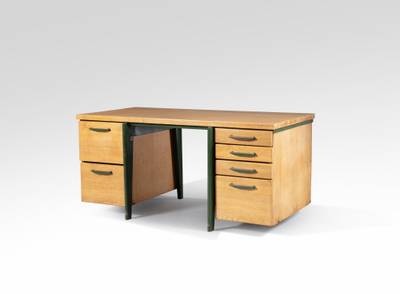
Jean Prouvé: Where Industry Meets Pure Beauty
Artist Spotlight · The Collection Editorial
“Never design anything that cannot be made.”
Jean Prouvé
In the spring of 2023, a single Standard Chair by Jean Prouvé sold at auction in Paris for a sum that would have startled even the most seasoned collectors of twentieth century design. It was not an isolated moment. Over the past decade, Prouvé's work has commanded sustained and passionate attention at Christie's, Phillips, and Wright, with his most celebrated pieces routinely exceeding their high estimates. What this market enthusiasm reflects is something deeper than fashion: a growing recognition that Prouvé achieved something rare in the history of modern objects.
Jean Prouvé
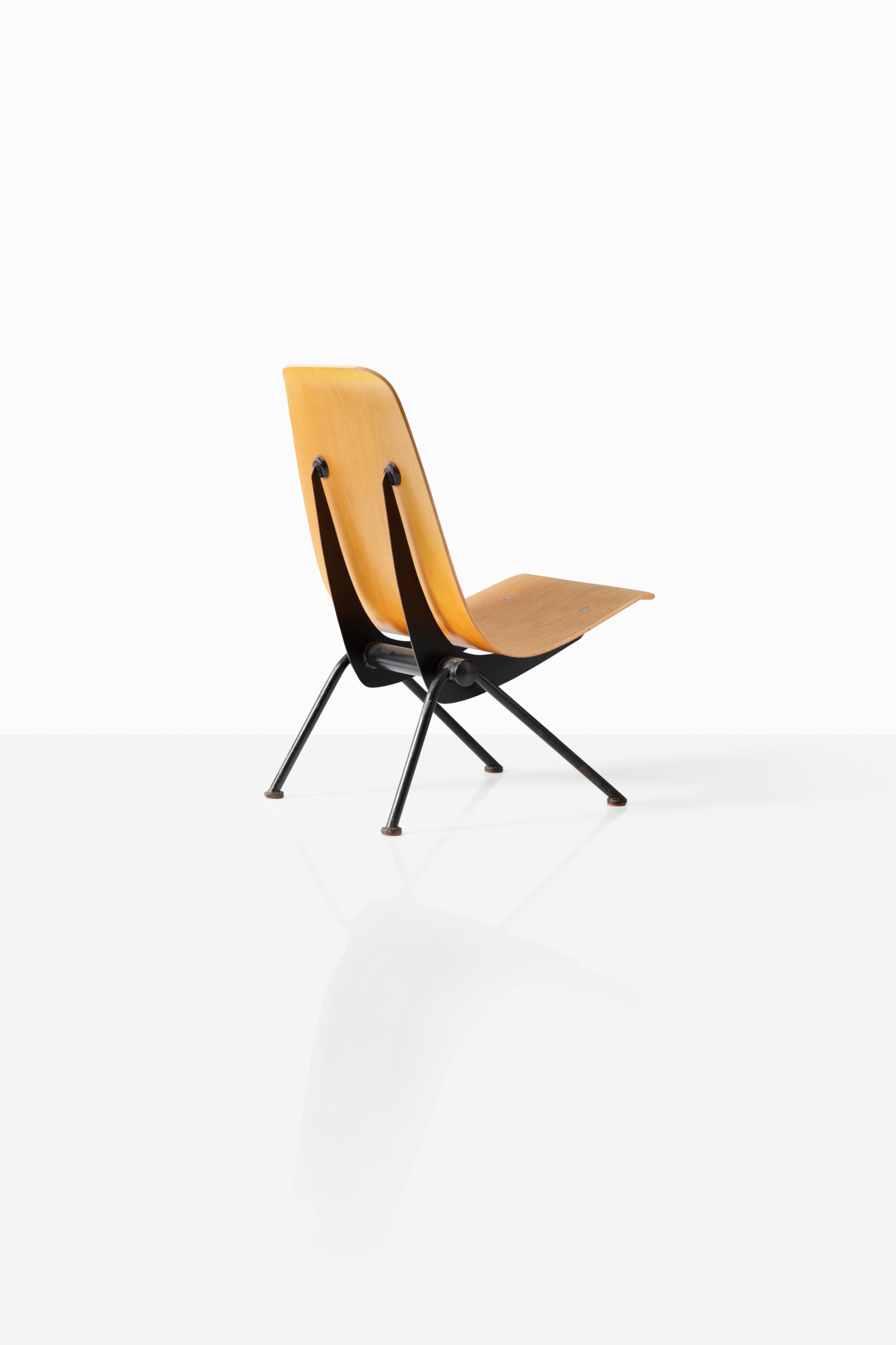
Fauteuil léger n°336, dit Antony
He made things that were simultaneously honest, beautiful, and genuinely useful, and he did so with a rigor and inventiveness that has never been replicated. Jean Prouvé was born in Paris in 1901 into a family steeped in artistic life. His father, Victor Prouvé, was a painter and decorative artist closely associated with the École de Nancy, the celebrated Art Nouveau movement centered in the Lorraine region of northeastern France. Growing up surrounded by craftspeople who believed deeply in the union of art and everyday life, the young Prouvé absorbed a philosophy that would animate everything he made.
He trained as a metalworker and ironsmith in Nancy and Paris during the 1910s and early 1920s, apprenticing with the renowned ironworker Émile Robert and later with the Art Nouveau metalwork master Adalbert Szabo. These formative years gave him a hands on intimacy with materials that no amount of formal architectural education could have provided. In 1923, Prouvé opened his own metalworking atelier in Nancy, and it was here that his singular vision began to crystallize. He was fascinated by industrial processes, particularly by what could be achieved through bending, folding, and pressing sheet metal into structural forms.
Jean Prouvé
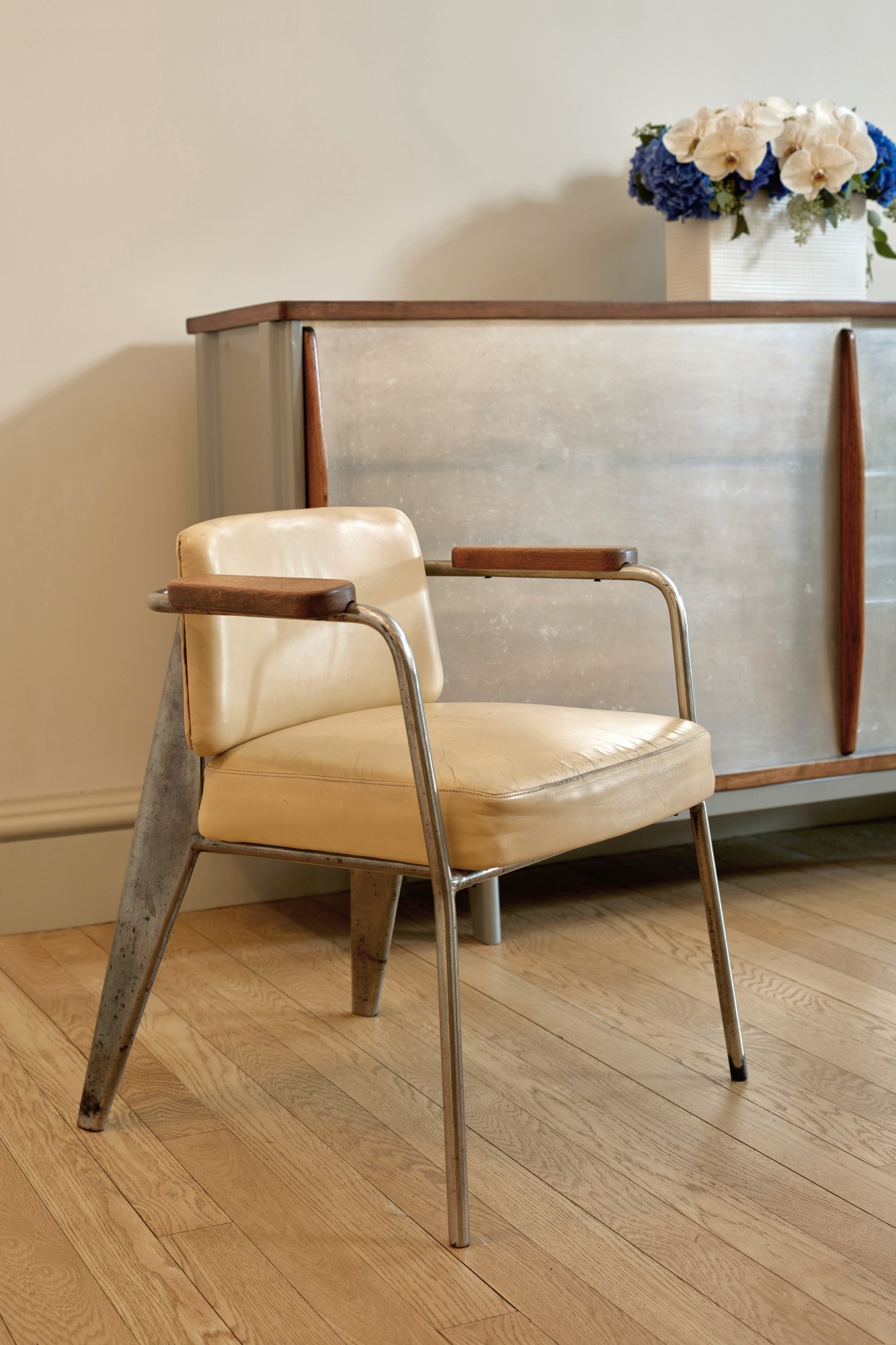
"Direction" Armchair
Where other designers of his era reached for the ornamental, Prouvé reached for the structural. He understood that a bent sheet of steel, properly conceived, could carry load more efficiently than a cast or forged element of far greater mass. This insight became the animating principle of his entire output, from furniture to prefabricated building systems. By the 1930s, his workshop had evolved into a small but extraordinarily inventive manufacturing operation, attracting commissions from schools, universities, and public institutions across France.
“A well-made object is the most beautiful thing in the world.”
Jean Prouvé
The Standard Chair, first developed in the early 1930s and refined through subsequent decades, remains the work by which Prouvé is most immediately recognized. Its logic is immediately legible: the rear legs, which bear the greater structural load of a seated person's weight, are fabricated from folded sheet steel and are visibly more robust than the slender tubular front legs. Function is expressed rather than concealed. The Antony Chair, created around 1950 for student residences at the University of Strasbourg, carries a similarly compelling authority, its molded plywood shell and lacquered steel frame achieving a warmth and ease that belies the industrial nature of its construction.
Jean Prouvé
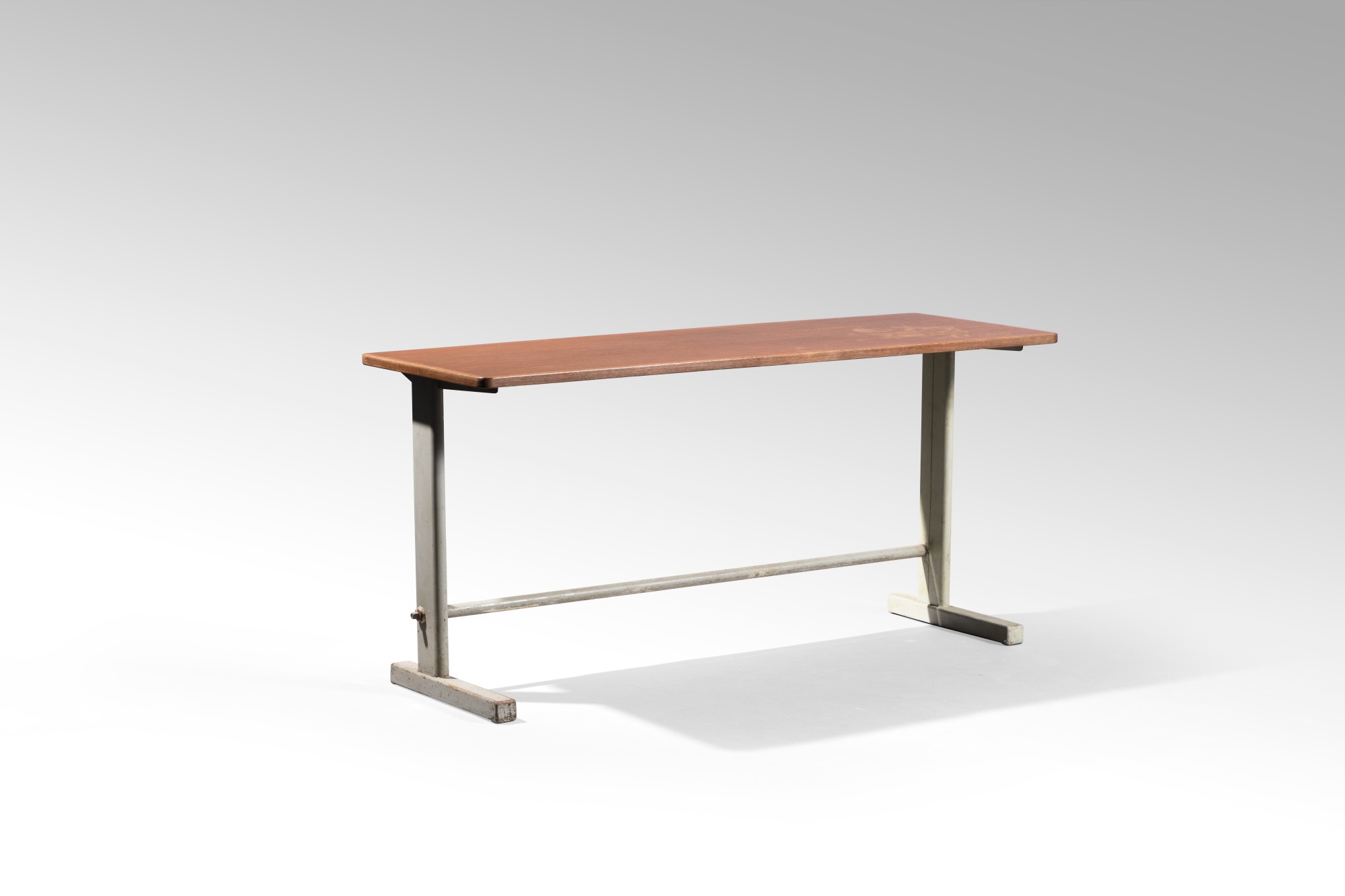
Cité no. 500 Table, demountable variant, large model, 1952
These are not cold or austere objects. They are objects that feel, on close acquaintance, deeply considered and even generous. The Bureau Standard, the Direction Armchair, the demountable Cité tables: each piece in Prouvé's canon rewards sustained looking and rewards use even more. The collecting landscape around Prouvé has matured considerably since the early 2000s, when his work first began attracting serious international attention beyond France.
Today, his furniture occupies a category of its own, understood not merely as design but as art historical artifact and as genuinely livable object. Collectors are drawn to works from specific periods, with pieces from the late 1930s through the early 1950s generally considered the most desirable. Rarity matters, as always, but so does authenticity of patina and the presence of original upholstery or surface treatment. The Semi metal chairs, the Visiteur armchair, and the Refectory Tables represent the breadth of his production range and offer different entry points for collectors at varying stages.
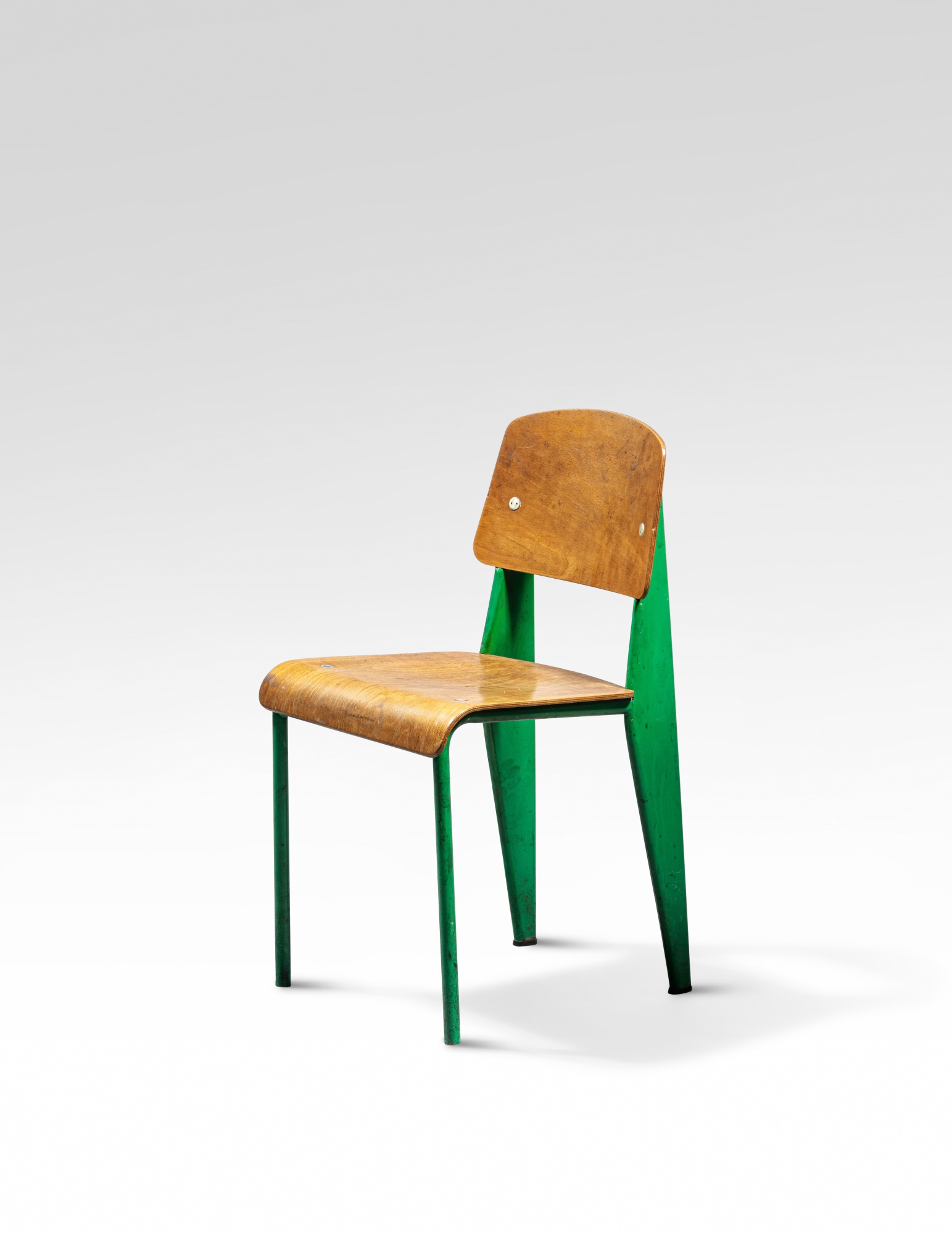
Jean Prouvé
Chaise standard, version Métropole n°305
Provenance traceable to the original institutional commissions, such as university residences or government buildings, adds both historical resonance and market confidence. To understand Prouvé fully, it helps to place him among the constellation of modernist designers and architects who were his contemporaries and occasional collaborators. He worked alongside Charlotte Perriand, who shared his conviction that good design was a form of social provision, and his sensibility rhymes with that of Charles and Ray Eames in America, who were similarly committed to the expressive and structural possibilities of new industrial materials and processes. He corresponded with Le Corbusier and counted figures from the Bauhaus tradition among his admirers.
Yet Prouvé remained distinctly French and distinctly himself, grounded in the workshop rather than the studio, committed to making things with his own hands even as his practice scaled. His refusal to separate thinking from making placed him closer to the medieval craftsman than to the celebrity designer, and this is precisely what gives his objects their particular authority. Prouvé's legacy today extends far beyond the auction room. His prefabricated housing systems, developed urgently in the years following the Second World War to address France's acute housing shortage, anticipated conversations about flexible, demountable, and sustainable construction that feel urgently contemporary.
Museums including the Centre Pompidou in Paris and the Vitra Design Museum in Weil am Rhein hold significant collections of his work and have organized major retrospectives that have introduced successive generations to his vision. Architecture schools and design programs routinely return to his notebooks and prototypes as models of a way of working that fuses rigorous structural thought with genuine aesthetic feeling. For collectors, owning a piece by Jean Prouvé is not merely an act of aesthetic choice. It is an alignment with a philosophy: that the best made things are the ones where nothing is hidden, where form follows force, and where beauty is the natural consequence of honest work done well.
Explore books about Jean Prouvé

Jean Prouvé: Complete Works
Peter Sulzer
Jean Prouvé: A Life of Creation
Catherine Coley
Jean Prouvé: Metal Craftsman
Jean-Claude Steinmann

Prouvé: The Poetics of Functional Design
Benedikt Taschen
Jean Prouvé: An Architecture of Conviction
Peter Sulzer, Veronique Desnos