Jean-baptiste Carpeaux
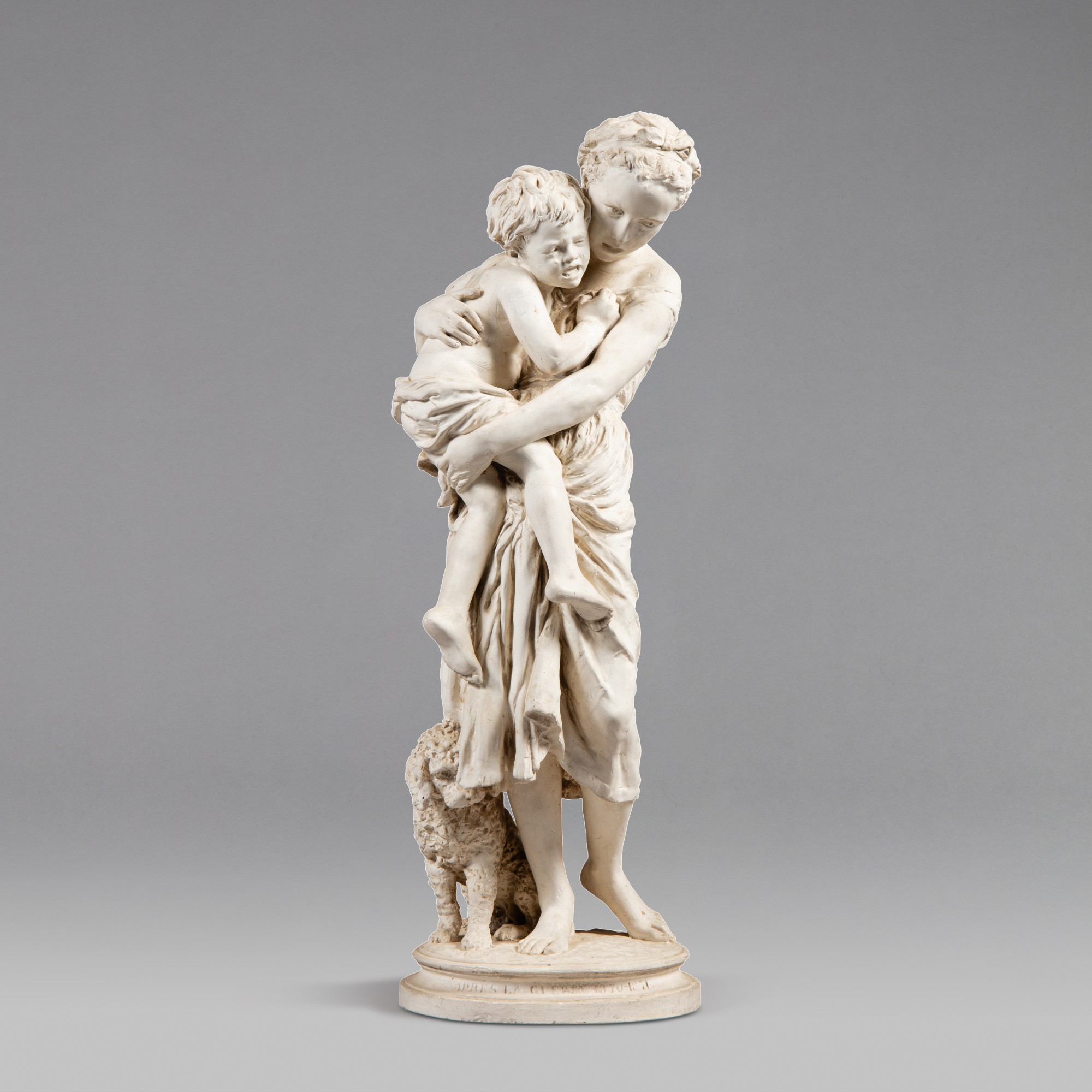
Carpeaux: The Sculptor Who Made Marble Breathe
Artist Spotlight · The Collection Editorial
There is a moment, standing before Jean Baptiste Carpeaux's monumental sculptural group La Danse at the Musée d'Orsay in Paris, when the stone seems to exhale. The figures twist and reach and laugh, their drapery caught mid flutter, their mouths open in what feels like genuine ecstasy. When the work was installed on the façade of the Paris Opéra in 1869, it scandalized the city so thoroughly that a bottle of ink was thrown at it. Today that same work is considered one of the supreme achievements of nineteenth century French sculpture, and the Musée d'Orsay's permanent display of both the original plaster and later marble versions draws visitors from across the world who come specifically to stand in its presence.
Jean Baptiste Carpeaux was born on May 11, 1827, in Valenciennes, in the Nord department of northern France, a city with a distinguished artistic heritage as the birthplace of the earlier Rococo sculptor Antoine Watteau. His father was a mason, and the family was working class, circumstances that gave the young Carpeaux both a physical understanding of material and an urgent, almost ferocious ambition to rise. He moved to Paris as a teenager and enrolled at the École des Beaux Arts, studying under the sculptor François Rude, whose own romantic dynamism would leave a clear imprint on his student's sensibility. These were years of grinding poverty and fierce determination, and Carpeaux's early formation was shaped by the understanding that beauty was something you earned through labor.
His breakthrough came through the institution that defined French artistic life: the Prix de Rome. Carpeaux won the prize in 1854, earning him residency at the Villa Medici in Rome, and the experience proved transformative in ways that went far beyond technical instruction. He immersed himself in the work of Michelangelo and the great Baroque masters, particularly Gian Lorenzo Bernini, absorbing their lessons about movement, emotion, and the capacity of the human body to carry psychological weight. His Roman period culminated in his submission piece Ugolino and His Sons, completed in 1861, a harrowing interpretation of the episode from Dante's Inferno in which Count Ugolino is imprisoned with his children.
The work shocked and thrilled the Paris Salon with its raw anguish, and it established Carpeaux immediately as an artist of the first rank. Carpeaux returned to Paris at a moment of extraordinary opportunity. The Second Empire under Napoleon III was reshaping the city under Baron Haussmann, and there was appetite and funding for ambitious public art. Carpeaux became the favored sculptor of the imperial circle, receiving commissions for portrait busts and decorative programs that brought him into close proximity with power and wealth.
His portrait busts from this period are among the finest of the century, combining the formal requirements of official portraiture with a psychological acuity that feels almost modern. His bust of the Princess Mathilde, Napoleon III's cousin and one of the great patrons of the era, captures both the sitter's authority and a certain weariness with that same authority. These were not flattering confections but honest encounters between artist and subject. The work that defines Carpeaux's legacy remains La Danse, created between 1865 and 1869 for the façade of Charles Garnier's new Paris Opéra.
The commission asked for an allegorical group representing the spirit of dance, and what Carpeaux delivered was something the committee had not anticipated: a ring of nude figures in ecstatic motion, centered on a winged genius of dance, the whole composition radiating outward like energy made solid. The public outrage was genuine and prolonged, with critics calling the work indecent and morally corrupting. Garnier himself defended Carpeaux fiercely, and the controversy ultimately secured the work's immortality. The original stone group, damaged by weathering, was replaced in 1964 by a copy by Paul Belmondo, and the original was preserved first at the Louvre and later at the Musée d'Orsay, where it remains one of the collection's defining masterpieces.
For collectors approaching Carpeaux's work today, the market offers several distinct entry points. Preparatory terracotta studies and smaller bronze reductions of his major sculptural groups appear at auction with some regularity, and these works carry with them the directness of Carpeaux's hand in a way that the monumental public pieces necessarily cannot. Christie's and Sotheby's have both handled significant Carpeaux material in their nineteenth century sculpture sales, with strong results reflecting sustained scholarly and collector interest. His paintings and drawings, less celebrated than the sculpture but equally alive with that restless energy, represent an area where knowledgeable collectors can still find remarkable value.
The range of his output, from intimate portrait drawings to oil sketches crackling with observed life, rewards the collector who takes the time to look broadly at his practice. Carpeaux belongs to a constellation of nineteenth century sculptors who together redefined what the medium could do. His closest counterparts include Auguste Rodin, who was eleven years younger and who clearly absorbed the lessons of Carpeaux's expressive approach to the figure even as he pushed further toward symbolism and fragmentation. The Italian sculptor Giovanni Boldini, working in a parallel painterly tradition, shared Carpeaux's gift for capturing fleeting psychological states.
Looking backward, the lineage runs through Rude and through the Baroque energy of Puget, the great French Baroque sculptor whose work Carpeaux studied deeply. Understanding Carpeaux means understanding him as a pivot point, the figure through whom the classical tradition was transformed into something raw enough to make Rodin possible. His life was cut short by illness: he died on October 12, 1875, at only forty eight years old, having spent his final years in declining health and legal disputes over the reproduction rights to his work. The bitterness of those final years should not obscure the astonishing completeness of what he achieved.
Carpeaux gave nineteenth century sculpture its pulse. He insisted that stone and bronze could carry not just form but feeling, not just likeness but life. In an era that often confused grandeur with stiffness, he understood that true grandeur was only possible through movement, through breath, through the radical vulnerability of the human body caught in a moment of becoming. That understanding has not aged.
It has only deepened.
Explore books about Jean-baptiste Carpeaux
Jean-Baptiste Carpeaux
Stanislas Lami
Carpeaux
Margaret Scollan
Jean-Baptiste Carpeaux (1827-1875): Sculptor of the Second Empire
Anne Pingeot
Carpeaux: A Life
Philip Ward-Jackson
Jean-Baptiste Carpeaux and the Decorative Arts
Anne Distel
Carpeaux: Sculptures and Drawings
Musée des Beaux-Arts de Valenciennes
Jean-Baptiste Carpeaux: Painter, Sculptor, Draftsman
Ruth Butler