Jana Euler
Jana Euler Paints the World Deliriously Alive
Artist Spotlight · The Collection Editorial
When Jana Euler's paintings entered the galleries of Portikus in Frankfurt for her solo exhibition there, something shifted in the room. The works did not hang quietly. They pressed forward, their large surfaces alive with distorted figures, slippery animal forms, and color relationships that felt simultaneously wrong and absolutely inevitable. That quality of productive wrongness, of images that unsettle while they seduce, has made Euler one of the most compelling painters working in Europe today, and her international profile has continued to grow steadily through major institutional and gallery presentations across Germany, Belgium, the United Kingdom, and beyond.
Jana Euler
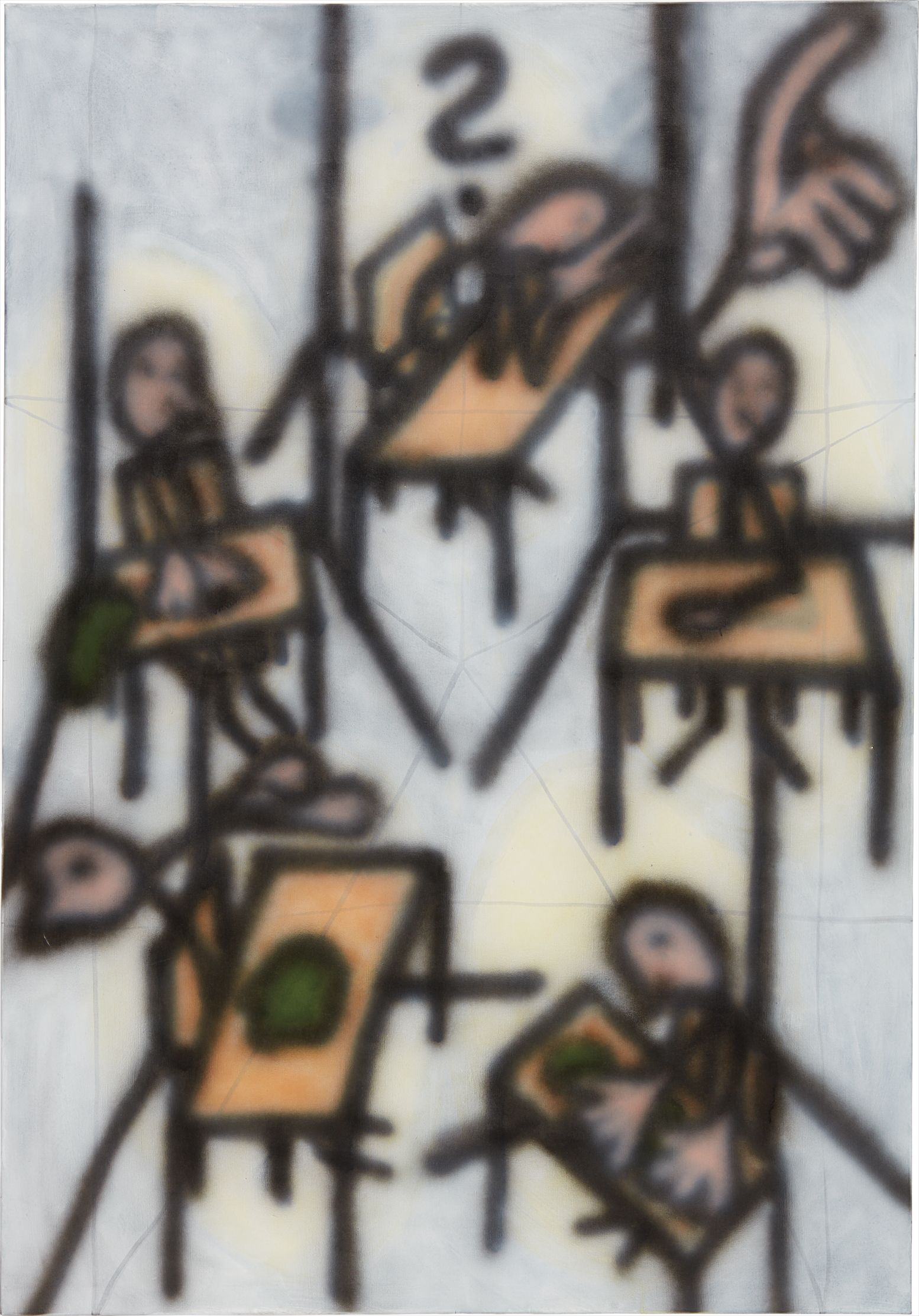
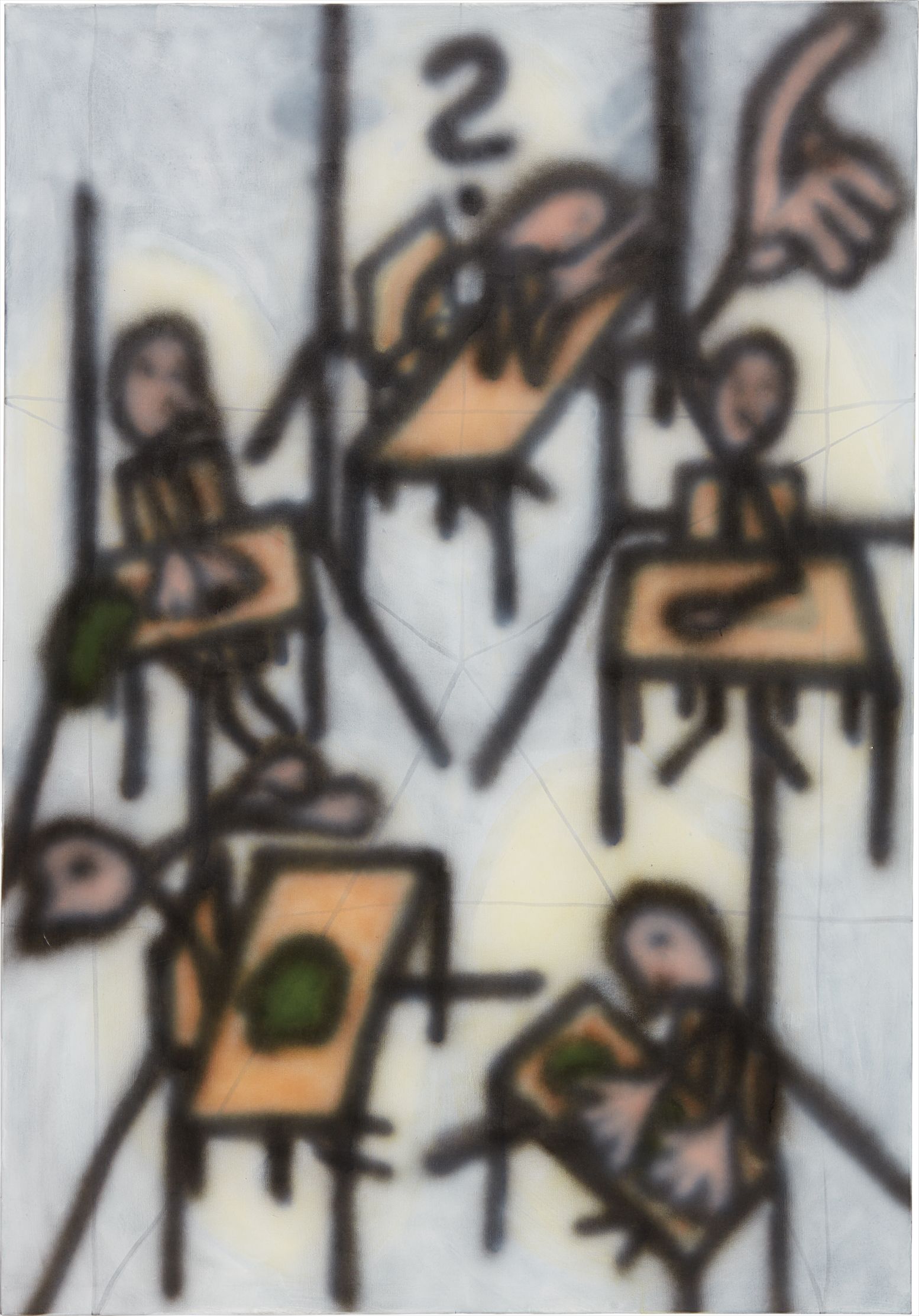
The working-process out of focus, 2012
Euler was born in 1982 in Kassel, Germany, a city with a deep and particular relationship to contemporary art through its long history with Documenta, the internationally significant exhibition held there every five years. Whether or not that proximity shaped her directly, there is something in her sensibility that feels aware of art history as a living argument rather than a settled archive. She studied at the Städelschule in Frankfurt, one of Europe's most rigorous and genuinely experimental art academies, and later continued her formation at the École Nationale Supérieure des Beaux Arts in Paris. This dual immersion, in the serious intellectual atmosphere of Frankfurt and the culturally saturated environment of Paris, gave her practice a layered foundation that resists easy categorization.
Her early works already showed an appetite for psychological tension and formal invention. Euler does not paint the world as it is but as it might feel from inside a dream that has begun to tip toward strangeness. Her figures are often incomplete or transformed, bodies merging with objects or with each other, animals appearing in contexts that carry the weight of fable without offering the comfort of resolution. There is a humor at work too, and this is crucial: Euler understands that comedy and dread can occupy the same brushstroke, and she exploits that proximity with considerable intelligence.
Jana Euler
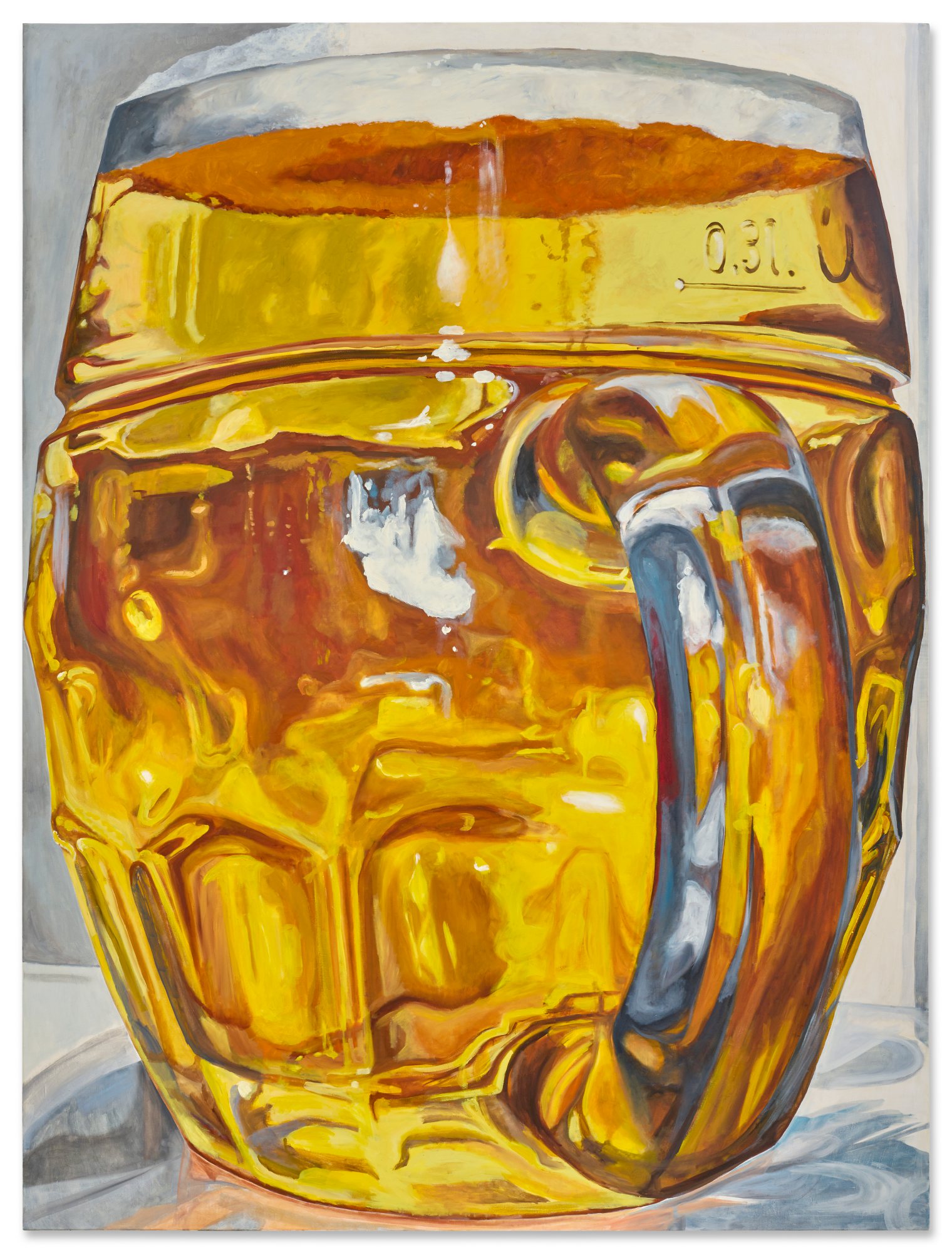
Beer without Glass, 2013
The darkly comic dimension of her painting puts her in a lineage that includes artists like Martin Kippenberger and the broader tradition of German painters who treat absurdity as a serious philosophical position. The works available through The Collection offer a generous window into different phases and registers of her practice. "The working process out of focus" from 2012, rendered in acrylic on canvas, captures an early and already confident engagement with the idea of making itself as subject matter. Painting that turns its attention to its own conditions of production has a rich history, but Euler brings to it an irreverence that keeps the work from feeling merely conceptual.
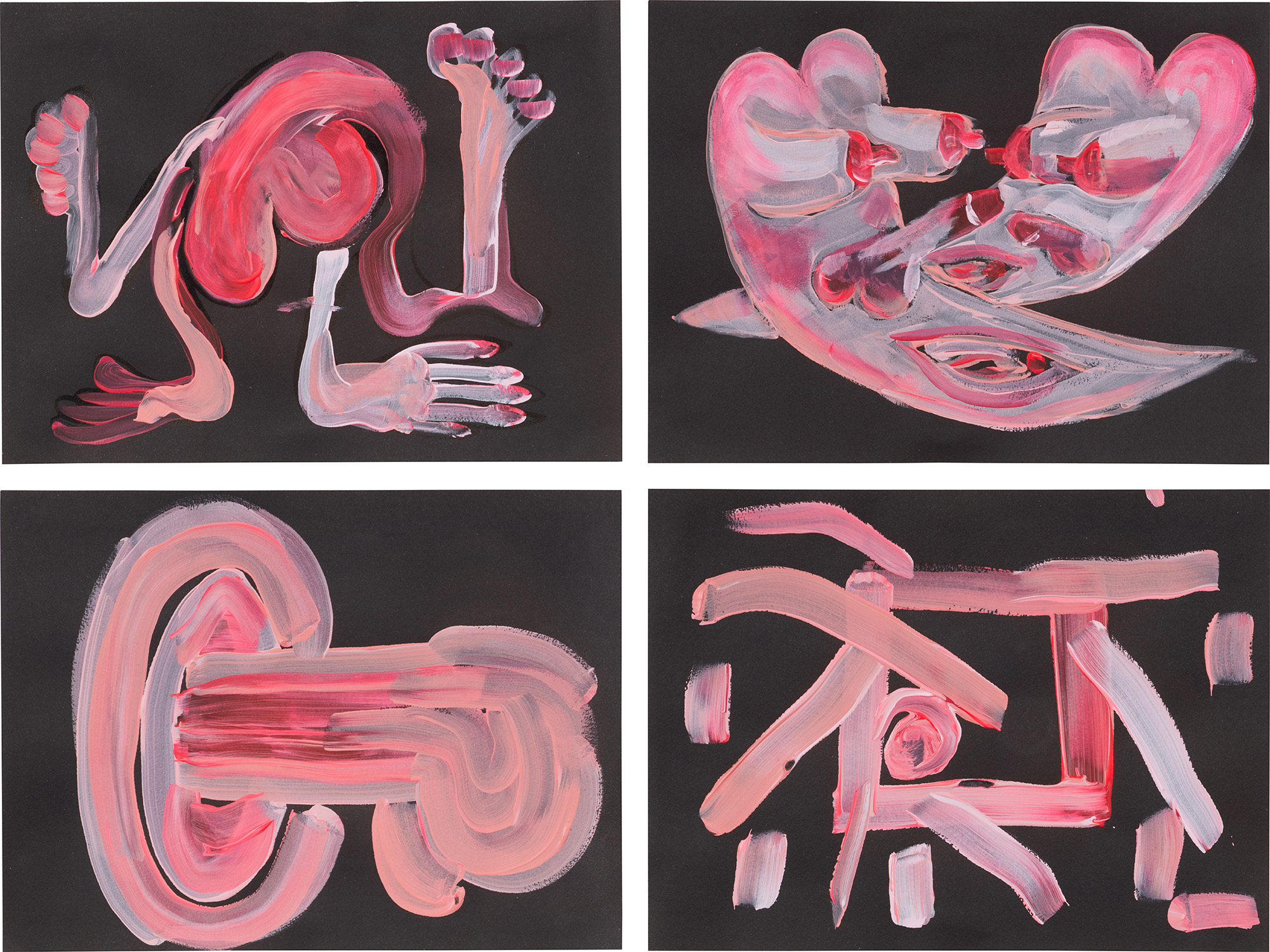
"Beer without Glass" from 2013, in oil on canvas, is one of those titles that operates as a small philosophical joke: the absence of a container suggests something about desire, about the impossibility of holding what we want without changing it. "gossip rain, private and public painting" from the same year, executed in ink and acrylic on paper, shows her moving fluidly between media, treating works on paper not as studies but as full propositions. "Universe 2" from 2015, ink on paper presented in the artist's own frame, is a reminder that Euler thinks carefully about the total object, not just the image. And "Headless Into Abstraction" from 2017, a four part work in acrylic on paper, marks a moment of sustained investigation into what happens when figuration begins to dissolve at its own edges.
Jana Euler
Headless Into Abstraction, 2017
For collectors, Euler's work rewards careful looking over time. Her paintings are rarely immediately legible, and that sustained resistance is part of their value. Works that reveal themselves slowly tend to retain their hold on the rooms they inhabit, continuing to generate new readings as circumstances and viewers change around them. Her use of acrylic and oil, and her willingness to work across canvas and paper, means that her practice exists at multiple price points and scales, making entry into her work possible for collectors at different stages of engagement.
The works on paper in particular represent an opportunity to live closely with her thinking in a format that is both intimate and formally complete. As her institutional profile continues to expand, early and mid career works carry the particular satisfaction of having recognized a significant voice before the broader consensus fully formed. Contextually, Euler belongs to a generation of European painters who came of age in a moment when painting was once again having to justify itself against the claims of other media, and who responded by making painting stranger, more self aware, and more ambitious rather than more defensive. Artists like Michaela Eichwald, Amelie von Wulffen, and Kerstin Brätsch share with Euler a willingness to push figuration into uncomfortable psychological territory, and to treat the history of painting not as a burden but as a vocabulary full of possibilities for misuse and reinvention.
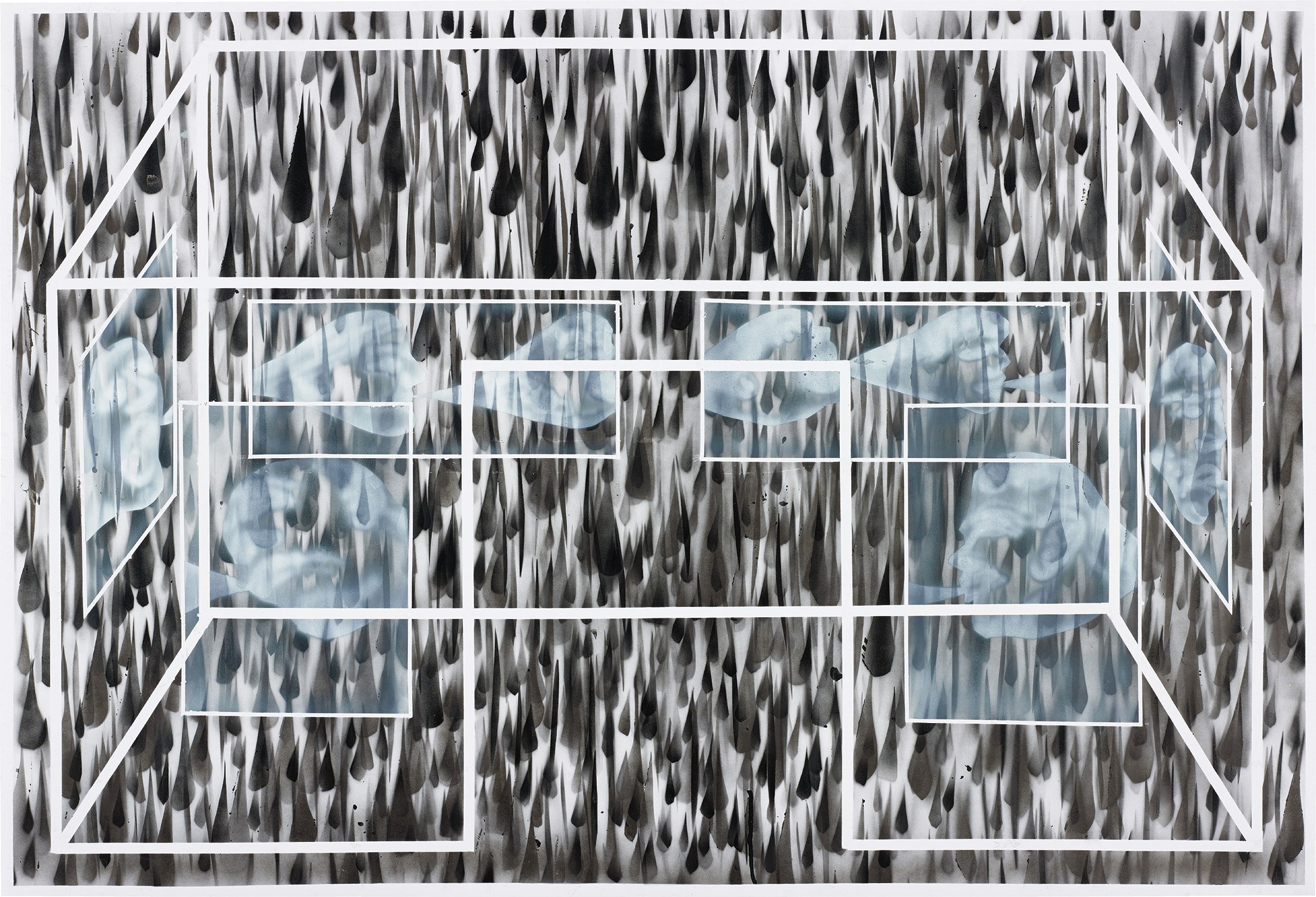
Jana Euler
gossip rain, private and public painting, 2013
Euler's work also engages productively with surrealism, not as pastiche but as a genuine methodology: the surrealist conviction that the image can reach truths unavailable to rational description runs through her practice as a structuring principle. What makes Euler matter now, in a cultural moment saturated with images and suspicious of difficulty, is precisely her refusal of ease. Her paintings ask something of their viewers. They propose that looking is an activity with psychological stakes, that the images we choose to live with say something about the desires and anxieties we are willing to acknowledge.
There is generosity in that demand: Euler trusts her audience to meet the work at its own level of intensity. As institutions across Europe and beyond continue to present and collect her work, and as her reputation deepens among collectors who value paintings that hold their complexity over years and decades, the arc of her career traces a quiet and convincing argument for what figurative painting can still do when it is made with total seriousness and genuine wit.
Explore books about Jana Euler