Jan Dibbets
Jan Dibbets: Light, Time, and Wonder
Artist Spotlight · The Collection Editorial
There is a particular kind of artist whose influence spreads quietly through decades, shaping how entire generations understand the relationship between perception and reality. Jan Dibbets is precisely that kind of artist. In recent years, major European institutions have returned sustained attention to his practice, and the art market has responded in kind, with his meticulously produced photographic suites and conceptual works achieving renewed recognition among collectors who understand the full depth of what Dibbets accomplished. His presence in significant private and institutional collections across Europe and North America speaks to a reputation that has only deepened with time.
Jan Dibbets
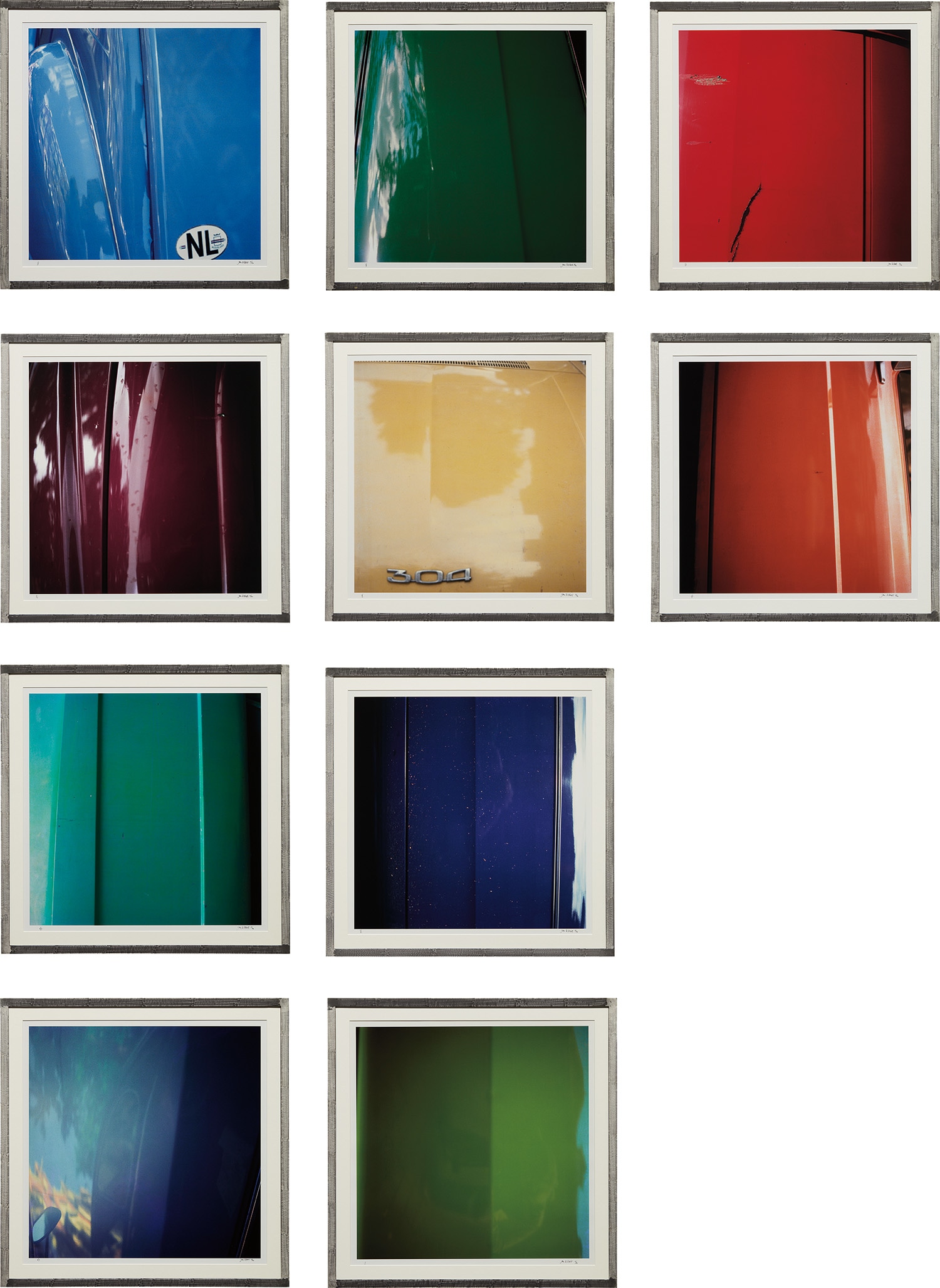
Colour Studies, 1973
Dibbets was born in Weert, in the Dutch province of Limburg, in 1941, and the particular quality of northern European light seems almost inseparable from his entire artistic vision. He trained at the Academie voor Beeldende Kunsten in Tilburg before traveling to London in the late 1960s, where he encountered a thriving conceptual art scene and briefly studied with Jan Holtrop. That London period was formative in the most meaningful sense, exposing him to British and American conceptualism while sharpening his distinctly Dutch sensibility toward observation, precision, and the measured recording of natural phenomena. The Netherlands, with its flat geography, its monumental skies, and its long tradition of painters who understood how light transforms a scene, gave Dibbets a visual inheritance he would spend decades reinterpreting through radically contemporary means.
By the late 1960s and early 1970s, Dibbets had established himself as one of the central figures in Conceptual Art and what became known as Arte Povera adjacent movements, though his practice always retained a poetic warmth that set him apart from strictly theoretical contemporaries. He became associated with the international Conceptual Art network, exhibiting alongside artists such as Richard Long, Gilbert and George, and Lawrence Weiner, and he was included in the landmark 1969 exhibition "When Attitudes Become Form" curated by Harald Szeemann at the Kunsthalle Bern, one of the defining moments in the history of Conceptual Art. That inclusion placed him firmly within the most important conversation happening in Western art at that moment. His early television piece for Dutch public television, in which he used the camera to "correct" perspective, announced the arrival of a genuinely original intellect.
Jan Dibbets
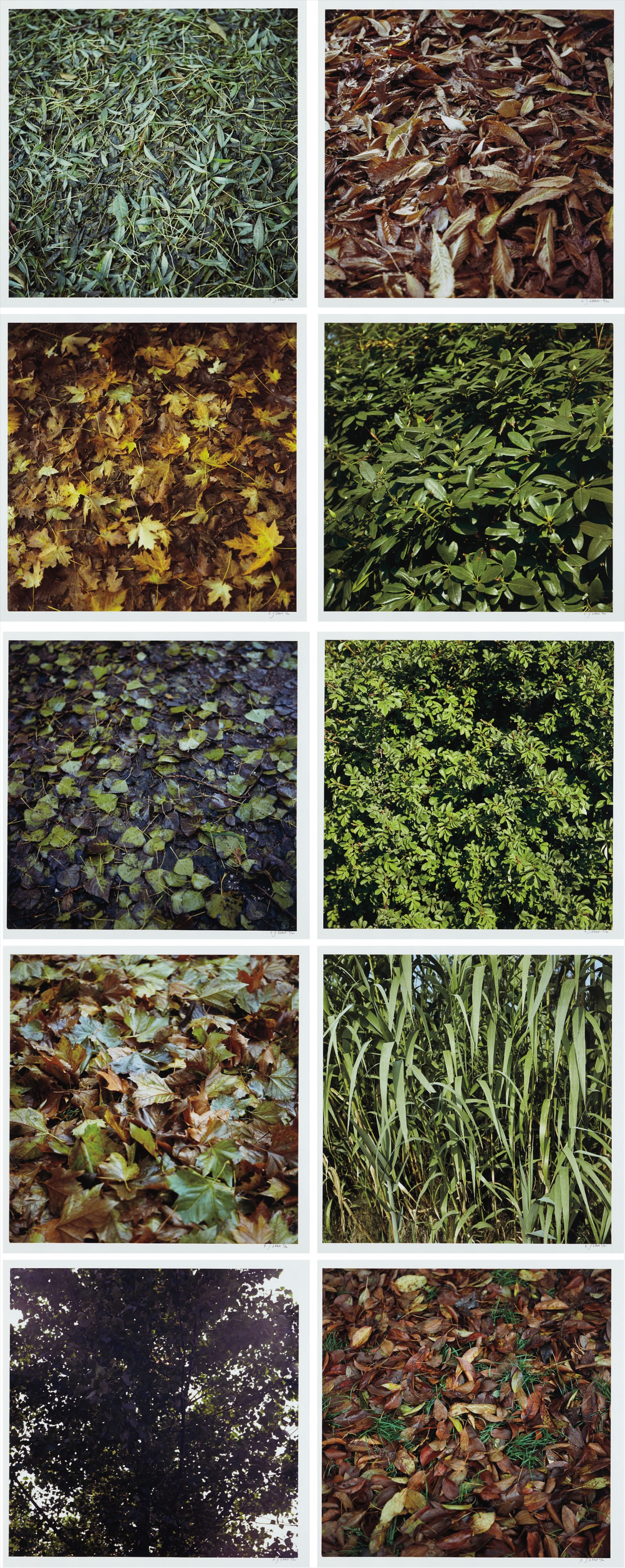
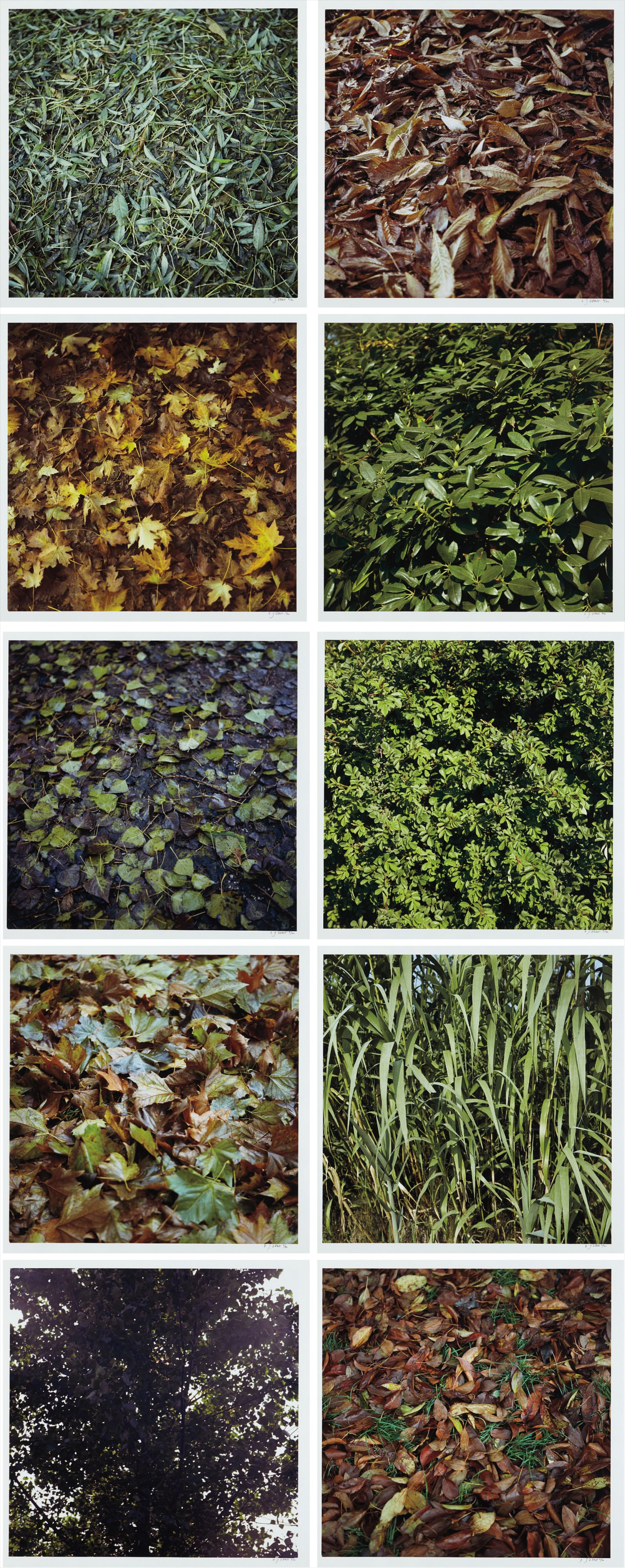
Leaves
The signature gesture of Dibbets' practice is the transformation of photographic documentation into something that transcends documentation entirely. His perspective corrections, in which photographs are assembled to compensate for or exaggerate the distortions of camera optics, revealed how thoroughly mediated our understanding of space and architecture truly is. His series devoted to windows, horizons, interiors, and skies use the photographic grid not as a neutral recording device but as an active compositional and philosophical instrument. Works such as "Colour Studies" from 1973, a ten part chromogenic print suite, exemplify his ability to make systematic investigation feel genuinely sensuous.
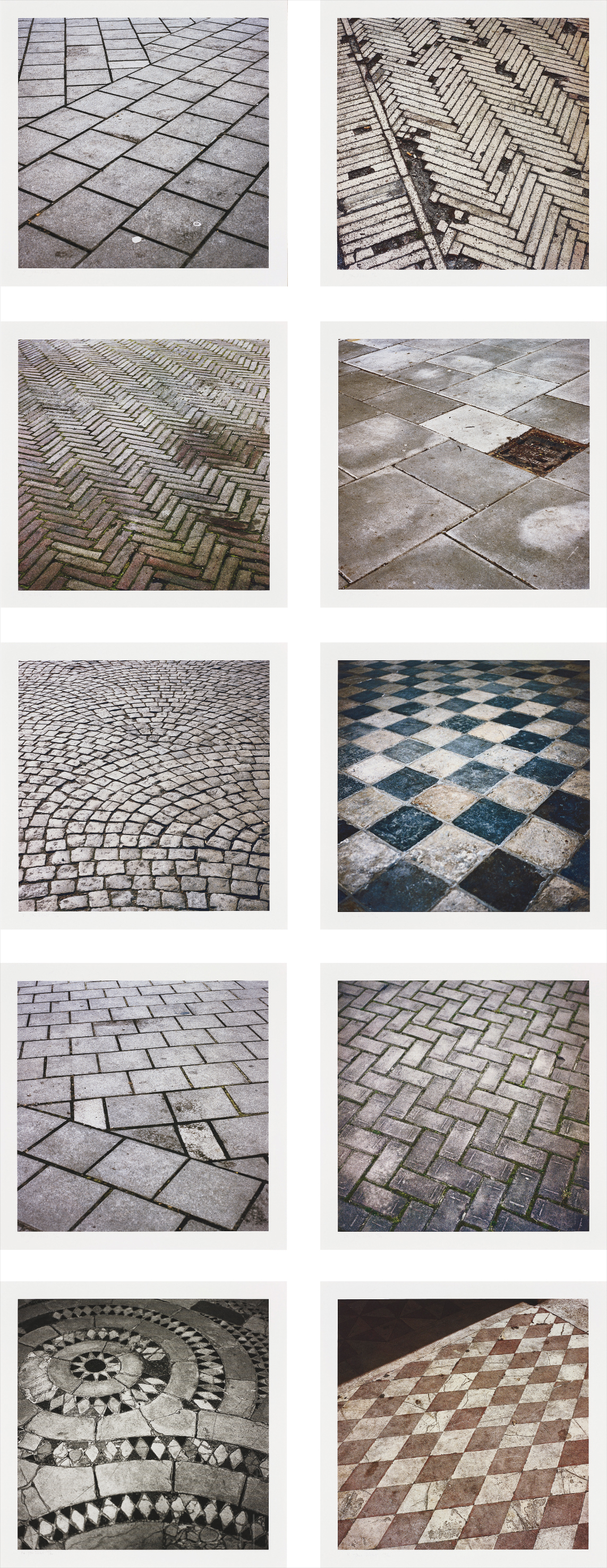
The prints arrest the eye before the mind even begins to process the conceptual framework behind them, which is precisely the quality that makes Dibbets a collector's artist rather than merely an art historian's subject. The suites published through Alan Cristea Gallery in London represent some of the most collectible and rigorously produced editions in his output. Works including "Leaves," "Water," and the suite now known as "1976 to 1981 and 2004" were published in limited editions with the kind of care and material quality that reflects the high seriousness with which Dibbets approaches every aspect of his practice. The "Water" suite, co published with Galerie Lelong in Paris and presented in an original blue fabric covered portfolio case, is a particularly beautiful example of how Dibbets merges the intimate and the grand.
Jan Dibbets
1976-1981/2004
Each print in these series carries individual annotations and numbering in the artist's own hand, which gives even edition works a quality of direct authorship that collectors rightly prize. "Soissons from Ten Windows" and "Four Courts Dublin A and B" demonstrate his sustained engagement with architecture and the experience of inhabiting space, themes that have preoccupied him from the 1970s through the 2000s. For collectors approaching Dibbets' market, the photographic suites and photo collage works offer an ideal entry point into a practice that has historically been undervalued relative to its art historical significance. Auction results at the major international houses have reflected growing institutional and scholarly recognition, with edition works in fine condition and with their original portfolio cases commanding the strongest results.
The presence of artist's proofs in many of his published suites adds a layer of rarity and desirability for serious collectors. What distinguishes Dibbets from many of his Conceptual Art peers is the sustained visual and tactile pleasure his works provide: these are not cold demonstrations but warm, carefully considered invitations to see the world differently. To understand Dibbets fully is to understand the broader ecosystem of Conceptual and Post Minimal art that flourished in the late 1960s and 1970s. His Dutch contemporaries and predecessors, from Mondrian's structural legacy to the more immediate example of Ger van Elk, provide one frame of reference.
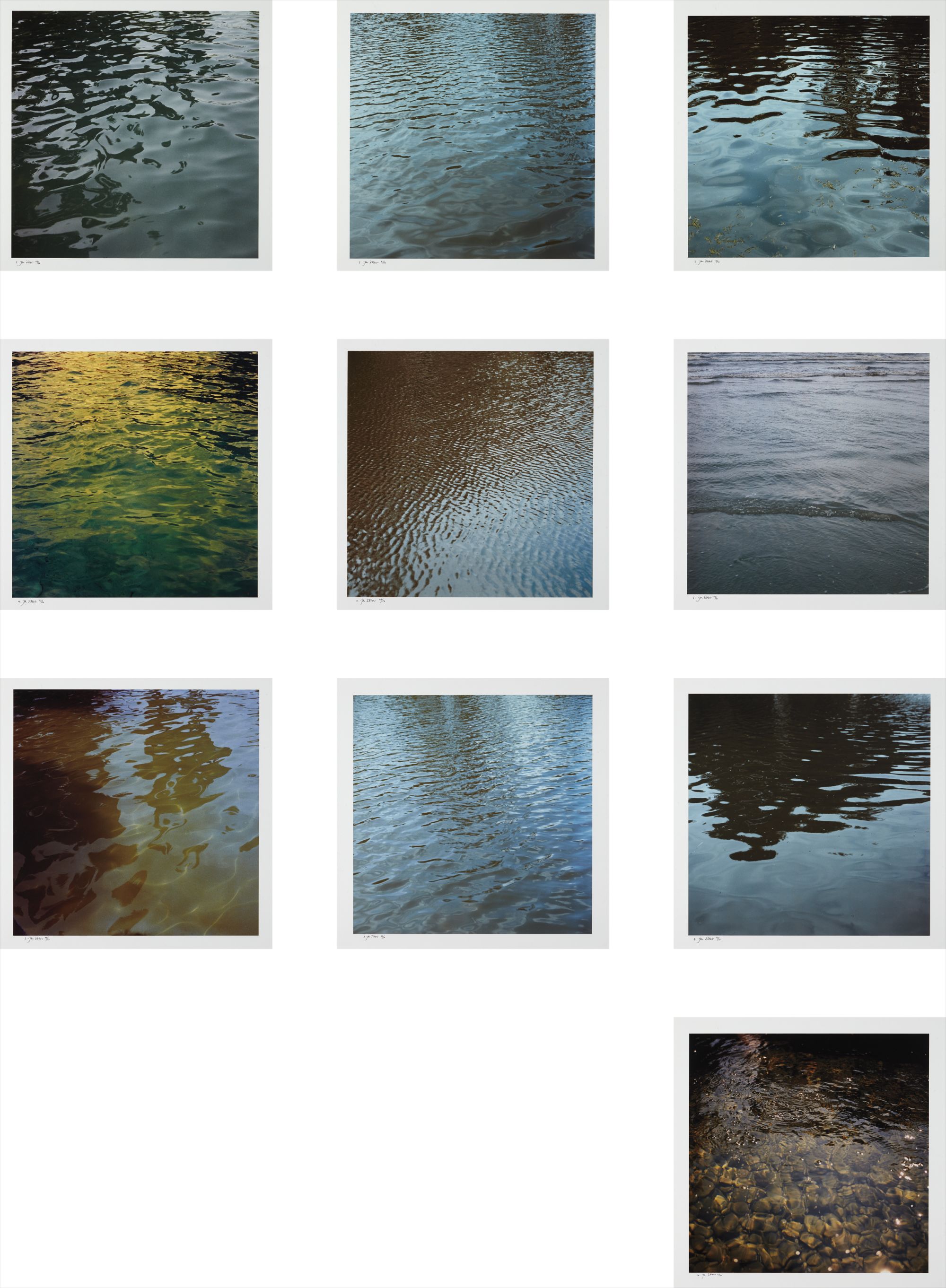
Jan Dibbets
Water
But Dibbets belongs equally to the international network that included Hamish Fulton, John Hilliard, and Victor Burgin in Britain, and the American conceptualists who were rethinking what photography could mean for art. He occupies a unique position within that generation as an artist who embraced photography not as a medium of documentation but as the very site of philosophical and perceptual inquiry. The legacy of Jan Dibbets is the legacy of genuine seeing. In an era dominated by screens and algorithmically mediated images, his insistence on the constructed, contingent, and endlessly interesting nature of visual perception feels not dated but prophetic.
Museums including the Stedelijk Museum Amsterdam and the Centre Georges Pompidou hold significant works in their permanent collections, confirming his place in the canon. For collectors who want to hold in their hands something that genuinely changed how art thought about photography, space, and time, the works of Jan Dibbets offer exactly that: a lasting encounter with one of the most quietly radical intelligences his generation produced.
Explore books about Jan Dibbets
Jan Dibbets: Catalogue Raisonné of Prints
Dibbets, Jan and Louwrien Wijers
Jan Dibbets: A Retrospective
Coosje van Bruggen
Jan Dibbets: The Fotogalerie Book
Multiple authors
Jan Dibbets: Land Art
Dibbets, Jan
Jan Dibbets: Video Works
Various curators