Jamie Nares
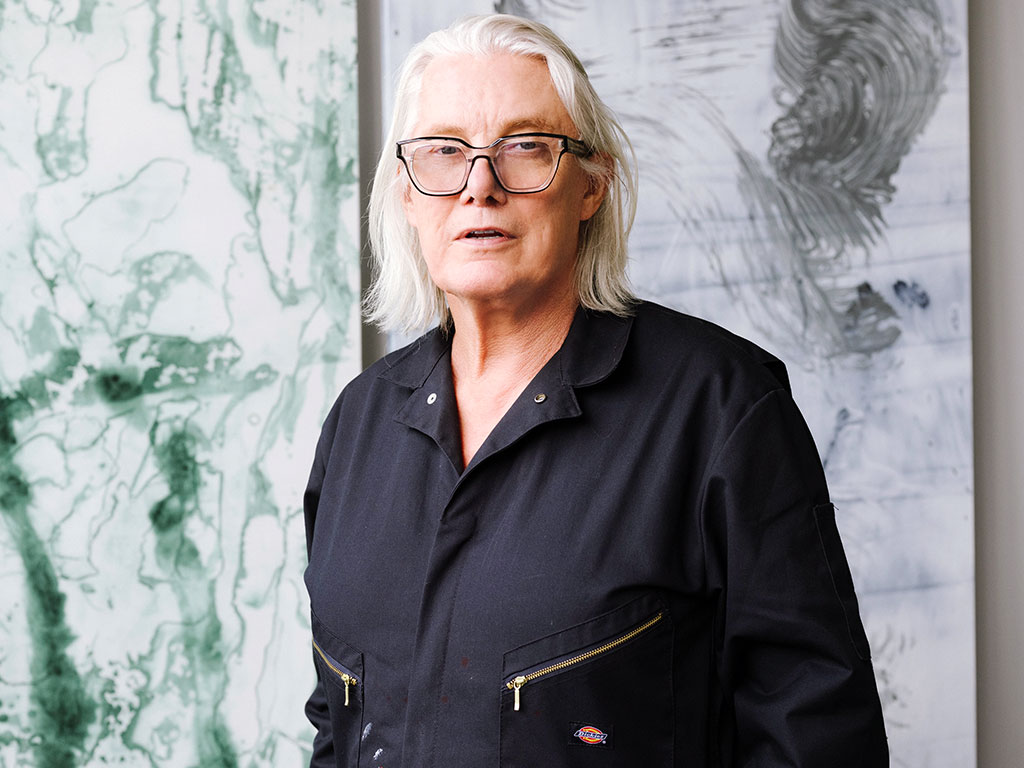
Jamie Nares, Forever in Luminous Motion
Artist Spotlight · The Collection Editorial
Something is stirring in the studios and galleries that have long tracked Jamie Nares with admiration and devotion. With new oil paintings arriving in 2025 and 2026, titles like "Silver City," "On The Road Again," and "See Saw" signal an artist working at full creative velocity, the brushwork as alive and charged as anything produced in the past five decades. Collectors who have followed Nares since the downtown Manhattan years are finding fresh reasons to pay close attention, and a younger generation discovering the work for the first time is encountering a practice that feels simultaneously rooted in art history and entirely of this moment. The energy in the new canvases is unmistakable, and it confirms what devoted followers have known for years: Jamie Nares is one of the most vital and consistently surprising painters working today.
Jamie Nares
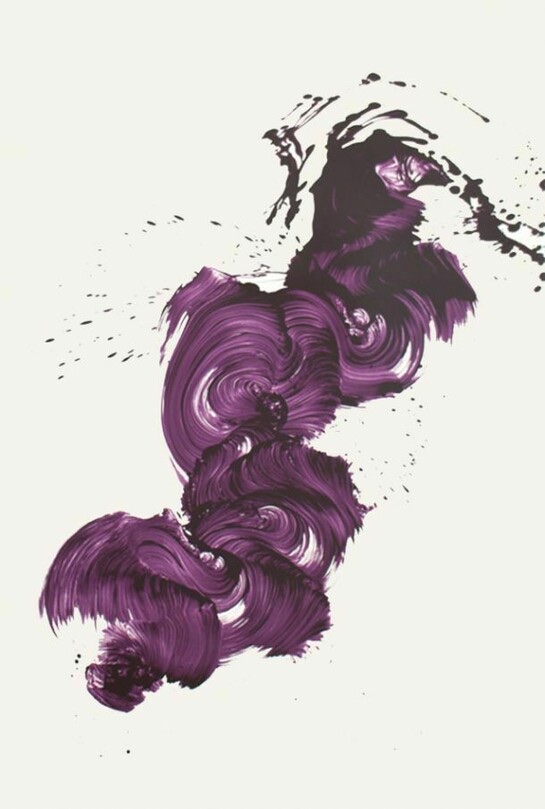
Step up, 2013
Nares was born in London in 1952, and the particulars of that formation matter. A British sensibility, attuned to tradition and irreverence in equal measure, traveled with the artist across the Atlantic when Nares arrived in New York City in 1974. That move proved decisive. New York in the mid 1970s was economically precarious and culturally explosive, a city shedding its postwar confidence and discovering something rawer and more urgent in its place.
Lower Manhattan, with its cheap loft spaces and restless community of artists, musicians, filmmakers, and poets, offered exactly the friction that a young artist arriving from London might need. Nares found it immediately, and never left. The late 1970s placed Nares at the very center of the No Wave movement, one of the most radically generative cultural moments in recent American history. As a founding member of the post punk band the Contortions, Nares was part of a scene that rejected the polished conventions of mainstream rock and roll in favor of dissonance, provocation, and raw feeling.
Jamie Nares
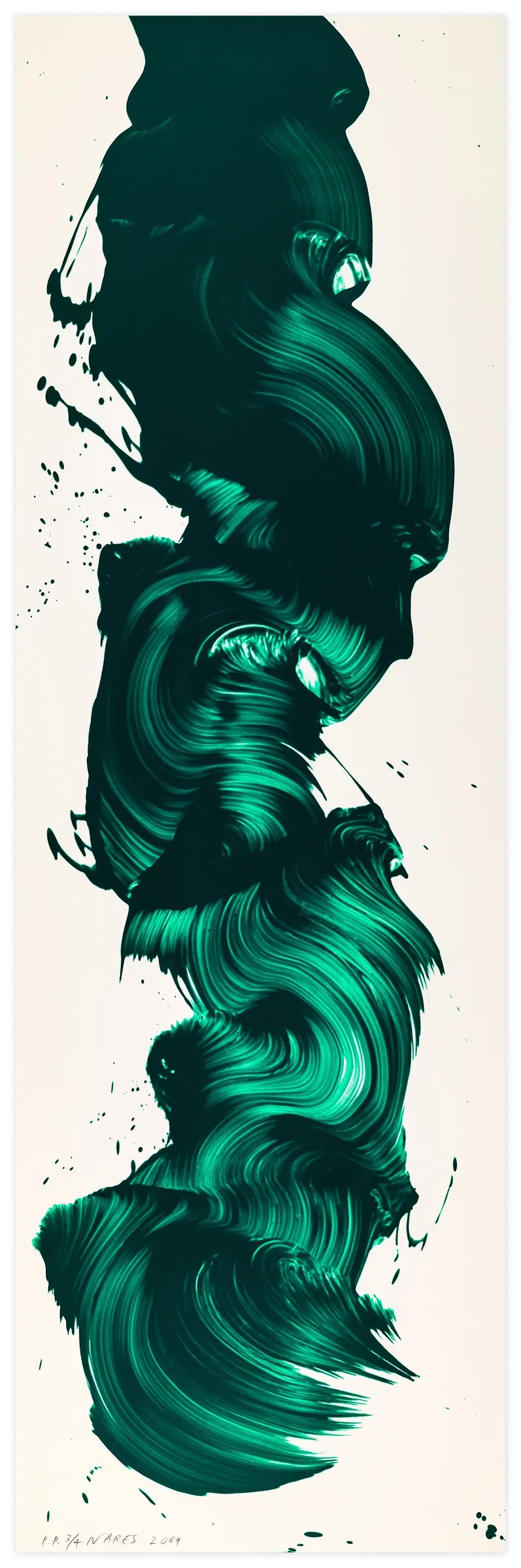
Stop, 2009
That sensibility extended directly into visual art and film. Nares directed "Rome '78," a landmark work of No Wave Cinema, a movement that used Super 8 and 16mm film as tools of artistic disruption rather than commercial storytelling. The film world and the art world overlapped entirely in this milieu, and Nares moved between them with a fluency that reflected genuine commitment to both. Peers and collaborators in this period included figures such as Jean Michel Basquiat, Lydia Lunch, and Glenn Branca, artists whose names have since become synonymous with a pivotal turn in American culture.
As the 1980s unfolded, Nares deepened an engagement with painting that would become the defining throughline of the practice. The gestural abstraction that emerged in this period drew on the emotional directness of Neo Expressionism while maintaining a distinctive lightness and precision that set the work apart from the more theatrical excesses of that movement. Nares developed a technique of applying paint in long, single sweeping gestures, movements that carry the energy of performance directly into the physical surface of the canvas. The result is work that feels inhabited, as though the act of making is still present and breathing inside the finished object.
Jamie Nares
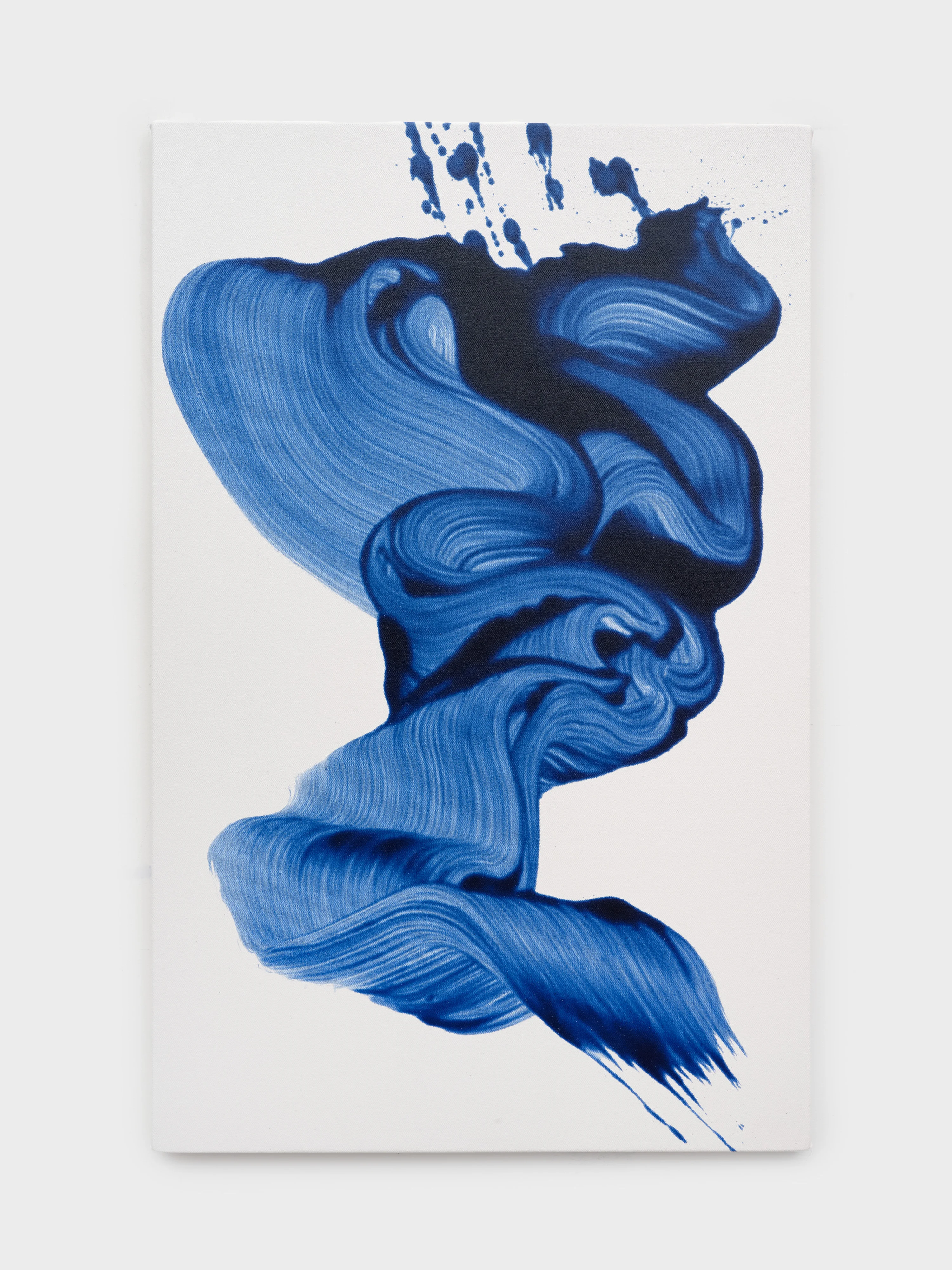
It's A Girl, 2025
This quality has only deepened over time, and the recent oils on canvas and linen demonstrate a painter who has refined a singular language to a point of extraordinary command. The signature works in the current body of paintings reward close looking in ways that photographs cannot fully capture. "Night Flight" from 2024, rendered in oil on linen, carries the atmospheric quality its title suggests, tones shifting across the surface in a way that evokes both movement and suspension. "Once and For All" from the same year has the quality of a definitive statement, assured and open at the same time.
The earlier screenprints, including "Stop" from 2009 and the ten color "Step Up" from 2013, printed on Saunders 410g handmade paper, demonstrate that Nares brings the same gestural intelligence to works on paper as to large scale canvases. The choice of handmade paper for "Step Up" is characteristic of an artist who thinks carefully about every material decision, understanding that the substrate is never neutral but always participates in the meaning of the work. For collectors, the appeal of Nares operates on several levels at once. There is the art historical weight: a career spanning more than four decades, with roots in one of the most documented and celebrated countercultural movements of the twentieth century, provides a foundation that serious collections can rely upon.
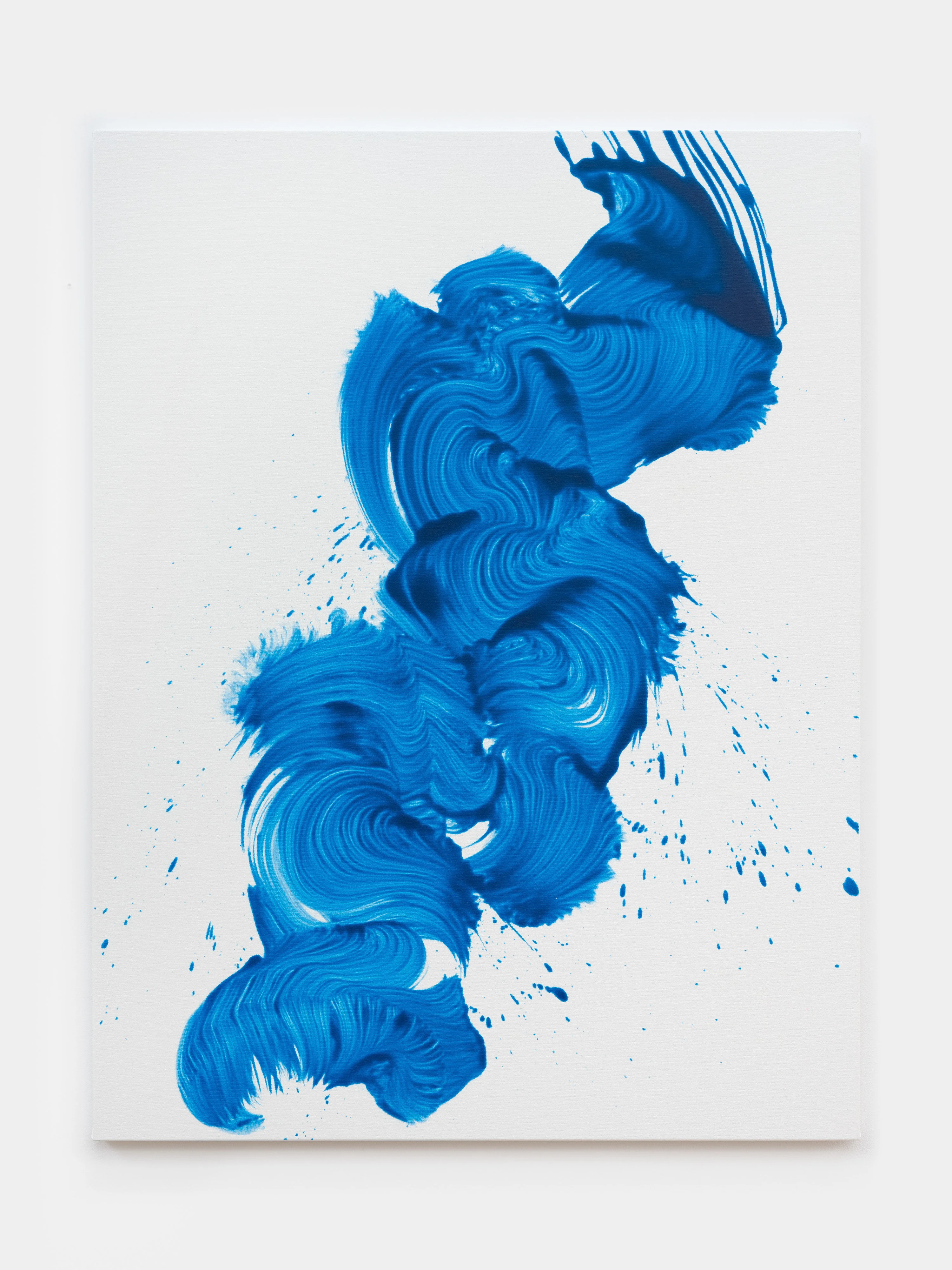
Jamie Nares
Once and For All, 2024
There is also the sheer visual pleasure of the work, which does not require any contextual knowledge to be felt immediately. And there is the market dimension: artists with Nares's depth of practice and institutional recognition, who continue to produce work of genuine freshness, represent a profile that sophisticated collectors recognize as both culturally significant and worthy of sustained attention. The range of works available, from screenprints to large scale oils, means that the practice is accessible at multiple price points, which is meaningful for collectors building thoughtfully over time. Placing Nares within art history involves drawing connections in several directions simultaneously.
The gestural lineage runs back through the Abstract Expressionists, particularly the action painting traditions associated with Franz Kline and Willem de Kooning, but filtered through decades of downtown New York experimentation. The video and film work connects Nares to a tradition of artist filmmakers that includes Yvonne Rainer, Jack Smith, and Jonas Mekas. The post punk origins place the practice in conversation with artists like Basquiat and Keith Haring, who also emerged from the charged intersection of music, performance, and visual art that defined lower Manhattan in the late 1970s and early 1980s. Nares belongs to all of these lineages without being reducible to any single one of them, which is precisely what makes the work so enduringly interesting.
The legacy of Jamie Nares is still being written, and that is part of what makes this moment so compelling for collectors and institutions alike. With new canvases arriving bearing titles that feel open, optimistic, and in motion, "On The Road Again," "See Saw," "Allese," there is a palpable sense of an artist who has earned the freedom to follow the work wherever it leads. Nares has spent more than fifty years making things that matter, from No Wave films shot on Super 8 in the 1970s to luminous oils on canvas completed in 2026, and the practice shows no sign of settling into repetition or comfort. That restlessness, always disciplined, always purposeful, is the quality that collectors who have spent time with this work return to again and again.