James White
James White Finds Beauty in Everyday Britain
Artist Spotlight · The Collection Editorial
There is a particular kind of attention required to see the world the way James White sees it. Not the grand gesture or the monumental statement, but the bin bag left on a kerb, the takeaway carton catching evening light, the double glass of something amber on a pub table. These are the subjects that have quietly defined one of British contemporary painting's most thoughtful and distinctive voices, and in recent years collectors across the United Kingdom have begun to recognise what White has long understood: that the texture of ordinary life, rendered with uncommon skill and emotional intelligence, carries a weight that transcends the merely documentary. White works within a tradition that is deeply and proudly British, drawing on the long lineage of painters who found richness in the vernacular and the overlooked.
James White
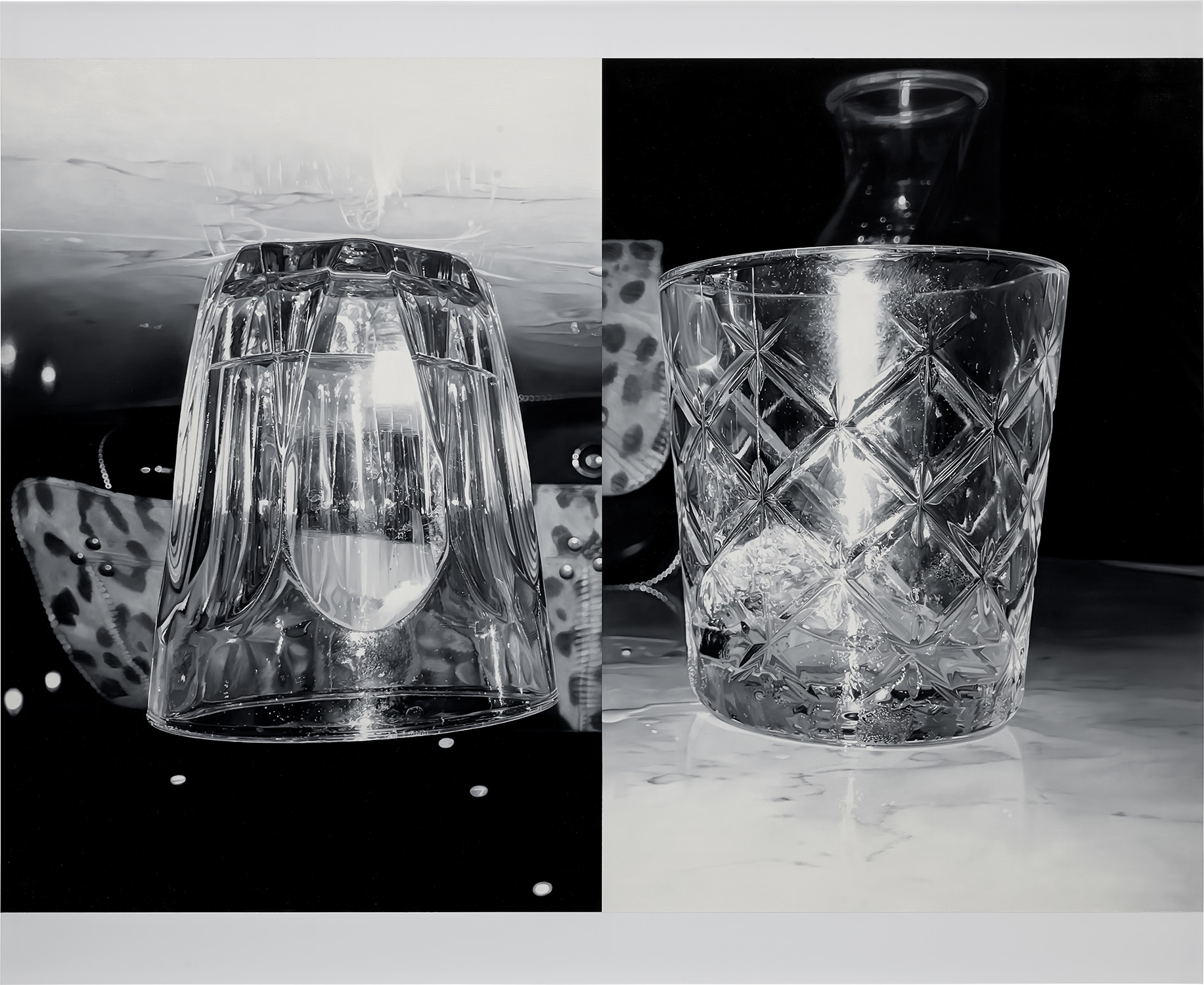
Double Glass, 2018
His formation as an artist was shaped by the visual culture of urban Britain, the layered, sometimes bruised, always vital fabric of cities and their inhabitants. Where many painters of his generation turned toward the conceptual or the internationally fashionable, White remained committed to the painted surface as a site of genuine feeling, a place where the lived experience of ordinary people could be honoured and examined with care. His technical practice is inseparable from his thematic concerns. White works predominantly in oil and varnish on birch plywood and acrylic faced panels, a choice of support that is itself quietly significant.
These are materials with a certain democratic honesty about them, workmanlike and unpretentious, yet capable of holding extraordinary luminosity when White applies his characteristic layering of oil and varnish. The varnished surface creates a depth and a glow that photographs struggle to capture, a quality that collectors who have seen his work in person consistently describe as revelatory. The works are often housed in artist made acrylic and Plexiglas boxes, a presentation that simultaneously protects and elevates, framing the quotidian subject matter within a kind of cool, contemporary shrine. The development of White's practice across the 2000s and into the 2010s reveals an artist of genuine intellectual ambition working through a sustained set of questions about urban life, memory, and what it means to be a person moving through the world.
James White
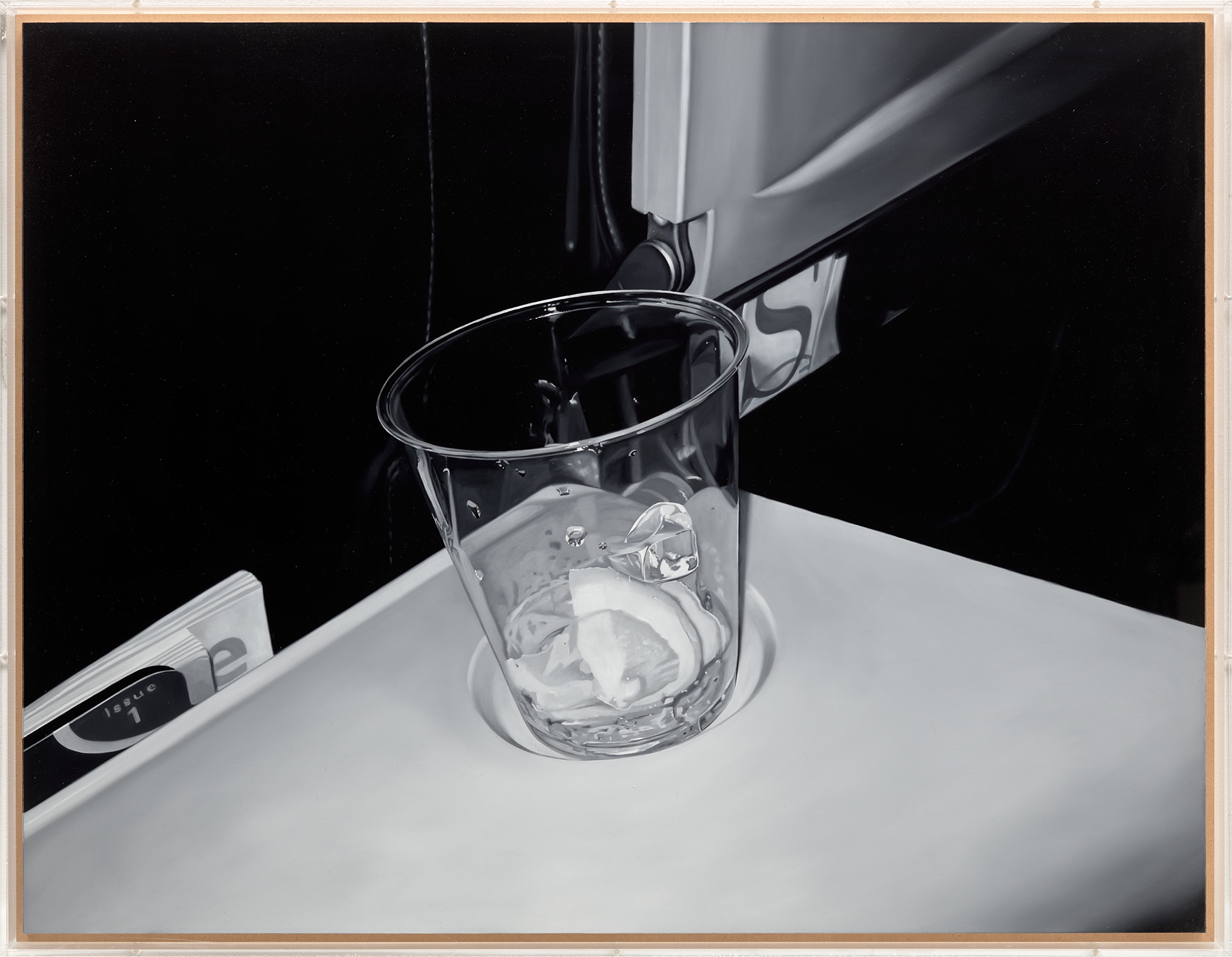
Relationships VII, 2008
Works from 2007 and 2008, including Take Away and Relationships VII, show an artist already in confident command of his visual language, using the specificity of mundane objects and human encounters as entry points into something far more expansive. Relationships VII, executed in oil and varnish on birch plywood, is among his most compelling achievements from this period: the title's numbering suggests a seriality, a commitment to returning again and again to the same territory, testing what painting can hold and what it must let go. Double Glass, made in 2018 and considered by many who follow his work to be among his finest single paintings, demonstrates the full maturity of his approach. Created in oil and varnish on an acrylic faced panel and presented in the artist's own Plexiglas box, the work takes what might be the most unremarkable of subjects and transforms it through White's mastery of surface and light into something genuinely moving.
There is an intimacy to it, a sense of time suspended, of a moment in a life held carefully in paint. It is the kind of work that rewards sustained looking, that gives more the longer one spends with it, and this quality of slow revelation is perhaps the defining characteristic of White's best paintings. For collectors, White represents a compelling opportunity at a moment when his work is gaining meaningful recognition within the British contemporary art market. His paintings have appeared at regional and mid tier auction sales across the United Kingdom, where they have attracted the attention of collectors drawn to the combination of technical accomplishment and emotional directness that distinguishes his work.
James White
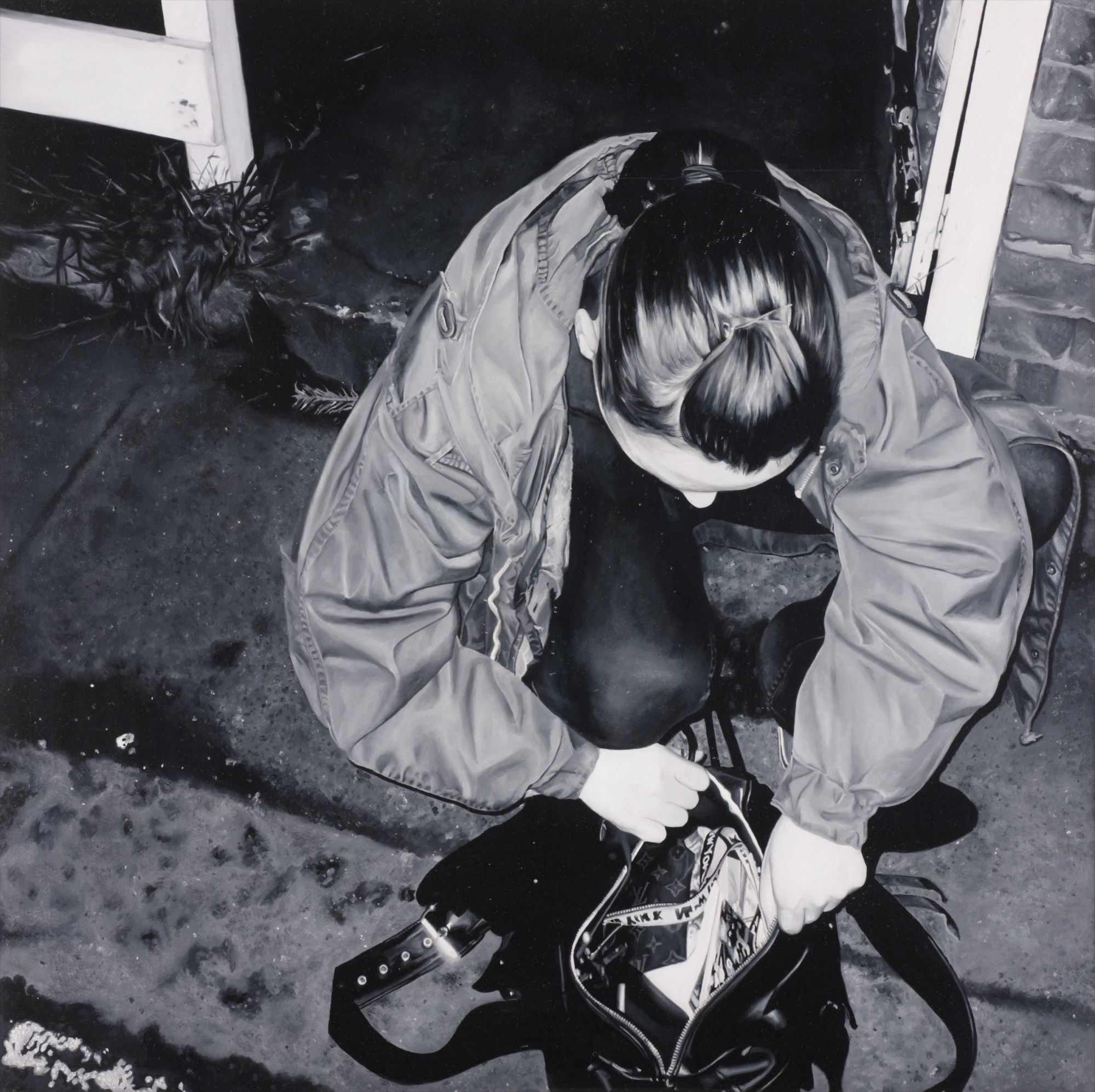
Bianca
The relatively modest scale of his market presence to date is, from a collecting perspective, an advantage: this is an artist whose work can still be acquired at prices that reflect genuine value, before the wider critical recognition that his practice deserves fully arrives. Works on birch plywood and acrylic faced panel in artist made frames and boxes are particularly worth seeking out, as the presentation speaks to a consistent and considered artistic vision. In terms of art historical context, White occupies an interesting position within British painting. His commitment to figurative and urban subject matter places him in conversation with painters such as Michael Andrews, whose quiet intensity and focus on the social fabric of British life feels like a genuine precedent.
There are also resonances with the School of London painters in his dedication to the figure and to paint itself as a carrier of meaning, though White's palette and his choice of subject locate him firmly in his own time and place. The tradition of painters who found in the everyday a subject worthy of serious artistic attention, from the kitchen sink painters of the 1950s onward, provides useful context, but White is not a nostalgist. His work is rooted in the present tense of contemporary British urban experience. What White offers, ultimately, is a form of witness.
James White
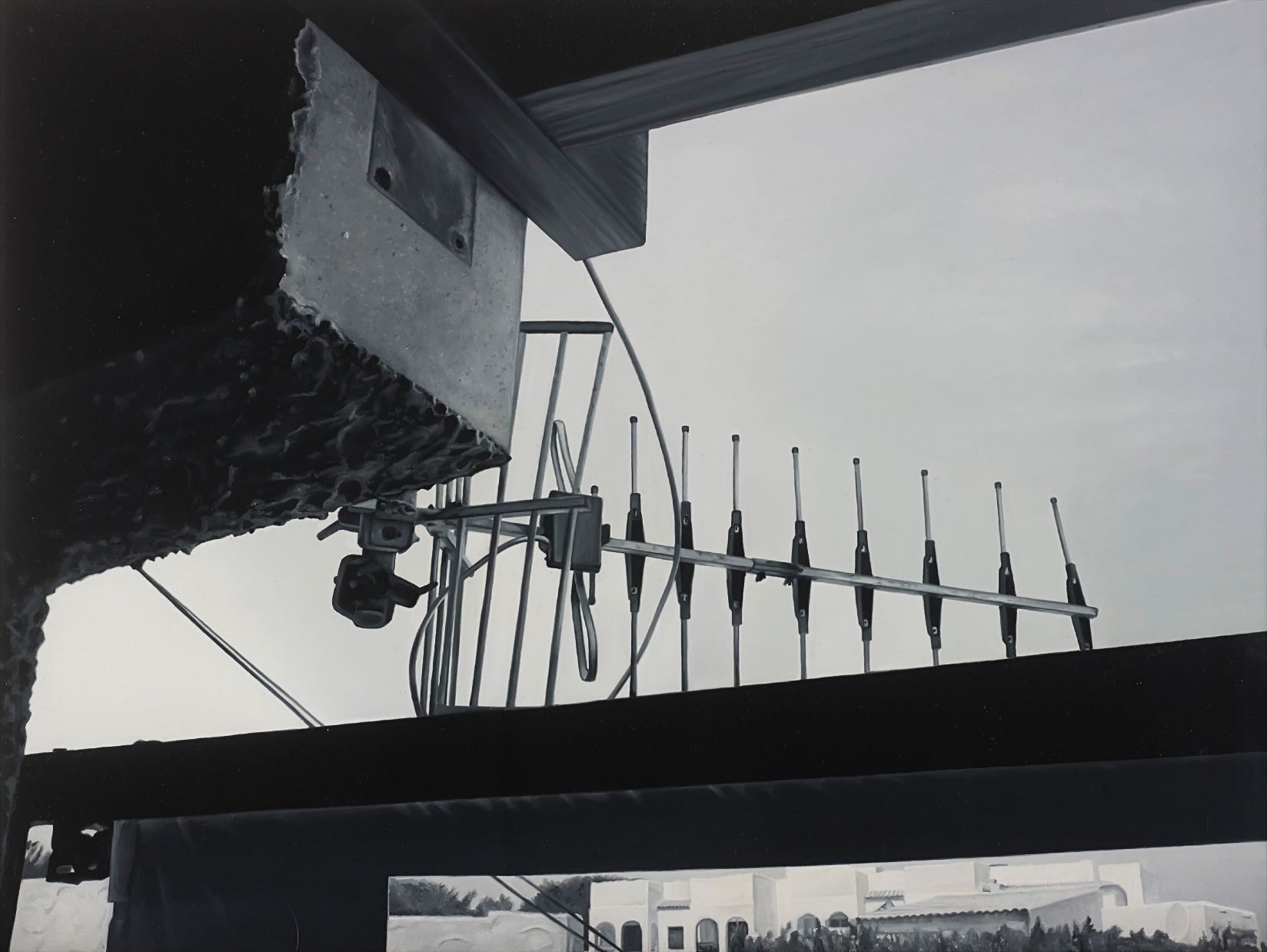
Aerial
His paintings ask us to pause before the things we normally pass without seeing, to find in the overlooked and the ordinary a beauty and a pathos that is inseparable from what it means to live a human life in a British city in the early twenty first century. That is not a small thing. The artists who teach us to see differently, who expand the territory of what painting can address and honour, are the ones who endure. James White is building a body of work that does exactly that, and collectors who recognise this now will find themselves, in time, grateful for their attention.