James Welling
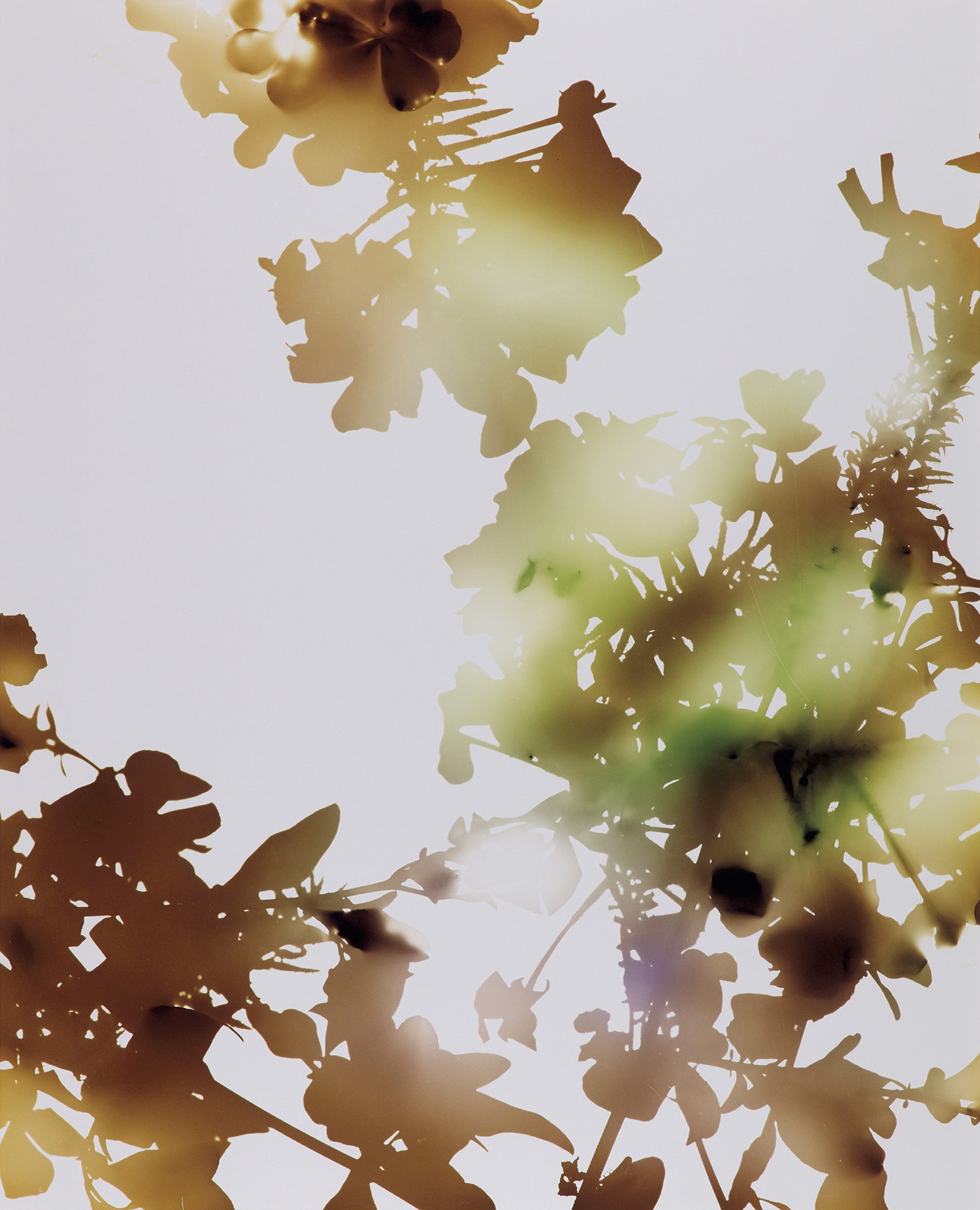
James Welling Makes Light Itself Sing
Artist Spotlight · The Collection Editorial
“I want the photographs to have some pictorial weight, some sense of being in the world.”
James Welling, interview with David Zwirner
In the autumn of 2022, the art world turned its full attention to a quietly radical body of work that had been building for decades. David Zwirner presented a significant exhibition of James Welling's photographs in New York, drawing collectors, curators, and critics who had long understood that Welling occupies a singular position in the history of contemporary photography. The show gathered works that moved fluidly between abstraction and representation, between deep historical process and urgent present tense, reminding viewers that few artists alive have pushed the medium so consistently and so beautifully into new territory. To stand in that gallery was to understand that Welling is not simply a photographer.
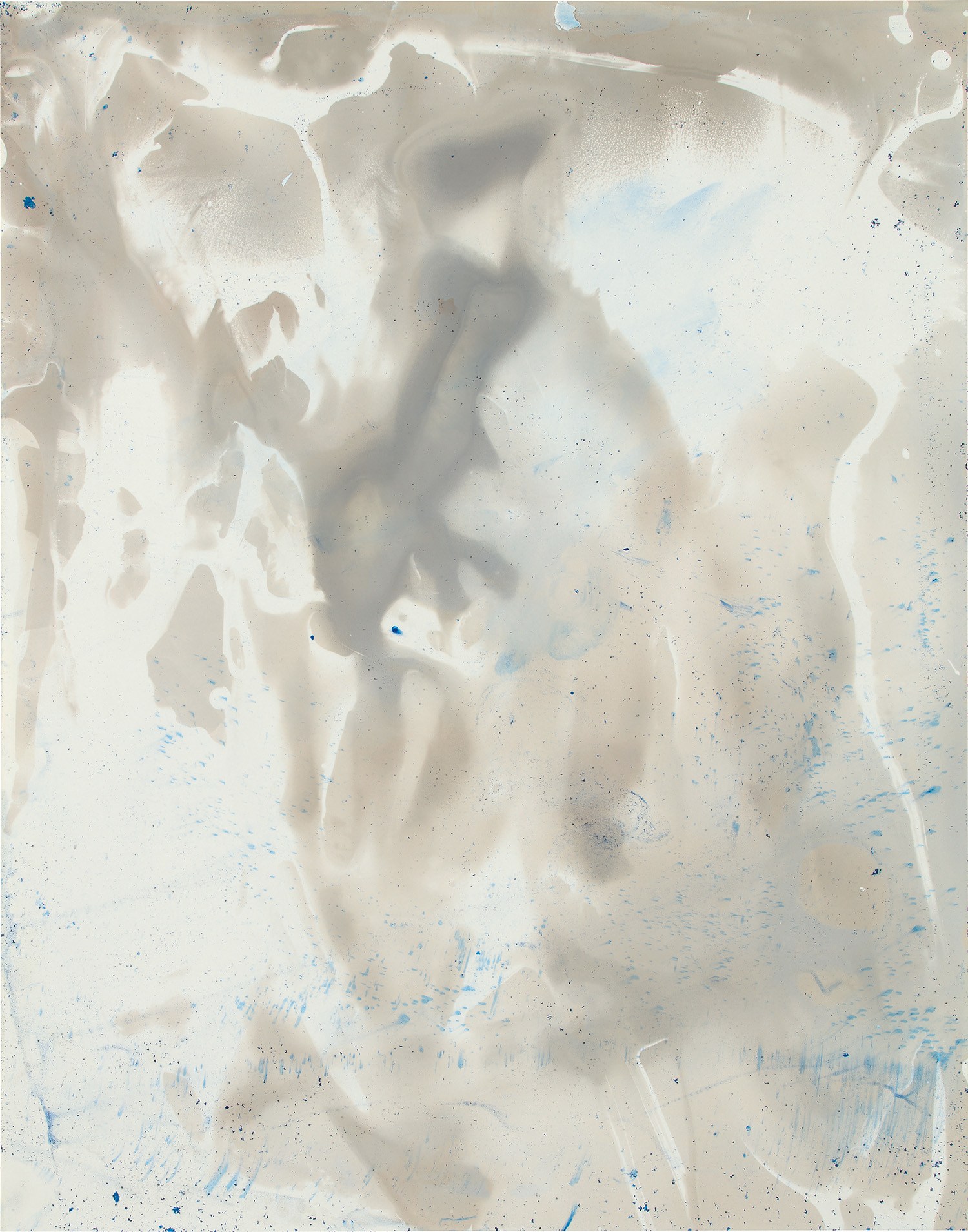
James Welling
Feb (10) c. 2014
He is a philosopher of light. Welling was born in Hartford, Connecticut in 1951, coming of age during a period when American art was undergoing seismic transformation. The conceptual movements of the late 1960s and early 1970s were dismantling received ideas about what art could be, and the young Welling absorbed these energies with particular intensity. He studied at Carnegie Mellon University before completing his MFA at the California Institute of the Arts in 1974, where he worked alongside some of the most rigorous conceptual thinkers of his generation.
CalArts in that period was a crucible of ideas, and Welling emerged from it with a deeply analytical orientation toward image making, one that would carry him through a career of remarkable breadth and discipline. The arc of Welling's artistic development is a study in productive restlessness. His early work in the late 1970s and 1980s engaged directly with the legacy of conceptualism, questioning what a photograph could mean and what it was permitted to show. The Drapes series, begun in the early 1980s, became one of his most celebrated early statements.
James Welling
40, 1984
Using lengths of aluminum foil and fabric draped in the studio, Welling created gelatin silver prints of extraordinary tonal richness that read simultaneously as abstract compositions and as photographs of something entirely real. The works confounded the eye in the best possible way, asking whether the image was a document or an invention, and ultimately suggesting that this distinction may not matter at all. His gelatin silver prints from this period remain among the most sought after works from the era of Pictures Generation adjacency, though Welling's concerns were always distinctly his own. Through the 1990s and into the 2000s, Welling expanded his practice in ways that demonstrated both technical virtuosity and genuine intellectual courage.
His engagement with the architecture of Philip Johnson's Glass House in New Canaan, Connecticut produced a sustained body of work that used the modernist landmark as both subject and lens. Photographing the Glass House across seasons and in radically varying light conditions, Welling made images that honored Johnson's transparent architecture while also transforming it into something more mysterious and more personal. The series became a meditation on visibility itself, on what glass reveals and what it withholds. During the same period, Welling undertook sustained research into New Bauhaus photography, producing works that revisited and reimagined the experimental photographic practices associated with László Moholy Nagy and his circle.
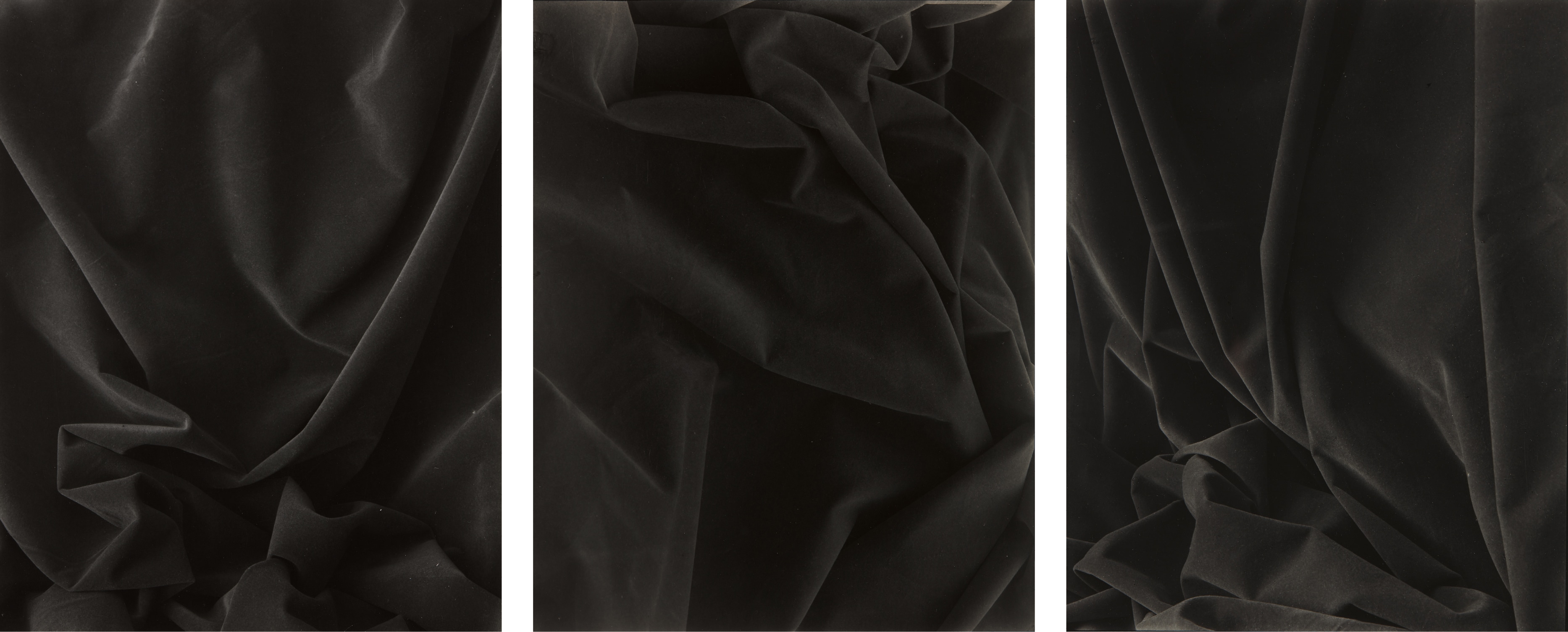
James Welling
Selected Images from Drapes
These investigations were not merely academic. They were living acts of creative inheritance. Among the works available to collectors today, several reward particularly close attention. The chromogenic prints mounted to Plexiglas, such as the work titled 013 from 2006, demonstrate Welling's mastery of color as both material and idea.
The mounting to Plexiglas is not simply a presentational choice. It creates a luminous quality in the image, as though light is emanating from within the photograph rather than falling upon its surface. The unique chemigram works, including the piece combining the chemigram process with applied acrylic paint from around 2014, represent another dimension of his practice entirely. Chemigrams are created through the direct manipulation of photographic paper with chemical agents, bypassing the camera altogether, and Welling's decision to introduce acrylic paint into this process produces images of startling physical presence.
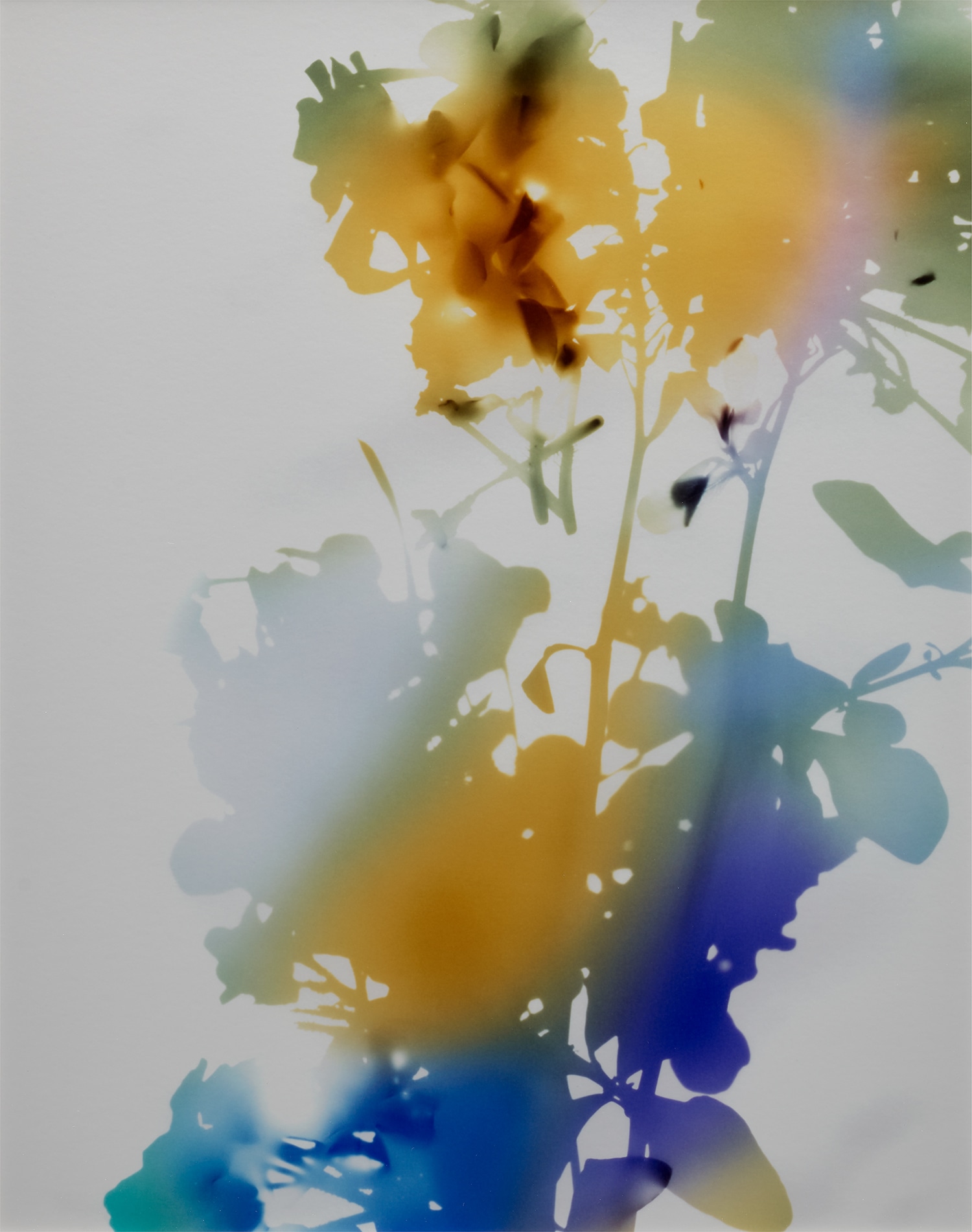
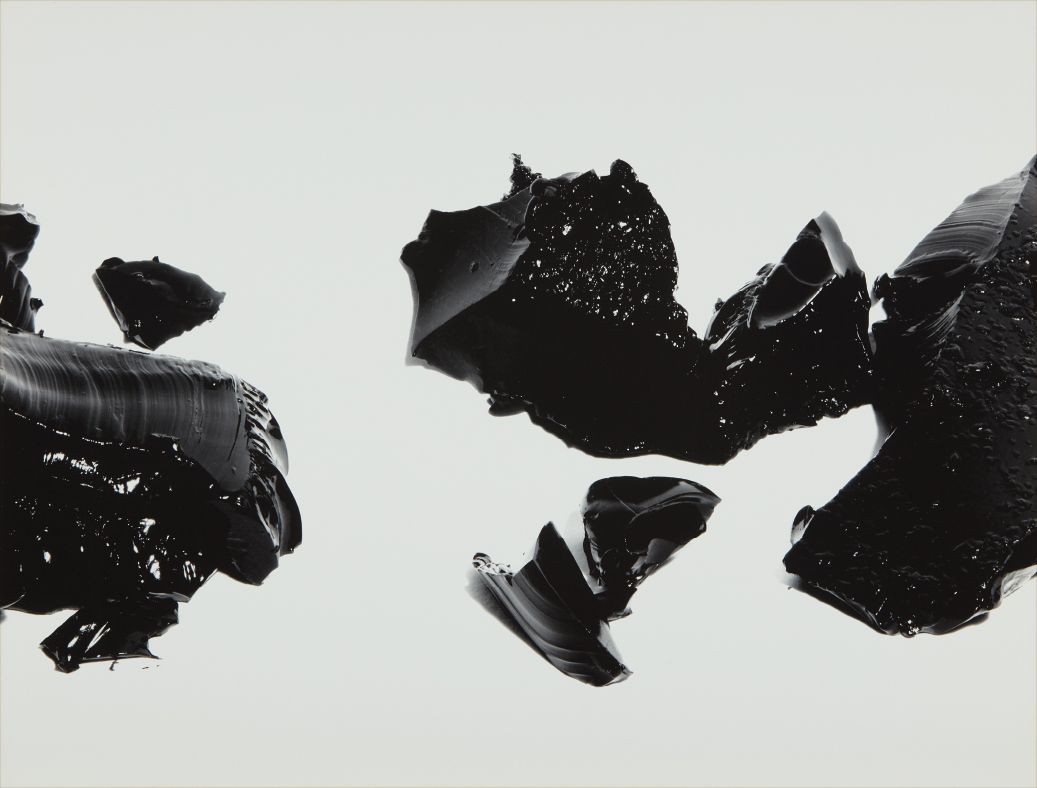
James Welling
001+7+a
These are works that collapse the boundary between photography and painting, and they feel urgently contemporary even as they invoke the most ancient conditions of image making. The Torso series, with chromogenic prints dating to 2005, brings the figure into the conversation with characteristic obliqueness, presenting the body as a further surface for the investigation of light and form. From a collecting perspective, Welling represents a rare convergence of critical seriousness and genuine visual pleasure. His works have entered the permanent collections of major institutions including the Museum of Modern Art in New York, the Whitney Museum of American Art, and the Guggenheim, which speaks to the depth of institutional confidence in his practice.
For private collectors, the range of his output offers meaningful entry points across different budgets and different sensibilities. The gelatin silver prints from the 1980s carry historical weight as documents of a pivotal moment in American photography, while the more recent chromogenic and chemigram works are at the height of their market relevance. Collectors drawn to artists who move between abstraction and representation, who take the history of their medium seriously without being imprisoned by it, will find in Welling a practice that rewards sustained engagement and deepens with time. Welling's place within the broader conversation of contemporary photography connects him to a constellation of artists who emerged from the conceptual ferment of the 1970s and have continued to evolve with remarkable integrity.
His concerns with process, with the materiality of the photographic object, and with the history of the medium place him in productive dialogue with artists such as Christopher Williams, whose investigations of photographic convention are similarly rigorous, and with the late work of figures like John Baldessari, under whom he studied at CalArts. There is also a meaningful connection to painters who think photographically, and to photographers who think pictorially, a liminal space that Welling has always inhabited with unusual confidence. His long tenure teaching at UCLA has furthermore shaped a generation of artists who carry his questions forward in new directions. What makes Welling matter now, as much as ever, is the quality of his attention.
In an era saturated with images produced at speeds that preclude reflection, his work insists on slowness, on process, on the radical act of looking carefully at what light does when it meets a surface. He has spent more than four decades asking what photography is, and his answer has never been simple or final. It has been, instead, a continuing series of beautiful propositions, each one opening onto the next. For collectors, for institutions, and for anyone who cares about the future of the photographic image, James Welling remains an essential presence.