James Siena
James Siena: Where Order Meets Beautiful Chaos
Artist Spotlight · The Collection Editorial
There is a particular kind of attention that James Siena's paintings demand. Standing before one of his densely worked enamel panels at Pace Gallery in New York, you feel it immediately: a pull toward the surface, an almost involuntary leaning in, as though the eye itself needs to trace every branching line, every iterated turn, every decision the artist made and then made again, slightly differently, across the entire field of the work. Siena has been one of the most quietly influential figures in American abstraction for decades, and in recent years institutions and collectors alike have returned to his work with fresh enthusiasm, recognizing in its systematic beauty something profoundly human and deeply necessary. Siena was born in 1957 and grew up immersed in the intellectual and cultural currents of postwar America.
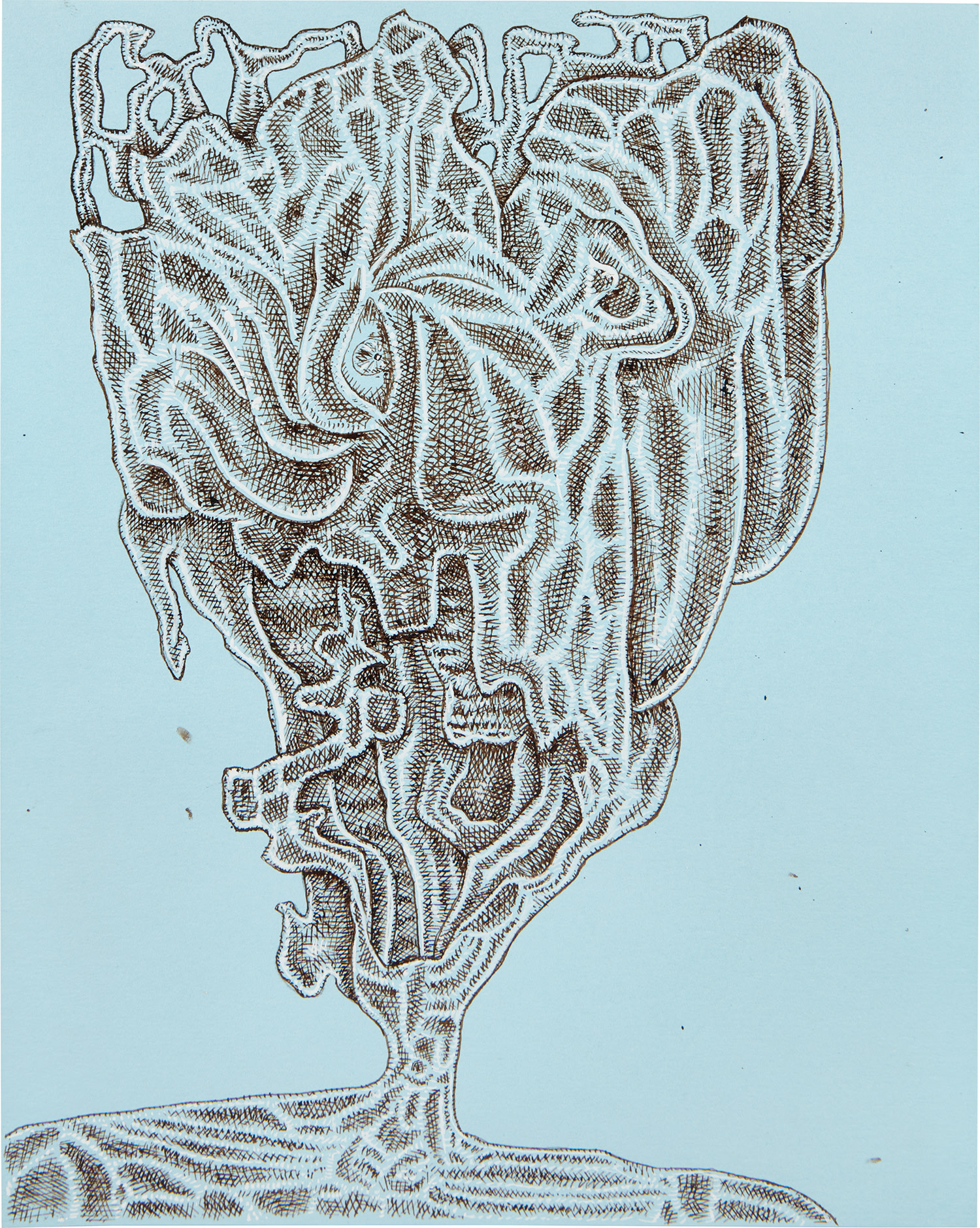
James Siena
Decaying Old Man
He studied at Cornell University, where he received his Bachelor of Fine Arts, an environment that placed him in conversation with rigorous traditions of both art history and structural thinking. That dual inheritance, the poetic and the logical, would become the defining tension of everything he made. Like many artists of his generation, he arrived in New York during a period when painting was being questioned from every direction, and his response was not to abandon its possibilities but to reinvent them from the inside out. His development as an artist through the 1980s and into the 1990s was marked by a patient, almost meditative process of rule making.
Siena began establishing what he called constraints for himself: self imposed systems that would govern how a mark could move across a surface, how a line could branch, how a pattern could grow or decay. These were not formulas in the cold, mechanical sense. They were more like musical scores, structures that made improvisation possible by defining its limits. The results were compositions that felt simultaneously ancient and utterly contemporary, recalling Islamic tilework, Celtic illumination, and the diagrams of theoretical mathematics all at once, while belonging unmistakably to the present moment.
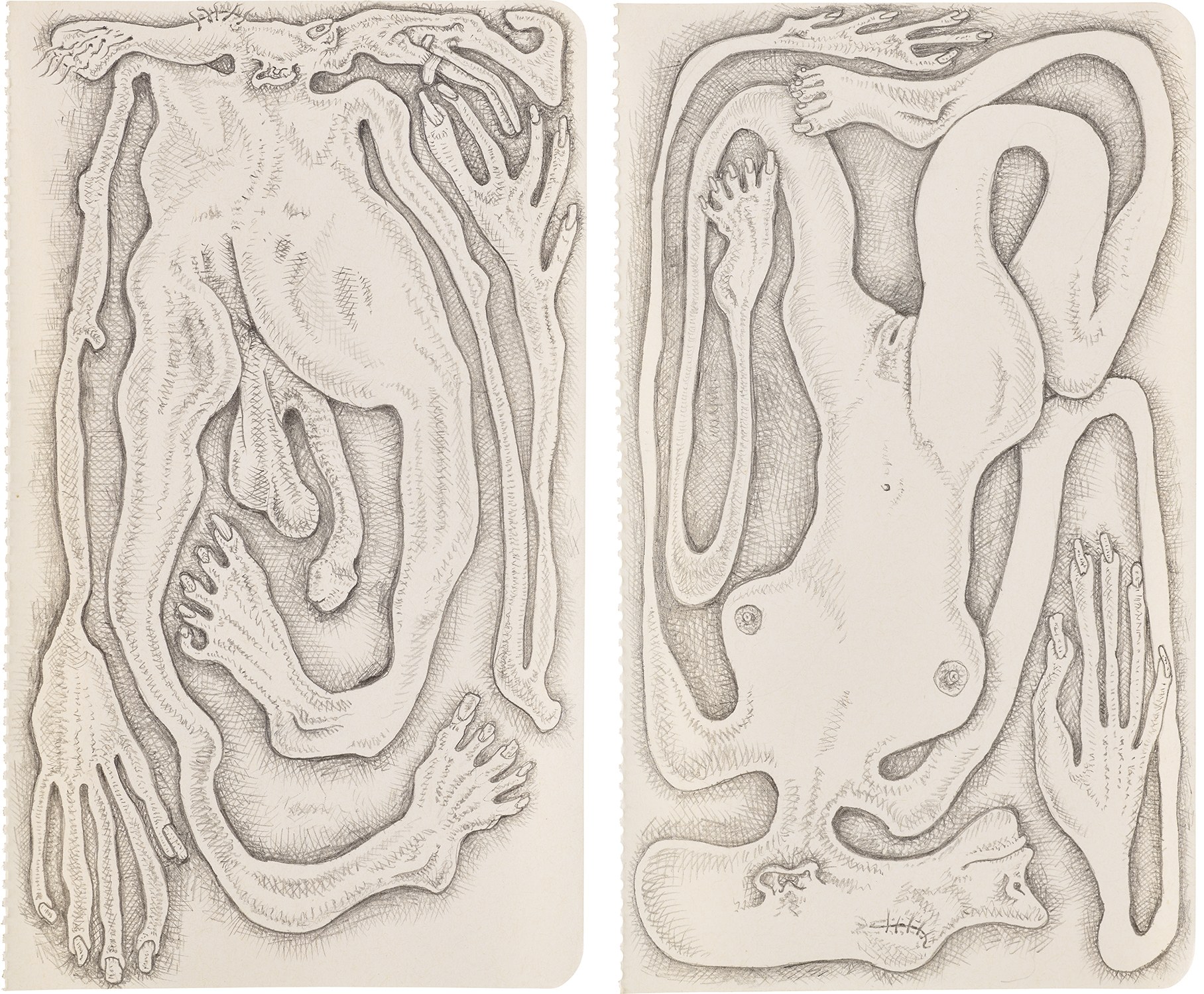
James Siena
Semi Flat Boy; and Semi-Flat Girl
The signature works that brought Siena to wider attention include paintings executed in enamel on aluminum, a combination of materials that gives his surfaces an almost jewel like luminosity. Works like Heliopolis, completed in 2005, exemplify his method at its most refined: dense, interlocking forms that seem to breathe and pulse, generated by iterative processes that the artist both controls and releases into something beyond pure control. His prints, produced in collaboration with master printers and publishers including Harlan and Weaver in New York, extend this sensibility into multiples of extraordinary complexity. Works such as the Nine Prints series demonstrate how his logic translates across media, with screenprints, lithographs, and Ukiyo e woodcuts each presenting new technical challenges that Siena absorbs into his practice with characteristic thoroughness.
His drawings on paper, including works in graphite and ink, reveal the intimacy of his process: the hand tracing its own thinking in real time, without the safety net of digital reproduction or mechanical aid. For collectors, Siena's work offers something rare in the contemporary market: intellectual substance paired with genuine visual pleasure. His pieces reward sustained looking in a way that very few works do, revealing new internal relationships the longer they are lived with. Works on paper, including prints published in numbered editions through Harlan and Weaver, represent an accessible entry point into a body of work that has steadily appreciated in critical and market terms.
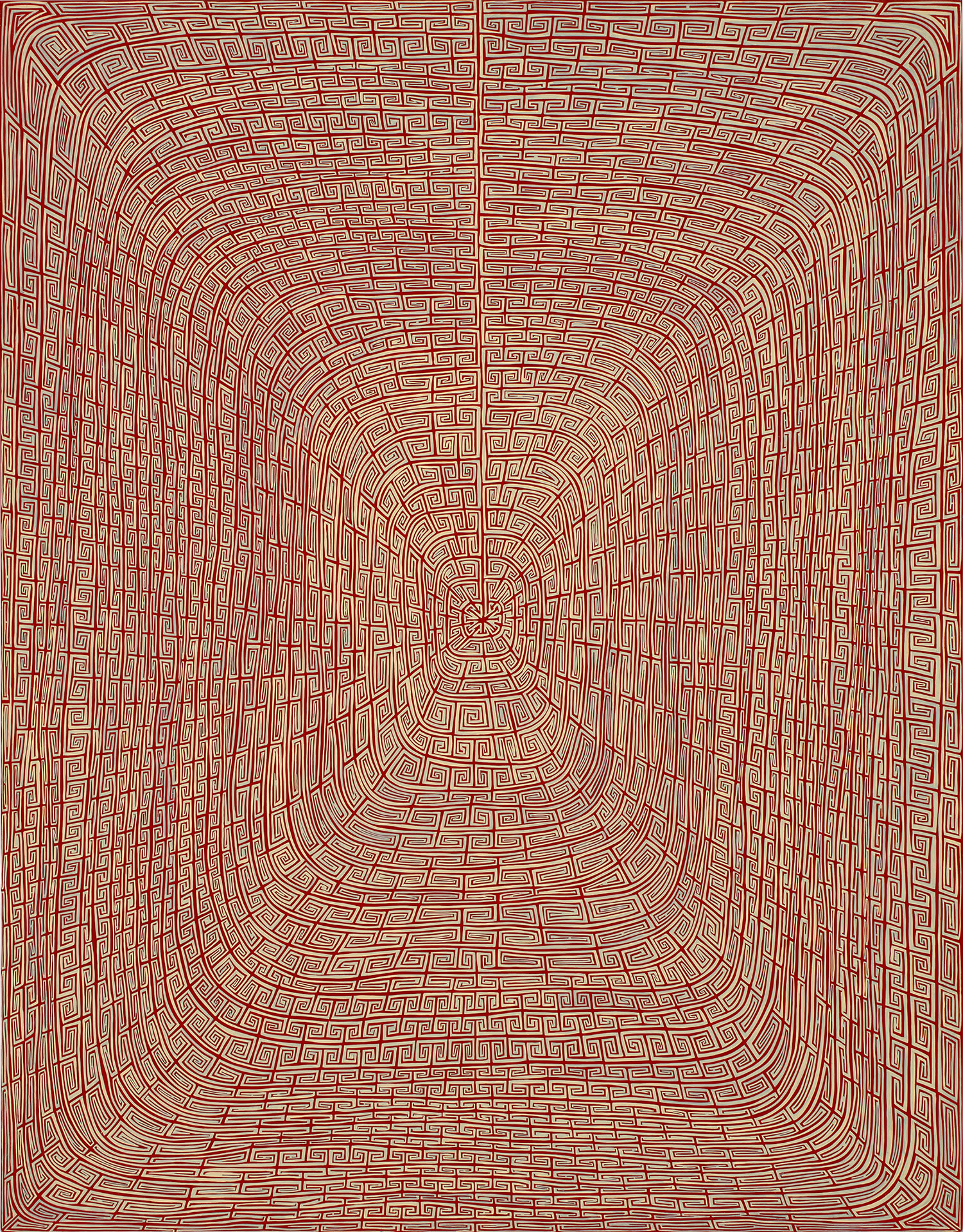
James Siena
Heliopolis, 2005
Unique works in enamel on aluminum and oil on panel command serious attention at auction and in private sales, with collectors drawn to the combination of conceptual rigor and craft mastery that Siena embodies. The variety within his output, from intimate graphite drawings to large scale painted panels to ambitious print portfolios, means that there is a Siena for many kinds of collection and many kinds of wall. Siena's place in art history is best understood alongside artists who similarly explored the generative possibilities of systems and repetition without sacrificing warmth or humanity. His work resonates with the legacy of Sol LeWitt, whose wall drawings established that instructions and outcomes could together constitute a complete artistic statement.
There are affinities too with Mel Bochner's investigations of counting and notation, with Agnes Martin's devotion to the meditative grid, and with the broader tradition of pattern and decoration that artists like Robert Zakanitch and Joyce Kozloff helped rehabilitate in the 1970s and 1980s. Yet Siena is not reducible to any of these influences. His work has its own distinct metabolism, a quality of organic restlessness within strict formal bounds that sets it apart. What makes Siena's practice feel urgent today is precisely this quality of the handmade within the systematic.
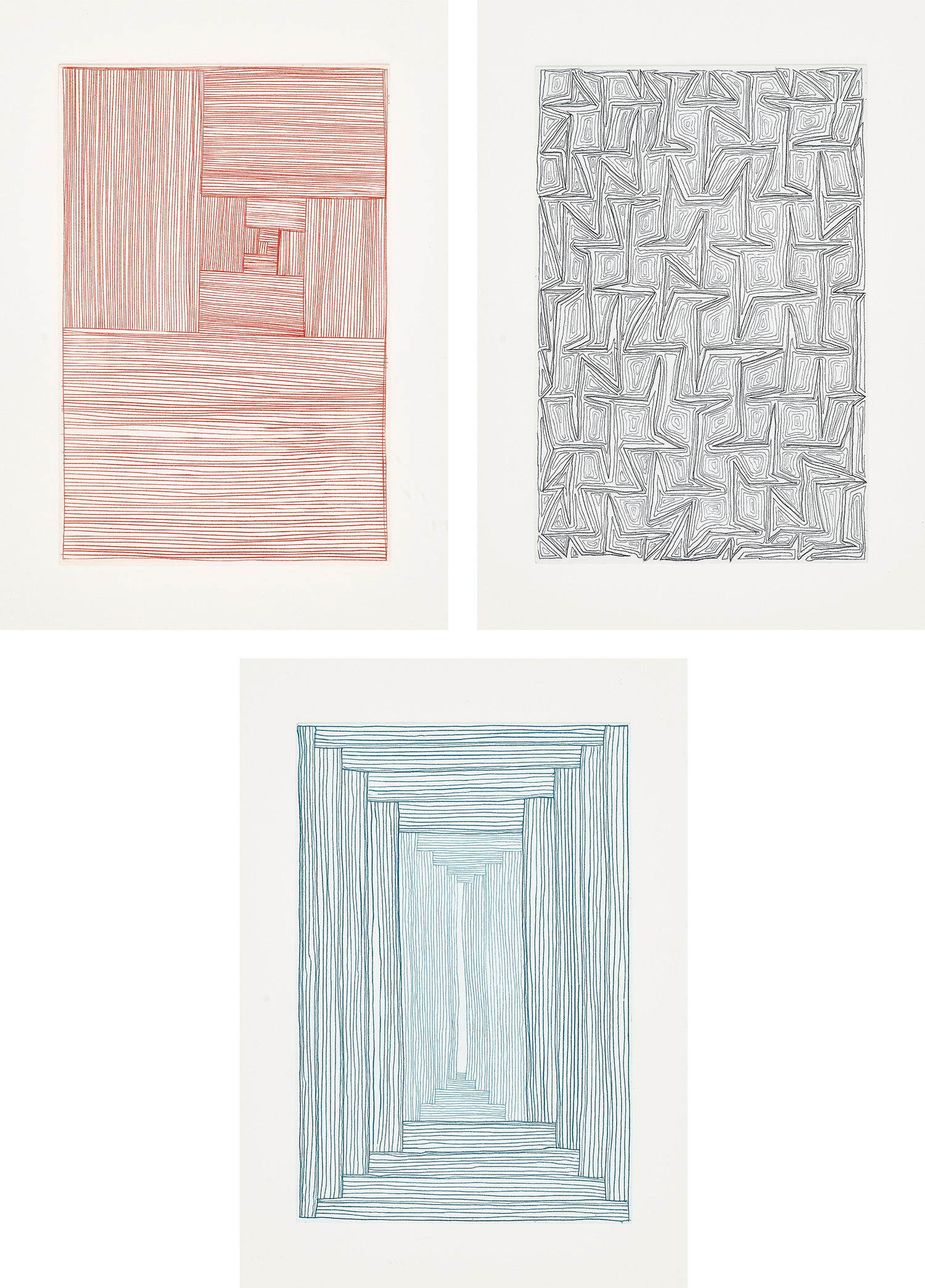
James Siena
Constant Window; Proton Saga; and 56787654, from Nine Prints
At a moment when algorithmic processes and artificial intelligence generate images by the billion, Siena's method of constructing his own algorithms by hand, of being both the programmer and the executor, takes on a new philosophical weight. He anticipated, in oil and enamel and ink, questions that now preoccupy the entire culture: what does it mean for a system to make something, and where does authorship live in that transaction? His answer, worked out over decades of patient studio practice, is that it lives in the body, in the accumulation of decisions that no external system can fully replicate. That answer feels more compelling now than ever, and it ensures that James Siena's contribution to contemporary art will continue to grow in meaning and stature with each passing year.