James Brooks
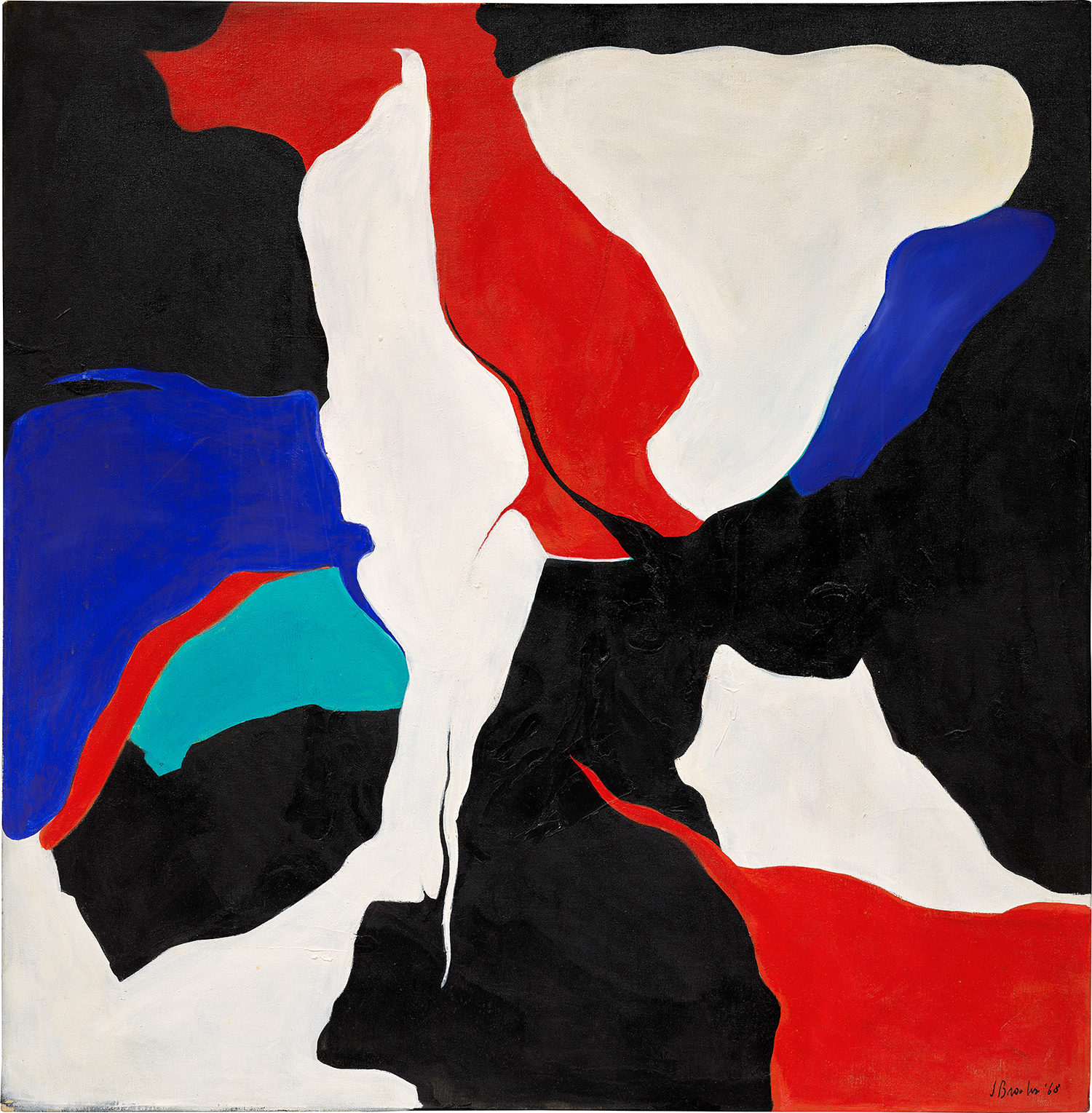
James Brooks: Color Breathes, Gesture Sings
Artist Spotlight · The Collection Editorial
There is a particular kind of painting that rewards patience, one that does not announce itself all at once but instead opens slowly, the way light shifts across a room over the course of an afternoon. James Brooks painted that way. His canvases, held in the permanent collections of the Whitney Museum of American Art, the Smithsonian American Art Museum, and major institutions across the United States, have a quality of sustained aliveness that continues to draw serious looking from collectors and curators decades after his death in 1992. In a moment when gestural abstraction is enjoying renewed critical and market attention, Brooks stands as one of its most quietly essential figures, a painter whose work bridges the raw energy of Abstract Expressionism with the luminous restraint of Color Field painting in ways that feel genuinely singular.
James Brooks
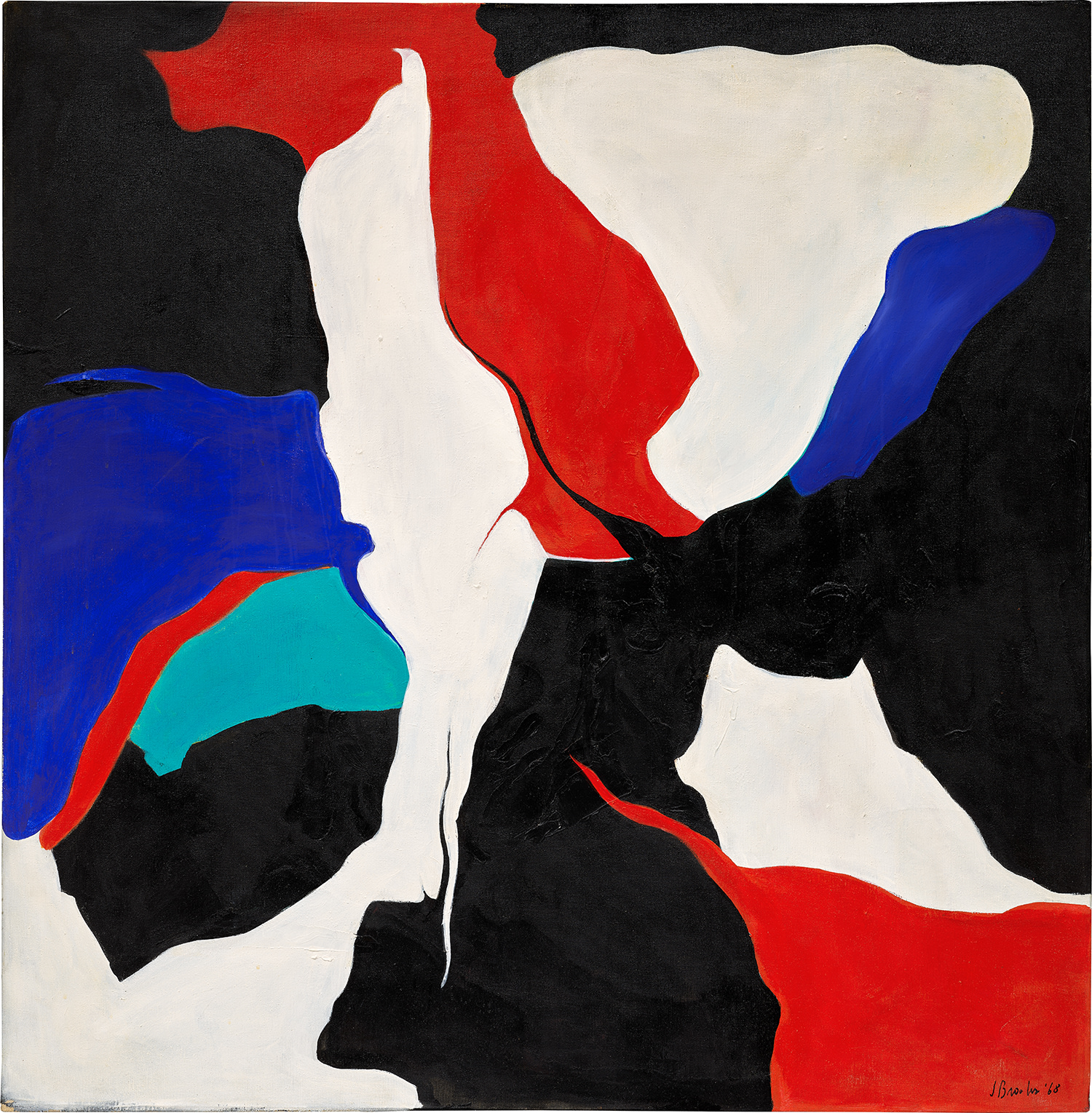
Blow, 1982
James Brooks was born in 1906 in St. Louis, Missouri, and came of age during a period of extraordinary ferment in American cultural life. He studied at the Dallas Art Institute before moving to New York, where he enrolled at the Art Students League in the late 1920s. New York in those years was a city absorbing modernist ideas from Europe while searching for an authentically American visual language, and Brooks was ideally positioned to participate in that search.
He worked under the Federal Art Project during the 1930s, which placed him alongside painters who would collectively reshape the course of American art, including his contemporaries within the downtown New York milieu that would later be called the New York School. One of the formative moments of Brooks's development came through his work on a large scale mural commission completed in 1942 for the Marine Air Terminal at LaGuardia Airport in New York. The project, titled Flight, stretched across a broad interior space and demanded a mastery of scale and compositional rhythm that would prove foundational to his later easel painting. Working at that scale forced Brooks to think about how gesture and form could carry across distance, how a painted mark could remain vital even when read from far away.
James Brooks
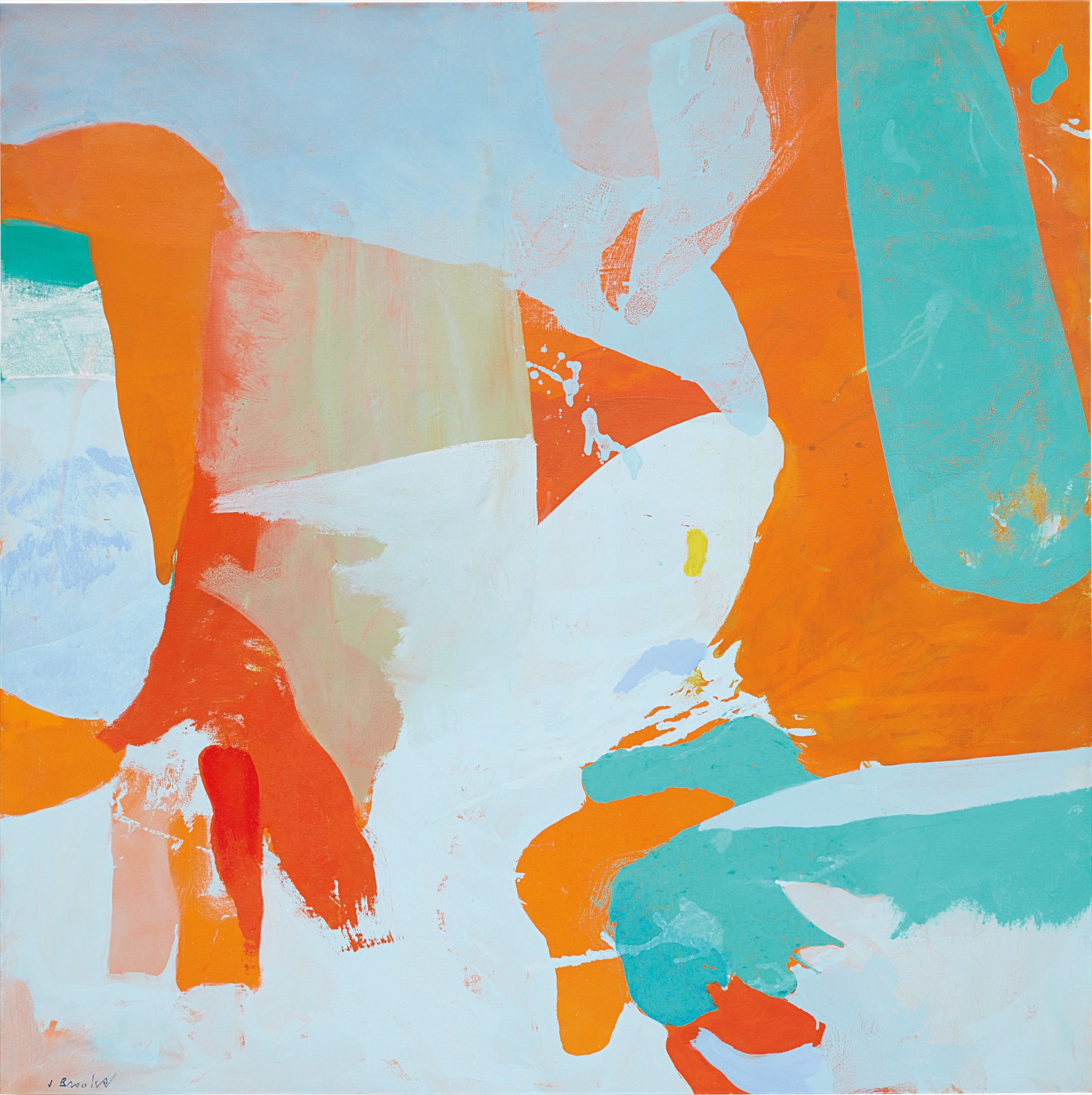
Fangle
That lesson never left him. When he returned to studio painting in the late 1940s and early 1950s, he brought with him an unusual confidence in the communicative power of large, deliberate, and improvisatory mark making. The true breakthrough in Brooks's practice came through a discovery that was, in the best sense, accidental. Working in the late 1940s, he noticed that paint soaking through the back of a canvas left traces that possessed an organic, almost geological beauty.
He began deliberately staining canvas as a primary technique, allowing pigment to bleed and pool and settle into the weave of the fabric before building further marks on top. This placed him in a conversation with painters like Helen Frankenthaler and, later, Morris Louis and Kenneth Noland, all of whom explored the stain as a means of releasing color from the tyranny of outline and contour. Yet Brooks was never purely a colorist in the manner of the Washington Color School painters. He retained a fierce commitment to the gestural mark, to the evidence of the hand, and it is this synthesis that gives his mature work its distinctive character.
James Brooks
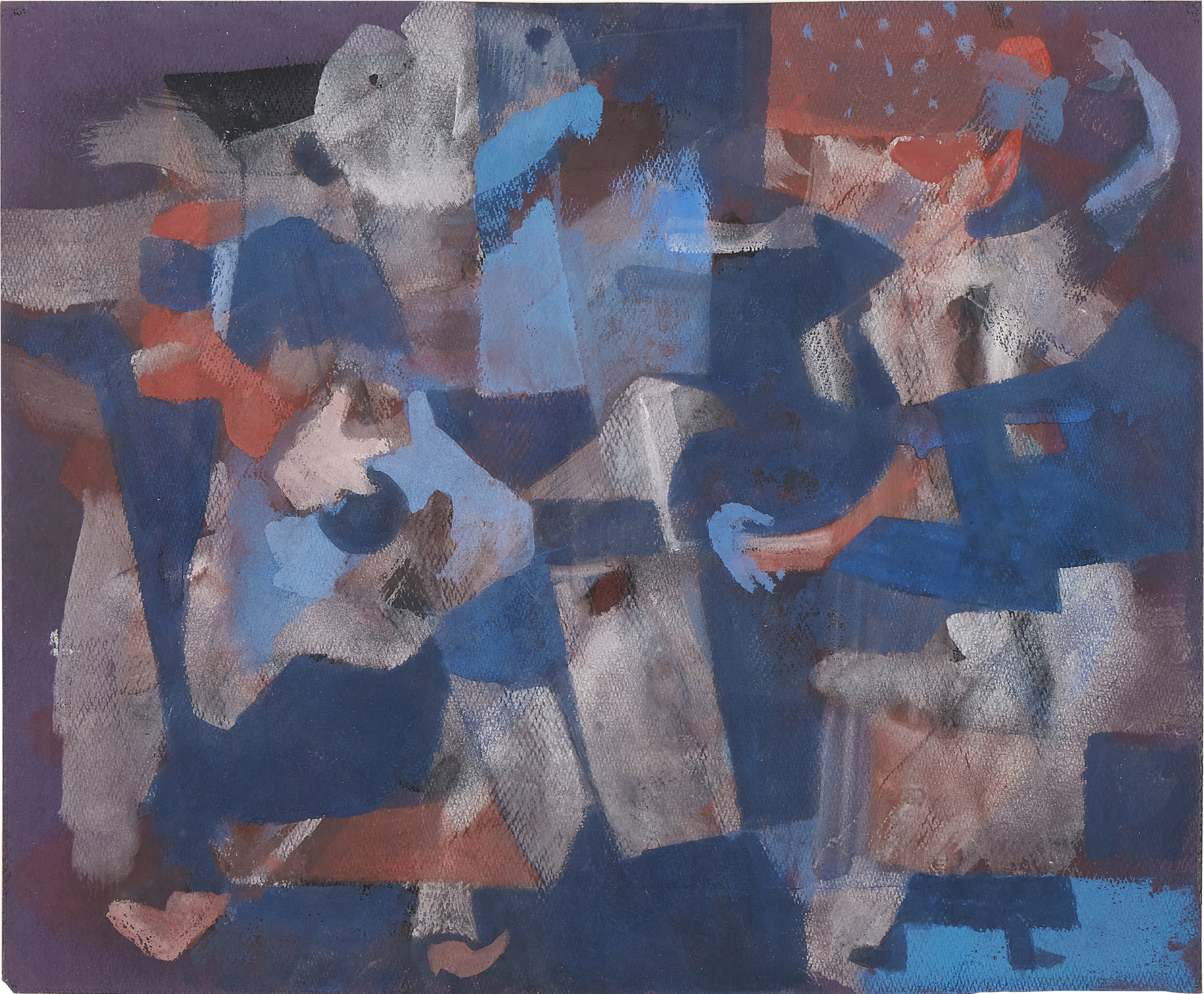
Untitled, 1946
The works available through The Collection offer a remarkable cross section of Brooks's long and productive career. Untitled, a gouache on canvas paper from 1946, belongs to the period when Brooks was actively digesting the lessons of Surrealist automatism alongside the more structural concerns inherited from Cubism. It is the kind of early work that collectors of 20th century American art prize for its documentary value as much as its intrinsic beauty. Noran from 1967 and the two 1972 works, Ehr and Mark, represent the mature Brooks in full command of his acrylic practice, with that characteristic layering of color that feels simultaneously accidental and inevitable.
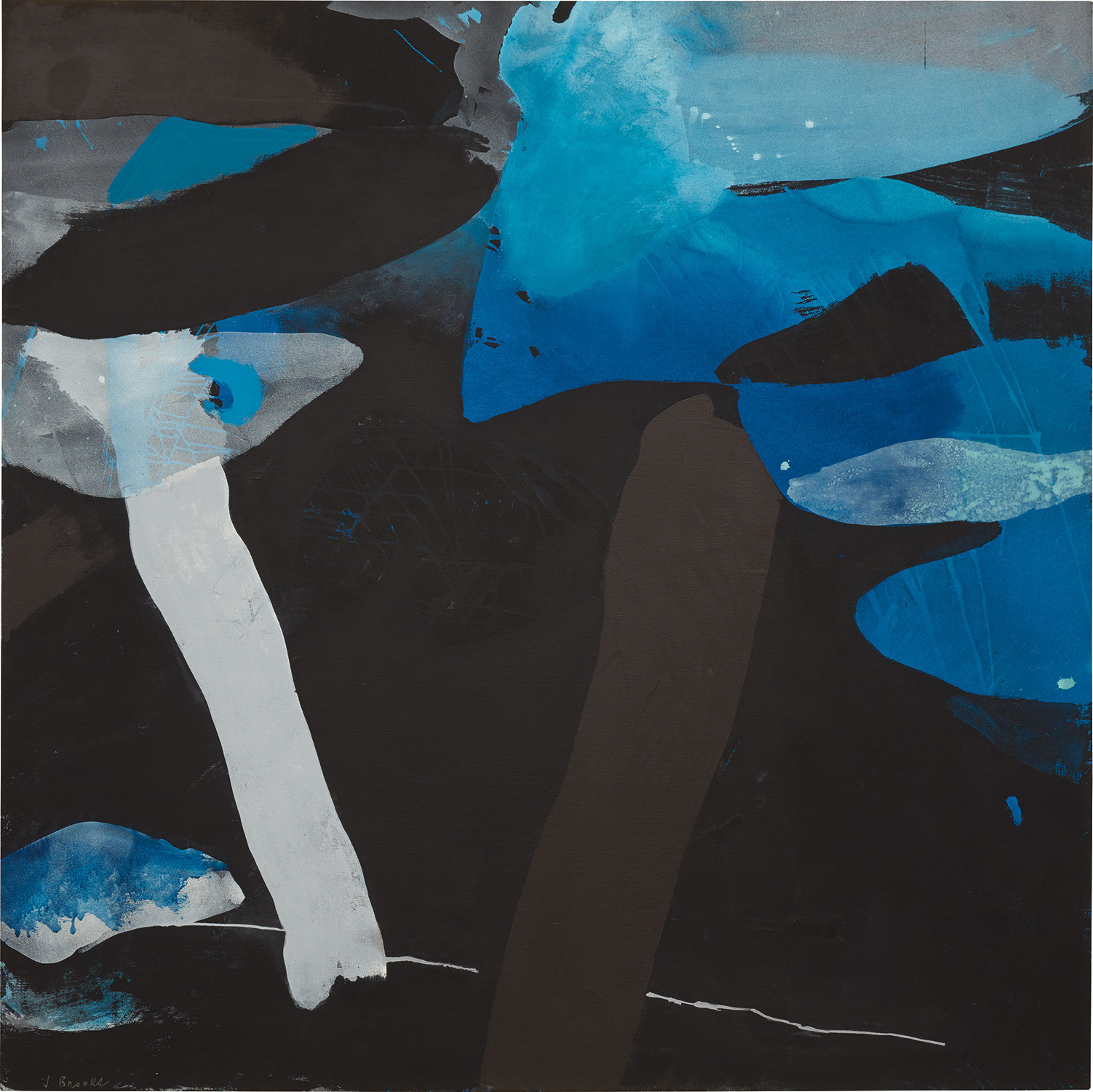
Blow, an oil on canvas from 1982, demonstrates how little Brooks's appetite for risk diminished as he aged. Well into his seventies he was still making paintings that surprise, that push against any temptation toward formula. From a collecting perspective, Brooks occupies an advantageous position in the market. He is historically significant and institutionally validated, yet he has never attracted the auction frenzy that surrounds a Pollock or a de Kooning, which means that works of genuine quality remain accessible to collectors who are motivated by connoisseurship rather than spectacle.
James Brooks
Ehr, 1972
Works on paper and works in gouache from the 1940s represent a particularly compelling point of entry, offering a window into a pivotal decade in American art at a price point that reflects Brooks's relative underrecognition rather than his actual stature. Larger acrylic canvases from the 1960s and 1970s, the years of his most sustained productivity, reward those with the wall space to live with them properly. Color and surface texture are the two qualities to attend to most closely: the best Brooks canvases have a luminosity that photographs rarely capture. To understand Brooks fully it helps to situate him within the overlapping circles of mid century American abstraction.
He was a genuine peer of Franz Kline, Philip Guston, and Bradley Walker Tomlin within the Abstract Expressionist generation, sharing their commitment to process and their belief that painting could be a form of direct emotional and intellectual address. At the same time his investigation of stained and soaked color places him in genuine dialogue with Frankenthaler and the Color Field painters who followed. He is sometimes described as a bridge figure between these two tendencies, which is accurate but risks underselling his originality. Brooks was not simply a synthesis of forces around him.
He was a painter with a genuinely personal visual language, one that took time to arrive at and proved durable enough to sustain a career of more than four decades. James Brooks died in East Hampton, New York, in 1992, having lived long enough to see the critical reputation of his generation rise, fall, and begin to rise again. His legacy is one of quiet integrity, of a painter who trusted the process of making over the demands of market or fashion. There is something instructive in that for collectors today.
The artists who prove most enduring are rarely those who made the most noise in their moment. They are the ones whose work continues to repay attention, to reveal new things upon each encounter. Brooks is emphatically that kind of painter, and the pleasure of living with his work is cumulative, deepening over time in the manner of the very best art.
Explore books about James Brooks