Jacques Lipchitz
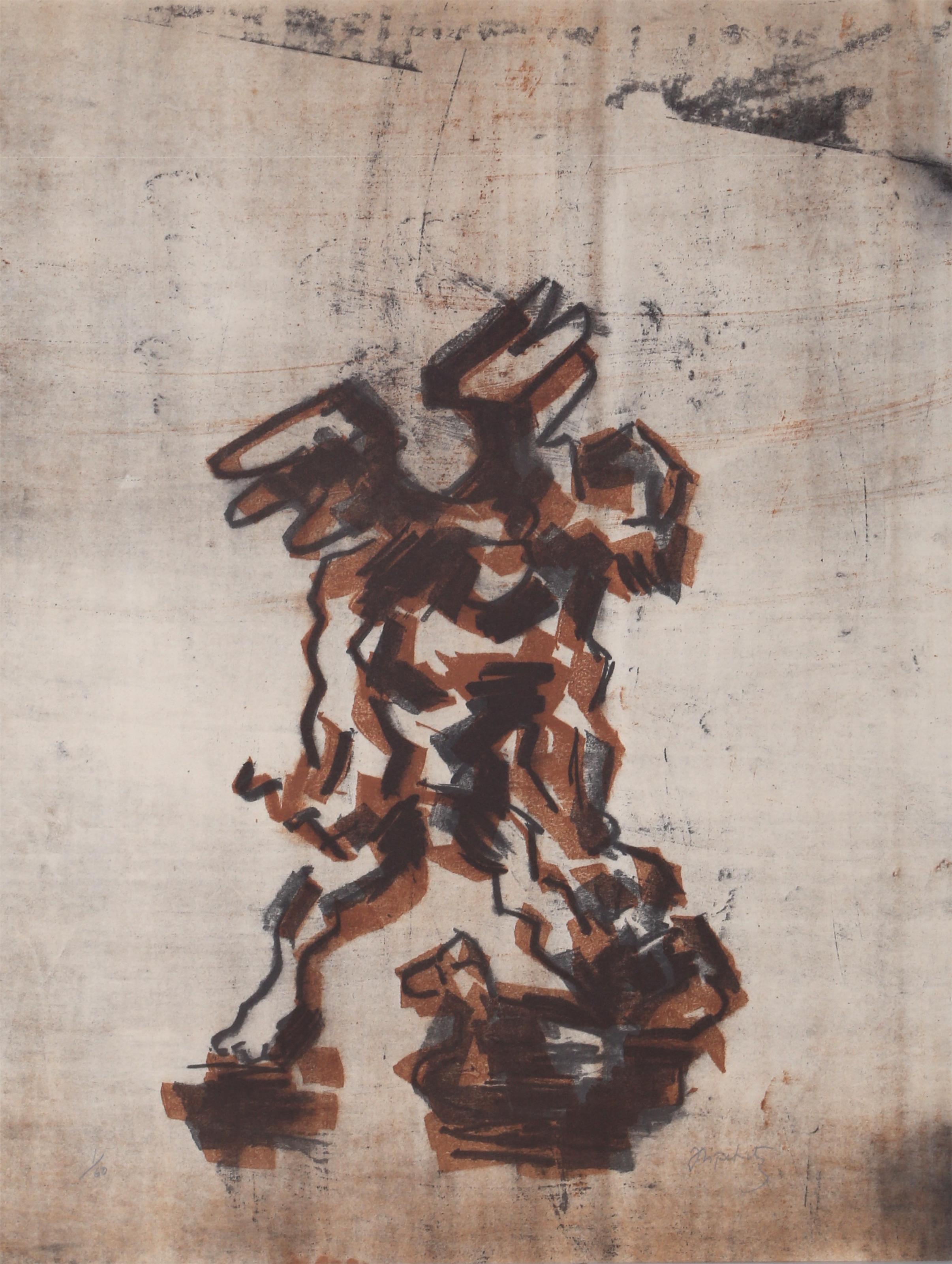
Jacques Lipchitz: The Sculptor Who Bent Space
Artist Spotlight · The Collection Editorial
“My sculpture is the diary of my life. Whoever understands it understands me.”
Jacques Lipchitz, quoted in "My Life in Sculpture", 1972
There is a moment, standing before a bronze by Jacques Lipchitz, when the eye refuses to settle. The forms push outward and fold inward simultaneously, casting shadows that seem to belong to a different object entirely. It is a sensation that no photograph quite captures, and it is precisely why institutions from the Tate Modern to the Museum of Modern Art in New York have continued to return to his work in their permanent collection rotations and special presentations. When the Nasher Sculpture Center in Dallas devoted renewed attention to his Cubist period, it confirmed what serious collectors have quietly understood for decades: Lipchitz was not a footnote to Cubism but one of its essential architects, and the only sculptor who truly cracked the code of translating that revolutionary visual language into three dimensions.
Jacques Lipchitz
Sacrifice of Isaac
Chaim Jacob Lipchitz was born in 1891 in Druskininkai, a small spa town in what was then the Russian Empire and is now Lithuania. His father was a building contractor, and there is something fitting in that inheritance: Lipchitz would spend his career thinking about mass, structure, and the way volumes hold together or pull apart. Against his father's wishes, he left for Paris in 1909 at the age of eighteen, enrolling at the École des Beaux Arts and later studying at the Académie Julian. Paris in that era was the undisputed center of the art world, and the young Lithuanian threw himself into it with the intensity of someone who had traveled a very long way to be exactly where he was.
By 1913, the trajectory of his life had changed irrevocably. He entered the orbit of the Cubist circle, meeting Juan Gris, Pablo Picasso, and Diego Rivera, among others. These were not casual acquaintances but genuine intellectual exchanges, conversations about form and perception that would echo through everything Lipchitz made for the next sixty years. Where painters like Picasso and Braque were breaking objects into facets across a flat canvas, Lipchitz posed the harder question: what does that fragmentation look like when the object itself occupies real space?
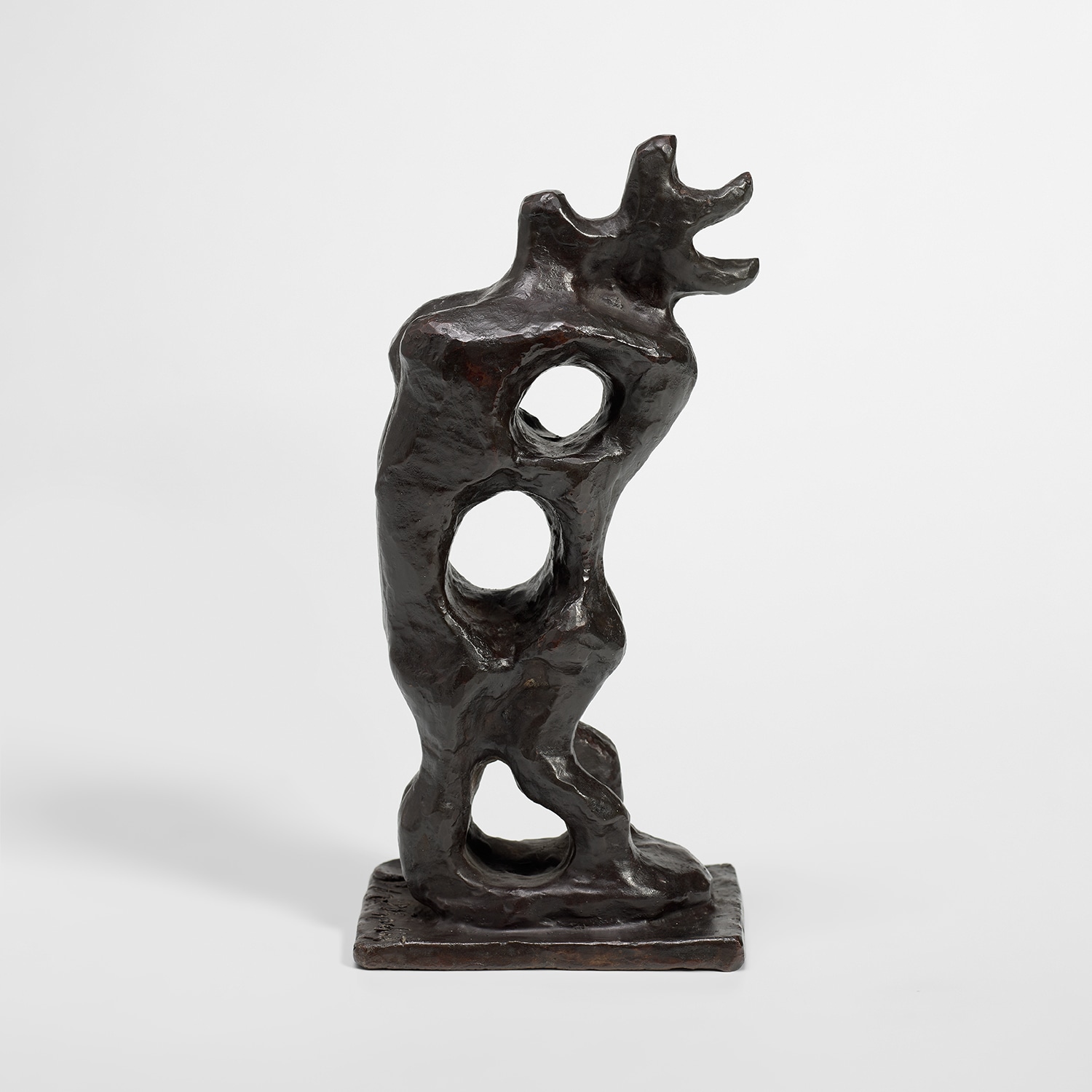
Jacques Lipchitz
Encounter, 1929
His answer arrived in the sculptures of the mid 1910s, works that dismantled the figure into interlocking planes and angular voids, transforming the human body into something that felt simultaneously ancient and radically modern. His development moved through several distinct phases, each one building on the tensions of the last. The early Cubist sculptures, including works like "La Rencontre" from 1913 and the remarkable "Personnage demontable" of 1915, a work constructed from assembled wood elements, showed his willingness to treat the sculpture itself as a problem to be solved rather than an image to be rendered. By the 1920s, with bronzes like "Arlequin à la mandoline" and "Homme assis," he had developed a personal grammar of interlocking curved and angular forms that was recognizably his own, distinct from anything happening in painting.
“I have tried to make my sculpture talk. Not to explain, but to speak directly to the senses.”
Jacques Lipchitz
The "transparent sculptures" he began in the late 1920s were perhaps his most audacious technical leap: open, lattice like bronzes in which negative space became as expressive as the metal itself. "Encounter" from 1929 belongs to this extraordinary moment and stands as one of the most spatially inventive works in twentieth century sculpture. The 1930s brought a deepening engagement with mythology and biblical narrative that would define the second half of his career. Works like "Jacob and the Angel" from 1932 and later explorations of the "Sacrifice of Isaac" theme drew on his Jewish heritage and on a sense of spiritual urgency that intensified as the political situation in Europe darkened.
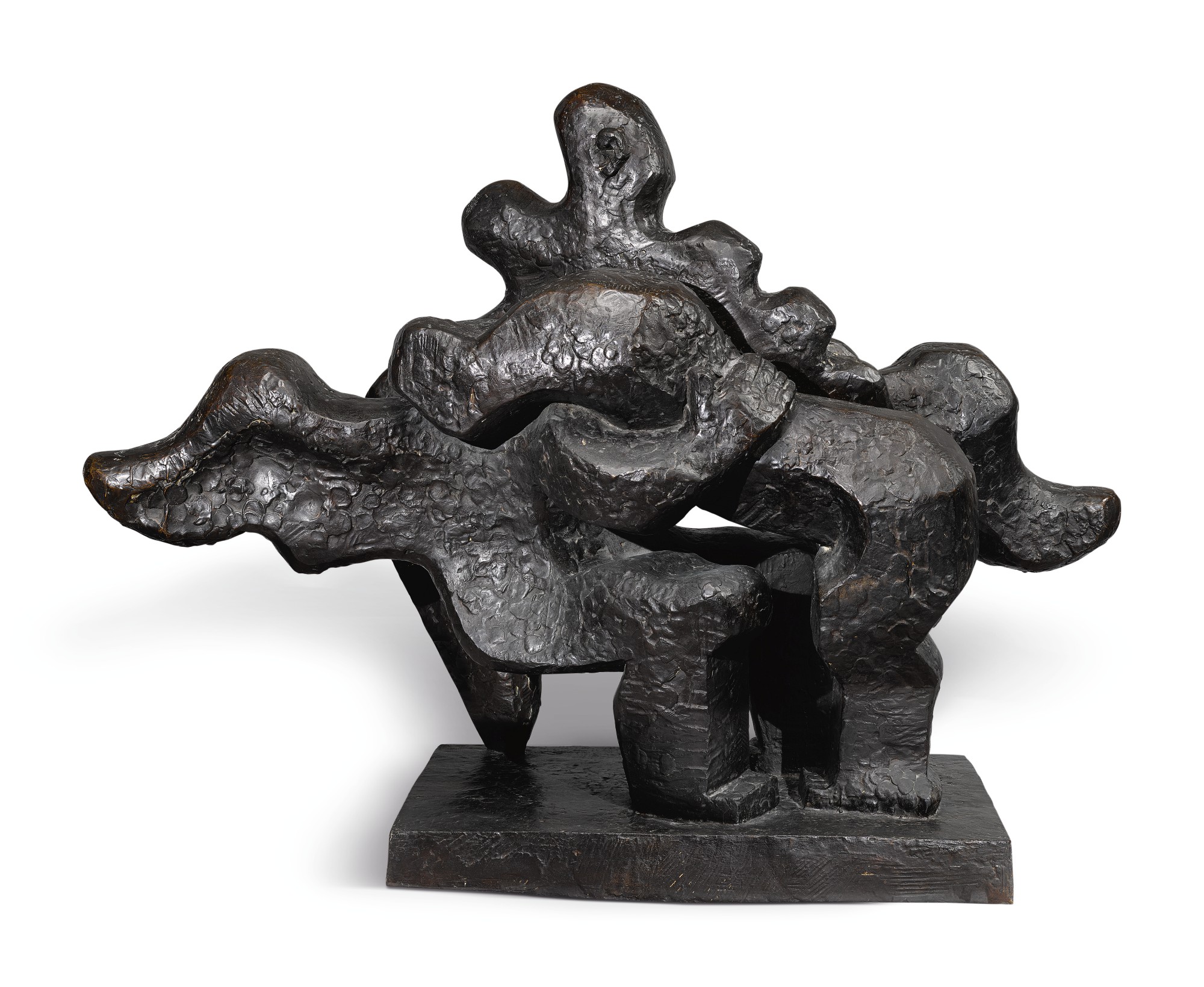
Jacques Lipchitz
Jacob and the Angel, 1932
He fled the Nazi occupation of France in 1941, eventually settling in the United States, first in New York and later in Hastings on Hudson. Rather than diminishing his output, the displacement seemed to expand his ambitions. His American work grew in scale and emotional force, the forms becoming more baroque and turbulent, wrestling with themes of sacrifice, struggle, and redemption with a directness that earlier work had approached more obliquely. The "Study for Pastorale" from 1933, rendered in tempera and graphite on panel, offers a rare window into how he moved between media and worked through ideas before committing them to bronze, a reminder that his practice was deeply thoughtful and iterative.
For collectors, Lipchitz presents one of the most intellectually rewarding entry points into early modernist sculpture. His bronzes are cast objects with documented provenance that often traces back to Parisian foundries and well established estate records, giving buyers a level of confidence that is genuinely reassuring. Works from the Cubist period of the 1910s and 1920s command the strongest interest at auction, with major examples appearing regularly at Christie's, Sotheby's, and Bonhams in New York and London. Smaller bronzes and works on paper, including the lithographs and panel studies that appear alongside his sculpture, offer more accessible collecting opportunities without sacrificing the depth of engagement his work rewards.
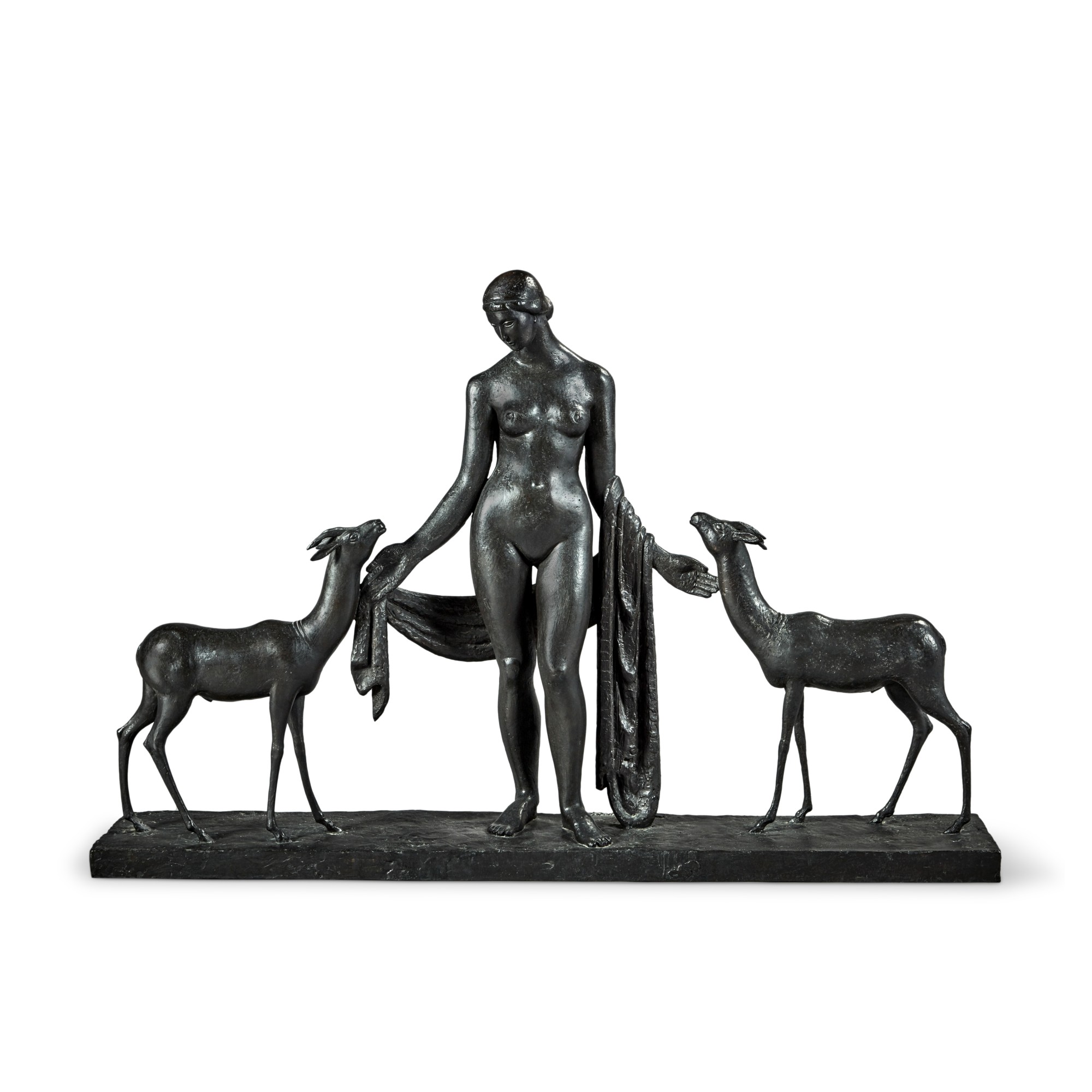
Jacques Lipchitz
Femme et gazelles, 1911
A Lipchitz bronze rewards repeated looking in a way that very few objects do: the work changes with the light, with the hour, and with the knowledge the viewer brings to it. To understand Lipchitz fully, it helps to consider him in relation to the constellation of sculptors who were also grappling with modernism's possibilities in the first half of the twentieth century. Constantin Brancusi was reducing form to its essential silence at the same moment Lipchitz was fracturing it into dialogue. Henri Laurens was the sculptor most closely aligned with his Cubist circle in Paris, and the two shared both influences and important collectors.
Ossip Zadkine, another Eastern European émigré working in Paris, explored similar themes of fragmentation and myth. What distinguishes Lipchitz from all of them is the sheer range of his ambition: he was willing to be Cubist, then expressionist, then monumental, following the work wherever it needed to go rather than settling into a signature style that the market could easily categorize. His legacy is one of restless formal intelligence and hard won emotional depth. At a moment when collectors and institutions alike are revisiting the full breadth of twentieth century sculpture, Lipchitz stands as a figure whose reputation has only grown more secure with time.
He was not interested in elegance for its own sake, nor in difficulty as a pose. He believed that sculpture could carry the full weight of human experience, the spiritual, the erotic, the terrifying, the joyful, and he spent a lifetime proving it. To encounter his work is to encounter that belief in its most tangible form, bronze that thinks and breathes.
Explore books about Jacques Lipchitz
Jacques Lipchitz: A Life
Debra Bricker Balken
Jacques Lipchitz: His Sculpture
Alfred M. Frankfurter
My Life in Sculpture
Jacques Lipchitz with H. H. Arnason
Lipchitz: A Retrospective
Marlborough Gallery
Jacques Lipchitz: Cubist Sculptor
Siegfried Salzmann

The Drawings of Jacques Lipchitz
Peter Selz

Jacques Lipchitz: Modern Sculpture in the Making
Ezra Pound