Jacqueline Humphries
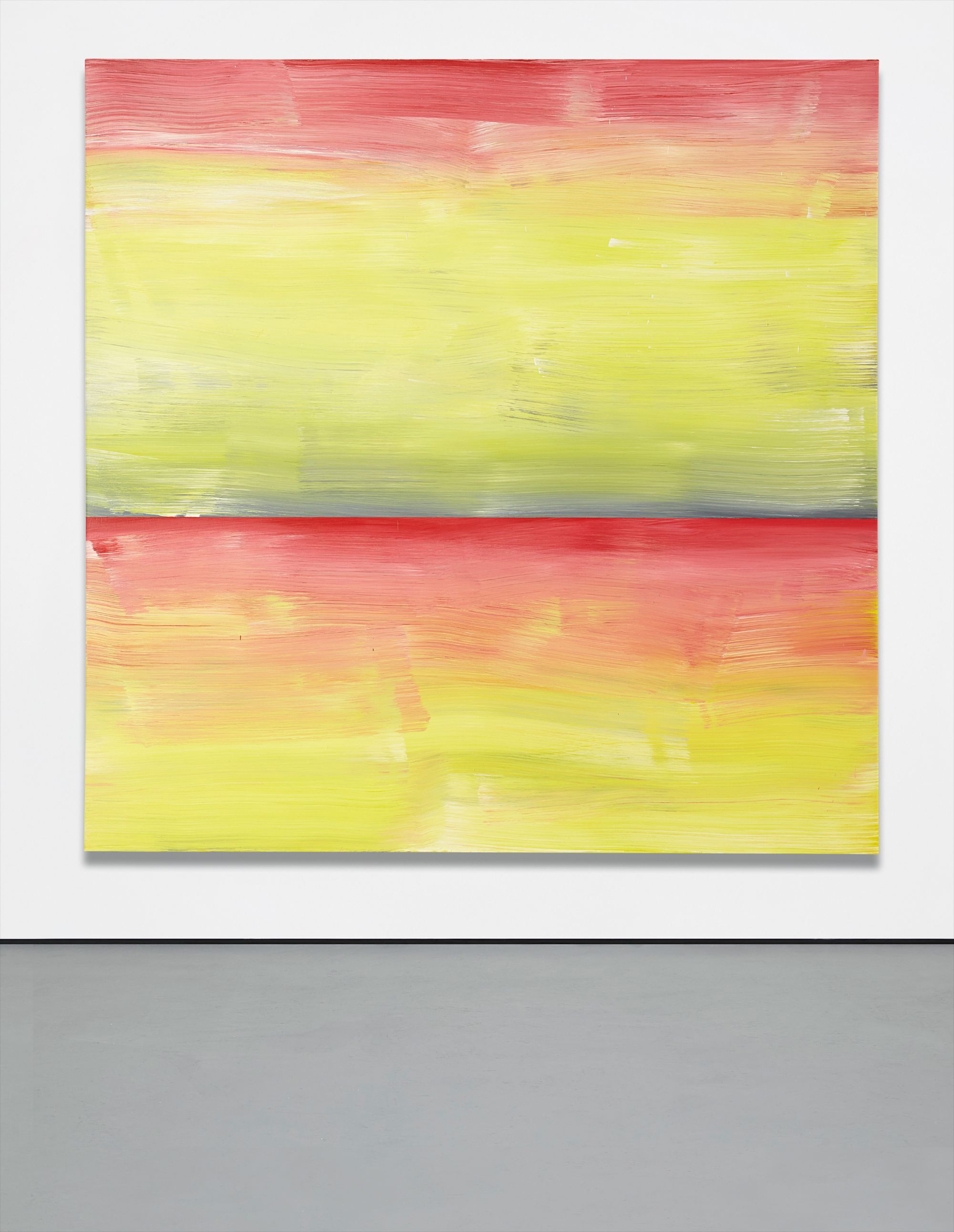
Jacqueline Humphries Paints the Digital Soul
Artist Spotlight · The Collection Editorial
Something remarkable has been unfolding in contemporary painting over the past decade, and Jacqueline Humphries sits at the very center of it. Her large scale canvases, slick with silver and crackling with gestural energy, have earned her a place in the permanent collection of the Whitney Museum of American Art and the sustained attention of some of the most discerning collectors working today. Her 2017 exhibition at Greene Naftali Gallery in New York, which included the now celebrated canvas bearing the title "Ω:)", crystallized what many had sensed for years: that Humphries is one of the most intellectually serious and visually thrilling painters of her generation. She does not simply respond to the internet age.
Jacqueline Humphries
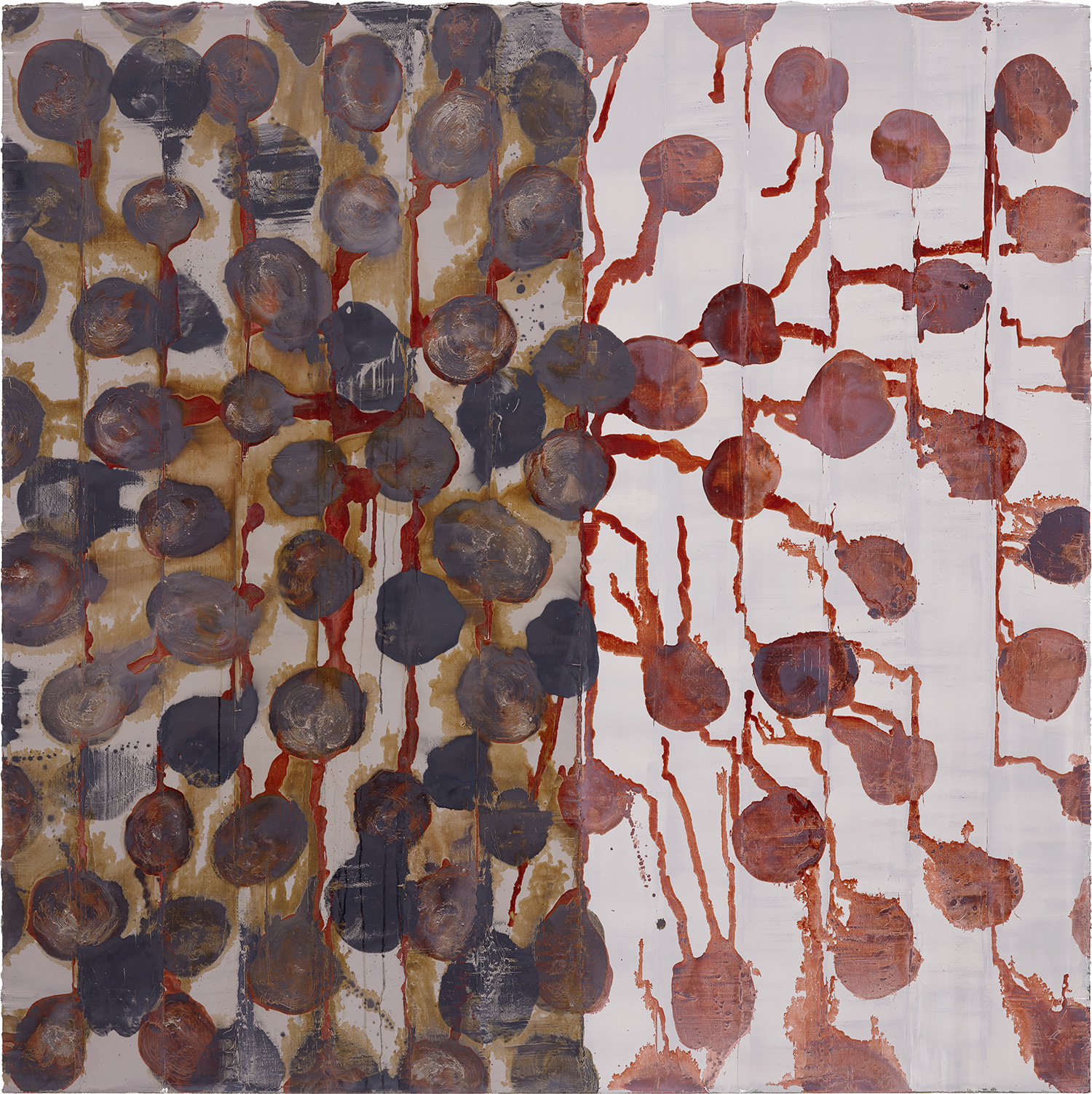
Out, 1989
She paints from inside it. Born in New Orleans in 1960, Humphries came of age in a city saturated with sensory complexity, layered history, and a particular kind of atmospheric beauty that resists easy categorization. She went on to study at the San Francisco Art Institute and later at Tulane University, before relocating to New York, the city that would become the permanent backdrop to her practice. New York in the 1980s was a crucible of competing energies, neo expressionism on one side, a resurgent interest in abstraction on the other, and the lingering shadow of minimalism pressing down on everyone.
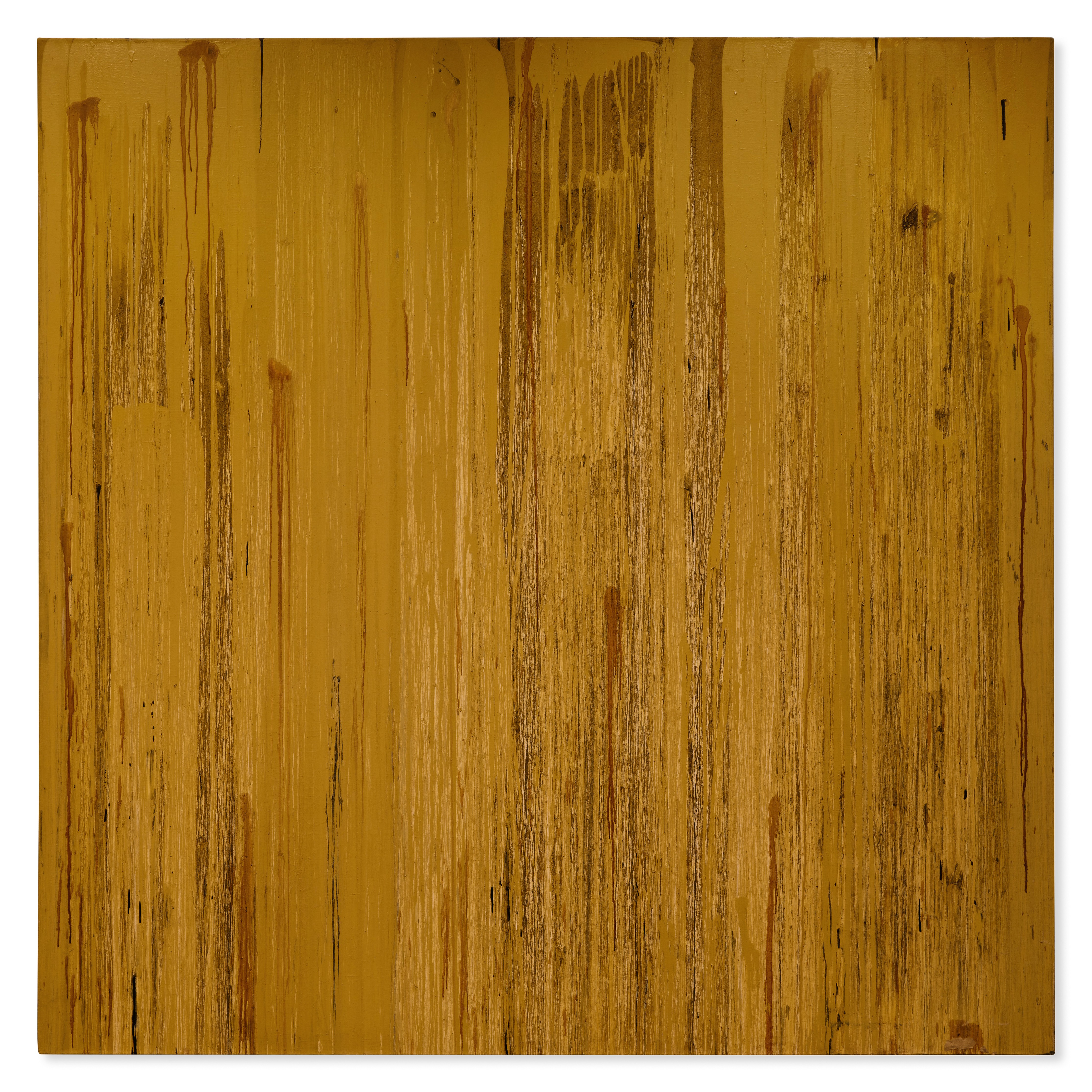
Humphries absorbed all of it without being consumed by any single tendency. Her early works from the late 1980s, including "Out" and "White Wall", both painted in 1989 in oil on linen, show a painter already committed to the physical act of mark making while remaining deeply curious about what a painting can mean as an object in the world. These are works of considerable confidence: the surfaces dense with layered gesture, the compositions refusing easy resolution. By 1992, with works like "Merrill Dext", she was pushing her investigations further, developing a formal language that was clearly rooted in Abstract Expressionism but equally alert to the conditions of its own making.
Jacqueline Humphries
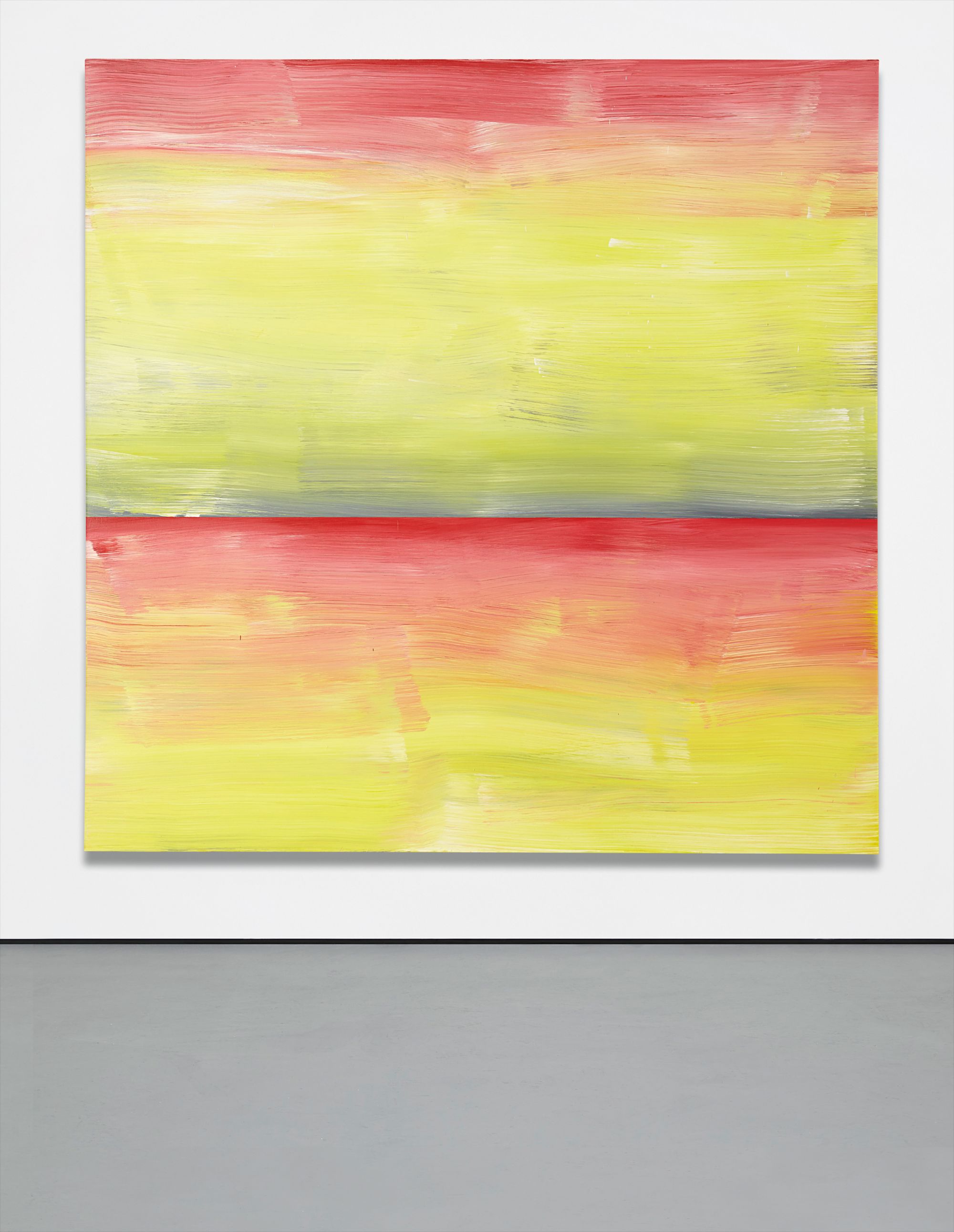
Hor. #10
The 1994 "Untitled", an oil on panel work conceived in 36 parts, announced her willingness to think at scale and to question the singular bounded canvas as the default unit of painting. The pivotal evolution in Humphries's practice came as the internet moved from novelty to infrastructure, reshaping how images are made, seen, shared, and felt. Rather than treating digital culture as subject matter to be illustrated, she absorbed its logic into the very structure of her paintings. Her turn toward silver monochrome fields populated by emoji, glyphs, and fragmented text was not a concession to trend but a rigorous formal decision.
Silver, as a surface, behaves differently from any other ground: it reflects the viewer back, implicates the room, and shifts with the light in ways that feel almost cinematic. The emoji and symbols that appear in her canvases, most famously in "Ω:)" from 2017, are not decorations. They are marks in the fullest painterly sense, loaded with the ambiguity and emotional compression that defines communication in the digital era. The omega symbol and the smiley face coexist without irony and without resolution, much like our own interior lives as we move between the physical and the virtual.
Jacqueline Humphries
Merrill Dext, 1992
Among the works available through The Collection, the range of Humphries's practice becomes wonderfully apparent. "The Mirror and the Mask" from 2010 offers a transitional moment in her development, a painting that still carries the gestural heat of her earlier work while reaching toward the cooler, more reflective surfaces she would later refine. "Four Corners" and "95%" demonstrate her mature command of composition and her ability to use negative space and chromatic restraint as expressive tools rather than mere formal strategies. The two watercolor drawings on heavy wove paper, listed simply as "Jacqueline Humphries", offer a rare and intimate glimpse into her thinking at a smaller scale, revealing the same rigor and confidence that animate her large canvases.
Collectors who are drawn to painting with genuine intellectual content will find in these works a sustained argument about what it means to make pictures now. In the broader context of the art market, Humphries occupies a position that is both critically validated and still relatively accessible by comparison to peers whose reputations have been amplified by major auction houses. Her institutional presence is substantial: beyond the Whitney, her work is held in significant private and museum collections, and her exhibitions at Greene Naftali in New York have been met with consistent critical enthusiasm. For collectors building a serious collection with an eye toward historical significance, her work represents a compelling opportunity.
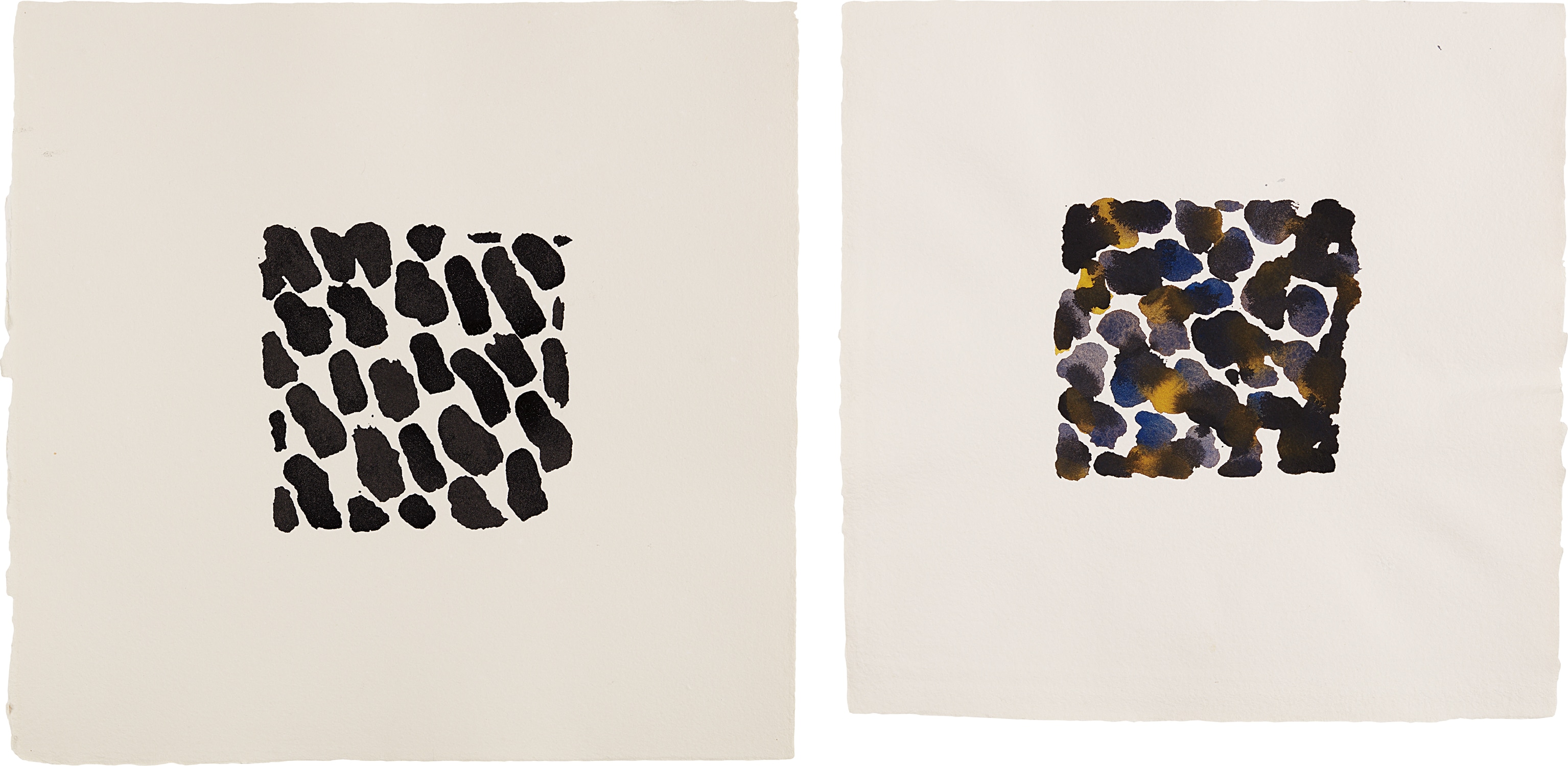
Jacqueline Humphries
Jacqueline Humphries
Paintings from the late 1980s and early 1990s, her formative period in oils on linen, have a documentary quality that will only grow in importance as art history sharpens its focus on how abstraction survived and transformed across the digital threshold. The artists who come to mind alongside Humphries form an illuminating constellation. One thinks of Laura Owens, similarly engaged with the surface of the image and the conditions of contemporary looking. One thinks of Amy Sillman, whose commitment to gestural painting as a living critical practice parallels Humphries's own.
Further back, the shadow of Lee Krasner and Joan Mitchell falls across her work not as influence to be overcome but as lineage to be honored and extended. Humphries is in conversation with the entire history of American abstraction, and her great contribution is to have found a way to conduct that conversation in the visual language of the present moment. What Humphries ultimately offers is something rarer than technical mastery or theoretical coherence, though she has both in abundance. She offers a model of painting that refuses nostalgia without abandoning tradition, that embraces the strangeness of contemporary life without surrendering to it.
Her canvases ask the viewer to be present in the room, to move, to let the silver surface shift, to sit with the emoji not as joke or shorthand but as genuine mark, as human gesture compressed into a pixel and then released again into paint. In an era when the relevance of painting is perpetually questioned, Humphries does not argue for it. She simply demonstrates it, work after extraordinary work.