Jack B. Yeats
Jack Yeats: Ireland's Great Visionary Painter
Artist Spotlight · The Collection Editorial
“I have never drawn anything that could be called an abstract painting. I have always painted things that are there.”
Jack B. Yeats
There is a moment in the permanent collection at the National Gallery of Ireland when visitors stop walking. It happens in front of a Jack B. Yeats canvas, almost involuntarily, drawn by a quality of light and feeling that seems to pulse from within the paint itself. That experience has become something of a rite of passage for lovers of modern art, and it speaks to why Yeats remains, decades after his death in 1957, the most beloved and critically significant Irish painter of the twentieth century.
Jack B. Yeats
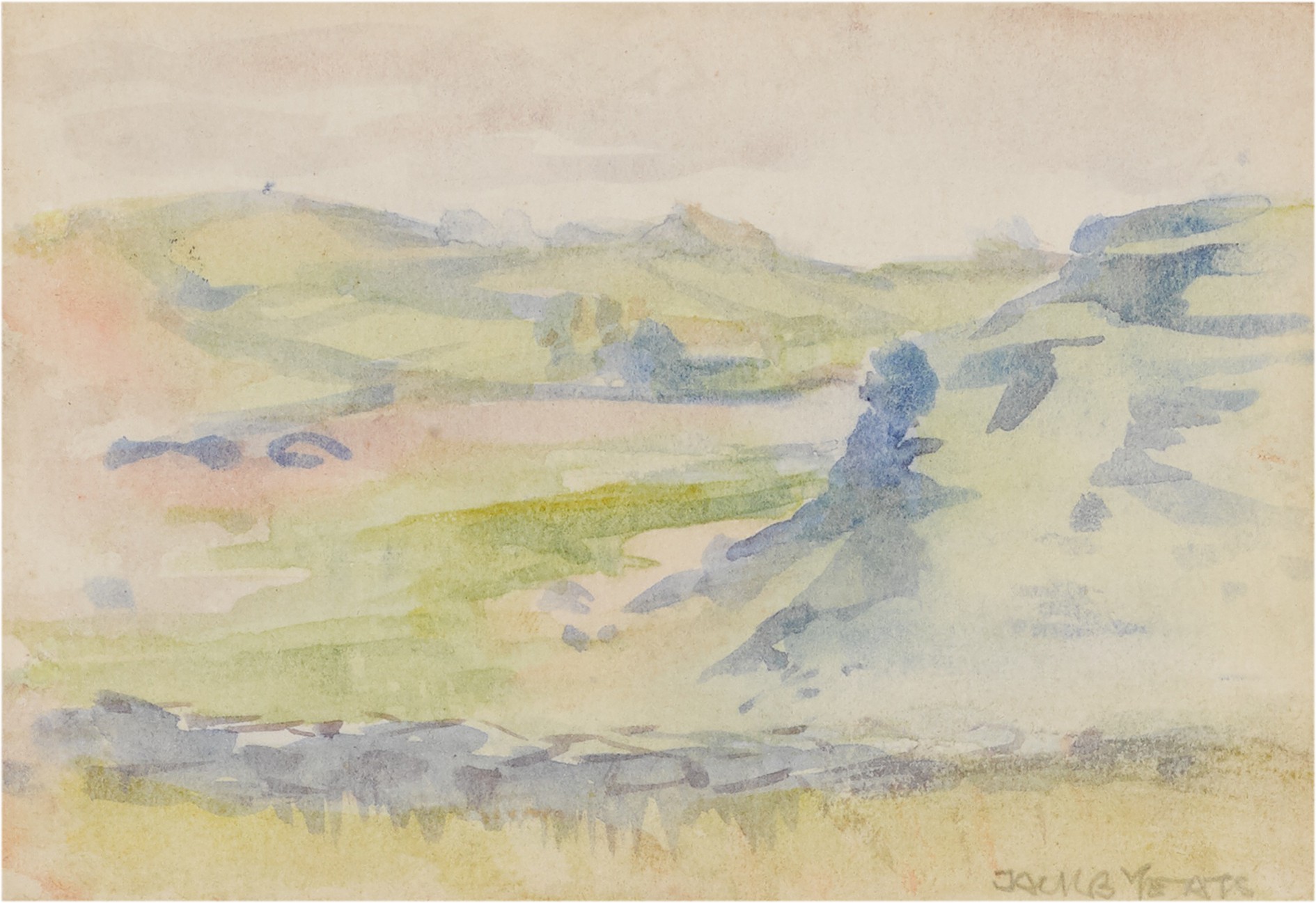
Near Ballycastle, 1909
His reputation has only deepened with time, and the market for his work, particularly his mature oils, reflects a collecting community that understands it is dealing with one of the great figures of European modernism. Jack Butler Yeats was born in London in 1871, the youngest son of the portrait painter John Butler Yeats and the brother of the poet William Butler Yeats, whose own towering reputation long cast a complicated shadow over the family name. Jack spent formative years in Sligo, on the west coast of Ireland, living with his maternal grandparents, and it was there that the visual and emotional vocabulary of his life's work was established. The landscapes of Connacht, the horse fairs, the itinerant storytellers, the fishermen and tinkers and travellers who moved through the west of Ireland in the late nineteenth century: all of this entered him deeply and never left.
Sligo was not simply a backdrop. It was the living material of his imagination. His early career was shaped by work as an illustrator. Through the 1890s and into the 1900s, Yeats contributed drawings to publications including Punch and the Broadside series he produced with his wife Mary Cottenham White, known as Cottie.
Jack B. Yeats
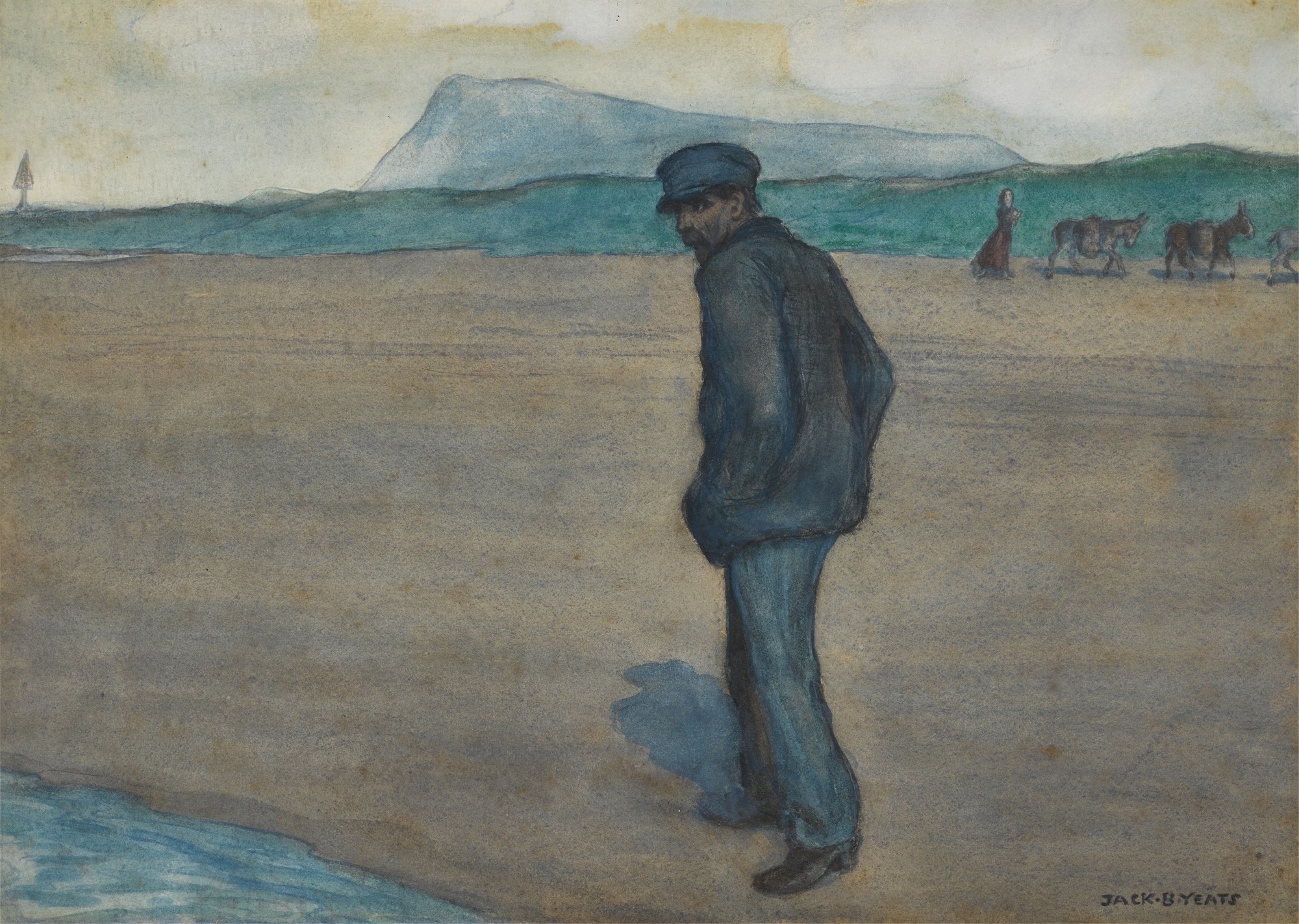
The Beach Comber, 1905
These years gave him a draughtsman's discipline and a storyteller's instinct for the telling detail. His early watercolours from this period, several of which are represented on The Collection including the vivid Near Ballycastle and The Beach Comber, both from around 1905 to 1909, show a painter already in full command of mood and narrative. The west of Ireland coast, its light and its tough human geography, is rendered with an affection that never tips into sentiment. The great transformation in Yeats's practice came in the 1920s and accelerated through the 1930s.
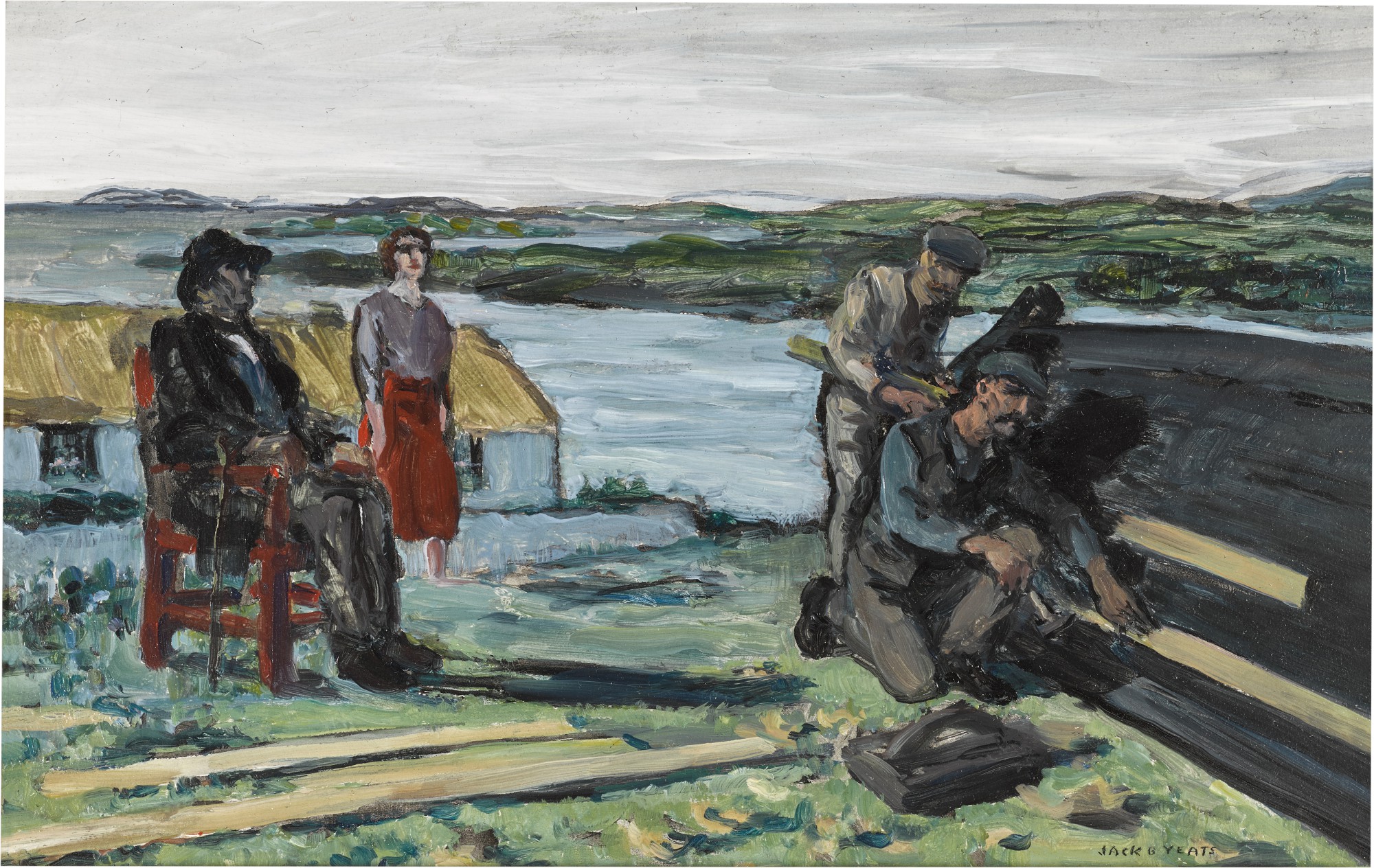
He moved decisively toward oil paint and toward an increasingly expressionistic handling of it, applying pigment with a palette knife and sometimes his fingers, building surfaces of extraordinary richness and energy. Works like The Boat Builder from 1923 and The Road to Galway from 1924 sit at the threshold of this shift, still figuratively anchored but already charged with a new urgency. By the time of The South Pacific in 1937 and A Nor Western Town in 1936, his compositions had become looser, more atmospheric, almost operatic in their emotional ambition. He was reading Samuel Beckett, who admired him enormously, and the feeling was mutual: both men were reaching toward something irreducible in the human condition, and their friendship was one of the more remarkable creative relationships of mid century European culture.
Jack B. Yeats
The Boat Builder, 1923
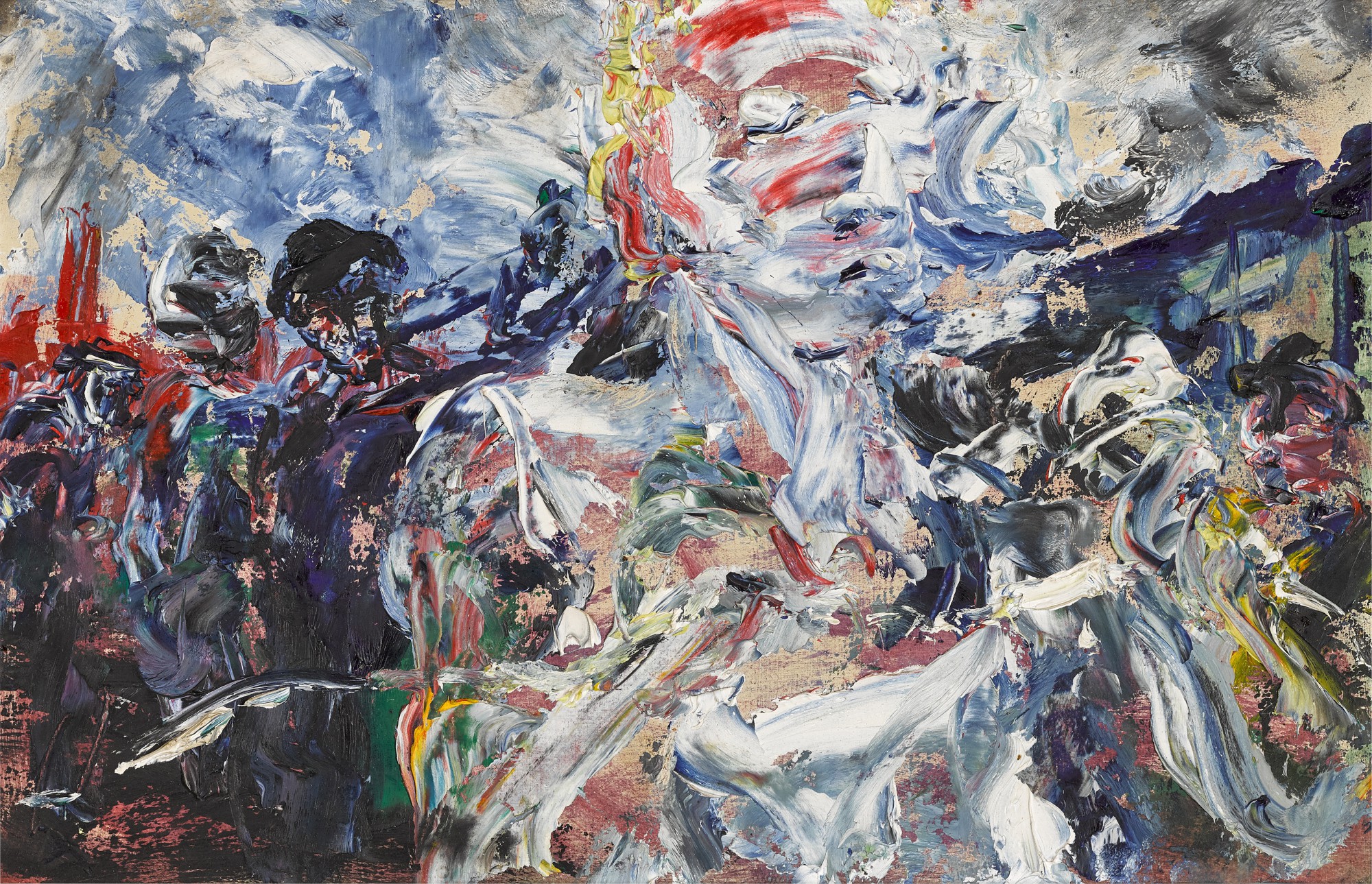
The late works are where many collectors and scholars now locate his greatest achievement. Paintings such as The Face of Victory from 1949 represent the full flowering of his mature style: figures and landscapes dissolving into one another, colour used not to describe but to evoke, a sense of memory and longing held in near perfect tension with the physical act of painting. Engravings from 1943 similarly demonstrates his ability to layer meaning across a surface until the boundary between the material and the psychological becomes genuinely difficult to locate. These are paintings that reward sustained looking and that reveal new dimensions across multiple encounters.
They are, in the fullest sense, inexhaustible. For collectors, the Yeats market has long been one of the most compelling stories in Irish art. His works appear regularly at auction through Bonhams, Adam's in Dublin, and Sotheby's, and significant examples have achieved prices that place him firmly in the company of major international modernists. The watercolours and works on paper, such as the pen and ink Illustration to Granuaile from 1913, offer an accessible point of entry into his practice and carry the same narrative intelligence and technical assurance as his oils.
Jack B. Yeats
The Face of Victory, 1949
Collectors new to Yeats are often advised to look closely at the early and middle period works on board and paper, where his draughtsmanship and his lyrical response to Irish life are most directly legible. Those seeking the full measure of his genius look to the oils, particularly from the 1930s onward. Within art history, Yeats occupies a singular position. He was aware of European expressionism and of the German painters who were his rough contemporaries, but he arrived at his late style through an entirely independent process of development rooted in Irish subject matter and Irish feeling.
Comparisons are sometimes made to Oskar Kokoschka and to Edvard Munch in terms of the emotional intensity of his surfaces, and there is something in his use of landscape that resonates with the British painters of the St Ives school, particularly in his later work. But Yeats is ultimately his own category. No other painter of his generation made the particular quality of Atlantic light, the social texture of the Irish west, and the inner life of solitary figures cohere so completely into a unified vision. His legacy today is both national and universal.
In Ireland he is a cultural icon, his work central to the story the country tells about itself and its modernity. Internationally he is increasingly recognised as one of the essential painters of the twentieth century, an artist who developed a form of expressionism that owed nothing to any school or movement and everything to a lifetime of looking, feeling, and painting with absolute conviction. To encounter a Yeats, whether in a museum, a private collection, or across the pages of a platform like The Collection, is to meet an artist who trusted paint to carry the full weight of human experience, and who was right to do so.
Explore books about Jack B. Yeats
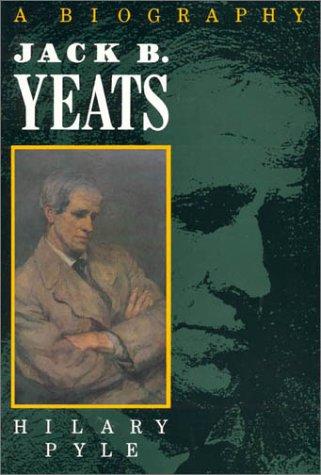
Jack B. Yeats: A Life
Hilary Pyle
Jack B. Yeats Paintings and Drawings
Hilary Pyle

The Paintings and Drawings of Jack B. Yeats: A Catalogue Raisonné
Hilary Pyle
Jack B. Yeats: Painter and Poet
Anne Crookshank and Desmond Fitzgerald
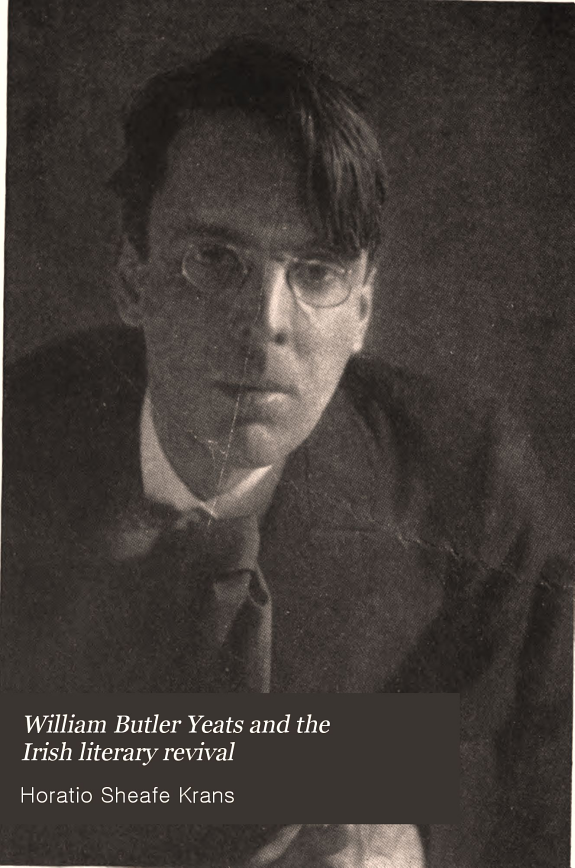
Jack B. Yeats and the Irish Literary Revival
Morris Eaves

Jack B. Yeats: Image and Vision
Hilary Pyle
The Collected Works of Jack B. Yeats
Hilary Pyle