Ivy Haldeman
Ivy Haldeman Finds the Poetry in Ordinary Things
Artist Spotlight · The Collection Editorial
Something quietly remarkable has been happening in contemporary American painting, and Ivy Haldeman is at the center of it. Over the past several years, her work has moved from the knowing appreciation of gallery insiders to a broader cultural conversation about what figurative painting can do when it refuses to play by inherited rules. Her solo exhibitions at Bureau gallery in New York have drawn serious critical attention, and her paintings now appear in collections that understand the rare value of a singular, fully realized artistic vision. In a moment when painting feels both oversaturated and urgently necessary, Haldeman's work cuts through with a clarity that is all her own.
Ivy Haldeman
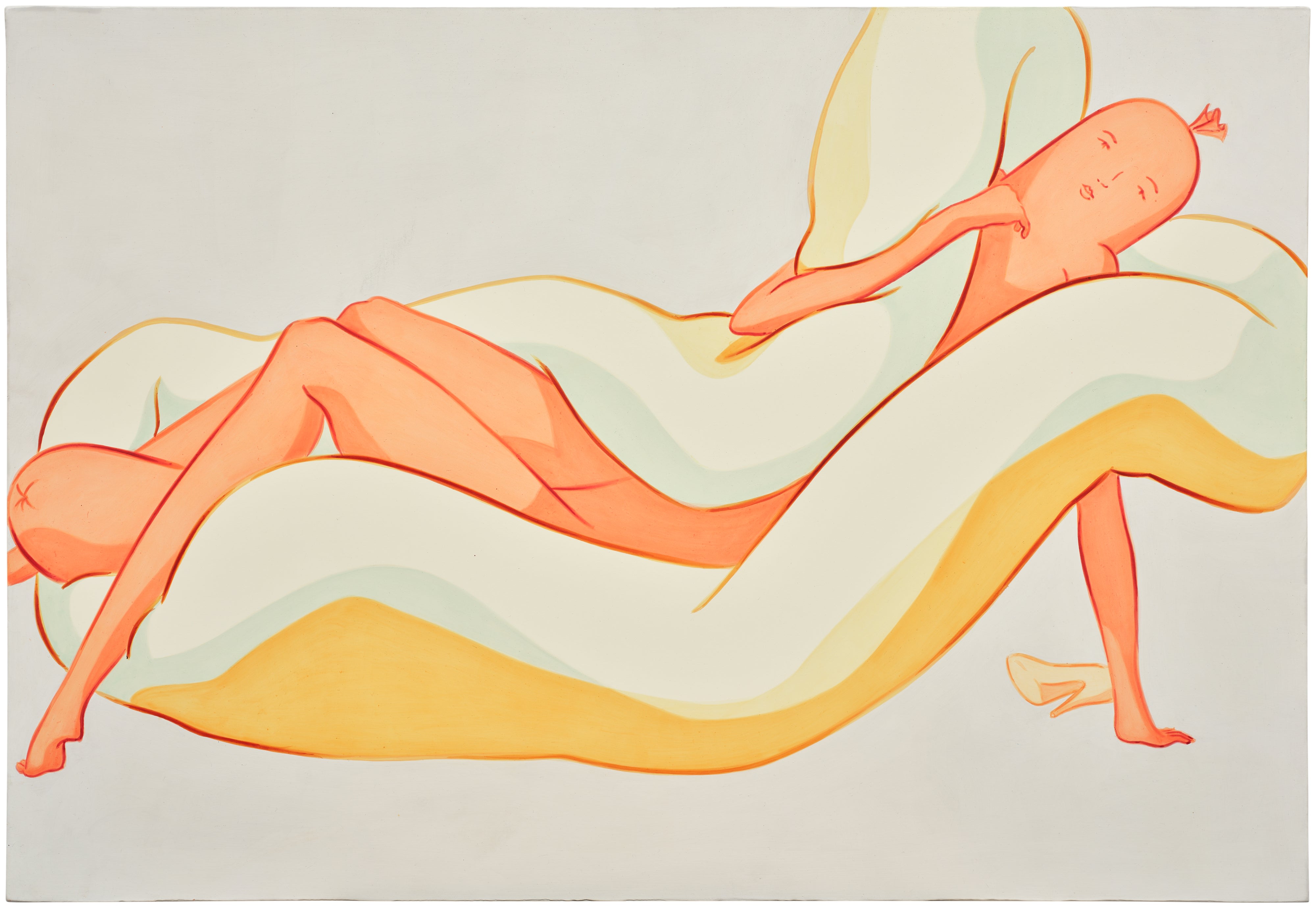
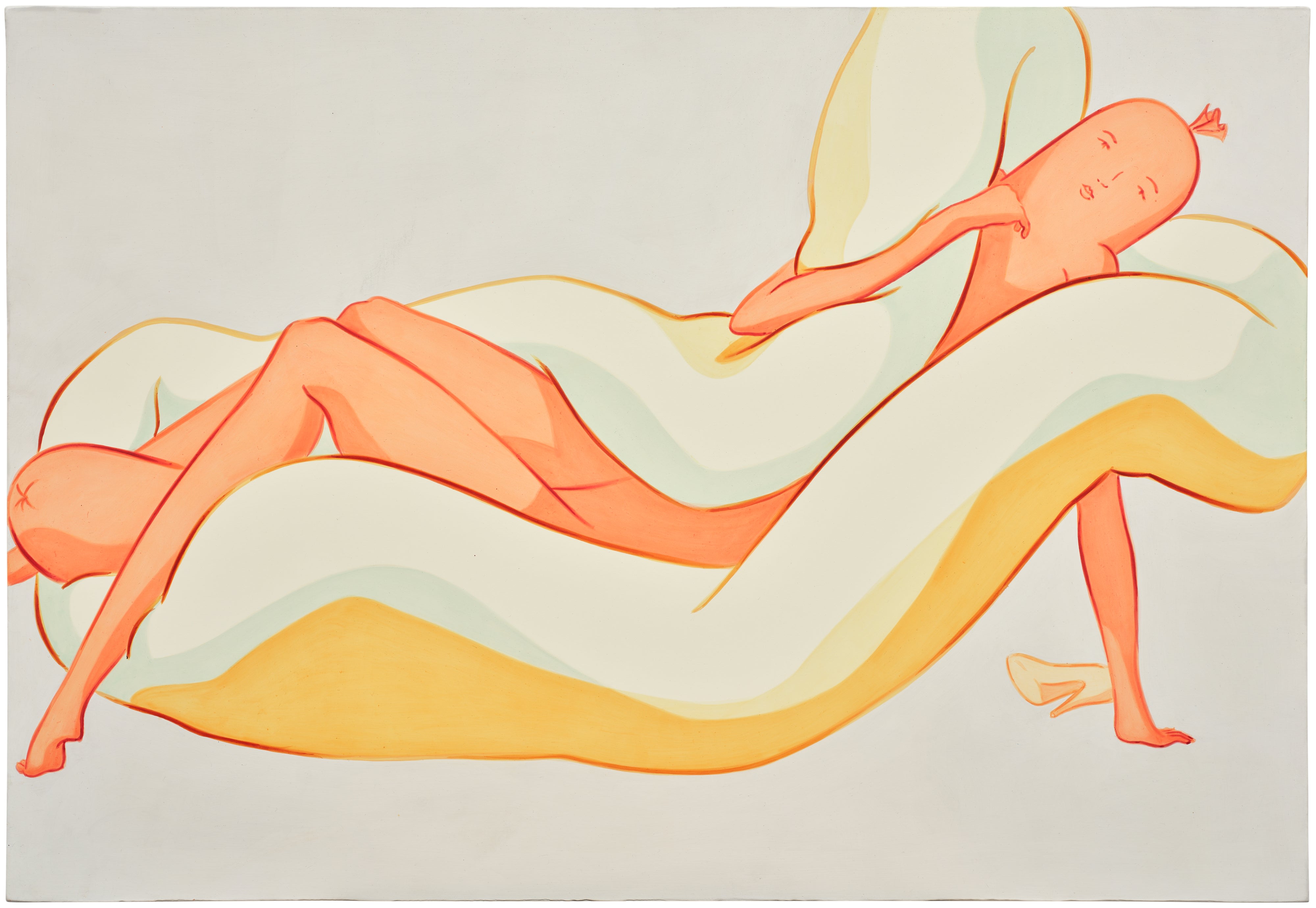
Horizontal Figure, Foot Turns Inward, Thighs Touch, Hand to Collar, 2022
Born in 1980, Haldeman grew up in the United States and came of age artistically in New York, a city whose visual culture is inseparable from the commercial and the fine art, the billboard and the brushstroke. That tension between high and low, between the dignity of painting and the frank seduction of graphic design, would become the very material of her practice. She studied painting seriously and absorbed the full weight of art history, from the elongated figures of Mannerist masters like Pontormo and Bronzino to the cool economy of mid century American illustration, without being crushed by any of it. What she took from these sources was a permission: to flatten, to stylize, to let the image be exactly what it is without apology.
Her artistic development has been marked by a steady and assured accumulation of a personal visual language rather than any dramatic rupture or reinvention. In her earlier works she began establishing the formal vocabulary that would define her practice: figures rendered with sleek, unmodulated surfaces, limbs arranged in poses that are at once natural and slightly alien, backgrounds stripped of environmental detail. The colors she chose were not the colors of the world but the colors of a world that has been carefully considered, muted and sophisticated, pulling from a palette that suggests both vintage print culture and something more psychologically loaded. By the mid 2010s it was clear that she was not experimenting toward a style but had arrived at one.
Ivy Haldeman
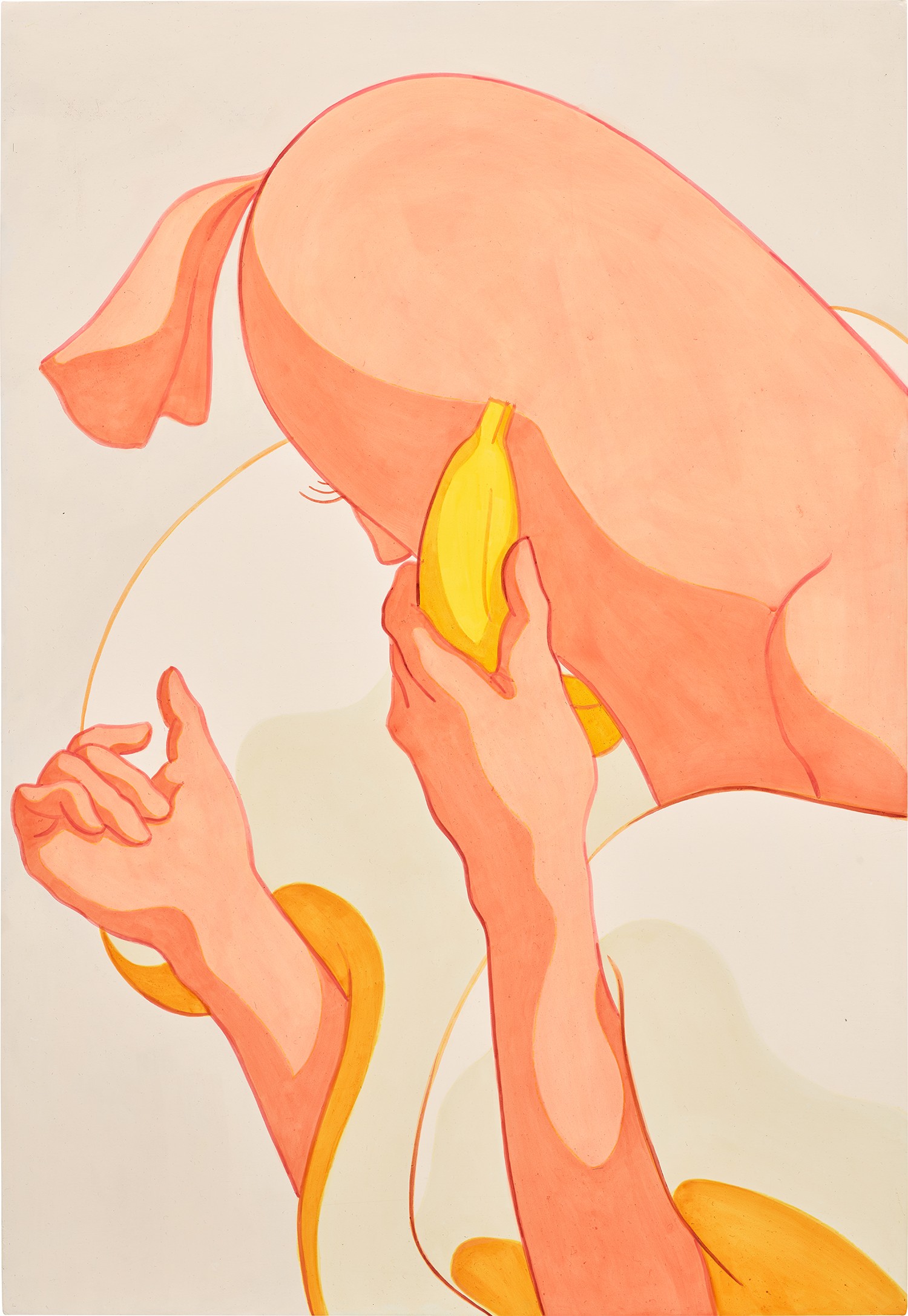
Banana Phone, 2018
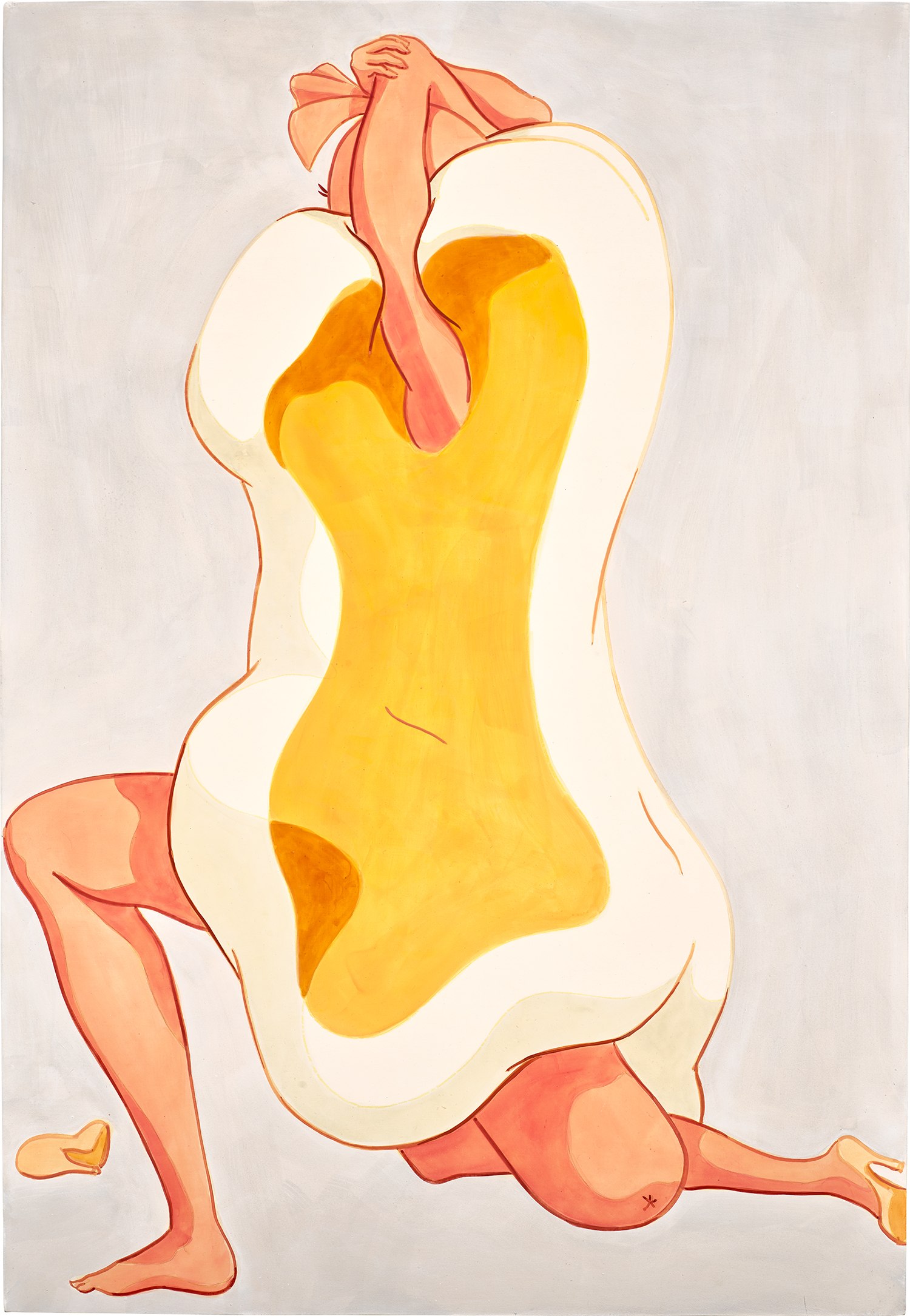
The titles of Haldeman's paintings are themselves a kind of artwork, functioning as deadpan descriptive catalogues of physical facts. A work like "Full Figure, Right Knee Down, Flung Shoe, Hand Grasps Elbow Above Head" from 2016, acrylic on linen mounted on board, tells you precisely what you will see while telling you almost nothing about what you will feel. That gap between description and experience is where her work lives. The figure in question is neither distressed nor at ease in any legible way; it occupies a psychic middle distance that the viewer must navigate alone.
Similarly, "Horizontal Figure, Foot Turns Inward, Thighs Touch, Hand to Collar" from 2022 offers the body as both subject and formal problem, the graceful arrangement of limbs creating a composition that rewards sustained looking the way a well resolved abstract painting does. These are not illustrations of emotional states. They are emotional states, rendered in acrylic with a precision that feels almost loving. Then there are the hot dogs.
Ivy Haldeman
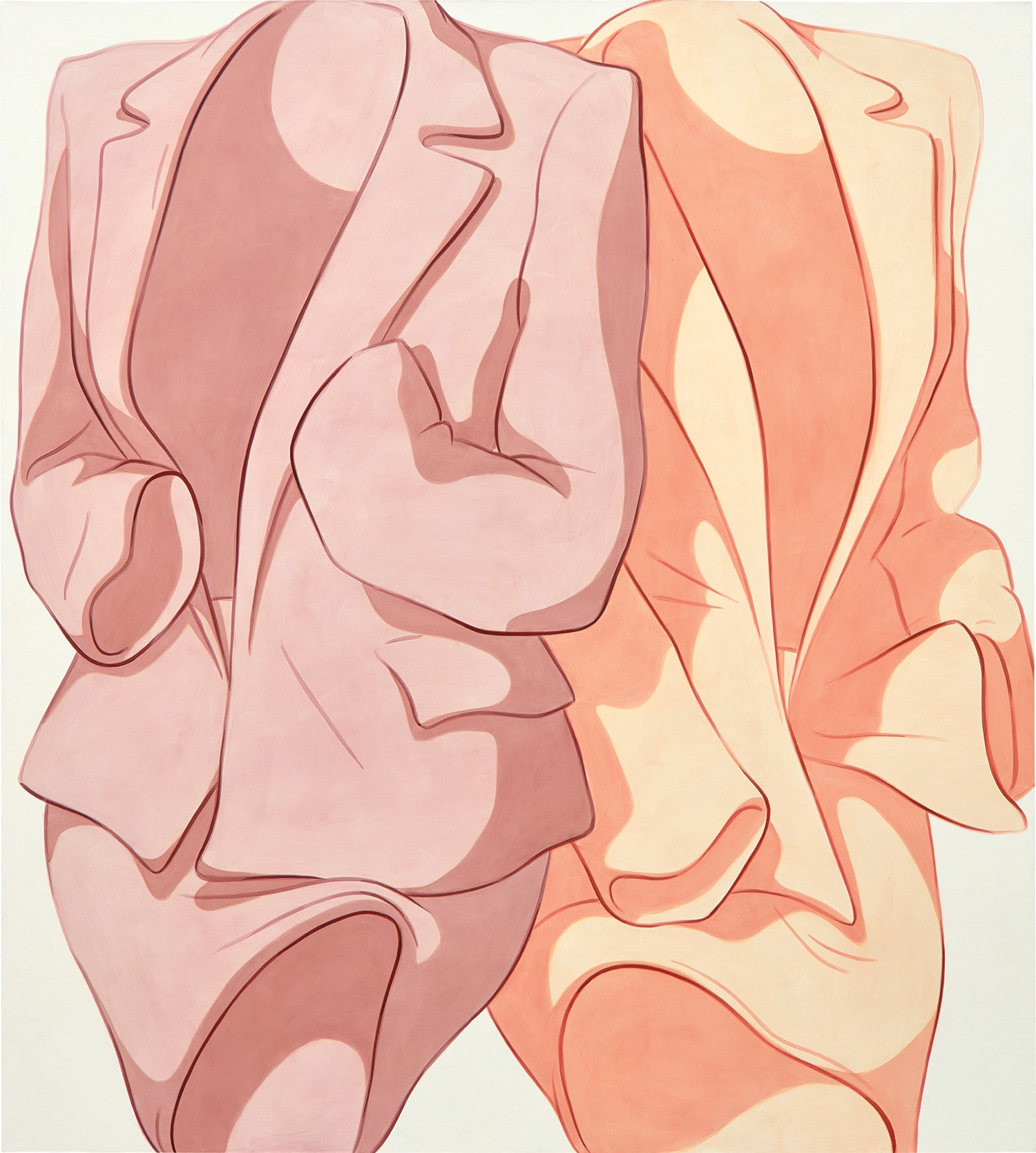
Two Suits, Wrist Bent, Cuff to Pocket (Mauve, Peach), 2019
Haldeman's inclusion of the hot dog as a recurring subject has become one of the most discussed and genuinely delightful gestures in recent American painting. Works from her hot dog series treat the frankfurter with the same formal seriousness and graphic intensity as the human figure, inviting comparisons that are funny and then, quickly, something more. The "Banana Phone" from 2018, acrylic on linen over board, extends this inquiry into objects that carry cultural weight while remaining gloriously absurd. These paintings are not mere jokes, though they are genuinely amusing.
They participate in a long tradition of artists using the humble and the commercial as a mirror held up to desire, status, and the textures of everyday life. One thinks of Wayne Thiebaud's pastries, of Claes Oldenburg's soft sculptures, of the knowing brand consciousness of early pop art, though Haldeman's sensibility is cooler and more interior than any of these direct precedents. For collectors, Haldeman's work presents an unusual combination of accessibility and depth. Her paintings are visually immediate: they communicate their formal pleasures quickly, and the deadpan wit makes them genuinely pleasurable to live with.
Ivy Haldeman
Full Figure, Right Knee Down, Flung Shoe, Hand Grasps Elbow Above Head, 2016
But they also reward the kind of sustained attention that reveals new layers over time. The "Two Suits, Wrist Bent, Cuff to Pocket (Mauve, Peach)" from 2019 is a perfect example of this quality: on first encounter it reads as a formally elegant arrangement of suited forms in beautiful, barely there color. Over time it becomes something more ambiguous, the relationship between the two figures suggesting negotiation, intimacy, or competition in equal measure. Works on linen, a support she has used consistently throughout her career, carry a particular material warmth that collectors often note upon encountering the paintings in person.
The scale of her works varies in ways that suit different collecting contexts, and her consistent productivity means that a serious collection of her work can be built across different periods and subjects. Within the broader landscape of contemporary painting, Haldeman occupies a position that is genuinely her own while connecting meaningfully to a generation of painters who have made figuration strange and newly potent again. Her work invites comparison with artists like Dana Schutz, whose figuration also plays with grotesque deformation as a form of expressiveness, and with the more graphic coolness of Eric Fischl's psychological stagings, though Haldeman's register is quieter and more interior than either. The art historical precedents reach back through American illustration of the mid twentieth century and forward through the influence of graphic design and commercial art on visual culture.
She is part of a conversation about what painting knows that other media do not, and her answer, delivered consistently across a body of work built over more than a decade, is that painting knows the body better than anything. The importance of Ivy Haldeman's work today lies in its refusal to be anxious about what painting should do. Her figures exist in a space that is neither narrative nor purely formal, neither emotionally transparent nor coldly withholding. They ask the viewer to be present, to look carefully, and to tolerate a productive uncertainty about meaning.
In a cultural moment that rewards instant legibility, there is something genuinely nourishing about an artist who trusts the image to do its work at its own pace. Her practice, built painting by painting over years of serious commitment, represents exactly the kind of vision that collecting is meant to support and preserve.