Ivon Hitchens
Ivon Hitchens: Where Colour Becomes the Countryside
Artist Spotlight · The Collection Editorial
“A painting should be a re-creation of the emotion experienced before nature, not a reproduction of its appearance.”
Ivon Hitchens
There are painters who depict the landscape, and then there are painters who seem to breathe it. Ivon Hitchens belonged emphatically to the second category. When the Pallant House Gallery in Chichester mounted its devoted survey of his work, visitors spoke of standing before his canvases and feeling the Sussex woodland close around them, the damp air of a winter pool rising from the paint itself. That quality, at once sensory and almost inexplicable, is what has sustained his reputation across the decades since his death in 1979, and what continues to draw serious collectors to his work with quiet, devoted enthusiasm.
Ivon Hitchens
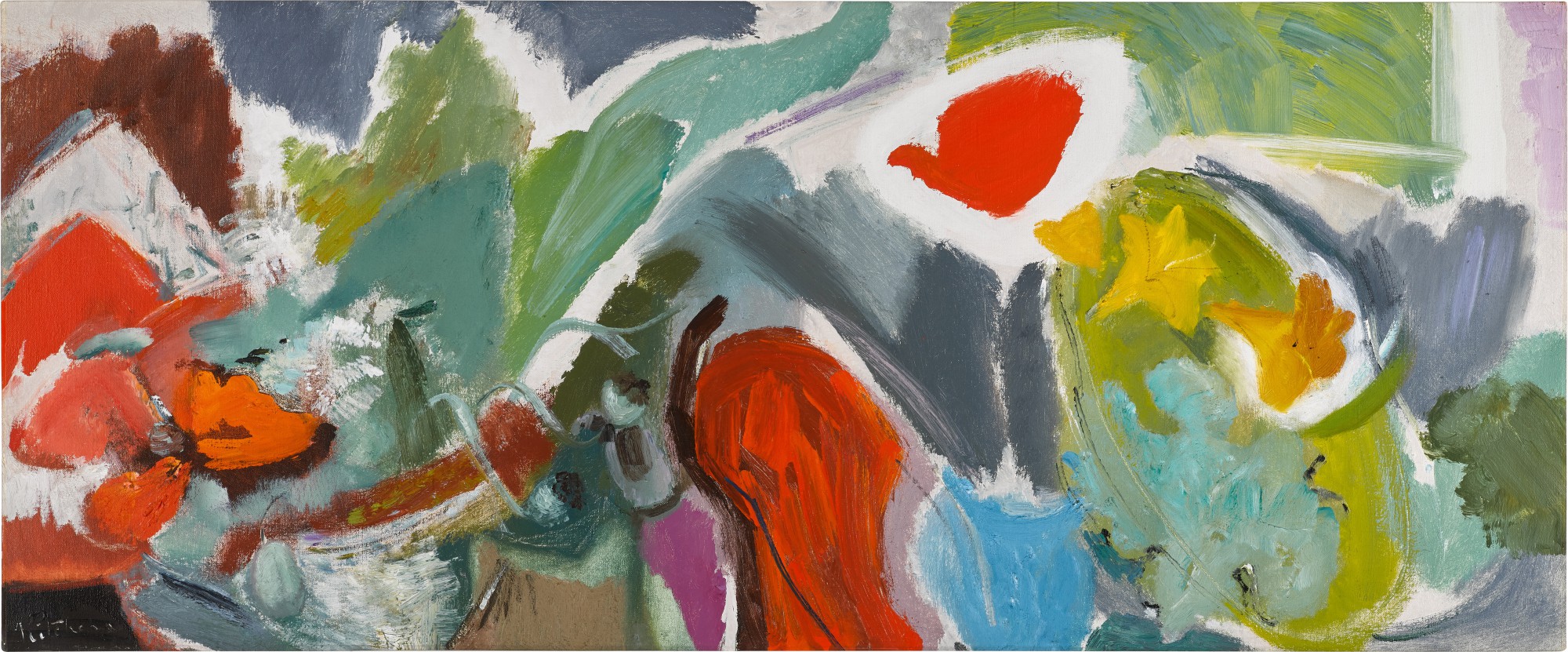
One Poppy and Yellow Lilies, 1957
Hitchens was born in London in 1893 into a family already steeped in art. His father, Alfred Hitchens, was a painter, and the young Ivon absorbed the culture of the studio from childhood. He studied at the St John's Wood Art Schools and later at the Royal Academy Schools, where he received a rigorous academic training that he would spend much of his subsequent career productively dismantling. The early influence of Post Impressionism, and particularly the example of artists such as Paul Cézanne and the Fauves, gave him permission to trust colour and sensation over documentary accuracy.
By the time he was exhibiting with the Seven and Five Society in the 1920s alongside artists including Ben Nicholson and Christopher Wood, it was clear that Hitchens was on a path distinctly his own. The defining rupture in his life and career came in 1940, when a German bomb destroyed his London home during the Blitz. Rather than seeking another city base, Hitchens retreated to a plot of land he owned in the West Sussex village of Lavington Common, near Petworth, and there he lived for the remainder of his long life in a series of caravans and eventually a modest house he built among the trees. The woodland, the pools, the water meadows and the shifting light of the Sussex Weald became his permanent subject.
Ivon Hitchens
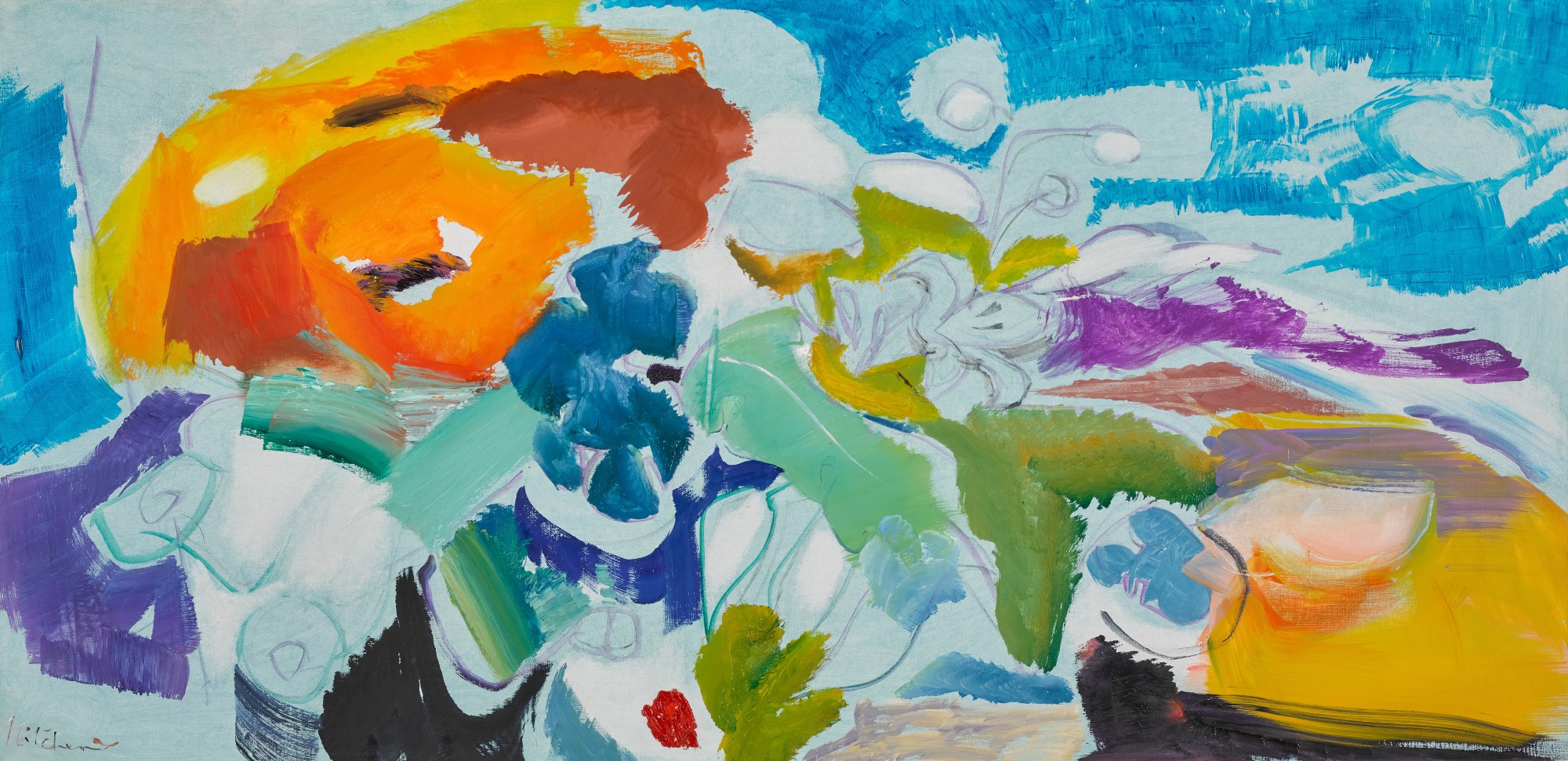
Poppy Against a Blue Sky, 1968
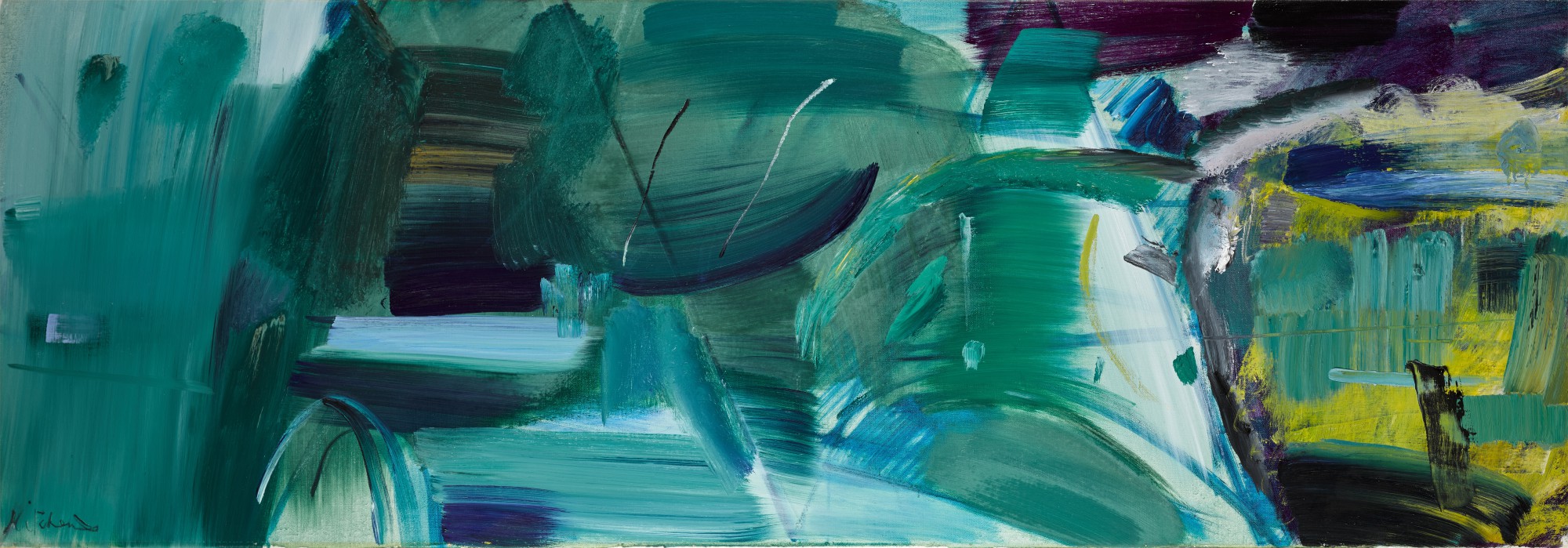
It was a radical choice, and one that turned out to be artistically liberating beyond anything he could have anticipated. Cut off from the metropolitan art world, he was free to pursue his singular vision without interruption. In Sussex, Hitchens developed the format and approach that would define his legacy. He worked on canvases of unusual proportions, wide and horizontal, almost panoramic, a shape that mimicked the peripheral sweep of human vision as the eye travels through a wood or across open water.
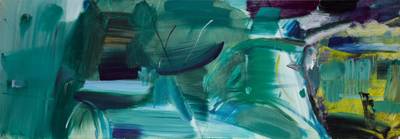
Within those dimensions he laid down broad, confident strokes of colour, unmixed and decisive, building up a picture that reads as pure sensation from a distance and reveals extraordinary painterly intelligence up close. The boundary between what is seen and what is felt dissolves entirely. Works such as Avington Water No. 3 from 1965 demonstrate this mastery with particular force: the pools of deep teal and warm ochre are not quite a river, not quite an abstraction, but something trembling beautifully between the two.
Ivon Hitchens
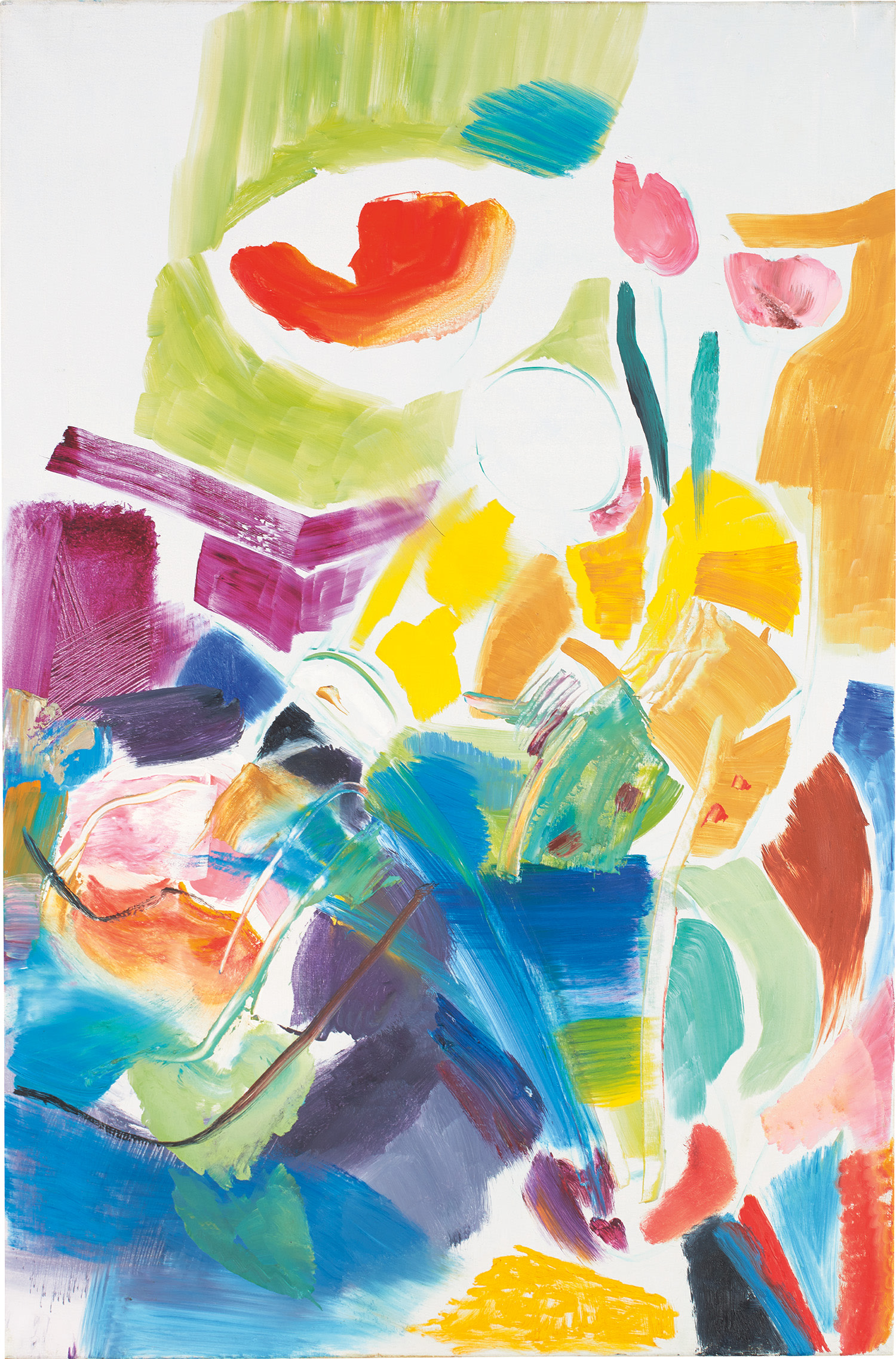
Flowers in a Blue Vase, 1970
Holbrook Pools, painted in 1937 before his Sussex immersion had fully taken hold, already shows the direction of travel, the water rendered in layered washes that anticipate everything to come. Hitchens was not exclusively a landscape painter, and collectors who know his work well will seek out the other strands of his practice with equal appetite. His flower paintings carry the same generous, unguarded relationship to colour that characterises the landscapes, and works such as One Poppy and Yellow Lilies from 1957 and Poppy Against a Blue Sky from 1968 are among the most joyful things he ever made. The flowers are never prettified or sentimentalised; they are treated with the same structural seriousness as a tree or a hillside, each bloom a kind of colour argument.
His figure paintings, including the series of reclining nudes such as April Nude No. 1 from 1949, extend this approach to the human form, which he renders with warmth and an almost choreographic awareness of how a body occupies space. From a collecting perspective, Hitchens occupies a genuinely privileged position in the market for twentieth century British art. His work has been held by major institutions including Tate, the Arts Council Collection, and the Pallant House Gallery, which houses one of the most important concentrations of his paintings in public hands.
Ivon Hitchens
Avington Water No. 3, 1965
At auction, strong examples command serious attention, and the range of scale and subject in his output means there are entry points for collectors at various levels of engagement. The wide horizontal landscapes in oil are naturally the most sought after, particularly those from the 1950s and 1960s when his technique was at its most assured and his relationship to the Sussex landscape most fully realised. Works on paper and smaller oil studies offer an intimate view into his working process, and for those beginning a relationship with his practice they can be a rewarding place to start. To understand where Hitchens sits in the longer story of British art, it helps to consider the company he keeps.
He shares with John Piper a passionate attachment to the English landscape as a site of emotional and almost spiritual meaning, though where Piper tended toward the dramatic and the architectural, Hitchens was drawn to the organic and the dissolved. His semi abstraction places him in dialogue with the St Ives painters, particularly Peter Lanyon and Patrick Heron, both of whom were navigating similarly charged territory between representation and pure colour field. Yet Hitchens was doing this from the Sussex woods, slightly apart from every movement and school, which is perhaps why his achievement feels so complete and so coherent. What Hitchens offers a collector today is something rarer than fashionability.
His work has never needed the endorsement of a particular moment because it operates on a frequency that bypasses the merely contemporary. Standing before a late canvas from 1970 such as Red Splash or Flowers in a Blue Vase, one encounters a painter who had spent decades learning to trust his own eye absolutely, and who had found in a small corner of southern England an inexhaustible source of meaning. That combination of place, commitment, and painterly intelligence is not easily replicated. Hitchens earned his position as one of the great British painters of the twentieth century through the accumulated evidence of a lifetime's work, and that position grows only more secure with time.
Explore books about Ivon Hitchens