Ivan Konstantinovich Aivazovsky
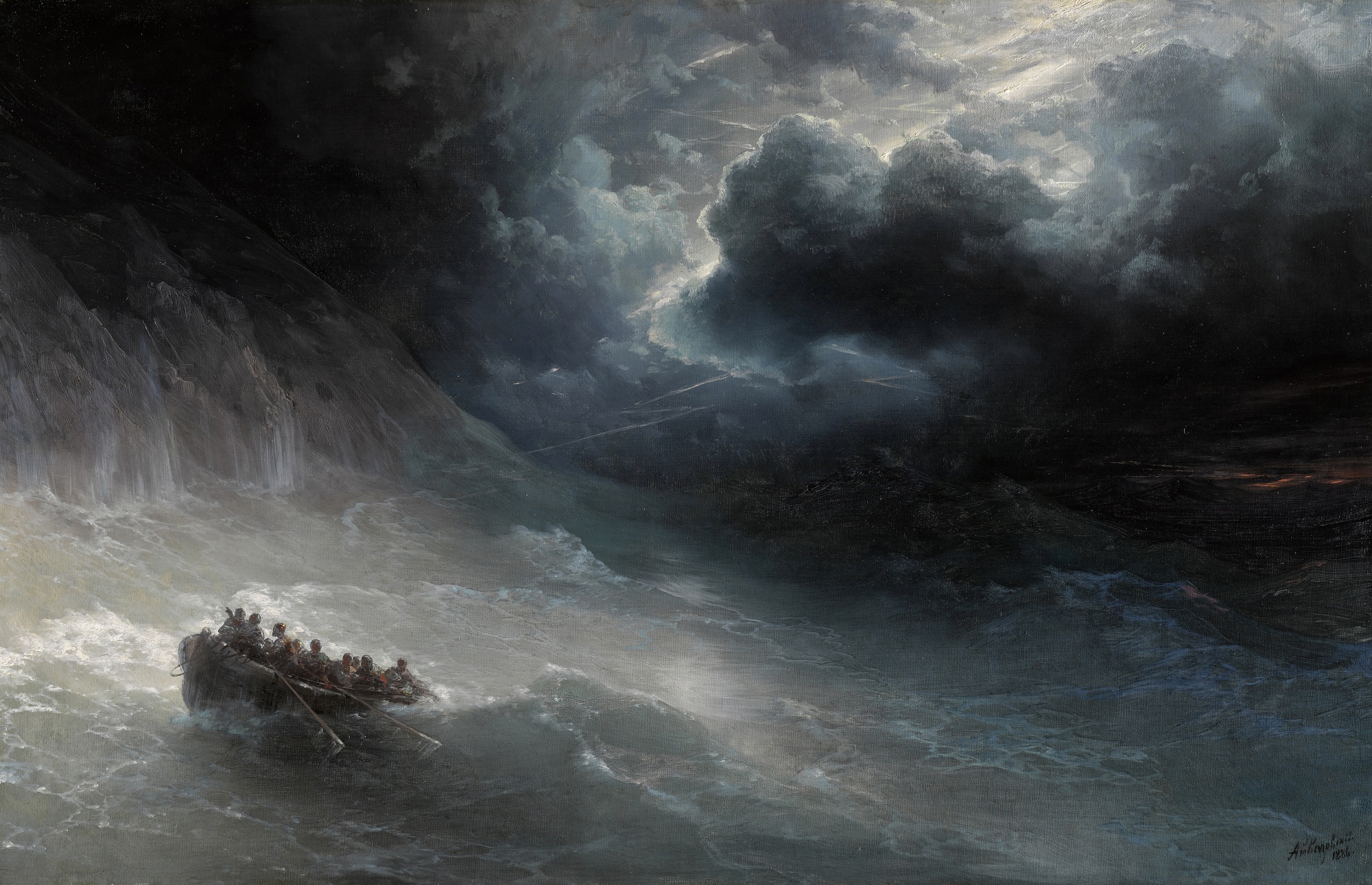
Aivazovsky: Master of the Eternal Sea
Artist Spotlight · The Collection Editorial
“The movement of the waves, the sky, the vast expanse of the sea: these are my life and my element.”
Ivan Aivazovsky
Stand before any major Aivazovsky canvas and the experience is immediate and physical. The light does not simply illuminate the scene; it seems to emanate from within the water itself, as though the sea holds a source of illumination that no storm can extinguish. In recent years, the market for this extraordinary Russian Romantic painter has surged with renewed conviction, with major auction houses in London and New York regularly achieving seven figure results for significant works. His paintings arrive at sale with the kind of expectation usually reserved for the great European masters, and they rarely disappoint.
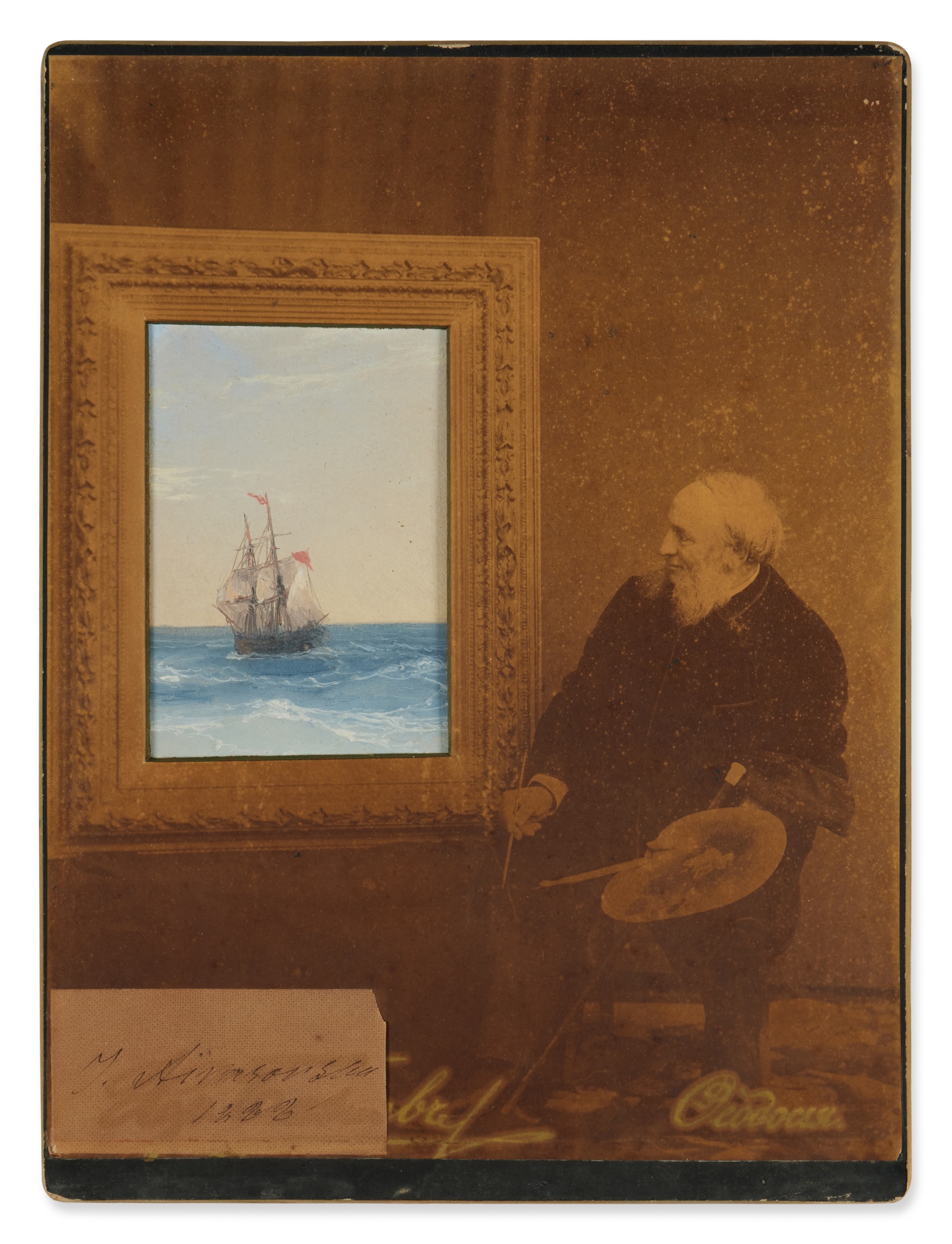
Ivan Konstantinovich Aivazovsky
A Ship off the Coast
That appetite reflects something deeper than fashion: it reflects the enduring, almost visceral power of his vision. Ivan Konstantinovich Aivazovsky was born in 1817 in Feodosia, a port city on the Crimean coast then under the rule of the Russian Empire. The city had been a thriving center of trade for centuries, shaped by Greek, Genoese, and Ottoman influences, and growing up beside the Black Sea gave the young Aivazovsky an intimacy with water that would define every decade of his working life. Recognizing his extraordinary talent, local officials helped him secure a place at the Imperial Academy of Arts in Saint Petersburg, where he enrolled in 1833 at the age of sixteen.
He studied under the French marine painter Philippe Tanneur and the celebrated landscapist Maxim Vorobiev, absorbing technical foundations that he would spend the rest of his life transcending. His early promise was confirmed with startling speed. By the late 1830s he had attracted the attention of the Russian court and was sent by the Academy on a scholarship journey to Europe, spending time in Rome, Venice, and across the Mediterranean. These years were formative in ways that went beyond technique.
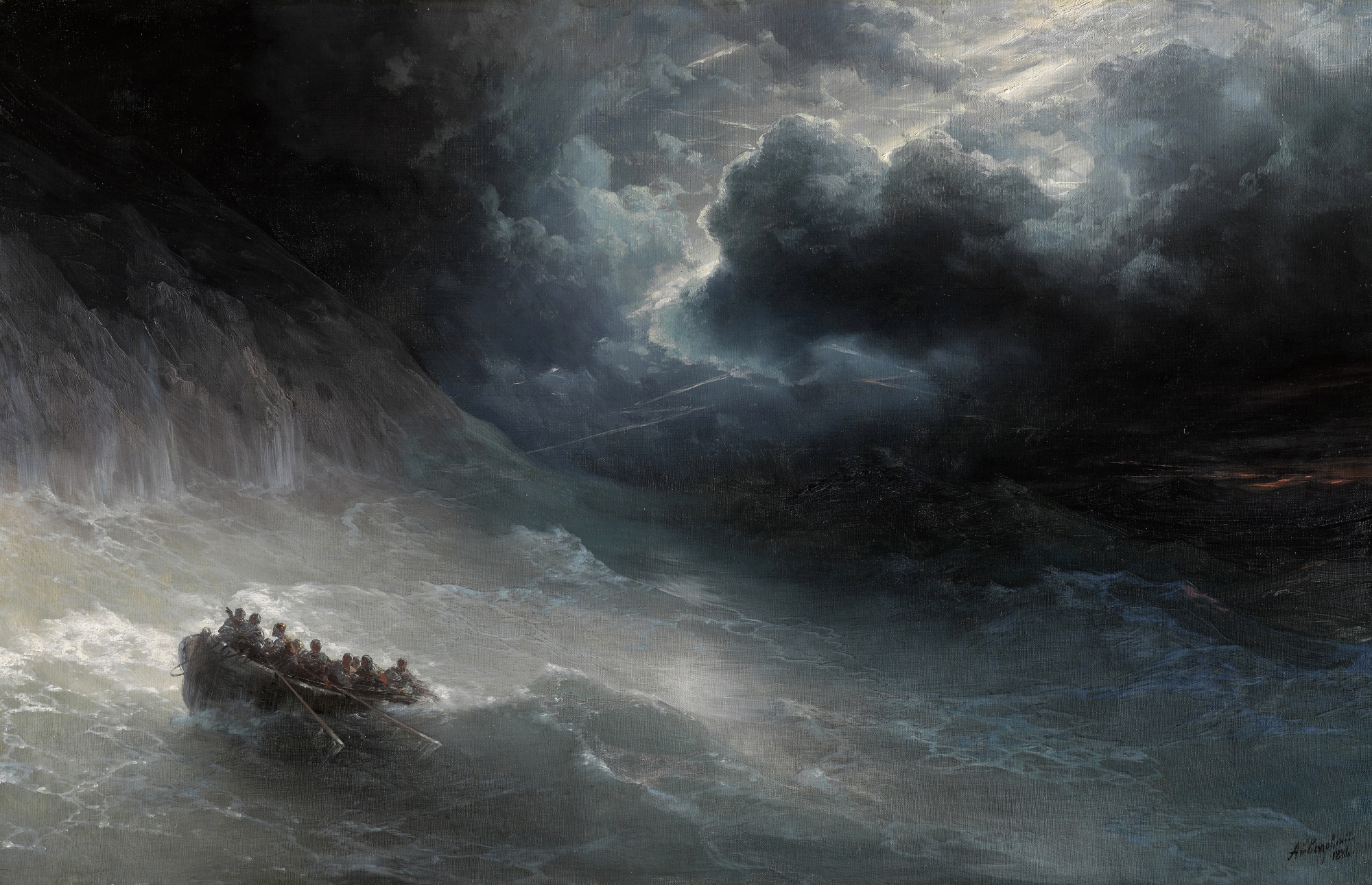
Ivan Konstantinovich Aivazovsky
The Wrath of the Seas
He encountered the work of J.M.W. Turner in England, and while the two painters represent quite different temperaments, both were consumed by the question of how light and water could be made to coexist on a flat surface in a way that felt true to lived experience.
Aivazovsky returned to Russia with a fully formed artistic identity and an ambition that would sustain over six thousand completed works across a career lasting more than six decades. The paintings that define his reputation are almost always organised around a single, overwhelming atmospheric event. A storm building or breaking, moonlight falling across open water, a vessel straining against forces that dwarf it entirely. His technique involved working with great speed while the paint was still wet, building translucent layers of colour that create the sensation of light passing through water rather than simply reflecting off its surface.
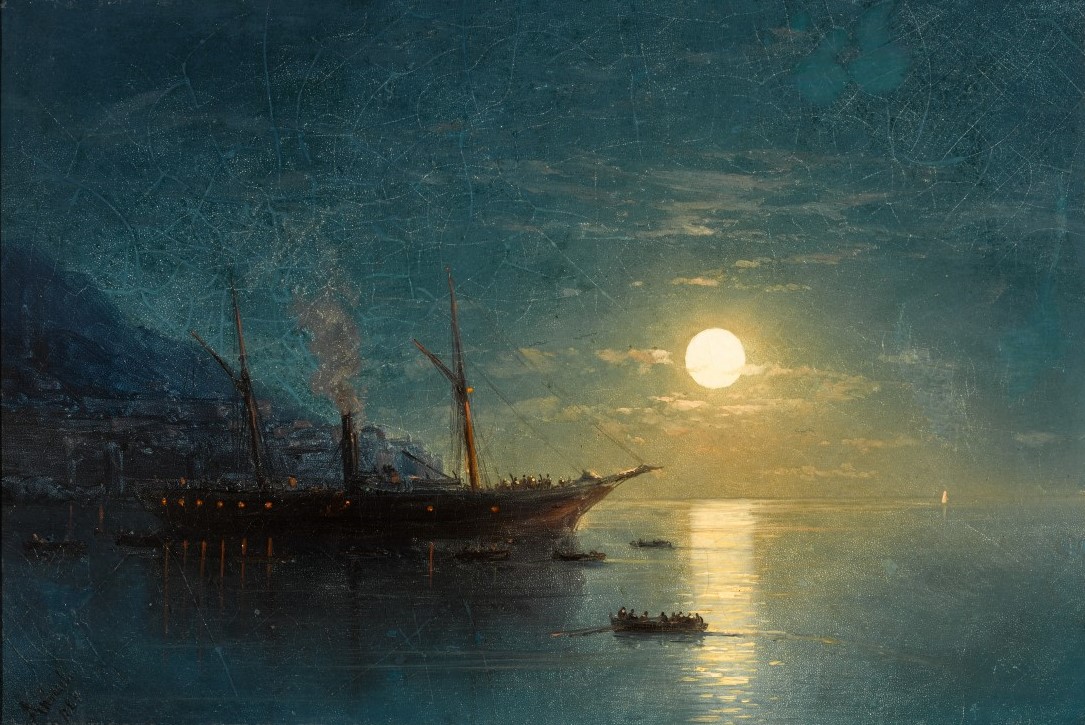
Ivan Konstantinovich Aivazovsky
Steamboat on a Moonlit Night
Works such as The Ninth Wave, painted in 1850 and held in the State Russian Museum in Saint Petersburg, represent this method at its most operatic: survivors clinging to wreckage while the sea rises around them in a wave of almost supernatural scale, yet bathed in a warm golden light that transforms catastrophe into something approaching the sublime. His moonlit nocturnes achieve a different register entirely, quieter and more meditative, but equally masterful in their handling of reflected light on moving water. Among the works currently available through The Collection, several demonstrate precisely why collectors are drawn to Aivazovsky with such consistency. Steamboat on a Moonlit Night and Moonlight over the Dnieper both show his nocturnal palette at its most refined, the water surface rendered as an intricate mosaic of silver and indigo that rewards extended looking.
A Moonlit Night on the Crimean Coast carries the particular emotional weight of a place he knew intimately and returned to throughout his life, having made Feodosia his permanent home and built a studio there that he opened to the public in 1880, making it one of the earliest artist museums in Russia. His pair of Southern Italian views, depicting the Gulf of Naples and the Bay of Pozzuoli, demonstrate the breadth of his geographic imagination and the way his Mediterranean travels left permanent marks on his visual memory. Even a work like Winter in Ukraine, executed in pencil and chalk, reveals the underlying draughtsmanship that his most spectacular oils can sometimes obscure. From a collecting perspective, Aivazovsky occupies a position that is both historically secure and actively dynamic.
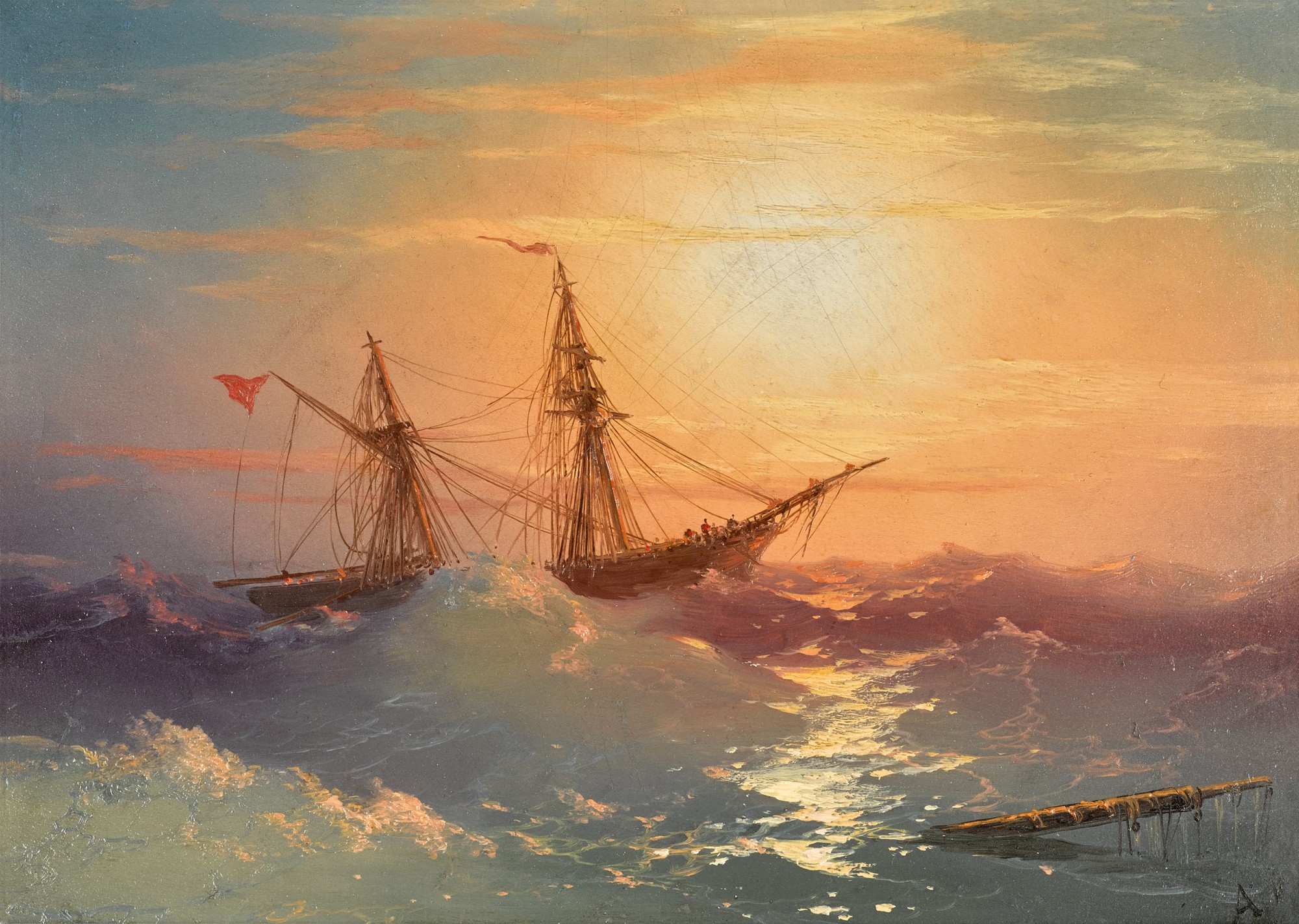
Ivan Konstantinovich Aivazovsky
Ship at Sea
His works are held in the Hermitage, the Tretyakov Gallery, the Russian Museum, and significant private collections across Europe, the United States, and the Middle East, which speaks to the universality of his appeal across cultural contexts. Smaller format works and those on board or card offer an accessible entry point for collectors who wish to engage with his practice, and they often display the same qualities of light and atmosphere that characterise his large exhibition canvases. When assessing a work, the consistency of his signature periods matters, as does the condition of varnish layers that can dramatically affect the luminosity for which he is celebrated. The market for Aivazovsky has proven resilient across economic cycles in a way that reflects genuine connoisseurial regard rather than speculative enthusiasm.
To understand Aivazovsky fully, it helps to place him within the broader tradition of marine and landscape painting in the nineteenth century. He is a natural point of comparison with the Dutch Golden Age marine painters such as Willem van de Velde the Younger, whose meticulous attention to sea conditions he admired, and with the English tradition running from Turner through to the Norwich School. Among his Russian contemporaries, his sensibility differed markedly from the social realism that would come to dominate Russian painting in the second half of the century. He was never primarily interested in human drama or political narrative; the sea itself was his subject, and human figures in his compositions exist largely to provide scale and to anchor the emotional stakes of survival and transcendence.
Aivazovsky died in Feodosia in 1900, reportedly still at work on a canvas depicting a Turkish ship in distress, completing a career that had spanned the entirety of the Romantic age and outlasted many of its central figures. More than a century later, his paintings continue to command attention in the world's great auction rooms and museum galleries not because they are historical curiosities but because they address something permanent in human experience: the desire to stand at the edge of something vast and beautiful and feel fully alive within it. For collectors who respond to painting at that level of ambition and feeling, Aivazovsky remains an essential and endlessly rewarding presence.
Explore books about Ivan Konstantinovich Aivazovsky
Ivan Aivazovsky
Aleksei Lebedev
Aivazovsky
Vladimir Petrov
Ivan Konstantinovich Aivazovsky: His Life and Work
Maria Davydova
The Paintings of Ivan Aivazovsky
Natalia Spassky
Aivazovsky and the Sea
Georgy Sternin