Ivan Chuikov
Ivan Chuikov, Master of the Visible World
Artist Spotlight · The Collection Editorial
There is a particular kind of pleasure that comes from standing before a work by Ivan Chuikov and feeling the ground shift beneath your assumptions. His paintings ask you to look again, and then again, layering meaning beneath meaning until the act of seeing itself becomes the subject. Though Chuikov passed away in 2020, the years since have brought renewed attention to his practice, with collectors and institutions across Europe reassessing the extraordinary body of work he produced over six decades. His art, long celebrated in Moscow conceptualist circles, now commands serious attention in the international market, and rightly so.
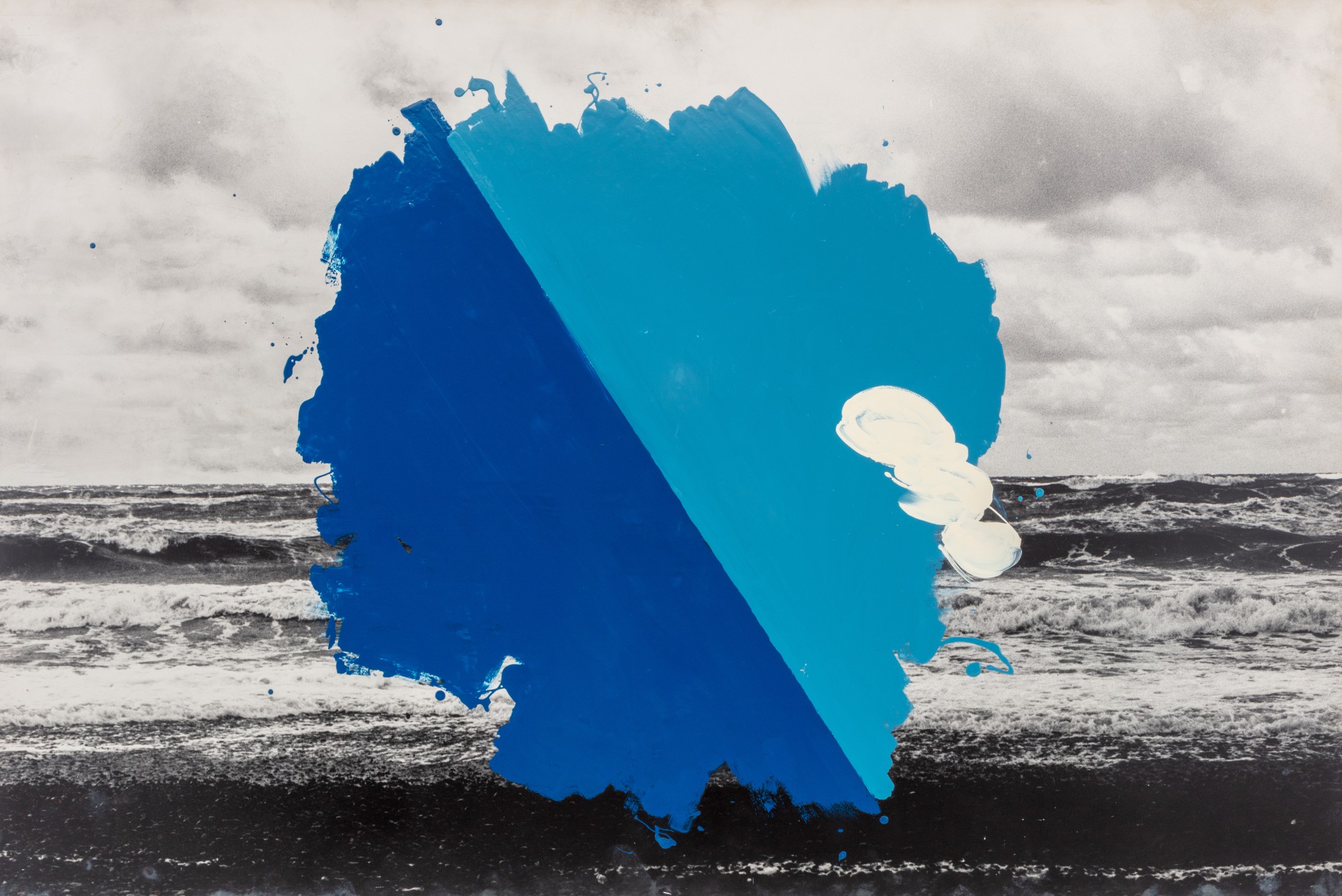
Ivan Chuikov
Point of View I
Ivan Semyonovich Chuikov was born in Moscow in 1935, coming of age in a Soviet culture that strictly policed the boundaries of acceptable artistic expression. The official doctrine of Socialist Realism dominated institutions, galleries, and art schools, leaving little room for experimentation. Yet Chuikov trained rigorously in the classical tradition, studying at the Surikov Moscow State Academic Art Institute, where he absorbed the technical discipline that would underpin everything he later made. His mastery of paint handling, his sensitivity to surface, and his understanding of pictorial structure all grew from this formal education, even as his intellectual ambitions eventually carried him far beyond its constraints.
By the 1960s and into the 1970s, Chuikov had found his way into the vibrant underground of Moscow Conceptualism, a movement that included figures such as Ilya Kabakov, Erik Bulatov, and Vitaly Komar and Alexander Melamid. This community gathered in private apartments, passed ideas through informal networks, and built a sophisticated art discourse entirely outside the reach of official Soviet culture. For Chuikov, this context was galvanizing. He began to interrogate the very mechanisms of representation, asking what a painting actually does when it claims to show us something, and what conventions we bring to the act of looking that we never quite examine.
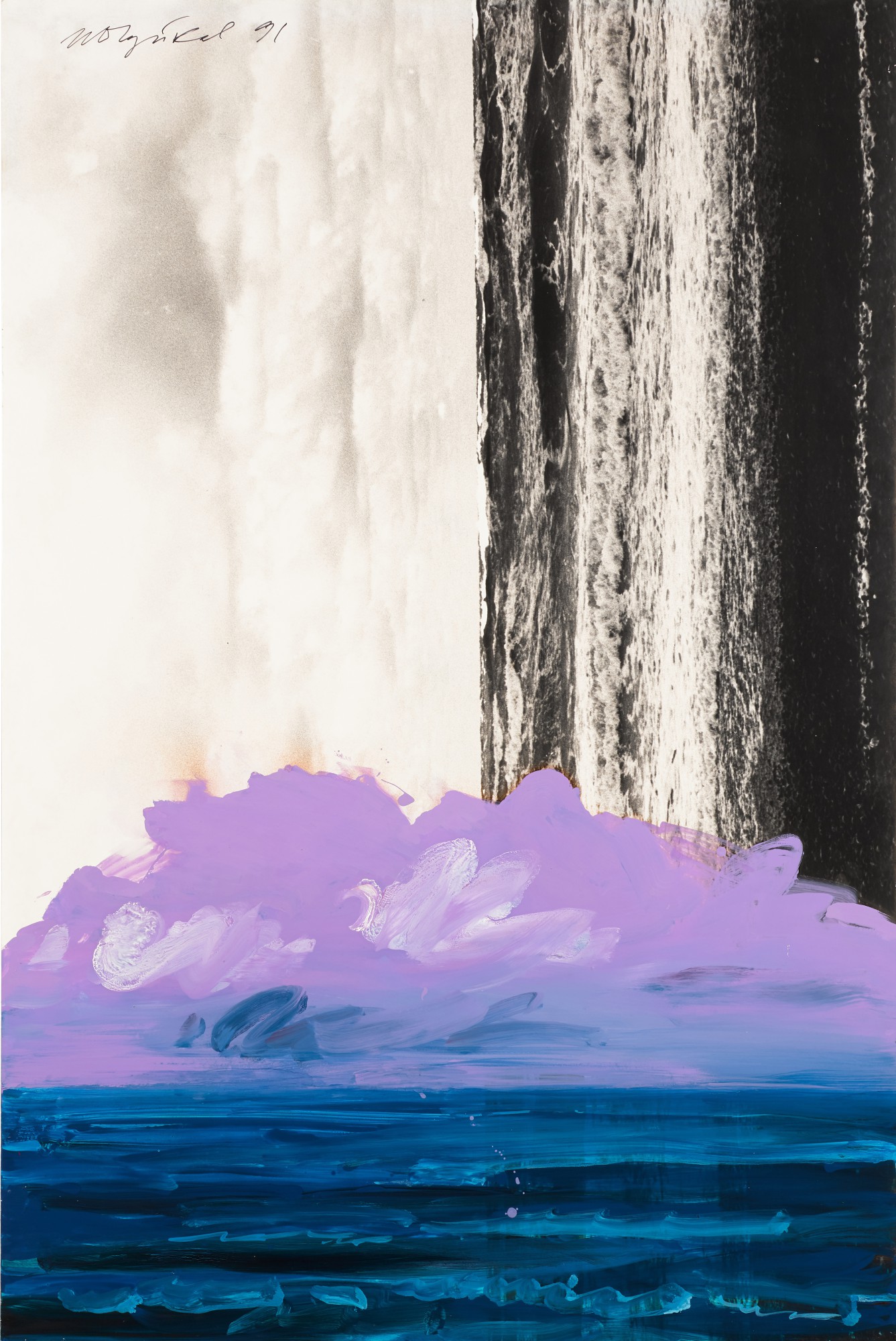
Ivan Chuikov
Point of View IV
His work became an ongoing philosophical investigation dressed in the language of objects and paint. The signature achievement of Chuikov's career is perhaps his Windows series, a long running body of work in which painted or printed images of windows are set into actual wooden frames complete with hardware, blurring the boundary between the painted illusion and the physical reality of the object. Works such as Window LI and Window XLIII exemplify this approach, using vinyl and enamel paint on wood and masonite to create pieces that are simultaneously paintings, sculptures, and conceptual propositions. The window, as a motif, carries enormous art historical weight: it is the classical metaphor for the picture plane itself, the Renaissance idea of the painting as a transparent opening onto an imagined world.
Chuikov takes that metaphor and makes it literal, then uses that literalness to make you question everything you thought you understood about illusion. The result is work that feels both cerebral and profoundly sensory. Equally compelling is his Fragments series, in which Chuikov presents portions of images, cropped and isolated on masonite grounds, often executed in alkyd enamel with a precision that recalls both commercial signage and high modernist painting. Fragment No.
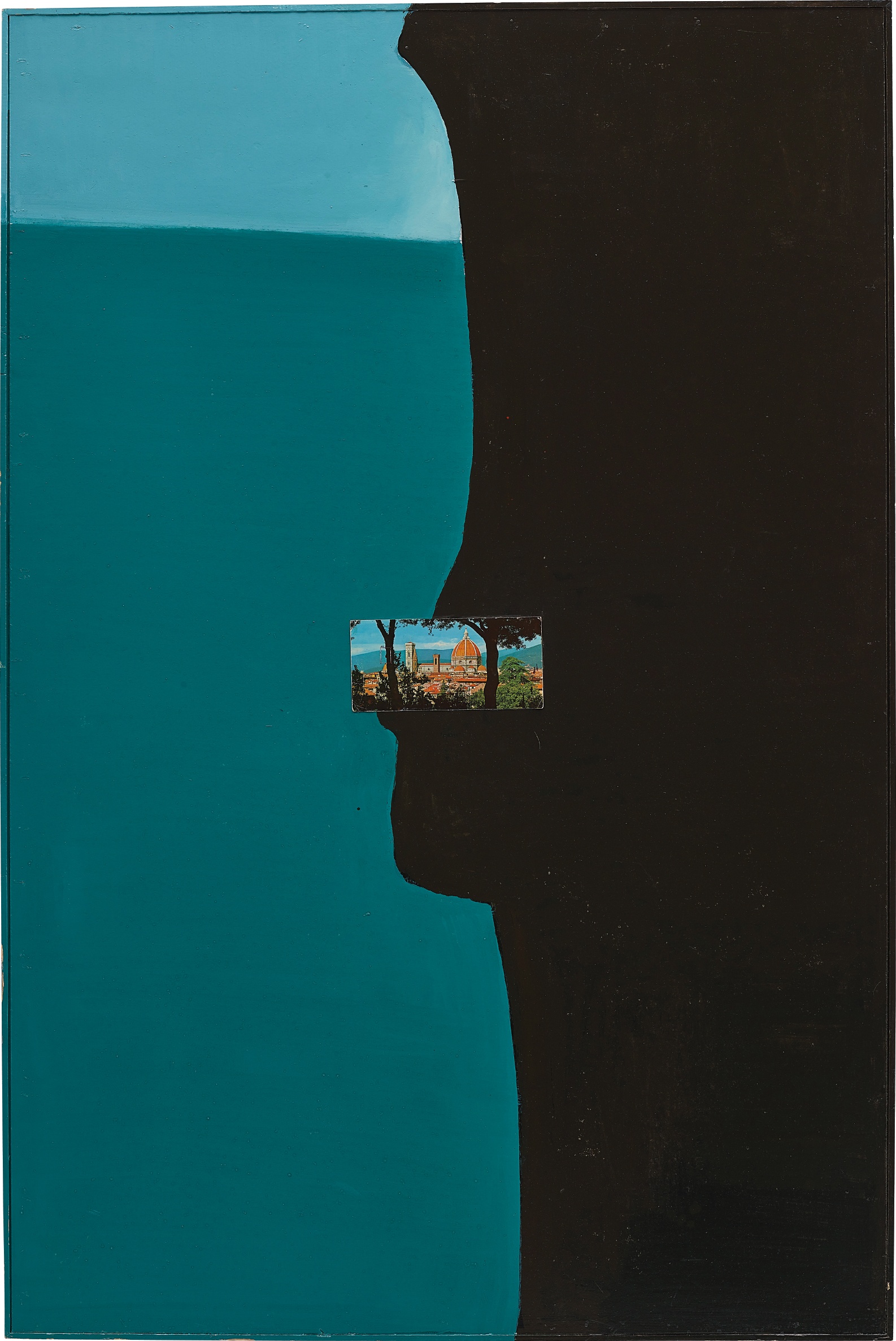
Ivan Chuikov
#19 from the series 'POSTCARD FRAGMENTS', 2004
4, made in 1982, and Fragment No. 6 are exemplary works in this vein, presenting the viewer with enough visual information to tantalize but never quite enough to resolve. The Postcard Fragments series, including the 2004 work No. 19, extends this inquiry into the realm of paper collage combined with alkyd enamel on masonite, layering found imagery with painted intervention in ways that feel simultaneously nostalgic and rigorously analytical.
These are works about the gap between what images promise and what they deliver, about the conventions that make pictures legible and what happens when those conventions are gently, precisely disrupted. The Point of View series represents yet another facet of his restless intelligence. In works such as Point of View I, Point of View III, and Point of View IV, Chuikov applies enamel paint directly onto photographs laid on board, creating a dialogue between the mechanical reproduction of reality and the handmade mark. The photographic image beneath carries the authority of documentation, the sense that something was really there, really seen.
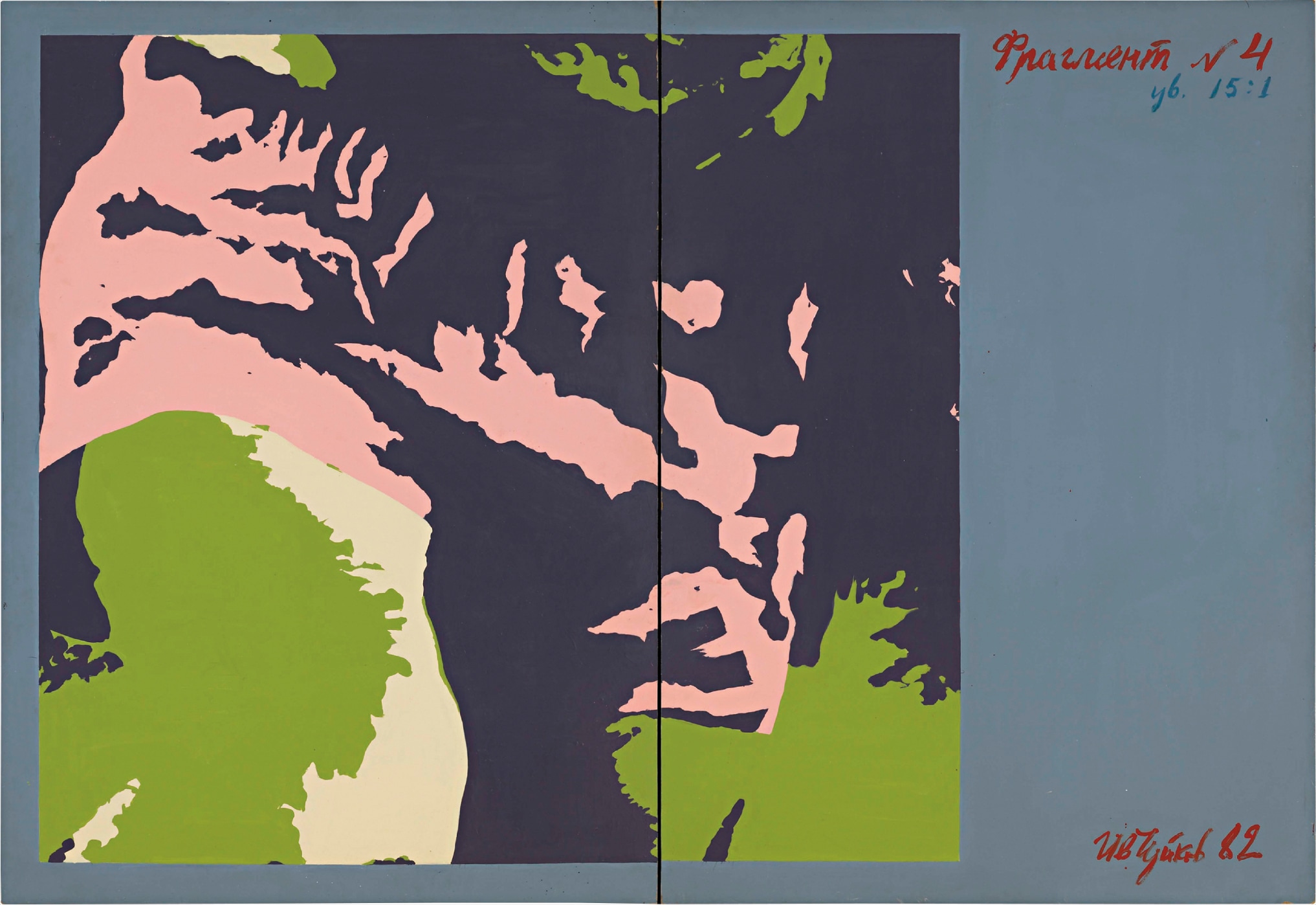
Ivan Chuikov
Fragment no4, 1982
The painted surface above insists on the artist's presence, on interpretation, on the subjectivity inherent in any act of looking. Together, they produce images that feel both found and made, both objective and deeply personal. Blue Square, dedicated to Malevich and executed in enamel on photograph laid on masonite, extends this into direct conversation with the history of Russian abstract painting, honoring the suprematist tradition while gently complicating its claims to pure visual truth. For collectors, Chuikov's work offers a remarkable combination of qualities.
His surfaces reward close attention, the precise application of enamel over varied grounds creating textures and tonal relationships that reproduce poorly and must be experienced in person. His intellectual framework connects him to one of the most historically significant art movements of the twentieth century, placing him in permanent dialogue with Kabakov and Bulatov, artists whose market values have risen substantially as the importance of Moscow Conceptualism has become better understood in the West. At the same time, Chuikov's work is not merely an art historical artifact. It speaks directly to contemporary concerns about images, media, representation, and the constructed nature of vision that feel urgently relevant in a world saturated with screens and reproductions.
Collectors drawn to Richter's photographic paintings or the conceptual rigour of John Baldessari will find in Chuikov a kindred spirit working in a distinct and compelling register. Chuikov's legacy is one of principled independence and sustained intellectual commitment. He worked for decades in conditions that made artistic experimentation genuinely risky, building a practice of extraordinary coherence and depth without the support of institutional validation. When the Soviet system dissolved and Russian artists gained access to the international art world, Chuikov exhibited in Germany and across Europe, finding audiences who recognized the quality and ambition of what he had been making all along.
He continued working until the end of his life, refining and extending ideas he had been pursuing for half a century. To encounter his work today is to encounter an artist who never stopped asking the most fundamental questions about what painting is and what seeing means, and who answered those questions with an elegance and precision that is simply thrilling to behold.