Italian, 17th century
Italy's Golden Century Glows Anew
Artist Spotlight · The Collection Editorial
There are moments in the history of collecting when anonymity becomes its own form of eloquence. At Christie's Paris in recent seasons, and across the salerooms of Sotheby's and Bonhams in London, a quietly consistent phenomenon has drawn the attention of serious collectors and curators alike: works attributed to the broad yet luminous designation of Italian, 17th century have been achieving prices that reward patience, connoisseurship, and a genuine love of the Baroque period. These are objects and paintings that exist outside the easy comfort of a famous signature, yet carry within them the full weight of one of the most transformative eras in the history of Western art. To engage with them is to step directly into a world of molten bronze, candlelit devotion, and the revolutionary grammar of light and shadow that changed everything.
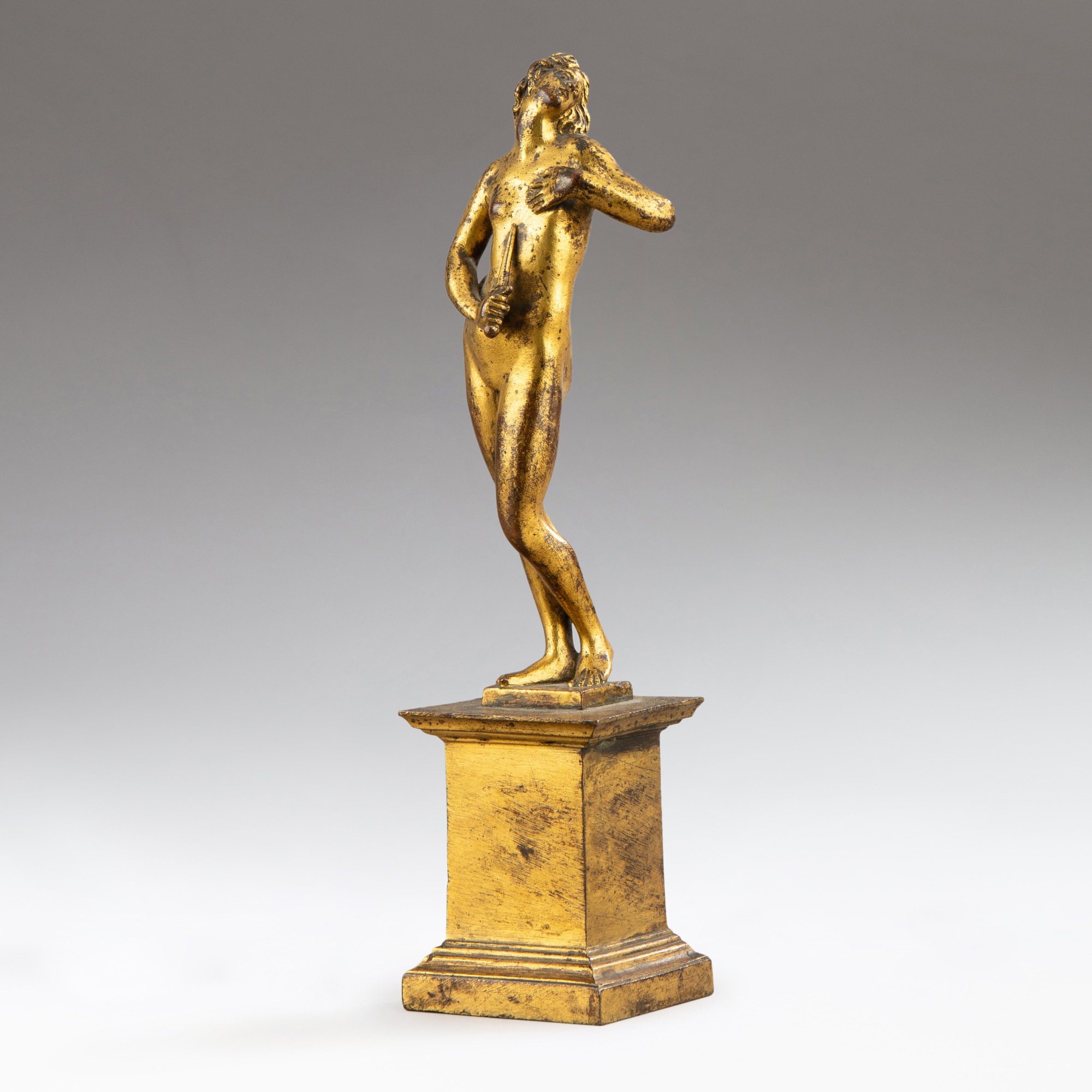
Italian, 17th century
Lucrèce
The seventeenth century in Italy was not a single moment but a sustained eruption of creative energy that radiated outward from Rome, Naples, Florence, Bologna, and Venice to reshape artistic practice across the entire European continent. The catalyst, of course, was Michelangelo Merisi da Caravaggio, whose brutal naturalism and theatrical chiaroscuro arrived like a thunderclap in the final years of the sixteenth century and reverberated for decades afterward. But the Italy that produced the works we now gather under the designation Italian, 17th century was also the Italy of Gian Lorenzo Bernini's sculpted ecstasies, of the Carracci academy's rigorous classicism, of Pietro da Cortona's ceiling frescoes, and of the deeply felt religious reformation that the Council of Trent had set in motion. Artists working in this environment absorbed all of it, negotiating between grandeur and intimacy, between the public commission and the private devotional object.
The formation of an artist in seventeenth century Italy was an intensely communal affair. Young painters, sculptors, and metalworkers entered workshops as adolescents, grinding pigments and casting small bronzes before they were permitted to touch a principal work. The guild structures of Rome and Florence maintained rigorous standards of material practice, which is precisely why objects from this period so often display a technical mastery that seems almost impossible to attribute to a single anonymous hand. A gilt bronze figure of Lucrèce, cast with psychological intensity and mounted on an integral gilt bronze base, speaks of a craftsman who understood not only the lost wax process but also the iconographic tradition stretching back through Renaissance humanism to ancient Rome.
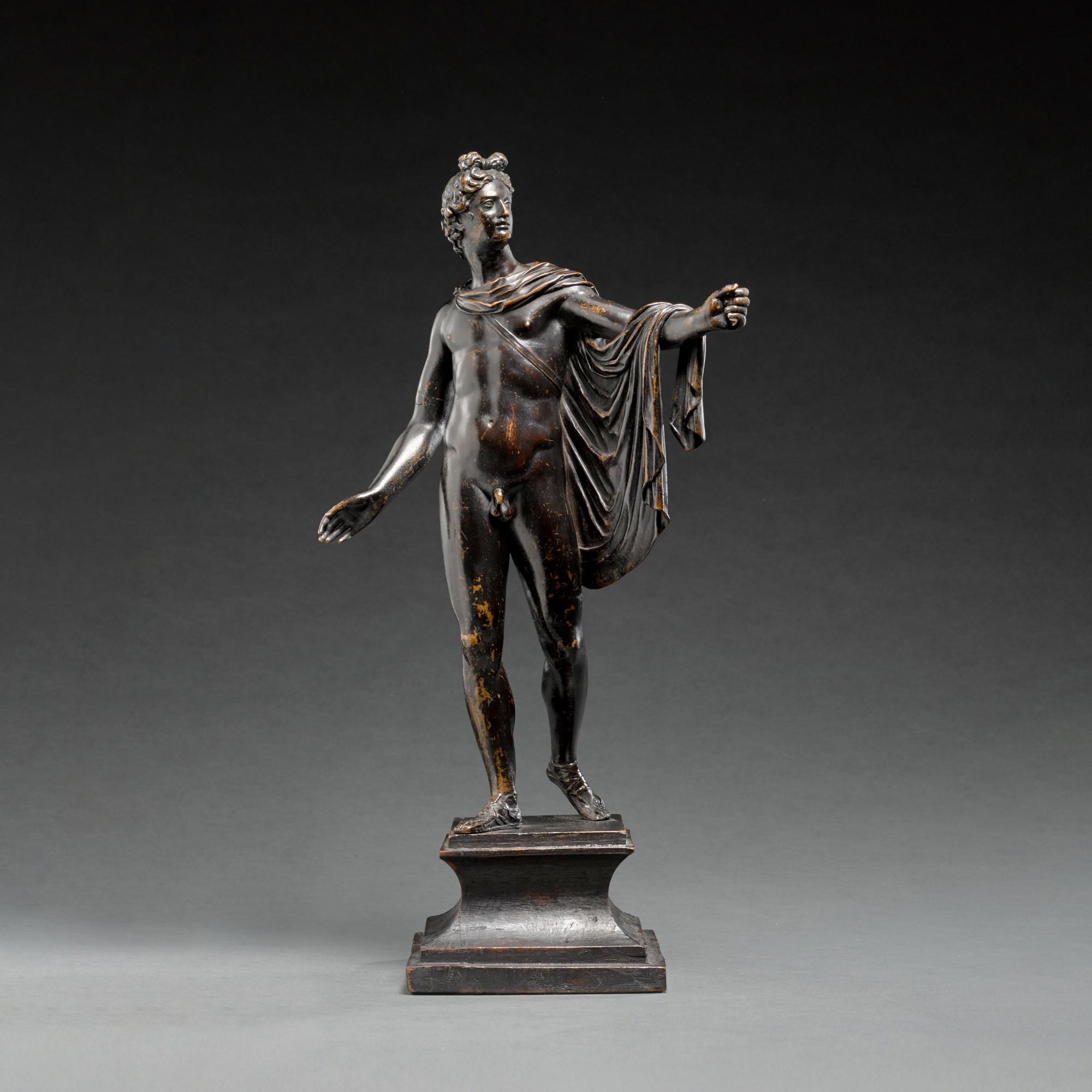
Italian, 17th century
Apollo Belvedere
The surface treatment, the careful chasing of drapery and flesh, the decision about gilding: each of these choices was deliberate and learned. What makes the sculpture and decorative objects of this period so compelling to contemporary collectors is precisely their range of register. Consider the majestic calm of a bronze Apollo Belvedere mounted on an ebonised wood base: this is an object that participates in a centuries long conversation between antiquity and the early modern period, between the Hellenistic original in the Vatican collections and the workshops of Rome that spent the seventeenth century studying, copying, and reimagining it. Or consider the spiritual gravity of a parcel gilt bronze Risen Christ on an ebonized wood socle, where the warmth of the partial gilding directs the eye toward divinity while the darker bronze grounds the figure in human suffering.
These are not merely decorative objects. They are theological arguments made in metal. Similarly, a pair of gilt bronze Orants mounted on octagonal polychrome marble bases represents the kind of sophisticated ensemble thinking that characterised the most ambitious Italian interiors of the period, where sculpture, precious stone, and gilded surface were orchestrated into a unified devotional or dynastic statement. The marble works in this tradition carry their own distinct authority.
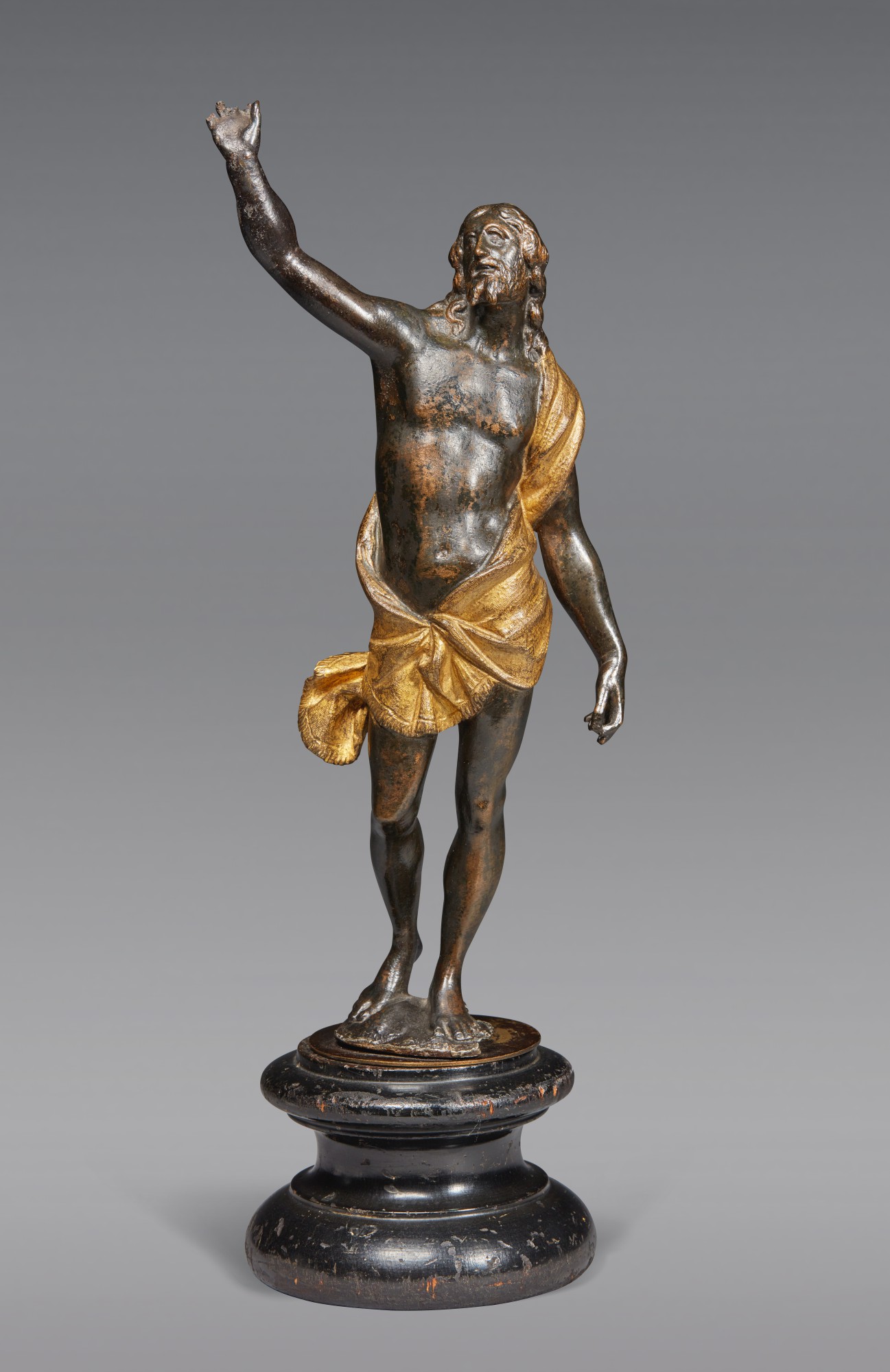
Italian, 17th century
Risen Christ
A Bust of Hesiod in marble connects the seventeenth century Italian workshop directly to the ancient Greek poet, whose Theogony and Works and Days were among the foundational texts of classical education. That an Italian sculptor of this era would carve such a subject tells us something important about the intellectual ambitions of the period and about the collectors who commissioned such portraits of antiquity for their studioli and libraries. Equally revealing is the presence of a Bust of Caesar in bronze on a turned ebonized wood socle, a type of object that flourished in the collections of Roman nobility and educated patrons throughout the century. The Tête de Vierge, by contrast, belongs to a wholly different emotional register: tender, inward, suffused with the particular quality of Marian devotion that Italian religious painting brought to its highest expression in this era.
And a silver Pomander, indistinctly marked, reminds us that the finest Italian workshops of the seventeenth century were as fluent in precious metalwork as in bronze and marble. For collectors approaching this field today, the Italian, 17th century designation offers something genuinely rare in the current market: the opportunity to acquire objects of historical depth and material distinction at prices that reflect genuine uncertainty of attribution rather than any deficiency in quality. The most seasoned advisors in this space will tell you to look first at the quality of casting and chasing in bronze works, at the evidence of original patination, and at the coherence between subject matter and period bases, many of which are themselves works of fine craftsmanship. Provenance research has advanced enormously in recent decades, and what arrives at auction today as Italian, 17th century sometimes yields, on further study, an attribution to a documented workshop or even a named master.
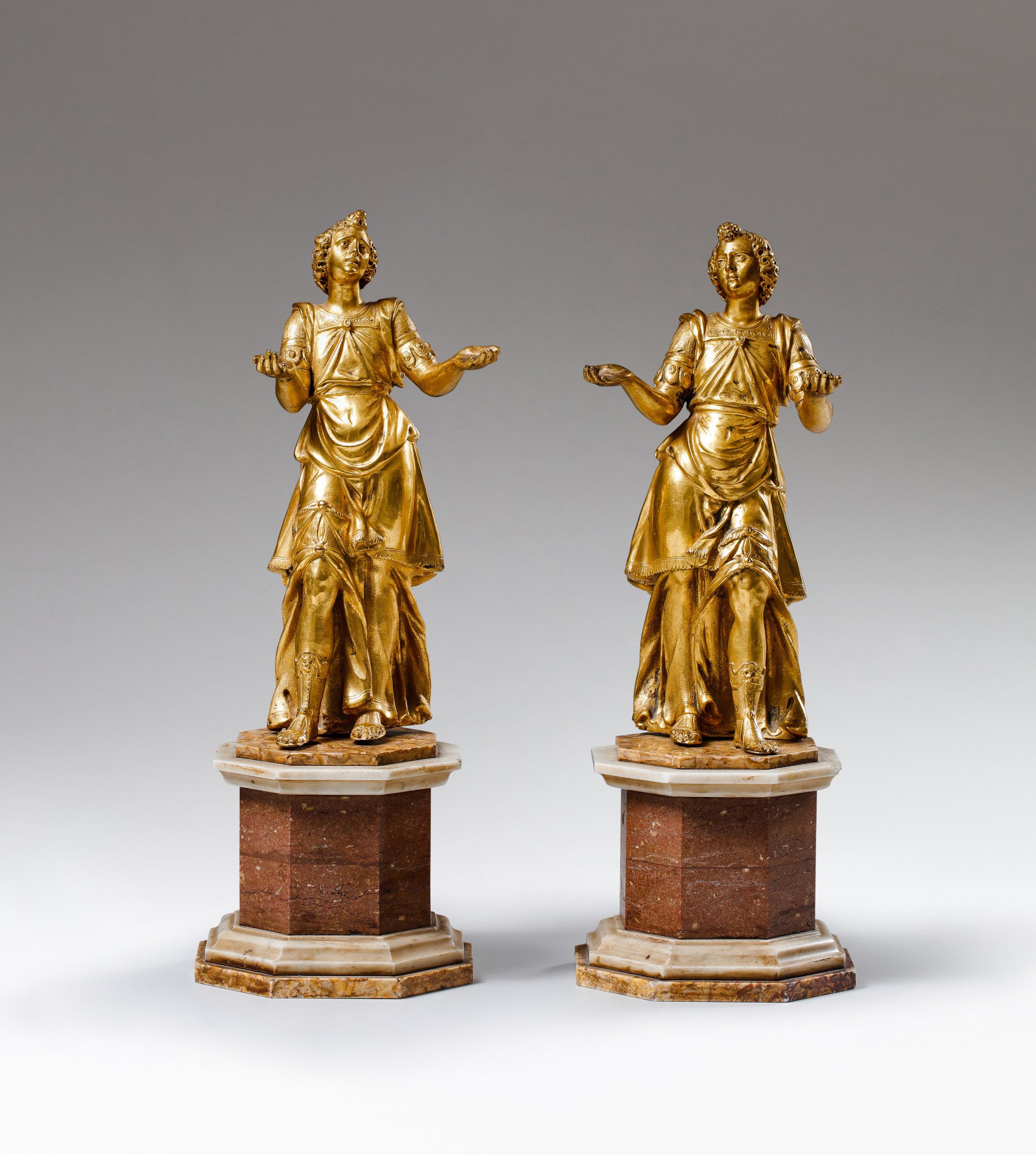
Italian, 17th century
Paire d'Orants
The field rewards the curious and the patient. In the broader art historical conversation, works of this designation sit in the company of named masters whose influence permeated every corner of Italian practice: Orazio and Artemisia Gentileschi, Guido Reni, Guercino, Alessandro Algardi, and Francesco Fanelli, among many others. The anonymous works do not diminish in that company. They often illuminate it, offering evidence of how widely and how deeply the innovations of the great masters filtered into the workshops and foundries of the peninsula.
A collector who lives with a seventeenth century Italian bronze alongside a documented Algardi cast, or who places an anonymous Marian study in conversation with a Reni drawing, is engaging in exactly the kind of comparative looking that has always been the engine of connoisseurship. The legacy of Italian seventeenth century art is, in the truest sense, the legacy of the modern visual imagination. The dramatic lighting that defines so much of cinema, the sculptural presence that contemporary artists continue to both embrace and argue with, the devotional intensity that still moves viewers in museums from the Louvre to the Prado to the Uffizi: all of it flows, in some measure, from the extraordinary century that these works represent. To collect in this field is to participate in that inheritance directly, to hold in one's home or one's hands an object that was made when the world was learning, for the first time, to see.
Explore books about Italian, 17th century
The Lives of the Most Excellent Painters, Sculptors, and Architects
Giorgio Vasari
Le vite de' pittori, scultori et architetti moderni
Giovanni Baglione
Abecedario pittorico
Pellegrina Amoretti
The Art of Painting
Johannes Vermeer
Idea of the Temple of Painting
Federico Zuccari
Treatise on Painting
Leonardo da Vinci
Museum Florentinum
Francesco Bocchi
Description of the City of Rome
Leonardo Bufalini