Irving Penn
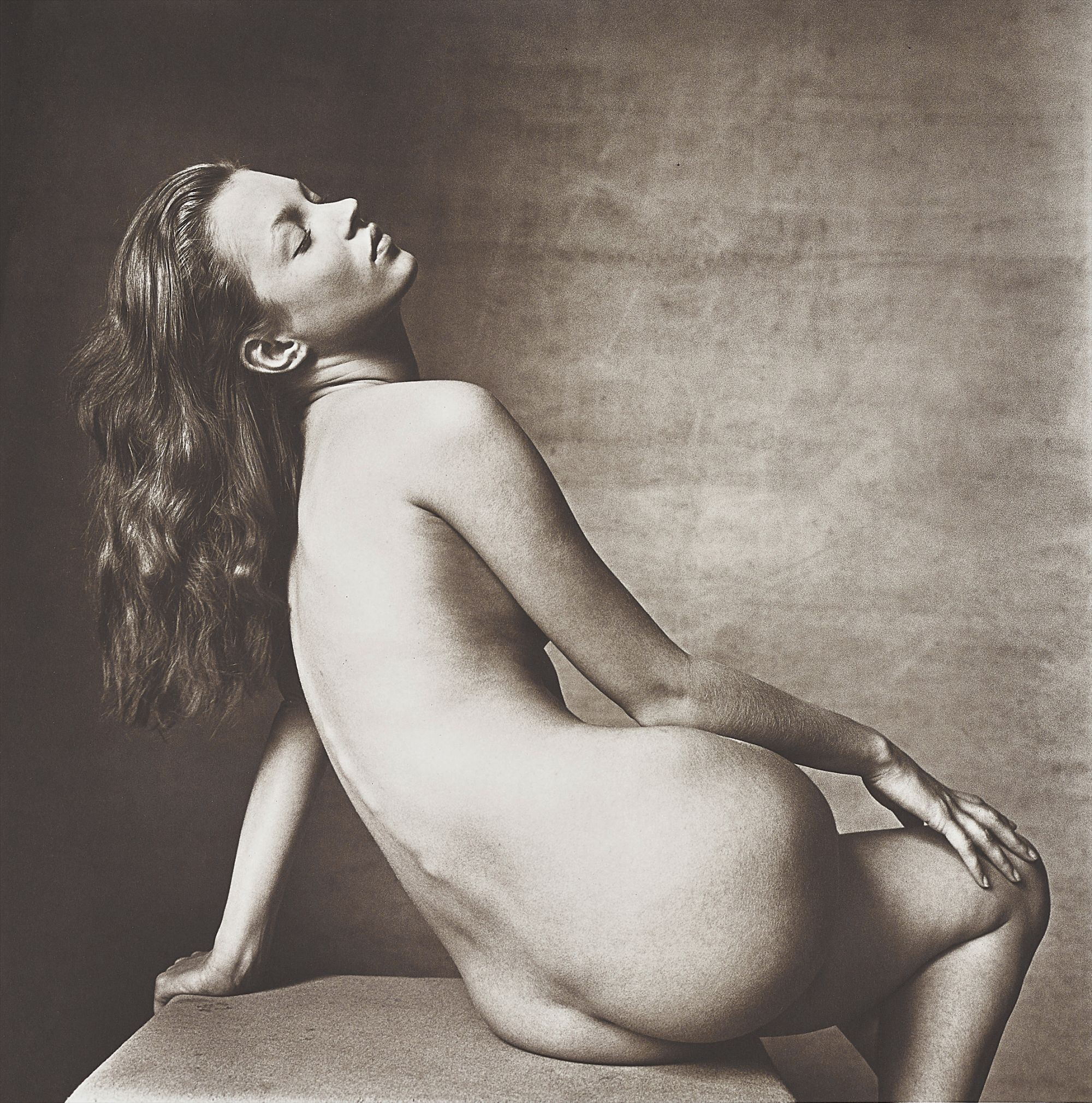
Irving Penn, Master of the Perfect Frame
Artist Spotlight · The Collection Editorial
“A good photograph is one that communicates a fact, touches the heart, and leaves the viewer a changed person.”
Irving Penn
There is a moment, standing before an original Irving Penn platinum palladium print, when the photograph stops being a photograph. The surface becomes something closer to a drawing, dense and luminous, with a tonal range that feels impossible for silver alone to hold. That experience, available at the world's great institutions including the Metropolitan Museum of Art, the Museum of Modern Art in New York, and the J. Paul Getty Museum in Los Angeles, is precisely what has secured Penn's place as one of the undisputed giants of twentieth century image making.
Irving Penn
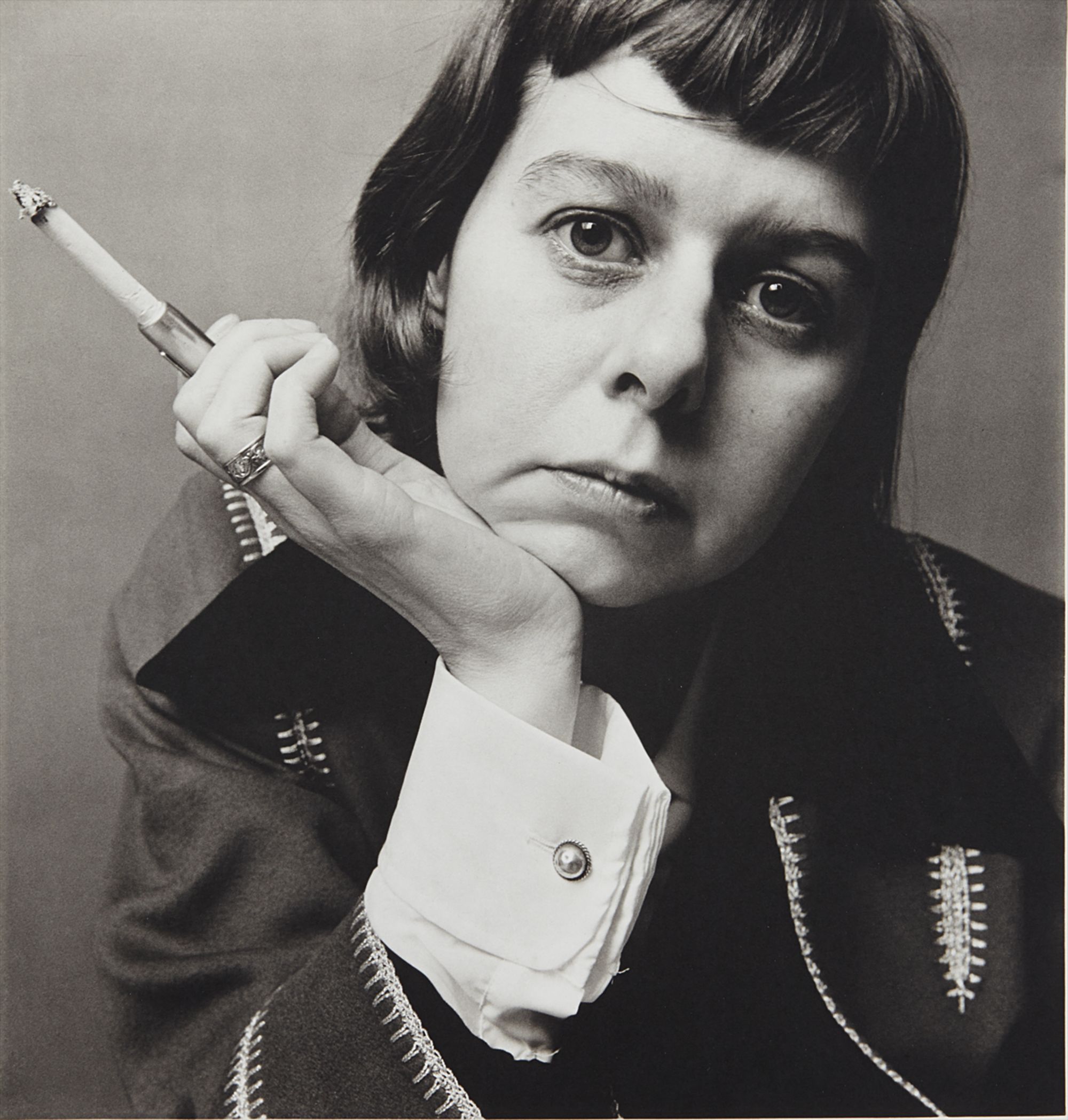
Carson McCullers, New York, May 10, 1970
His work continues to draw serious collectors and new admirers in equal measure, its authority only deepening with time. Irving Penn was born in 1917 in Plainfield, New Jersey, the son of a watchmaker and a nurse. He studied at the Philadelphia Museum School of Industrial Art under Alexey Brodovitch, the legendary art director who would also shape the sensibilities of Richard Avedon. That early training under Brodovitch was formative in the deepest sense: it instilled in Penn a rigorous understanding of design, negative space, and the relationship between image and page.
Before photography became his primary medium, Penn worked as an art director himself at Vogue, where he briefly attempted painting before Alexander Liberman, the magazine's creative director, encouraged him to pick up a camera instead. The rest belongs to the history of the medium. Penn's rise at Vogue, which began in earnest in the 1940s, was swift and absolute. His first Vogue cover appeared in October 1943, and from that point forward his work defined the visual language of American fashion photography for decades.
Irving Penn
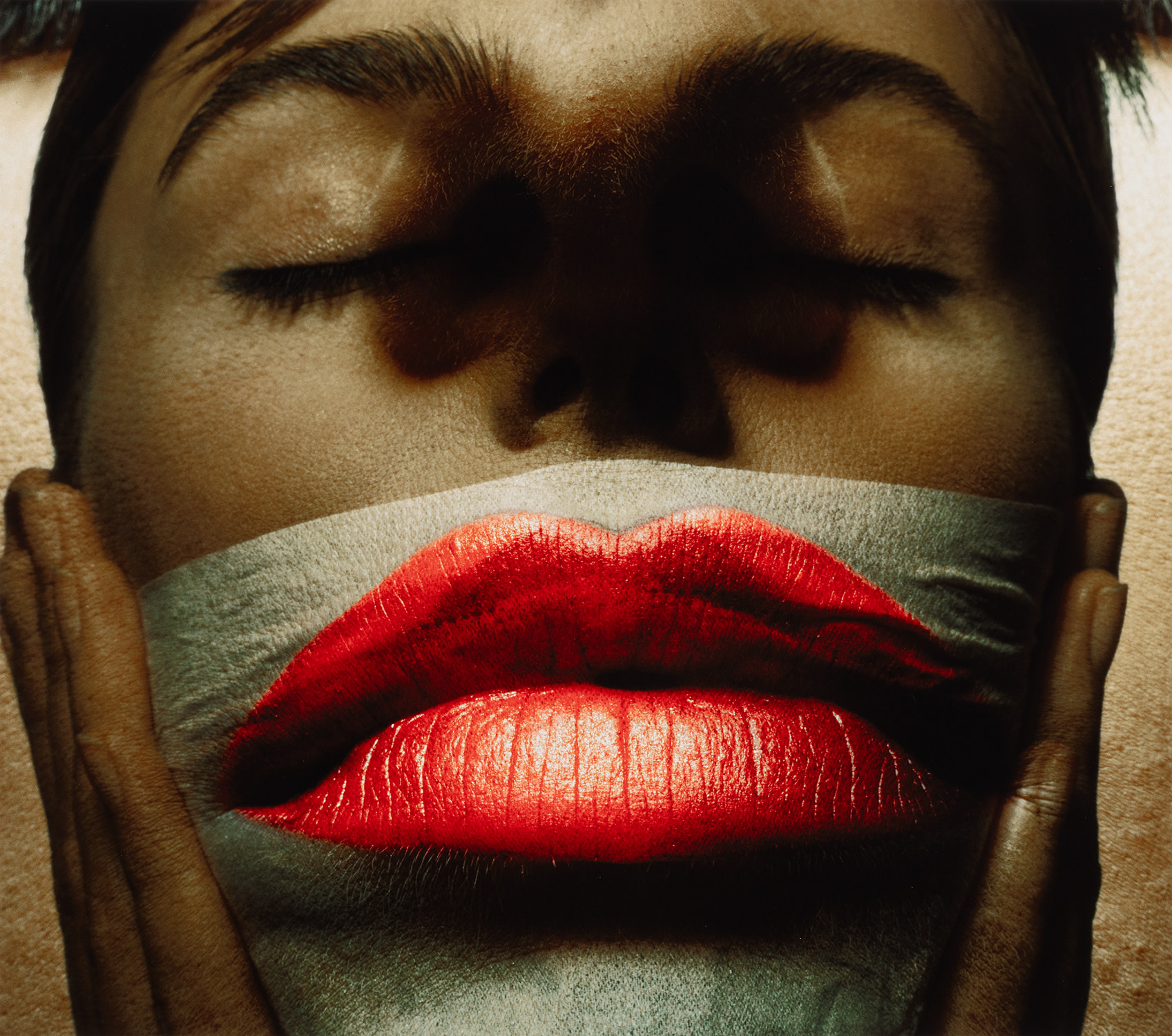
Red Lips, New York
But Penn was never merely a fashion photographer in the commercial sense. He brought the formal discipline of a painter to every assignment, reducing each image to its essential components: the subject, the light, and the space between. His early studio portraits, often shot against plain gray or white backgrounds or within the corner of two intersecting canvas flats, stripped away distraction and demanded everything from the person sitting before him. The result was an intimacy that felt almost uncomfortable in its honesty.
“The camera is an instrument that teaches people how to see without a camera.”
Irving Penn
The body of work Penn produced across his long career is staggering in its range and consistency. His portraits of cultural figures from Pablo Picasso to Truman Capote to Marlene Dietrich remain among the most psychologically compelling images of the twentieth century. Works such as his portrait of Carson McCullers, made in New York in 1970 and now available as a signed and numbered edition, demonstrate his uncanny ability to hold a subject in time without reducing them to a symbol or a type. His fashion work, including iconic images such as the Black and White Fashion study of Jean Patchett from 1950 and the playful elegance of Black and White Hat from the same year, show how completely he could transform a commercial brief into an act of pure visual intelligence.
Irving Penn
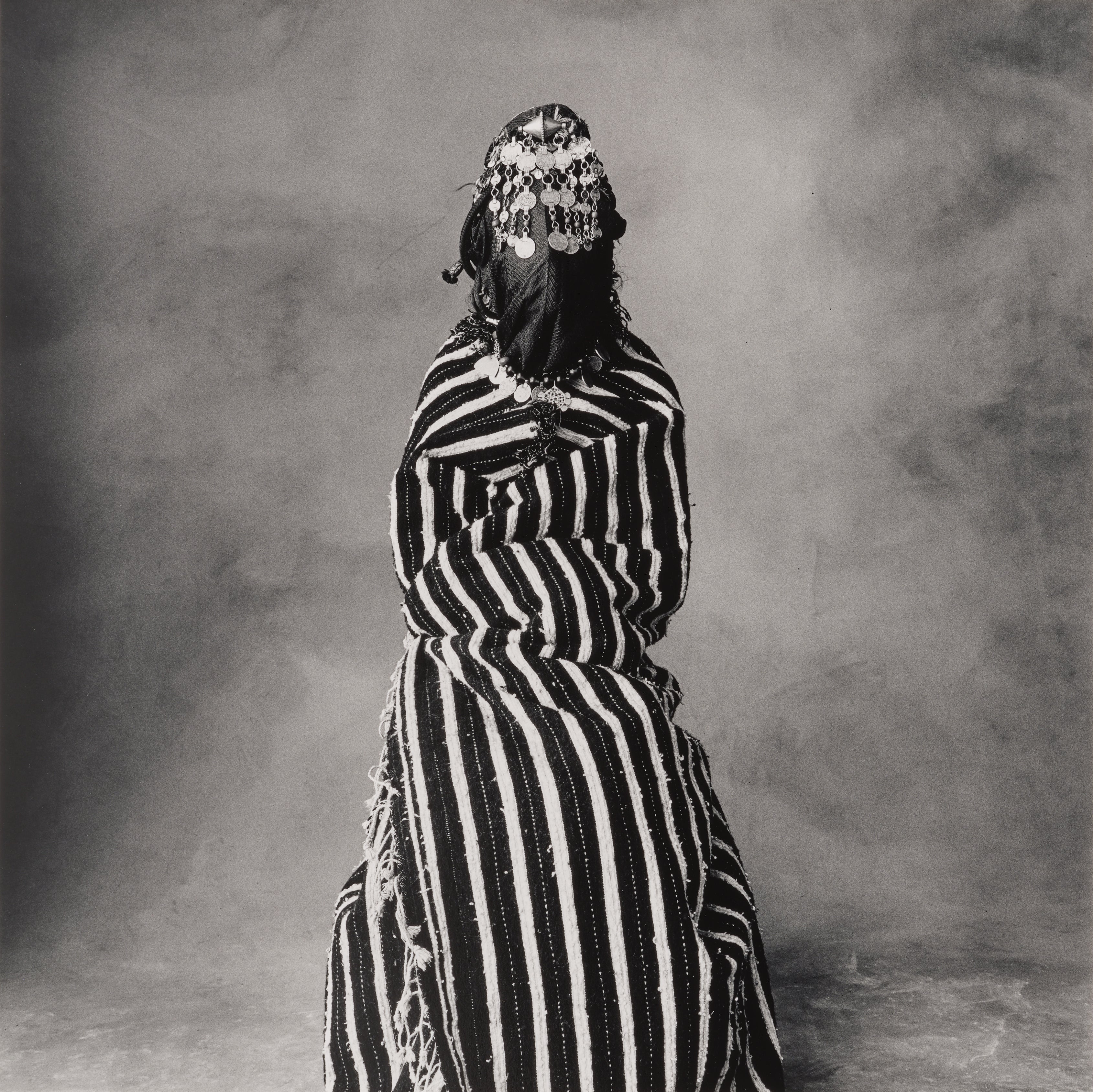
Marriageable Young Woman of Imilchil, Morocco
His still life photographs, among them the now celebrated Croissant from New York printed in 1992, elevate the ordinary object to the status of monument. Perhaps most remarkable was Penn's capacity for reinvention. In the late 1960s and into the 1970s, he turned his camera on street trades workers in London, Paris, and New York, photographing chimney sweeps, fishmongers, and pastry cooks with the same gravitas he brought to Hollywood stars. He photographed cigarette ends in close up, producing works such as Cigarette No.
37 from 1977, transforming discarded debris into objects of strange, almost sculptural beauty. His series documenting indigenous peoples, including the quietly powerful Marriageable Young Woman of Imilchil, Morocco, approached its subjects with a formal reverence that placed them firmly within the tradition of art photography rather than documentary. Throughout all of this, Penn continued to refine his mastery of the platinum palladium printing process, producing prints of extraordinary textural richness that have no equivalent in the photographic canon. For collectors, Penn represents one of the most compelling propositions in the photography market.
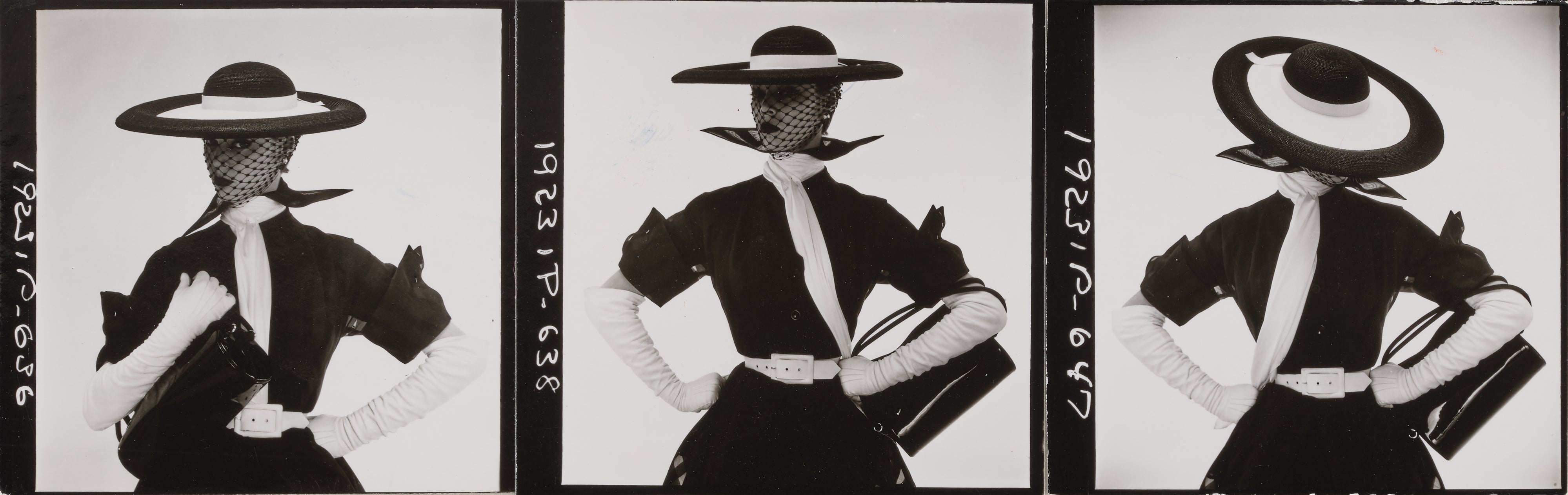
Irving Penn
Black and White Fashion (Jean Patchett), New York
His work occupies what the market rightly calls blue chip territory: deeply institutionally validated, consistently strong at auction, and supported by a body of critical scholarship that is only growing. Signed and editioned prints, particularly those with clear provenance connecting them to Penn's own studio practice, command serious attention at the major auction houses. Collectors are advised to look closely at edition numbers, printing dates, and the condition of the verso stamps and annotations, all of which Penn attended to with characteristic precision. Early gelatin silver prints from the 1950s, dye transfer prints from the 1980s and 1990s, and the rare platinum palladium works each represent distinct areas of the market with their own dynamics and price ranges.
The breadth of Penn's output means there are genuine entry points for collectors at multiple levels. Penn's place within art history is best understood in relation to the photographers who shared his commitment to elevating the medium to the status of fine art. His peer and sometime rival Richard Avedon pursued a similarly exacting approach to portraiture, though with a rawer emotional register. Edward Weston, whose close up studies of vegetables and shells Penn admired, can be seen as a formal ancestor of Penn's still life work.
In the tradition of studio photography, Penn stands alongside August Sander and Yousuf Karsh as someone who understood that the studio was not a limitation but an instrument, a controlled environment in which the full truth of a subject could be coaxed into view. Penn's long dialogue with painting, with Cézanne's apples and Chardin's kitchen objects, gives his still lifes a resonance that places them in conversation with centuries of Western image making. Irving Penn died in New York in 2009 at the age of ninety two, having worked with focused discipline almost until the end. What he left behind is not simply an archive of beautiful images but a way of seeing: patient, precise, and profoundly respectful of the world in front of the lens.
In a media culture defined by speed and proliferation, his photographs ask us to slow down, to look carefully, to understand that the space between simplicity and perfection is where all meaningful art lives. For collectors who bring a Penn print into their homes, that invitation never expires.
Explore books about Irving Penn
Irving Penn: A Life
Emmanuelle de L'Ecotais
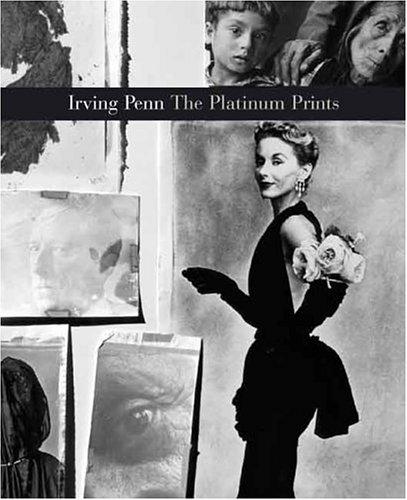
Irving Penn: Platinum Prints
Irving Penn
Irving Penn: Passages
Irving Penn
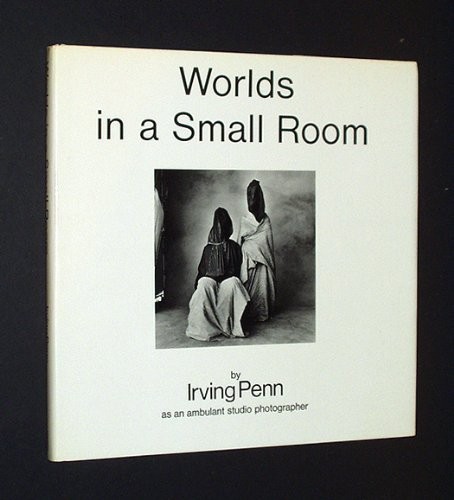
Worlds in a Small Room
Irving Penn
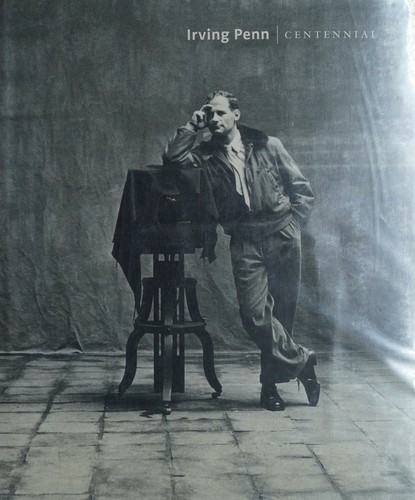
Irving Penn: Centennial
Maria Morris Hambourg
Irving Penn: A Career in Photography
Colin Westerbeck
Irving Penn: Photographs
Irving Penn and John Szarkowski