Irene Chou
Irene Chou: Where the Universe Meets the Brush
Artist Spotlight · The Collection Editorial
In the grand sweep of twentieth century Chinese ink painting, few artists transformed the tradition as boldly and as beautifully as Irene Chou. Her canvases and paper works pulse with an energy that feels simultaneously ancient and urgently contemporary, as though the cosmos itself had been coaxed into visible form through the disciplined freedom of her brush. Today, as collectors and institutions across Asia, Europe, and North America increasingly seek out the artists who bridged Eastern classical practice with Western modernist ambition, Chou stands as one of the most luminous figures in that conversation. Her work continues to find passionate new audiences, and the breadth of her vision rewards every encounter.
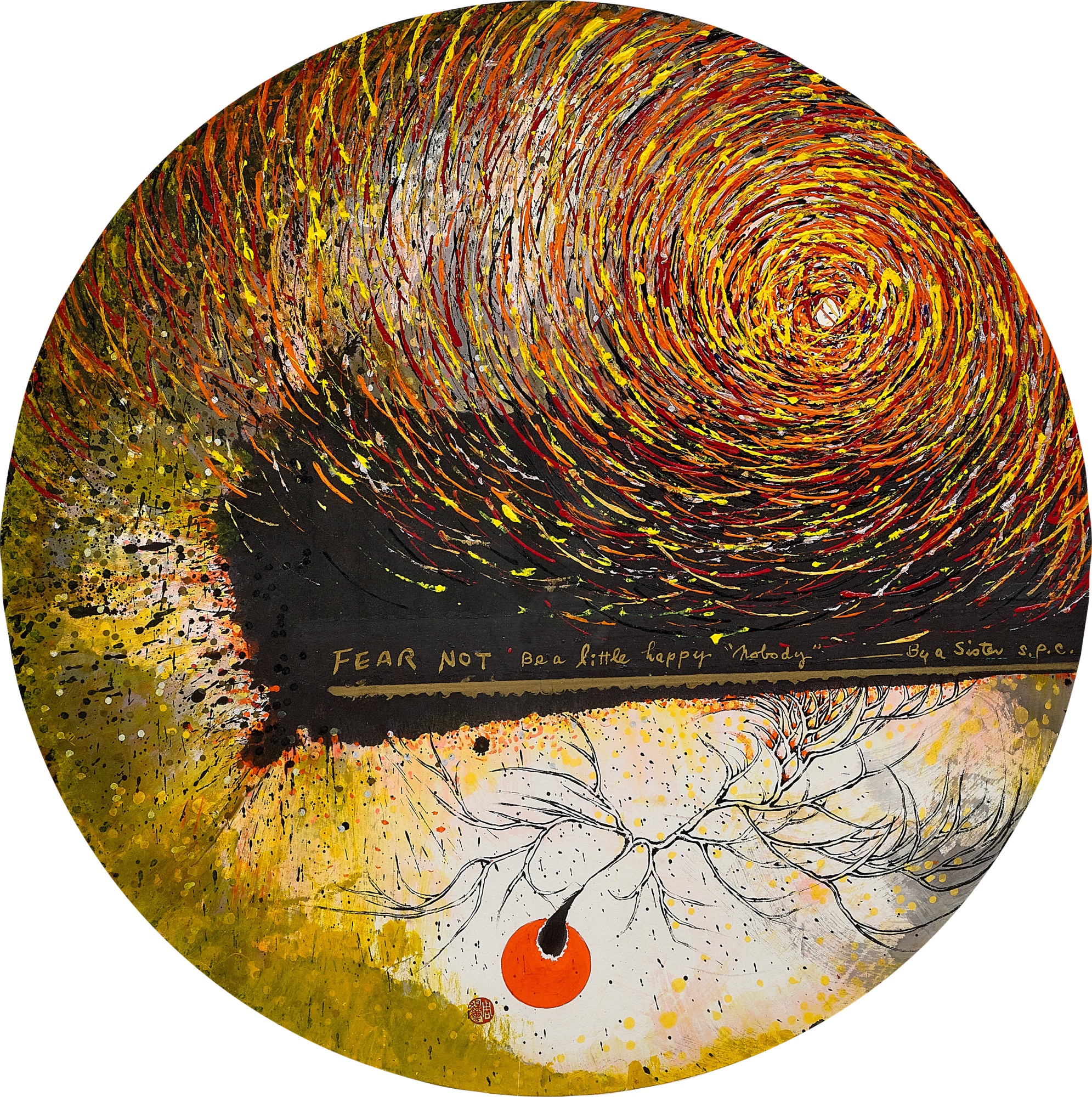
Irene Chou
The universe is my mind 宇宙便是吾心
Irene Chou was born in Shanghai in 1924, a city then crackling with cultural collision and reinvention. She came of age in an environment where the weight of Chinese artistic heritage coexisted with the provocations of imported modernism, and that creative tension would define her entire career. She studied painting in Shanghai before relocating to Hong Kong in 1949, a move that placed her at the center of one of the most dynamic artistic communities in postwar Asia. Hong Kong in those decades was a crossroads, and for a painter of Chou's temperament, it was exactly the right place to test ambitions that could not be contained by any single tradition.
In Hong Kong, Chou became a student of the legendary Lui Shou Kwan, the painter widely credited with founding the New Ink Painting movement and pushing Chinese ink art into genuine dialogue with Abstract Expressionism and Zen aesthetics. Under his guidance, Chou absorbed the philosophical underpinnings of ink practice while simultaneously opening herself to the radical freedoms that postwar Western abstraction had introduced. She was not content to simply replicate either tradition. From the start, her instinct was to find the place where both dissolved into something entirely her own.
Irene Chou
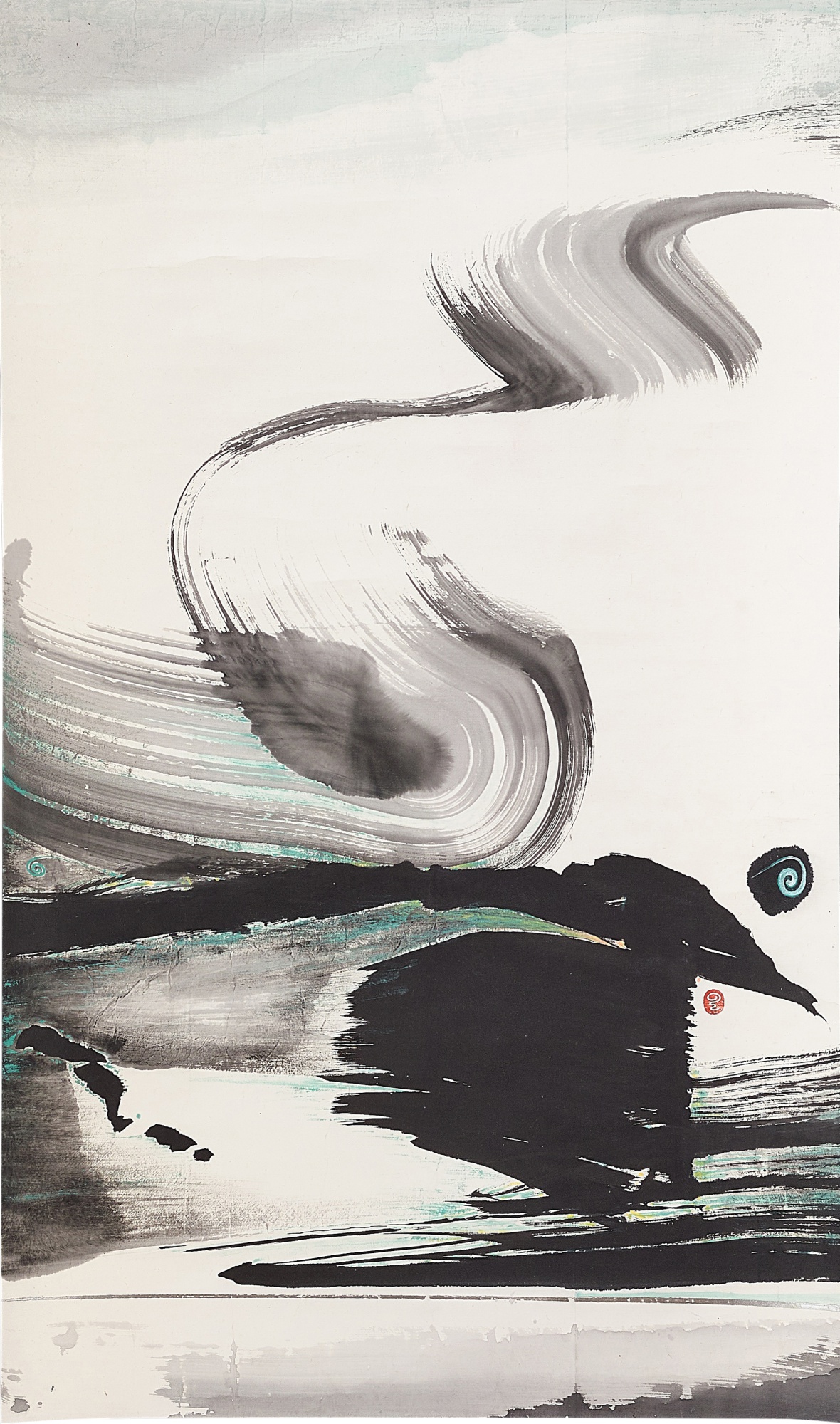
Time & Space 時間與空間, 1989
Her development through the 1960s and 1970s was marked by an increasing willingness to let pure energy guide the brush, to allow the ink to speak in gestures that were at once calligraphic and wholly abstract. The works that define Chou's mature practice are among the most viscerally powerful in the New Ink canon. Her celebrated piece "The Universe Is My Mind" captures the philosophical ambition at the heart of her art. The title, drawn from the classical Confucian thinker Lu Xiangshan, declares a belief that consciousness and cosmos are not separate things but one continuous reality, and Chou's brushwork enacts precisely that conviction.
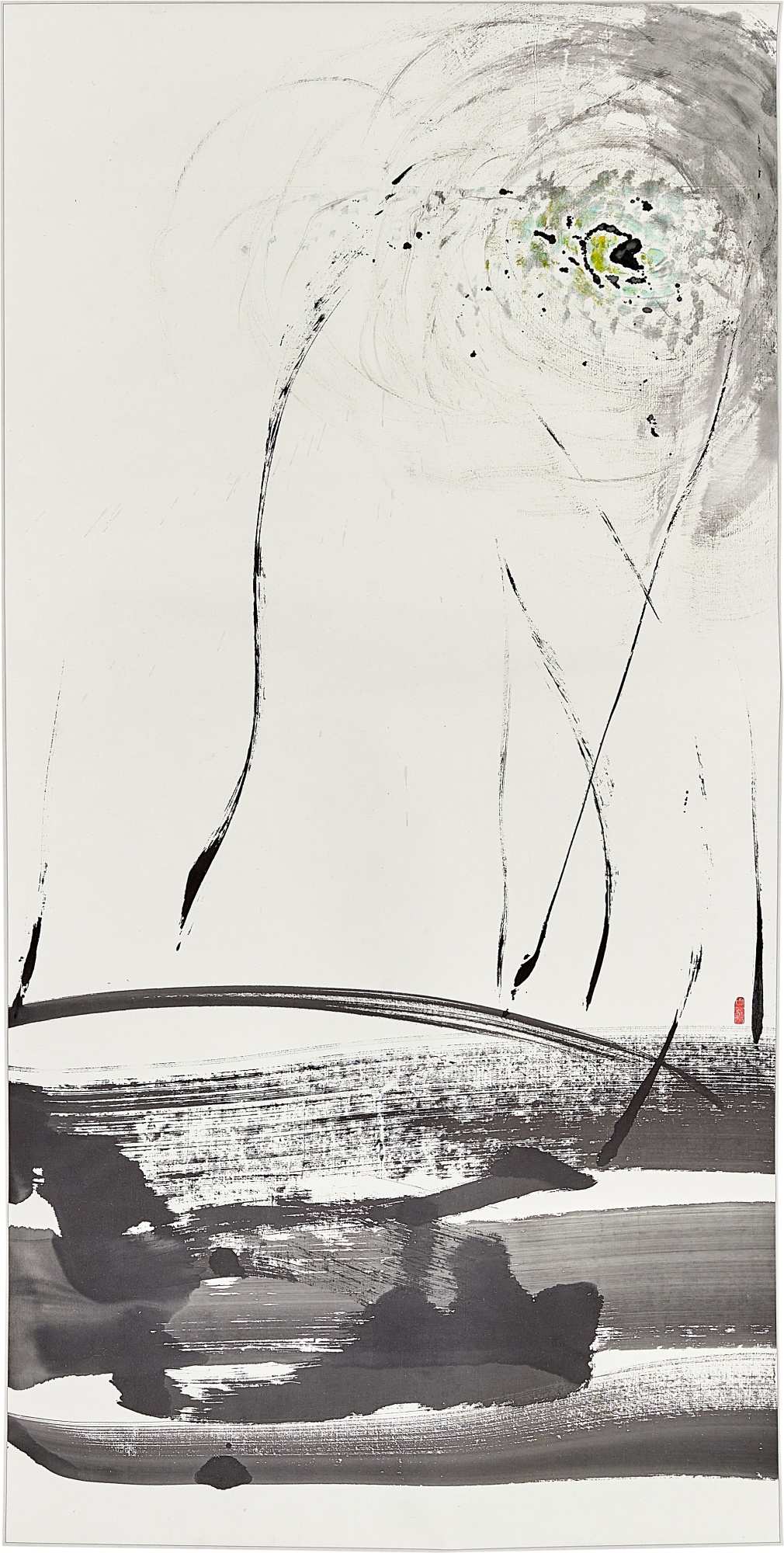
Swirling forms, deep spatial voids, and explosive passages of color and ink create a world that feels both meditated and improvisational, the result of years of practice distilled into moments of absolute freedom. Similarly, "Time and Space," completed in 1989, demonstrates her mastery of the hanging scroll format, a form loaded with the weight of Chinese artistic history that she transforms into something urgent and alive. And in "Zen B1," made in 1988, she distills her Zen informed practice to its essence, producing a work of austere beauty that asks the viewer to slow down, to breathe, and to see. For collectors, Irene Chou's work represents a rare intersection of historical importance and lasting aesthetic power.
Irene Chou
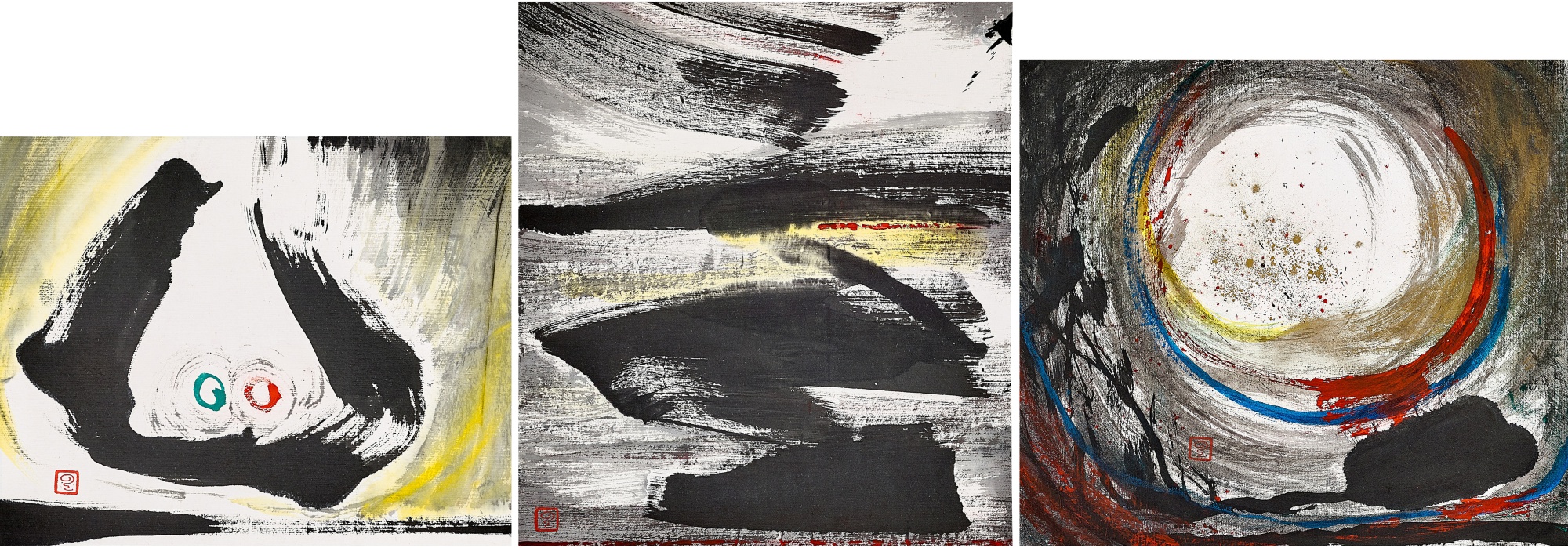
Untitled 無題
She is among the small group of artists who genuinely expanded what ink painting could do and mean in the second half of the twentieth century. Her works have appeared at major auction houses in Hong Kong and have attracted serious institutional and private attention across Asia and beyond. Collectors drawn to the New Ink movement will find in Chou an artist whose work stands comfortably alongside that of her contemporaries and peers, including Lui Shou Kwan himself, as well as artists such as Wucius Wong and Luis Chan, all of whom were working through related questions about tradition, abstraction, and identity during the same fertile decades. Works on paper, particularly those combining ink with color in the scroll and hanging format, represent the heart of her practice and tend to hold the deepest resonance for serious collectors.
Within art history, Chou occupies a position of genuine distinction. The New Ink Painting movement she helped shape is now recognized as one of the defining cultural contributions of postwar Hong Kong, a body of work that refused the false choice between fidelity to tradition and openness to the modern world. Her practice has clear affinities with the spontaneous gesturalism of Franz Kline and the meditative abstraction of Mark Tobey, yet it is rooted in a fundamentally different philosophical soil, one nourished by Taoism, Zen Buddhism, and the long history of Chinese literati painting. She is not a Western abstractionist working in Eastern materials.
Irene Chou
Zen B1 禪 B1, 1988
She is something far more interesting: an artist who found in both traditions the same underlying truth and made that discovery visible. Chou's legacy grows more significant with each passing year, as the art world continues to reckon seriously with the full range of twentieth century modernism beyond the Euro American canon. Her work reminds us that the great conversations of modern art were global, that artists in Hong Kong, Shanghai, and Taipei were asking the same profound questions about consciousness, form, and meaning that their contemporaries were pursuing in New York and Paris, and often arriving at answers of equal depth and originality. For any collector seeking work that is at once historically grounded and visually thrilling, that carries genuine philosophical weight while rewarding purely sensory attention, Irene Chou is an essential artist.
To live with one of her works is to live with a sustained inquiry into the nature of existence itself, rendered in ink and color on paper with breathtaking grace.