Inez van Lamsweerde and Vinoodh Matadin
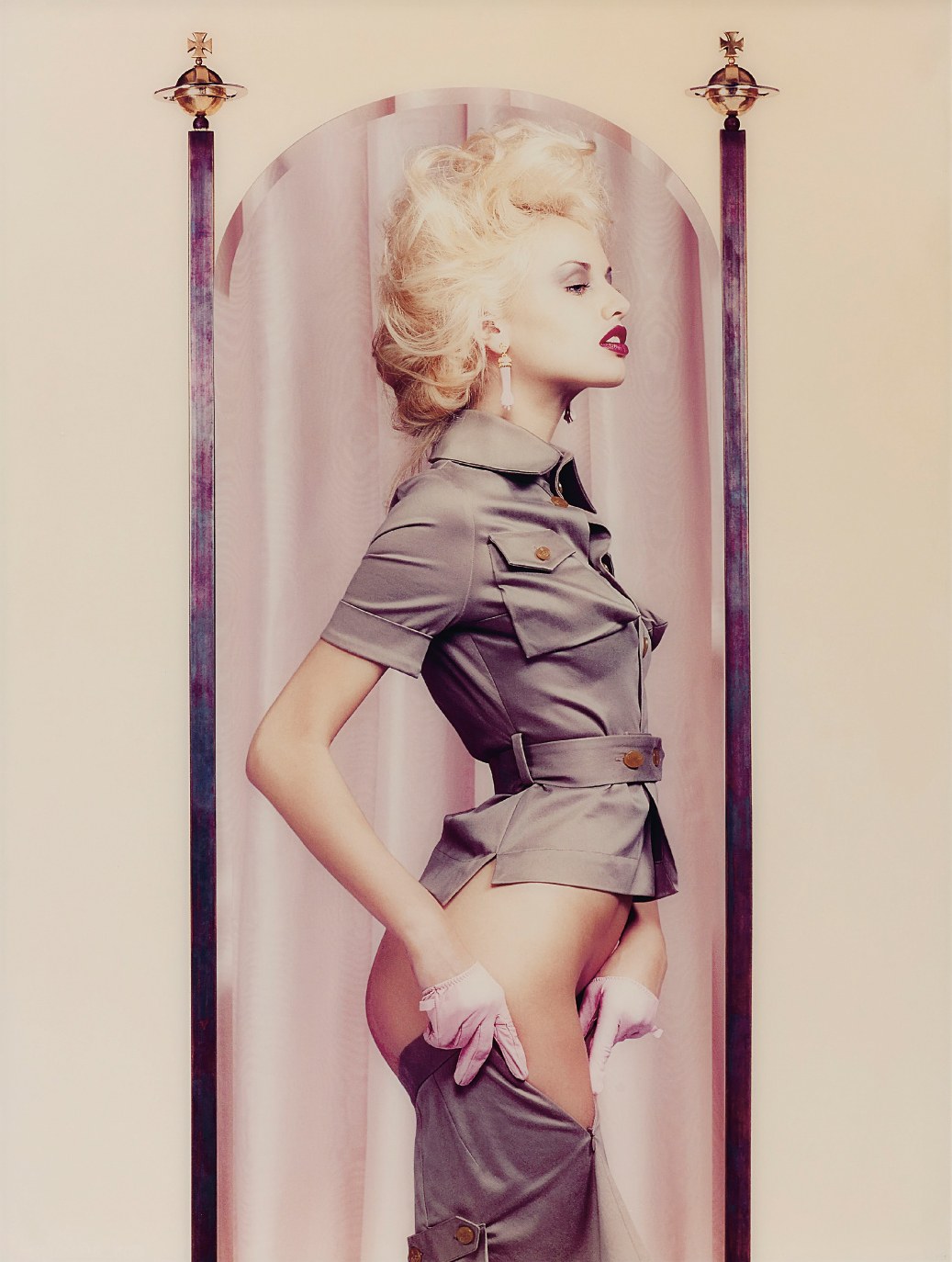
Inez and Vinoodh: Beauty Reimagined, Forever
Artist Spotlight · The Collection Editorial
“We are interested in beauty as a concept, not just as an aesthetic. It is always about what lies beneath.”
Inez van Lamsweerde, Interview Magazine
There is a particular kind of electricity in the air whenever Inez van Lamsweerde and Vinoodh Matadin unveil new work. Their 2023 exhibition at Matthew Marks Gallery in New York drew the kind of quietly reverent crowd that gathers when something genuinely important is on view, collectors and curators standing close to the prints, searching for the seam between the real and the invented, and finding, as ever, that it does not exist. The duo have spent four decades constructing a visual world so internally consistent and so technically singular that it has become one of the defining aesthetic languages of our era. To encounter their work in person is to understand why collectors return to it again and again.
Inez van Lamsweerde and Vinoodh Matadin
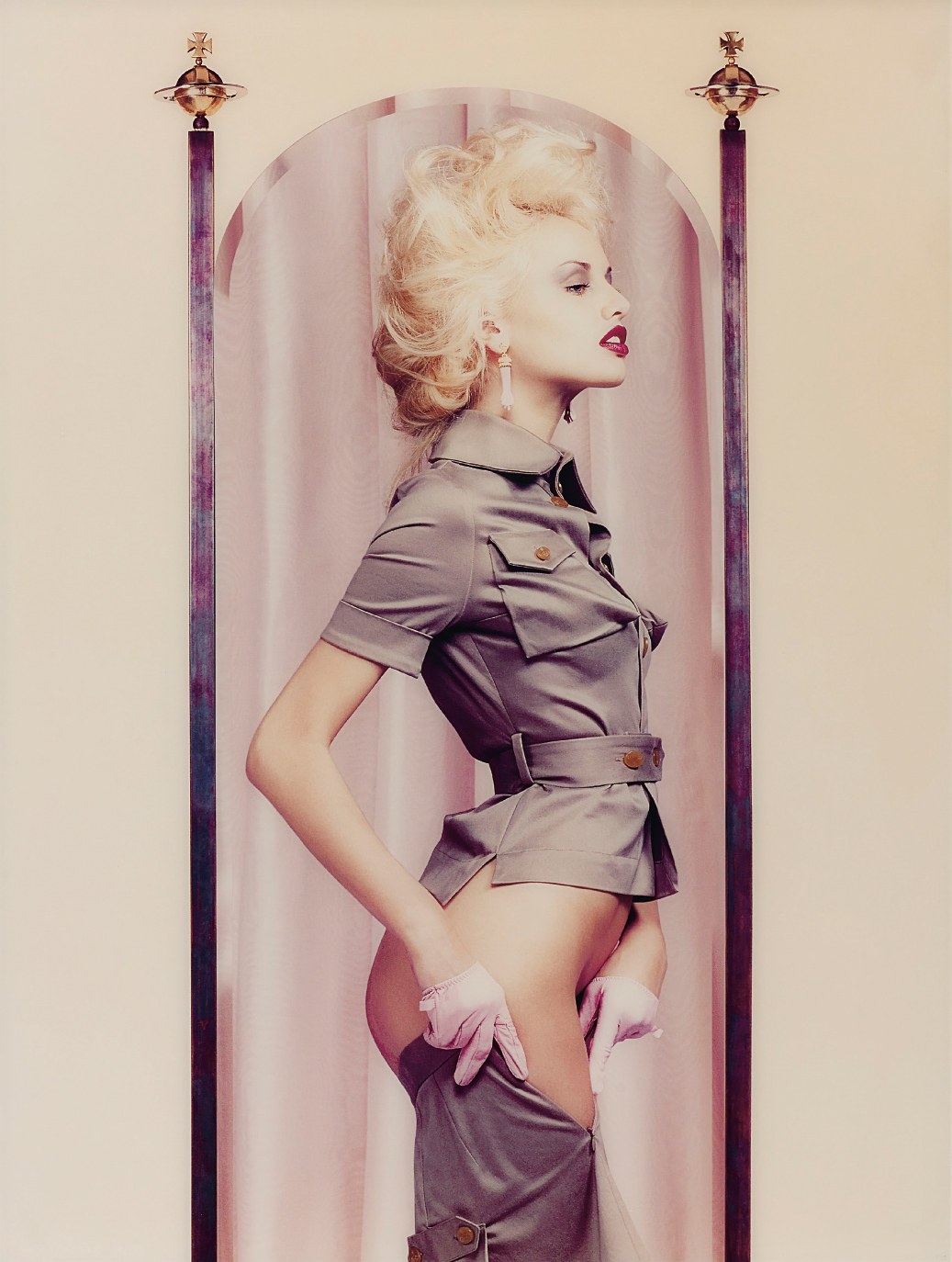
Adriana
Inez van Lamsweerde was born in Amsterdam in 1963, and Vinoodh Matadin followed in 1961. Both came of age in a Netherlands that was absorbing the full cultural upheaval of the late twentieth century, a country that prided itself on radical openness and yet remained deeply engaged with questions of form and craft. Van Lamsweerde studied at the Amsterdam Fashion Institute, where she developed a rigorous understanding of the body as constructed image rather than natural fact. Matadin, working in fashion styling and creative direction, brought an instinct for surface, texture, and the seductive power of the well chosen object.
When they began collaborating in the late 1980s, they were not simply combining two skill sets. They were building an entirely new way of seeing. The early work announced itself with startling confidence. By the early 1990s, van Lamsweerde and Matadin were producing images that used digital manipulation not as a parlor trick but as a philosophical position.
Inez van Lamsweerde and Vinoodh Matadin
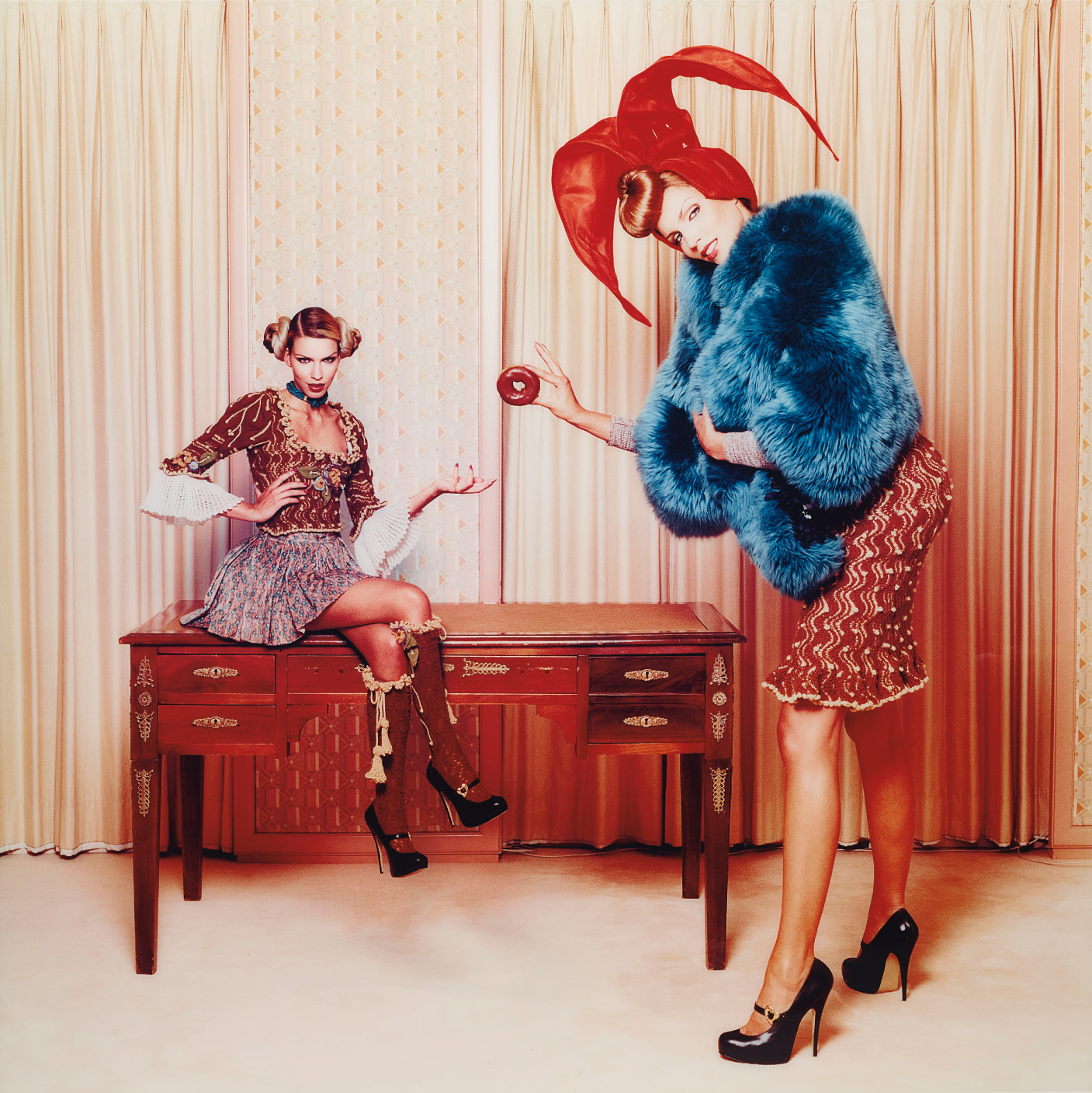
Donut, Kym (for Vivienne Westwood)
Their 1995 series "Thank You Thighmaster" presented female bodies that had been altered in ways that were unsettling precisely because they were so fluent, so beautiful, and so technically accomplished. The images forced viewers to confront how much of the idealized body they already accepted as natural was, in fact, a fiction constructed by advertising, fashion, and the male gaze. The work landed in galleries and in critical discourse simultaneously, which is a rare achievement, and it established the duo as artists who could operate with equal seriousness in the fine art and commercial spheres without compromising either. Throughout the 1990s and into the 2000s, van Lamsweerde and Matadin deepened their relationship with the fashion world while continuing to push the boundaries of what a photograph could be.
They shot campaigns and editorial work for publications including Vogue Paris and W Magazine, and collaborated with designers at the highest level of the industry. Yet these commercial engagements were never separate from their artistic practice. Instead, they served as a laboratory for ideas that would then find their fullest expression in gallery and museum contexts. Their portraits of figures including Björk, Kate Moss, and Madonna entered the visual lexicon of the period not simply as celebrity images but as artworks in their own right, dense with intention and technical mastery.
Among the works available on The Collection, two pieces offer an ideal entry point into understanding the breadth of the duo's vision. "Adriana," a chromogenic print flush mounted to Perspex, demonstrates their extraordinary gift for the portrait that transcends its subject. The Perspex mounting is not merely a presentation choice. It transforms the surface of the image into something luminous and slightly unreal, as though the subject exists in a space adjacent to our own rather than within it.
"Donut, Kym," a chromogenic print mounted on aluminium and face mounted to Perspex, shows the duo working in a more playful register, connecting the body to consumer culture and popular iconography with the wit and precision that has always characterized their finest work. Both pieces exemplify the technical specificity of their mounting processes, which collectors rightly prize as integral to the meaning of each image. From a collecting perspective, van Lamsweerde and Matadin occupy a particularly compelling position in the market. Their work sits at the intersection of photography, digital art, and conceptual practice, which means it appeals to collectors approaching from several directions at once.
Works in chromogenic print with Perspex or aluminium mounting have held strong at auction and in private sales, supported by the consistent institutional attention the duo receives and by the relative scarcity of their fine art editions compared to their commercial legacy. Collectors drawn to artists such as Wolfgang Tillmans, Rineke Dijkstra, and Andreas Gursky will find in van Lamsweerde and Matadin a practice that shares those artists' seriousness of purpose while bringing a distinctly different sensibility rooted in constructed beauty and technological inquiry. The duo's Dutch heritage also places them in dialogue with a long tradition of painters and image makers who understood that artifice, handled with sufficient skill, becomes its own kind of truth. The legacy of Inez van Lamsweerde and Vinoodh Matadin extends well beyond the images themselves.
They helped define the visual grammar of an era and in doing so changed the way the fashion world, the art world, and the broader culture thought about the photograph as a site of meaning rather than mere documentation. Their insistence on treating digital manipulation as a conceptual tool rather than a cosmetic one gave subsequent generations of image makers permission to think more rigorously about what technology could mean in artistic practice. Artists working today in the space between photography and digital fabrication owe a significant debt to the framework van Lamsweerde and Matadin established in those early, groundbreaking years. To collect their work now is to hold a piece of that history and to participate in a conversation that remains as vital and as unresolved as it ever was.