Imogen Cunningham
Imogen Cunningham, Forever Seeing Clearly
Artist Spotlight · The Collection Editorial
“Which of my photographs is my favorite? The one I'm going to take tomorrow.”
Imogen Cunningham
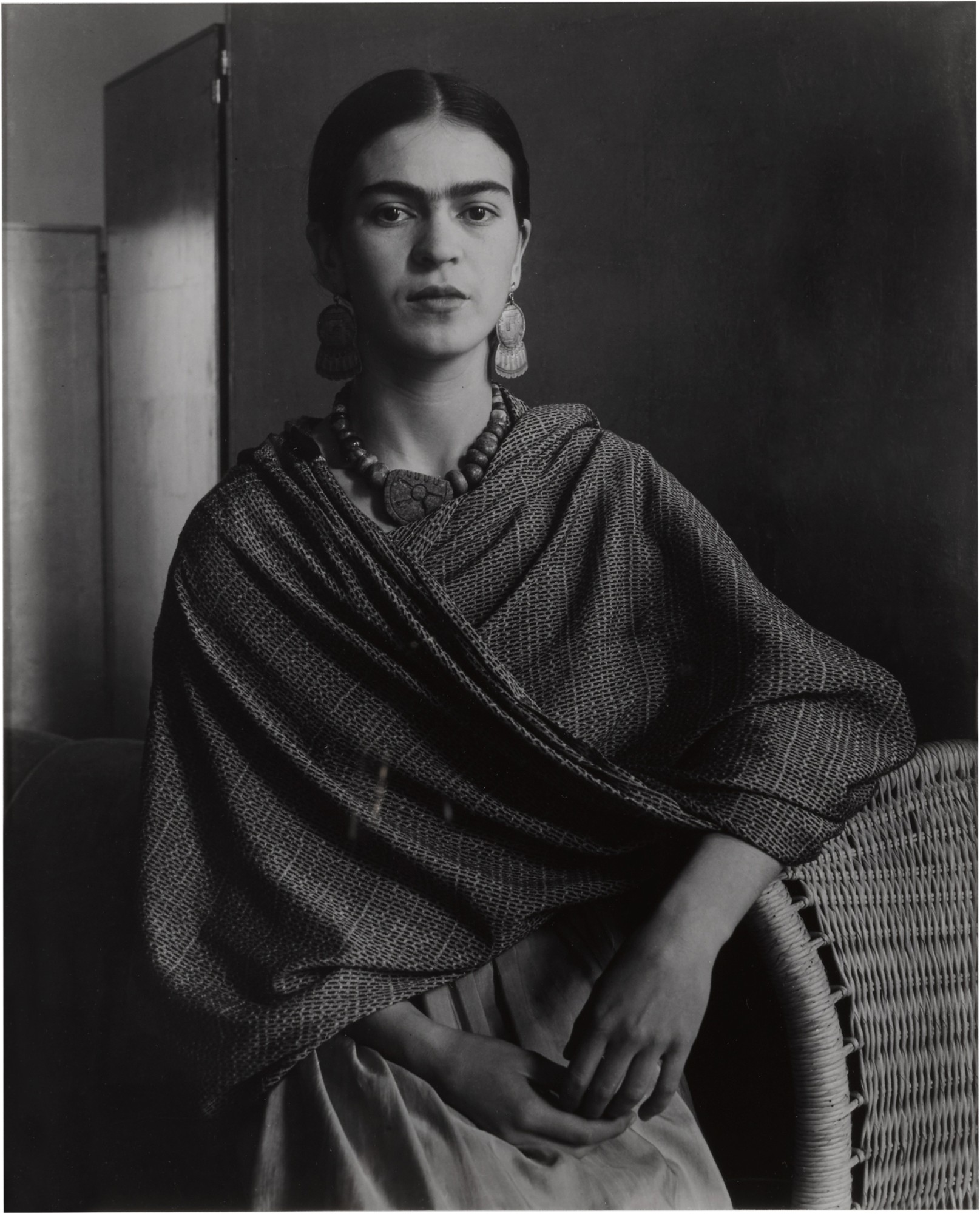
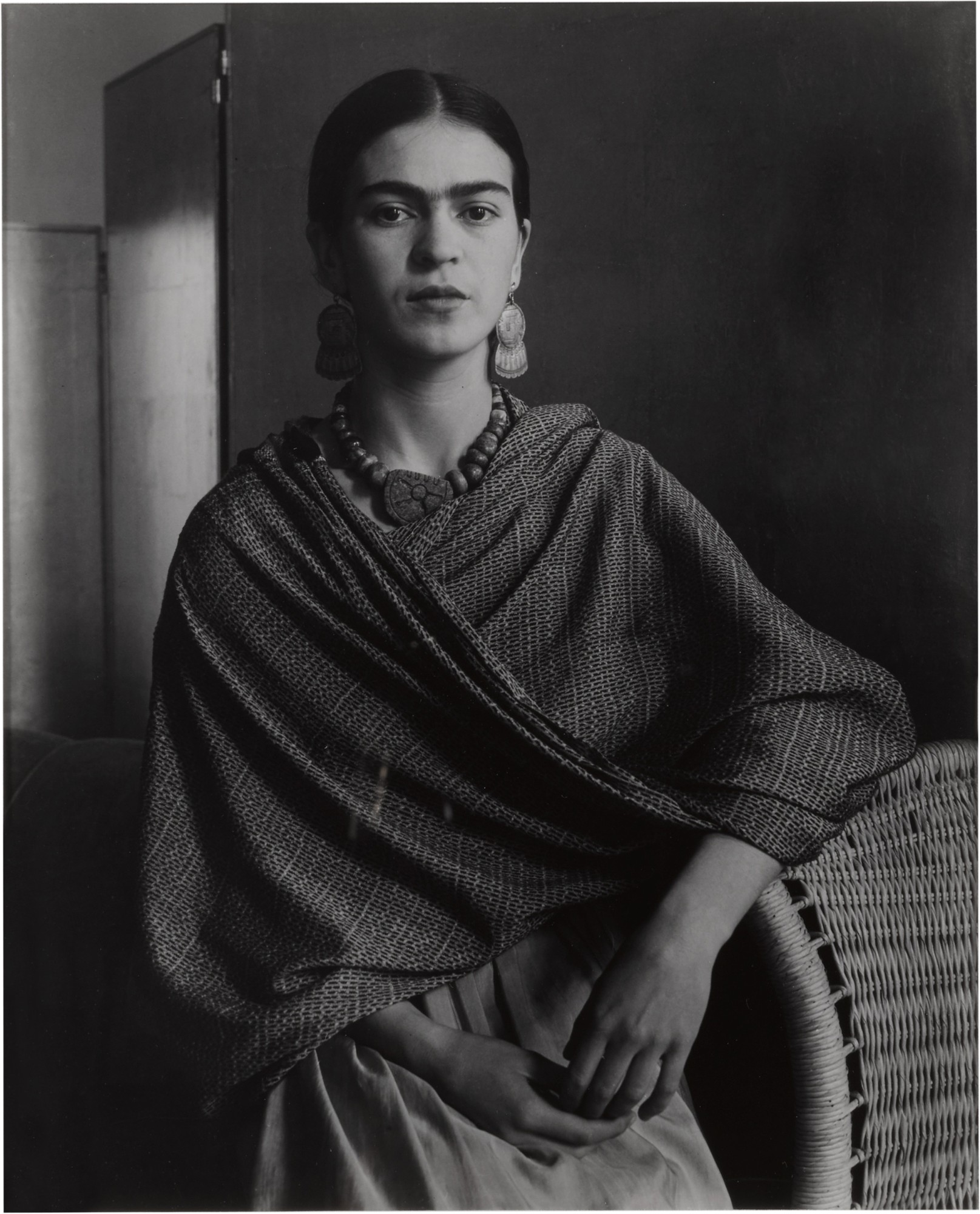
There is a photograph of Frida Kahlo taken in 1931 that stops you in your tracks. Kahlo sits composed and formidable, her gaze direct, her presence filling the frame with a quiet authority that mirrors the photographer's own. That photograph, made by Imogen Cunningham and titled simply "Frida Kahlo, Painter and Wife of Diego Rivera," is among the most celebrated portraits of the twentieth century, a testament to what happens when two artists of extraordinary force meet each other without flinching. It is also, in its gelatin silver luminosity, a perfect introduction to why Cunningham's work continues to feel so alive, so necessary, nearly five decades after her death.
Imogen Cunningham
Frida Kahlo, Painter and Wife of Diego Rivera
Imogen Cunningham was born in Portland, Oregon in 1883, one of ten children raised in modest circumstances that did nothing to dim her curiosity or ambition. She discovered photography as a teenager and pursued it with a seriousness that was, for a young woman at the turn of the century, quietly radical. She studied at the University of Washington, graduating in 1907 with a degree in chemistry, a discipline that would serve her technical mastery of the medium for the rest of her long life. She then traveled to Dresden to study photographic chemistry with Robert Luther, one of the foremost experts of the era, before returning to Seattle to open her own portrait studio.
The grounding she received in both science and craft gave her work a precision and intentionality that set it apart from the very beginning. Cunningham's early work drew on the soft focus pictorialist aesthetic that dominated fine art photography in the early twentieth century, but she moved decisively away from that style as the 1920s arrived. Her friendship and professional exchange with Edward Weston and Margrethe Mather, both of whom she photographed with evident warmth and intellectual respect, pushed her toward sharper lines, closer observation, and a deeper faith in photography's capacity to reveal rather than romanticize. By the time she joined the Group f.
Imogen Cunningham
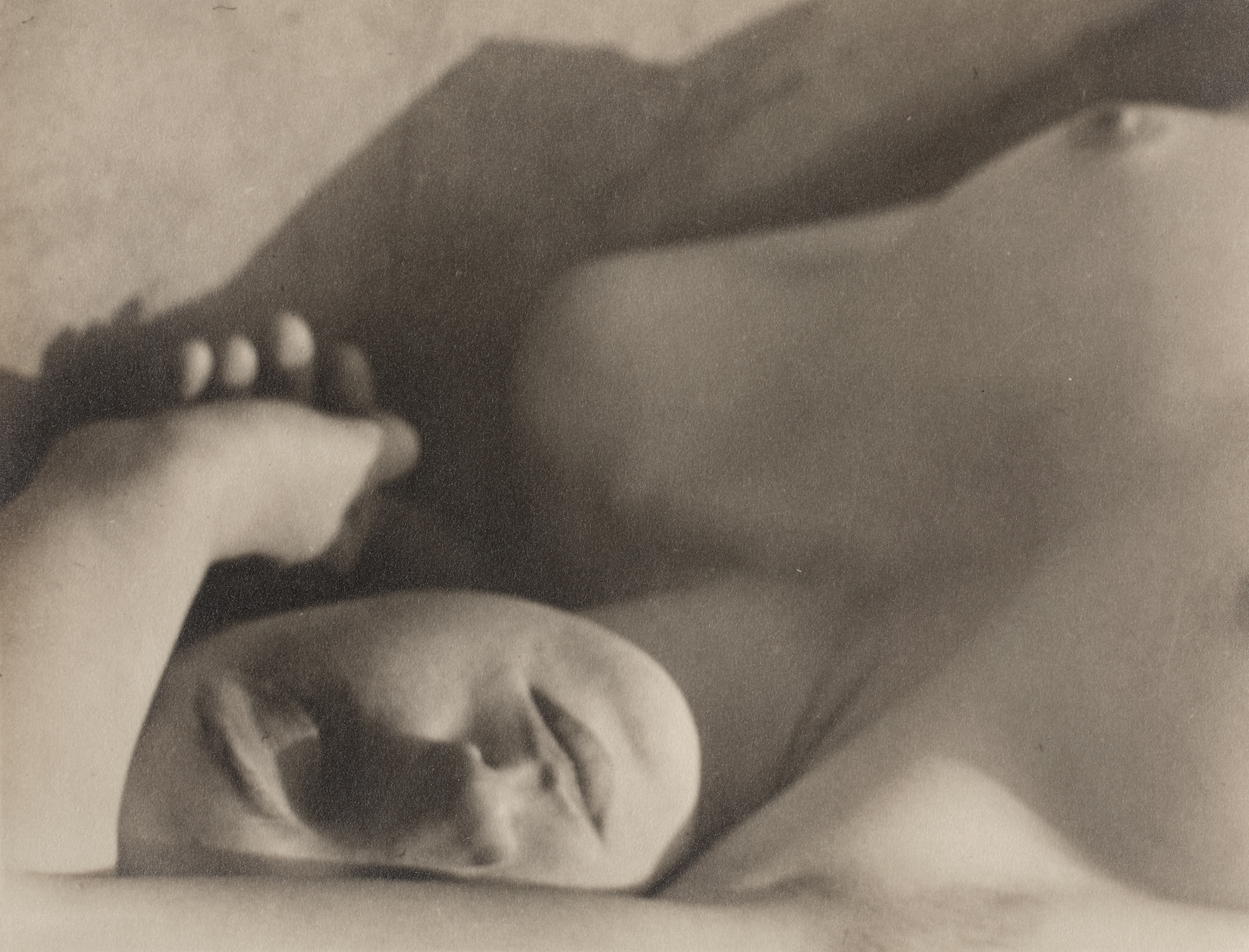
Nude (Portia Hume)
64 in 1932 alongside Weston, Ansel Adams, and Willard Van Dyke, she was already producing the botanical studies and figure work that would define her legacy. Group f.64, named for the small lens aperture that produces maximum depth of field and sharpest focus, stood for straight photography, unmanipulated and unadorned, and Cunningham embodied those values with rare grace. Her botanical photographs are where many collectors first encounter the full force of her vision.
“I have never been bored in my life. If you follow your interests, you are never bored.”
Imogen Cunningham
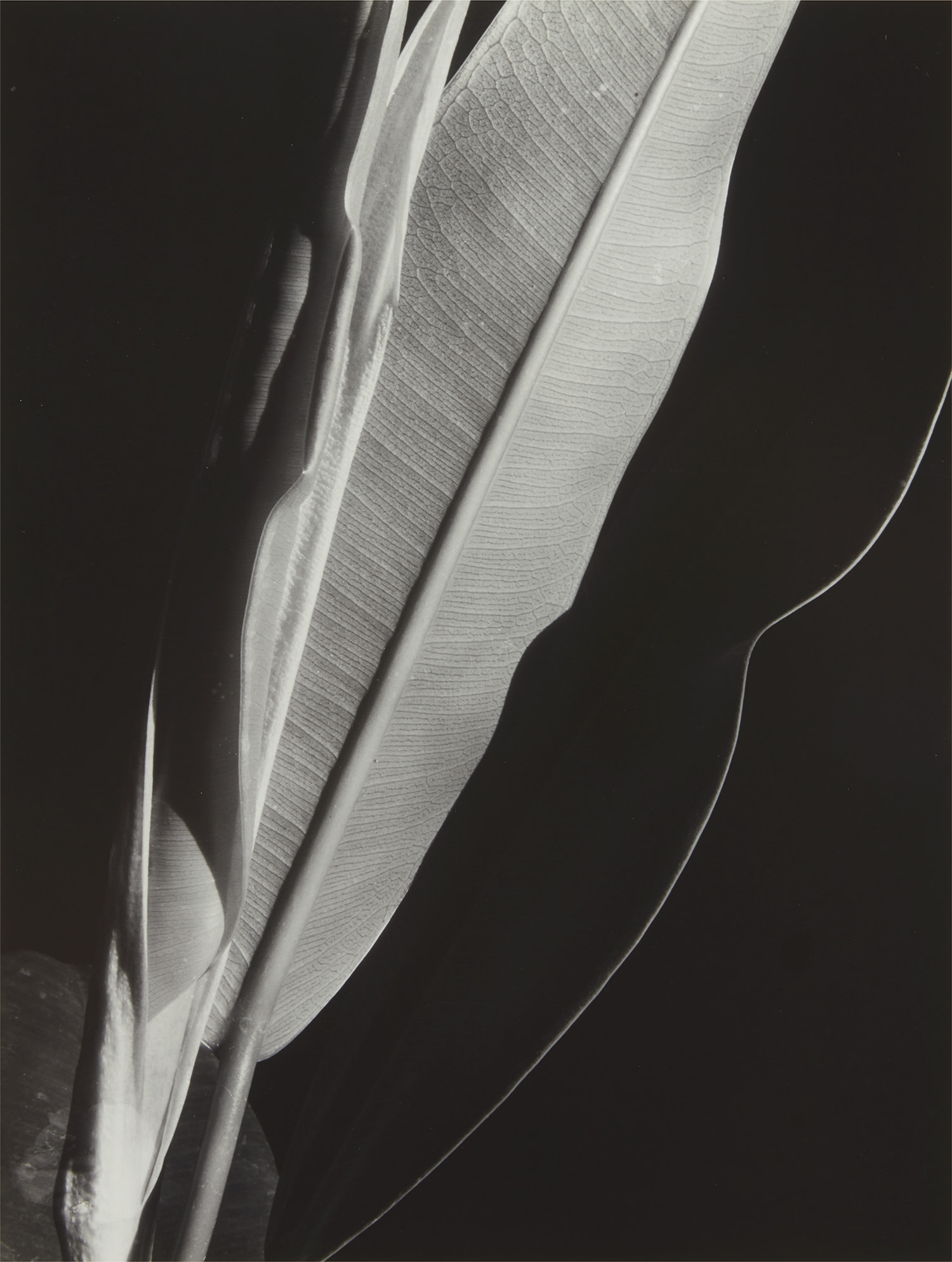
Works such as "Magnolia Blossom (Tower of Jewels)," "Rubber Plant," "Banana Plant," "Calla with Leaf," "Agave No. 2," and "Flax" are not merely beautiful images of plants. They are studies in structure, light, and form that anticipate the abstract and the sensual simultaneously. Cunningham found in the natural world a geometry that was at once rigorous and erotic, transforming a calla lily or an agave into something that feels genuinely monumental.
Imogen Cunningham
Rubber Plant
Her macro compositions, made largely in the 1920s and 1930s, preceded and in many ways influenced the flower photography that Georgia O'Keeffe was exploring in paint during the same period. The two women, working in different media and different cities, were arriving at related truths about the inner life of natural forms. Her portrait work is equally commanding. Beyond the iconic image of Kahlo, Cunningham photographed Alfred Stieglitz at American Place with a directness that honors the great gallerist without deference, capturing a man who had done more than almost anyone to legitimize photography as fine art.
Her portraits of artists, writers, and thinkers across several decades constitute a remarkable visual archive of American cultural life. She was not a documentarian in the journalistic sense but rather a portraitist of interior states, someone who waited for the moment when her subject's public persona gave way to something more private and more true. The result, across hundreds of portraits made over more than sixty years, is a body of work that reads as one of the great sustained inquiries into what it means to look another person in the eye. For collectors, Cunningham's prints occupy a position of genuine distinction in the market for twentieth century photography.
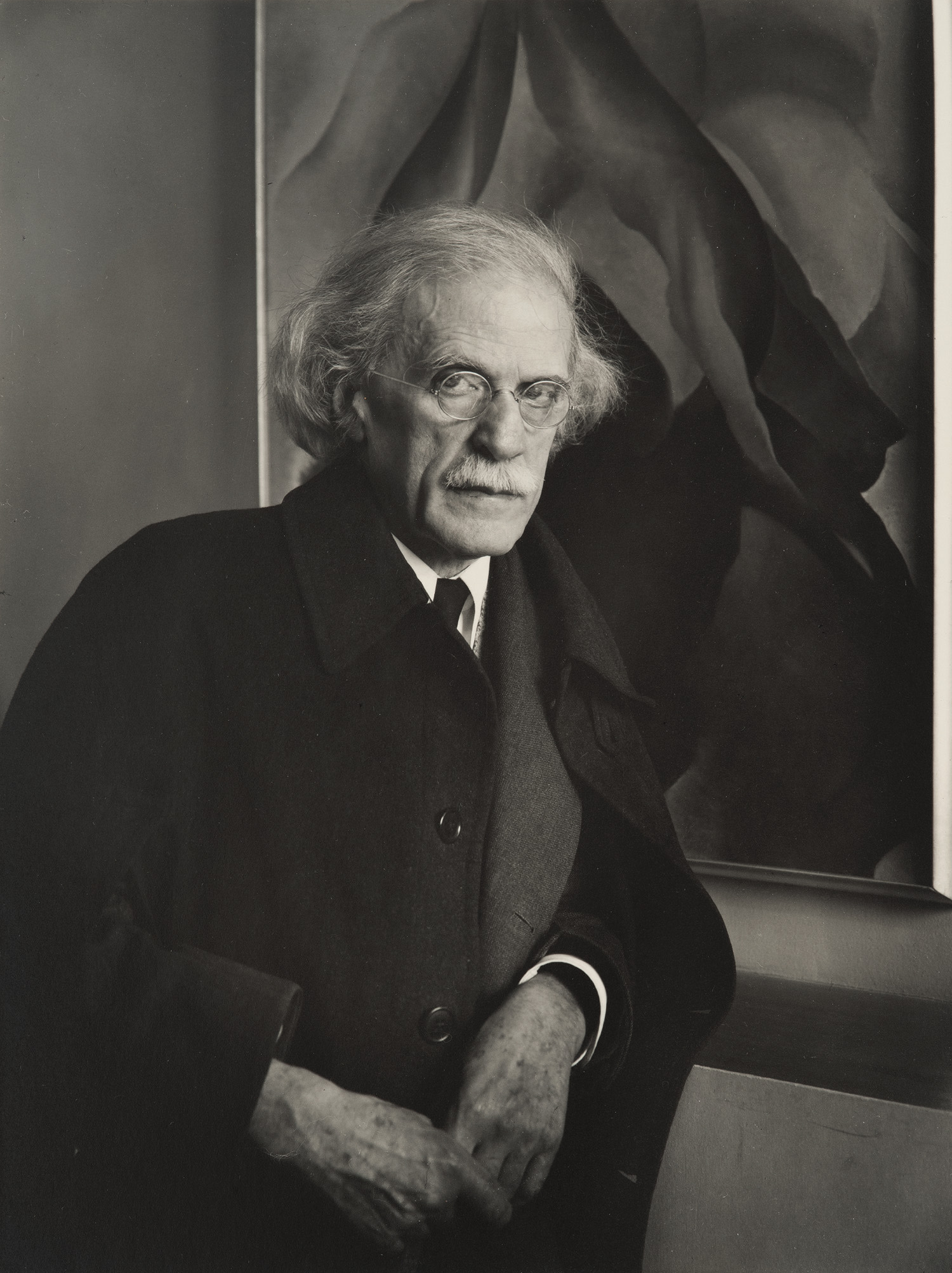
Imogen Cunningham
Alfred Stieglitz at American Place
Gelatin silver prints, particularly those with strong provenance and clear printing histories, are the works most actively sought. Printed later examples from well regarded estates and institutions offer accessible entry points, while vintage prints from the 1920s through the 1940s command serious attention at auction and among specialist dealers. The botanical works and the Kahlo portrait generate particular interest, but informed collectors also pursue her nudes, her industrial studies, and her late portrait work from the 1960s and early 1970s, when she was in her eighties and still working with undiminished acuity. The breadth of her practice means there is a Cunningham for many different collecting sensibilities, from the formally rigorous to the humanistically inclined.
Cunningham sits naturally in conversation with the great photographers of her generation and those who followed. Weston's plant studies share her reverence for organic form. Paul Strand's commitment to straight photography aligns with her Group f.64 principles.
Dorothea Lange, with whom Cunningham shared both a West Coast base and a commitment to the human subject, offers a parallel lineage. Later photographers such as Irving Penn and Richard Avedon, who also elevated portraiture to the level of sustained artistic inquiry, owe something to the standard Cunningham set. She is also, increasingly, recognized as a significant figure in the history of photography by women, a lineage that runs forward to Diane Arbus, Annie Leibovitz, and Nan Goldin. What is perhaps most extraordinary about Imogen Cunningham is the sheer duration and consistency of her artistic life.
She was still making portraits in her nineties, still curious, still looking. She founded the Imogen Cunningham Trust in 1974, two years before her death in 1976 at the age of ninety three, to preserve and manage her archive with the same care she had brought to every print. That act of stewardship feels entirely in character for a woman who understood that the work mattered beyond any single moment or career. Her photographs endure because they were made with intelligence, patience, and a deep regard for what the camera, in the right hands, can honestly find in the world.
Explore books about Imogen Cunningham
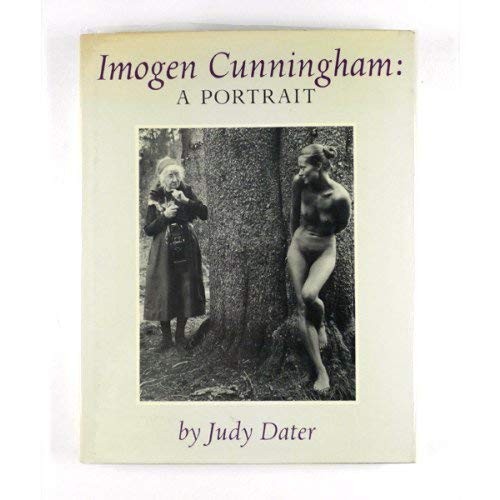
Imogen Cunningham: A Portrait
Judy Dater
Imogen Cunningham: Photographs
Richard Lorenz
Imogen Cunningham: Selected Texts and Bibliography
Paul Hill and Thomas Cooper
Imogen: Imogen Cunningham Photographs 1910-1973
Imogen Cunningham

The Photographer and the City
Imogen Cunningham
After Ninety
Imogen Cunningham and Margaretta K. Mitchell