Ilse Bing
Ilse Bing: The Queen Sees Everything
Artist Spotlight · The Collection Editorial
“With the Leica, I could catch life in the act.”
Ilse Bing
There is a photograph that stops you cold. A young woman holds a Leica to her eye, her reflection caught twice in a mirror, the geometry of the image folding in on itself with the cool precision of a mathematical proof. Taken in Paris in 1931, Ilse Bing's Self Portrait with Leica is one of the most celebrated self portraits in the history of photography, a work that declares, with absolute confidence, the arrival of a singular artistic intelligence. It hangs in major museum collections around the world, reproduced endlessly, studied in classrooms, and yet it retains the quality of a private revelation, as though you are the first person to truly see it.
Ilse Bing
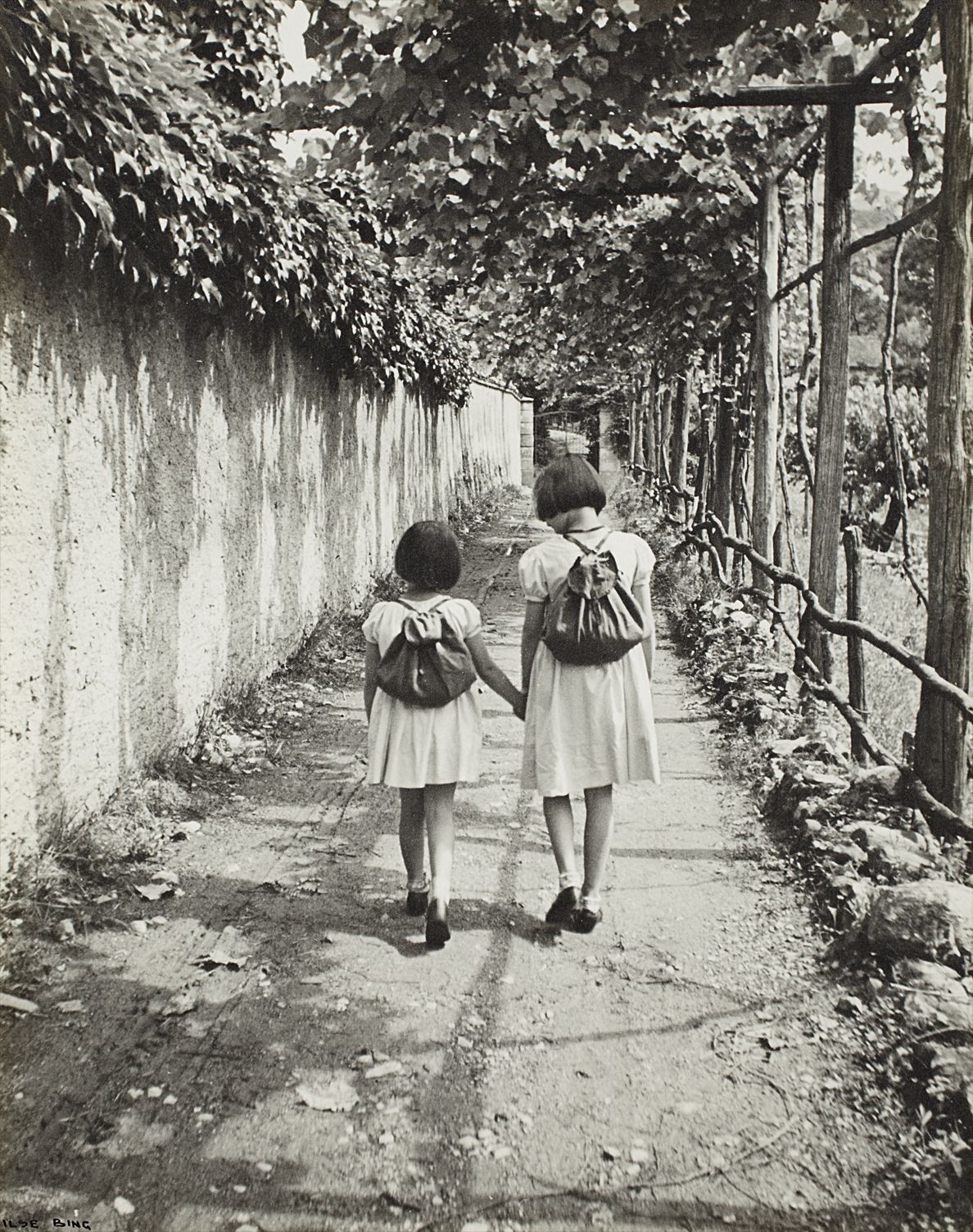
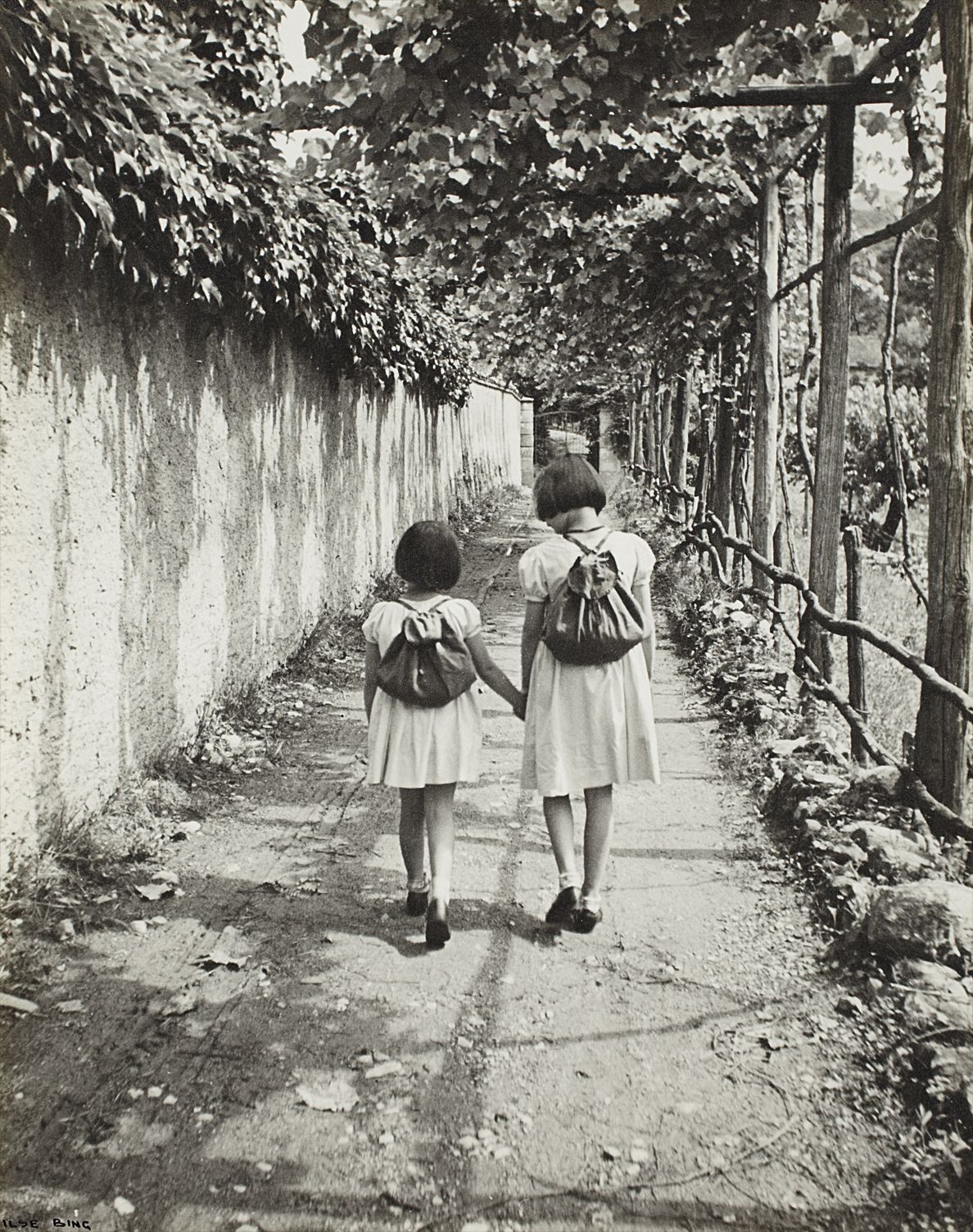
Renata and Her Sister
Bing was born in Frankfurt in 1899 into a prosperous Jewish family, and her early intellectual formation was shaped by the rich cultural life of Weimar Germany. She began her academic career studying art history at the University of Frankfurt, and it was in researching the work of the architect Friedrich Gilly for her dissertation that she first picked up a camera, using it as a practical tool for documentation. What happened next was the kind of creative transformation that cannot be planned. Photography did not merely serve her research; it consumed her.
By the late 1920s she had abandoned her dissertation and committed herself entirely to the medium, a decision of remarkable courage and clarity. In 1930 Bing moved to Paris, and the city became the great laboratory of her vision. She photographed the streets with an eye trained on geometry, light, and the fleeting human gesture, working almost exclusively with the Leica 35mm camera at a time when many photographers still considered it a lesser instrument, too small and too informal for serious work. Bing made it into something revelatory.
Ilse Bing
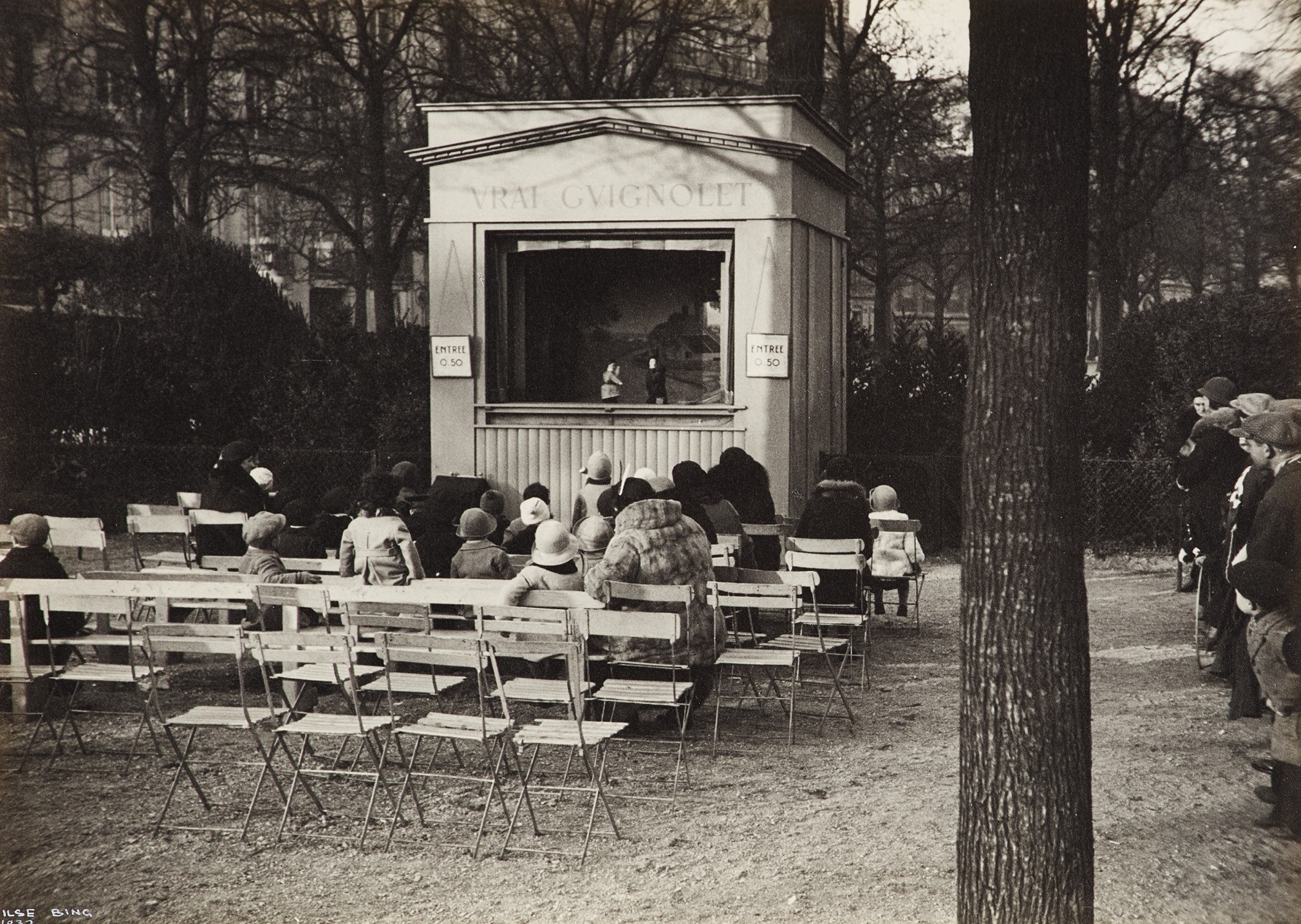
Vrai Guignolet, Paris
Her contemporaries recognized her gifts immediately. By 1931 she was exhibiting at the Galerie de la Pléiade in Paris and publishing her work in some of the leading illustrated magazines of the era, including Harper's Bazaar and the French weekly Vu. Her colleagues in the Parisian avant garde gave her a nickname that has followed her ever since: the Queen of the Leica. The Paris years, roughly 1930 to 1941, represent the fullest flowering of her practice.
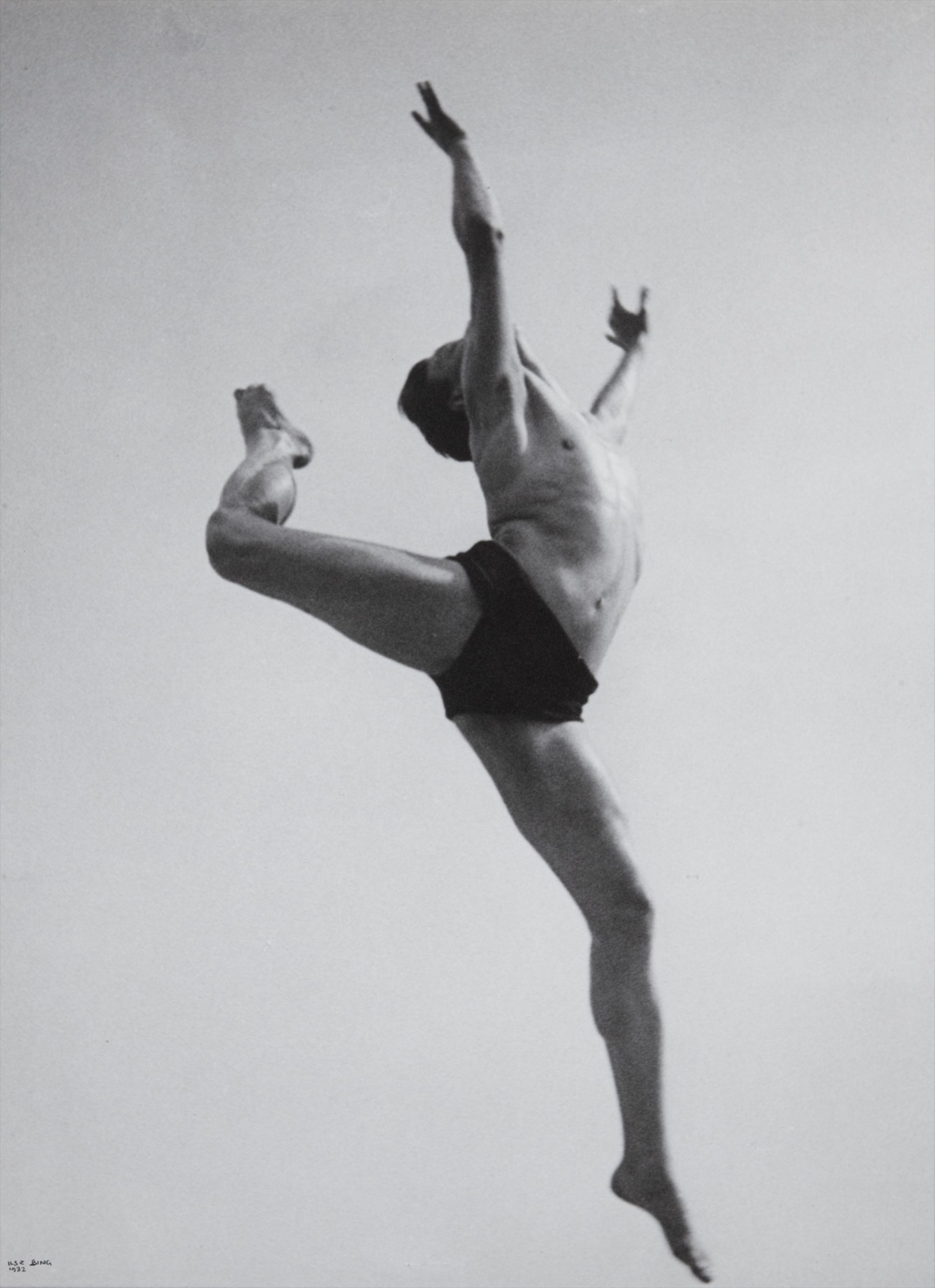
Works like Vendor at the Eiffel Tower and Quai de Bethune capture the city with a tenderness that never tips into sentimentality, each frame composed with the structural rigor of someone who had spent years thinking about architecture and form. Vrai Guignolet, Paris demonstrates her gift for finding the uncanny in the ordinary, the way a storefront or a figure on a pavement can suddenly crystallize into something mythic. Her dance photographs, including The Dancer Willem Gerard Van Loon, show a deep sympathy for bodies in motion, the image frozen at the precise instant when movement becomes sculpture. She was working alongside figures such as Brassaï, André Kertész, and Henri Cartier Bresson, and while history has sometimes overshadowed her contributions, scholars and collectors who look closely understand that she was not a peripheral figure in that world.
Ilse Bing
The Dancer, Willem Gerard Van Loon, Paris
She was central to it. In 1941, following the German occupation of France and a period of internment, Bing and her husband, the pianist Konrad Wolff, emigrated to the United States, settling in New York. The move marked a genuine shift in her practice. American subjects entered her work, and pieces like Acrobat on Ladder N.
Y. show her bringing the same eye for formal tension and human vitality to her new surroundings. Through the 1940s and into the 1950s she continued to photograph, but by the late 1950s she had largely stepped away from the camera, turning instead to poetry and collage. It was a quiet withdrawal that would only add to the sense, later, that her photographic body of work was a finite and precious thing.
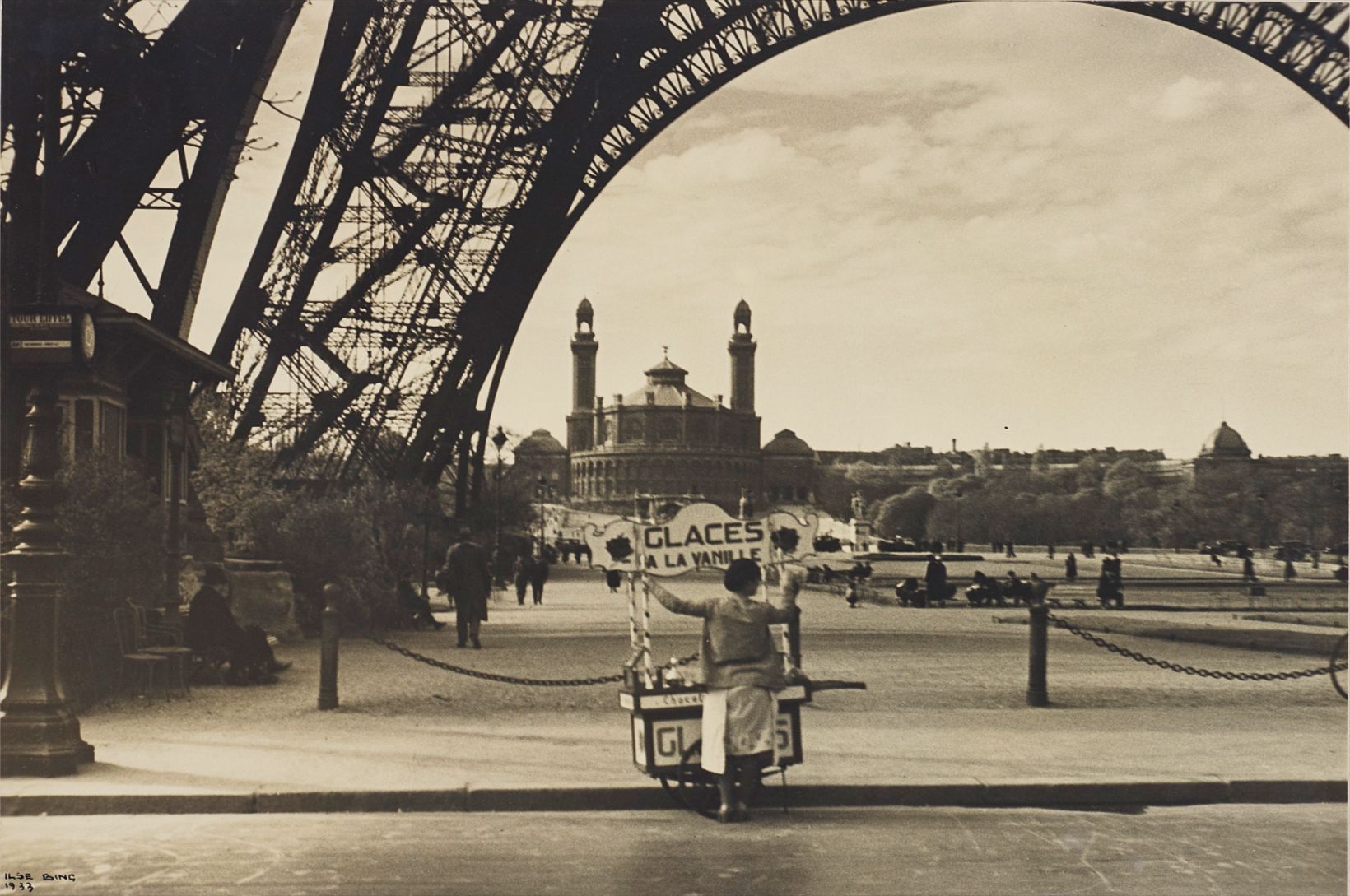
Ilse Bing
Vendor at the Eiffel Tower
The rediscovery of Bing's work is one of the more gratifying stories in the recent history of photography collecting. A 1976 retrospective at the Goethe Institute in New York began the process of reintroduction, and the Museum of Modern Art in New York holds examples of her work in its permanent collection, as does the Art Institute of Chicago and the San Francisco Museum of Modern Art. Auction results for her gelatin silver prints have strengthened steadily as institutional and private collectors alike have come to understand the depth and originality of her contribution. Works on paper mount, particularly those from the Paris period, are especially sought after, with condition and provenance being the primary considerations for serious buyers.
Her prints exist in small numbers, and examples that surface at auction or through specialist dealers attract genuine competition. For collectors engaging with Bing's work today, the gelatin silver print is the essential object. The tonal range she achieved, the way her prints hold both the deepest shadow and the most delicate highlight, reflects not only her technical mastery but a philosophy of seeing that was entirely her own. She understood that a photograph is also a drawing made with light, and the surface of her prints has the quality of something hand made even when it is entirely mechanical.
Works from the Paris years carry the greatest art historical weight, but the New York work rewards close attention and often represents a more accessible entry point for newer collectors. The self portraits, both the iconic Leica image and the quieter Self Portrait Paris, are the crown jewels of any collection that holds them. To situate Bing within art history is to understand the full ambition of modernist photography between the wars. She belonged to a generation that included Germaine Krull, Florence Henri, Lisette Model, and Berenice Abbott, women photographers who were remaking the medium with as much force and originality as any of their male peers.
The formal concerns she shared with Kertész and Cartier Bresson place her within the New Vision tradition, with its interest in unusual angles, reflections, and the transformation of everyday life into abstract form. Yet her voice remains distinctly her own, warmer than Cartier Bresson at his most detached, more architecturally rigorous than Kertész at his most lyrical. Ilse Bing lived to the age of 98, dying in New York in 1998, and there is something fitting in that long life, as though she needed all of those years to see what her work would eventually mean to the world. She spent decades in relative obscurity before the art world caught up with her, and she lived long enough to witness the full reclamation of her legacy.
The photographs she made in Paris in the 1930s feel as alive and urgent today as they did when she first made them, images that ask us to look more carefully, to trust the evidence of our own eyes, and to believe that a woman with a small camera and an extraordinary mind can change the way we see everything.
Explore books about Ilse Bing
Ilse Bing: Three Decades of Photography
Hilton Kramer
Ilse Bing: The Photographer
Françoise Denoyelle
Ilse Bing: Images from the Past
Ilse Bing
A Life in Photography
Ilse Bing and Jason Eskenazi