Idris Khan
Idris Khan Layers Time Into Pure Poetry
Artist Spotlight · The Collection Editorial
“I am always thinking about memory and how we hold things, how we compress experience into a single moment.”
Idris Khan, interview with Sean Kelly Gallery
When Idris Khan's large scale works filled the Sean Kelly Gallery in New York, visitors instinctively slowed their pace. Something about the density of those surfaces, the way text and image collapsed into one another like sediment over centuries, demanded a different kind of looking. Khan has become one of the most quietly essential British artists working today, a figure whose practice sits at the convergence of photography, philosophy, music, and devotion, asking us to reconsider what it means to truly see something we think we already know. Khan was born in Birmingham in 1978, growing up in a household shaped by both Islamic faith and Western cultural life.
Idris Khan
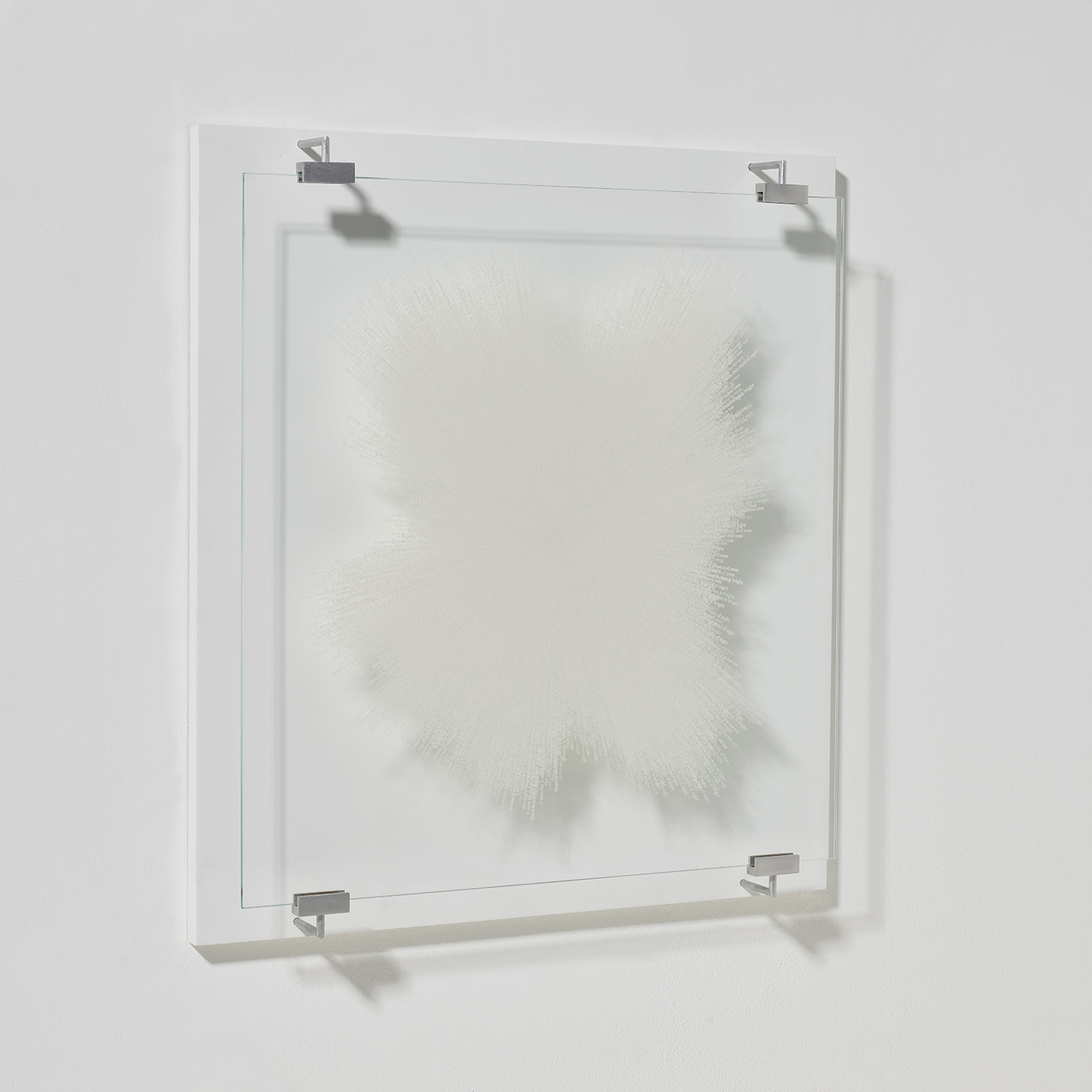
I See - Afer Paul Celan, 2015
That dual inheritance proved formative. The experience of straddling traditions, of holding multiple ways of understanding the world simultaneously, became not a tension to resolve but a method to embrace. He studied at the London College of Printing before completing an MA in Photography at the Royal College of Art in London, where he developed the layering technique that would define his practice. His early exposure to music, particularly the classical piano repertoire, and his deep engagement with religious text gave him an unusually rich set of source materials from which to draw.
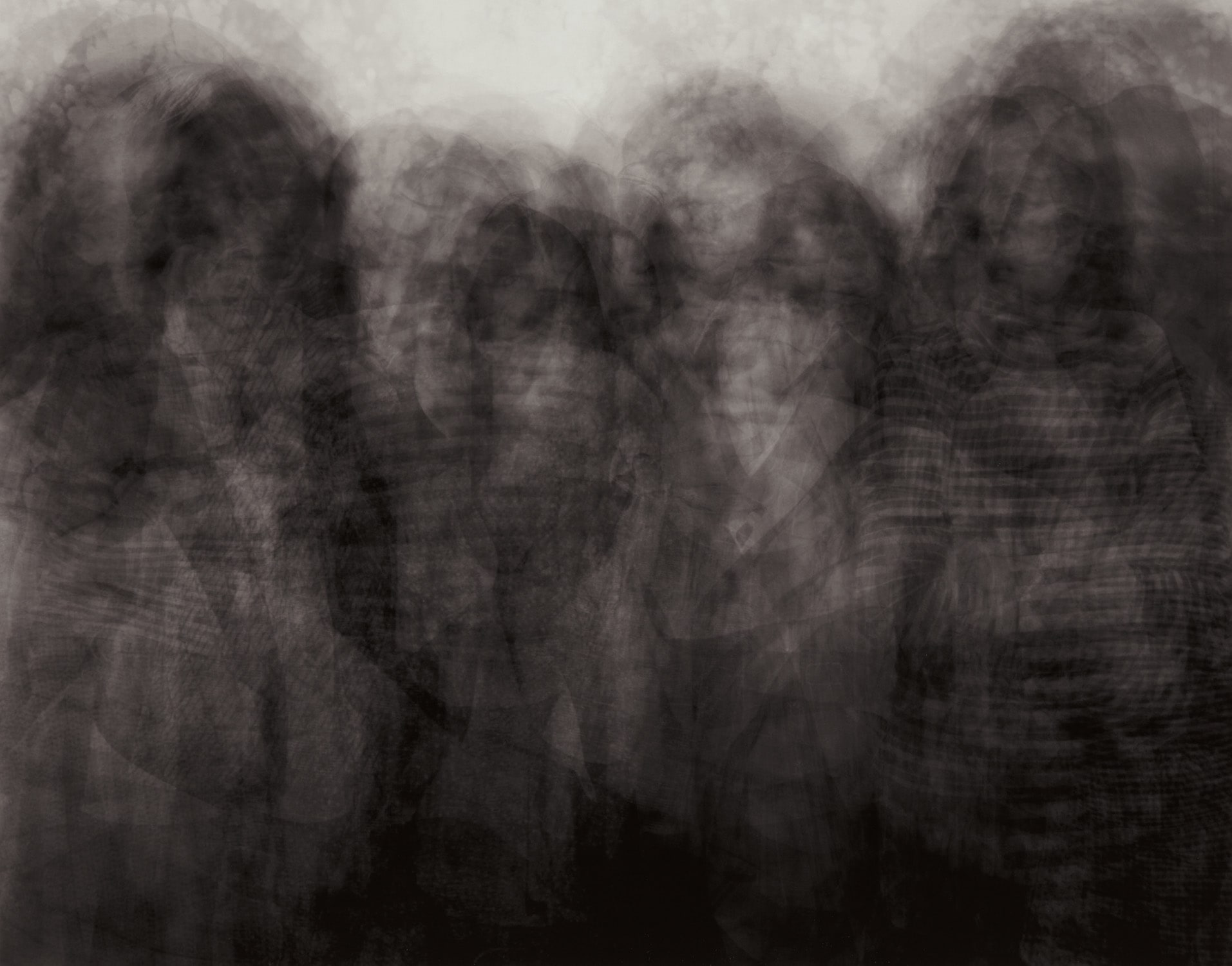
The breakthrough came with a deceptively simple idea: what would happen if every photograph in a canonical series were overlaid into a single image? The resulting works, including his celebrated every... Nicholas Nixon's Brown Sisters, collapsed decades of documentary photography into a single shimmering, ghostly field. Nixon's long running portrait project, which documented four sisters annually for decades, became in Khan's hands a meditation on the simultaneity of time, on how a human life contains all its moments at once rather than in strict sequence.
Idris Khan
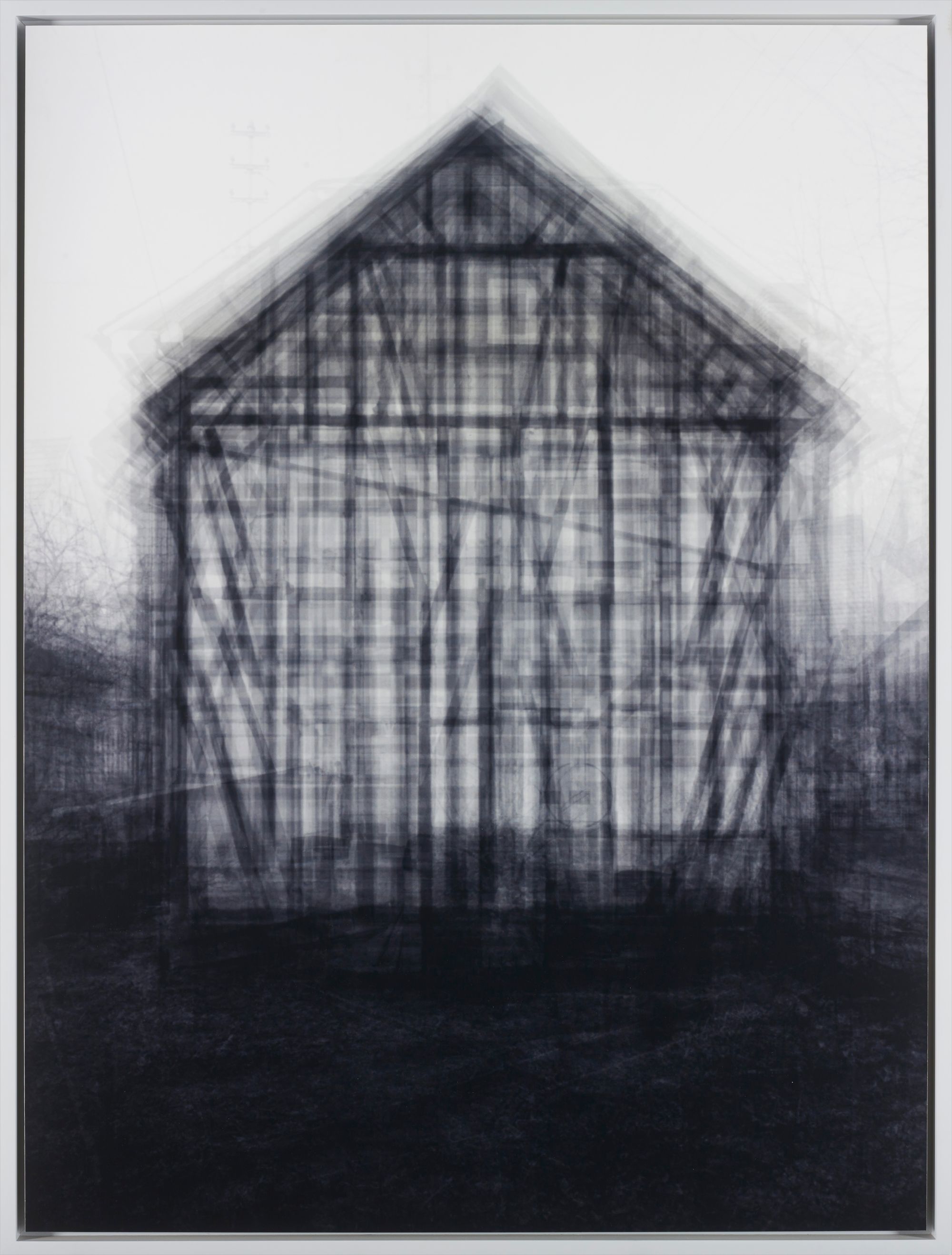
Every… Bernd and Hilla Becher Gable Sided House
The technical execution was meticulous, the emotional resonance immediate and profound. Critics and collectors recognised immediately that something genuinely new had arrived. From photography, Khan's practice expanded with remarkable confidence into sculpture, painting, and installation. Works like Every ...
Bernd and Hilla Becher Gable Sided Houses and Every ... Bernd and Hilla Becher Spherical Type Gas Holders paid homage to the great German conceptual photographers while transforming their systematic typologies into something warmer and more trembling. The Becher archive, so rigorously ordered and taxonomic in its original form, became in Khan's layered versions an image of collective memory itself. His series engaging with Chopin's Nocturnes extended the same logic into musical notation: the staves of every nocturne merged into a single dense, almost illegible score that nonetheless vibrated with the ghost of each individual melody.
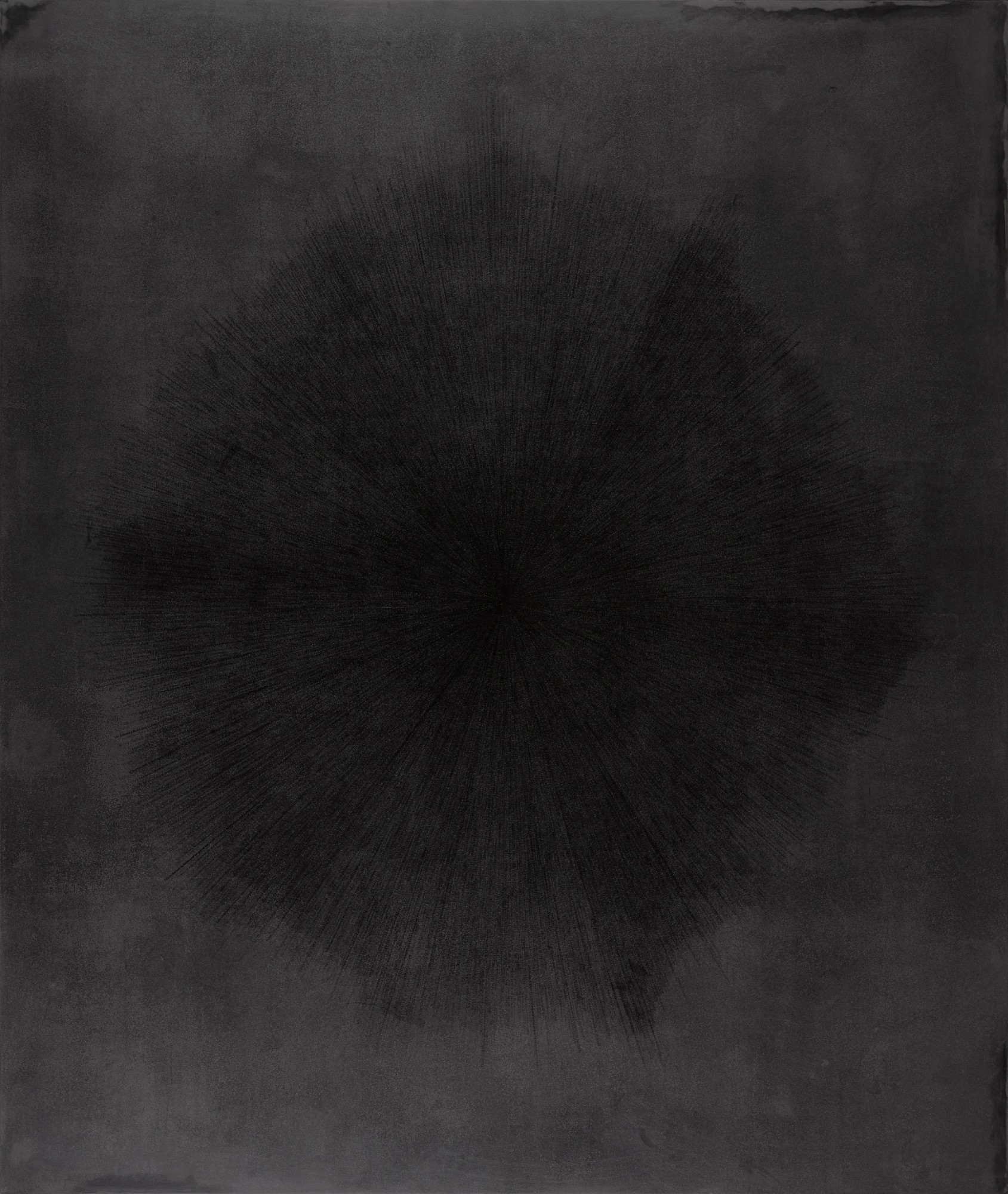
Idris Khan
The Untroubled Mind, 2012
These works asked whether the essence of something survives compression, and answered, convincingly, that it does. Khan's Islamic faith has surfaced with increasing directness and confidence over the course of his career. Works such as As Salaamu 'alaikum wa rahmatulaah, comprising a series of archival pigment prints that engage with the language of prayer and greeting, and The Untroubled Mind from 2012, executed in ink on gesso on aluminium, demonstrate his willingness to bring devotional experience into the gallery without apology or over explanation. These are not works that illustrate faith from a distance.
They are made from inside it, and their authority comes from that intimacy. I See, After Paul Celan from 2015, working with the stamped glass on aluminium panel that has become one of his signature material combinations, connected this spiritual register to the legacy of one of the twentieth century's most profound poets of trauma and witness. The breadth of Khan's references, from Rachmaninoff to Celan to Islamic calligraphic tradition, speaks to an artist who has never been willing to narrow his world. For collectors, Khan's work occupies a distinctive and enviable position.
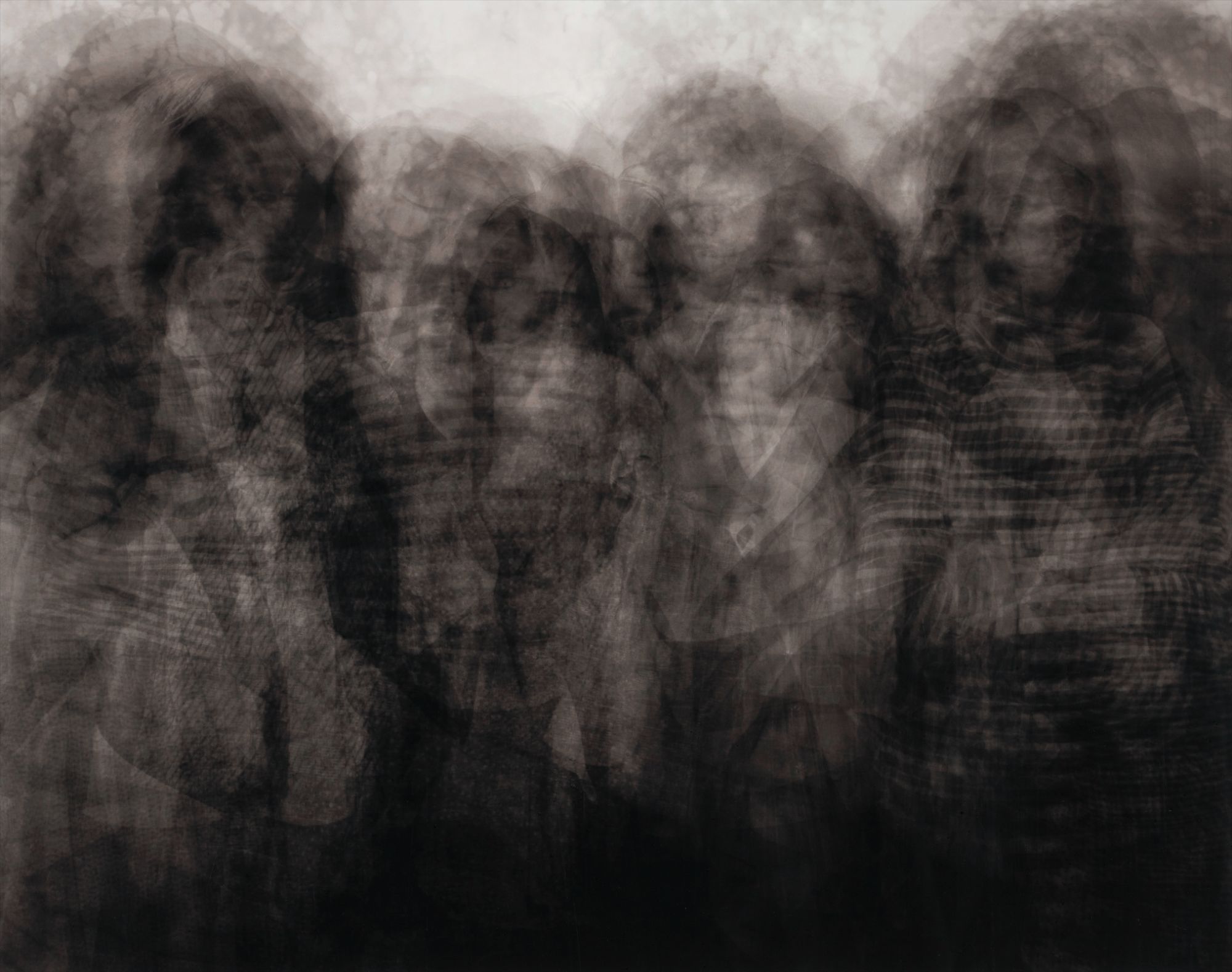
Idris Khan
every...Nicholas Nixon's Brown Sisters
His pieces function beautifully in private spaces precisely because they reward sustained, repeated looking in a way that more immediately legible works do not. A Khan hung in a home or private gallery reveals new layers, literally and figuratively, over years of living with it. His market has grown steadily and organically, supported by relationships with Sean Kelly Gallery in New York and Victoria Miro in London, two of the most respected platforms in contemporary art. Works have appeared at major international auction houses with increasing frequency, and institutional interest has remained strong, with pieces held in significant collections in Europe, the United States, and the Middle East.
The diversity of those collecting communities reflects the diversity of the references within the work itself. Within the broader landscape of contemporary art, Khan sits in instructive company. His engagement with seriality and the photographic archive places him in productive dialogue with artists such as Wolfgang Tillmans and Thomas Ruff, while his layering methodology shares a conceptual kinship with the archival impulses of Christian Boltanski. His interest in music as visual material recalls the synesthetic ambitions of Wassily Kandinsky, updated for a digital and photographic era.
Yet Khan remains a genuinely singular voice, one whose specific combination of sources and methods cannot be easily reduced to any single movement or lineage. He belongs to no school, which is precisely why his work endures. What makes Idris Khan's practice matter so deeply in the current moment is its insistence that complexity and contemplation are not luxuries but necessities. At a time when images are produced and consumed at a pace that precludes genuine attention, Khan makes work that cannot be absorbed quickly, that refuses to yield its full meaning in a single glance.
His layered surfaces are an argument for slowness, for return, for the kind of patient looking that resembles, in its own way, prayer. For collectors who believe that living with art should change the way one moves through time, there are few artists working today who deliver that experience as fully and as beautifully as Idris Khan.
Explore books about Idris Khan