Ian Davenport
Ian Davenport Lets Beauty Flow Freely
Artist Spotlight · The Collection Editorial
In the spring of 2018, pedestrians crossing Southwark Street in London found themselves pausing mid step, arrested by something extraordinary unfolding across the brick facade of Tanner Street. Ian Davenport had transformed an entire urban wall into a cascading symphony of colour, hundreds of vertical streams of paint pouring downward in disciplined waves of violet, amber, cobalt, and rose. The work, known as Poured Lines, became one of the most photographed public art interventions in recent London memory, a piece that stopped the city in its tracks and reminded everyone paying attention that abstract painting, at its most joyful and rigorous, still has the power to transform the world around us. Davenport was born in Sidcup, Kent, in 1966, growing up in the suburban margins of southeast London during a period when British cultural life was quietly fermenting toward the explosion that would define the following decade.
Ian Davenport
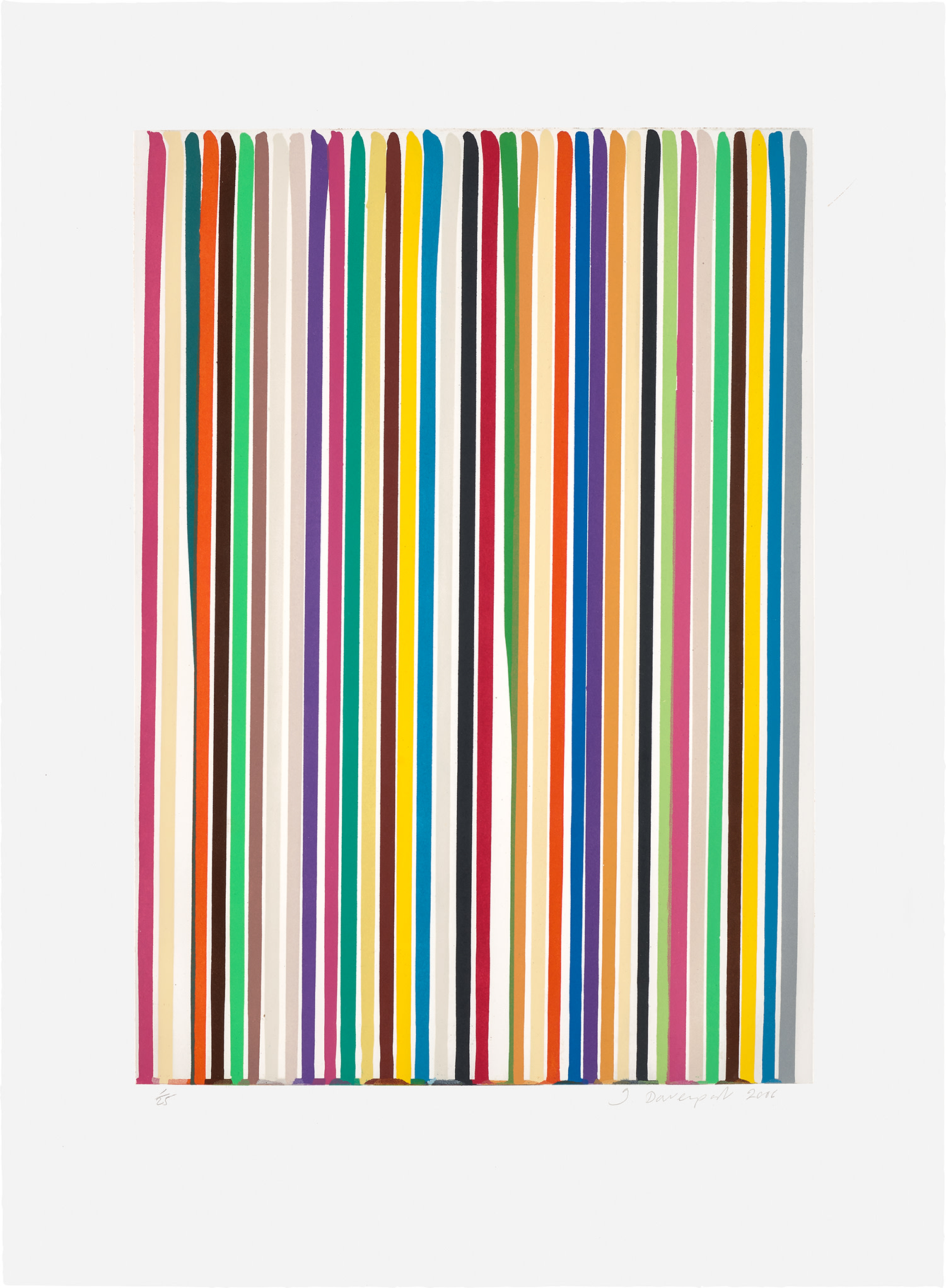
Etched Lines 3
He studied at Goldsmiths College of Art in the late 1980s, arriving at a moment when that institution was becoming the crucible of what the world would come to know as the Young British Artists. His peers included Damien Hirst, Michael Landy, and Gary Hume, a generation united not by shared aesthetic concerns but by an infectious confidence and a willingness to rethink the fundamental conditions of art making. Davenport absorbed that energy while carving out a path that was quietly, persistently his own. It was at Goldsmiths that Davenport began his essential experiment: what happens when the artist surrenders some measure of control to the material itself?
Working initially with household paint on wooden boards, he developed a method of pouring paint in vertical lines, allowing gravity to carry colour down the surface and, crucially, allowing paint to pool at the bottom in small, satisfying arcs where lines converged and colours blended. The method sounds simple in description but is deceptively demanding in execution. Every decision about viscosity, sequence, and colour relationship must be made before the pour begins, because once the paint moves, it moves on its own terms. The result is a body of work that feels both inevitable and alive.
Ian Davenport
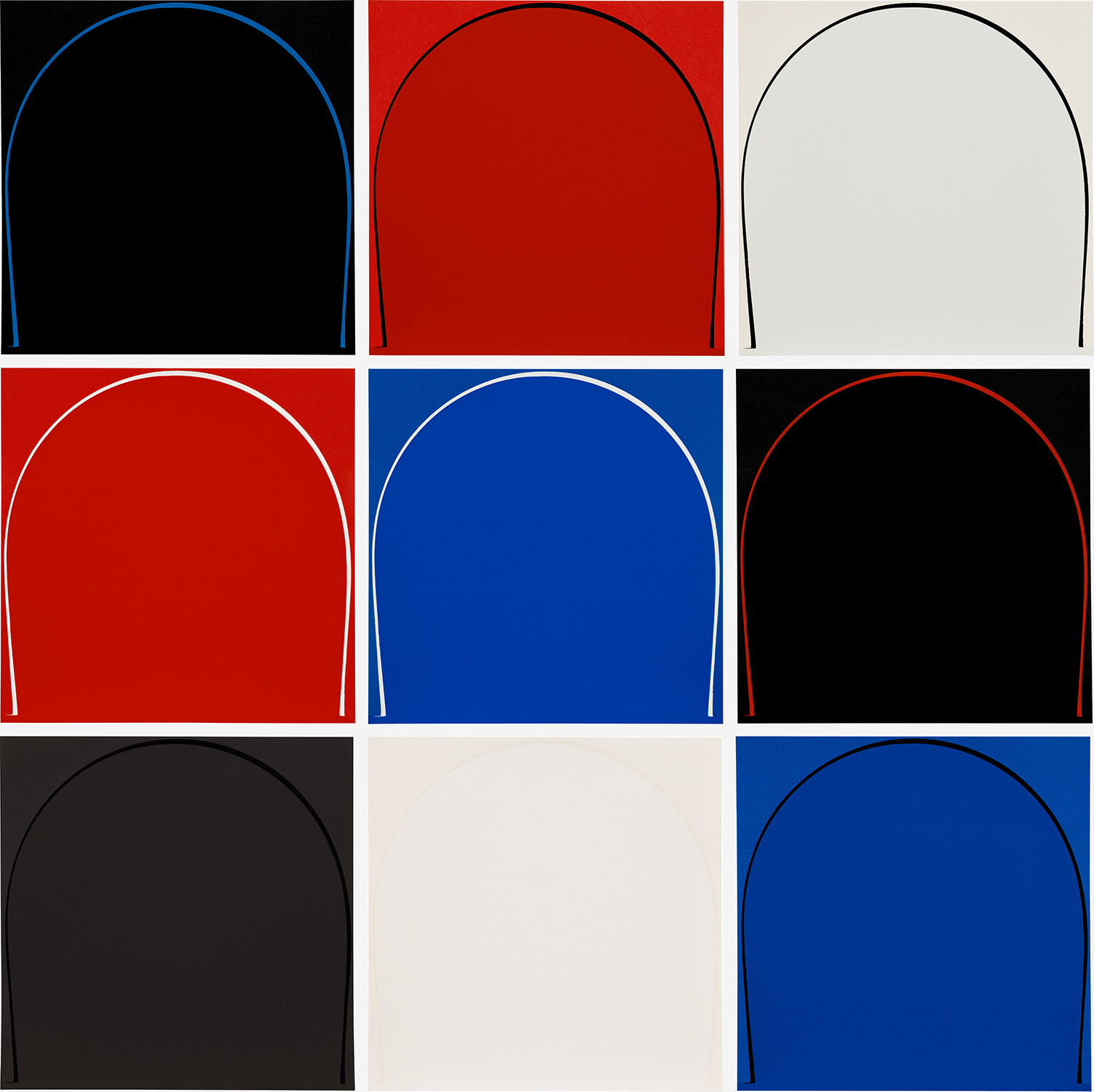
Nine Arches Portfolio
The early 1990s brought Davenport significant critical recognition. His inclusion in the landmark 1988 Goldsmiths degree show that effectively launched the YBA moment gave him an early platform, and gallery representation followed. He exhibited with Waddington Galleries in London and developed relationships with print publishers, particularly Alan Cristea Gallery, that would yield some of the most celebrated works in his catalogue. His collaboration with Alan Cristea produced the Nine Arches Portfolio, a suite of signed and numbered prints that distil the logic of his painted practice into the intimacy of the multiple, each sheet a precise meditation on colour interval and vertical movement.
These works, published in an edition of thirty with eight artist's proofs, have become touchstones for collectors who want to understand how Davenport thinks. What distinguishes Davenport from his abstract contemporaries is the way he positions himself in relation to the history of colour painting without being imprisoned by it. One feels the presence of Morris Louis and his stained veils, the structural intelligence of Bridget Riley, the sensory ambition of Ellsworth Kelly. Yet Davenport's poured lines carry a distinctly physical, even performative quality that belongs entirely to his own moment.
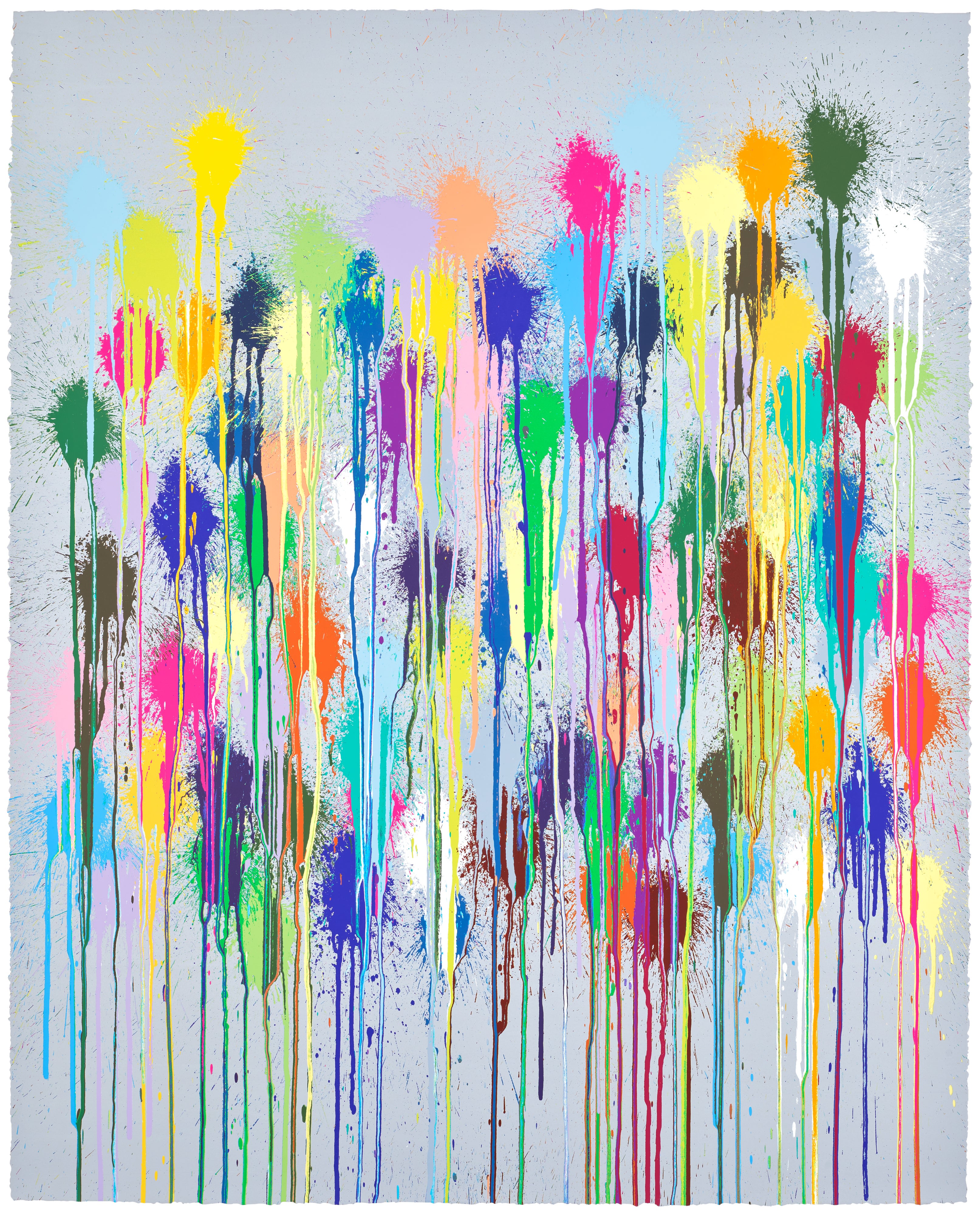
Ian Davenport
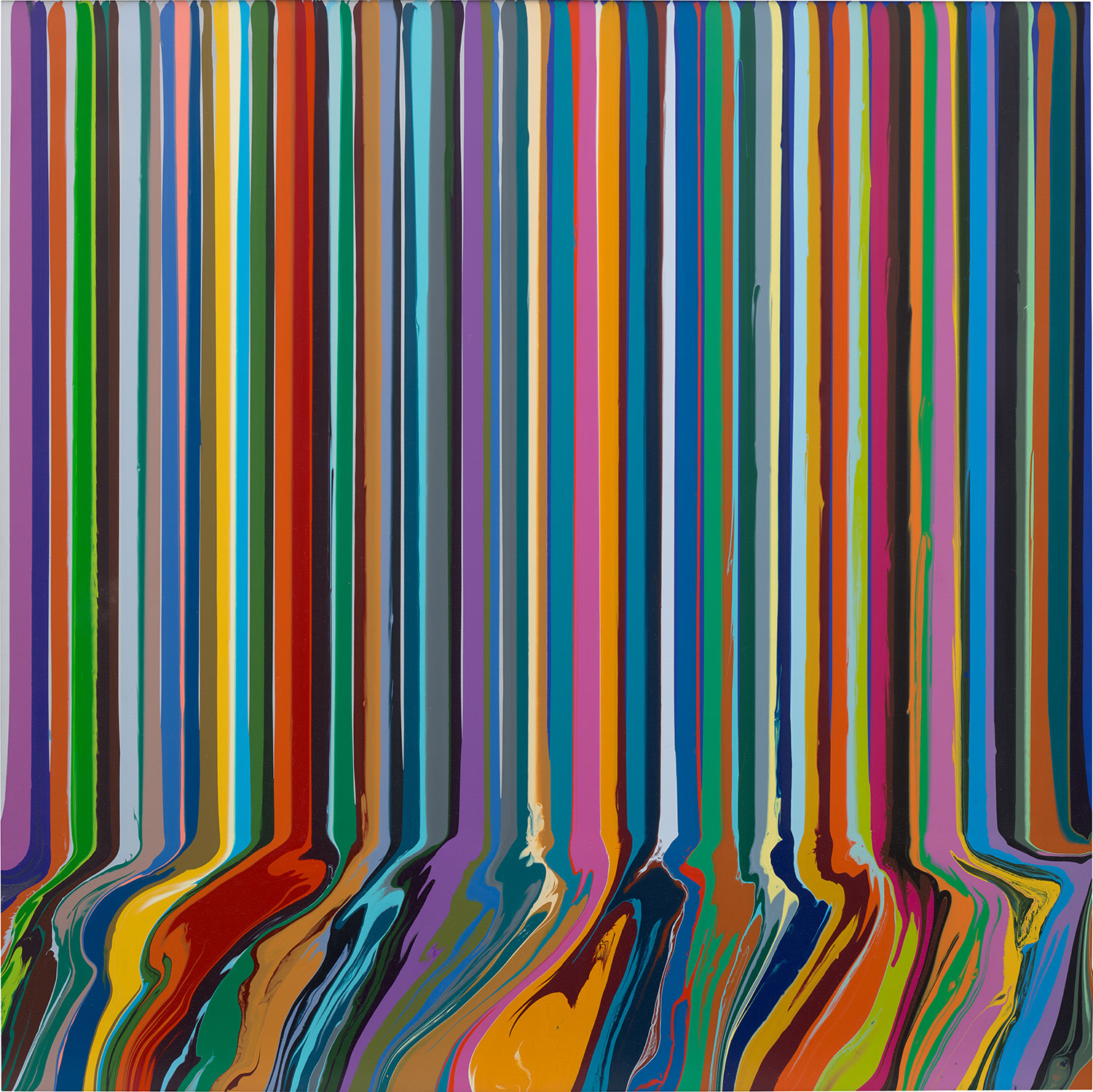
Light Grey, Dark Blue, 2019
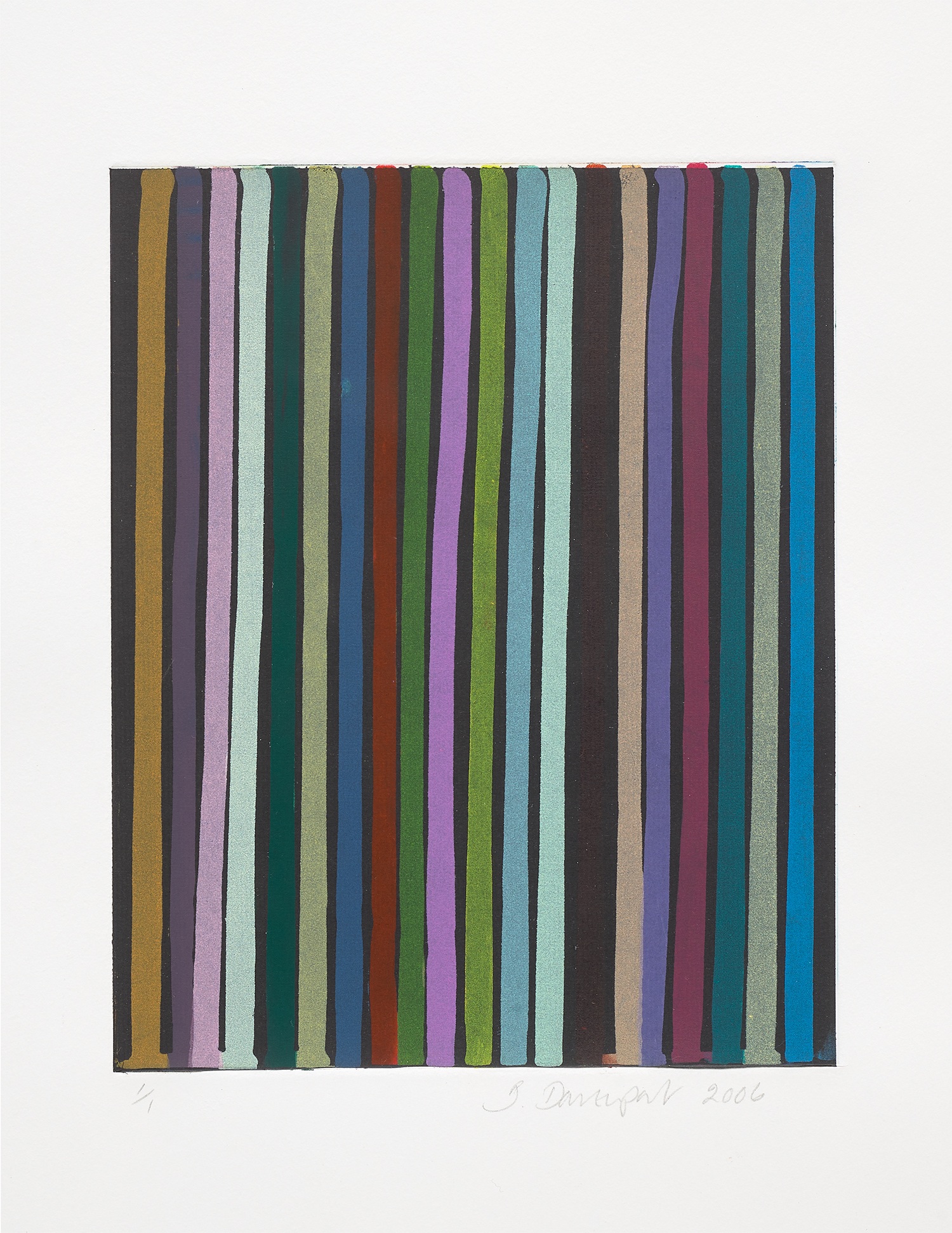
Works such as Light Grey, Dark Blue from 2019, rendered in acrylic on aluminium mounted on panel, demonstrate how his palette has grown more nuanced and complex over time, the cool metallic ground lending his colours a luminosity that canvas cannot offer. The aluminium support is not merely a practical choice but a philosophical one, sharpening the relationship between paint and surface and making every tonal decision more consequential. His printmaking practice deserves particular attention from collectors, because it reveals the intellectual architecture beneath the apparent spontaneity of the paintings. Works such as Etched Lines 3 and Etched Lines: Multicoloured on Black, produced as etchings in colour on Hahnemühle paper, show Davenport translating the logic of the pour into the controlled resistance of the etching plate.
The monoprint etchings, including works in the Venetian Red series, are unique objects that combine the repeatability of the print medium with the unrepeatable accidents of colour layering. Colourcade Buzz, his etching with Chine collé on Hahnemühle paper, adds yet another material register, the delicate tissue of Chine collé paper pressing against the Hahnemühle ground to create surface complexity that rewards close looking. These are not secondary works but primary statements in a different language. From a collecting perspective, Davenport occupies an enviable position in the contemporary British market.
Ian Davenport
Etched Lines: Multicoloured on Black
His works appear regularly at the major London auction houses, and his prints, particularly those published through Alan Cristea and Jealous Gallery, have demonstrated consistent demand across a range of price points that makes his practice accessible to collectors at various stages of their journey. Works from the Help Portfolio, such as Uplift, signed, dated, and numbered in an edition of 125 with 25 artist's proofs and published by Jealous Gallery, represent an ideal entry point: a work with institutional provenance, a clear edition history, and the full warmth of Davenport's colour intelligence in a format that suits a wide range of interiors and collections. Collectors drawn to artists such as Gary Hume, Callum Innes, or Jason Martin will find that Davenport sits in productive conversation with all of them, sharing their commitment to process and material specificity while arriving at an emotional register that is distinctly warm and open. What Davenport has built over four decades is something rarer than a career: a vision.
He has identified a set of questions about colour, gravity, and the limits of authorship, and he has returned to those questions with extraordinary patience and invention, finding in each return something genuinely new. His public commissions have brought that vision to audiences who would never seek out a gallery, and his collaborations with publishers have made the work available to collectors who understand that intimacy and ambition are not opposites. As British abstract painting continues to attract serious global attention, Davenport stands as one of its most generous and enduring practitioners, an artist whose work makes the world look, and feel, more vivid.
Explore books about Ian Davenport