I Nyoman Masriadi
Masriadi's Bold Vision Rewrites Southeast Asian Art
Artist Spotlight · The Collection Editorial
When Christie's Hong Kong brought down the hammer on a major work by I Nyoman Masriadi in the mid 2000s, the art world took notice in a way it rarely does for artists from Southeast Asia. The sale confirmed what a devoted circle of regional collectors had already understood for years: that this painter from Gianyar, Bali, was operating at a level of conceptual and technical ambition that demanded a global audience. In the decades since, Masriadi has only deepened his practice, producing works that are at once visually arresting and philosophically layered, earning him a reputation as one of the most significant figurative painters to emerge from Asia in the contemporary era. Masriadi was born in 1973 in Gianyar, a regency of Bali long regarded as the cultural and artistic heartland of the island.
I Nyoman Masriadi
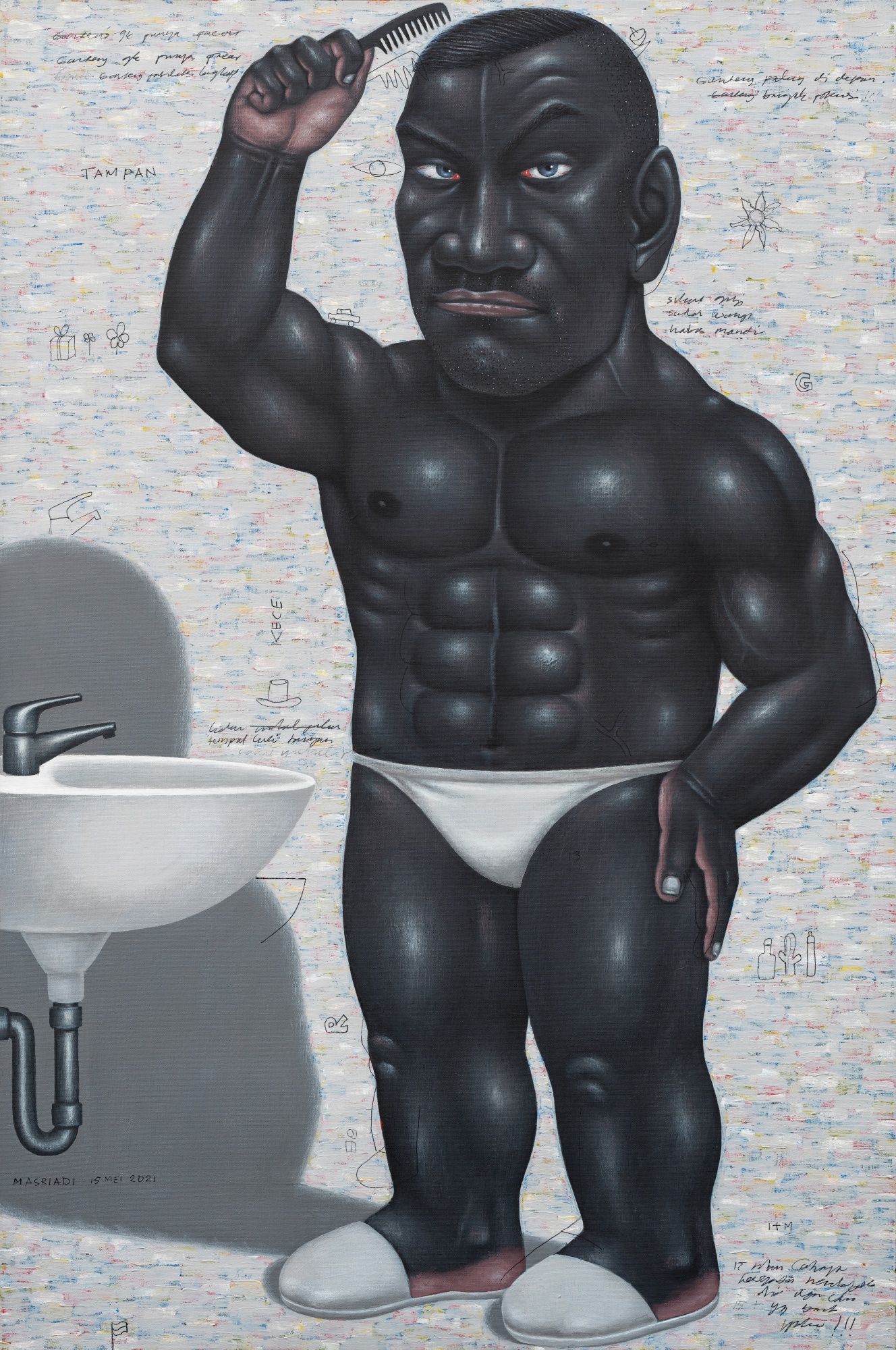
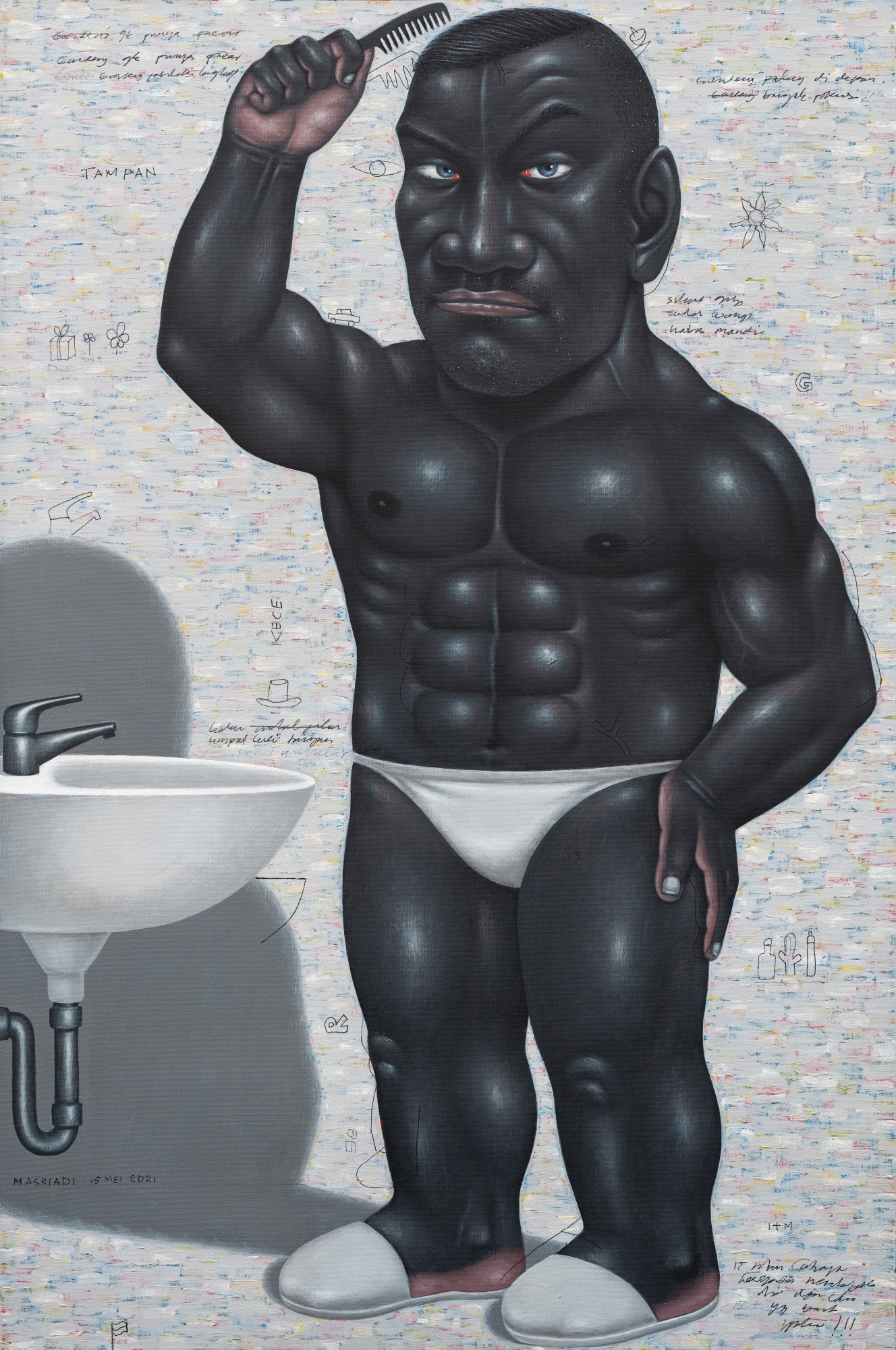
Si Ganteng (The Handsome One) 英俊的那位, 2021
Growing up in a place saturated with devotional imagery, ritual performance, and centuries of craft tradition gave him an intuitive understanding of how images carry meaning and how form can communicate something far beyond its surface. Yet rather than remain within that tradition, he sought a wider vocabulary. He pursued his formal training at the Indonesian Institute of the Arts, known as ISI, in Yogyakarta, the city on the island of Java that has served as the intellectual engine of Indonesian contemporary art for generations. Yogyakarta in the 1990s was electric with artistic debate, political tension following the long Suharto years, and a generation of young artists hungry to interrogate their own cultural moment.
It was in Yogyakarta that Masriadi found his voice and his subject. The city's heady mix of traditional Javanese culture, student activism, and exposure to global art movements pushed him toward a mode of painting that was satirical, self aware, and unafraid of humor as a critical tool. He developed the visual language that would come to define his career: monumental dark skinned figures rendered with almost sculptural muscularity, placed in scenarios drawn from popular culture, mythology, martial arts cinema, comic books, and the textures of everyday Indonesian life. These are not gentle observations.
I Nyoman Masriadi
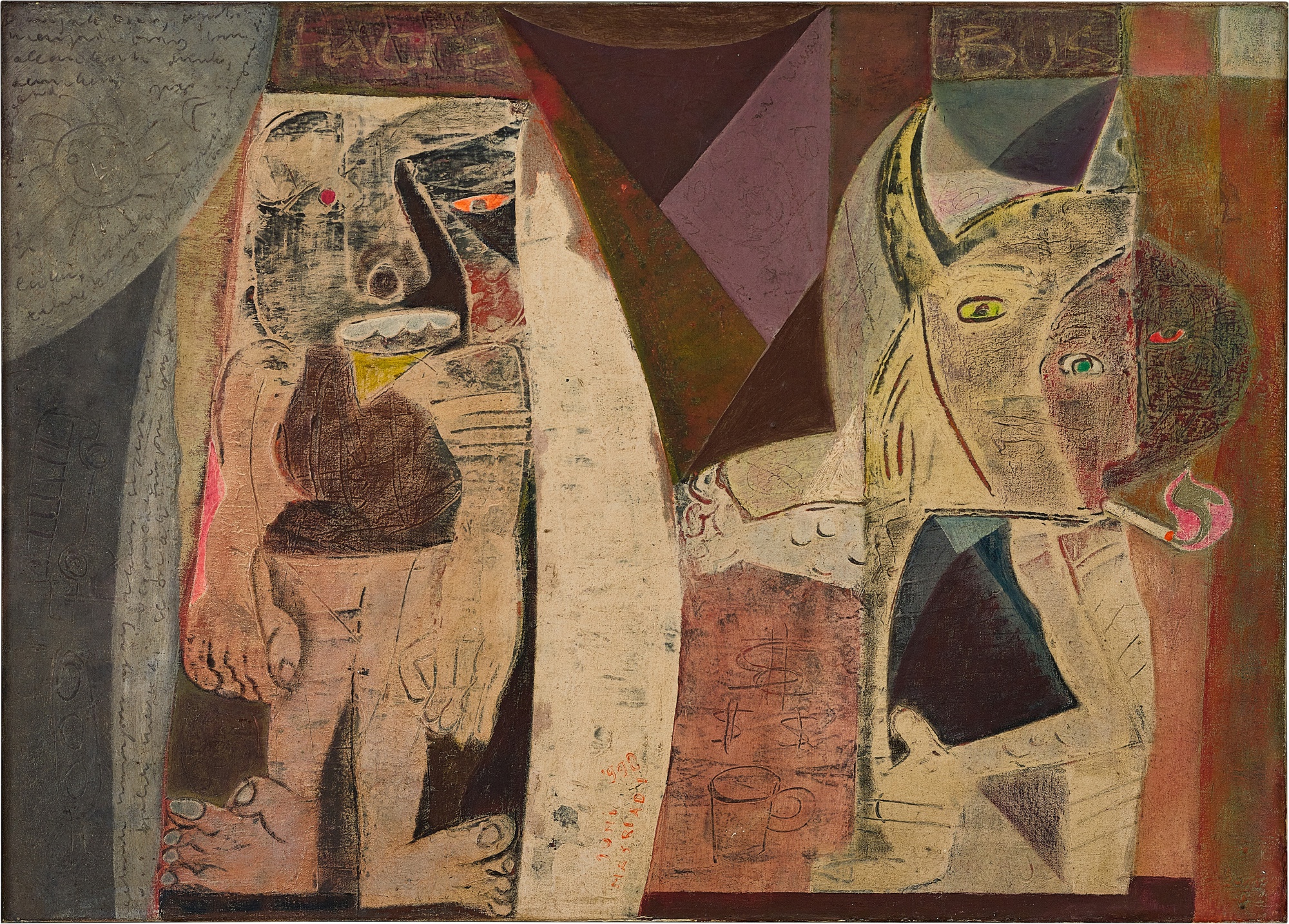
無題
They are confrontations wrapped in the clothing of comedy, inviting laughter before delivering something more unsettling and more lasting. The figures themselves are central to understanding what makes Masriadi's work so distinctive and so consequential. By choosing to paint dark skinned bodies as heroic, powerful, and central to the pictorial drama, he made a statement that resonated far beyond aesthetic preference. In a regional context where skin tone carries enormous social and commercial weight, his insistence on celebrating these figures was quietly radical.
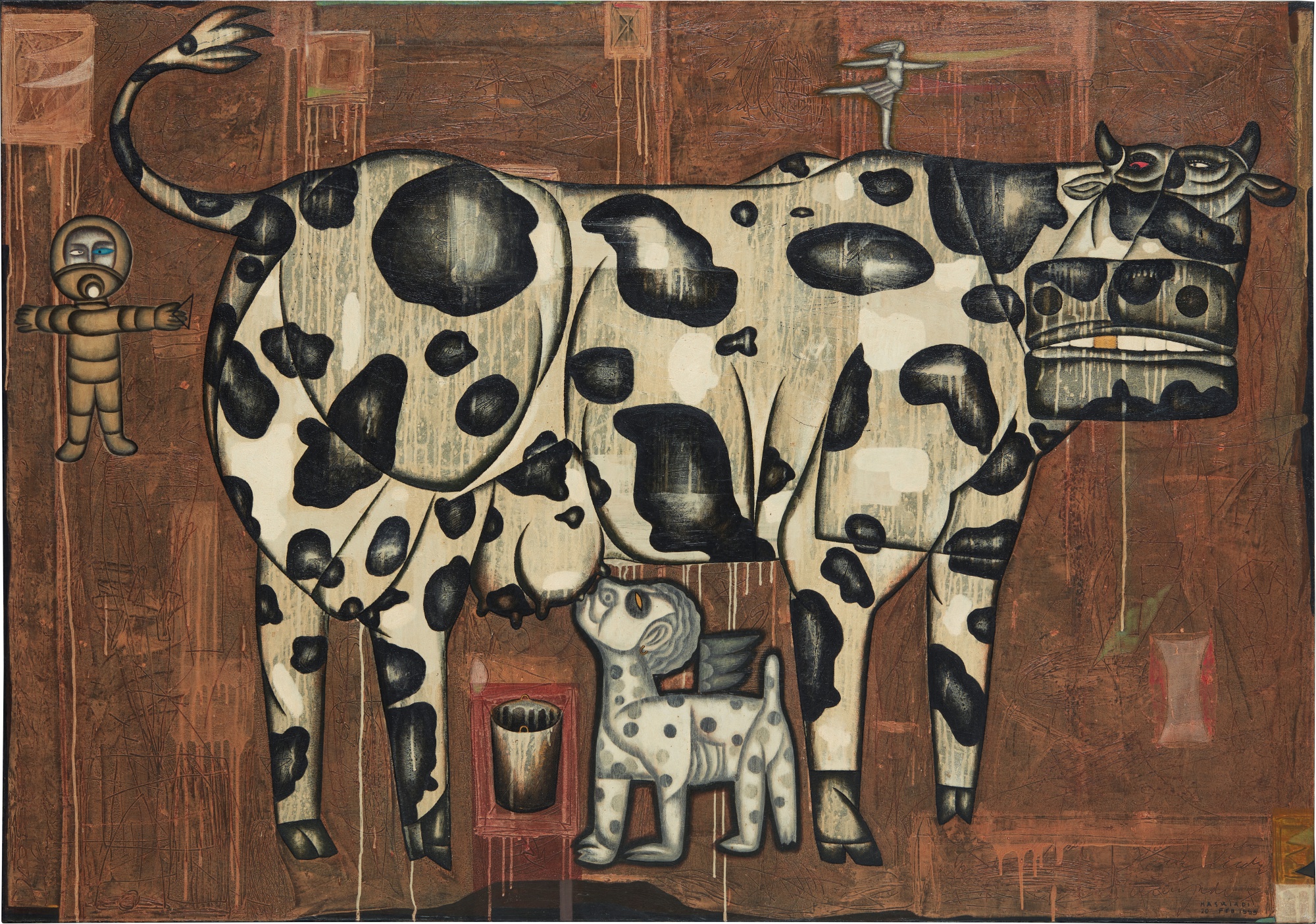
The musculature he gives his characters borrows from the visual language of superhero comics and action film posters, genre traditions he treats with knowing affection while simultaneously pulling them apart. The result is painting that operates on multiple registers at once, functioning as pop spectacle, as cultural criticism, and as a deeply personal meditation on identity and belonging. Among the works that best illuminate his range is Mother Earth, created in 1999, a piece that places his recognizable figure types within a framework of ecological concern and mythological resonance. The work dates from a pivotal moment in his career, when his conceptual ambitions were crystallizing into a mature pictorial language, and it carries the urgency of an artist who has found both his subject and his method.
I Nyoman Masriadi
Mother Earth 地球母親, 1999
More recently, Si Ganteng, completed in 2021 and subtitled The Handsome One in both English and Chinese, demonstrates the continuity of his vision across more than two decades while showing a painter who has lost none of his formal audacity. The bilingual subtitle is itself a small and telling gesture, acknowledging the transnational audience that has come to claim his work as their own. For collectors, Masriadi represents something rare: an artist whose market trajectory has been validated at the highest levels of the international auction world while his work retains a genuine intellectual and emotional richness that transcends any price tag. His works have appeared at Christie's and Sotheby's sales dedicated to Asian contemporary art, where they have consistently performed at the upper end of expectations and have on several occasions set records for Indonesian artists.
What draws serious collectors to his work is not simply the market narrative but the quality of the paintings themselves, the density of reference, the confidence of the drawing, and the sense that each canvas rewards sustained looking. Works from the late 1990s and early 2000s, when his style was forming and his ambition was at its most rawly visible, are particularly sought after, though his more recent canvases demonstrate that the fire has not dimmed. To understand Masriadi's place within the broader landscape of contemporary art, it is useful to consider him alongside artists who have similarly used figurative painting to interrogate cultural identity through humor, satire, and visual excess. The American painter Kerry James Marshall shares Masriadi's insistence on the heroism and centrality of dark skinned figures, though from a very different cultural vantage point.
Within the Southeast Asian context, artists such as Entang Wiharso, another Yogyakarta formed painter, engage in related explorations of Indonesian identity and the pressures of globalization. Masriadi predates much of the current international enthusiasm for figurative painting as a critical mode, which makes him not a follower of a trend but one of its unacknowledged architects. What Masriadi has built over three decades is a body of work that reflects back something true about the world we live in, about power and pretension, about the stories cultures tell themselves, and about the absurdity that lurks just beneath the surface of even the most serious human arrangements. He approaches all of this with the confidence of an artist who knows exactly what he is doing and the generosity of one who wants the viewer to be in on the joke.
That combination of rigor and warmth is extraordinarily difficult to achieve, and it is why his paintings continue to feel alive and necessary long after first encounter. In an art world that sometimes mistakes seriousness for solemnity, Masriadi is a vital reminder that laughter and intelligence are not opposites but partners.