Hubert Le Gall
Hubert Le Gall, Where Fantasy Meets Form
Artist Spotlight · The Collection Editorial
When a gilded bronze daisy unfolds into a pair of side tables, or a yeti materializes in gold leaf and sheepskin as a floor lamp, something genuinely rare has occurred in contemporary design: an object has crossed over into the territory of poetry. Hubert Le Gall has spent four decades building a body of work that refuses the distinction between furniture and sculpture, between craft and fine art, between the rational demands of a room and the irrational longings of the imagination. His pieces appear regularly at Christie's and other major international auction houses, where they attract precisely the kind of collector who understands that living with art and living with beauty need not be two separate ambitions. In recent seasons, sustained auction interest and a growing presence in European design fairs have confirmed what devoted collectors have known for years: Le Gall is one of the most singular creative voices working in decorative arts today.
Hubert Le Gall
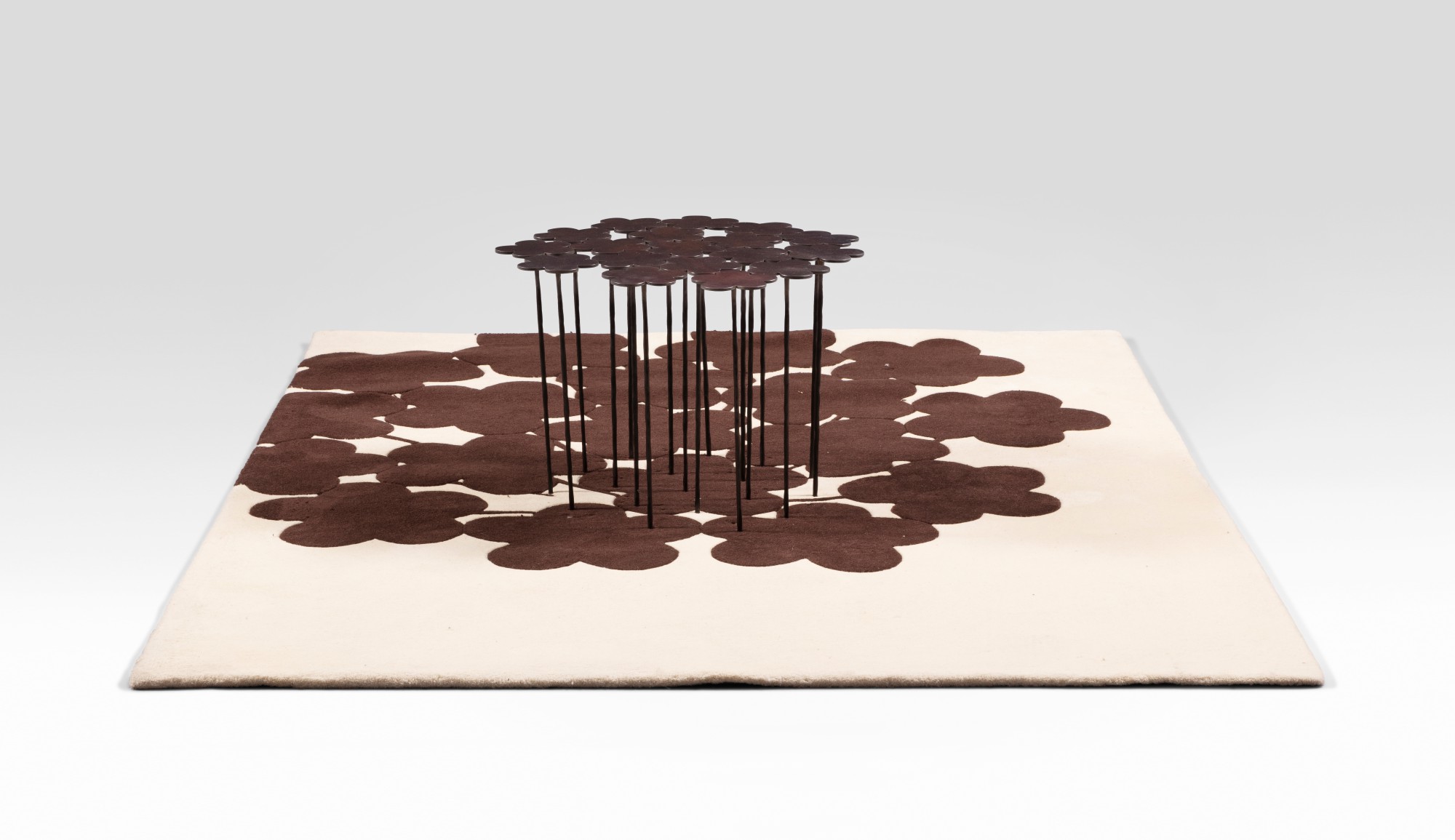
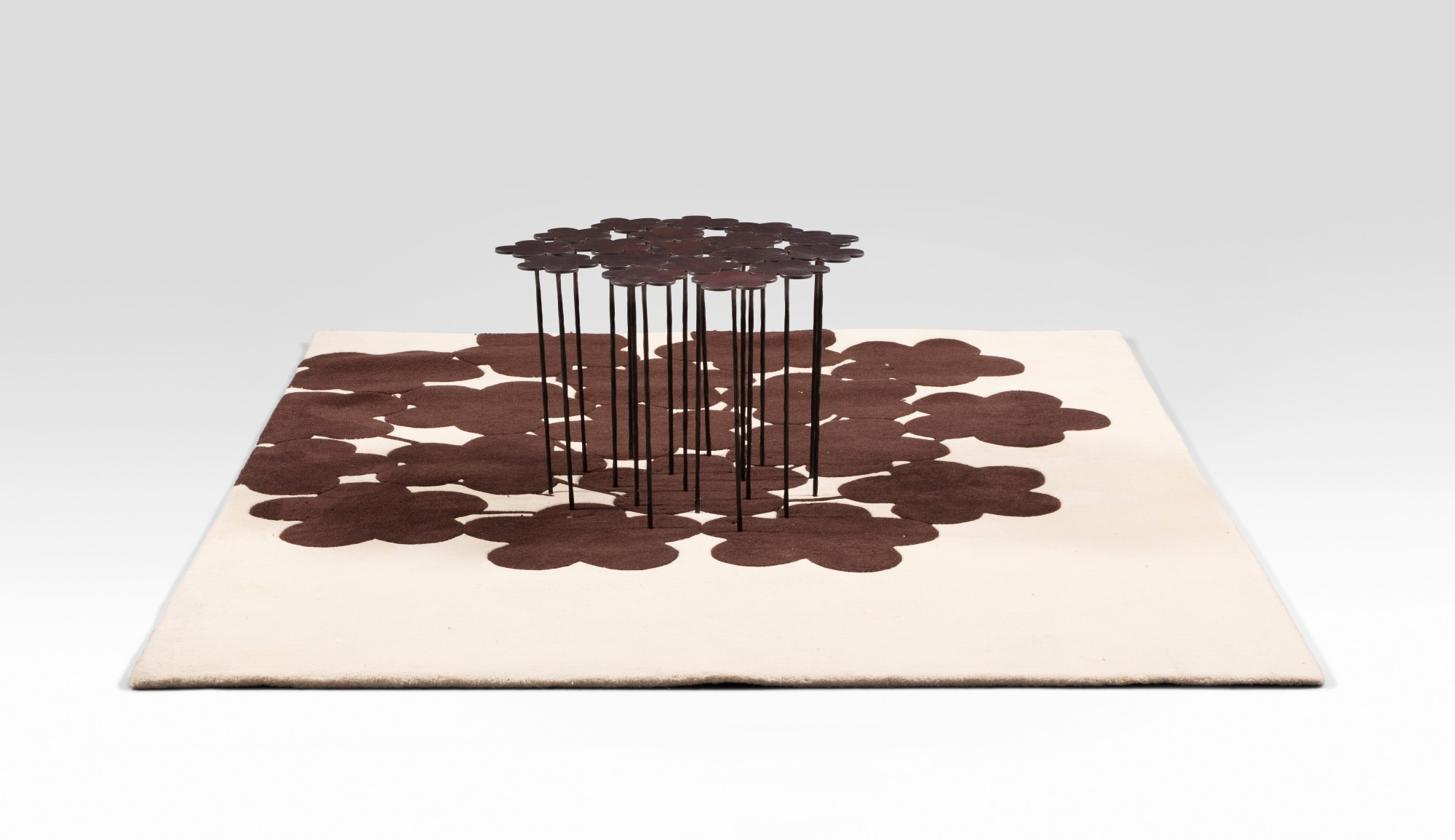
Table et tapis Ombre chinée, pièce unique
Born in France in 1961, Le Gall came of age in a cultural moment saturated with the legacies of Surrealism, Pop Art, and the grand tradition of French decorative craft. France has long maintained a particular seriousness about the applied arts, a tradition running from the ébénistes of the Ancien Régime through the Art Nouveau workshops of Nancy and the extraordinary craftsmen who surrounded the great couturiers of the twentieth century. Le Gall absorbed all of this, but what distinguished him from the outset was an instinct for the uncanny, a desire not merely to make beautiful things but to make beautiful things that seemed to be dreaming. His formation drew equally on art history and on the surrealist impulse to destabilize the familiar, to find in the domestic object a hidden life.
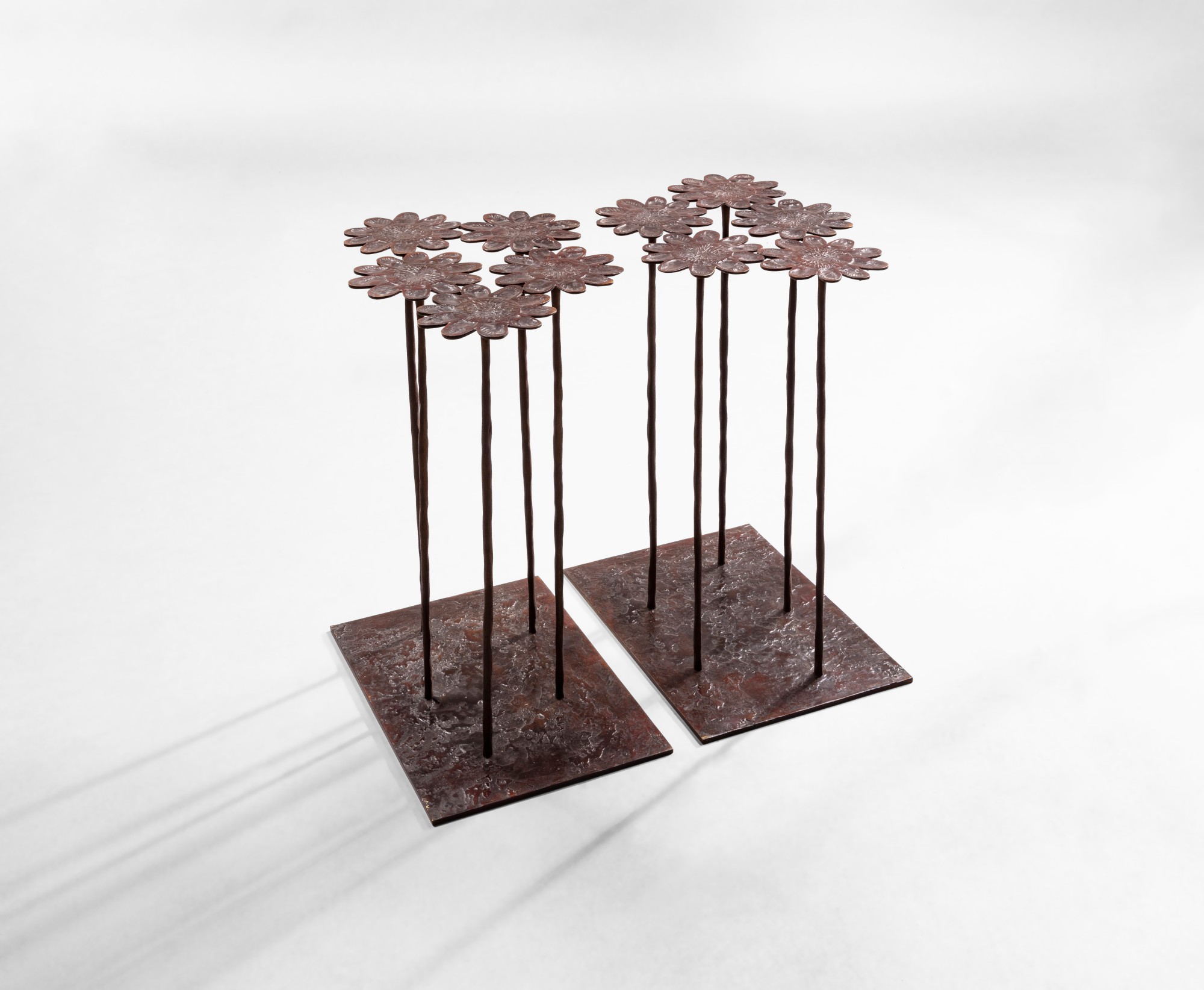
His artistic development unfolded through a sustained dialogue with materials, most notably patinated bronze, gilded metal, lacquered wood, and the kind of unexpected sensory contrasts, such as the softness of sheepskin against the cold authority of cast metal, that give his pieces their peculiar emotional charge. Over the decades his practice evolved from early explorations of animal motifs and organic form into an increasingly confident and layered visual language. He became known for his ability to hold contradictions in suspension: a piece might be both monumental and playful, both historically literate and entirely sui generis. The Tables basses Marguerite, a pair of side tables cast in patinated bronze in the form of daisy flowers, exemplify this balance perfectly.
Hubert Le Gall
Tables basses Marguerite
They carry echoes of Art Nouveau's love of botanical form while feeling completely contemporary, even slightly absurdist, as if they had arrived from a dream about a garden that never quite obeys the rules of botany. Among the works that best represent his mature achievement, the Table et tapis Ombre chinée stands apart for its ambition. Realized in wool and patinated bronze as a unique piece, it unites a sculptural table with a hand worked textile, treating the rug beneath as an extension of the object itself rather than a neutral ground. The effect is cinematic: one imagines the table and its shadow as collaborators in some gentle theatrical production.
The Lampe Mon Yéti, in gold leaf gilded bronze with a sheepskin body and fabric shade, is pure invention, a mythological creature domesticated into a source of light, simultaneously absurd and deeply beautiful. The Paravent Le rêve de la souris, in lacquered wood and gilt bronze, demonstrates his mastery of the traditional decorative arts format of the folding screen, transformed here into something narrative and intimate. And the Commode pré emballé, in wood, gilt bronze, and resin, pays affectionate homage to Christo's wrapped objects while remaining entirely its own proposition, a piece of furniture caught in a moment of becoming or unbecoming, depending on the mood of the room. For collectors, Le Gall's work occupies a particularly compelling position in the market for collectible design.
Hubert Le Gall
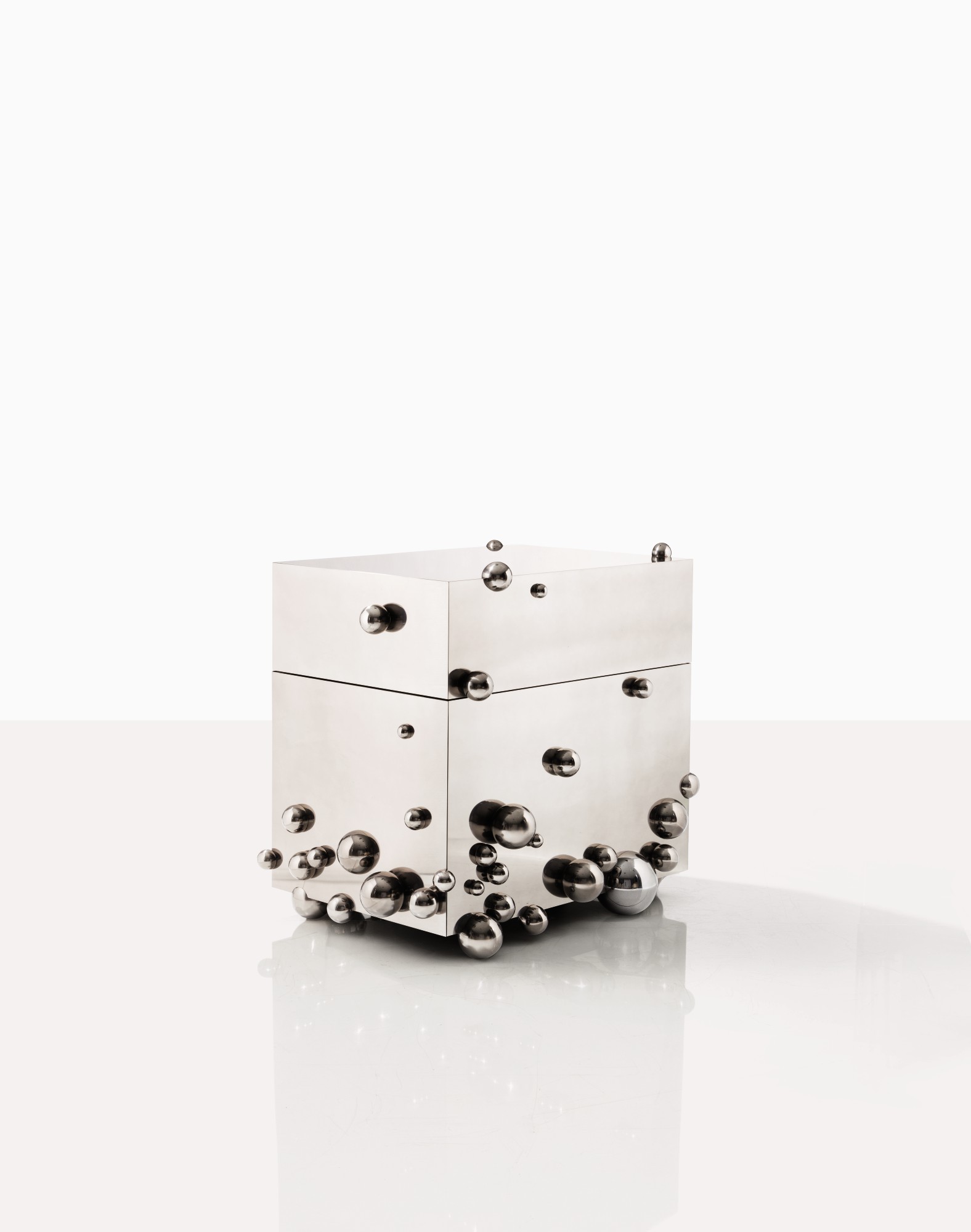
Unique Swipp Cabinet
His limited editions and unique pieces offer the kind of rarity and art historical seriousness that serious collectors require, while the functional dimension of much of his work means that these objects can be lived with, placed in rooms, used, and encountered daily in a way that a painting on a wall cannot always provide. The tactile richness of his materials, whether the warmth of gilded bronze or the organic irregularity of a lacquered surface, means that his pieces reward sustained acquaintance. Collectors who encounter a Le Gall at auction frequently report that photographs, however beautiful, do not fully prepare one for the presence of the object itself. This is the mark of genuinely great craft: it insists on physical encounter.
In the broader context of art history and collectible design, Le Gall's closest spiritual ancestors include the great French designer and sculptor Diego Giacometti, whose bronze furniture for private clients achieved a similarly mythological quality, and Claude Lalanne, whose zoomorphic furniture dissolved the boundary between creature and function with comparable wit and material sophistication. One might also draw lines to the surrealist objects of Meret Oppenheim, to the biomorphic forms of Jean Arp, and to the playful philosophical provocations of Marcel Duchamp, though Le Gall's register is warmer and more unabashedly pleasurable than any of these forebears. Among his contemporaries in collectible design, figures such as François Xavier Lalanne and Mattia Bonetti share something of his commitment to the fantastical, but Le Gall's voice remains distinctly his own: more literary, perhaps, more given to narrative and to the quiet comedy of the domestic uncanny. What makes Le Gall matter today, in a collecting landscape increasingly attentive to the boundaries between art and design, is precisely his refusal to be contained by either category.
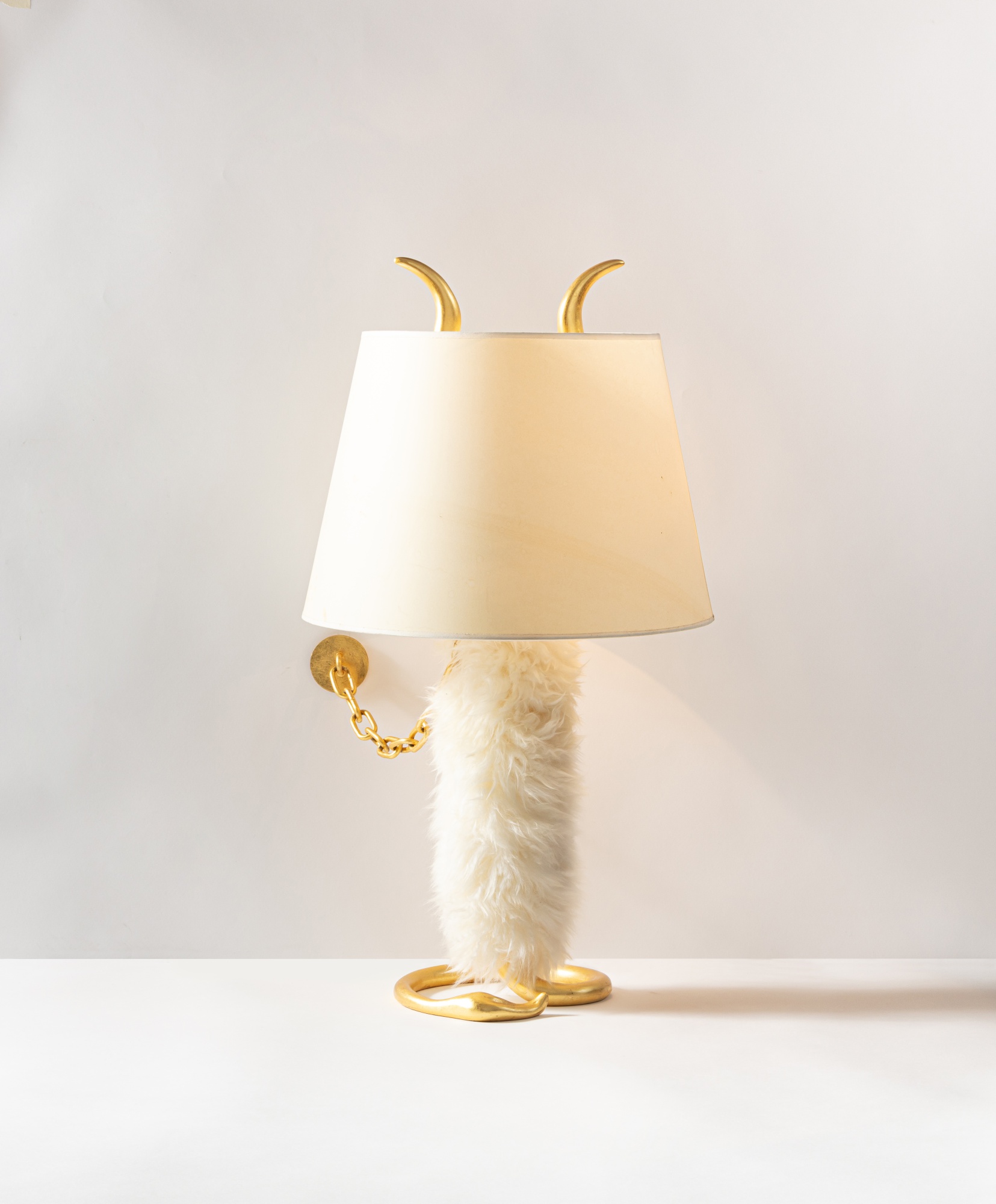
Hubert Le Gall
Lampe Mon Yéti
He works in a tradition that France has historically honored but that the broader international art market has sometimes undervalued relative to painting and sculpture. As that calculus shifts, and as collectors and institutions increasingly recognize that a great table or lamp or screen can carry as much meaning as any canvas, Le Gall's achievement comes into sharper focus. He has spent a career making objects that insist on being more than objects, things that bring wit and warmth and a kind of philosophical mischief into the rooms fortunate enough to contain them. To collect his work is to invite something genuinely alive into one's home.