Huang Rui
Huang Rui, The Architect of Chinese Freedom
Artist Spotlight · The Collection Editorial
In the autumn of 1979, something remarkable happened on the streets of Beijing. A group of young artists hauled their paintings to the iron railings outside the China Art Gallery and hung them without permission, without a state imprimatur, without apology. The Stars Group, known in Chinese as Xingxing, had arrived. Among the most vital forces behind that audacious first exhibition was Huang Rui, a painter and poet then in his late twenties, whose work crackled with a restless intelligence and a refusal to be silenced.
Huang Rui
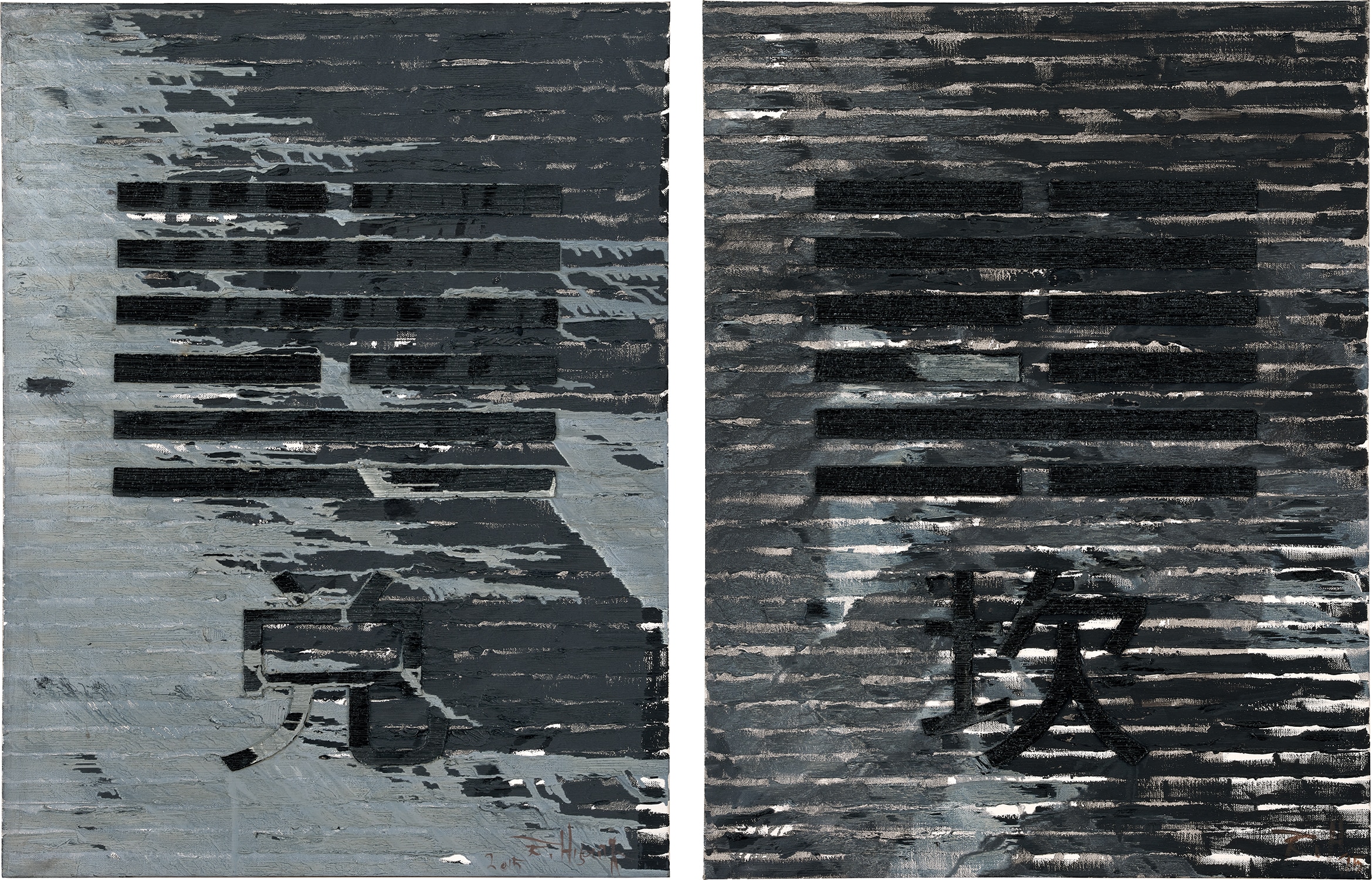
Lake & Water, 2015
That moment is now recognized as one of the founding gestures of contemporary Chinese art, and Huang Rui remains its most eloquent living embodiment. Born in Beijing in 1952, Huang Rui came of age during one of the most turbulent periods in modern Chinese history. The Cultural Revolution, which began in 1966, disrupted virtually every avenue of formal artistic education and intellectual life. Like so many young people of his generation, he navigated those years without the benefit of conventional schooling in the arts, developing instead a fiercely self directed practice shaped by observation, reading, and an acute sensitivity to the world around him.
This formation outside official structures would prove foundational, instilling in him a lifelong commitment to art made on its own terms rather than on the state's. The Stars Group, which Huang Rui cofounded alongside artists including Wang Keping and Ma Desheng, drew its name from the idea that each artist was an individual star, distinct and autonomous, in deliberate contrast to the collective anonymity demanded by socialist realist doctrine. Their 1979 exhibition, staged defiantly in public space after institutional venues refused them, drew enormous crowds and provoked both admiration and official anxiety. A subsequent protest march through Beijing when authorities tried to shut the show down became a landmark moment in the history of Chinese civil society.
Huang Rui
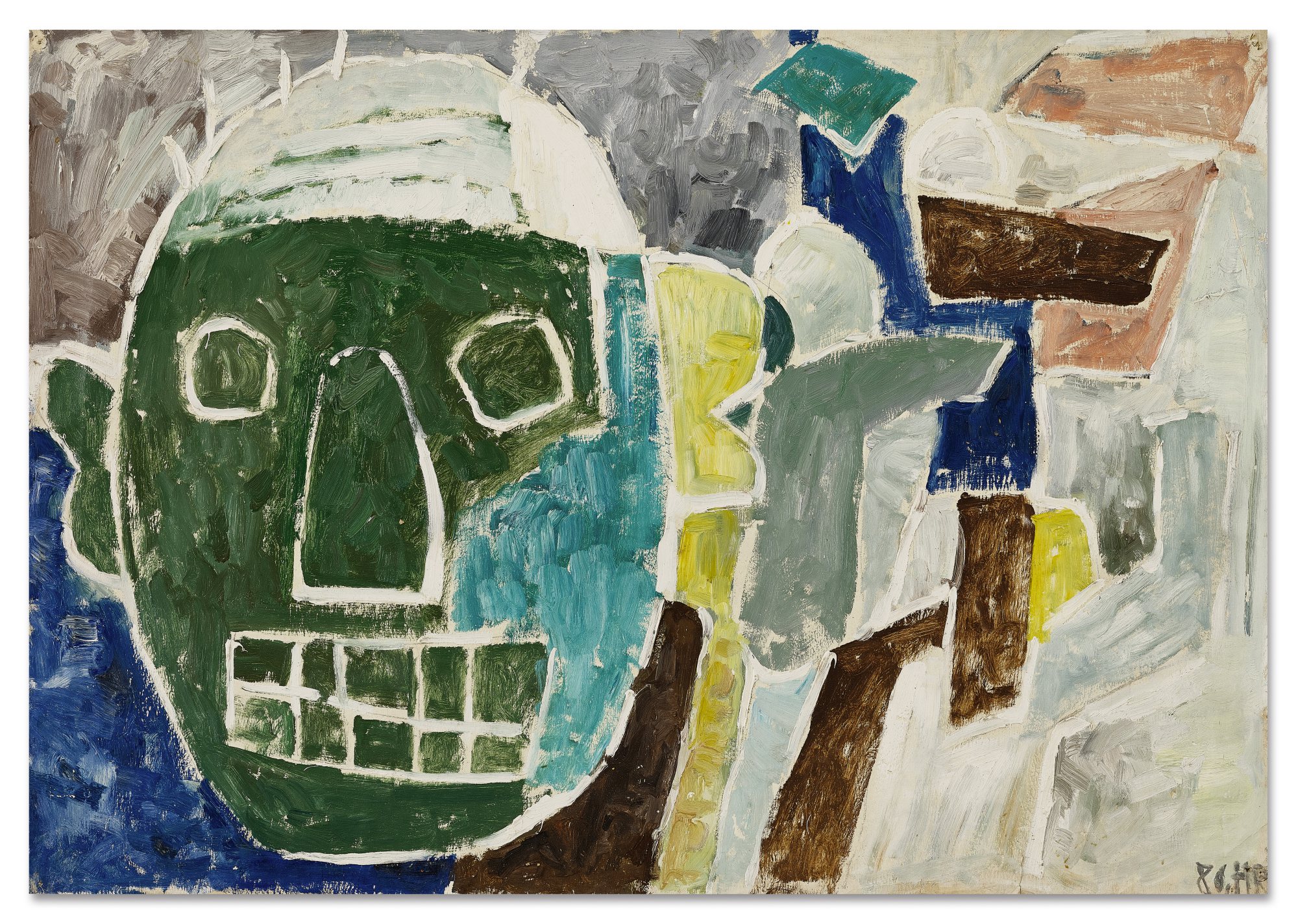
Preparation for Democracy Wall 民主牆草稿
Huang Rui was at the center of it all, functioning simultaneously as organizer, artist, and witness. His artistic practice across the following decades demonstrated a rare capacity for evolution without self abandonment. After spending a formative period in Japan from the mid 1980s onward, where he engaged deeply with minimalist and conceptual traditions while maintaining his distinctly Chinese perspective, Huang Rui returned to Beijing in the early 2000s and played a pivotal role in establishing the 798 Art District in Dashanzi. This repurposing of decommissioned Bauhaus era factory buildings into studios and galleries helped transform Beijing into a genuine hub of international contemporary art, and Huang Rui's own studio there became a gathering point for artists, critics, and curators from around the world.
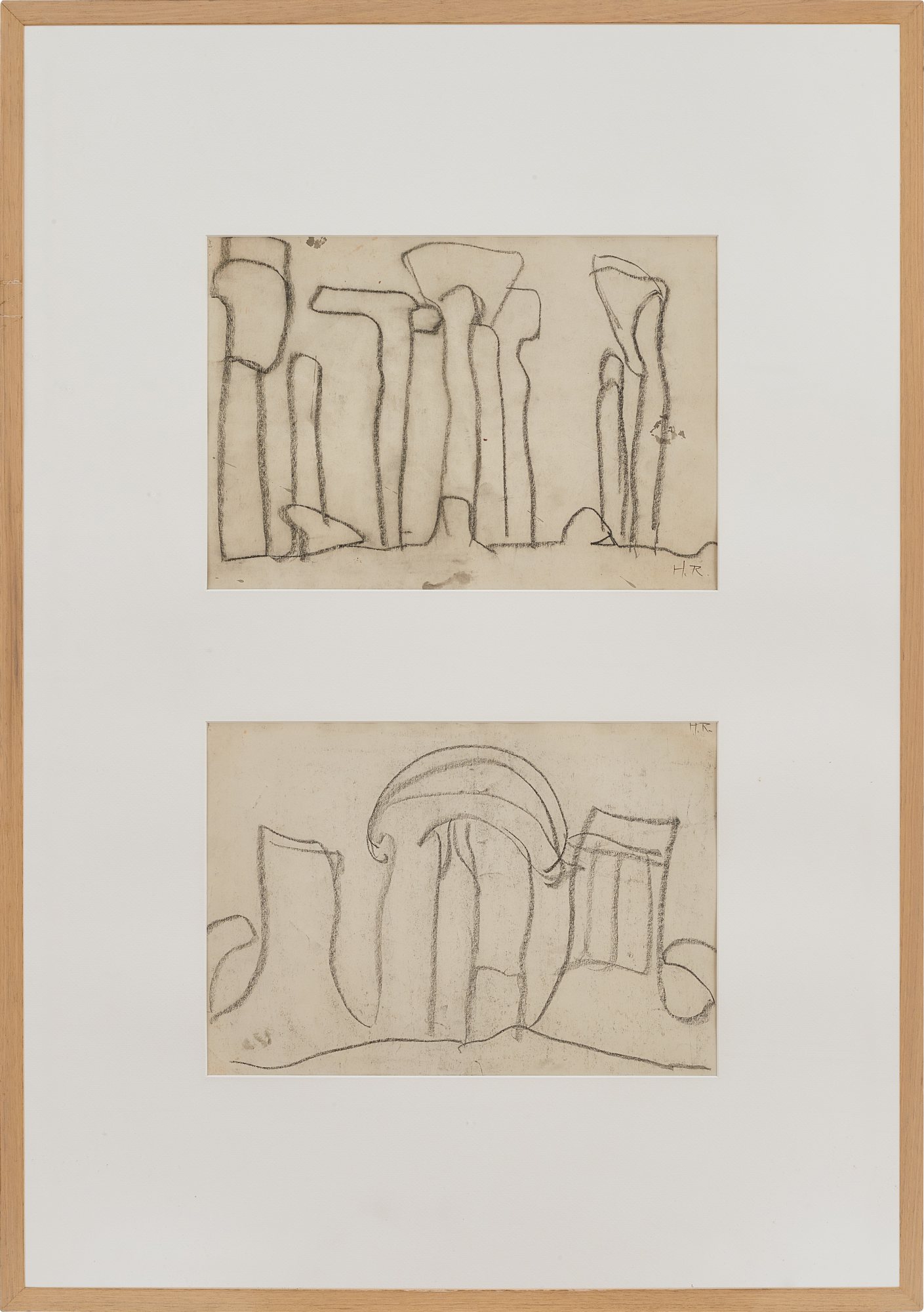
His contribution to that project was not merely logistical but visionary, an act of cultural placemaking consistent with everything he had done since 1979. The works available through The Collection offer a compelling window into the full arc of his practice. "Yuanmingyuan (Two Works)" from 1979, rendered in pencil on paper, carries the weight of its historical moment with remarkable directness. The Old Summer Palace, or Yuanmingyuan, is itself a site dense with meaning in the Chinese imagination, a place of imperial splendor destroyed and looted by Anglo French forces in 1860, and Huang Rui's choice of subject in that charged year of 1979 speaks to his instinct for layering contemporary urgency onto deep historical ground.
Huang Rui
Yuanmingyuan (Two Works) 圓明園(兩幅作品), 1979
"Preparation for Democracy Wall," executed in oil on paper laid on board, is equally charged. The Democracy Wall movement of 1978 and 1979, during which citizens posted political essays and poems on a stretch of wall in central Beijing, was a brief and exhilarating opening in public discourse, and Huang Rui's preparatory work for this series captures that energy with intimate immediacy. Then there is "Lake and Water" from 2015, an oil on canvas diptych that reveals his more meditative mature voice, painting that breathes and opens outward rather than pressing against constraint. Together these three works trace a journey from the urgency of political awakening to the contemplative authority of a fully realized painter.
From a collecting perspective, Huang Rui occupies a position of genuine historical importance that is not yet fully reflected in the broader market. Artists who were present at the creation of a movement, who can be pointed to as originators rather than inheritors, represent a distinct category of cultural asset. His early works on paper carry documentary as well as aesthetic value, situating the viewer inside a pivotal moment in twentieth century art history. His later paintings demonstrate that his practice never calcified into historical posturing but continued to develop with genuine artistic ambition.
Collectors drawn to the deep roots of Chinese contemporary art, as well as those building collections that span the political and the poetic, will find in Huang Rui a figure whose work repays sustained attention. Works from the Stars Group period are increasingly rare on the primary and secondary markets, making any opportunity to acquire pieces from that era particularly significant. To understand Huang Rui fully it helps to place him in relation to his peers and to the broader currents of postwar art. Within the Chinese context, his closest companions in historical significance are fellow Stars members and, somewhat later, figures associated with the 85 New Wave movement such as Xu Bing and Gu Wenda, artists who also grappled with the collision between Chinese tradition and global modernity.
Internationally, his trajectory rhymes in certain ways with dissident artists working in other authoritarian contexts during the Cold War era, figures who understood that to make art freely was itself a political act. There is something in his sensibility that connects to the Fluxus tradition as well, the sense that art is inseparable from the conditions of its making and the community that surrounds it. What secures Huang Rui's legacy above all is his integrity across time. He did not soften his positions when softening became convenient, and he did not retreat into nostalgia when the art world began to celebrate his early radicalism.
He continued to work, to think, to challenge. The Democracy Wall, the Stars Group, the 798 District: these are not merely biographical footnotes but genuine contributions to the landscape of human creative freedom. To collect his work is to participate in that history, and to recognize that the most enduring art is always, in some fundamental way, an argument for what it means to be alive and unsilenced.
Explore books about Huang Rui
Huang Rui: A Retrospective
Gao Minglu
The Stars: Ten Years
Huang Rui
Huang Rui and the Stars Movement
Ellen Lupton and Andrea Lipps
Contemporary Art in China
Wu Hung
Art and the Politics of the Chinese Cultural Revolution
Michael Sullivan