Honoré Daumier
Daumier: The Great Humanist Eye
Artist Spotlight · The Collection Editorial
“One must be of one's time.”
Honoré Daumier
There is a moment in the permanent collection galleries of the Musée d'Orsay in Paris where visitors tend to slow down and lean in. The works are modest in scale, many of them prints and drawings, some barely larger than a sheet of notebook paper. Yet they hold you. Honoré Daumier, the nineteenth century French artist who spent decades chronicling the absurdities of modern urban life, still speaks with startling directness across a distance of nearly two centuries.
Honoré Daumier
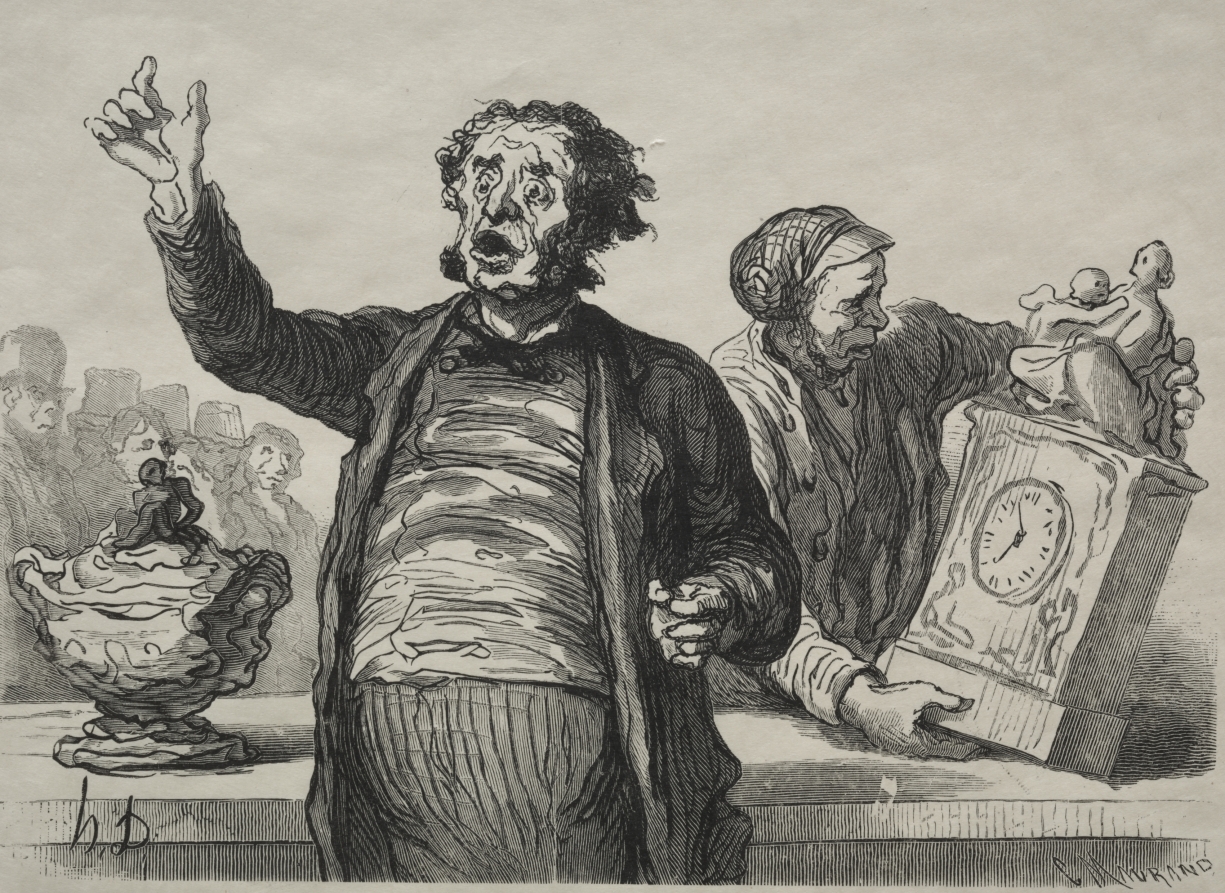
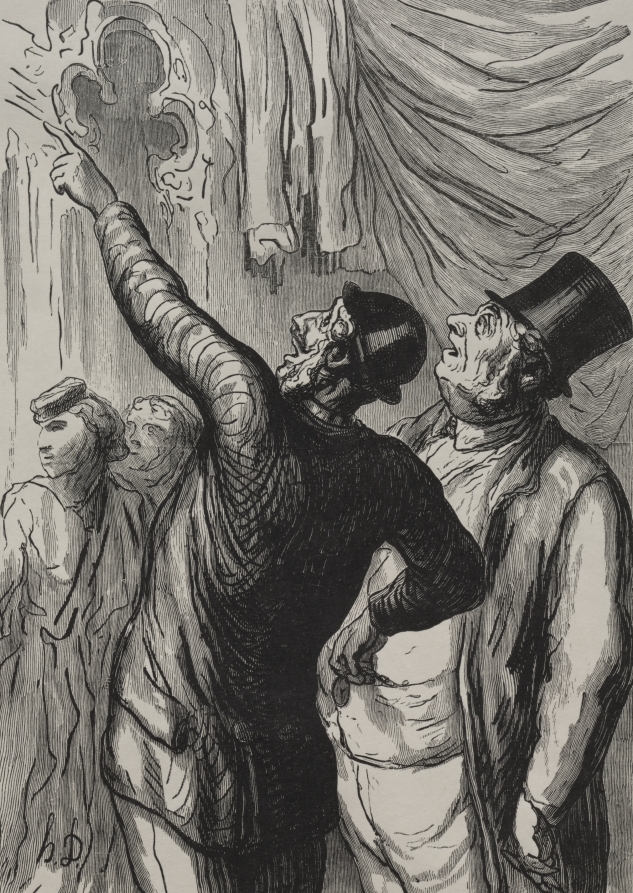
At the Universal Exhibition: The perfect guide, 1867
His figures lean and gesticulate, argue and snooze, preen and suffer, and in every line you feel the unmistakable presence of a mind that understood people with both forensic clarity and deep, generous affection. Daumier was born in Marseille in 1808, the son of a glazier with literary ambitions who moved the family to Paris when Honoré was a young boy. The city would shape everything. Paris in the early nineteenth century was a churning, contradictory place, a metropolis reinventing itself through revolution and reaction, through the anxieties of the emerging bourgeoisie and the grinding pressures placed on the working poor.
Daumier grew up with limited formal schooling and took work as a bailiff's clerk and then as a bookseller's assistant before finding his way into printmaking. He studied briefly under Alexandre Lenoir and received some training in lithography, the then revolutionary printing technique that would become the great instrument of his art. By his early twenties he was contributing caricatures to the satirical journal La Caricature, and his trajectory was fixed. The defining early episode of Daumier's career arrived in 1832, when he produced a lithograph depicting King Louis Philippe as the mythological figure Gargantua, swallowing bags of gold extracted from the poor.
Honoré Daumier
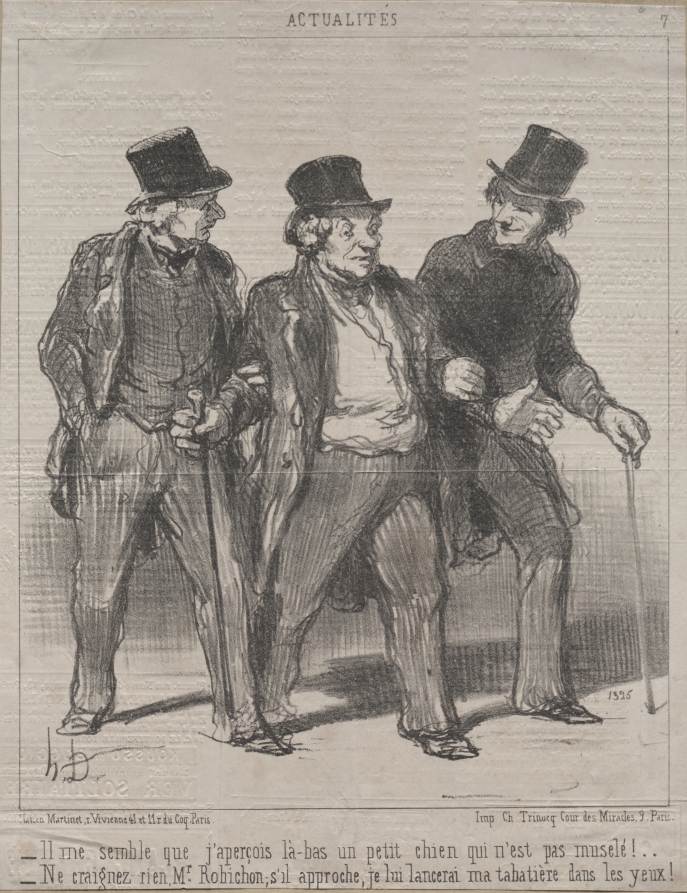
It seems to me that I notice a little dog there that is not muzzled!..., 1852
The image was bold to the point of recklessness. Daumier was prosecuted, convicted, and sentenced to six months in prison. Rather than silence him, the experience galvanised his sense of purpose. When he emerged, he began his long association with the journal Le Charivari, for which he would eventually produce well over three thousand lithographs across several decades.
These were not mere illustrations. They were compressed, perfectly observed social documents, each one delivering more insight about class, vanity, professional hypocrisy, and the texture of Parisian daily life than most novels manage across hundreds of pages. The range of Daumier's output is astonishing. He moved with equal facility between the courtroom and the concert hall, the legislative chamber and the theater box, the auction house and the boulevard.
Honoré Daumier
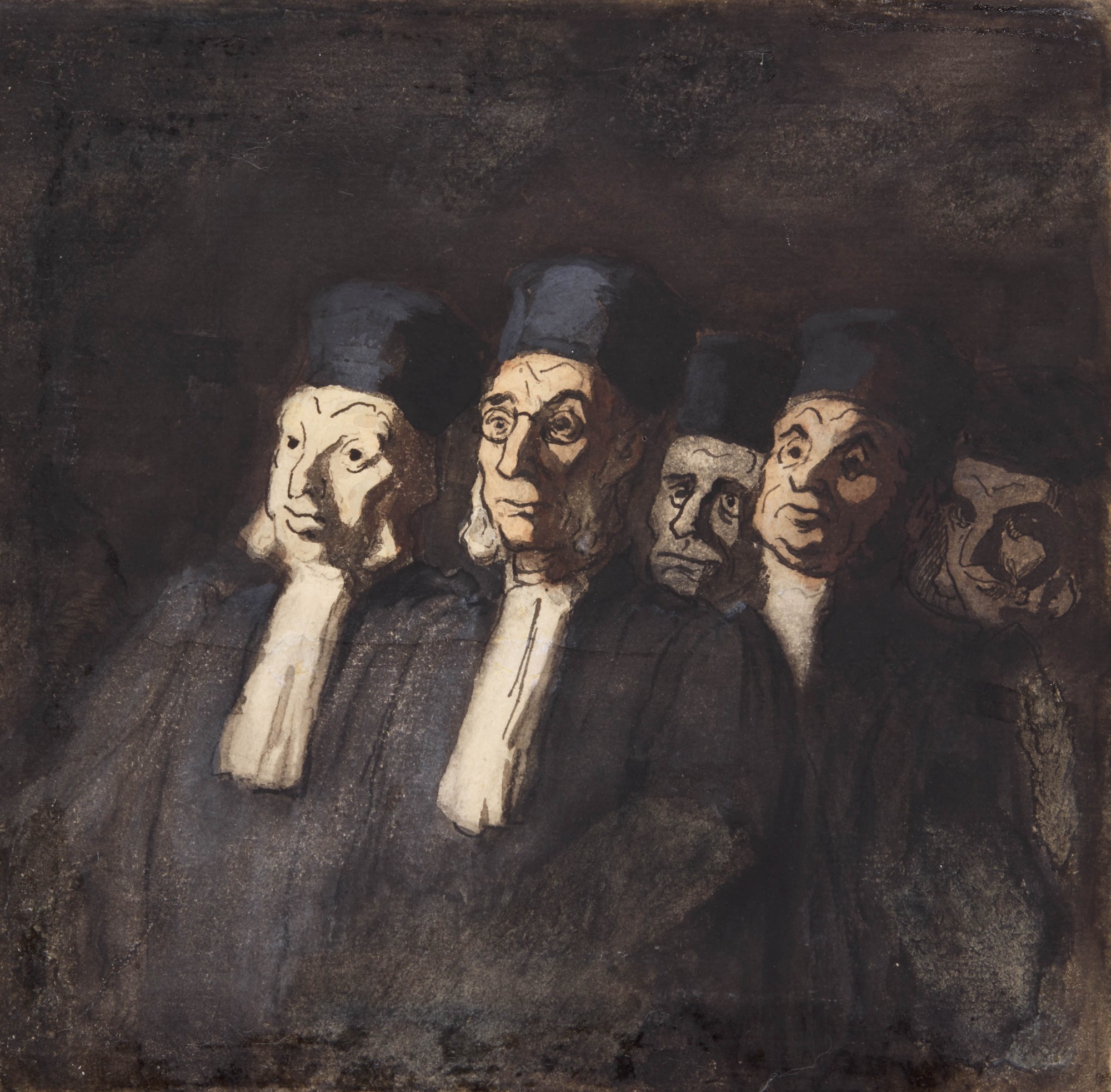
Le banc des avocats
His series on lawyers, collected under the title Les Gens de Justice, remains one of the most penetrating studies of professional self importance ever made in any medium. Works like Le banc des avocats, rendered in watercolour and pen and ink, show figures so absorbed in their own rhetoric that the human beings supposedly in their care have ceased to exist. His theater subjects capture the peculiar social theatre that plays out in the audience as much as on the stage, and The Box Office at the Theater from 1862 shows his mastery of wood engraving with the same economy and wit he brought to lithography. The 1867 wood engraving At the Universal Exhibition: The perfect guide distills an entire comedy of manners into a single scene, the pompous guide and the bewildered visitor caught in the eternal dance of expertise and ignorance.
Daumier also produced paintings and sculptures of extraordinary quality, though these were largely unknown to his contemporaries and only fully appreciated after his death. His clay and bronze busts of parliamentary deputies, made in the early 1830s, are among the most psychologically probing portrait sculptures of the entire century. His paintings of Don Quixote and of the heavy burdens carried by ordinary people carry a weight that connects him directly to Rembrandt and Goya, two artists with whom he is often and rightly compared. When Camille Corot, one of his closest friends and a fellow traveller in the observation of humble life, learned in Daumier's final years that the aging artist risked losing his home, he quietly purchased a house and gave it to him.
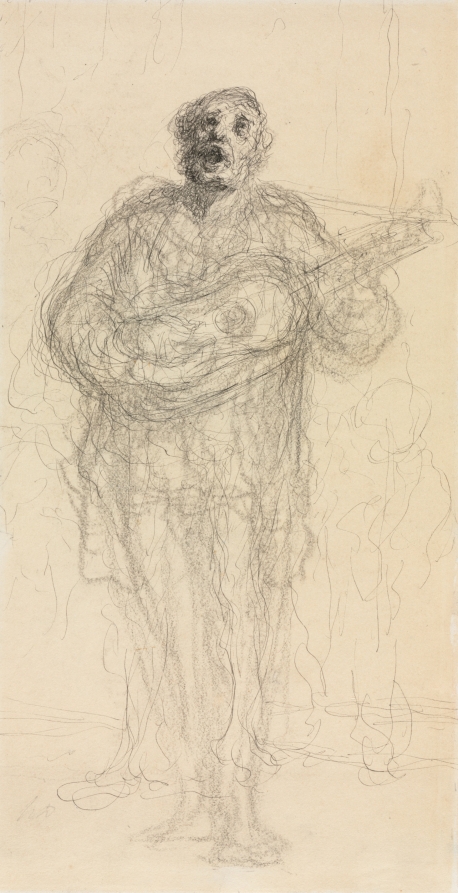
Honoré Daumier
Singing Guitarist (recto), 1855
It was an act of friendship that speaks to the esteem in which Daumier was held by the artists who knew him best. For collectors, Daumier offers a remarkable combination of historical importance, aesthetic pleasure, and accessibility. Lithographs and wood engravings from his years at Le Charivari appear regularly at auction and through specialist print dealers, and they represent a genuine opportunity to acquire works by one of the most significant figures in the history of graphic art at prices that remain attainable compared to his contemporaries in painting. Watercolours and drawings are rarer and correspondingly more sought after, with institutions and serious private collectors competing for them whenever they appear.
Condition and impression quality are the primary variables to consider with the prints, and working with a knowledgeable adviser to assess these factors is essential. The subjects that tend to generate the most collector enthusiasm are the legal and theatrical series, the political caricatures, and the Don Quixote paintings and drawings, though any close attention to Daumier's work reveals that his quality of observation almost never faltered regardless of subject. Daumier sits at the intersection of several major currents in art history and his influence runs remarkably wide and deep. His social realism connects him backward to Goya and forward to the entire tradition of politically engaged art that runs through Käthe Kollwitz, George Grosz, and on into the graphic activism of the twentieth century.
His acute observation of bourgeois life anticipates and in some ways surpasses the social comedies that Gustave Courbet and Édouard Manet would paint in oils. His printmaking established a standard for the medium that practitioners in every subsequent generation have measured themselves against. Artists as different as Pablo Picasso and Francis Bacon have cited his work as formative, and the tradition of editorial illustration that still shapes how we see political life owes him an incalculable debt. What makes Daumier feel so alive today is precisely what made him remarkable in his own time: he looked at people without sentimentality and without cruelty, with a warmth that never collapsed into softness and a critical intelligence that never curdled into contempt.
He understood that the theater of public life, the posturing of lawyers and politicians, the social anxieties of the newly prosperous, the quiet endurance of ordinary working people, was not separate from the human condition but was its most vivid daily expression. To collect Daumier is to bring into your home a voice that has been telling the truth about how we live, and how we perform living, for more than a hundred and fifty years. It is one of the great privileges that the art market occasionally makes available to those paying close attention.
Explore books about Honoré Daumier
Honoré Daumier
Philippe Sington
Daumier: 120 Great Lithographs
Philibert Roberts
Honoré Daumier: A Life
David S. Kermes
The Art of Honoré Daumier
Jean Adhémar

Daumier and His World
Howard P. Vincent
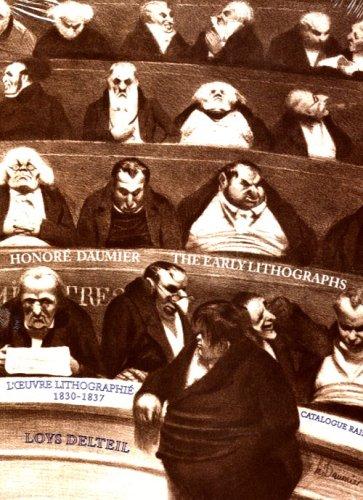
The Complete Lithographs of Honoré Daumier
Loys Delteil
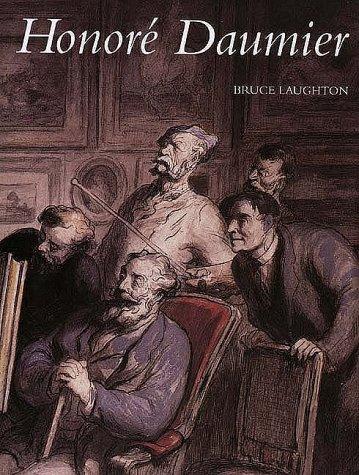
Honoré Daumier: Master of Caricature
Klaus Herding
Daumier: Drawings and Watercolors
Roger Passeron