Hermann Nitsch
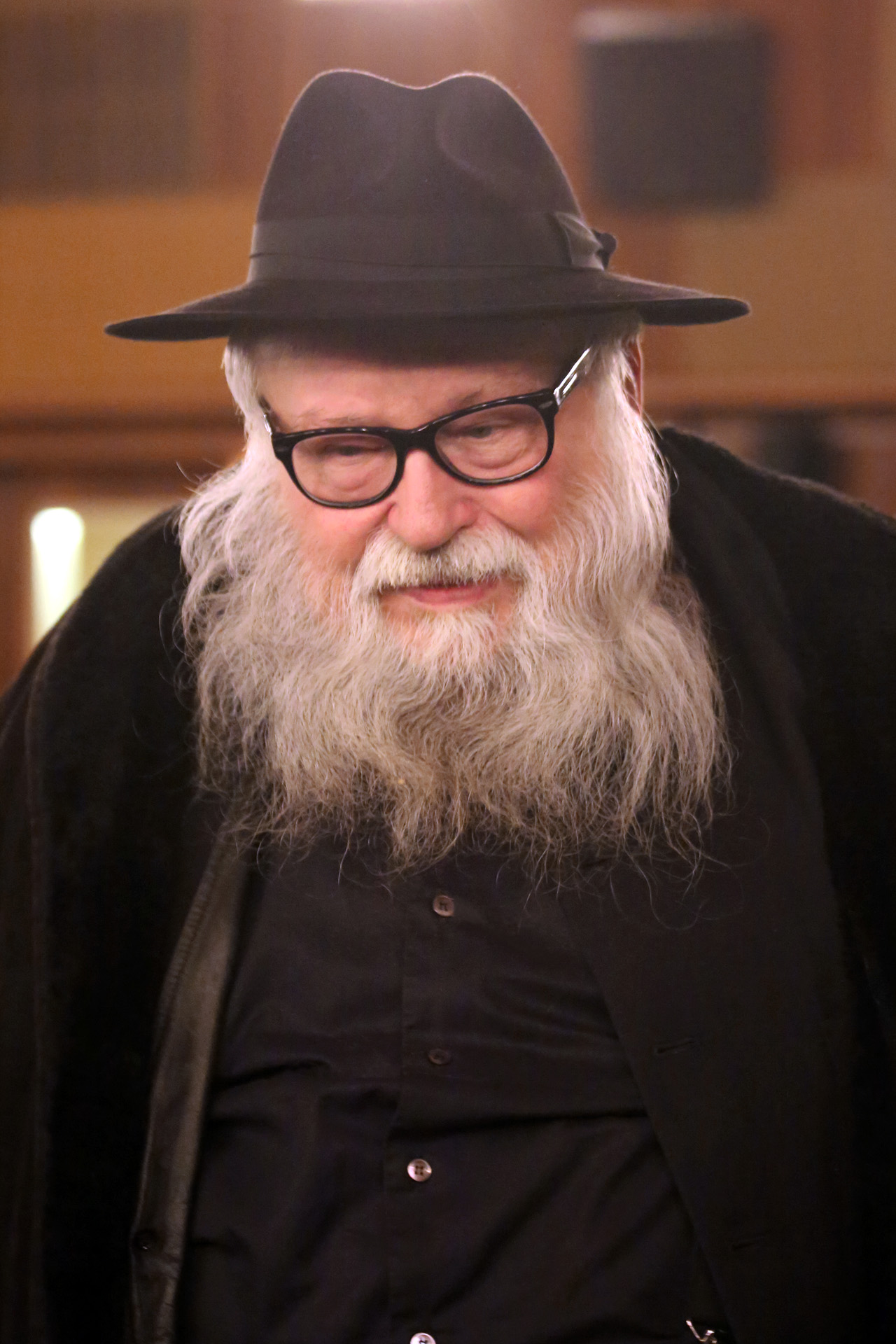
Hermann Nitsch: A Life Poured Into Art
Artist Spotlight · The Collection Editorial
“I want to reach a state of highest, most intense, most extreme consciousness, to reveal life in all its intensity.”
Hermann Nitsch, artist statement
In the spring of 2022, the art world paused to honour one of its most singular and uncompromising figures. Hermann Nitsch, the Viennese master of ritual, colour, and sensory confrontation, passed away at the age of eighty three, leaving behind a body of work that continues to provoke, move, and astonish in equal measure. His death prompted a wave of retrospective attention across European institutions, with museums from Vienna to Naples revisiting his decades long exploration of the sacred, the bodily, and the transcendent. For collectors and curators who had followed his practice from its earliest and most controversial moments, the occasion was both a farewell and a renewed invitation to understand what Nitsch had always insisted: that art must be felt in the body before it can be understood by the mind.
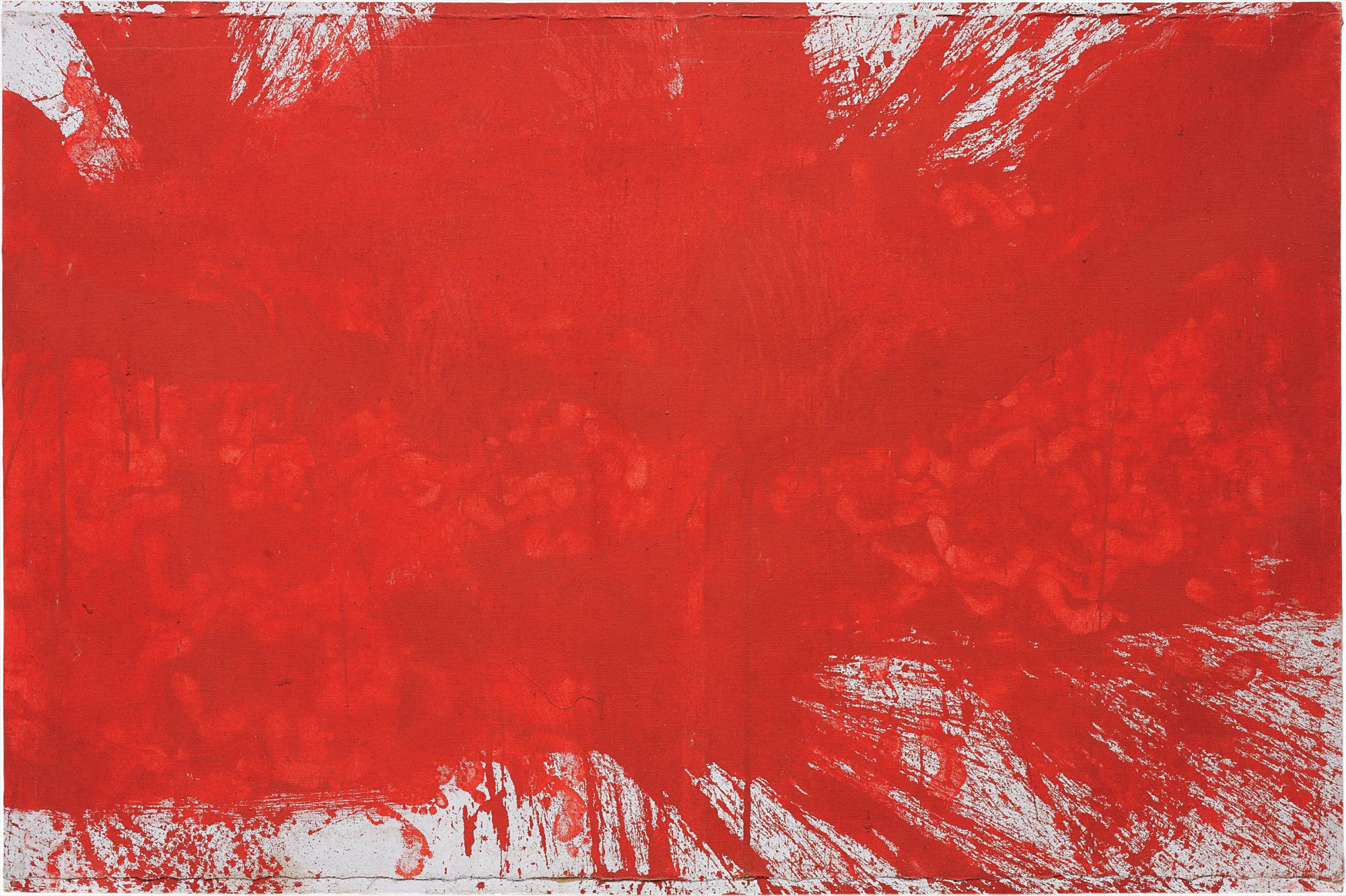
Hermann Nitsch
Schuttbild
Nitsch was born in Vienna in 1938, a city still shaped by the heavy psychological residue of empire, war, and repression. Growing up in postwar Austria, he encountered a culture simultaneously straining toward reconstruction and haunted by unspoken trauma. He trained at the Graphische Lehr und Versuchsanstalt in Vienna, developing a rigorous foundation in printmaking and drawing that would underpin even his most apparently spontaneous work. From his earliest years as a student, Nitsch was drawn to the intersection of art and ritual, reading voraciously in theology, philosophy, and psychoanalysis, absorbing the thought of Freud, Nietzsche, and the ancient Greek traditions of Dionysian ecstasy.
Vienna in the late 1950s was a pressure cooker, and Nitsch found in art the only vessel large enough to contain what he needed to express. In 1957, Nitsch began developing what would become the Orgien Mysterien Theater, or Orgies Mysteries Theatre, an ongoing theatrical and artistic project that he would continue to develop and perform for the rest of his life. This vast, multisensory undertaking drew on ancient religious ceremony, the Catholic mass, Greek tragedy, and the Wagnerian Gesamtkunstwerk to create events of overwhelming perceptual intensity. Alongside fellow Viennese Actionists including Günter Brus, Otto Muehl, and Rudolf Schwarzkogler, Nitsch forged a radical new language for performance and painting that placed the human body, blood, and visceral material at the centre of artistic inquiry.
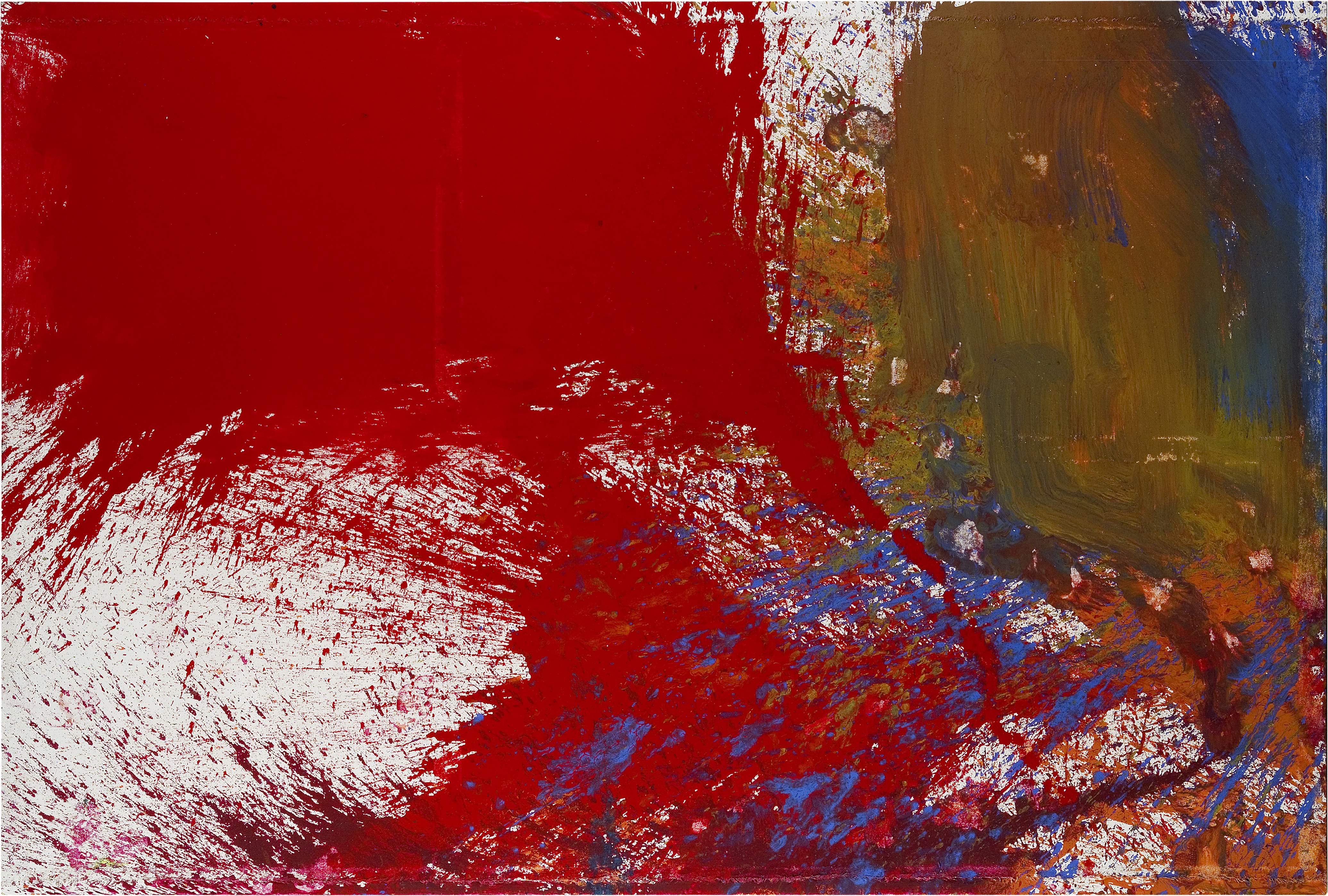
Hermann Nitsch
Si_1_07, 2007
The group was arrested, censored, and denounced, yet their influence on subsequent generations of artists working across performance, painting, and installation proved immeasurable. At the heart of Nitsch's visual legacy are his Schüttbilder, or poured paintings, works of extraordinary physical beauty that document the residue of his actions. Created by pouring, hurling, and spreading acrylic paint across canvas or jute in gestures that mirror the choreography of his theatrical events, these paintings occupy a unique position between Abstract Expressionism and ritual artefact. Works such as his Schüttbild from the 60th Painting Action on jute, and the rich poured canvases from 2007 and 2008 in the collection, demonstrate his extraordinary command of colour, particularly the deep, saturated reds and whites that recur throughout his practice like liturgical vestments.
“The Orgies Mysteries Theatre is my life's work, a total artwork that encompasses all of the senses.”
Hermann Nitsch, interview
Each mark carries the memory of the body that made it, the arc of an arm, the weight of a gesture, the tempo of a breath. His Untitled oil on burlap works carry a similar rawness, the rough texture of the support amplifying the sense that painting, for Nitsch, was always also a physical event. Beyond the poured works, Nitsch's printmaking and works on paper reveal another dimension of his intelligence. The Motiv I to V series, published by Galerie F in Kranenburg, Germany, and the mixed media Wiener Sezession work from 1987, demonstrate his sensitivity to the printed surface as a site of quiet intensity.
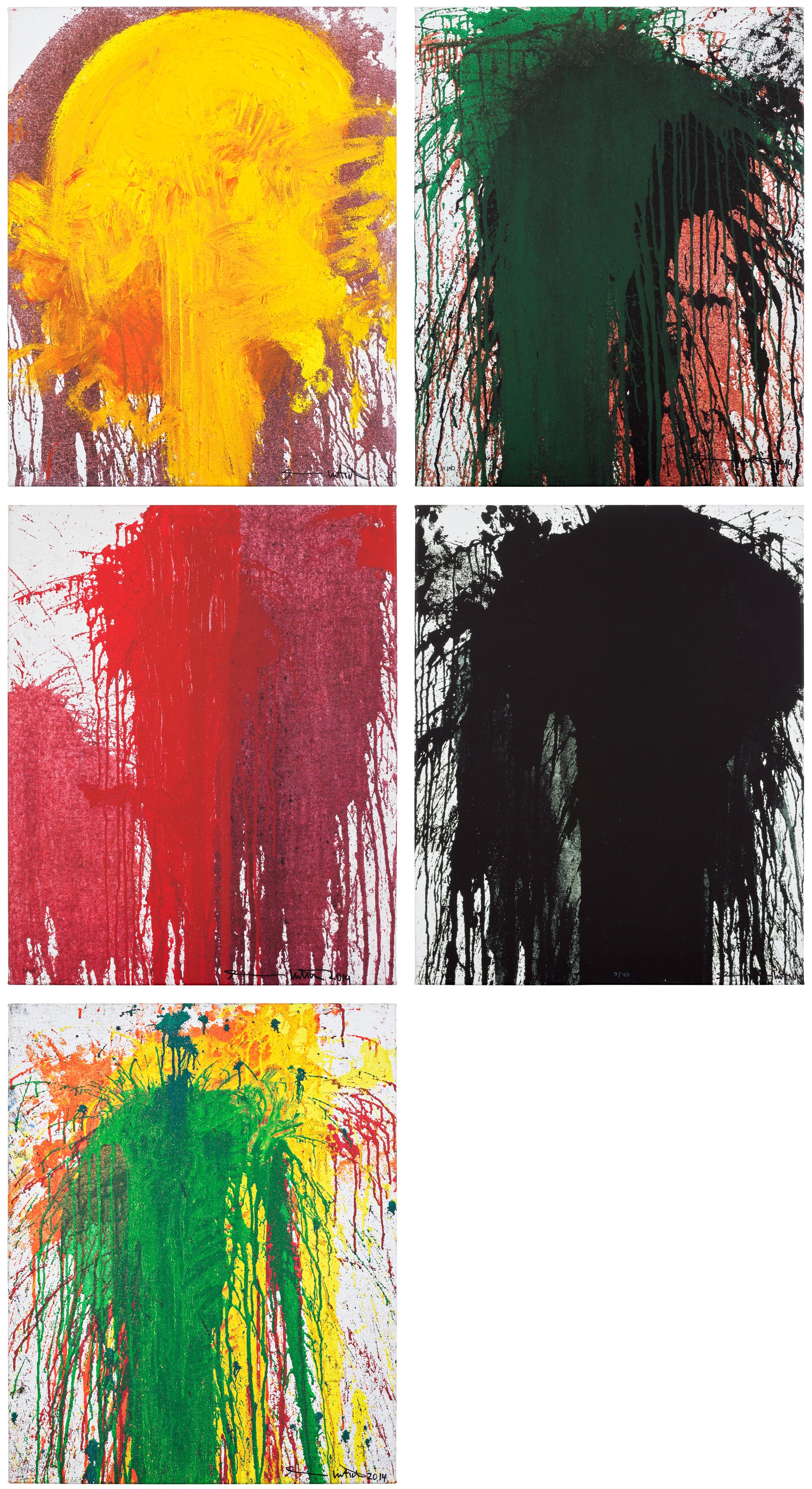
Hermann Nitsch
Motiv I - V
His silkscreen Das letzte Abendmahl, or The Last Supper, brings his ongoing engagement with Christian iconography into the register of the graphic, translating the ritual feast into colour and form with a directness that feels devotional rather than ironic. The 2019 Action Painting, combining acrylic, wood, and a cotton shirt on canvas, is a reminder that his practice never ceased evolving, continuing to incorporate the materials of lived human experience into its surfaces. For collectors, Nitsch's work occupies a distinctive and compelling space in the market. His paintings and works on paper have appeared consistently at major European auction houses, with particular strength at Dorotheum in Vienna and Sotheby's, where his Schüttbilder have attracted serious institutional and private interest.
What draws collectors is the combination of historical weight and sensory immediacy: owning a Nitsch is to possess something that carries the full charge of one of the twentieth century's most significant avant garde experiments while also functioning as a genuinely beautiful, formally resolved object. Works on jute and burlap offer particular texture and presence on a wall, while the prints and works on paper provide a more accessible entry point into a practice of considerable depth. Condition and provenance are important, as with any artist whose work crossed so many mediums and contexts. Nitsch belongs to a lineage that connects the gestural ambitions of Jackson Pollock and the Abstract Expressionists with the European body art traditions exemplified by Yves Klein, Joseph Beuys, and the broader Fluxus environment.
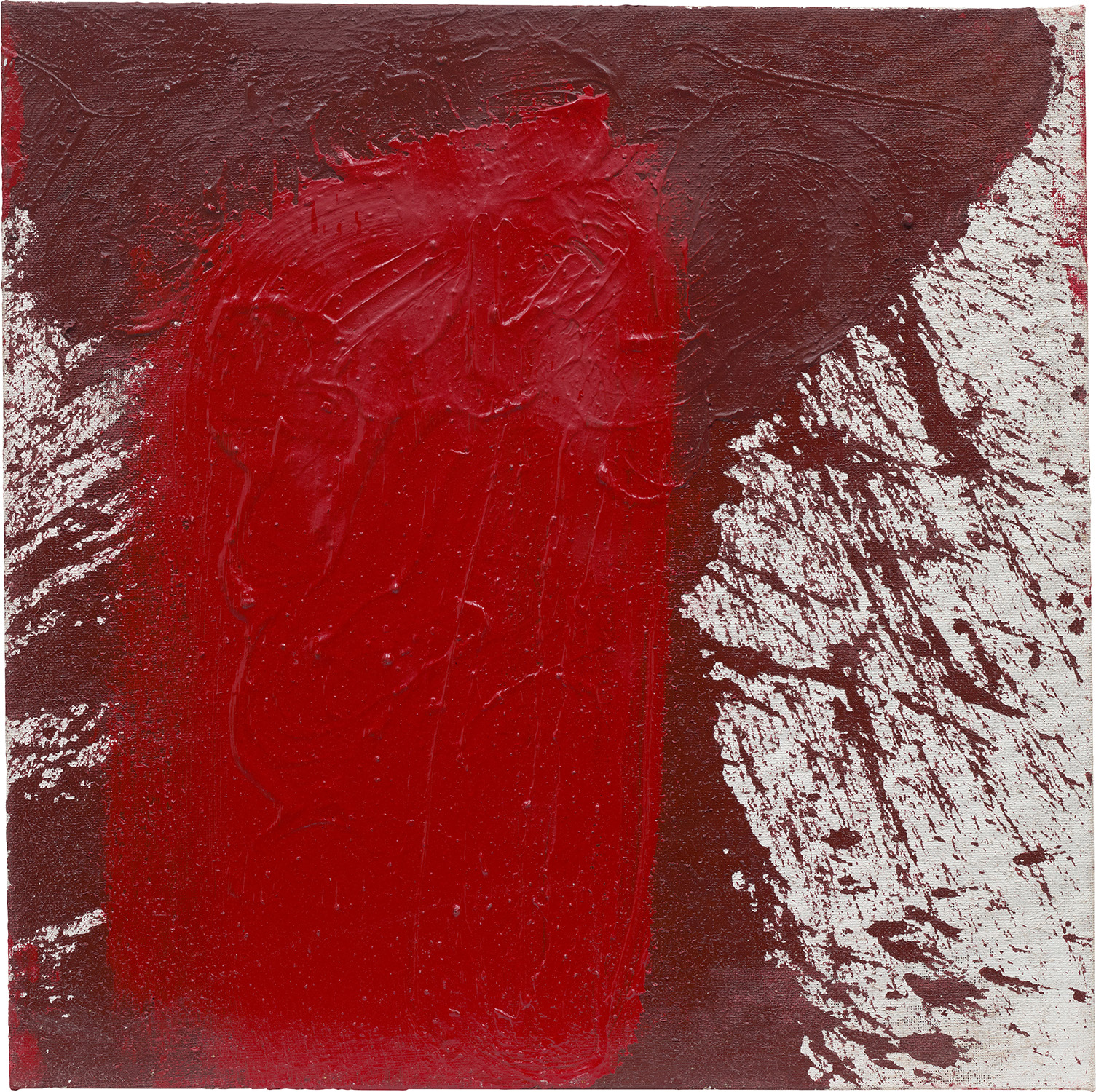
Hermann Nitsch
Schüttbild, 2008
His fellow Viennese Actionists remain the most immediate context, though his practice also invites comparison with artists such as Carolee Schneemann in America and Jannis Kounellis in Italy, all of whom pushed art toward a confrontation with organic matter, myth, and ceremony. Where some of these figures remained primarily performers or conceptualists, Nitsch always maintained an equally serious commitment to painting as an autonomous object, and it is this dual commitment that gives his work such unusual richness. The legacy of Hermann Nitsch is still being written. Institutions including the Nitsch Museum in Mistelbach, Austria, dedicated to his life and work, ensure that his archive remains accessible, while ongoing scholarship continues to situate his practice within the broader history of postwar European art.
For a new generation of collectors encountering his Schüttbilder for the first time, the experience is often one of immediate and surprising pleasure: these are paintings that ask a great deal but give back generously, in colour, in energy, and in the conviction that art remains one of the few activities capable of touching what is most essential in human experience. To collect Nitsch is to participate in a conversation that spans centuries, from ancient ritual to the present moment, and to hold in your hands something genuinely, irreducibly alive.
Explore books about Hermann Nitsch
Hermann Nitsch: A Retrospective
Museum of Modern Art
The O.M. Theatre: Documents and Reflections
Hermann Nitsch

Hermann Nitsch: Blood, Ritual, Theatre
Kristine Stiles
Orgone Mystery Theatre: Performances 1962-1968
Hermann Nitsch and Peter Weibel
Hermann Nitsch: Paintings and Drawings
Thaddaeus Ropac