Herb Alpert
Herb Alpert: A Life Tuned to Beauty
Artist Spotlight · The Collection Editorial
“I want to create something that makes people feel good, that lifts them.”
Herb Alpert
There is a moment in the creative life of certain rare individuals when one extraordinary gift refuses to contain itself within a single discipline. For Herb Alpert, that overflow has been quietly, joyfully unstoppable. Now well into his ninth decade, Alpert continues to make sculpture, paint canvases, and record music with the same restless curiosity that first propelled him to the top of the American pop world in the 1960s. His visual art practice, which he has pursued with seriousness and sustained commitment for several decades, has earned him gallery representation, critical attention, and a devoted collector following that sees in his sculptural work the same warmth and optimism that defined his music.
Herb Alpert
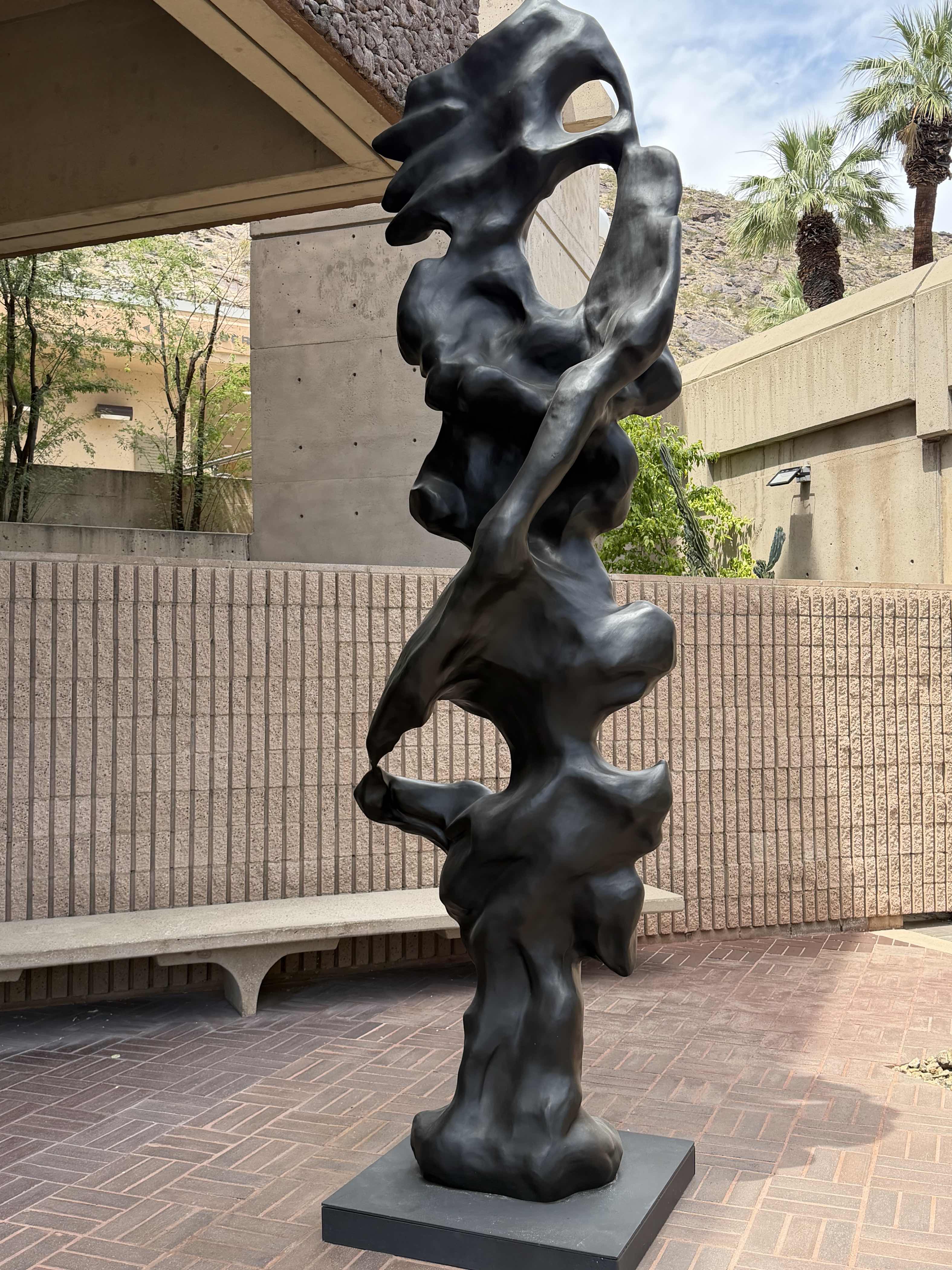
Warrior, 2011
Herbert Louis Alpert was born on March 31, 1935, in the Boyle Heights neighborhood of Los Angeles, a vibrant, working class community that was home to Jewish immigrants, Mexican American families, and a rich cross section of American urban life. His parents were both musicians, and the household rang with sound from his earliest years. Alpert began studying the trumpet at age eight, finding in the instrument a voice that felt entirely his own. Los Angeles in the postwar years was a city of extraordinary cultural ferment, and young Herb absorbed its rhythms deeply, from the mariachi music drifting north from Mexico to the jazz clubs of Central Avenue.
This geographic and cultural inheritance would prove foundational to everything that followed. After a stint in the United States Army, Alpert returned to Los Angeles and began building a career in the music industry, initially as a songwriter and session musician. The pivotal moment came in the early 1960s when, inspired by a bullfight he witnessed in Tijuana, he layered trumpet overdubs against a recording of a crowd and created a sound that felt bracingly new. That experiment became the blueprint for Herb Alpert and the Tijuana Brass, whose debut album, The Lonely Bull, arrived in 1962 on a label Alpert cofounded with Jerry Moss.
A and M Records, named for Alpert and Moss, would go on to become one of the most beloved and successful independent labels in American music history, home at various points to the Carpenters, Cat Stevens, Peter Frampton, and Sting. Through it all, Alpert kept recording, kept playing, and kept listening to the world around him for new sounds. The visual art practice emerged gradually and organically, much the way Alpert has described his approach to music: not forced, but followed. He began painting and sculpting seriously in the 1990s, and what started as a private pursuit became a sustained body of work that is unmistakably his own.
“Music is a language. If you practice it, you can speak it fluently.”
Herb Alpert
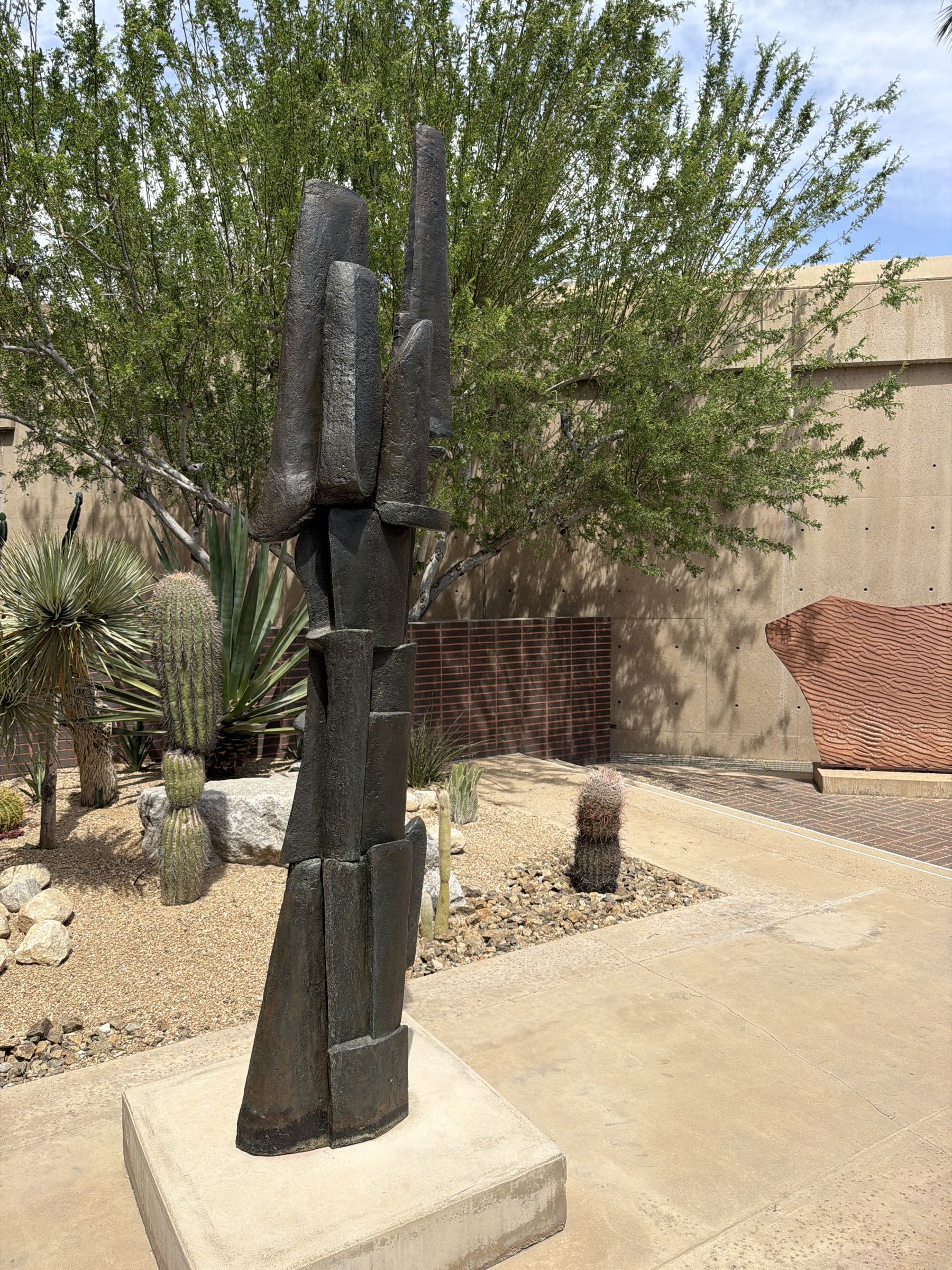
His sculptures, often in bronze, have an elemental, totemic quality. Figures rise and expand as if caught in a moment of becoming, their surfaces textured with the evidence of the artist's hand. The work titled Warrior, created in 2011 and realized in bronze, is among the most compelling examples of Alpert's sculptural vision. The piece carries a sense of quiet power and purposeful stance, evoking both ancient forms and something entirely contemporary.
It is work that rewards sustained looking, revealing new details in the play of light across its surface. Alpert's visual art exists in interesting dialogue with the broader landscape of American sculpture in the late twentieth and early twenty first centuries. His sensibility shares something with artists who have similarly blurred the line between popular culture and fine art, between accessibility and depth. There is a directness to his forms that recalls the emotional clarity of certain California artists working in figurative and abstract traditions simultaneously, artists for whom the human body remains a central site of meaning.
Collectors who are drawn to expressive bronze work, to sculpture that carries genuine feeling without sacrificing formal rigor, often find Alpert's pieces deeply satisfying additions to a collection. His background as a musician, someone who has spent a lifetime thinking about how emotion is structured and transmitted, lends his visual work a particular kind of intentionality. From a collecting perspective, Alpert's sculptural output represents an intriguing proposition. He is an artist who came to the visual arts not as a hobbyist but as someone with a lifelong aesthetic education and the discipline of a professional performer.
The Herb Alpert Foundation, which he established with his wife, the singer Lani Hall, has been a significant force in arts education and support across the United States, funding programs at institutions including CalArts and making substantial gifts to organizations that bring creative education to young people who might otherwise not have access to it. This philanthropic context adds depth to the collecting experience, connecting a work by Alpert to a larger story about the social value of creative life. Works in bronze, especially those from limited editions or that carry the direct evidence of the artist's process, are particularly sought after by collectors who value both aesthetic and biographical resonance. The legacy of Herb Alpert is one of rare amplitude.
He is among the very few artists in any medium who can claim to have genuinely shaped the sound of an era, built an institution that changed the music industry, and then gone on to develop a serious and evolving visual art practice. His five Grammy Awards, his induction into the Rock and Roll Hall of Fame in 2006, and his enduring presence as a trumpet player all speak to a musical achievement of the first order. But the sculpture and painting remind us that Alpert's creative life has never been content to rest on what has already been accomplished. He remains an artist in the truest sense, someone for whom making things is not a career category but a way of being alive in the world.
For collectors and admirers encountering his visual work for the first time, the experience often carries a particular quality of surprise and pleasure, the feeling of discovering that someone you already admired had still more to offer.