Henry Gunderson
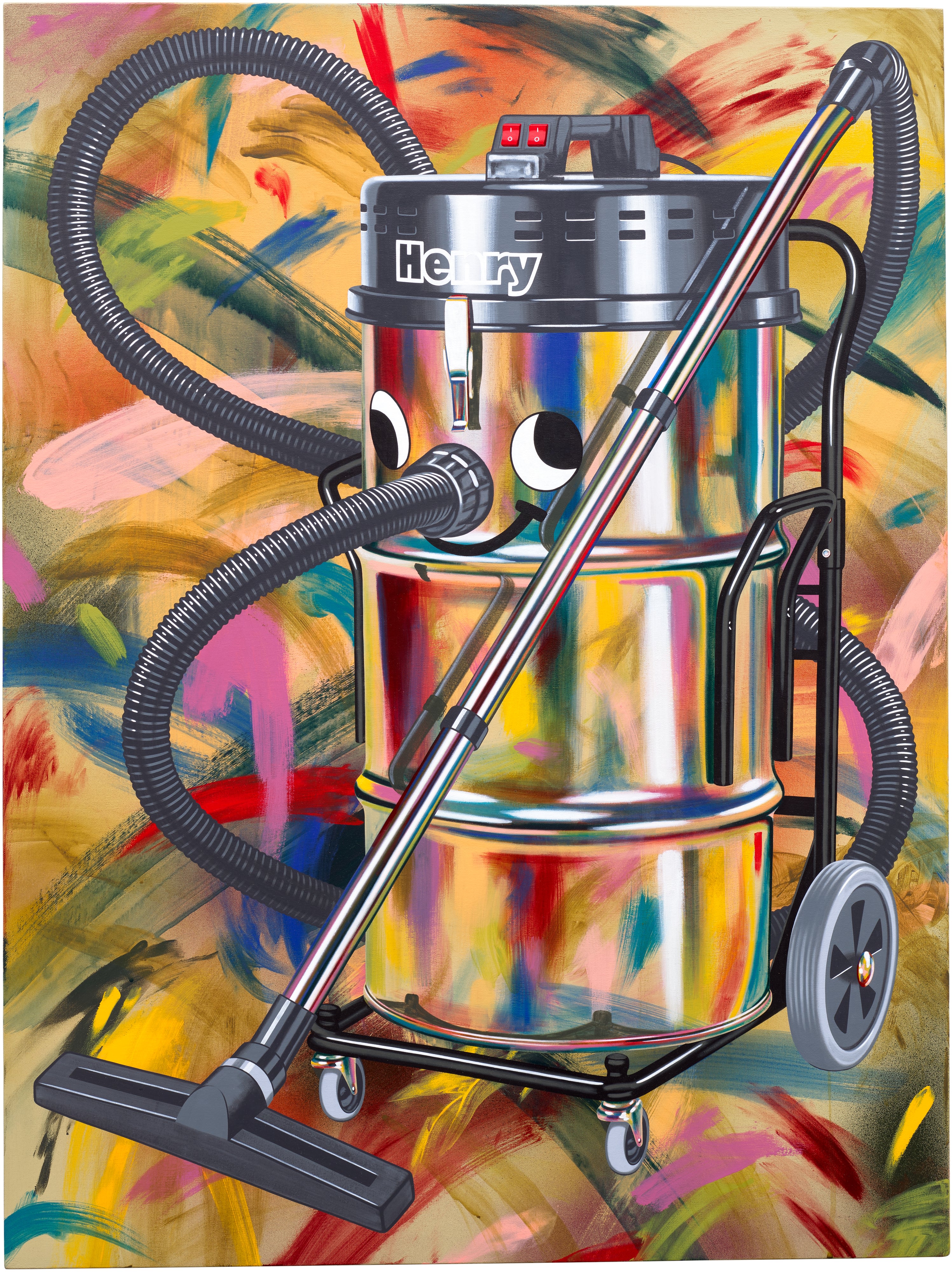
Henry Gunderson Paints the World His Way
Artist Spotlight · The Collection Editorial
There is a particular kind of painter working in New York right now who refuses to be solemn about the act of making art, who approaches the canvas with a smirk and a brush loaded with acrylic and arrives somewhere unexpectedly sincere. Henry Gunderson is that painter. Operating with a sensibility that is at once irreverent and deeply considered, Gunderson has carved out a distinctive space within contemporary American painting, one where humor and craft are not opposites but co conspirators. Gunderson came up through a New York art world that was, by the mid 2010s, recalibrating its relationship to figuration and to painting as a cultural act.
Henry Gunderson
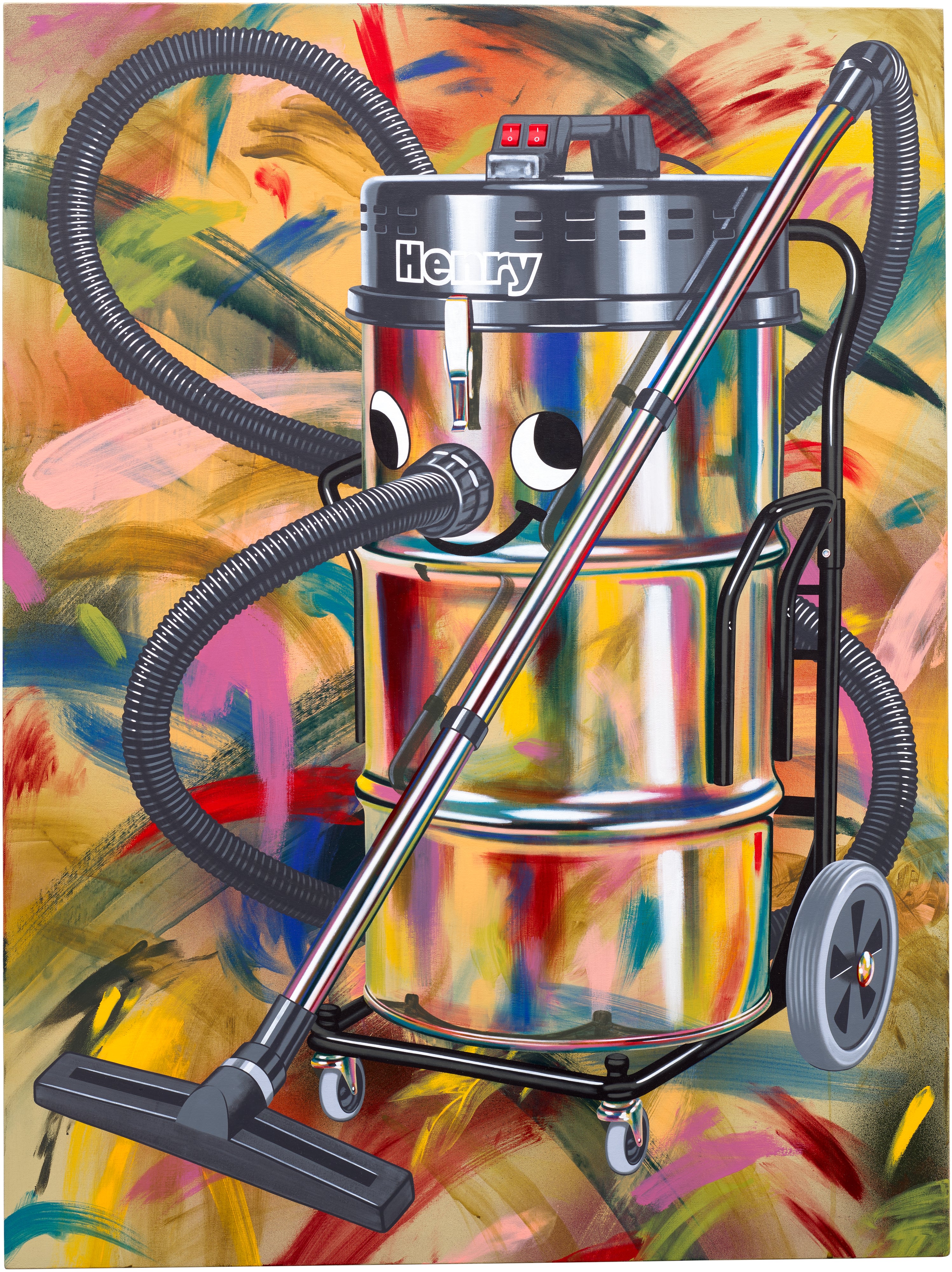
Henry Sux #5, 2020
The era rewarded artists who could hold multiple registers at once, who could be funny without being frivolous and critical without being humorless. Gunderson absorbed all of this and then did something rarer: he made it personal. His formation as an artist reflects a genuine engagement with the traditions of American painting while remaining alert to the absurdities of contemporary life, a combination that gives his work its particular charge. His artistic development has moved through recognizable phases while maintaining a consistent core intelligence.
Early work demonstrated a command of surface and composition that grounded whatever conceptual play was happening on top of it. Over time Gunderson refined his approach to text, image, and self reference, arriving at a practice that feels both loose and precise. The acrylic on canvas works that define his output are marked by a kind of controlled spontaneity, a sense that decisions were made quickly but not carelessly. The incorporation of spray paint in certain works adds another layer of urban texture and temporal awareness, gesturing toward graffiti and street culture without simply borrowing their aesthetics.
Henry Gunderson
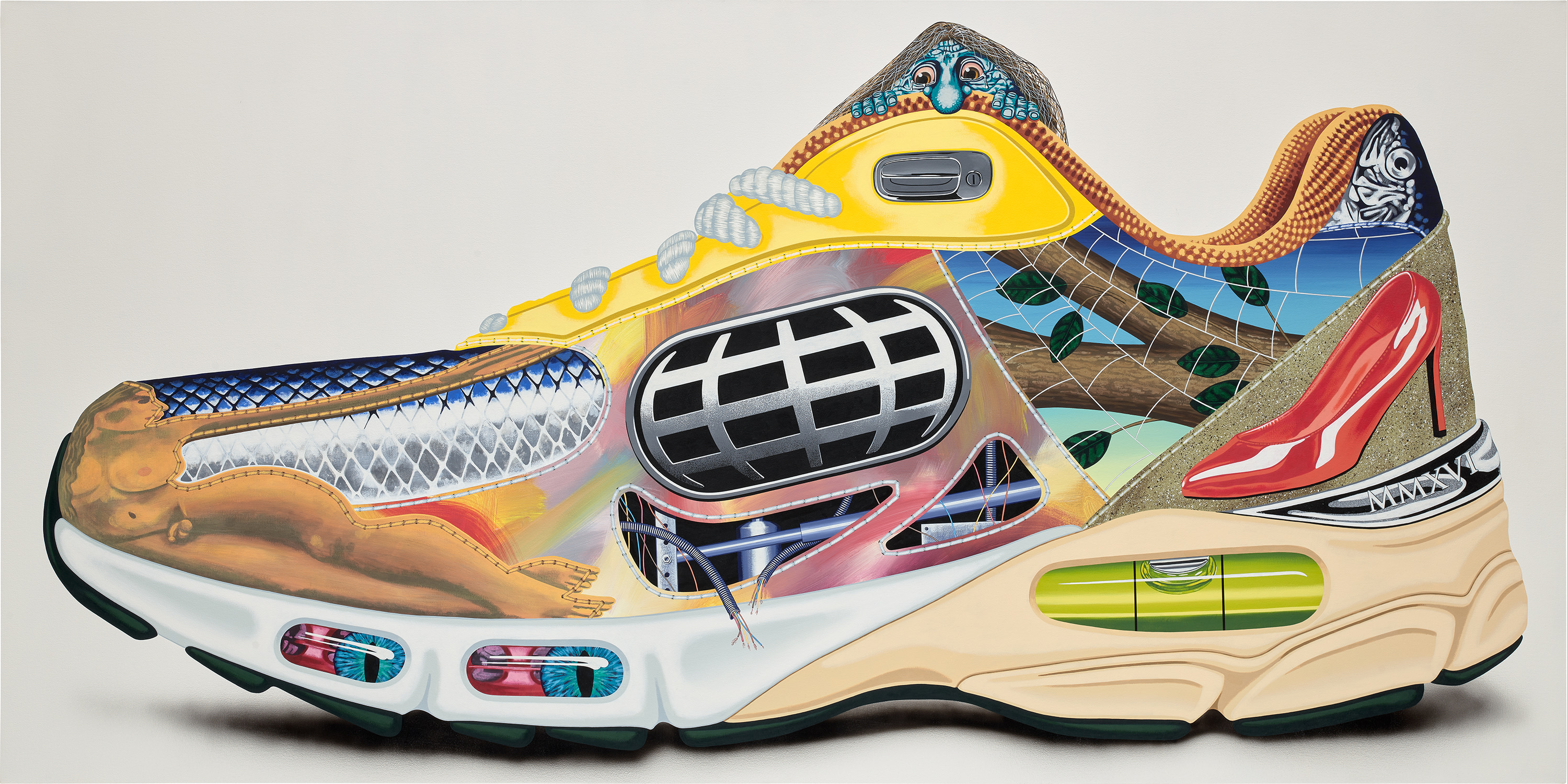
Globe Trotter, 2016
Two works in particular illuminate the range and ambition of Gunderson's practice. Globe Trotter, completed in 2016 and executed in acrylic and spray paint on canvas, is a work that operates on several frequencies simultaneously. The title alone carries enough cultural weight to set expectations that the painting then cheerfully subverts or confirms depending on where you stand. The combination of media is deliberate and earned, the spray paint introducing a kind of democratic energy into the painted surface, a reminder that images and symbols circulate far beyond the walls of galleries.
Henry Sux Number Five, from 2020, belongs to a serial body of work that is as conceptually rich as it is disarmingly candid. The title implicates the artist himself, turning self deprecation into a formal strategy. Serial work of this kind places Gunderson in conversation with a long tradition of artists who use repetition and variation to interrogate identity and authorship, and the Number Five designation suggests a sustained commitment to the premise rather than a one off gag. The market for Gunderson's work reflects the broader collector appetite for painting that is intelligent without being academic, accessible without being decorative.
Collectors drawn to artists like Joe Bradley, Hugh Hayden, or painters working in the tradition of American wit and formal rigor will find a natural affinity with Gunderson's canvases. His works reward sustained looking, revealing layers of intention that are not immediately apparent. For collectors entering his market, the acrylic on canvas works represent the clearest expression of his central concerns, while the mixed media pieces offer a window into the expansiveness of his thinking. Within the broader context of contemporary American painting, Gunderson occupies a position that feels both specific to his moment and connected to longer lineages.
The tradition of artist self portraiture and self critique runs through American art from the mid twentieth century onward, and Gunderson engages with it on his own terms. His use of language and seriality echoes strategies employed by artists as different as Christopher Wool and Karen Kilimnik, while his relationship to popular culture and urban visual language connects him to a generation of painters who grew up saturated in images and learned to make that saturation productive rather than paralyzing. What Gunderson offers the present moment is something genuinely needed: a painting practice that takes both the form and the joke seriously. In a cultural climate that can feel relentlessly earnest or relentlessly ironic depending on the day, his work holds both attitudes in productive tension.
The canvases do not resolve into easy statements. They sit with their contradictions and invite the viewer to sit with them too. That quality, the willingness to be genuinely unresolved, is one of the marks of a painter who is in it for the long run. For collectors and institutions paying attention, Henry Gunderson is an artist whose trajectory is worth following closely and whose best work already justifies the attention.