Henri Regnault
Henri Regnault: A Brilliant Life Beautifully Lived
Artist Spotlight · The Collection Editorial
Picture the Grand Palais des Beaux Arts during the Paris Salon of 1870, a crowd gathering before a monumental canvas that stopped visitors in their tracks. The painting, Regnault's "Summary Execution under the Moorish Kings of Granada," blazed with color and moral urgency in a way that felt wholly unlike the measured academic productions surrounding it. The young painter who made it was twenty six years old, newly returned from Morocco and Spain, burning with ideas and with a sensory restlessness that seemed almost too large for a single career. That career would prove heartbreakingly short, but what Henri Regnault accomplished in his twenty seven years on earth continues to astonish anyone who looks closely at his work.
Henri Regnault
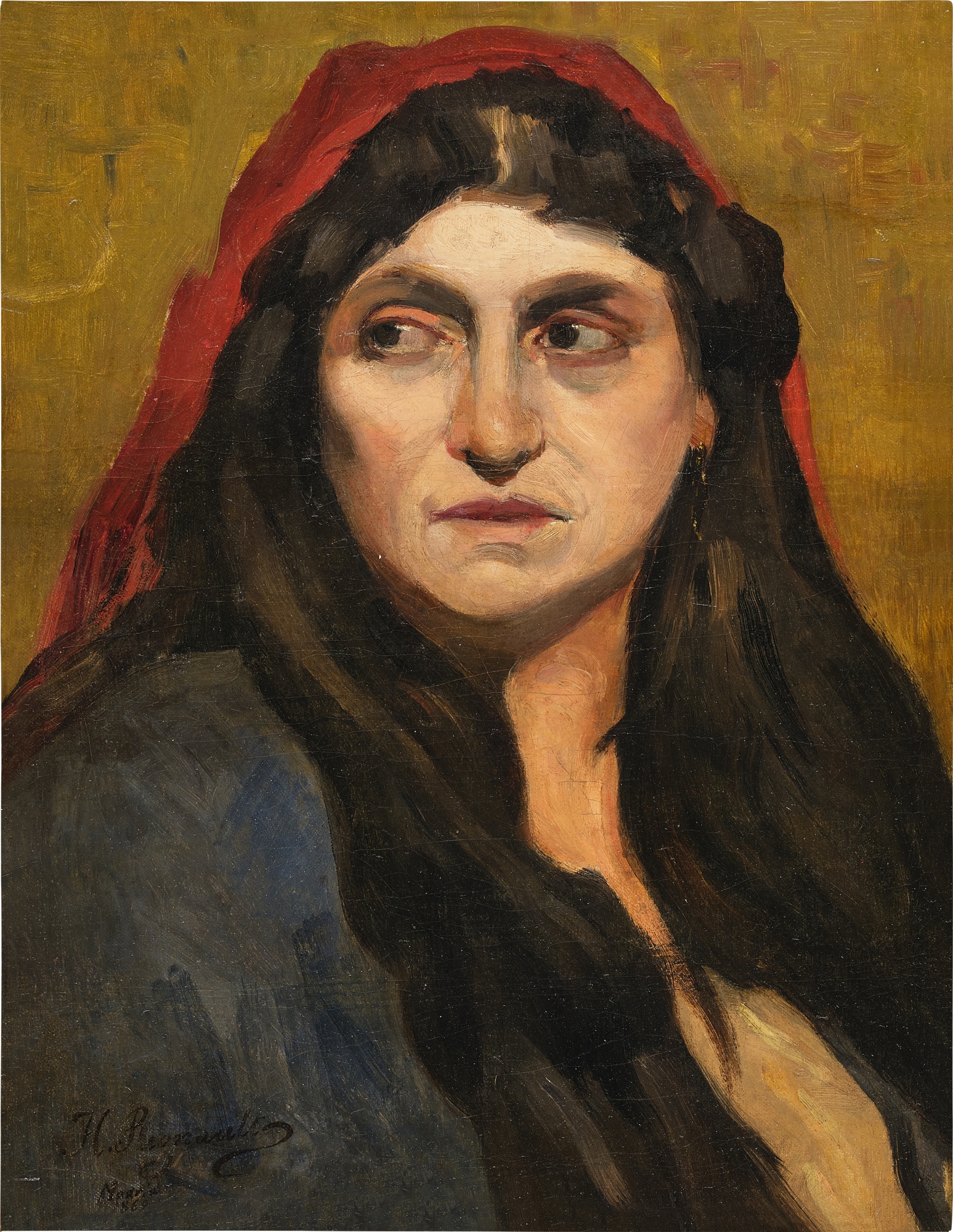
A Spanish Woman
Henri Georges Alexandre Regnault was born in Paris on October 31, 1843, into a family that valued intellectual and creative life. His father, Henri Victor Regnault, was a distinguished physicist and director of the Sèvres porcelain manufactory, a man of scientific precision and aesthetic sensitivity. Growing up surrounded by beauty in both its material and theoretical forms gave the young Henri an unusually rich foundation. He entered the École des Beaux Arts in Paris and studied under Louis Lamothe and then under the legendary academic painter Alexandre Cabanel, absorbing the full technical inheritance of the French tradition while clearly chafing to take it somewhere new.
Regnault won the Prix de Rome in 1866, the most coveted prize available to a French art student, and this award sent him first to the Villa Medici in Rome and then, crucially, on to Spain and Morocco. It was in Spain that something in him truly ignited. The country's architecture, its light, its people, and the legacies of Moorish culture all struck him with an almost physical force. He traveled to Granada, to Tangier, to Toledo, sketching and painting with furious energy.
Henri Regnault
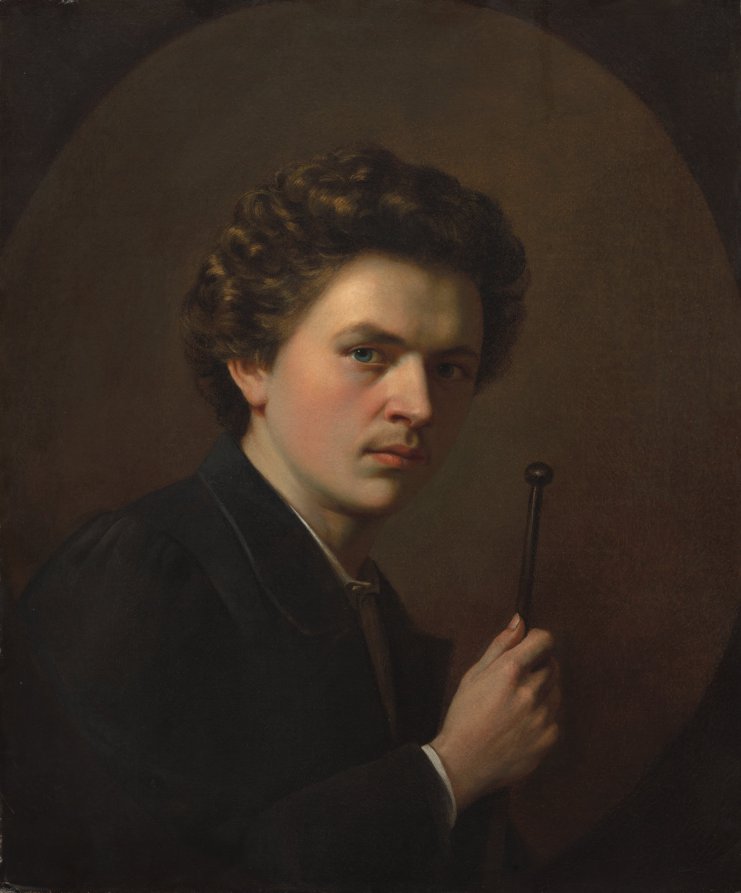
Self-Portrait with a Maulstick, 1858
The Spanish and North African experiences did not merely add subject matter to his repertoire. They fundamentally reorganized his sense of color, his approach to texture, and his understanding of how light could carry emotional weight. Works from these years have a vibrating intensity that distinguishes them immediately from the polished but sometimes cool productions of his Parisian contemporaries. Among the works that have come to define Regnault's reputation, the "Self Portrait with a Maulstick" from 1858 stands as a remarkably precocious achievement, painted when the artist was just fifteen.
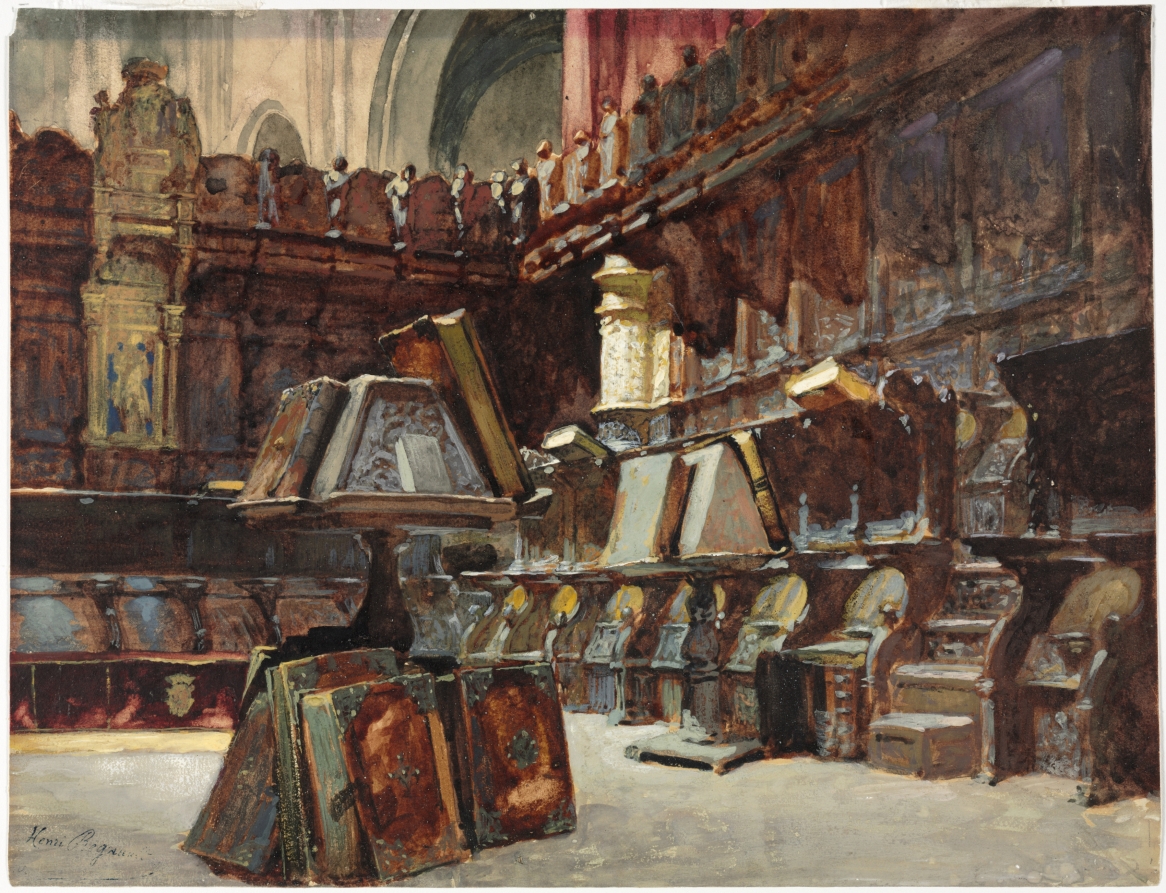
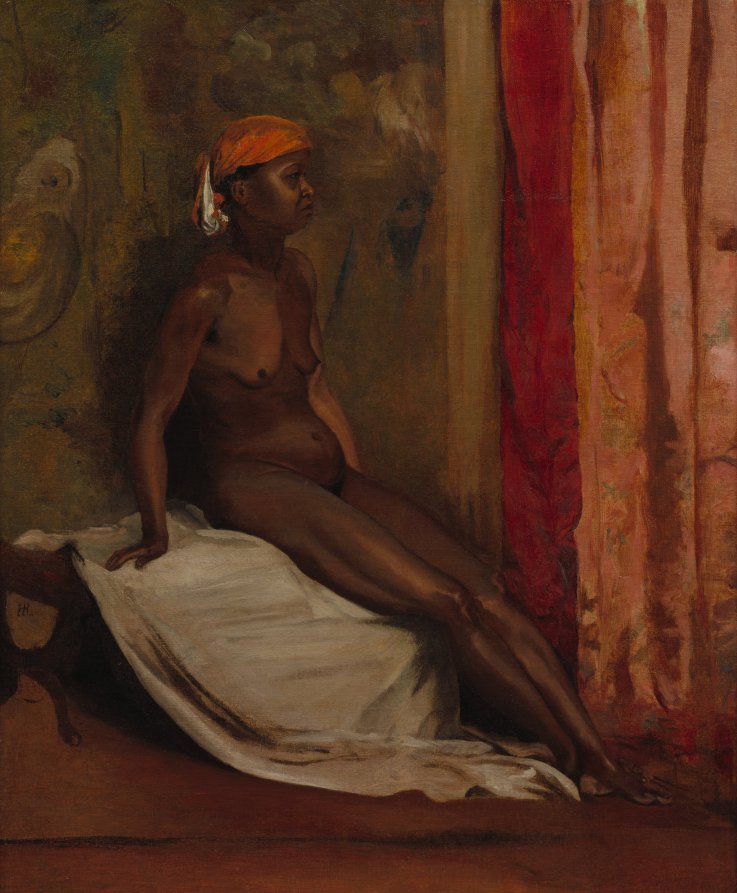
It reveals a young man already thinking seriously about the nature of artistic identity, looking out at the viewer with a directness that suggests someone who had decided, very early, exactly what he intended to be. The "Choir Stalls in a Spanish Cathedral" from 1863, executed in watercolor and gouache with traces of graphite, demonstrates a different but equally compelling register: here is the architectural grandeur of Iberia rendered with an almost devotional patience, the shadows in the carved wood deep and convincing, the overall effect one of reverent attention to a world that seemed to him inexhaustible. "Seated African Woman" from 1860 and "Head of a Man" from 1866 in black chalk both show how seriously Regnault took the act of looking at individual human beings, giving each subject a presence and dignity that transcends mere academic exercise. The oil painting known as "A Spanish Woman" captures the quality that collectors and curators have returned to again and again when discussing Regnault: his ability to hold stillness and energy in the same frame simultaneously.
Henri Regnault
Choir Stalls in a Spanish Cathedral, 1863
The figure commands attention not through theatrical gesture but through a kind of concentrated aliveness. Regnault was drawn to subjects who seemed to contain entire worlds within a single pose. This attentiveness to inner life, expressed through the entirely physical means of paint and light, is what separates his best work from that of artists who were technically his peers but never quite his equals in terms of imaginative generosity. For collectors approaching Regnault's work today, the context is one of genuine rarity combined with growing recognition.
Because he died at twenty seven in the Franco Prussian War, killed at the Battle of Buzenval on January 19, 1871, the total body of work he left behind is finite and relatively small. Each surviving piece carries the particular weight of knowing there will be no more. His drawings and works on paper, including the chalk studies and the watercolors from his Spanish years, offer a point of entry that is both financially accessible relative to large salon canvases and extraordinarily intimate in terms of artistic revelation. These works on paper show the thinking hand, the artist in the act of working something out, and for collectors who want proximity to a creative mind in full flight, they are perhaps the most rewarding objects of all.
Henri Regnault
Seated African Woman, 1860
Auction appearances are not frequent, and when significant works come to market they attract serious attention from both European and North American institutions and private buyers. To understand Regnault's place in the broader story of nineteenth century French painting, it helps to think about the generation he belonged to and the directions he seemed poised to take. He shared certain affinities with Gustave Moreau, whose symbolist tendencies and passion for the richly patterned surfaces of non Western cultures overlapped with Regnault's own orientalist explorations, though Regnault's work always retained a physical groundedness that Moreau sometimes sacrificed for dreamlike atmosphere. There are also points of comparison with Mariano Fortuny, the Spanish master whose luminous genre scenes and technical dexterity made him the most celebrated painter in Europe for a brief period in the late 1860s.
Regnault knew and admired Fortuny's work during his time in Spain, and the two painters can be seen as complementary voices in the broader European fascination with Mediterranean light and culture. Academic contemporaries like Jean Léon Gérôme also worked the same territories, though Regnault brought a heat and spontaneity to his subjects that Gérôme's more meticulous method rarely matched. What makes Henri Regnault matter today is not the pathos of an interrupted life, though that pathos is real and unavoidable. What matters is the evidence, visible in every surviving canvas and drawing, of a painter who was genuinely trying to push painting toward something new.
He wanted the color to do more, the surface to feel more alive, the human figure to carry more meaning. He was working toward a synthesis of the French academic tradition with everything he had absorbed from Spain and North Africa, a synthesis that would have taken European painting somewhere fascinating if he had lived to complete it. The works he left behind are not fragments or footnotes. They are complete achievements in their own right, made by someone who brought his full intelligence and feeling to every mark.
For collectors and institutions who seek out artists of genuine historical significance whose work can still surprise and move a contemporary eye, Henri Regnault represents exactly that combination of importance and discovery.