Heinz Mack
Heinz Mack, Master of Radiant Light
Artist Spotlight · The Collection Editorial
“Light is the most powerful phenomenon in the visual world. I want to make light visible as light.”
Heinz Mack, interview
In the grand survey of postwar European abstraction, few artists have pursued a single animating vision with such sustained brilliance and philosophical depth as Heinz Mack. His retrospectives at major institutions across Germany and the Netherlands over recent decades have reaffirmed his position not as a footnote to the Zero movement he helped found, but as one of its most luminous and enduring presences. Museum collections from the Kunstpalast in Düsseldorf to the Stedelijk Museum in Amsterdam hold his works as cornerstones of their postwar holdings, and the market for his reliefs and canvases has grown steadily as a new generation of collectors discovers what those who followed his career from the 1950s onward have long understood: Mack does not merely depict light, he conjures it. Heinz Mack was born in Lollar, Germany, in 1931, and came of age in a country rebuilding itself from almost total devastation.
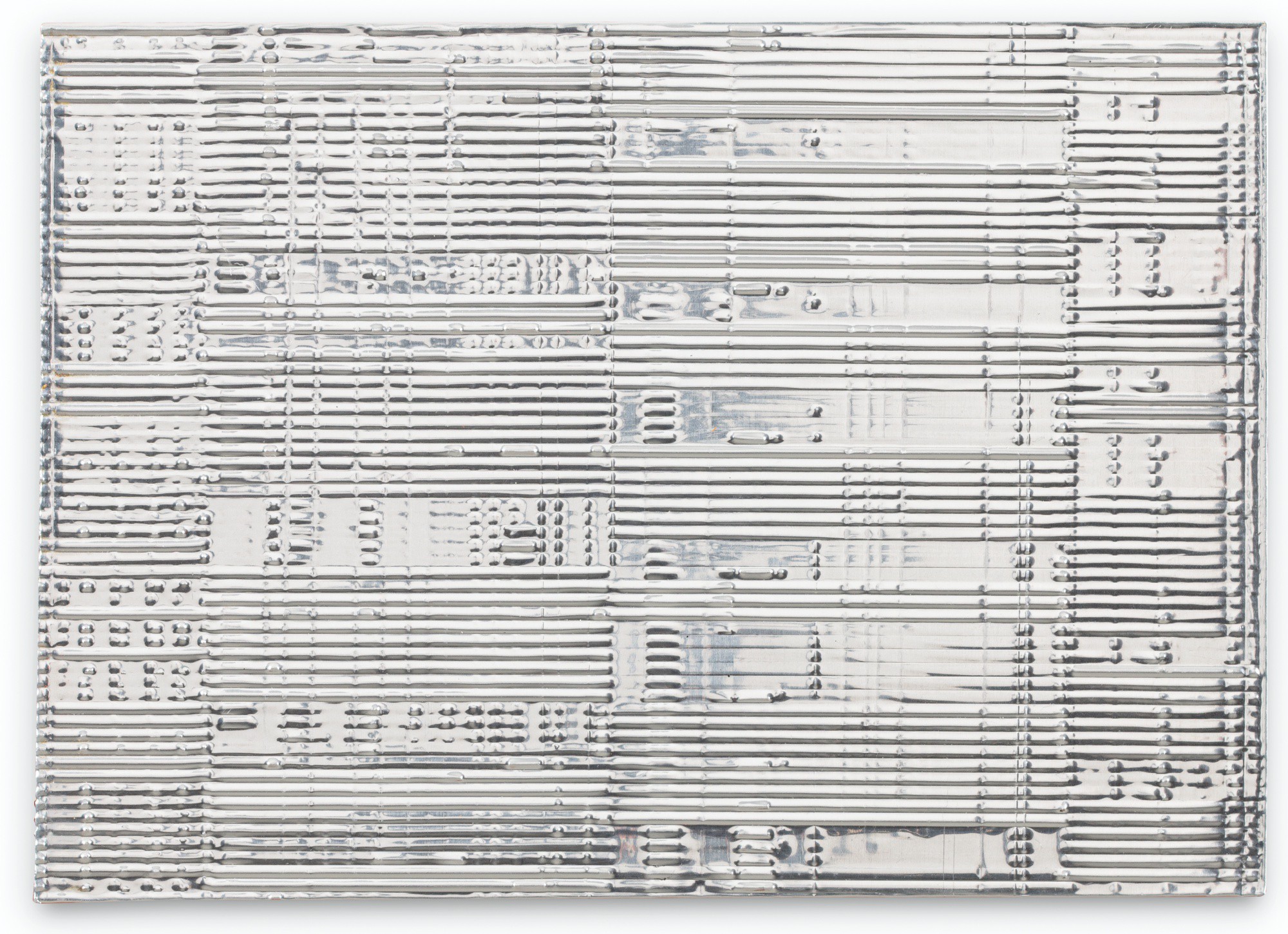
Heinz Mack
Untitled, 1962
He studied painting at the Kunstakademie Düsseldorf from 1950 to 1953, then pursued philosophy at the University of Cologne, a dual formation that would prove decisive. The philosophical inquiry into perception, into what we actually see when we see, ran like a current beneath all of his subsequent practice. Growing up surrounded by the ruins of the Third Reich and its catastrophic aesthetics, Mack and his peers felt a profound urgency to strip art back to something elemental, something that could be trusted: the physical phenomena of light, vibration, and pure visual sensation. In 1957, Mack and his close friend and fellow Düsseldorf artist Otto Piene founded the Zero movement, later joined by Günther Uecker.
The name was chosen deliberately to signal a point of absolute origin, a reset of the entire artistic conversation. Zero was not nihilism but its opposite: a declaration that art could begin again from first principles, from the behavior of light on a surface, from the silent drama of a vibrating metal sheet. The group held informal studio exhibitions they called Night Exhibitions in Düsseldorf, gathering artists and curious visitors to experience works that shimmered and pulsed under controlled lighting conditions. These evenings had the character of a quiet revelation, and word spread steadily through European avant garde circles.
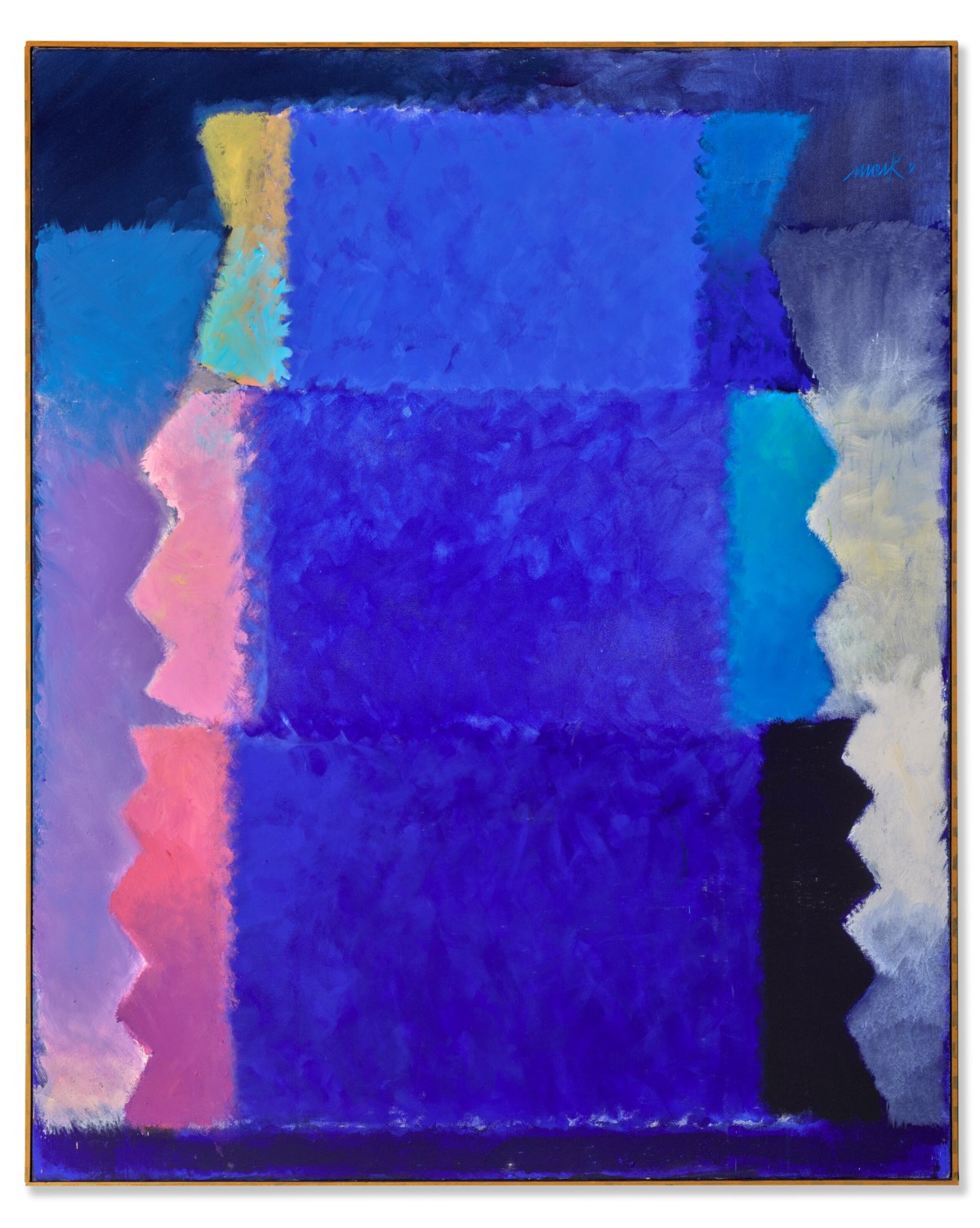
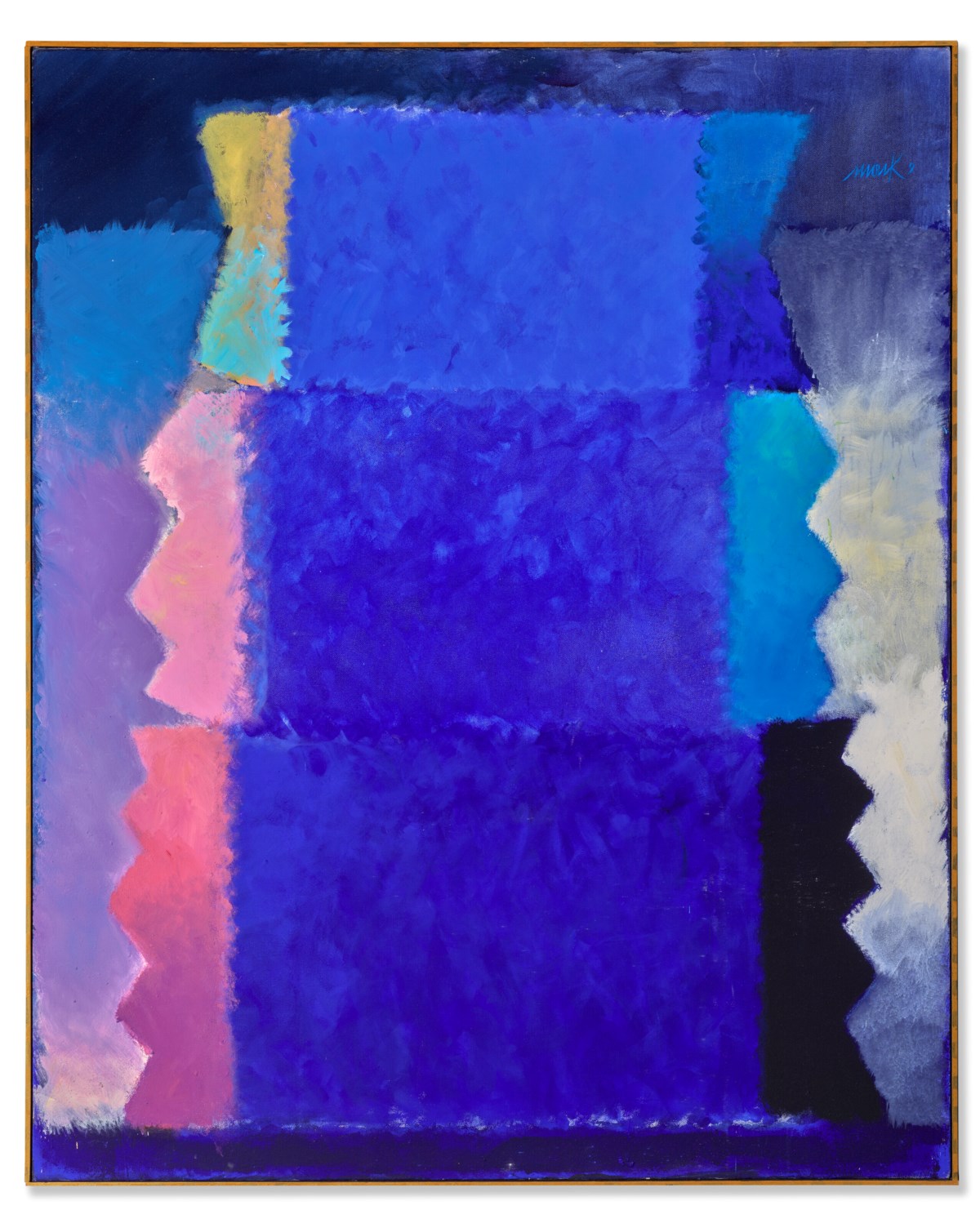
Heinz Mack
Sans titre, 2009
Mack's breakthrough came through his development of the aluminum relief, works in which sheets of the metal were textured, corrugated, and manipulated so that they caught and scattered light across their surfaces in ways that seemed almost alive. His Licht Regen Relief from 1958, aluminum mounted on painted wood, is a precise example of this ambition realized at an early and remarkable stage. The surface does not merely reflect light passively; it participates actively, breaking the viewer's gaze into countless small events. His Lamellen Relief of 1961 pushed the idea further, the parallel ridges of aluminum creating a rhythmic interplay between shadow and brightness that shifts as the viewer moves.
These are not decorative objects. They are instruments for a particular kind of seeing. Through the 1960s and into the 1970s, Mack expanded his vocabulary considerably. His prints and works on paper, including the Ohne Titel drawing of 1969 in ink and charcoal, and the sophisticated Kombinationsspiel portfolio of screenprints with aluminum laminated surfaces, show an artist deeply comfortable in multiple registers, capable of translating his obsessions with light and structure into works on modest as well as monumental scales.
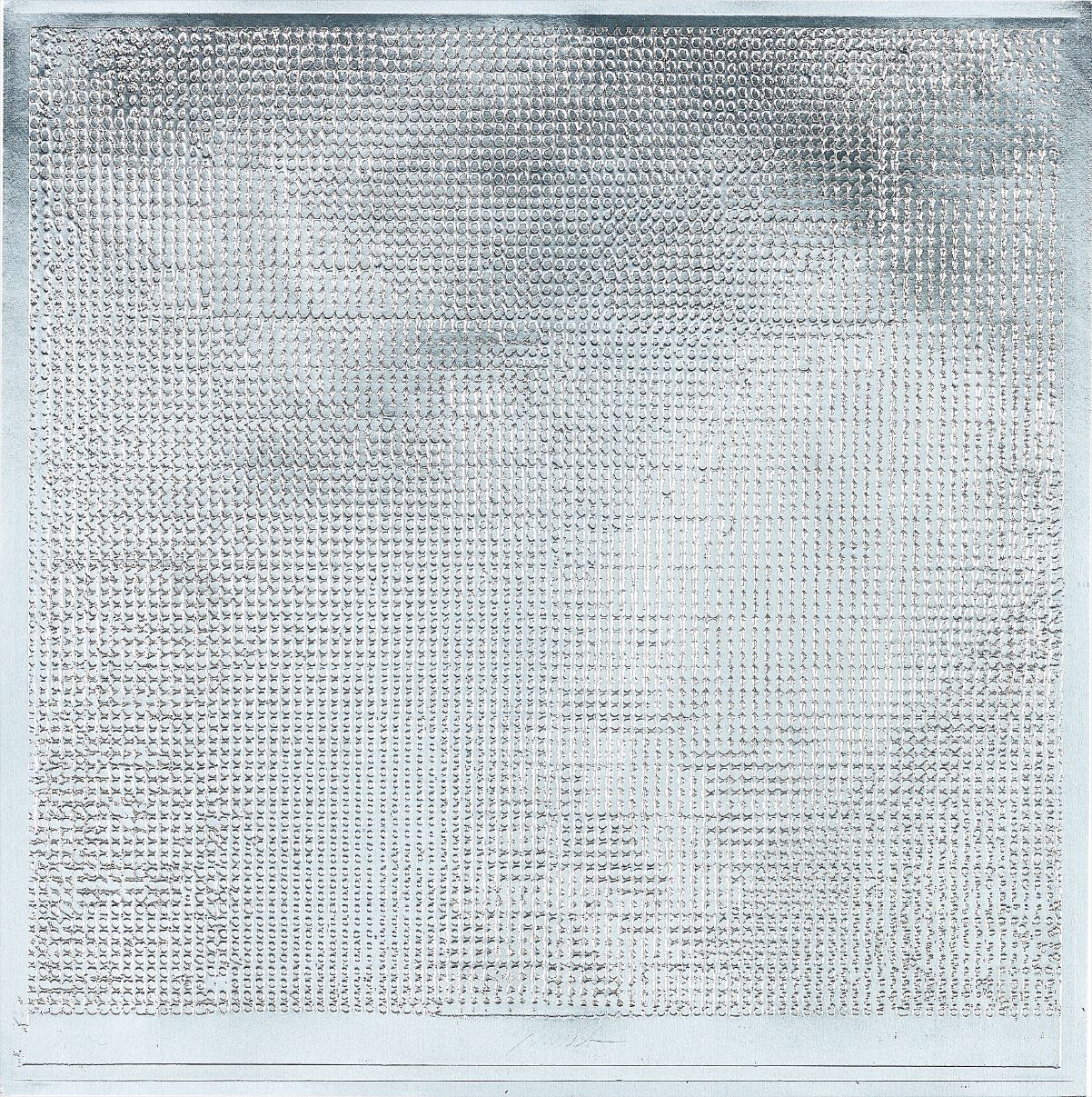
Heinz Mack
Lichtschraffur
The Meditations Spirale of 1971 introduced a contemplative, inward quality that balanced the outward exuberance of his relief works. By this point Mack was also engaged with ambitious environmental and land art projects, including his celebrated Sahara Project, a visionary series of proposals for large scale light installations in the desert landscape of North Africa that became legendary even largely unrealized, demonstrating the scope of his imagination. For collectors, Mack's work offers an unusually coherent and satisfying range of entry points. The aluminum reliefs from the late 1950s through the 1960s represent the core of his historical significance and command the strongest attention at auction, with significant examples having appeared at Sotheby's, Christie's, and Ketterer Kunst over recent years.
Works on paper, including the blind embossed Lichtschraffur on aluminum cardboard, offer collectors a more accessible way to engage with the same formal intelligence that drives the reliefs. His later acrylic paintings, such as the Sans Titre canvas of 2009, demonstrate a continued freshness in his engagement with color and luminosity well into his eighth decade. What connects all of these works across a span of more than sixty years is a remarkable consistency of purpose and a refusal to become merely decorative even as the surfaces grow more beautiful. Mack belongs to a constellation of artists who transformed European art in the years after World War Two by insisting on sensory and phenomenological experience as the ground of artistic meaning.
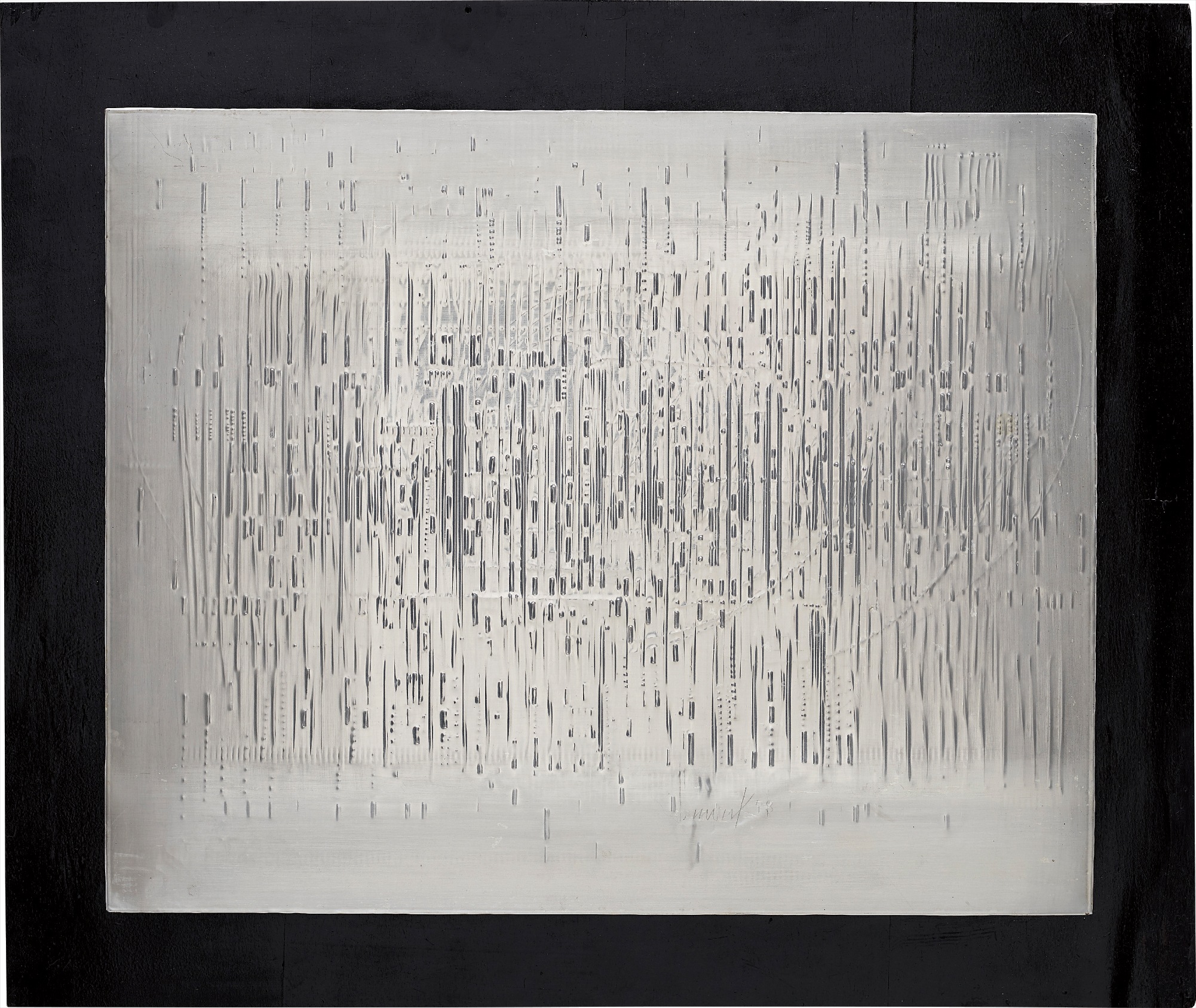
Heinz Mack
Licht-Regen-Relief (Light rain relief), 1958
His peers in Zero and its allied movements included Yves Klein in France, Lucio Fontana in Italy, and Jean Tinguely in Switzerland, all of whom sought to dissolve the boundary between the artwork and the lived experience of the viewer. Mack's particular contribution was a devotion to aluminum and to structured light that felt simultaneously deeply technological and deeply meditative. He shared with his friend Piene a belief that light was the fundamental medium of postwar optimism, a way of saying that something radiant could be built from the rubble of the recent past. The legacy of Heinz Mack is one of extraordinary steadfastness and generosity.
He gave the world a new way to think about what a surface can do, about the relationship between materials, light, and perception, and he continued to develop that thinking across a career of more than seven decades without ever retreating into self imitation. His works in major museum collections across Europe and North America stand as permanent reminders that the optimism of the Zero years was not naive but earned, grounded in rigorous thinking and genuine technical invention. For collectors drawn to works that reward sustained attention, that change with the light in a room and the angle of a glance, few artists offer what Mack offers: the experience of light itself, made tangible and lasting.
Explore books about Heinz Mack
Heinz Mack: Catalogue Raisonné
Heinz Mack
Heinz Mack: The Participant
Various Authors
Zero Movement: Heinz Mack and the ZERO Group
Nils Stählke
Heinz Mack: Werke 1953-1989
Heinz Mack
Mack: Light Art and Kinetic Sculpture
Museum Documentation