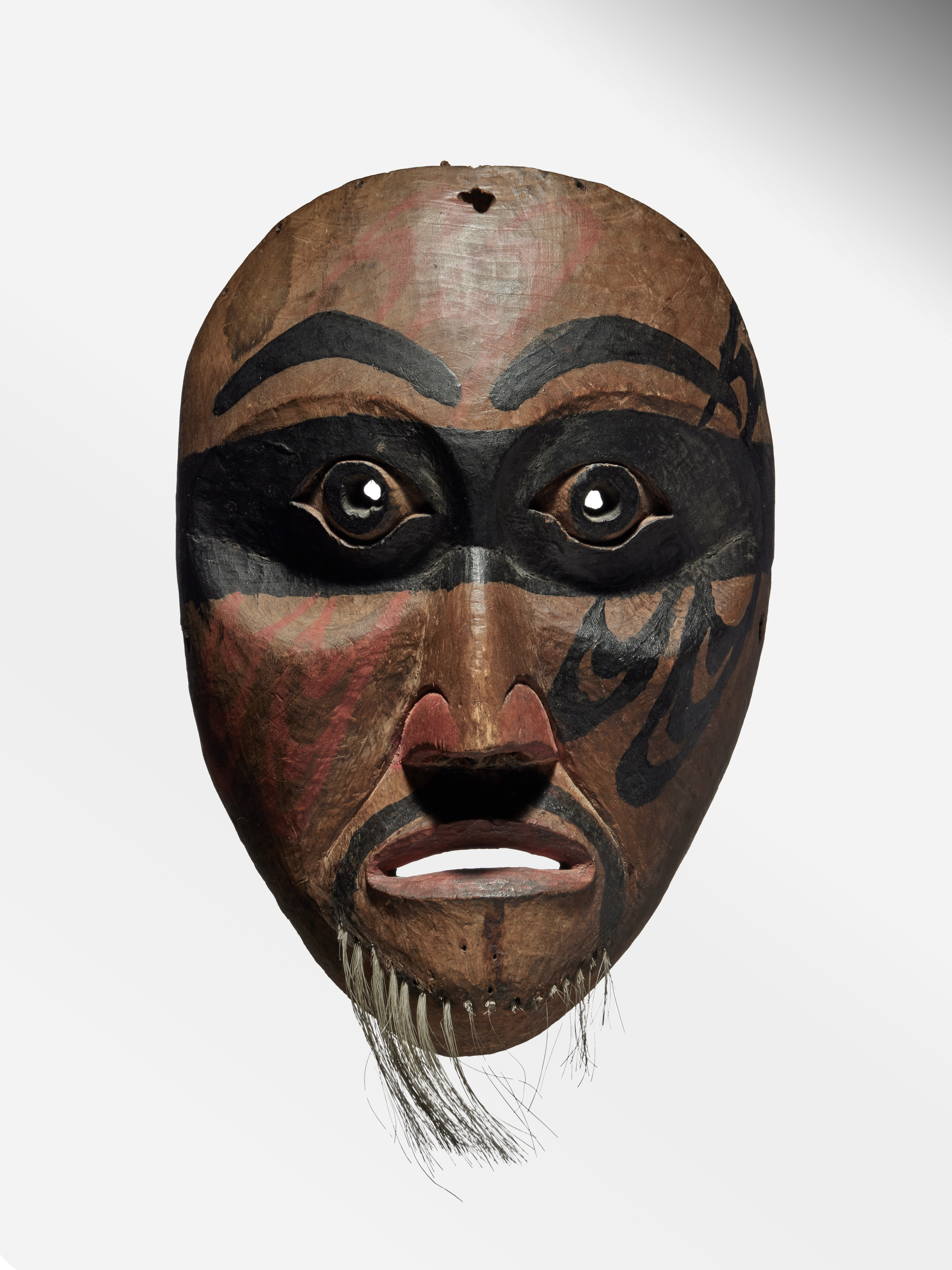
Heiltsuk Mask
Sacred Visions From the Central Coast
Artist Spotlight · The Collection Editorial
In the grand galleries of Sotheby's and Christie's, where the lights fall just so on polished auction platforms, Heiltsuk ceremonial masks have commanded rooms full of seasoned collectors into silence. These are not simply objects of aesthetic beauty, though beauty they possess in abundance. They are living records of a people whose relationship with the Central Coast of British Columbia stretches back thousands of years, whose ceremonies, governance structures, and spiritual philosophies found expression through the hands of master carvers working in red cedar, abalone, and copper. In recent years, as institutions across North America reckon seriously with the depth and sophistication of Indigenous art traditions, Heiltsuk masks have moved from the margins of ethnographic display into the very center of conversations about world art history.
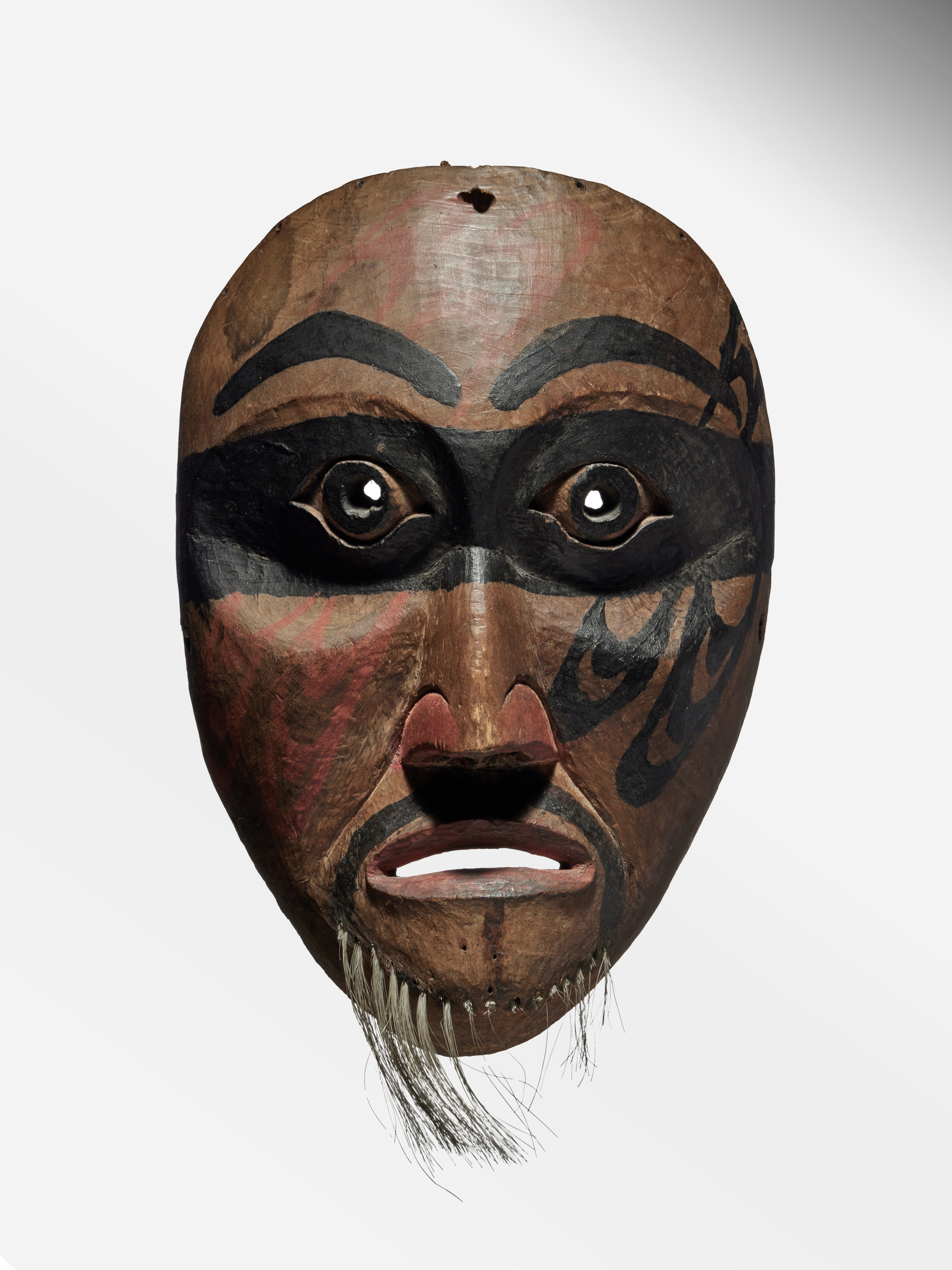
Heiltsuk Mask
Heiltsuk Mask
The Heiltsuk Nation occupies the Central Coast of British Columbia, centered around the community of Bella Bella on Campbell Island. This is a landscape of breathtaking intensity, where the Pacific Ocean meets ancient temperate rainforest and the air carries salt and cedar in equal measure. The Heiltsuk are one of the maritime peoples of the Northwest Coast, and their culture reflects an intimate, multigenerational knowledge of this environment. Salmon, raven, bear, and killer whale are not merely animals in Heiltsuk cosmology but complex spiritual presences with whom human beings maintain ongoing relationships of reciprocity and respect.
It is from this worldview that the tradition of ceremonial mask making emerges. Red cedar, known to Northwest Coast peoples as the tree of life, provided the primary material for mask carvers. Skilled artists would select fallen or standing cedar and work the wood through a process of adzing, carving, and finishing that could take weeks or months for a single important piece. Natural pigments, including ochre, charcoal, and copper compounds, were applied to create the bold graphic forms that define Northwest Coast aesthetics.
Abalone shell, traded across vast coastal networks, was inlaid to create eyes and decorative details that catch firelight with an iridescent shimmer. Copper, rare and prestigious, appeared as embellishment on pieces intended for the highest ceremonial occasions. The result was an art form of extraordinary technical sophistication, one that rewarded close looking with an almost endless depth of symbolic content. Ceremonial masks served their most vital function within the potlatch, the complex ceremonial and governance institution through which Northwest Coast nations managed wealth redistribution, confirmed hereditary privileges, and celebrated major life events.
For the Heiltsuk, the potlatch was and remains the center of cultural and political life. Masks worn by dancers during potlatch ceremonies were understood to allow the wearer to embody supernatural beings, ancestor figures, and the great animals of the Heiltsuk world. Transformation masks, which opened to reveal a second face within, were among the most technically dazzling and spiritually significant objects produced anywhere in the premodern world. The Canadian government banned the potlatch between 1885 and 1951, a period of devastating cultural suppression during which many sacred objects were confiscated, sold, or destroyed.
The resilience of Heiltsuk carving traditions through and beyond this period speaks to the profound importance of these objects to community identity and survival. The revival and continued flourishing of Northwest Coast Indigenous art from the mid twentieth century onward brought new visibility to the Heiltsuk tradition within the broader art world. Scholars and collectors began to engage more seriously with these works as art objects deserving the same analytical and appreciative attention given to any canonical tradition. Museums including the UBC Museum of Anthropology in Vancouver, the American Museum of Natural History in New York, and the British Museum in London hold important examples of Heiltsuk material culture, and ongoing repatriation efforts have seen meaningful numbers of ceremonial objects return to community care in Bella Bella.
These returns are understood not as the end of a collection but as the restoration of living cultural property to the communities whose members created them. For collectors approaching Heiltsuk masks in the secondary market, several considerations deserve careful attention. Provenance is paramount. The most respected examples come with clear documentation of their origins and have passed through legitimate channels with full transparency about their cultural context.
Works that appeared in major auction catalogues at Sotheby's and Christie's from the 1970s onward established important benchmarks for quality and value, with exceptional transformation masks and figural pieces achieving prices that reflect both their rarity and their extraordinary artistic accomplishment. Collectors who engage with this tradition thoughtfully, who seek to understand the ceremonial context from which these works emerged, and who consider the ethical dimensions of stewardship, tend to develop deep and lasting relationships with the objects in their care. The sensibility required is less that of a trophy hunter and more that of a custodian. Within the history of Northwest Coast art, Heiltsuk work sits alongside and in dialogue with the traditions of neighboring nations including the Kwakwaka'wakw, whose ceremonial art shares many formal characteristics and spiritual concerns, and the Haida, whose sculptural tradition has achieved enormous international recognition.
The great Haida artists Bill Reid and Robert Davidson brought Northwest Coast aesthetics to global audiences from the 1960s onward, opening critical and commercial pathways that benefited the broader recognition of all Northwest Coast traditions. Heiltsuk work shares with these traditions a mastery of formline design, the flowing system of primary and secondary forms that gives Northwest Coast art its distinctive visual logic, while maintaining its own iconographic vocabulary and ceremonial specificity. The importance of Heiltsuk masks today extends well beyond the art market. They are central to an ongoing cultural renaissance in which younger Heiltsuk artists learn traditional carving techniques from elders, connect those skills to contemporary artistic practices, and carry forward a living tradition that remained vital even through periods of intense colonial pressure.
For collectors, institutions, and admirers of art in its fullest sense, engaging with Heiltsuk masks means engaging with one of the most accomplished artistic traditions on earth, one whose aesthetic power, spiritual depth, and cultural resilience make it genuinely indispensable to any serious understanding of human creativity.
Explore books about Heiltsuk Mask
Heiltsuk Ceremonial Art and Potlatch
Margaret Blackman
The Heiltsuk People: Ethnography and History
Boyd Newcombe
Northwest Coast Indian Art: An Analysis of Form
Bill Holm
Living Traditions: Heiltsuk Art in the Modern World
Jennifer Kramer
The Spirit in the Mask: Heiltsuk Aesthetics
Steven Acheson