Hans-Peter Feldmann
Hans-Peter Feldmann Finds Beauty Everywhere
Artist Spotlight · The Collection Editorial
“I am interested in things that everybody knows, things that are part of everyday life.”
Hans-Peter Feldmann, interview with Artforum
When Hans Peter Feldmann accepted the Hugo Boss Prize at the Solomon R. Guggenheim Museum in New York in 2011, he did something entirely in keeping with his lifelong artistic philosophy: he converted the entire $100,000 prize into single dollar bills and pinned them, all 100,000 of them, across the walls of the Guggenheim's rotunda. The installation, titled "100,000 Dollar," transformed one of the art world's most prestigious spaces into something at once absurd, democratic, and deeply human. It was a gesture that crystallized everything Feldmann had spent four decades quietly pursuing, the idea that value is arbitrary, that accumulation is a form of meaning, and that the most extraordinary experiences can be conjured from the most ordinary materials.
Hans-Peter Feldmann
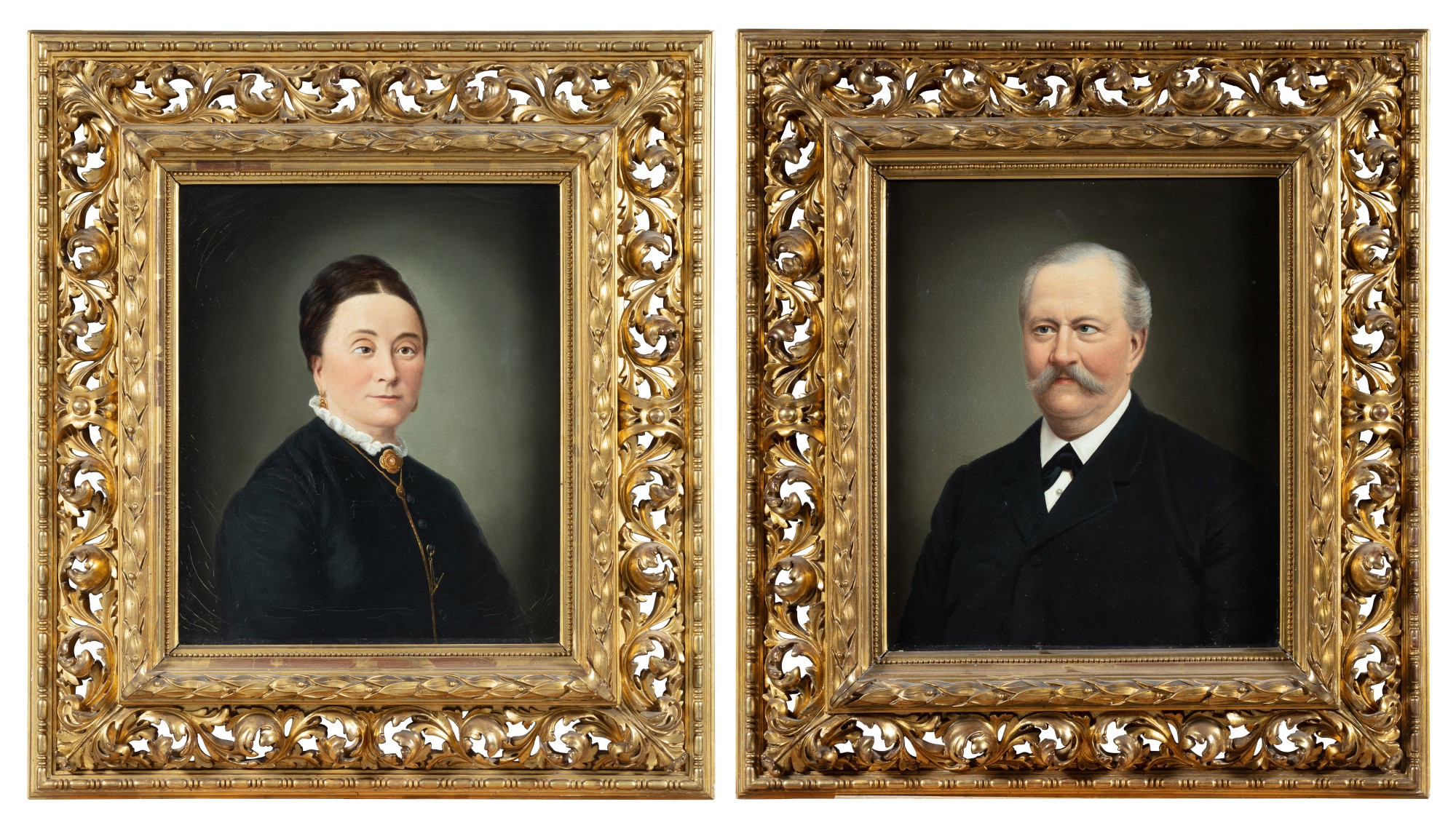
Old Portraits with Crossed Eyes (Diptych)
Feldmann was born in Düsseldorf in 1941, growing up in postwar Germany during a period of reconstruction that was both material and psychological. The country around him was rebuilding its physical landscape and, more complexly, reassembling a sense of collective identity from the ruins of the Third Reich. It was an environment acutely conscious of images and their power, of how photographs and printed matter could shape memory and manufacture meaning. These formative years instilled in Feldmann a lasting fascination with vernacular visual culture, the snapshots tucked into shoeboxes, the postcards displayed on refrigerator doors, the magazine clippings that ordinary people used to decorate their sense of the world.
He came of age artistically in the late 1960s, a moment when Conceptual art was dismantling the very foundations of what an artwork could be. Düsseldorf itself was an extraordinary crucible at this time, home to Joseph Beuys at the Kunstakademie and to the broader network of artists engaging with Fluxus, photography, and process based thinking. Feldmann was aware of these currents but carved out a distinctly quieter, more intimate register. Beginning around 1968, he began producing his now legendary artist books, modest, inexpensively printed pamphlets filled with found and appropriated photographs organized around simple themes.
Hans-Peter Feldmann
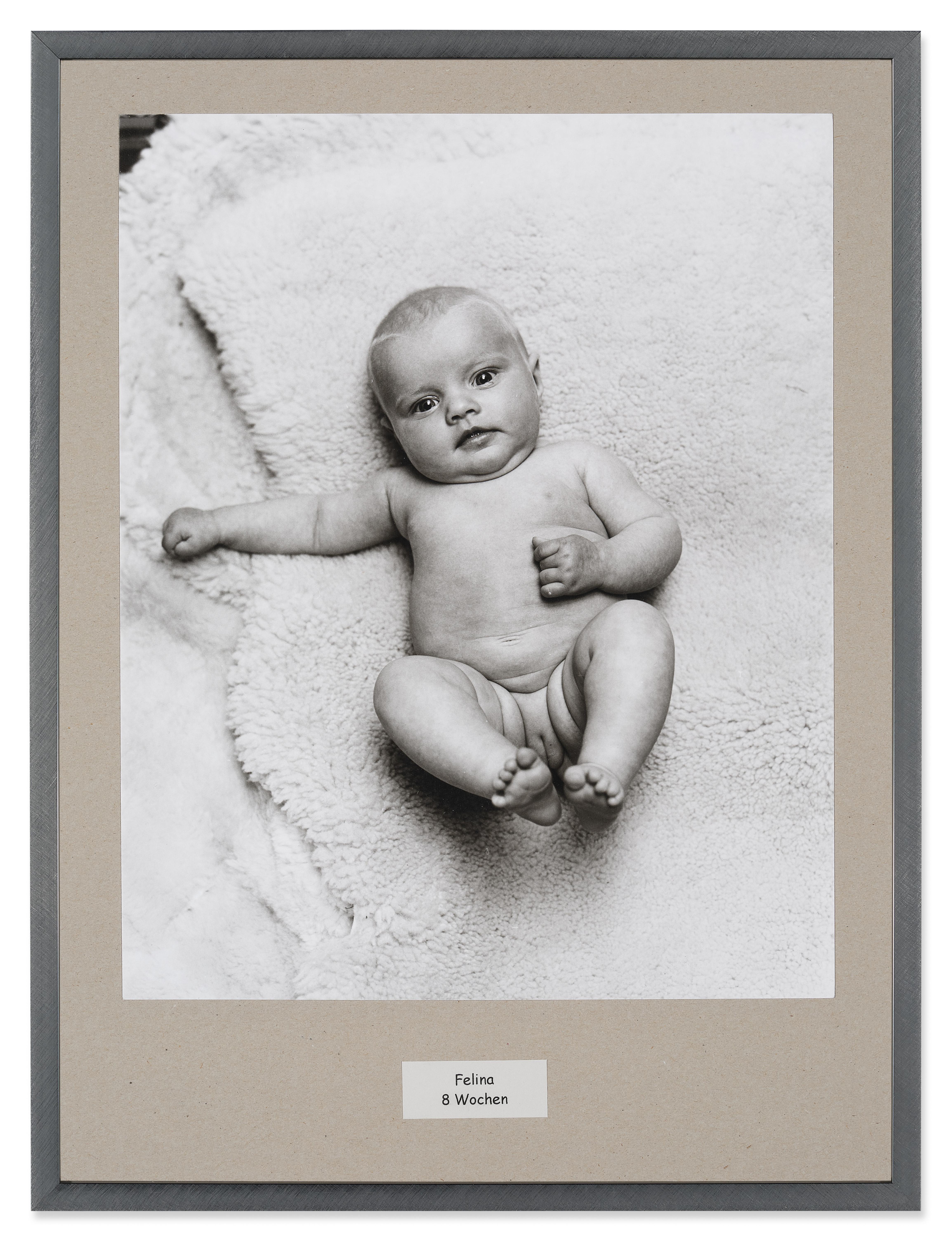
100 Years
These were not luxury objects. They were deliberately anti precious, priced so that almost anyone could own one. Those early books announced the central preoccupations that have driven his practice ever since. Feldmann is not interested in the unique, the rare, or the masterful.
He is interested in the common, the overlooked, the image that has been passed over precisely because it seems too ordinary to deserve attention. He collects postcards, amateur photographs, press clippings, toys, and domestic objects with the discipline of a true archivist, and then he reorganizes them according to his own quiet logic. Works like "Sonntagsbilder" (Sunday Pictures) gather together the visual texture of an ordinary day of rest in a way that feels both sociological and deeply tender. His series of sunset photographs, accumulated from found sources across years, transforms a cliché into something meditative and genuinely moving.
Hans-Peter Feldmann
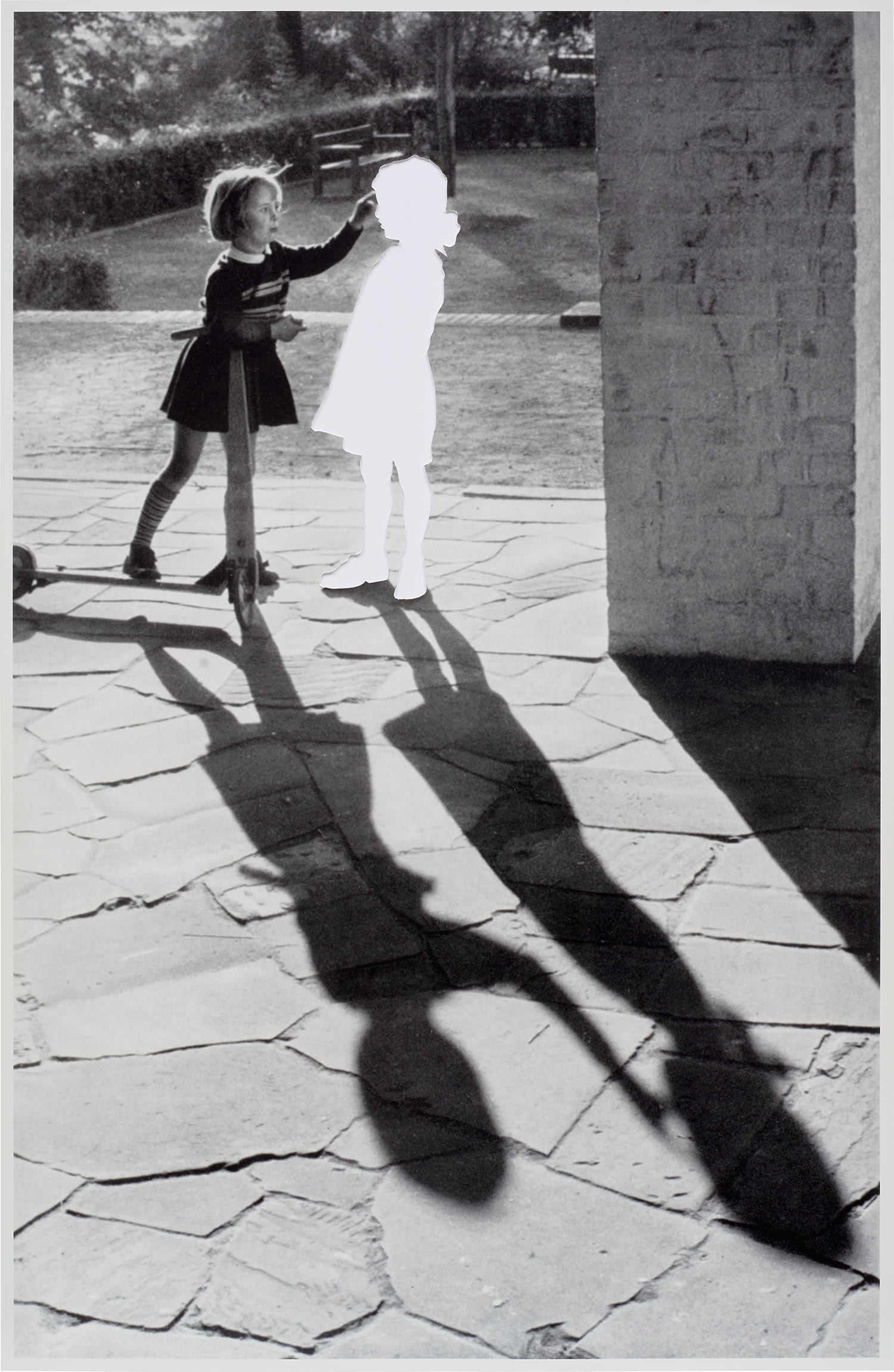
Mädchen mit Schatten
Among his most celebrated works is "100 Years," created in 2001, a sequence of 101 gelatin silver prints that documents a human life from birth to age one hundred through found portrait photographs. Each image is mounted on card with a letterpress title indicating the subject's age, and together they form a biography of no particular person and every person simultaneously. It is one of the most affecting works about mortality and the passage of time produced in the last quarter century, achieving its emotional force not through drama or spectacle but through patient accumulation. The work asks viewers to understand themselves as part of a shared human arc, and it does so with extraordinary gentleness.
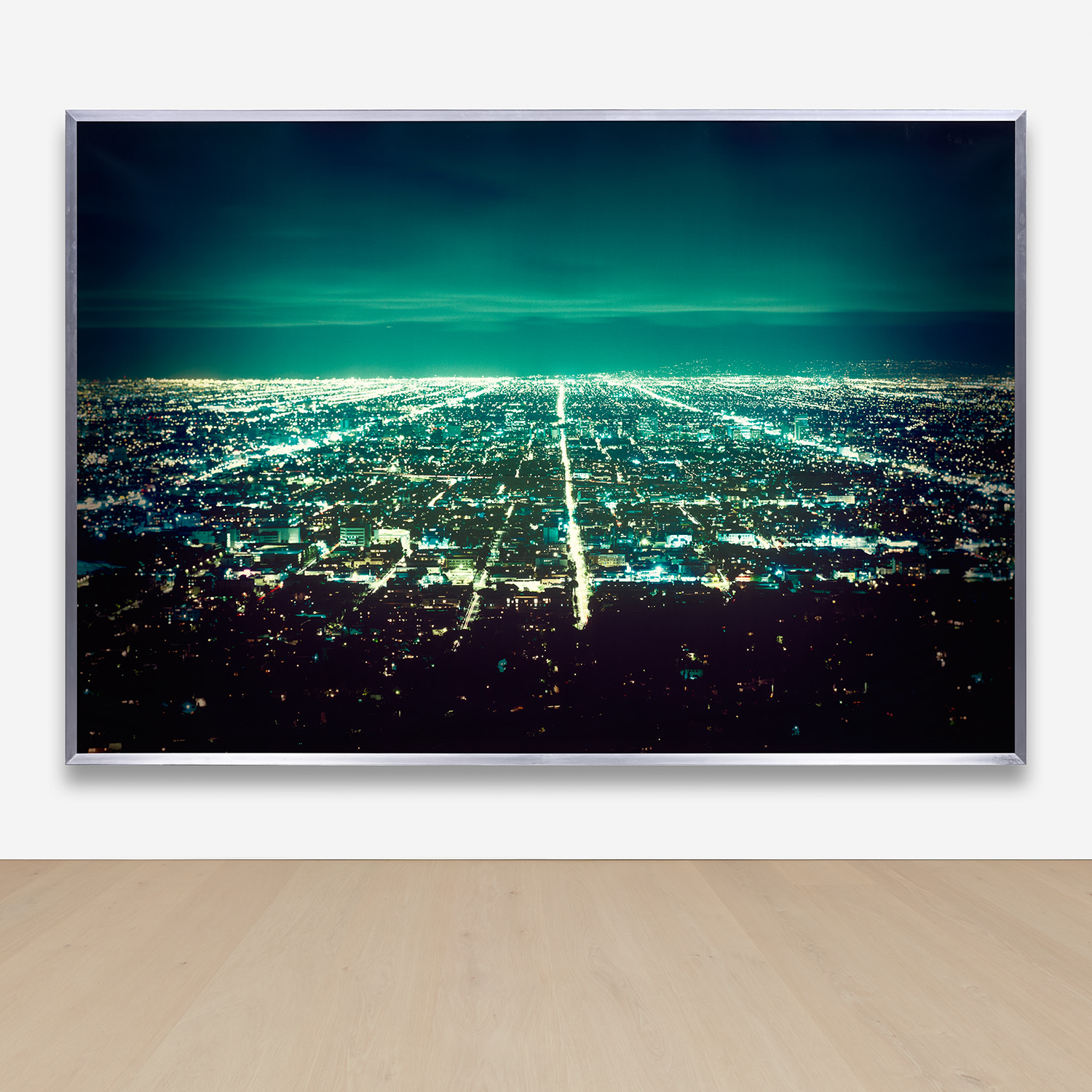
Other works, such as "Mädchen mit Schatten" and "Two Girls with Shadow," demonstrate his sensitivity to photography as a medium that captures both presence and absence, light and its inverse, the seen and the just out of frame. His sculptural works reveal a similarly playful intelligence. "David Head With Scarf," a painted plaster head fitted with an acrylic scarf, turns art historical reference into something warm and slightly comic. "Flower Pot," with its synthetic blooms planted in soil in plastic containers, invites questions about authenticity and desire that carry real philosophical weight while remaining entirely accessible.
Hans-Peter Feldmann
Two Girls with Shadow
"Airplane" from 2013 continues his long engagement with vernacular objects and the gap between the world as it is and the world as we imagine or represent it. Across all these works, Feldmann maintains a consistent refusal of pretension. He is an artist who genuinely believes that the most important things in life, love, time, memory, the beauty of an afternoon, are available to everyone. From a collecting perspective, Feldmann represents a genuinely compelling proposition.
His works occupy a space that is simultaneously intellectually rigorous and emotionally accessible, qualities that have made him a sustained favorite among collectors who care about ideas but are equally moved by feeling. Works on paper, photographs, and artist books from his earlier periods have attracted growing institutional and private interest, while his sculptural and installation pieces offer a different register of his thinking. Galleries including 303 Gallery in New York have been central to building his international profile, and works carrying labels from that context carry a clear and well documented provenance. As with many artists working in photography and appropriation, condition and completeness of framing and presentation are important considerations.
His editions are typically well documented and his practice has been consistent enough over decades that attribution is rarely in question. Feldmann belongs to a generation and tradition that includes Christian Boltanski, whose use of found photographs to excavate collective memory shares certain concerns, and Gerhard Richter, whose early photo paintings similarly interrogated the relationship between the photographic and the painterly. In the Conceptual lineage he connects to artists like On Kawara and Ed Ruscha, who also used seriality and deadpan accumulation to generate meaning. But Feldmann is distinctly warmer than many of his peers.
There is an affection in his practice that sets him apart, a sense that he genuinely loves the images and objects he collects, and that this love is itself the subject of the work. His legacy is one of sustained, principled generosity toward the visual world most of us inhabit. At a moment when the art market is often preoccupied with spectacle and scarcity, Feldmann's lifelong insistence on the value of the common and the shared feels not just admirable but necessary. He has shown that a photograph of a stranger, a shelf of cheap figurines, or a wall of dollar bills can, in the right hands and with the right attention, reveal something true and lasting about what it means to be alive.
That is a remarkable achievement, and it only deepens with time.
Explore books about Hans-Peter Feldmann