Hannah Wilke
Hannah Wilke: Body, Beauty, and Brave Truth
Artist Spotlight · The Collection Editorial
“I use my body as a canvas because I want to make something beautiful out of the experience of being a woman.”
Hannah Wilke
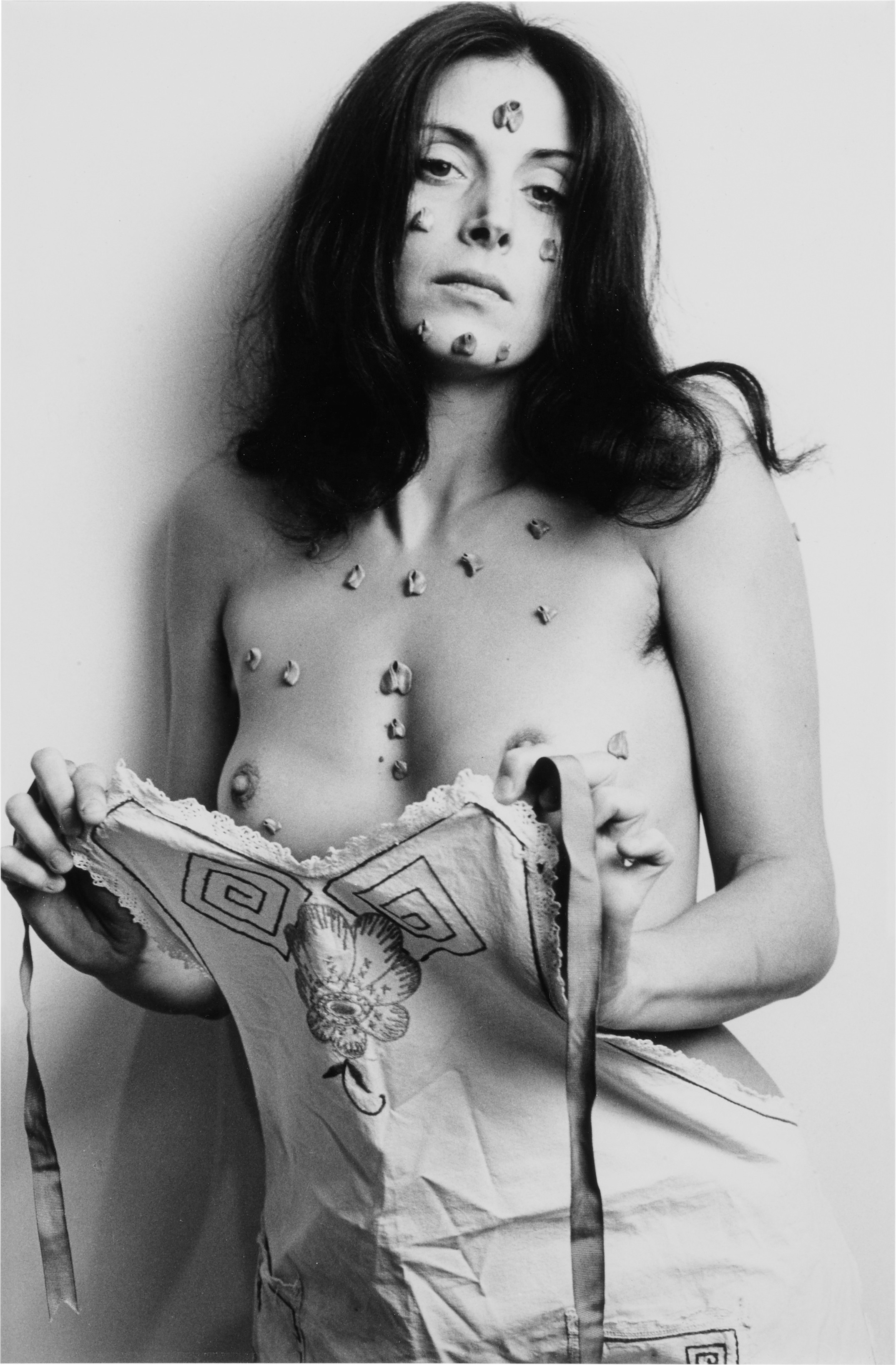
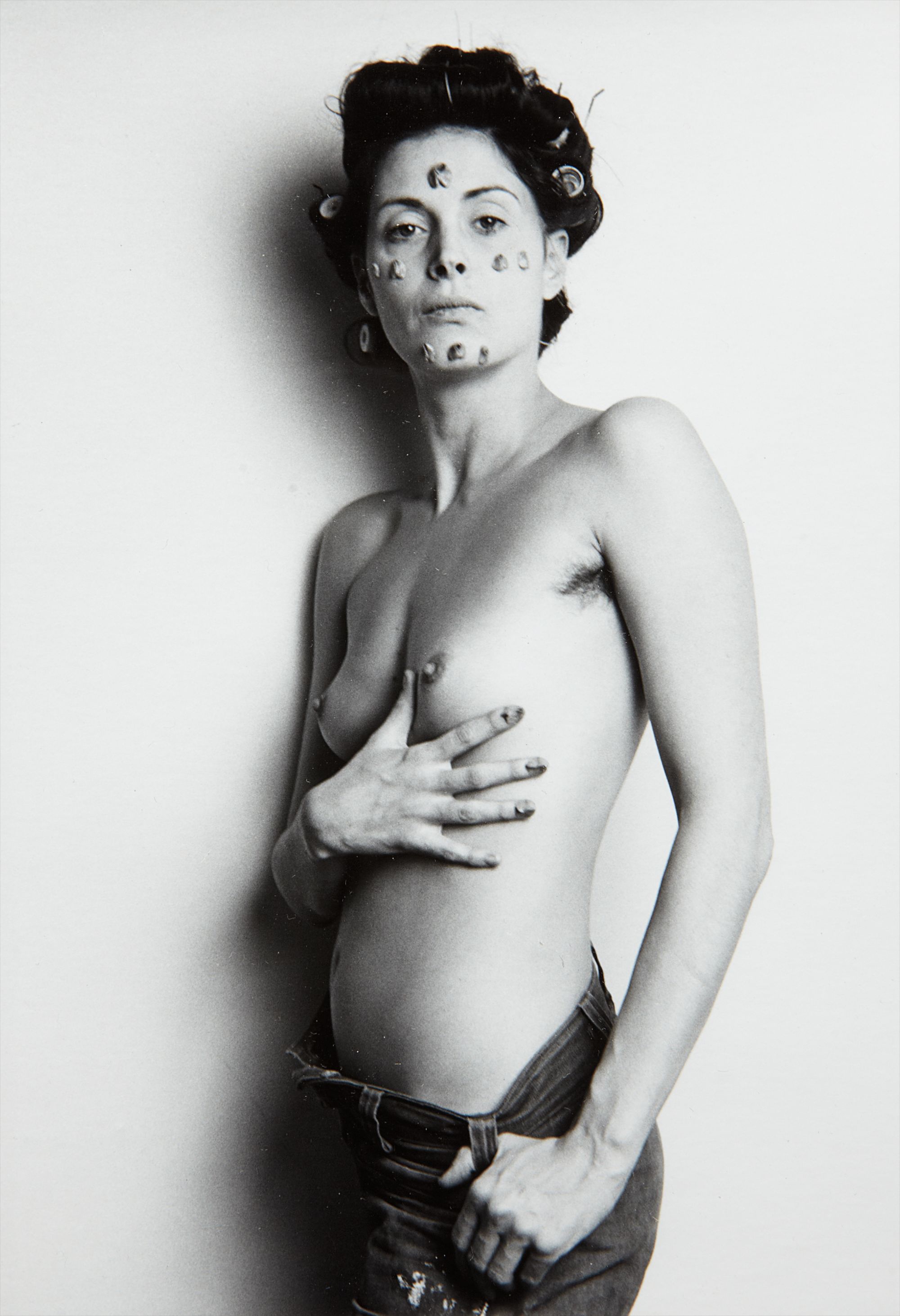
There is a moment in Hannah Wilke's legendary S.O.S. Starification Object Series, first presented in the mid 1970s, that stops viewers cold even today.
Hannah Wilke
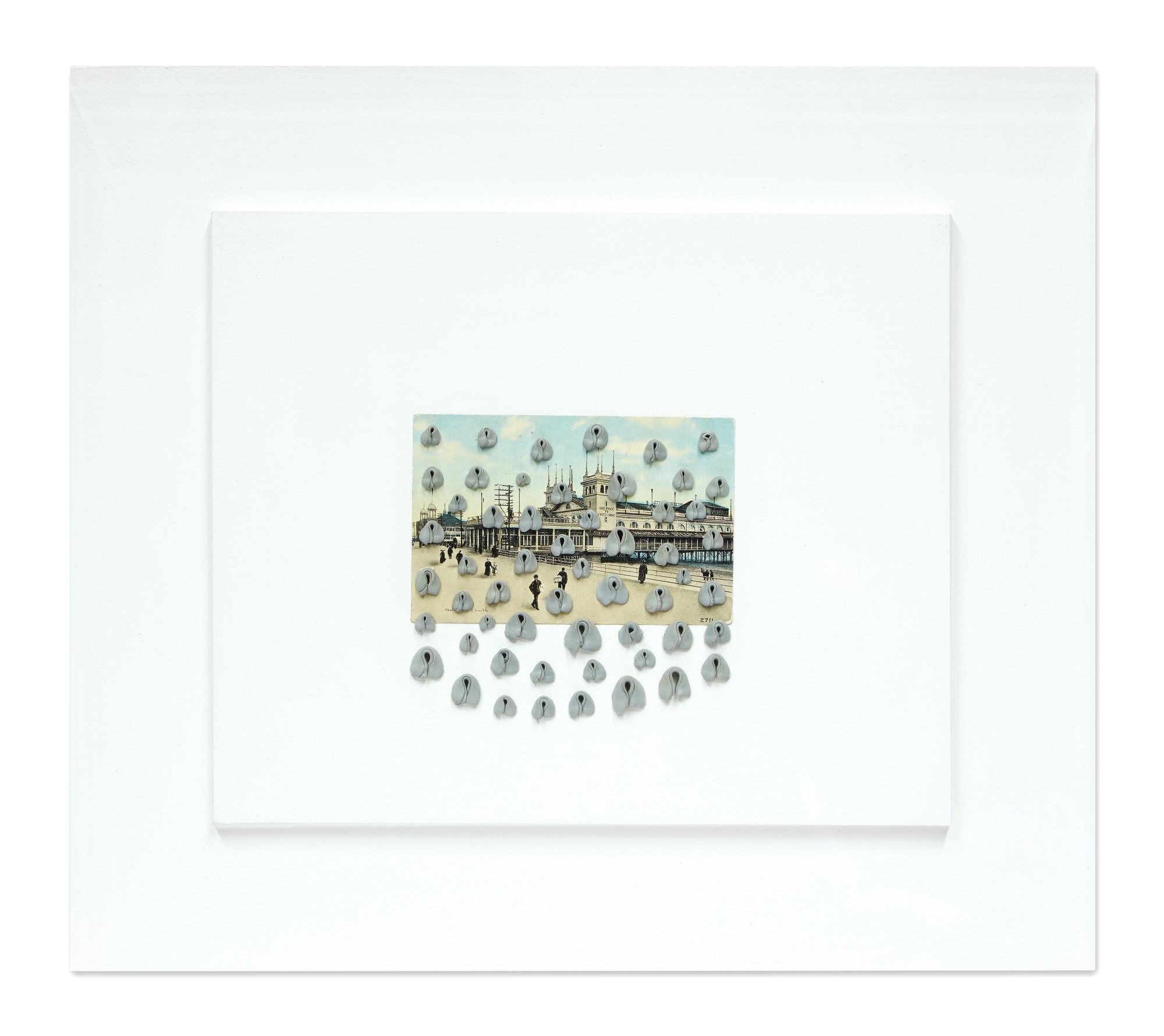
Atlantic City, New Jersey
Wilke stands before the camera in a series of poses that quote the language of pinup photography, her bare torso covered in small, petal shaped pieces of chewing gum she has folded and pressed into the skin like wounds or ornaments. The images are confrontational and seductive at once, refusing to be one thing. Decades after their creation, these photographs continue to appear in major museum surveys, feminist art retrospectives, and critical anthologies, a testament to how thoroughly Wilke anticipated the cultural conversations that would come to define contemporary art's engagement with the body, gender, and the politics of looking. Hannah Wilke was born Arlene Hannah Butter in New York City in 1940.
She grew up in a Jewish household shaped by the vitality and intellectual energy of postwar New York, and she later adopted the name Wilke professionally. She studied at the Tyler School of Art at Temple University in Philadelphia, earning her Bachelor of Fine Arts and Bachelor of Science in Education in 1962. From early in her formation, she was drawn to sculpture and the tactile qualities of materials, a sensibility that would define her practice across ceramics, performance, photography, and works on paper. She returned to New York and began teaching, eventually joining the faculty at the School of Visual Arts, where she remained a beloved and challenging presence for much of her career.
Hannah Wilke
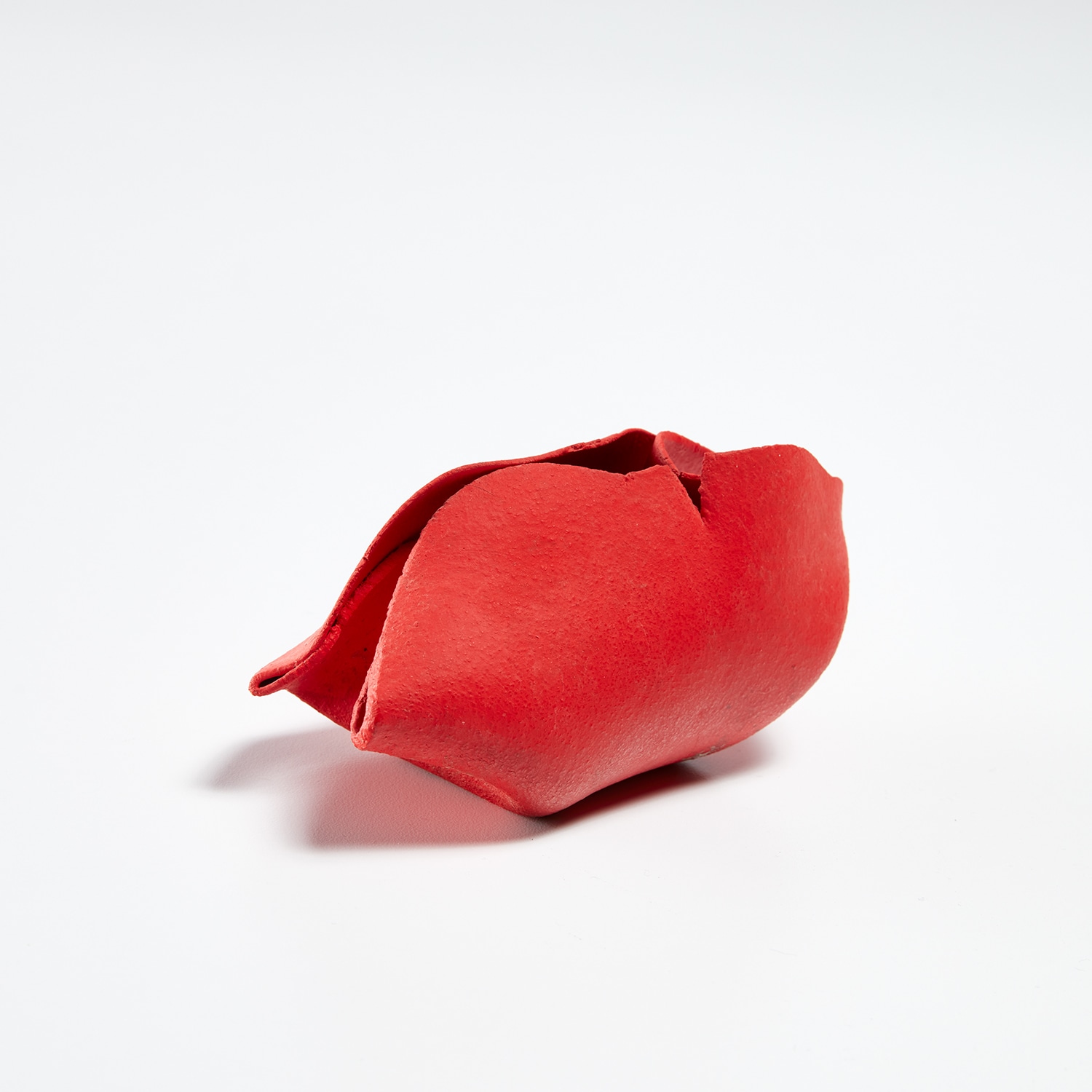
incised with the artist's signature and date "Wilke 84" on the underside, 1984
Wilke's development as an artist unfolded through a series of courageous material and conceptual leaps. In the late 1960s and early 1970s she was producing ceramic and latex sculptures that took unmistakably vulvar forms, insisting on the centrality of female anatomy at a moment when such directness was still genuinely transgressive. These works were not simply provocations. They were precise, formally rigorous objects made with deep attention to craft, and they placed Wilke in conversation with the broader feminist art movement taking shape in Los Angeles and New York simultaneously.
“Starification is not just about scars. It is about the marks society places on women.”
Hannah Wilke, artist statement
Her relationship with the eraser as a sculptural material was equally distinctive. Works such as Needed Erase Her, created in 1974, transformed the humble kneaded eraser into a medium loaded with conceptual weight, playing on the literal act of erasure and its resonance for women's experiences of being written out of history and public life. The S.O.
Hannah Wilke
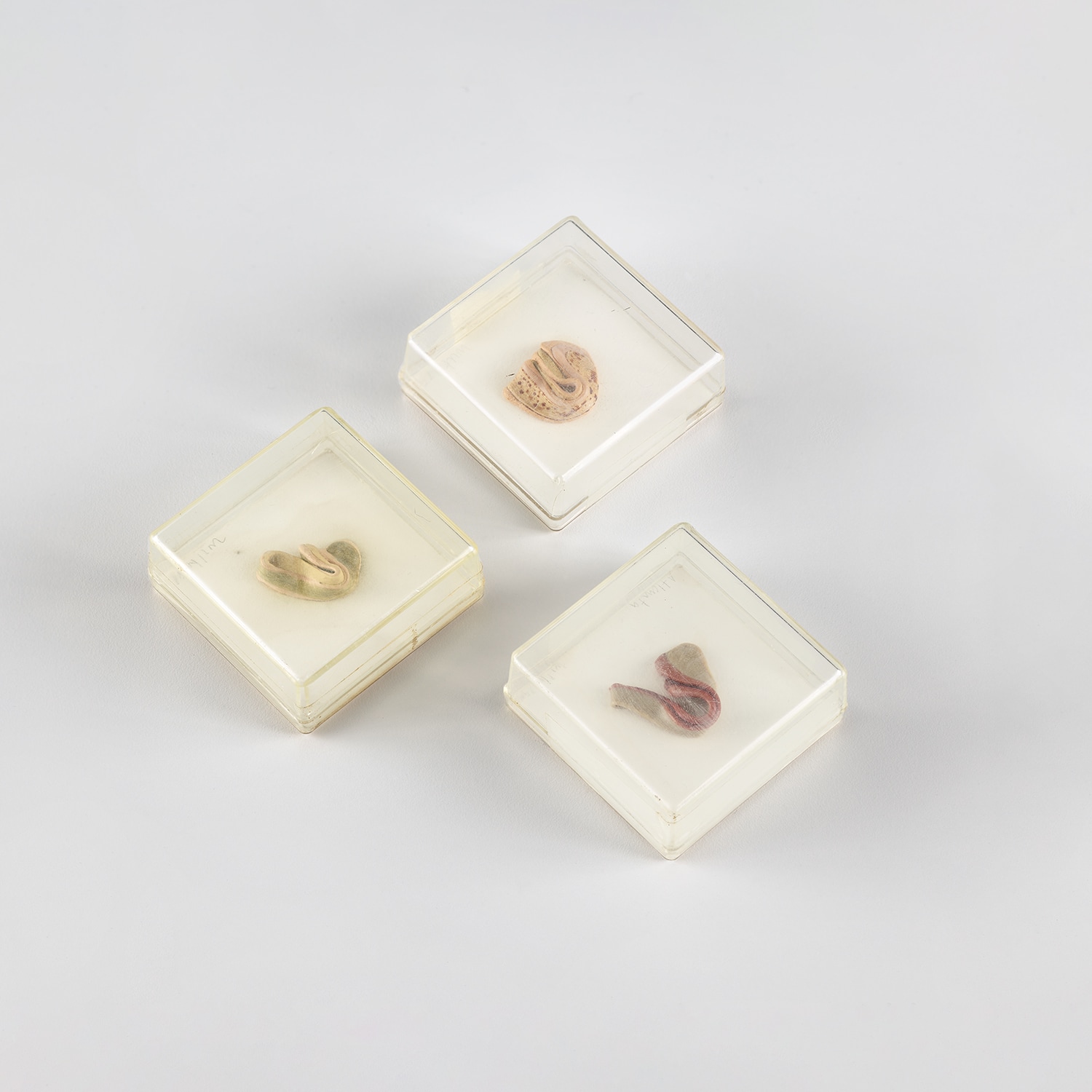
Three works (i-iii):, 1979
S. Starification Object Series, developed across the early and mid 1970s with key photographs produced in 1974 and 1975, remains her most recognized body of work. These gelatin silver prints show Wilke performing for the camera with a theatrical intensity that draws equally from art history, advertising, and personal mythology. The chewing gum forms she pressed onto her body were themselves miniature sculptures, vulvar and floral and strange, mass produced in their materials yet handmade in their final form.
The series raised difficult questions about the female artist who uses her own body as subject and whether beauty can be a form of critique rather than capitulation. Wilke was clear that her attractiveness was itself a kind of weapon she chose to deploy, and the debate her work sparked within feminist circles produced some of the most generative art critical writing of the era. Her later performance documentation, including the So Help Me Hannah series made in collaboration with Donald Goddard, extended this investigation with increasing wit and political sharpness. For collectors, Wilke's work offers a rare combination of historical importance and genuine visual power.
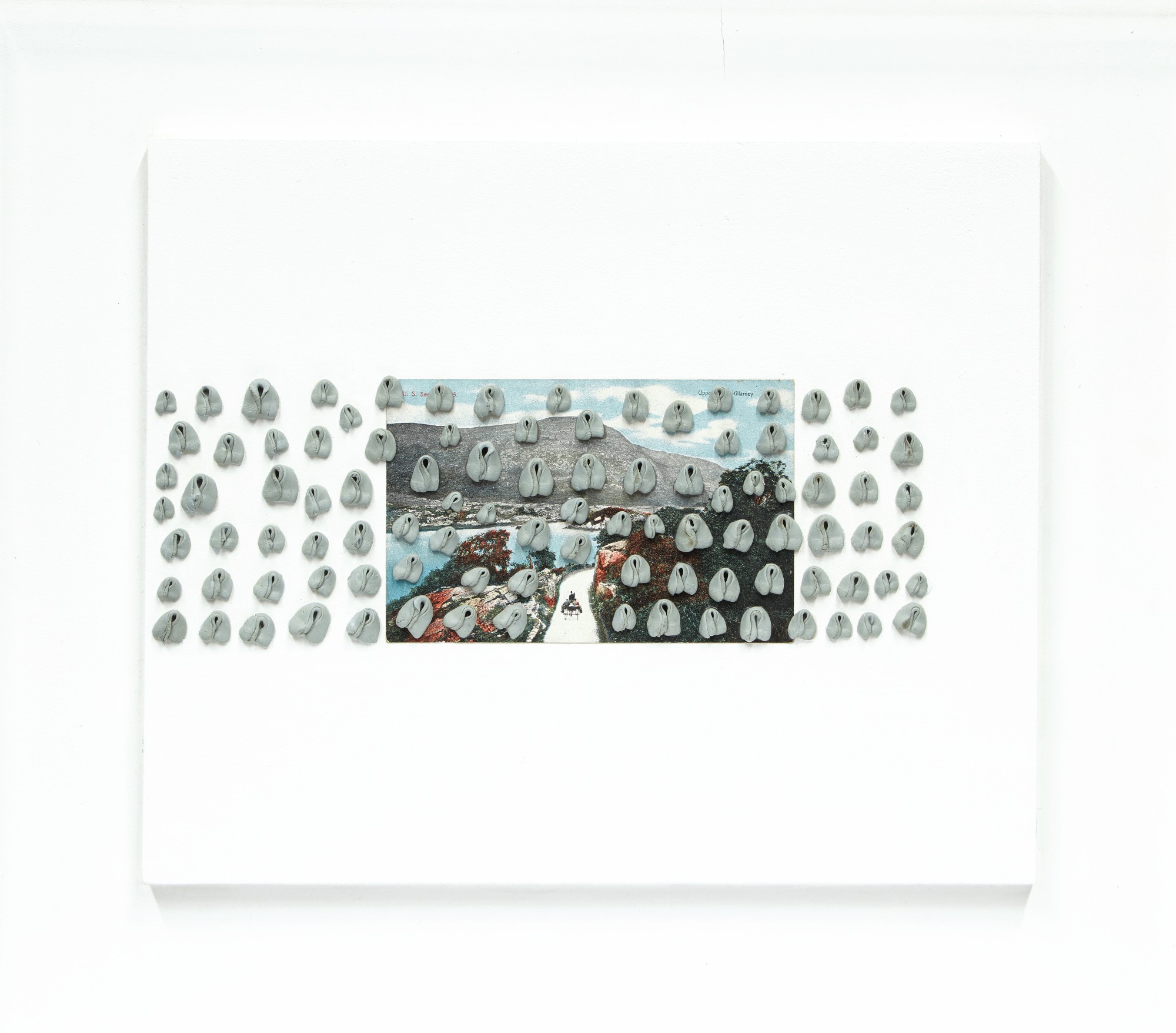
Hannah Wilke
Killarney
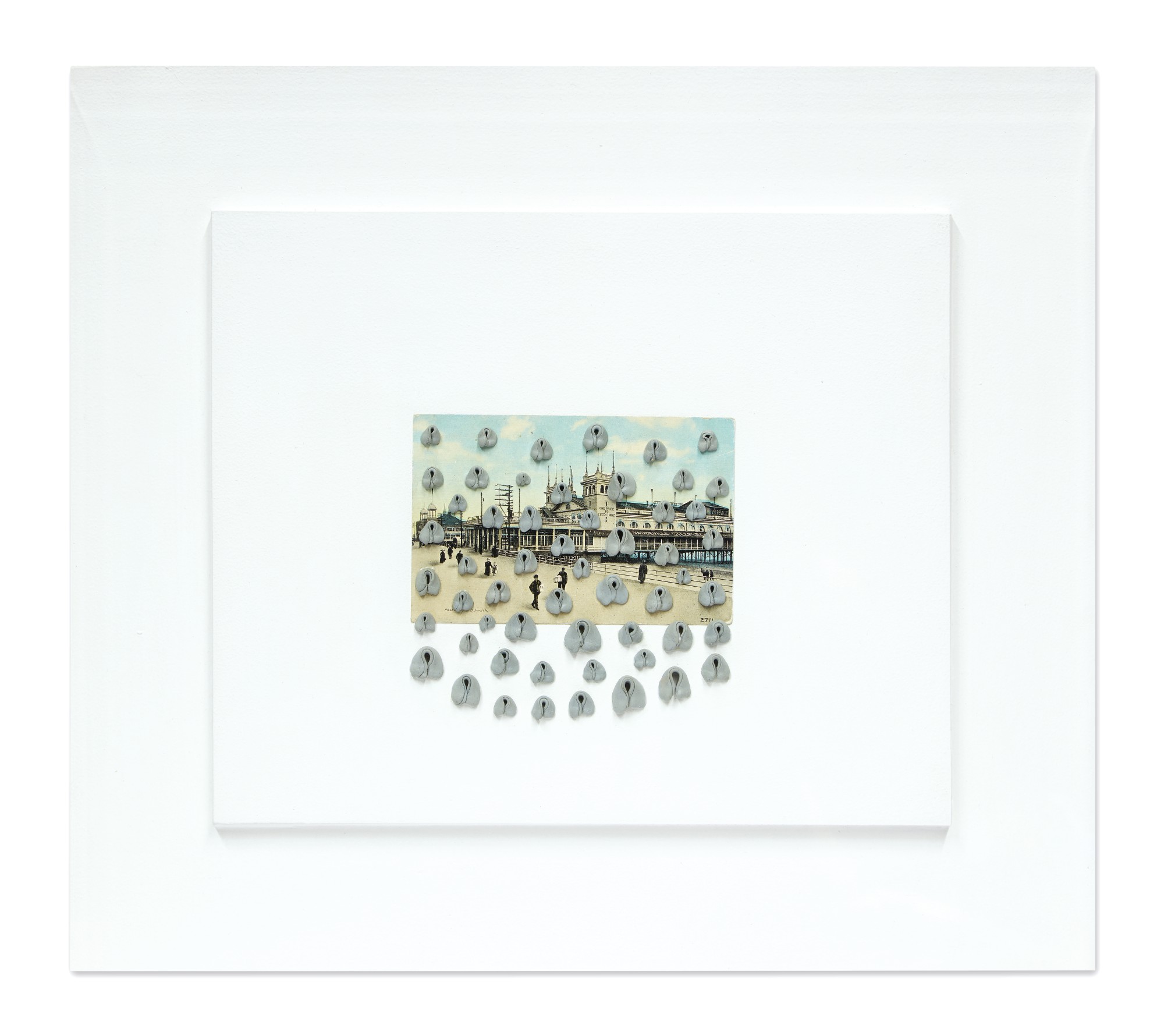
The eraser and postcard collages, such as Atlantic City, New Jersey and Killarney, are exquisite objects that reward close attention. Mounted to board and presented in Plexiglas frames, they demonstrate Wilke's gift for transforming modest, everyday materials into works of poetic charge. Her ceramics, including glazed pieces from the early 1980s, show the full range of her sculptural intelligence and her command of surface, color, and form. The gelatin silver prints from the S.
O.S. series have appeared at auction with increasing frequency and consistent collector interest, reflecting a broader market recognition of feminist art's foundational importance. Wilke's work sits at the intersection of Conceptualism, feminist practice, and American sculpture, making it compelling for collections built around any of those threads.
To understand Wilke fully is to understand the remarkable constellation of artists working around her in New York and beyond during the 1970s. She was a contemporary and in some cases a peer of Carolee Schneemann, whose body based performances shared Wilke's insistence on female subjectivity as a legitimate artistic subject. Eleanor Antin, Adrian Piper, and Lynda Benglis were all navigating related terrain, using photography and performance to interrogate representation and identity. Internationally, artists like VALIE EXPORT were pursuing comparable questions through equally rigorous means.
Wilke's work holds its own within this company with particular distinction because of the formal beauty of her objects and photographs, which give her critique a seductive surface that makes it impossible to look away. Wilke continued working with extraordinary commitment until the end of her life, producing the Intra Venus series during her illness in the early 1990s, a body of work that documented her experience of lymphoma with the same unflinching gaze she had always brought to the female body. She died in 1993 at the age of fifty two. In the years since, her reputation has grown steadily and is now firmly established.
Major institutions including the Museum of Modern Art and the Guggenheim hold her work, and her influence on subsequent generations of artists who engage with the body, beauty, and self representation is immeasurable. To collect Hannah Wilke is to hold a piece of the genuine history of American art, made by someone who refused every easy answer and gave the hardest questions the full force of her intelligence and her presence.
Featured Works
Explore books about Hannah Wilke
Hannah Wilke: A Retrospective
Elisabeth Sussman
Hannah Wilke: Intra-Venus
Donald Kuspit
Hannah Wilke: Gestures
Maura Reilly

Hannah Wilke: Buy Me I'll Change Your Life
Christine Poggi
Hannah Wilke: So Help Me
Paul Schimmel