H.C. Westermann
H.C. Westermann, America's Beloved Eccentric Visionary
Artist Spotlight · The Collection Editorial
“I think I work from a kind of personal mythology that has been built up over a long period of time.”
H.C. Westermann, interview with the Art Institute of Chicago
There is a moment in the permanent collection galleries at the Art Institute of Chicago when visitors stop cold. A Westermann sculpture sits in its case, handcrafted with the obsessive precision of a master shipbuilder, strange and funny and somehow heartbreaking all at once. The work does not announce itself with the theatrical scale favored by many of his contemporaries. It simply waits, patient and knowing, confident that whoever truly looks will not walk away unchanged.
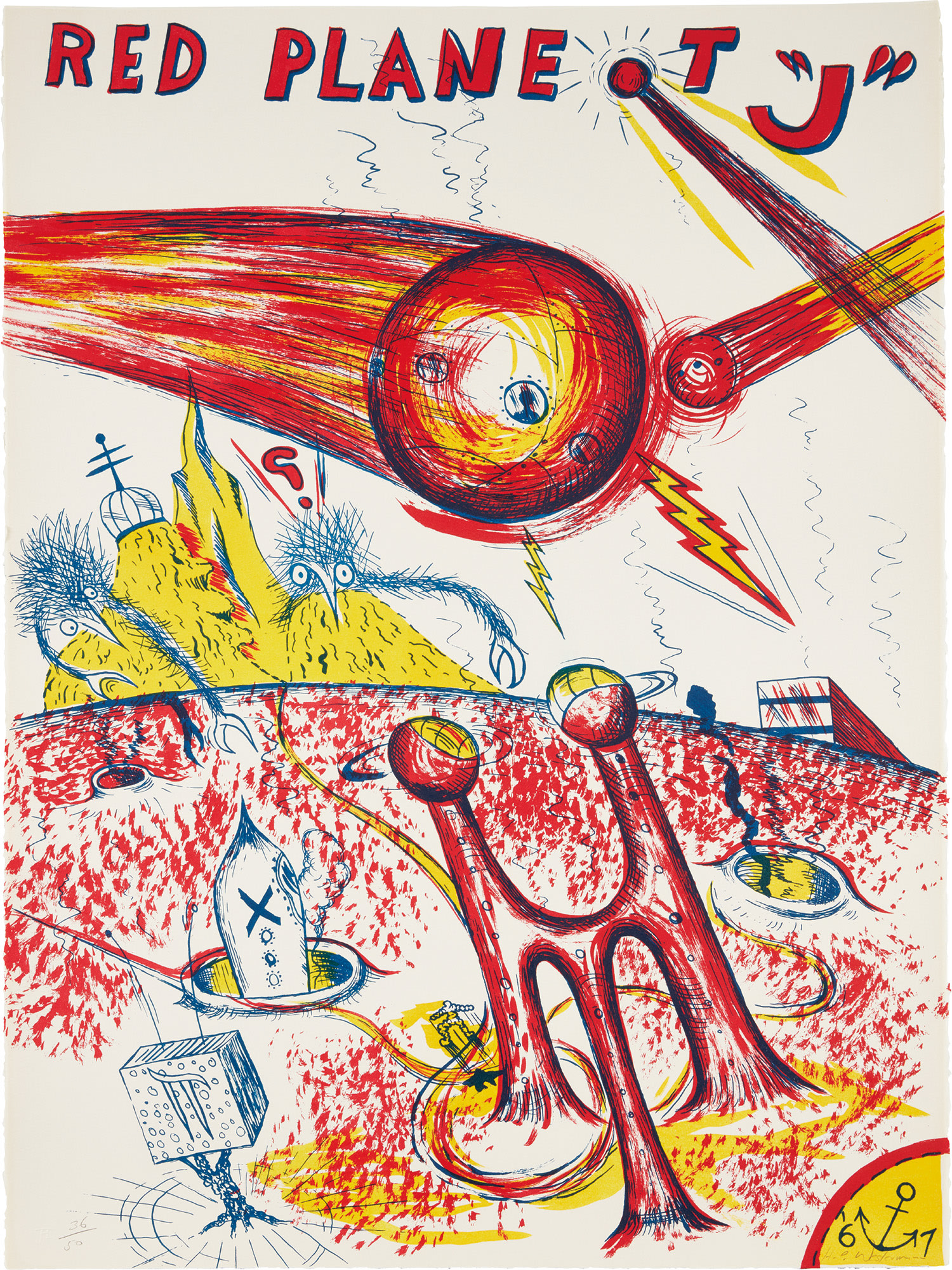
H.C. Westermann
Red Planet 'J' (Red Planet J)
That quality of patient strangeness, that refusal to perform on anyone else's terms, is exactly why H.C. Westermann feels so urgently alive to collectors and curators today. Horace Clifford Westermann was born in Los Angeles in 1922 and came of age during a period of profound American upheaval.
He served as a Marine in the Pacific Theater during World War II, witnessing combat and destruction that would leave permanent marks on his imagination. After the war he returned briefly to civilian life before reenlisting during the Korean War, serving aboard an aircraft carrier and watching planes and men disappear into the sea. These experiences gave his work its particular gravitational weight, a dark comedy that never forgets the cost of the joke. Between and alongside his military service, Westermann worked as a circus acrobat and performer, and that physical, improvisational intelligence is everywhere in the objects he made.
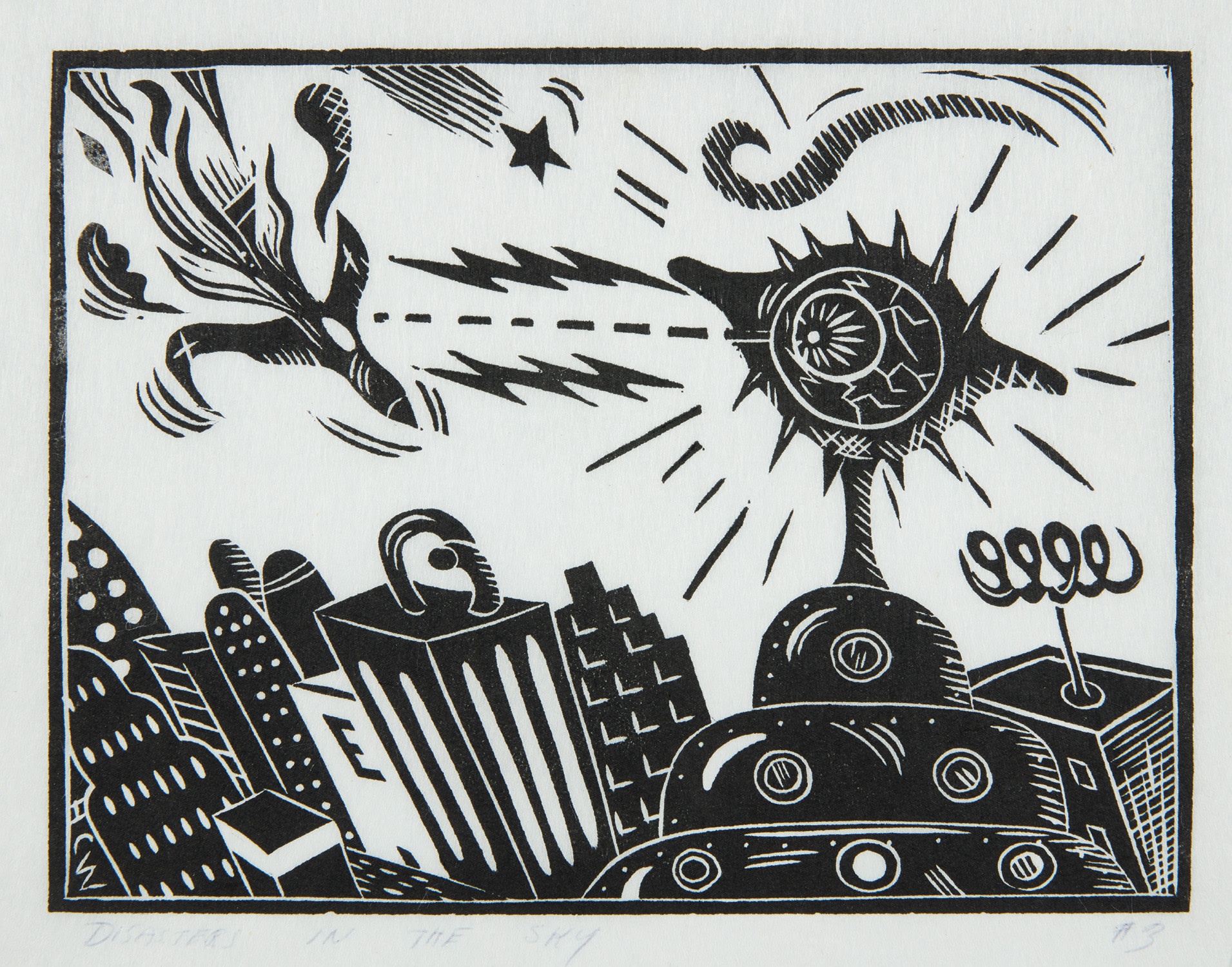
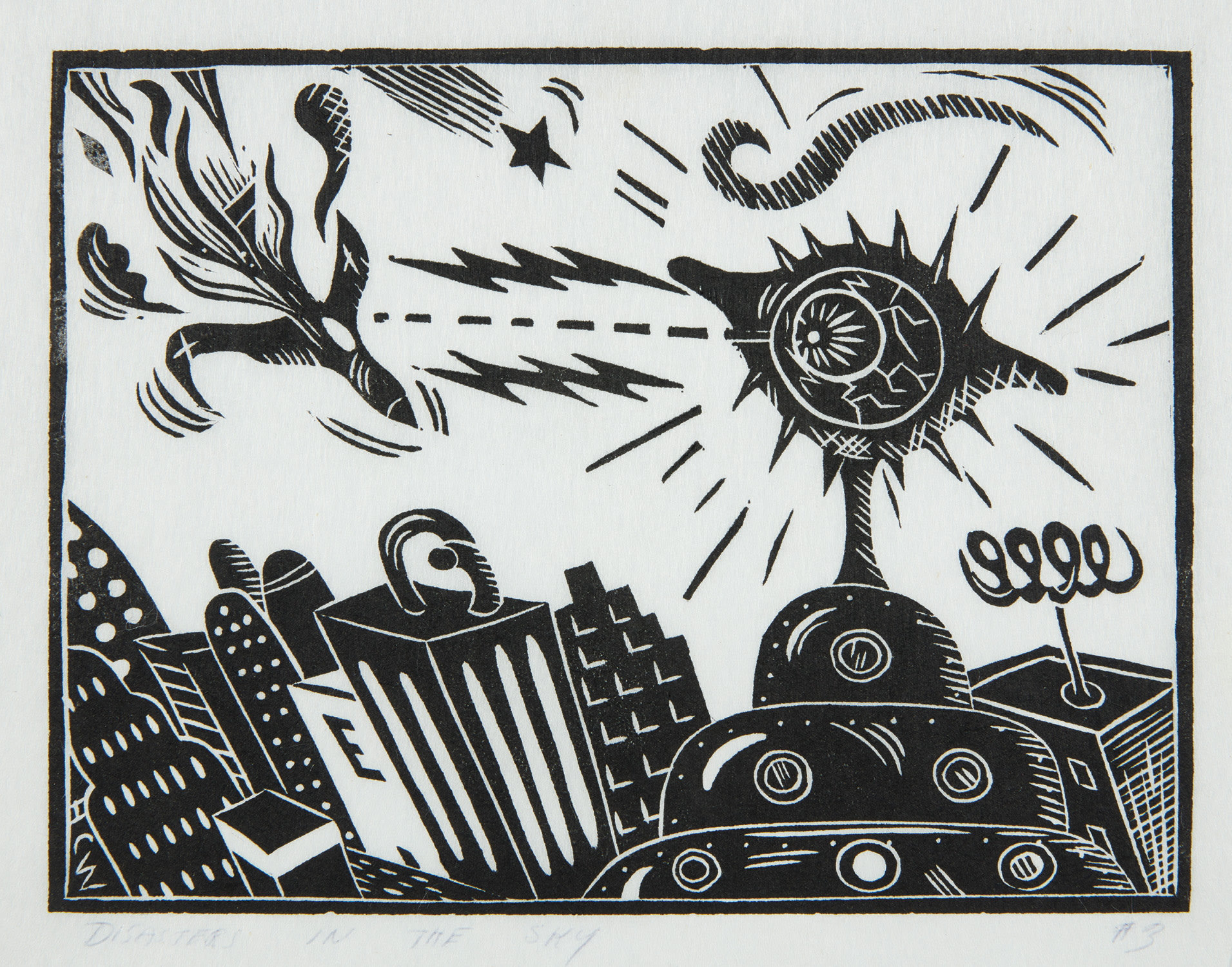
H.C. Westermann
Disasters in the Sky #3
He studied at the School of the Art Institute of Chicago on the G.I. Bill in the early 1950s, arriving in a city whose art scene was already brewing something distinctly its own. Chicago in those years was home to the Monster Roster, a loose constellation of figurative artists including Leon Golub, Cosmo Campoli, and June Leaf, who shared a commitment to raw psychological content over the cool abstraction dominating New York.
Westermann absorbed this atmosphere without being consumed by it. He was always fundamentally his own category, trained as a craftsman as much as an artist, and his sculptures came to reflect a sensibility that owed as much to carpentry, cabinetmaking, and folk tradition as to anything taught in an art school. His breakthrough years through the late 1950s and 1960s produced the bodies of work for which he is best remembered. Working in wood with extraordinary skill, he built box constructions, towers, miniature architectural forms, and figurative objects that carried enormous emotional charge without resorting to conventional expressionist gesture.
H.C. Westermann
Green River, from Six Lithographs (A. & B. 19C)
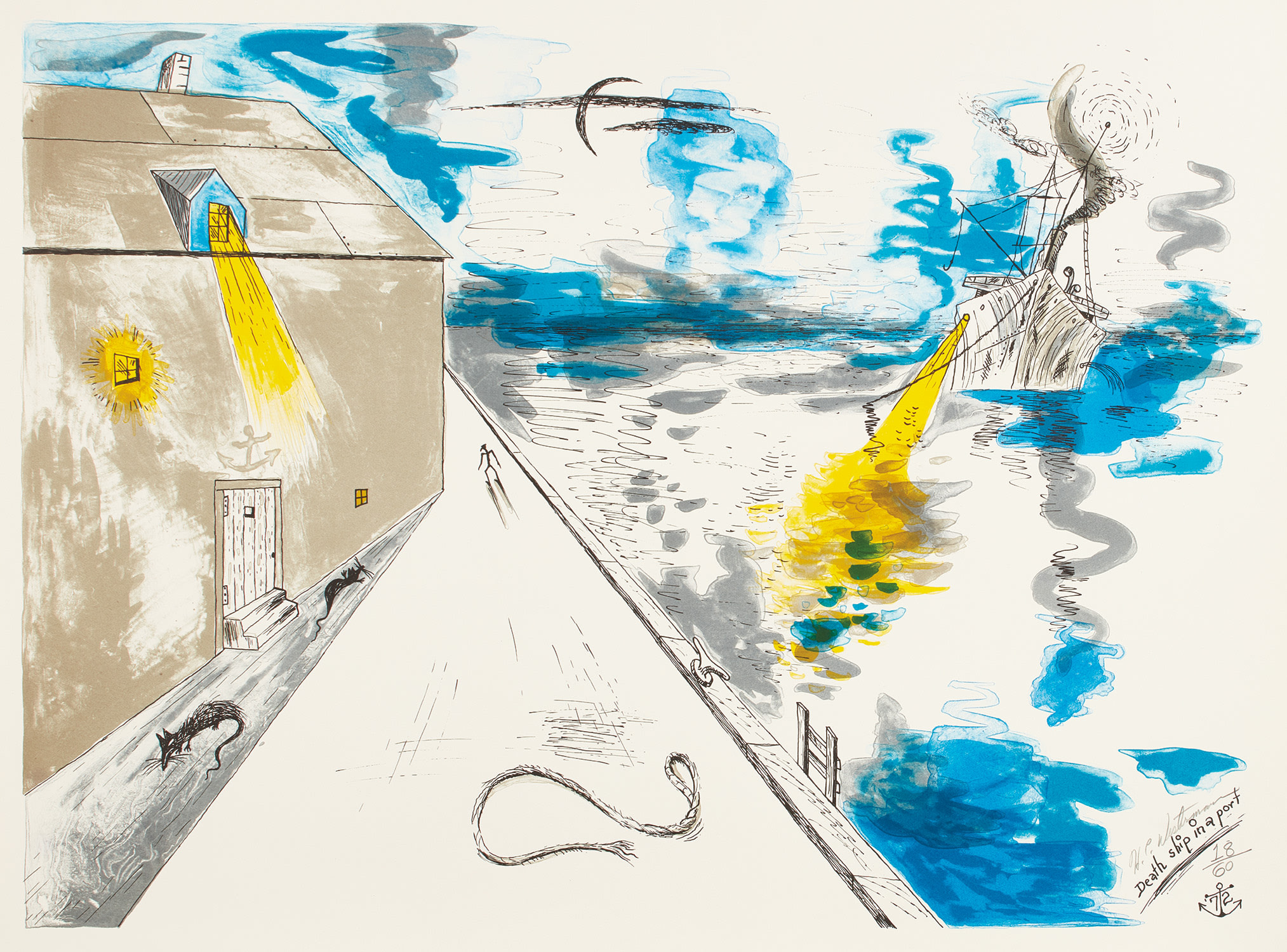
The surfaces were immaculate, the joinery impeccable, the imagery deliberately strange. Death ships, glass enclosed chambers, tiny figures trapped inside polished containers, all of it delivered with deadpan craftsmanship that made the darkness feel both more and less bearable. He corresponded prolifically with his friend and fellow artist William T. Wiley, and those illustrated letters, dashed off with cartoony wit and genuine feeling, became celebrated works in their own right.
Westermann was also a gifted printmaker, and the lithographs he produced in collaboration with the Tamarind Lithography Workshop in Los Angeles represent some of the most sought after works on paper in his catalogue. The Six Lithographs suite, including the luminous Green River and the warmly comic Holiday Inn, shows him working with color and composition in ways that feel both casual and entirely resolved. The planetary series, including Red Planet J and Green Planet, pushes into stranger territory, conjuring cosmic landscapes with the same handmade intimacy he brought to everything. His Disasters in the Sky series carries his characteristic blend of spectacle and tenderness, images that refuse to let catastrophe become merely spectacular.
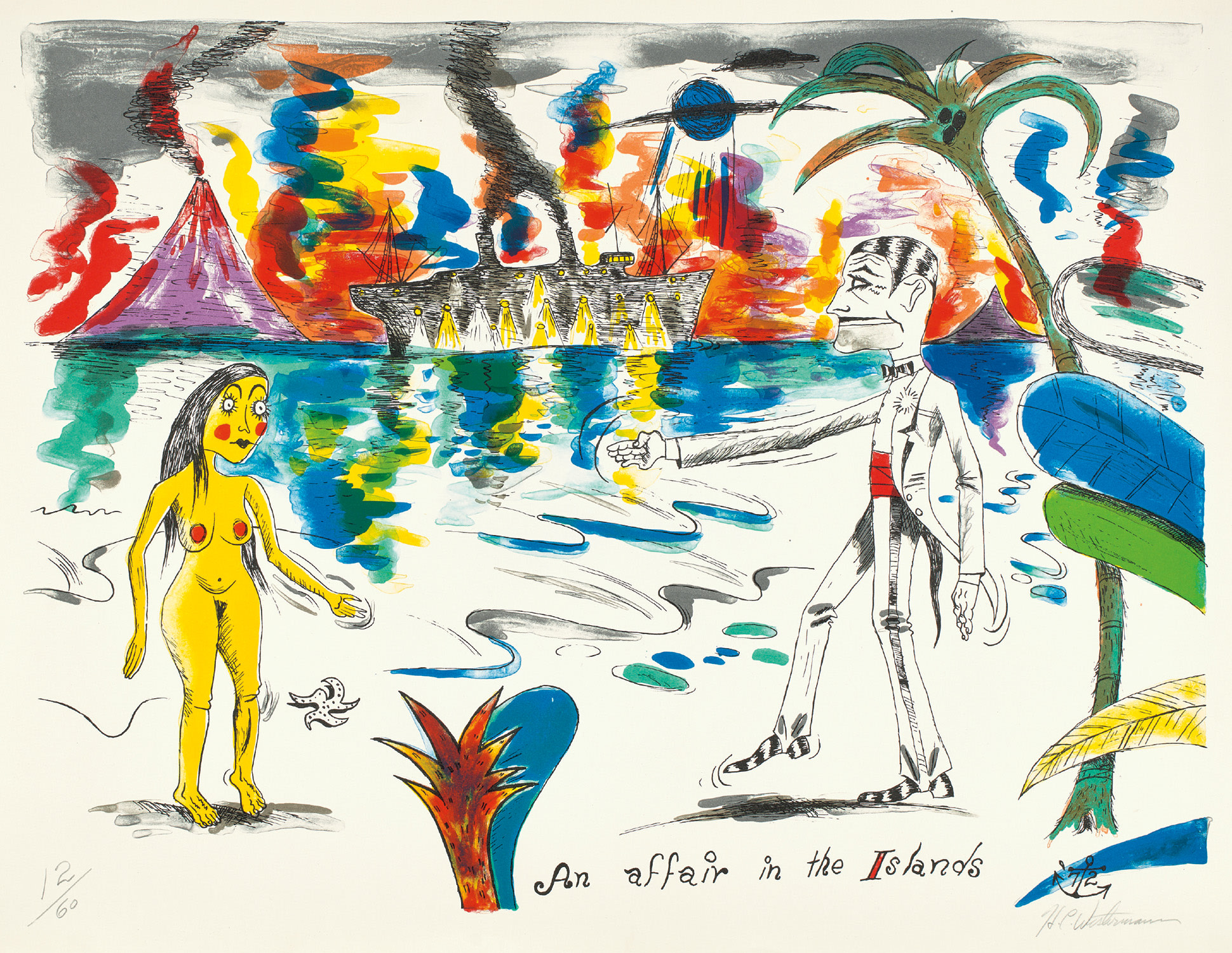
H.C. Westermann
Holiday Inn, from Six Lithographs (L.P. p. 181, pl. 84, A. & B. 19G)
These prints were published in small editions, typically no more than twenty impressions, which makes finding examples in strong condition a genuinely exciting moment for any collector. The market for Westermann has deepened steadily over the past two decades, driven by growing scholarly attention and a broader reappraisal of the Chicago Imagist tradition and its place in postwar American art. His sculptures command the highest prices, with major carved wood works appearing at Christie's and Sotheby's regularly exceeding estimates as institutional and private collectors compete for them. His works on paper and prints offer collectors a more accessible entry point into a singular sensibility, and the Tamarind lithographs in particular represent excellent value for what they are: small edition, signed and numbered impressions from a pivotal period in his career.
Collectors drawn to artists like Ed Kienholz, Bruce Conner, or the assemblage traditions of California often find Westermann a natural and deeply rewarding companion. His work also resonates strongly with admirers of outsider and folk traditions, though Westermann was always fully inside the art world, even when he pretended otherwise. His legacy extends in directions he could not have anticipated. Artists associated with Neo Expressionism in the 1980s acknowledged debts to his willingness to make feeling visible through physical material.
The Chicago Imagists who came after him, figures like Roger Brown and Jim Nutt, inherited a permission he helped establish: that American art did not have to submit to New York's agenda. Contemporary artists working in craft based sculpture, in assemblage, in work that combines autobiography with formal rigor, are working in a space that Westermann helped open. The Museum of Contemporary Art in Chicago and the Whitney Museum of American Art have both given his work serious retrospective attention, and each exhibition has introduced him to new generations who recognize in his objects something they did not know they were looking for. What makes Westermann so compelling to live with, and collecting is ultimately about living with things, is that his work does not resolve.
It holds contradictions in suspension: grief and slapstick, technical mastery and folk naivety, autobiography and mythology. He made things that look like they were built by someone who believed completely in the power of objects to carry meaning, and he was right. For collectors who want work that rewards sustained attention, that reveals new layers the longer it is known, Westermann remains one of the most genuinely rewarding figures in postwar American art. He is an artist whose time, in the most generous sense, keeps arriving.
Explore books about H.C. Westermann
H.C. Westermann: A Retrospective
Peter Selz

H.C. Westermann
Michael Blackwood
H.C. Westermann: Catalogue Raisonné of the Paintings
James T. Demetrion
H.C. Westermann: Drawings
Constance M. Lewallen

American Tableaux: Narrative Painting from the 1950s-1970s
Lawrence Alloway
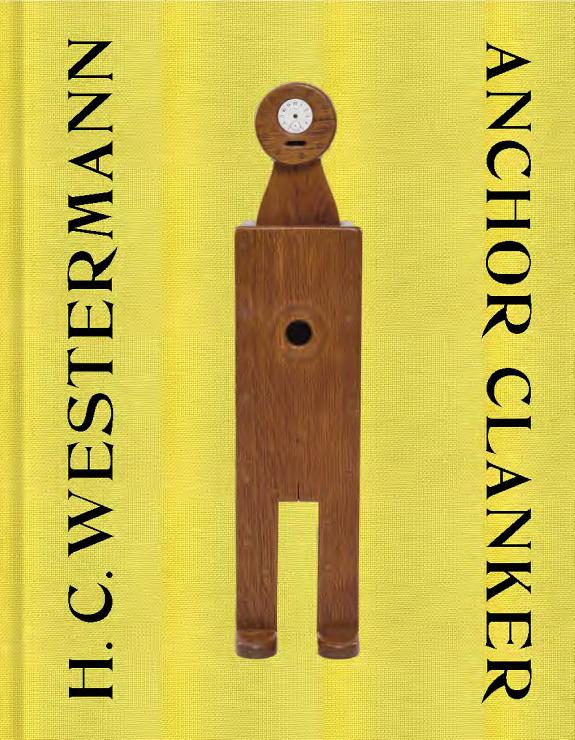
The Art of H.C. Westermann
Whitney Chadwick