Guy Yanai
Guy Yanai Paints the World Aglow
Artist Spotlight · The Collection Editorial
In recent seasons, Guy Yanai has emerged as one of the most quietly compelling voices in contemporary painting, earning sustained attention from collectors and institutions across Europe, the United States, and beyond. His canvases have appeared in gallery presentations from New York to Tel Aviv, from Paris to Berlin, drawing audiences who sense something rare in his work: a painter who has found a genuinely personal language and refuses to abandon it for trends. That steadiness, that commitment to a singular vision built from color, memory, and the textures of daily life, has made Yanai one of the most sought after painters of his generation. The momentum around his work feels earned rather than manufactured, the kind of recognition that arrives when an artist has spent years quietly perfecting something true.
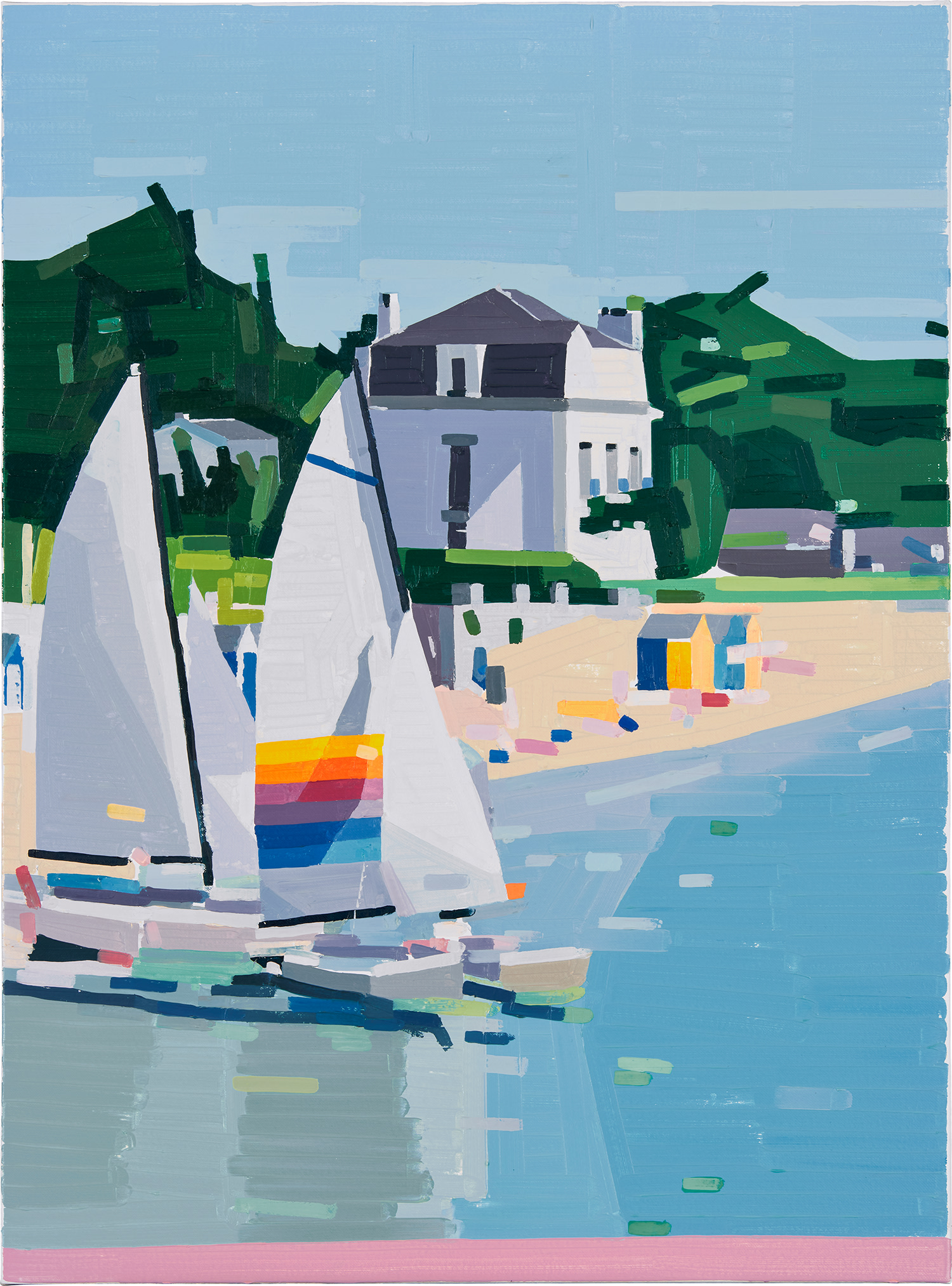
Guy Yanai
Normandy, 2020
Yanai was born in Israel in 1977, and his formation as an artist carries the particular texture of someone who grew up between cultures and landscapes, absorbing the intense Mediterranean light of the Middle East while remaining alert to the broader currents of Western art history. Israel in the late twentieth century offered a young artist an unusual vantage point, close enough to Europe to feel its artistic gravity but distant enough to develop a perspective that was never simply derivative. Yanai went on to pursue formal training that deepened his engagement with painting as a discipline, and by the time he began exhibiting seriously, it was clear that his relationship to the canvas was rooted in something more than technique. It was rooted in feeling, in the belief that a painting could hold the emotional residue of a place long after the painter had left it.
The development of Yanai's distinctive style involved a deliberate stripping away. Where many painters working in a figurative tradition accumulate detail, Yanai moved in the opposite direction, reducing scenes to their essential chromatic and compositional elements. The influence of Henri Matisse is unmistakable and openly acknowledged, and Yanai belongs to a lineage of painters who understood Matisse not as a decorator but as a radical simplifier, someone who discovered that emotion lives in flat fields of color and in the relationships between forms rather than in their elaboration. The Fauvist tradition, with its insistence on color as an expressive rather than descriptive tool, runs through Yanai's work like a warm current.
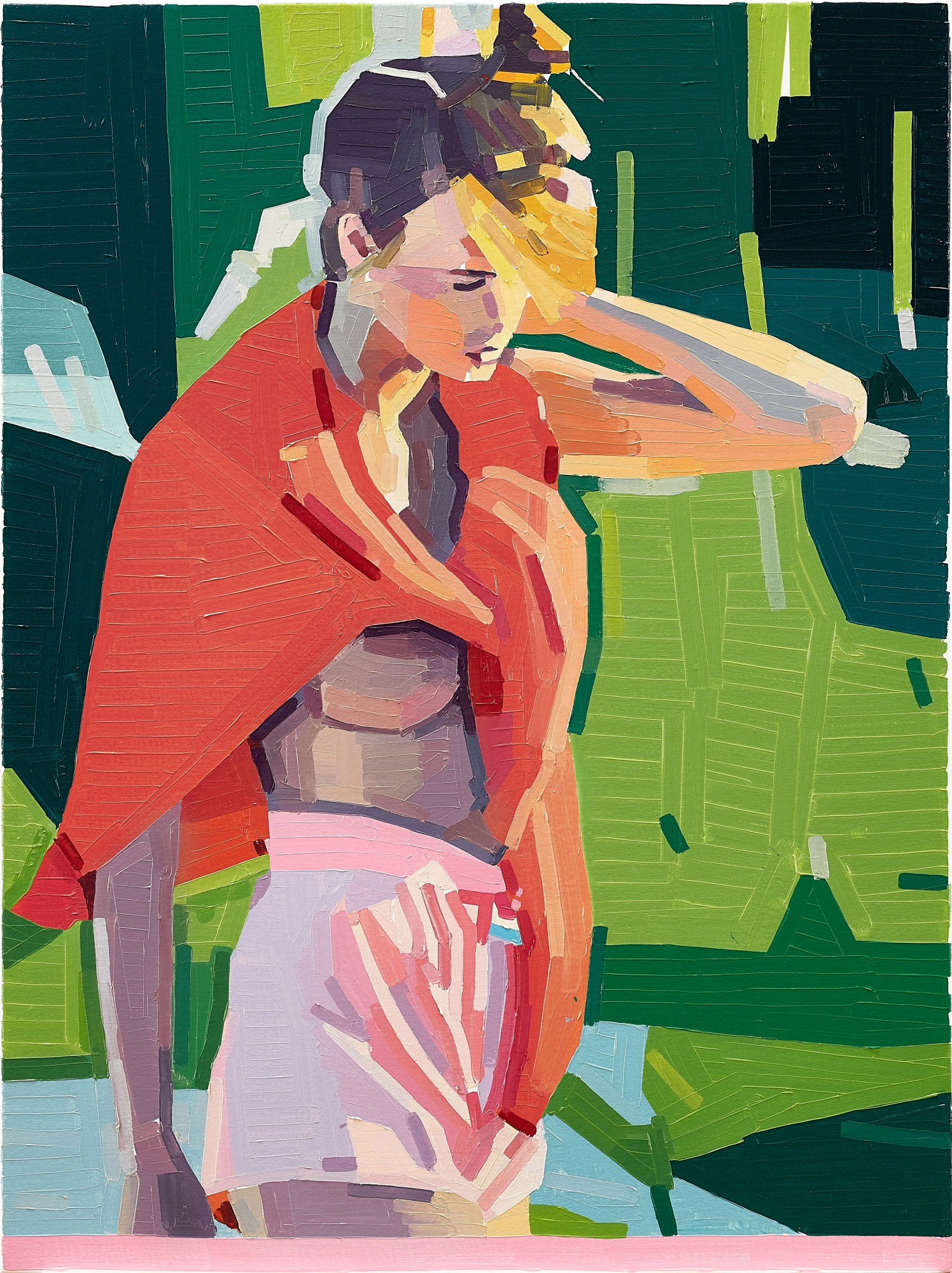
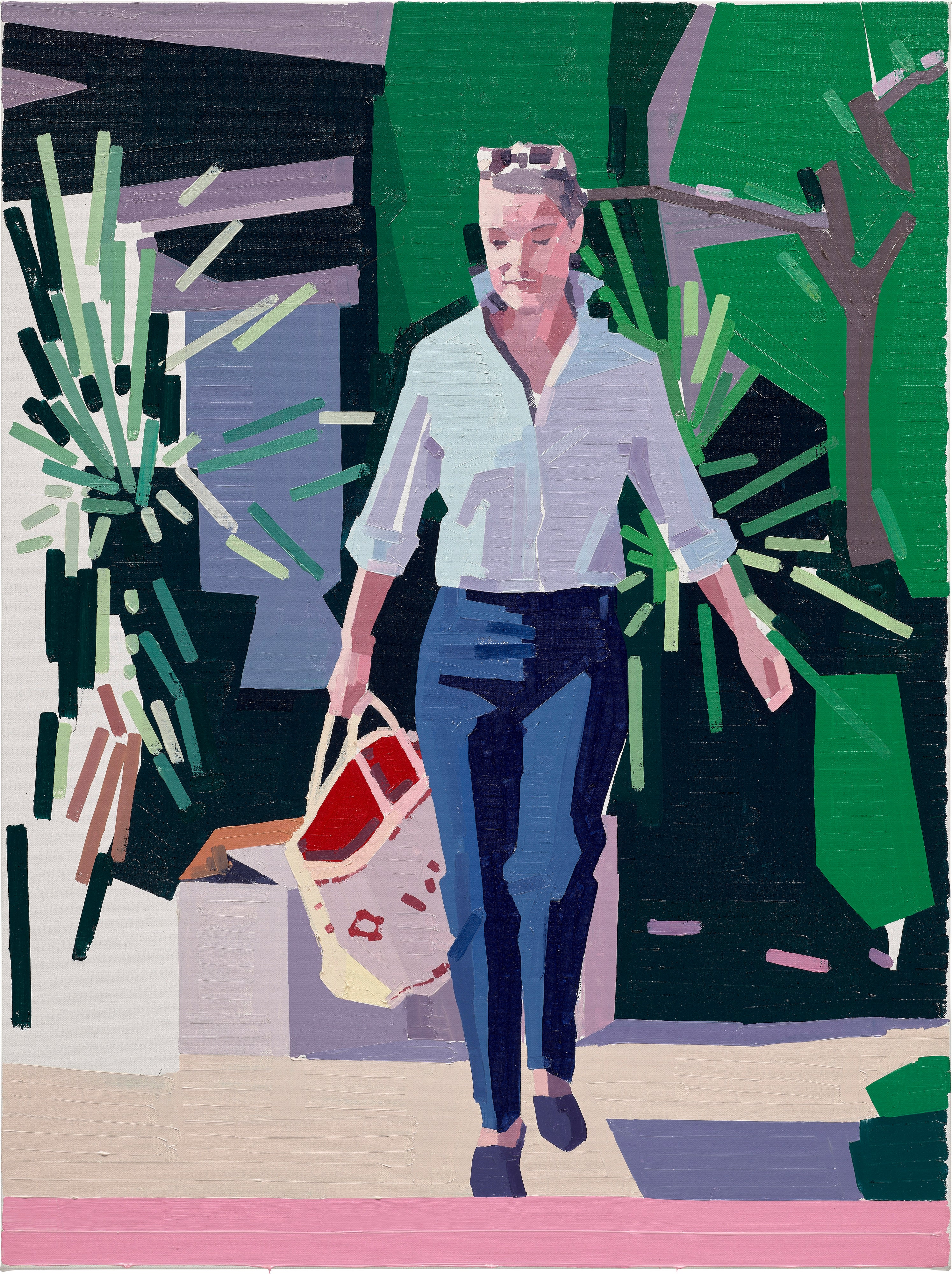
Guy Yanai
Woman with a Sweater Outside 外披毛衣的女人, 2021
Yet his paintings are never exercises in homage. They are translated into a sensibility that is specifically his own, shaped by the places he has traveled, the rooms he has inhabited, and the particular quality of light he has chased across multiple continents. Among the works that best illuminate his practice, "Rayol Without Me" from 2020 stands as a quietly devastating meditation on absence. The title announces what the image enacts: a beloved place rendered without the painter's presence, the garden at Rayol on the French Riviera depicted as a field of saturated greens and blues that seem to pulse with longing.
"Saint Martin and the Beggar (after Sassetta)" from 2019 demonstrates another dimension of Yanai's ambition, his willingness to enter into dialogue with art history directly and tenderly. Sassetta's fifteenth century altarpiece panel becomes, in Yanai's hands, a flat, luminous reckoning with charity and human connection across six centuries of painted distance. "House Without Room (Jerusalem)" from 2015, painted on linen, brings the artist's biography into direct contact with his formal concerns, the ancient city flattened and reimagined as pure color architecture. These are not postcard paintings.
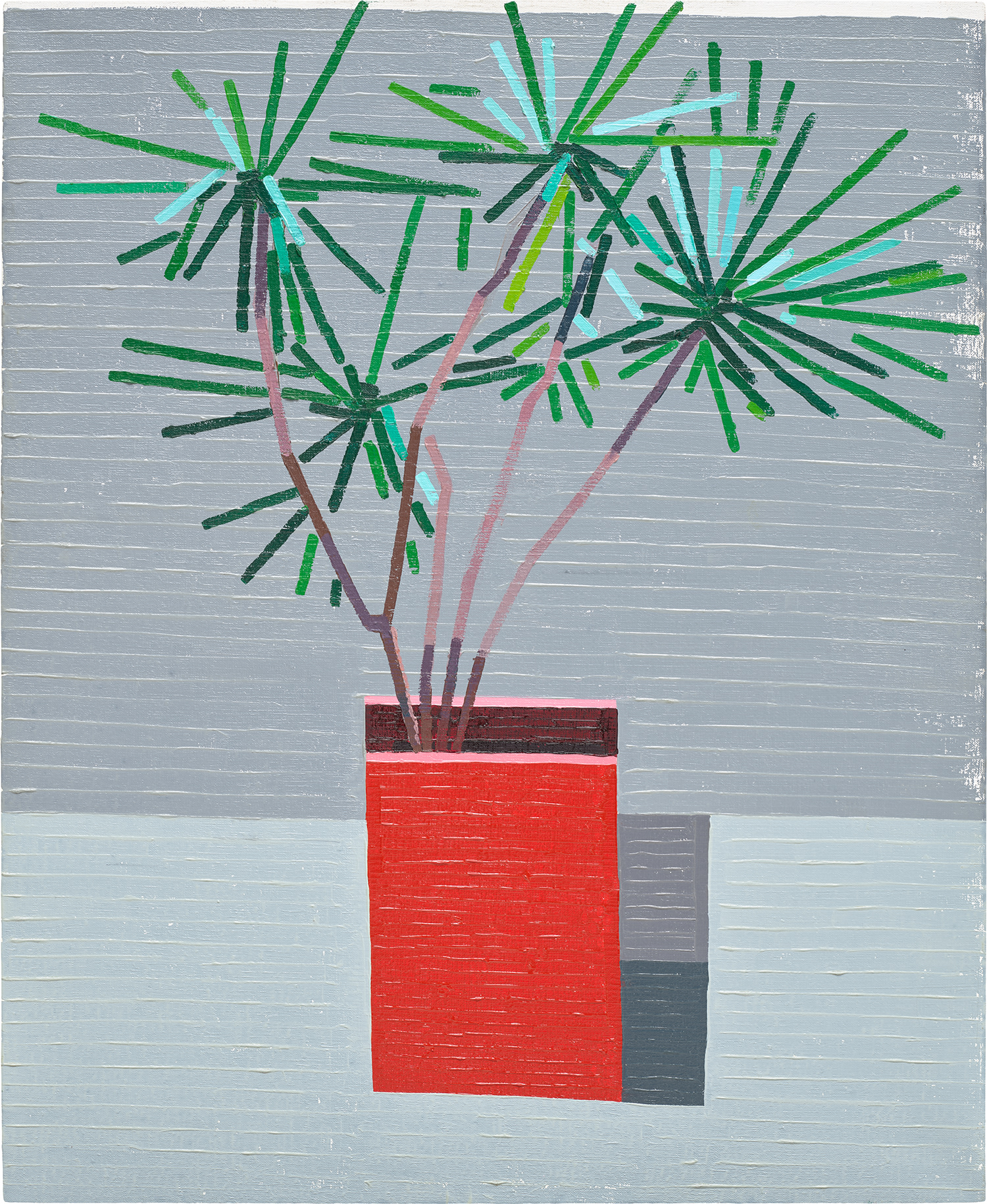
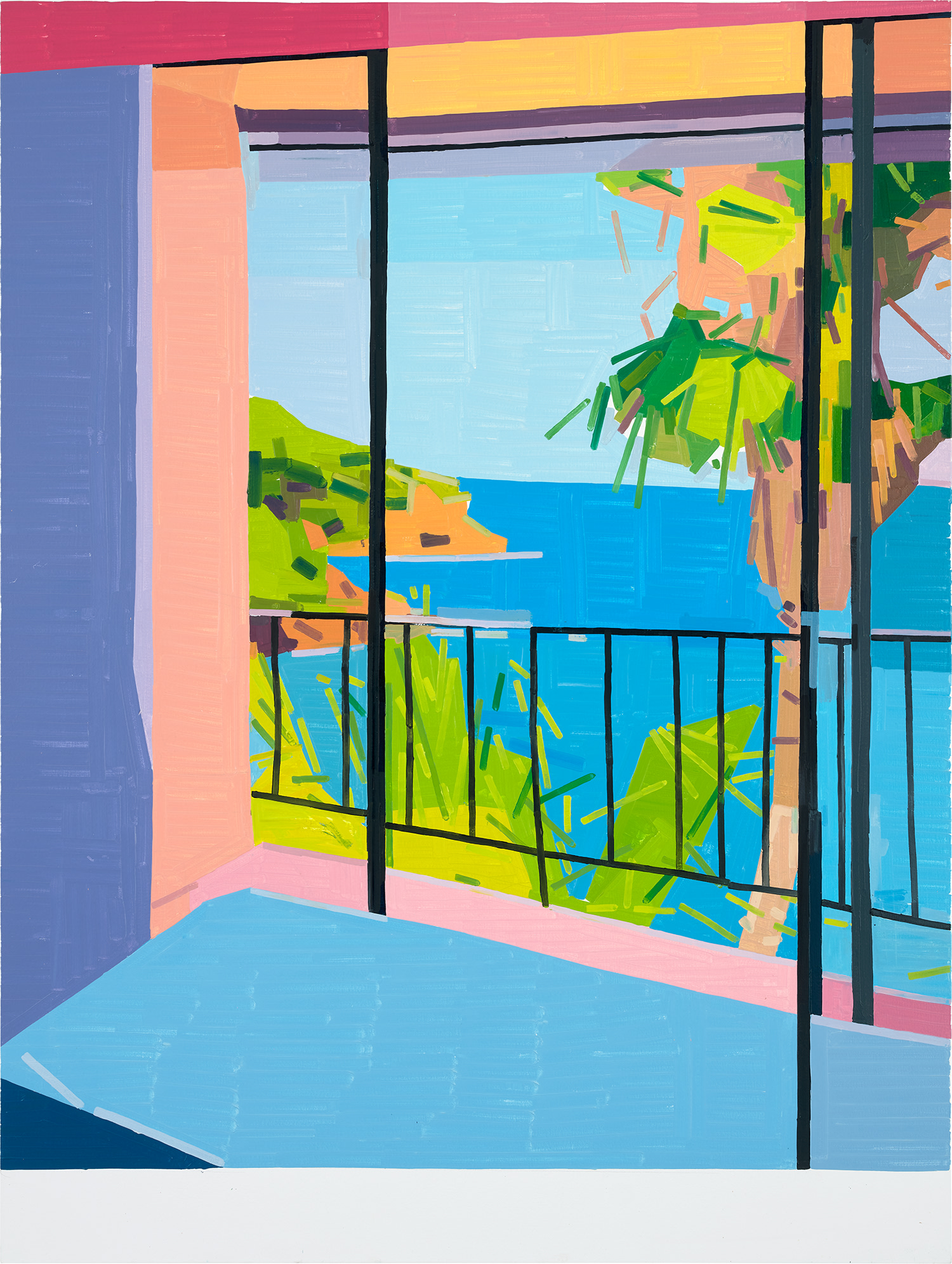
Guy Yanai
Home, 2014
They are acts of remembering. For collectors, Yanai's work offers something increasingly rare in a market saturated with irony and spectacle: sincerity executed with formal intelligence. His paintings are small to medium in scale, intimate in address, and yet they hold their own in any room. The oil on linen works in particular carry a material warmth that rewards close looking, the slightly absorbent surface giving his color fields a particular matte luminosity that reproduces poorly and therefore surprises every viewer who encounters the originals.
Works such as "Naples II" from 2016 and "Riding East" from 2014 demonstrate the range of his geographic imagination, the way he moves between the specific and the universal with an ease that takes years to develop. Collectors who came to Yanai early, drawn by works like "Plant on Toast" from 2010 with its almost comic simplicity and its genuine lightness of spirit, have watched his reputation grow steadily without the volatility that can destabilize younger markets. That steadiness reflects the depth of the work itself. Within the broader landscape of contemporary painting, Yanai occupies a position that connects several generations and traditions.
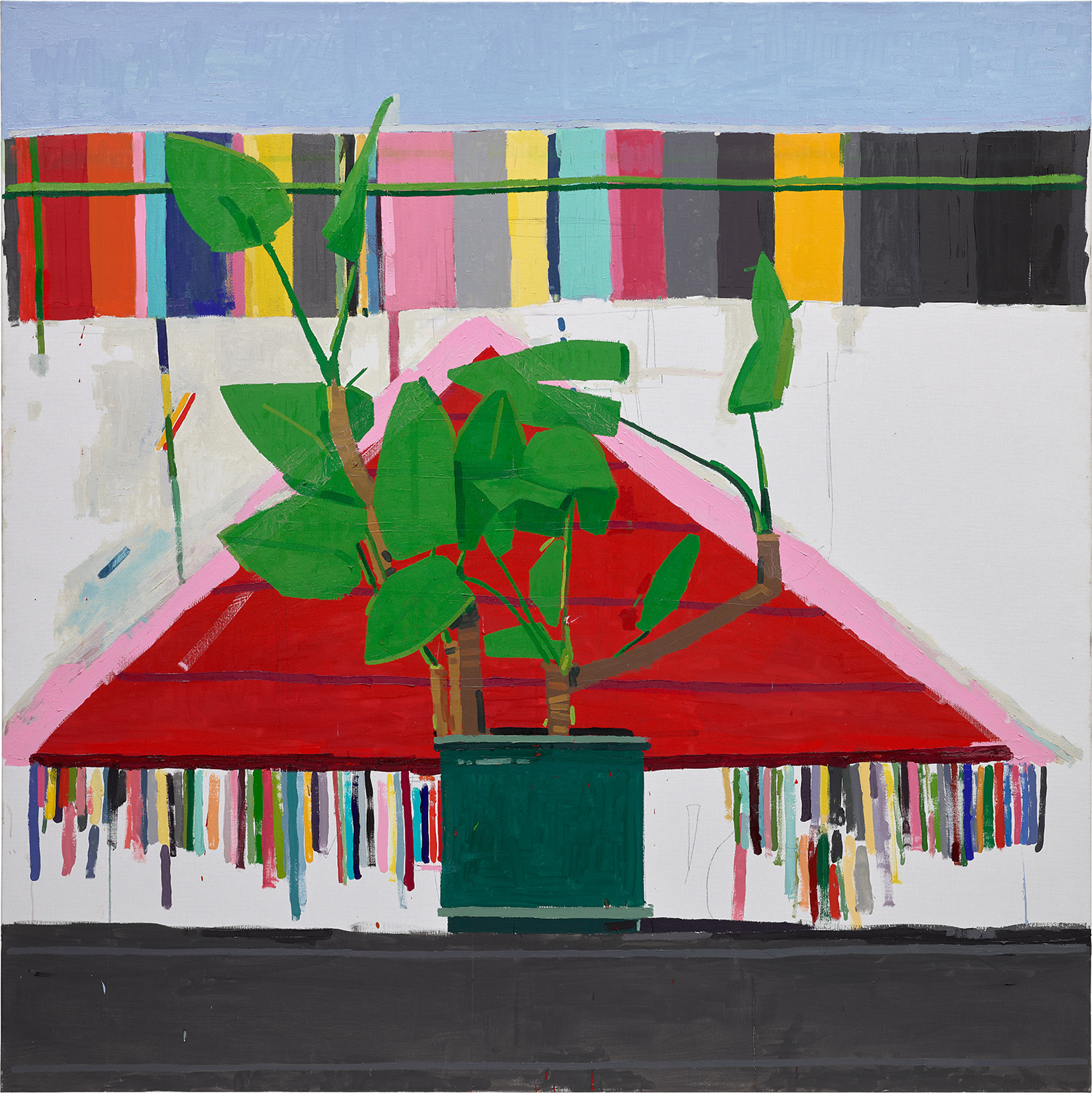
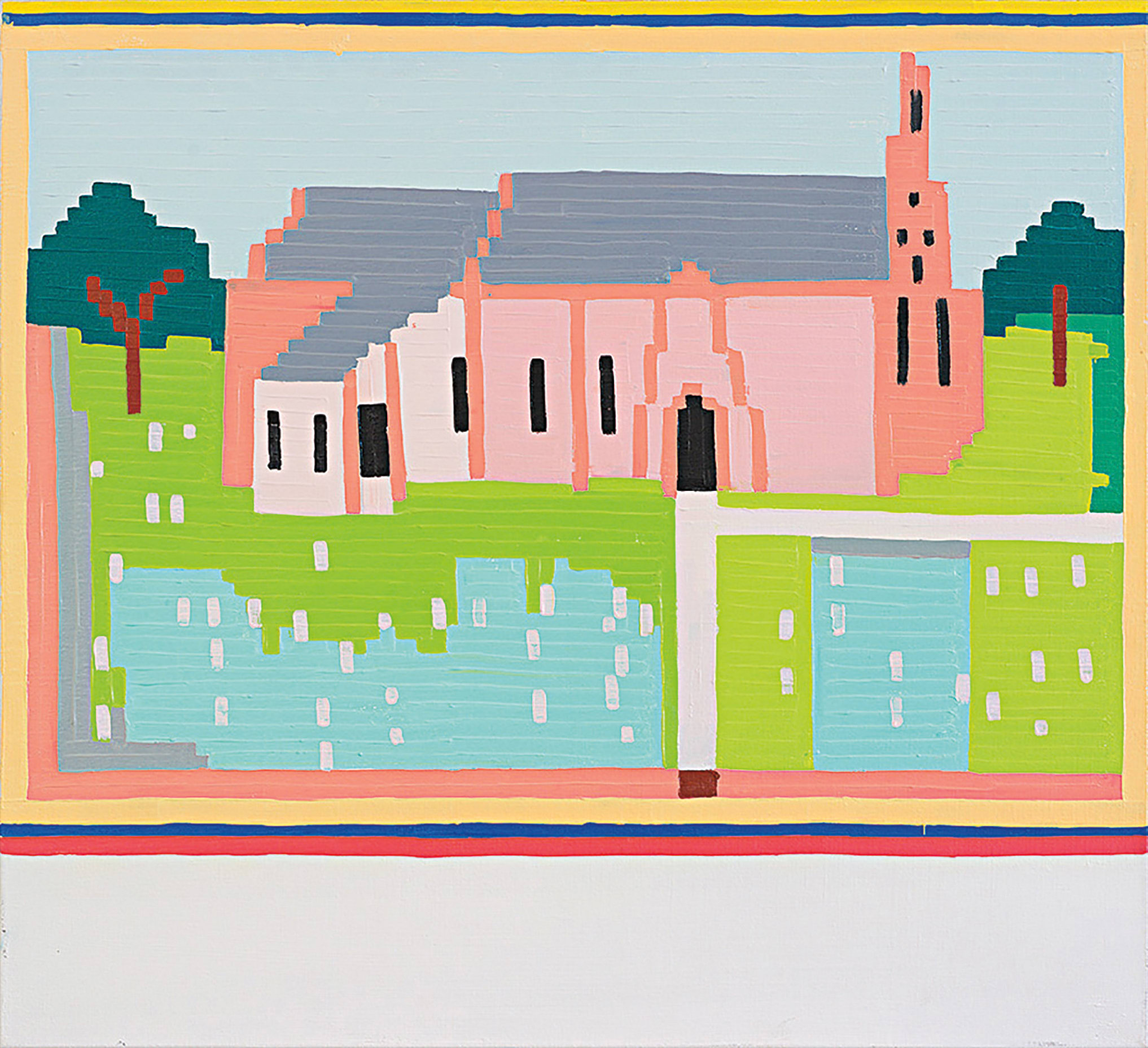
Guy Yanai
Plant on Toast, 2010
He shares with painters like Etel Adnan a Mediterranean sensibility rooted in color and place, and his formal reductions invite comparison with the work of Nicolas de Staël, whose own passages between abstraction and figuration feel like a distant relative of what Yanai achieves. The legacy of David Hockney's celebratory domesticity is visible in Yanai's interiors and landscapes, though Yanai's emotional register tends toward the wistful and the tender rather than the declarative. He is a painter interested in what remains after experience has been distilled: the color of an afternoon, the shape of a window, the feeling of a city seen for the last time. In this sense he belongs to a tradition of lyric painters who understand that restraint is not absence but concentration.
What makes Yanai matter today, at a moment when painting as a medium is experiencing a renewed seriousness of attention, is precisely his refusal to perform. His recent works, including "Woman Walking (Romy Schneider)" from 2022 and "Looking West" from the same year, show an artist continuing to develop within a consistent vision rather than chasing novelty. The choice of Romy Schneider as a subject is characteristic of his sensibility, a figure associated with grace, melancholy, and a particular European light, rendered in Yanai's flattened palette as something between portrait and memory. "Bye Torino," painted on linen, gives a farewell to a city all the formal weight of a genuine leave taking.
These are paintings that understand that the most ambitious thing a painter can do is make something that feels inevitable, as though it could not have been made any other way. Yanai has been making such things for decades now, and the world is still catching up.
Featured Works