Guy Bourdin
Guy Bourdin: Fashion Photography's Greatest Surrealist Visionary
Artist Spotlight · The Collection Editorial
“If I have one quality, it is that I am patient. I can wait forever for the right moment.”
Guy Bourdin
There is a photograph from January 1978, created for a Charles Jourdan campaign, that stops you cold. A pair of legs, impeccably shod, emerges from beneath a car door in a parking lot flooded with cinematic shadow. No face. No story, except the story you cannot stop inventing.
Guy Bourdin
'Charles Jourdan', January 1978
It is at once a fashion image, a crime scene, a dream sequence, and a provocation. It is, in short, a Guy Bourdin. Decades after it first appeared, the image retains every volt of its original charge, which is why collectors, curators, and fashion historians continue to return to his work with the urgency of people who feel they have not yet fully understood what they are looking at. Guy Bourdin was born in Paris in 1928 and endured a childhood marked by abandonment, raised largely without his parents in circumstances that left him with a deep interior solitude.
That solitude would become, over the course of his career, one of the most generative forces in twentieth century visual culture. He served in the French Air Force in Dakar, Senegal, where he began drawing and making photographs, and it was there that the seeds of his visual sensibility first took root: a feeling for saturated color, for heat and stillness, for the body rendered strange by light and landscape. When he returned to Paris in the early 1950s he sought out Man Ray, the great Dada and Surrealist artist whose influence would become foundational. Man Ray recognised something remarkable in the young Bourdin and offered encouragement at a critical moment, and that lineage, from Dada through Surrealism and into the commercial image, defines the architecture of everything Bourdin would go on to create.
Guy Bourdin
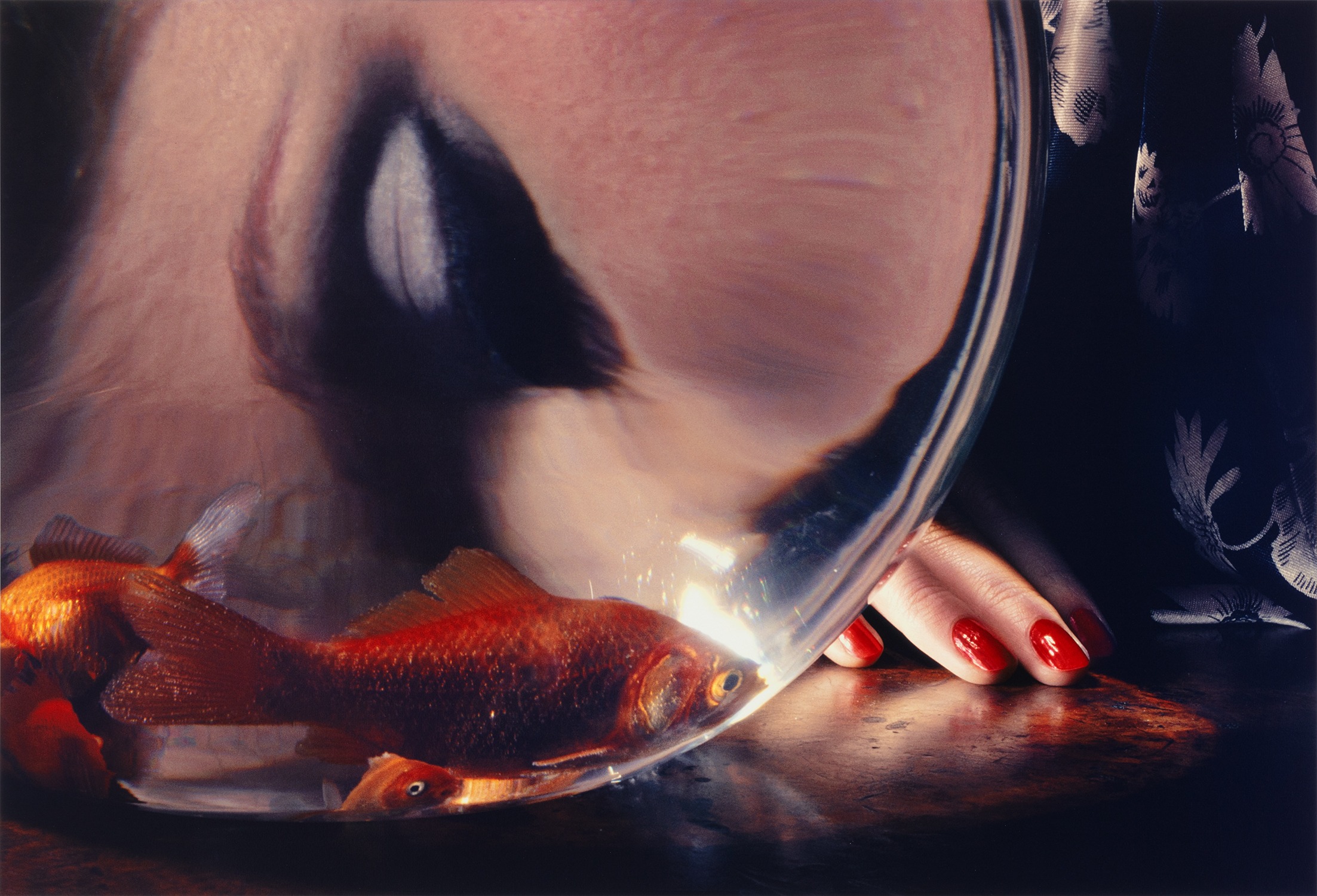
circa 1970
Bourdin's entry into fashion photography came through Vogue Paris, where he began contributing work in the early 1950s and where he would spend the better part of four decades producing some of the most challenging and visually sophisticated imagery the magazine ever published. His ascent was not a matter of smooth institutional favour. Bourdin was famously controlling and relentlessly perfectionist, a collaborator who was also an absolute authority on set. He built images with the precision of a filmmaker, directing light, color, and the bodies of his subjects with an exactness that had no precedent in fashion photography.
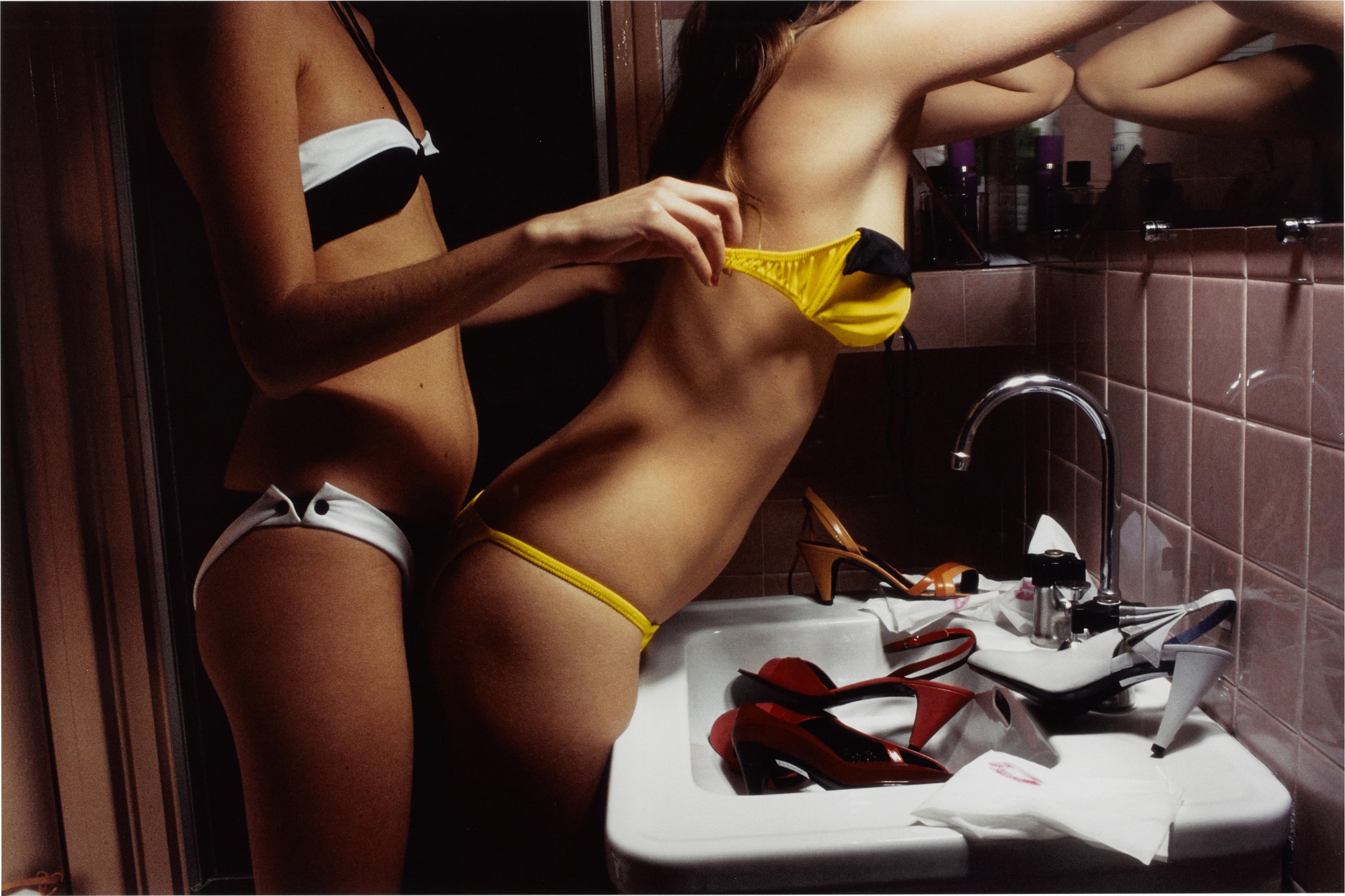
The spreads he produced for Vogue Paris through the 1970s and into the 1980s were unlike anything appearing elsewhere: tableaux of surreal domesticity, of glamour edged with dread, of women who were at once objects of desire and subjects of a deeply ambiguous gaze. They read like stills from films that do not exist, and they made viewers deeply uncomfortable in ways they could not always articulate. It is the Charles Jourdan campaigns, produced across the late 1970s and into the 1980s, for which Bourdin remains perhaps most celebrated among collectors today. These images, created to sell shoes, functioned simultaneously as autonomous artworks.
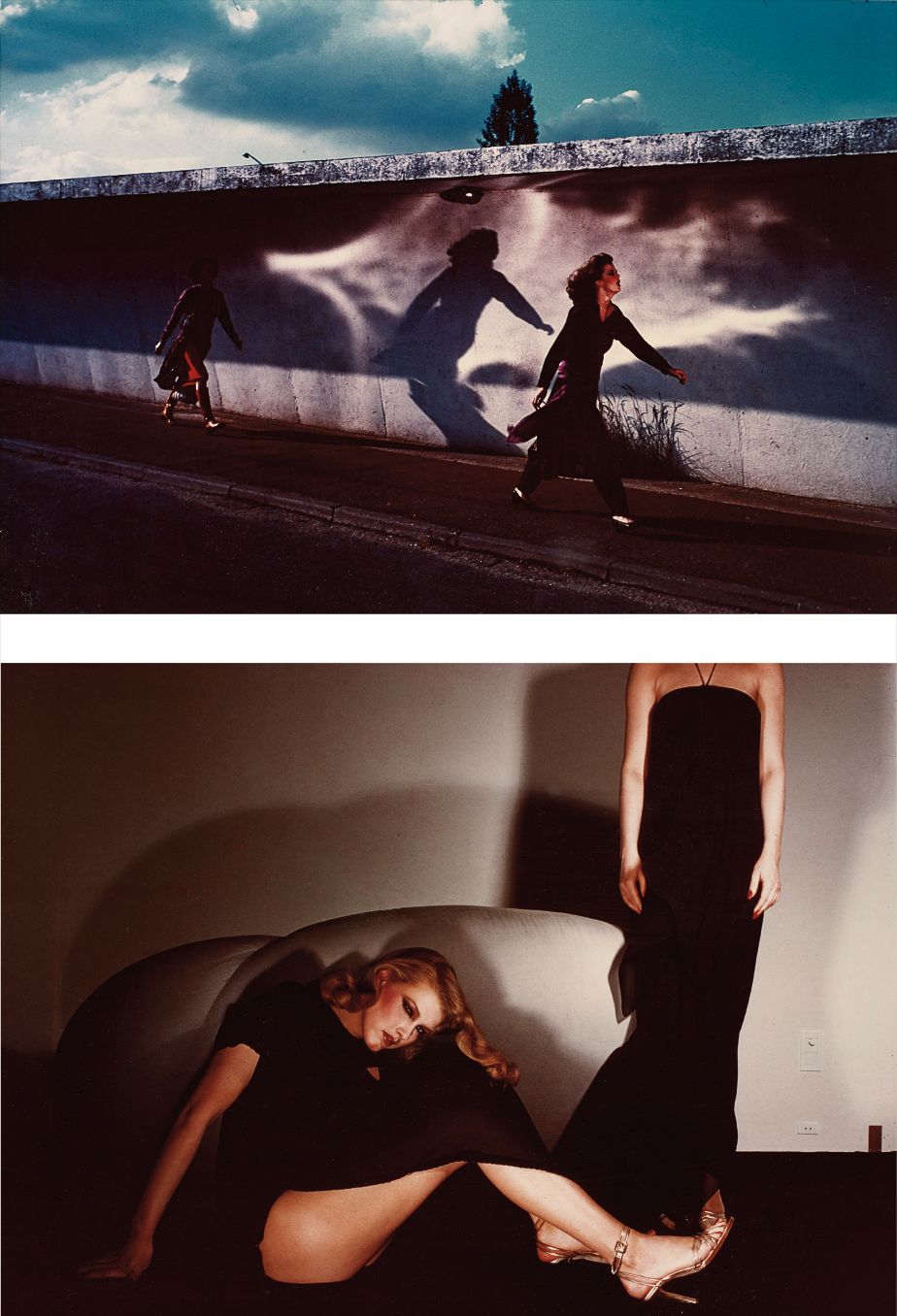
Guy Bourdin
Fashion Study, French Vogue, August, 1975; Fashion Study, French Vogue, March
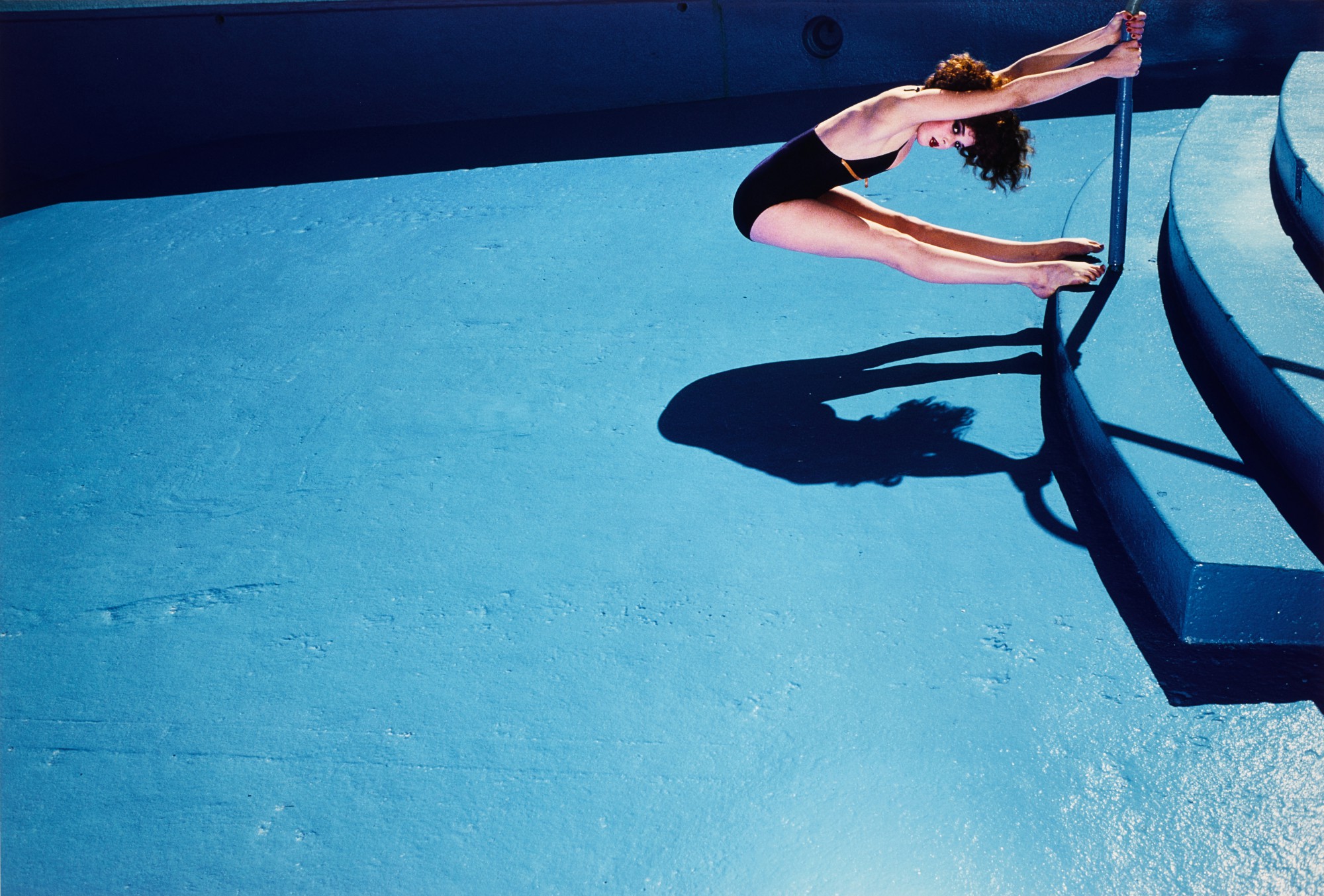
The shoe was often peripheral, a pretext. What dominated was narrative: a beach at dusk, a woman's body arranged with terrifying elegance, an atmosphere of aftermath and implication. The Autumn 1977 campaign images and the January 1978 works that appear among his most sought after pieces demonstrate his genius for the cropped frame, the withheld detail, the suggestion of violence or eroticism or both simultaneously. He worked in bold, almost hallucinatory color at a time when much serious photography still operated in black and white, and his chromogenic prints glow with a quality that feels less like documentation than like fever.
His Pentax Calendar work, including the July 1980 images printed in dye transfer, show the same mastery applied to a different register, the color science meticulous, the compositions equally loaded with psychological weight. On the collecting market, Bourdin occupies a position that is both singular and, in recent years, increasingly recognised at the highest levels. His prints have appeared at Christie's, Phillips, and Sotheby's with growing frequency and price, reflecting a broader reappraisal of fashion photography as a serious collecting category. Works from the Vogue Paris years, particularly the French Vogue spreads from the mid 1970s through the early 1980s, are among the most coveted.
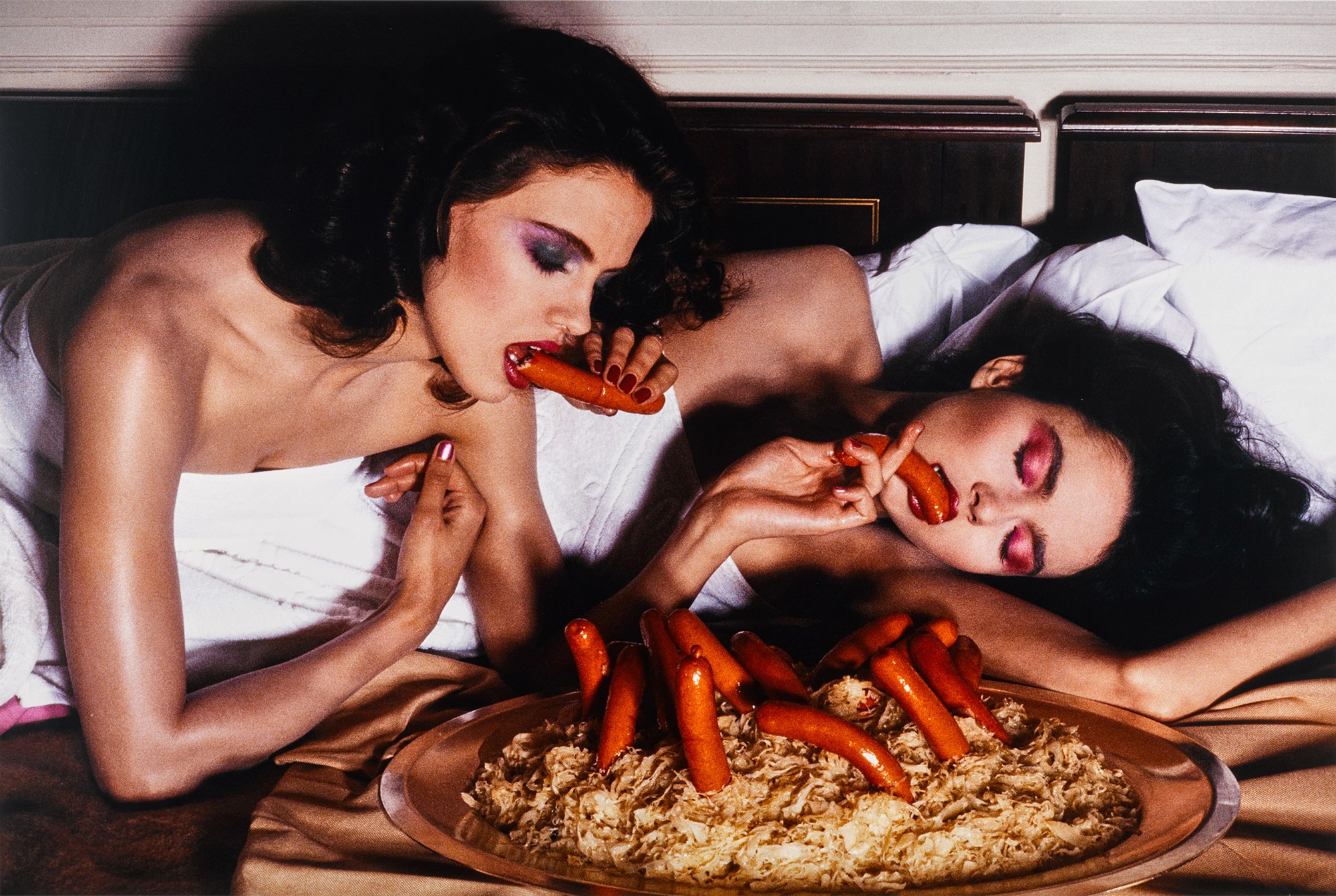
Guy Bourdin
'French Vogue', September 1981
The August 1975 and March issues, represented by chromogenic prints, as well as the December 1980 and September 1981 French Vogue images, command serious attention from collectors who understand that these are not ephemera but documents of a singular artistic vision. Condition and provenance matter enormously, as do print type and date: dye transfer prints and early chromogenic prints made close to the date of original publication carry a premium, while pigment prints made later offer an accessible entry point for collectors building toward a more comprehensive holding. In the broader sweep of art history, Bourdin belongs to a conversation that includes Helmut Newton, whose work for the same French Vogue pages explored adjacent territory of eroticism and power though with a different aesthetic and ethical temperature. He also sits in productive tension with the legacy of Man Ray and Hans Bellmer, whose Surrealist explorations of the female body as uncanny object clearly echo through Bourdin's work.
Irving Penn and Richard Avedon were his contemporaries in fashion, but the comparison illuminates difference more than similarity: where Penn and Avedon worked largely within a humanist tradition of portraiture and elegance, Bourdin dismantled that tradition from within, using the conventions of commercial imagery to introduce a genuinely unsettling visual philosophy. He is perhaps best understood as a bridge between the Surrealist avant garde of the mid twentieth century and the conceptual fashion photography of the 1990s and beyond, a line that runs forward through Nick Knight, David LaChapelle, and the more provocative work of Steven Meisel. Guy Bourdin died in Paris in 1991, having spent the final years of his life in increasing withdrawal from the industry that had made him famous. He left behind a body of work that he was famously reluctant to exhibit or commodify during his lifetime, which gives every print that has entered the market a particular weight of rarity and intentionality.
The posthumous retrospective exhibition at the Victoria and Albert Museum in London in 2003 introduced his work to a new generation and confirmed his place in the canon of twentieth century visual art. Today, with fashion photography receiving sustained institutional and scholarly attention, Bourdin's reputation is only deepening. To collect his work is to acquire a piece of visual thinking that has not yet been fully decoded, an image practice that continues to ask more of its viewers than they expect, and to give more in return than almost anything else made under the name of commercial art.
Explore books about Guy Bourdin