Gustave Doré
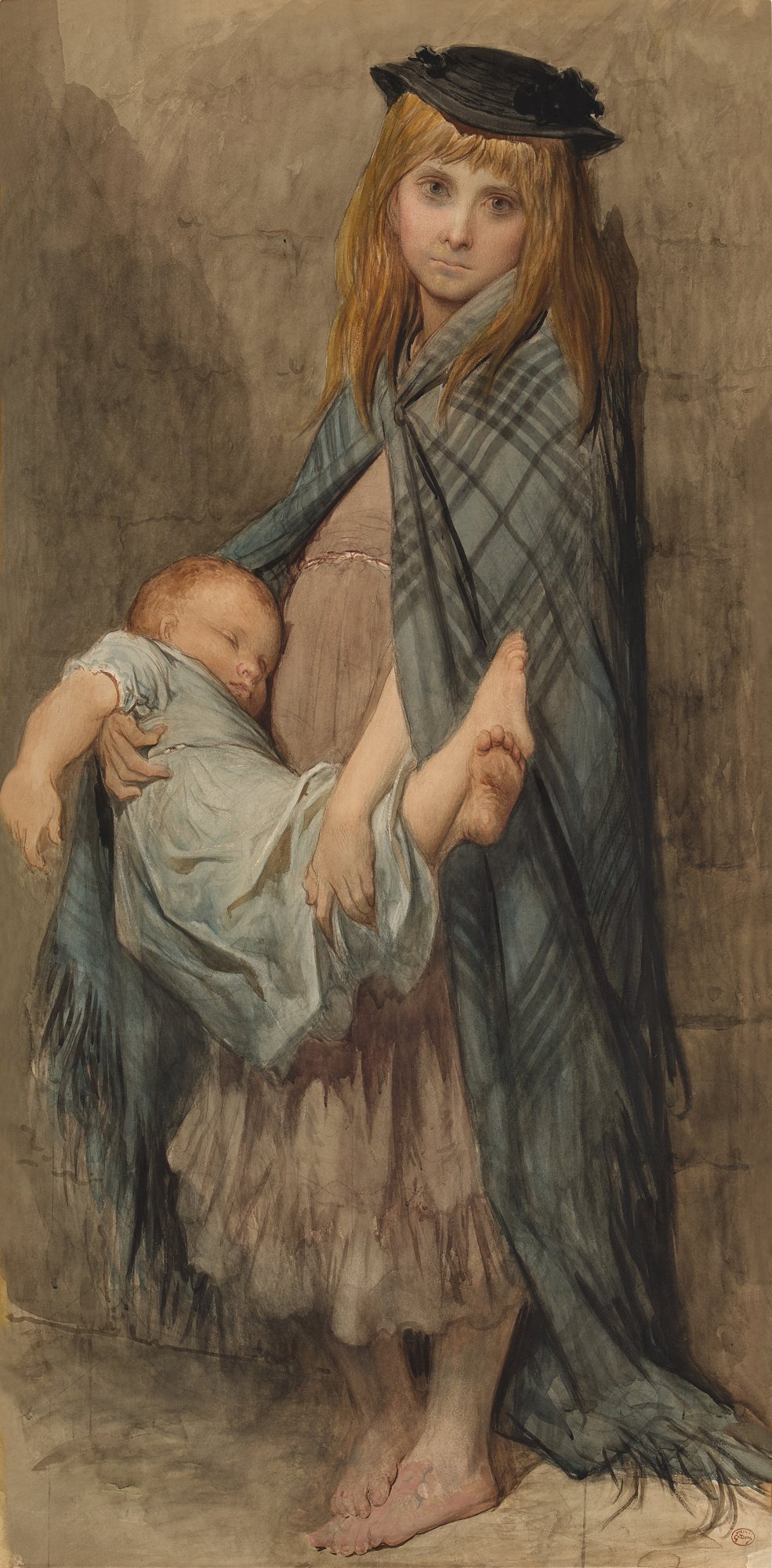
Gustave Doré, Master of the Magnificent Vision
Artist Spotlight · The Collection Editorial
There is a moment, standing before a large Gustave Doré illustration, when the scale of the man's imagination becomes almost overwhelming. It happened again recently at the Musée d'Orsay, where a survey of nineteenth century French draughtsmanship brought several of Doré's works into conversation with his contemporaries, and the room around his pieces seemed to quiet itself, as though visitors instinctively understood they were in the presence of something extraordinary. That effect, the hushed recognition of a singular talent, has never faded in the century and a half since Doré was alive and working at a pace that left the entire art world breathless. Gustave Doré was born in Strasbourg in January 1832, the son of a civil engineer, and from childhood he demonstrated a visual fluency that seemed less learned than simply native to him.
Gustave Doré
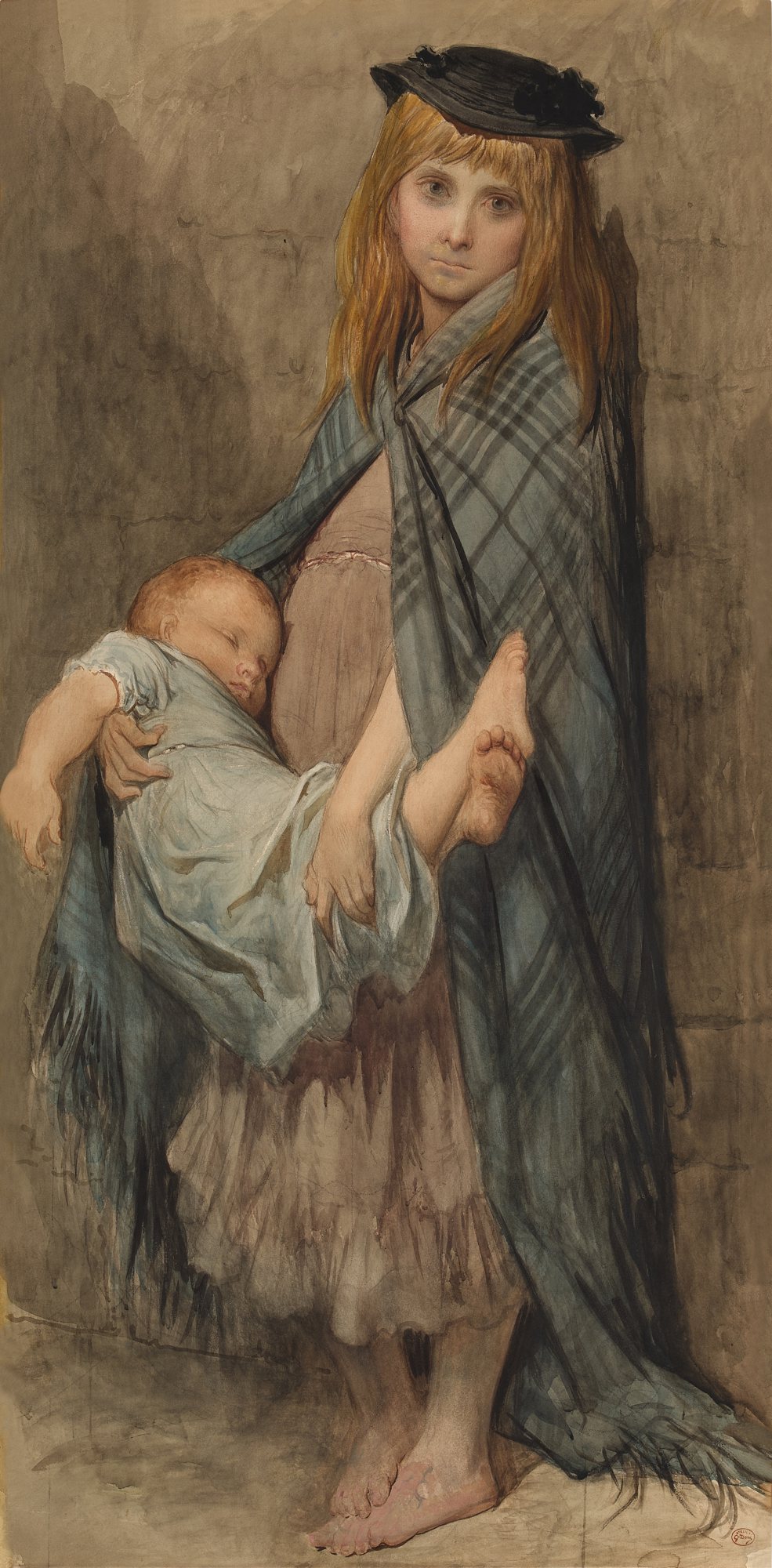
Poor Children of London
His family relocated to Paris when he was young, and the city became the furnace in which his talent was refined. By the age of fifteen he had secured a contract with the publisher Charles Philipon to produce lithographs for the Journal pour Rire, a satirical weekly that gave the teenage artist his first sustained public platform. The arrangement was remarkable for its time and speaks to how obvious his gifts were to anyone who encountered him. Doré's artistic development unfolded across an almost impossible range of subjects and techniques.
Through the 1850s he established himself as the preeminent illustrator of his era, producing monumental series of engravings for works including Dante's Inferno, Cervantes's Don Quixote, and the complete works of Rabelais. His 1857 illustrated edition of Don Quixote in particular announced a new standard for what book illustration could be, treating the page not as a container for text but as a theatrical stage where light, atmosphere, and psychological tension could be orchestrated with the full ambition of a painter. His 1866 illustrated Bible, produced with the engraver Héliodore Pisan, reached a global audience and cemented his reputation across Europe and North America. What made Doré's hand so distinctive was his command of tonal range and his instinct for the dramatic moment within a narrative.
Gustave Doré
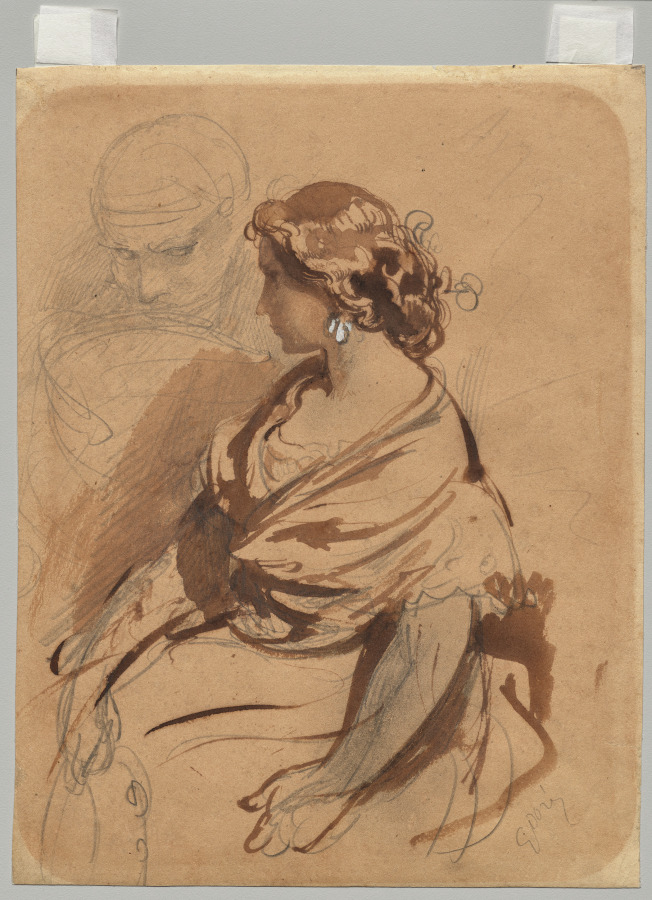
Young Woman from Valence, 1857
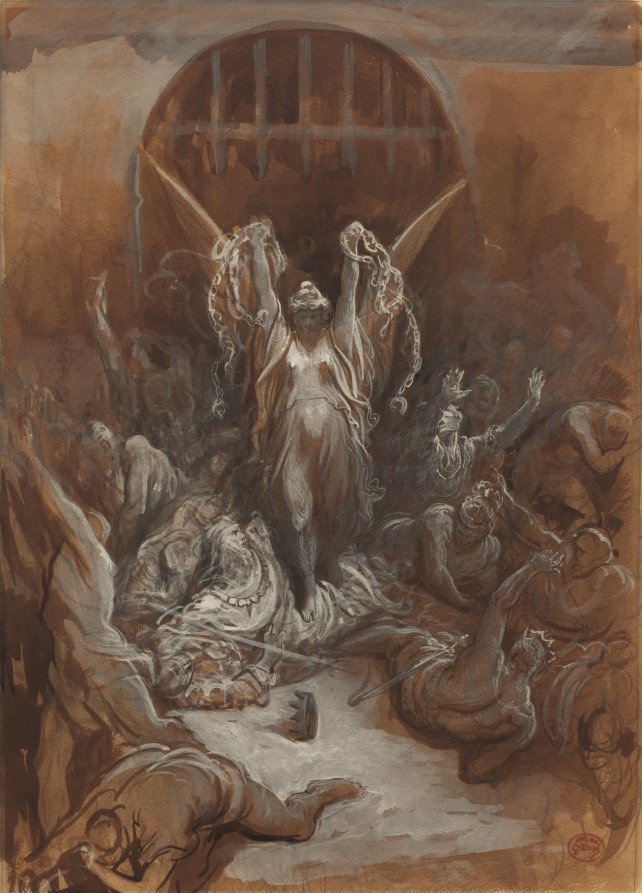
His drawings and watercolors demonstrate a sensitivity to light that feels almost photographic in its precision, yet the emotional temperature of his compositions is something no camera could replicate. The works now held on The Collection offer an intimate view of this sensibility across different stages of his practice. The study known as Young Woman from Valence, dating to 1857, reveals Doré working with brush and brown ink and graphite, the stumping technique softening edges to create a warmth that is almost breath. Liberty, from 1860, uses brush and brown wash alongside gray and white gouache to achieve a monumental quality within a modest format.
In Poor Children of London, executed in black chalk and watercolor, one encounters perhaps his most socially engaged register, a document of urban suffering rendered with the full weight of his technical mastery. The Don Quixote sketches in The Collection, including the Sketch for The Wolf Turned Shepherd from 1863 in graphite, and the companion Sketch of Hunting Scene on the verso, offer something particularly valuable to the serious collector: a view into Doré's working process, the rapid and confident mark making that preceded his finished compositions. These are not hesitant preparatory drawings. They are fully realized thoughts in graphite, evidence of a mind that saw the completed image before the pencil touched the page.
Gustave Doré
Liberty, 1860
The Sancho Panza drawing of 1858, in pen and brown and black ink on laid paper, captures the rotund squire with a warmth and humor that shows how deeply Doré had absorbed the spirit of Cervantes rather than merely illustrating its surface. For collectors, Doré represents one of the more compelling opportunities within nineteenth century European draftsmanship. His works on paper appear with some regularity at major auction houses including Christie's, Sotheby's, and Drouot in Paris, and prices across categories have shown sustained interest from both institutional and private buyers. The paintings are rarer and command significant attention when they surface.
La Promenade, an oil on canvas, points toward an aspect of his practice that is often overshadowed by the illustration work but which reveals an artist fully capable of competing with the leading salon painters of his generation. Collectors drawn to the Romantic and Symbolist currents of French art, as well as those who approach from a love of literary illustration, find common ground in Doré's practice. His works occupy a position adjacent to artists like Honoré Daumier, whose social observation and tonal daring share something with Doré's urban subjects, and to the English Pre Raphaelites, who admired his ability to create mythic weight from narrative subjects. Doré was also unusual among illustrators of his period in his ambition to be taken seriously as a fine artist.
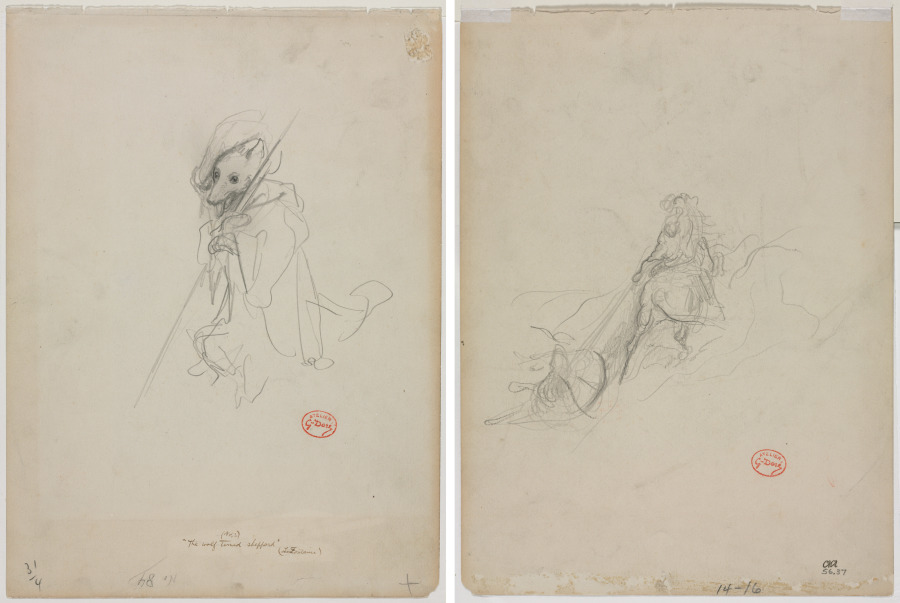
Gustave Doré
Sketch for "The Wolf Turned Shepherd" (recto) Sketch of Hunting Scene (verso), 1863
He exhibited large scale paintings at the Paris Salon throughout the 1860s and 1870s and even opened the Doré Gallery in London's New Bond Street in 1869, specifically to exhibit his paintings to a British audience hungry for his work. The gallery operated for years and drew enormous crowds, testimony to how beloved he was beyond the pages of the books that had made him famous. London clearly moved him: his observations of the city's social conditions, which fed into the Poor Children of London and related works, show an artist using his craft as a form of conscience as well as expression. Gustave Doré died in Paris in January 1883 at the age of fifty one, leaving behind a body of work whose scope remains staggering.
He illustrated more than ninety books, produced thousands of drawings and engravings, and painted with a seriousness that deserved more institutional recognition than it received in his lifetime. Today, as interest in the full breadth of nineteenth century visual culture continues to grow, collectors and curators are returning to Doré not simply as a historical curiosity but as an artist of genuine power whose technical achievement still commands respect. His drawings remind us that illustration and fine art have never been as separate as the academy once insisted, and that imagination operating at full capacity is its own category, one that Doré occupied alone.
Explore books about Gustave Doré
Gustave Doré: A Biography
Blanchard Jerrold
Gustave Doré
Régis Michaud
The Doré Illustrations for Dante's Divine Comedy
Gustave Doré
Gustave Doré 1832-1883
Corinne Bouchoux
Doré: Illustrator, Painter and Sculptor
Douglas Percy Bliss
The World of Gustave Doré
Jean Adhémar
Gustave Doré: His Life and Work
Millicent Rose