Guillermo Kuitca
Guillermo Kuitca Maps the Interior World
Artist Spotlight · The Collection Editorial
“I think of my paintings as stages without actors, or maps of places no one has ever been.”
Guillermo Kuitca
In 2007, the Argentine painter Guillermo Kuitca stood at the center of one of contemporary art's most celebrated spaces: the Argentine Pavilion at the Venice Biennale. His presentation that year confirmed what a generation of curators, collectors, and fellow artists already understood intuitively. Here was a painter working at the precise intersection of architecture and emotion, who had transformed the modest vocabulary of floor plans and cartography into a profound meditation on how we inhabit space, memory, and longing. Kuitca was born in Buenos Aires in 1961, and the city's particular atmosphere, its layered European immigrant culture, its grand theatres and broad boulevards, its historical turbulence, shaped him in ways that would only become fully legible in his mature work.
Guillermo Kuitca
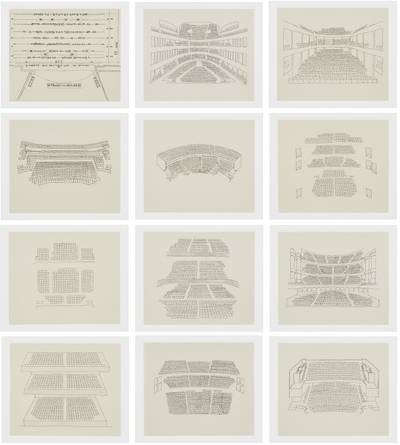
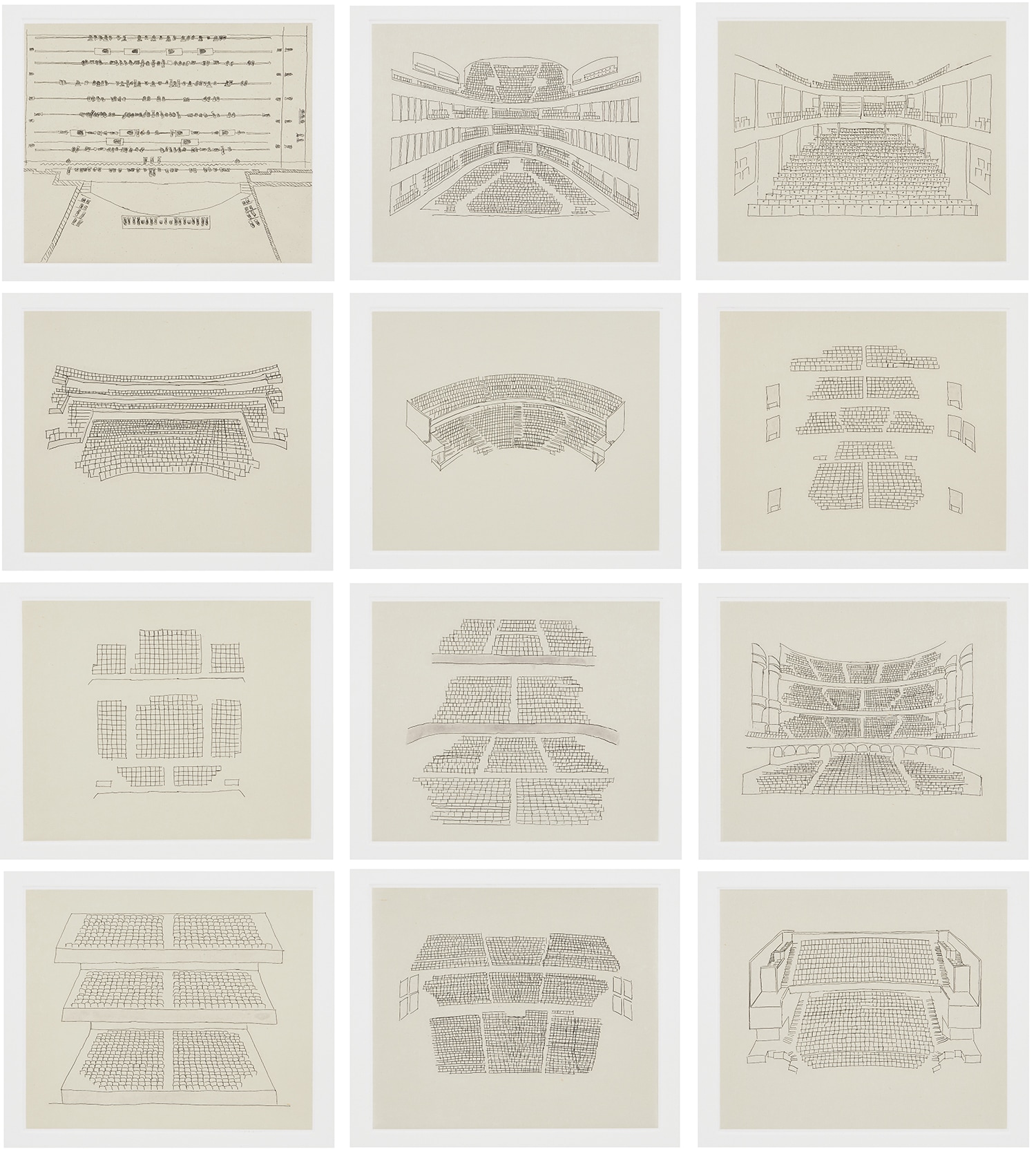
Puro Teatro (Pure Theatre)
He studied under the Argentine painter Aída Carballo and mounted his first solo exhibition at the age of thirteen, an astonishing early debut that signaled both his precocity and his seriousness of purpose. Buenos Aires in the 1970s and 1980s was a city living under immense political pressure, and the themes of displacement, disappearance, and the unreliability of home that would come to define Kuitca's painting were not abstract philosophical positions. They were lived realities absorbed from the world around him. His international breakthrough came in 1989, when he was invited to participate in the XVIII São Paulo Biennial, an invitation that introduced his work to a global audience and positioned him within the broader conversation of Latin American contemporary art.
Around this period, Kuitca was developing his signature approach: taking the schematic language of architectural floor plans and rendering them in oil and acrylic with a painter's sensibility rather than an engineer's precision. These were not blueprints. They were psychological documents. The rooms they described were simultaneously intimate and unknowable, suggesting habitation without ever quite delivering it.
Guillermo Kuitca
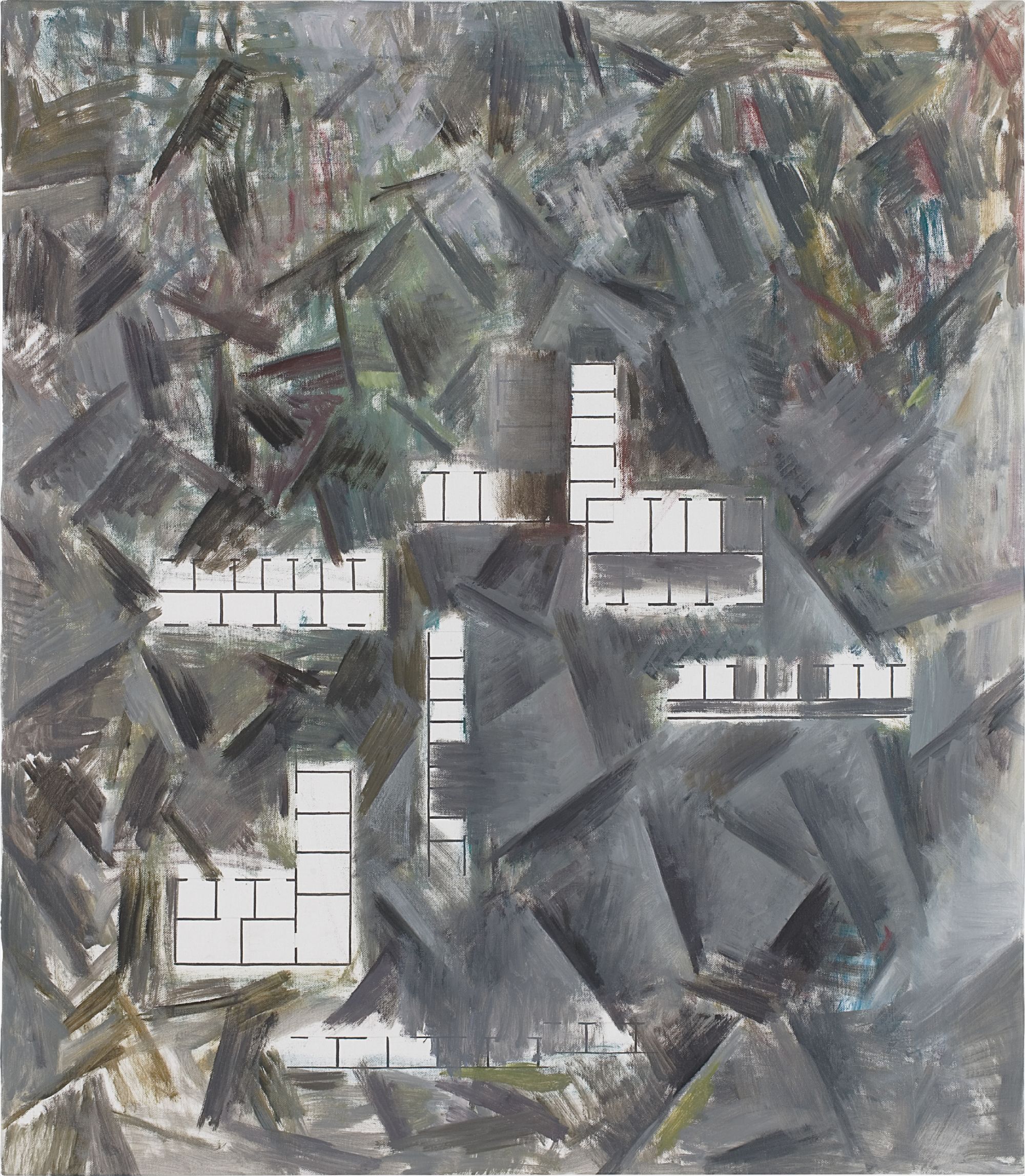
Guillermo Kuitca received international accolades at a young age when he was invited to participate in the XVIII São Paulo Biennal in 1989 and has since exhibited extensively worldwide, including major shows at the Museum of Modern Art in New York and the Centro de Arte Reina Sofia in Madrid. While his early paintings investigated areas like architecture, theater and cartography, his recent body of work continues to develop into new arenas. The present lot utilizes an architectural floor plan as its base, yet faceted paint layers obscure the viewer’s full comprehension of the represented space, both blocking the didactic nature of the map and simultaneously demonstrating a preoccupation with Cubism. This work relates to Kuitca’s powerhouse exhibition at the Venice Biennale in 2007 and shows his aptitude for disrupting the traditional notions of painting by optically exploring three-dimensional space., 2008
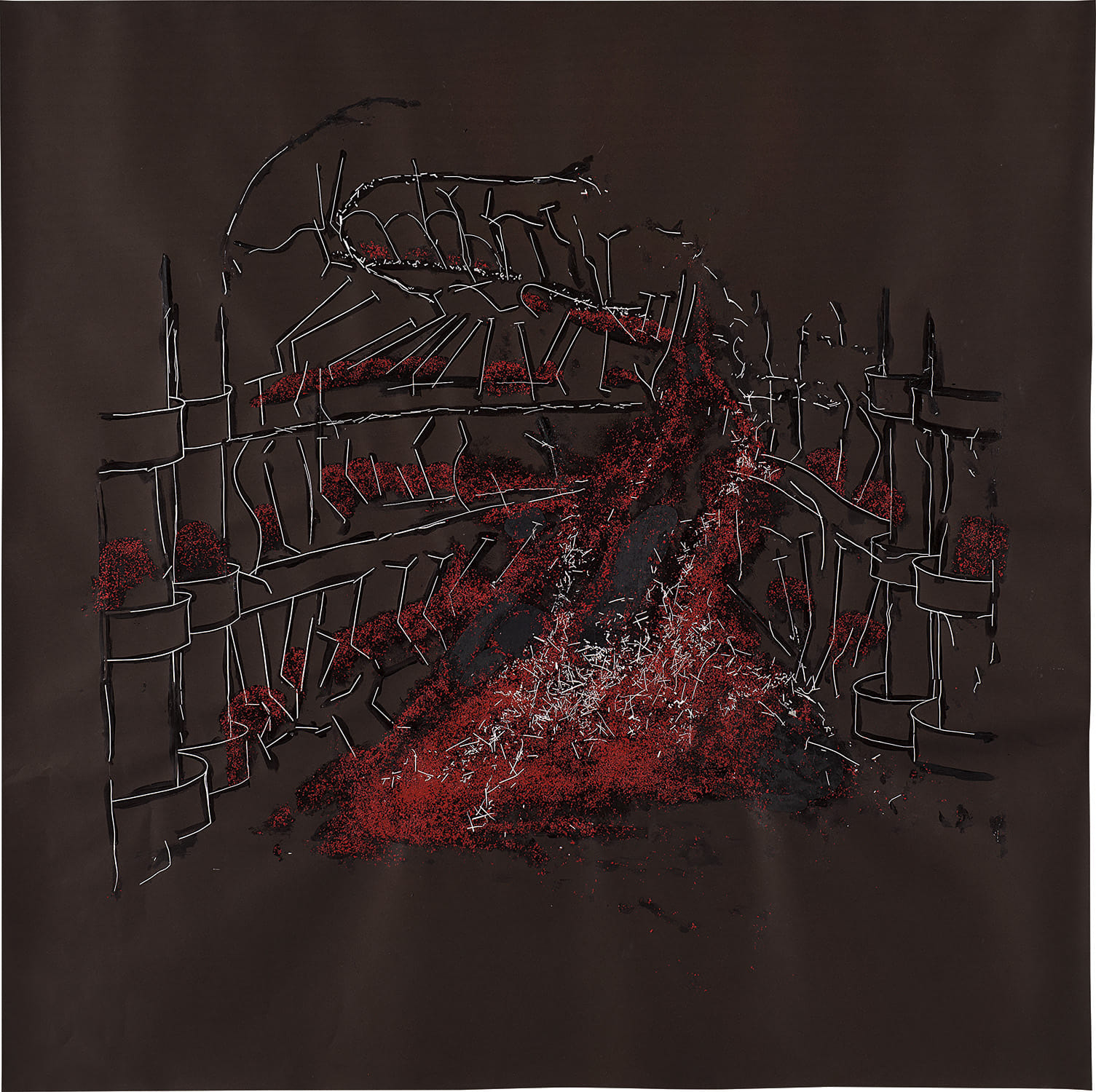
The work drew immediate comparisons to the conceptual rigour of artists like Alighiero Boetti while maintaining a warmth and painterly physicality that was entirely Kuitca's own. Throughout the 1990s and into the 2000s, his practice expanded in rich and unexpected directions. Maps of roads and national borders appeared on mattresses, a recurring motif that collapsed the political and the domestic into a single disquieting image. Seating charts from famous opera houses found their way onto large canvases, and works like "Opera de Paris, Palais Garnier" from 2005 exemplify this strand of thinking beautifully.
The Palais Garnier is one of the great theatrical monuments of the modern world, and Kuitca's rendering of its seating arrangement in mixed media on paper transforms a document of social order and spectatorship into something elegiac and strangely personal, as though every empty seat holds the trace of someone who once occupied it. His abiding interest in theatre, maps, and architecture is not merely formal. It speaks to fundamental questions about where we place ourselves in relation to others and to power. Among the most significant bodies of work in his print practice is "Puro Teatro," a complete set of twelve etching and aquatints on Gampi Chine collé to Rives de Lin paper, presented loose as issued in a cloth covered portfolio with title, justification, and text pages.
Guillermo Kuitca
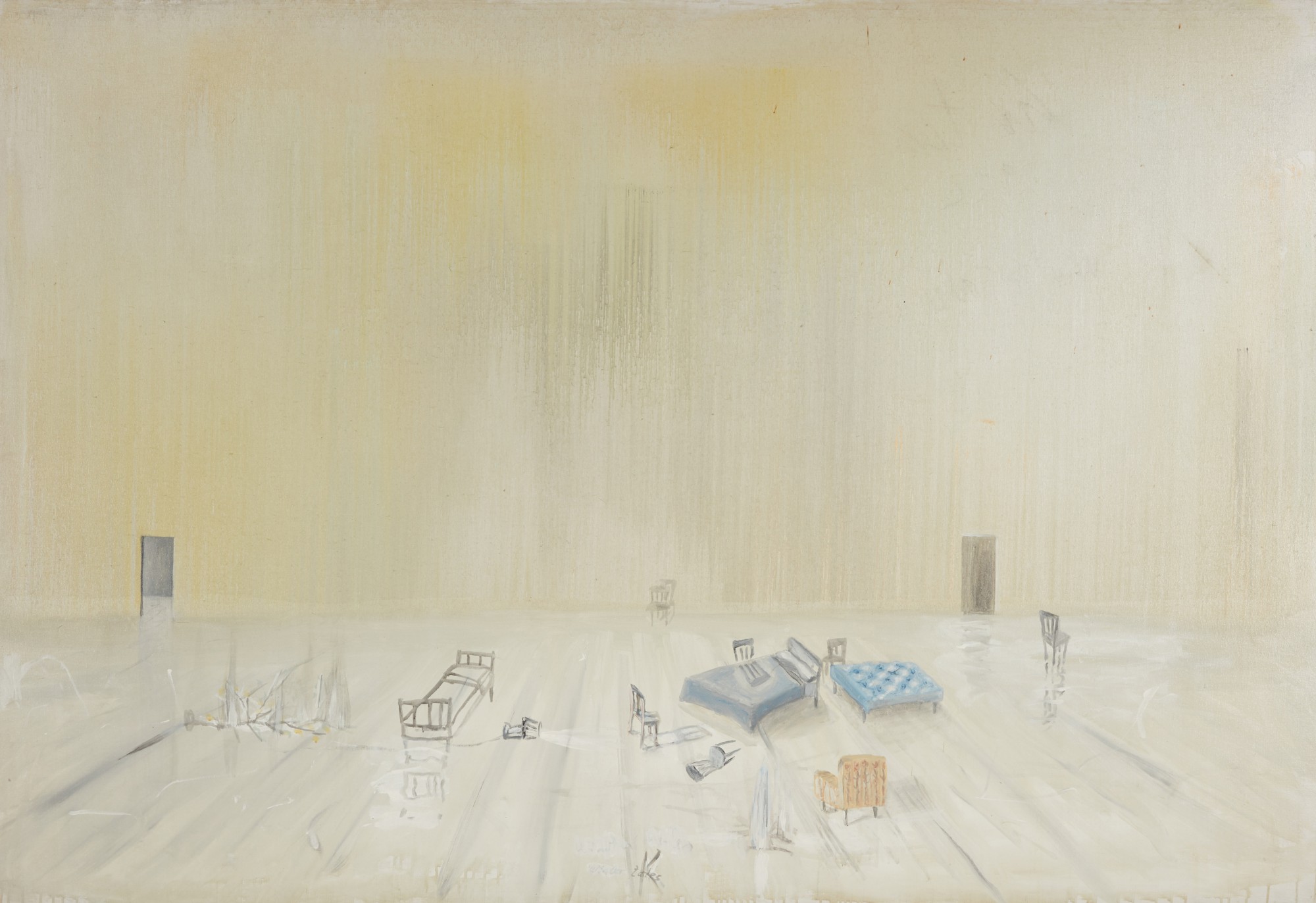
Winter Tales
This edition demonstrates Kuitca's mastery of the print medium with the same intellectual authority he brings to painting. The theatrical subject matter, the layered surfaces, and the architectural thinking embedded in the compositions make it one of the most cohesive and resolved portfolio works in contemporary Latin American printmaking. For collectors, it represents not only a significant cultural artifact but a work of sustained beauty that rewards long acquaintance. His paintings such as "Wien" from 1990 and "België" from 1984 offer a fascinating window into an earlier period of development, showing a young painter already grappling with ideas of geography and national identity that would later mature into something far more searching.
Major institutions have long recognized the importance of his contribution. The Museum of Modern Art in New York, the Tate, and the Centro de Arte Reina Sofía in Madrid all hold significant works by Kuitca in their permanent collections, a roster of institutional homes that reflects the genuine breadth of his international standing. His work has been shown at Sperone Westwater in New York and at major European venues, and he has been the subject of substantial survey exhibitions that have helped place his practice within the larger arc of post conceptual painting. Within that arc, he sits in a stimulating dialogue with artists who share his interest in cartographic and architectural imagery, including Matthew Ritchie, whose sprawling systemic paintings also investigate the relationship between diagrams and narrative, and with painters who have explored the theatre and performance space as subject matter.
Guillermo Kuitca
Opera de Paris, Palais Garnier, 2005
For collectors approaching Kuitca's work today, there are several important considerations. The floor plan paintings from the late 1980s and the map based works of the 1990s represent the core of his critical reputation and tend to attract the strongest institutional and scholarly interest. Works on paper and print editions such as the Puro Teatro portfolio and the suite of four lithographs with etching titled "Sin Titulo 1; Sin Titulo 2; Cuarta Pared; and Doble Teatro" offer a more accessible entry point while maintaining full engagement with his central concerns. These editions also document his long and serious commitment to printmaking as a primary rather than secondary medium.
The mixed media canvases, which incorporate silkscreen alongside paint, show a restless experimental intelligence and are particularly compelling for collectors interested in the intersection of conceptual and painterly traditions. Kuitca matters today for reasons that extend well beyond art historical positioning. We live in a moment of mass displacement, of redrawn borders and reimagined cities, of spaces that have been fundamentally altered by how we inhabit and abandon them. His paintings, made over four decades, feel newly urgent in this context.
They do not offer comfort in any simple sense, but they offer something more valuable: the sense that these experiences of dislocation and longing are legible, that they can be held and examined and given form. That is what the greatest art does, and it is what Kuitca has been doing, quietly and with enormous discipline, since he was a teenager in Buenos Aires. To collect his work is to bring that discipline and that generosity of spirit into direct, daily conversation.
Explore books about Guillermo Kuitca