Guglielmo Castelli
Guglielmo Castelli's Tender World of Luminous Dreams
Artist Spotlight · The Collection Editorial
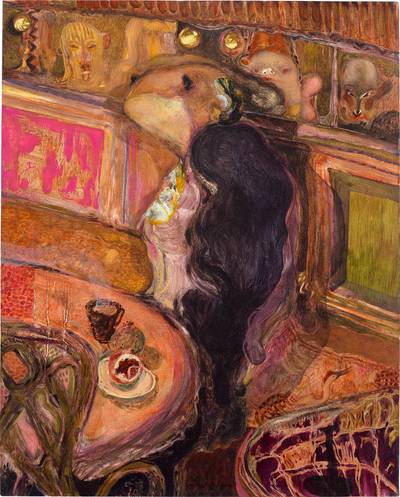
In the past several years, a quiet but unmistakable shift has occurred in contemporary figurative painting, and Turin born artist Guglielmo Castelli has emerged at its luminous center. His work has drawn sustained attention from collectors and institutions across Europe and beyond, with auction results affirming what gallery visitors and curators have long sensed: that Castelli is painting something genuinely necessary. His canvases appear in collections from Milan to London, and his exhibitions at Galerie Rolando Anselmi and with Luhring Augustine have introduced his practice to an increasingly global audience. At a moment when figuration is being reassessed with fresh urgency, Castelli offers something rare: intimacy without sentimentality, and vulnerability rendered with absolute pictorial precision.
Guglielmo Castelli
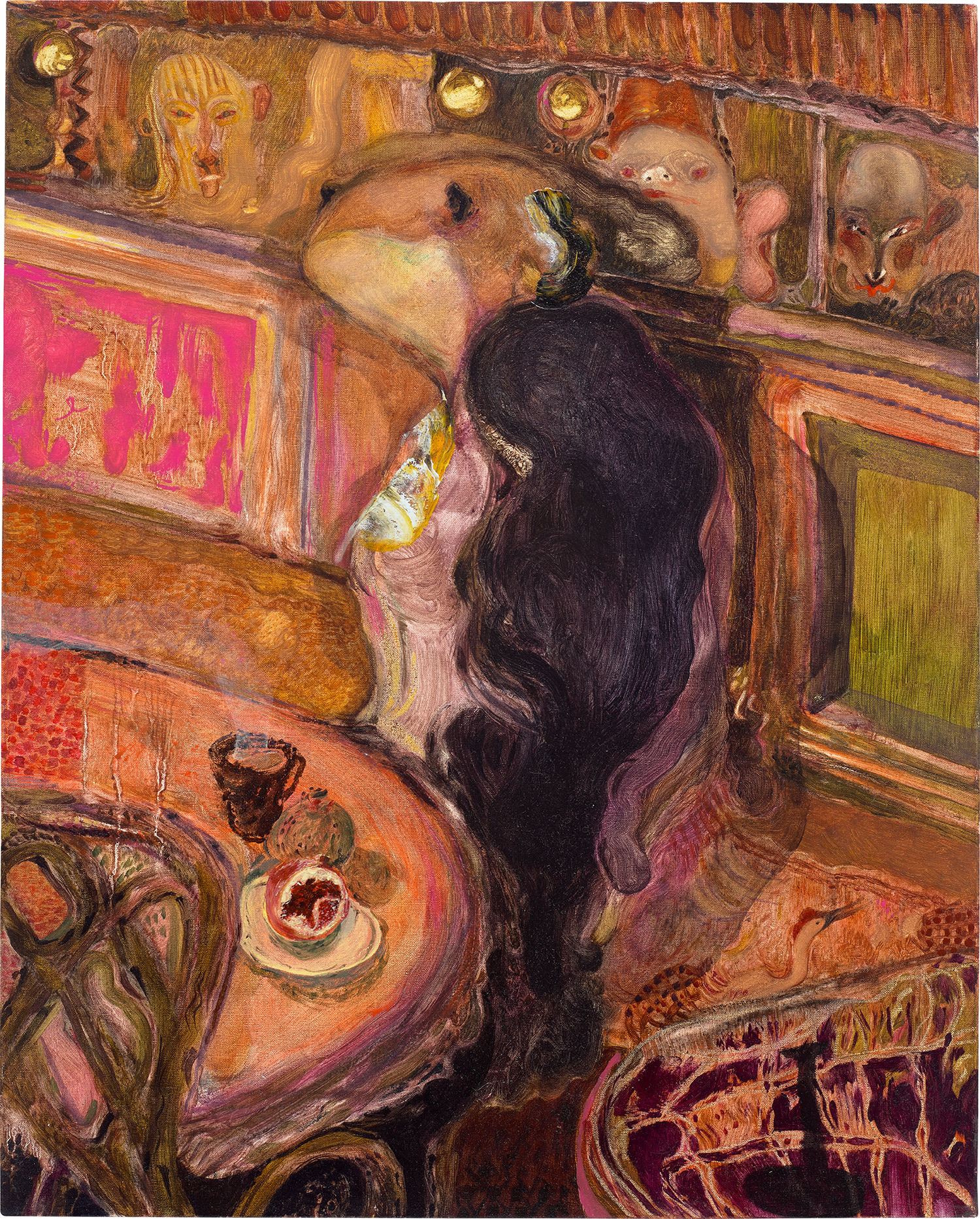
Café Müller, 2019
Castelli was born in 1987 in Turin, a city whose relationship with both industrial modernity and refined aesthetic culture has long shaped the artists who grow up within it. Turin carries the legacy of Arte Povera, of Giulio Paolini and Mario Merz, and of a broader Italian tradition that takes seriousness of purpose for granted. Growing up in this environment, Castelli came of age surrounded by an understanding that art could hold philosophical and emotional weight simultaneously. He studied in Turin and developed his practice there, never relocating to the more obvious centers of the contemporary art world.
That choice feels meaningful. His rootedness in his home city gives his work a quality of sustained attention, as though the paintings emerge from deep and uninterrupted contemplation rather than from the restless churn of art world capitals. Castelli's artistic development has been marked by a remarkable coherence of vision from relatively early in his career. He works primarily in oil on canvas and oil on board, and his technique reflects a genuine devotion to the material traditions of Italian painting even as his imagery floats free of any single historical period.
Guglielmo Castelli
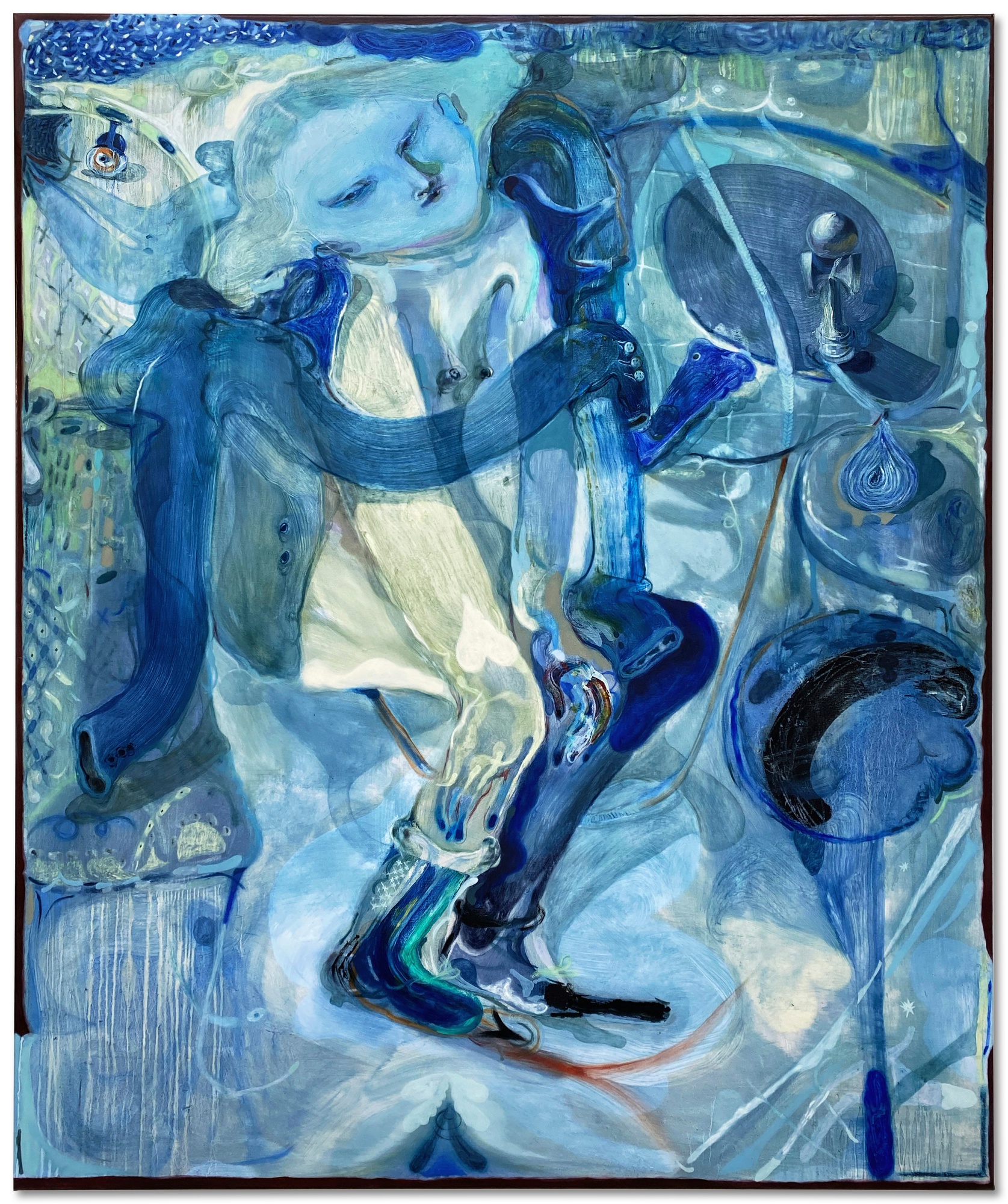
Mother and Father, 2021
His figures exist in states of suspension, reclining, drifting, or gathered in loose clusters, their bodies rendered in pale and luminous flesh tones that seem to absorb and emit light in equal measure. The backgrounds in his paintings are soft and indeterminate, often suggesting both interior and exterior space simultaneously, as though the settings themselves are psychological rather than physical. Over time, his palette has grown increasingly refined, his compositions more spacious, and his figures more deeply inhabited by an emotional interiority that resists easy description. Among his most celebrated works, Café Müller from 2019 stands as a particular touchstone.
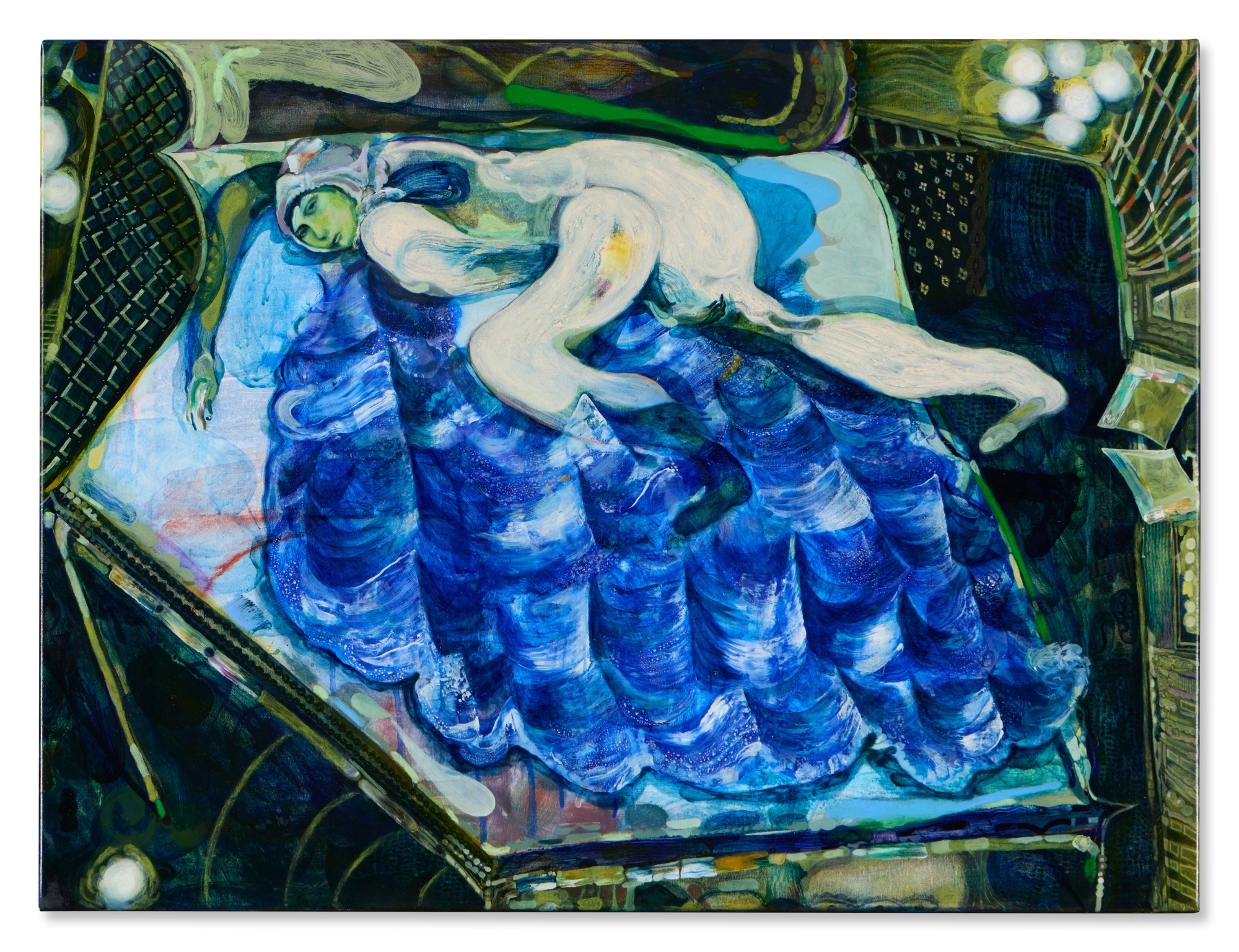
The title references the haunting Pina Bausch dance theater production of the same name, and the painting shares that work's quality of bodies moving through an uncertain space, reaching toward one another across distances that feel both physical and emotional. The painting demonstrates Castelli's gift for finding visual equivalents for states of feeling that language struggles to name. Mother and Father from 2021 and Lost Bodies in Utopian Places, also from 2021, extend this investigation with particular tenderness, placing figures in relationships that are clearly charged with meaning while refusing to resolve those charges into narrative clarity. Motherland and Drunken Incantations, both from 2020, along with The Maze from the same year, form a body of work from that period that reads as a sustained meditation on the fragility of selfhood and the strange comfort of proximity to others.
Guglielmo Castelli
Lost Bodies in Utopian Places, 2021
For collectors, Castelli's work presents a compelling case on multiple levels. His paintings are relatively modest in scale compared to many of his contemporaries, which gives them an intimacy that functions powerfully in both private and institutional contexts. They hold their presence without dominating a room, existing instead as quiet centers of gravity that draw the eye back again and again. The market for his work has grown steadily and organically, driven by genuine enthusiasm from collectors who respond to the emotional intelligence of the paintings rather than to speculative momentum alone.
Works from his key years between 2019 and 2021 are particularly sought after, as this period represents a crystallization of his mature voice. Collectors who acquire his work tend to speak of it in terms of sustained companionship, of paintings that reveal new dimensions over years of living with them. Within the broader landscape of contemporary figurative painting, Castelli occupies a distinctive position. He shares certain affinities with artists exploring psychological interiority through the human figure, including the dreamlike atmospheres associated with painters such as Michaël Borremans and the tender figuration of Cecily Brown, as well as the luminous vulnerability found in the work of Francesca Mollett.
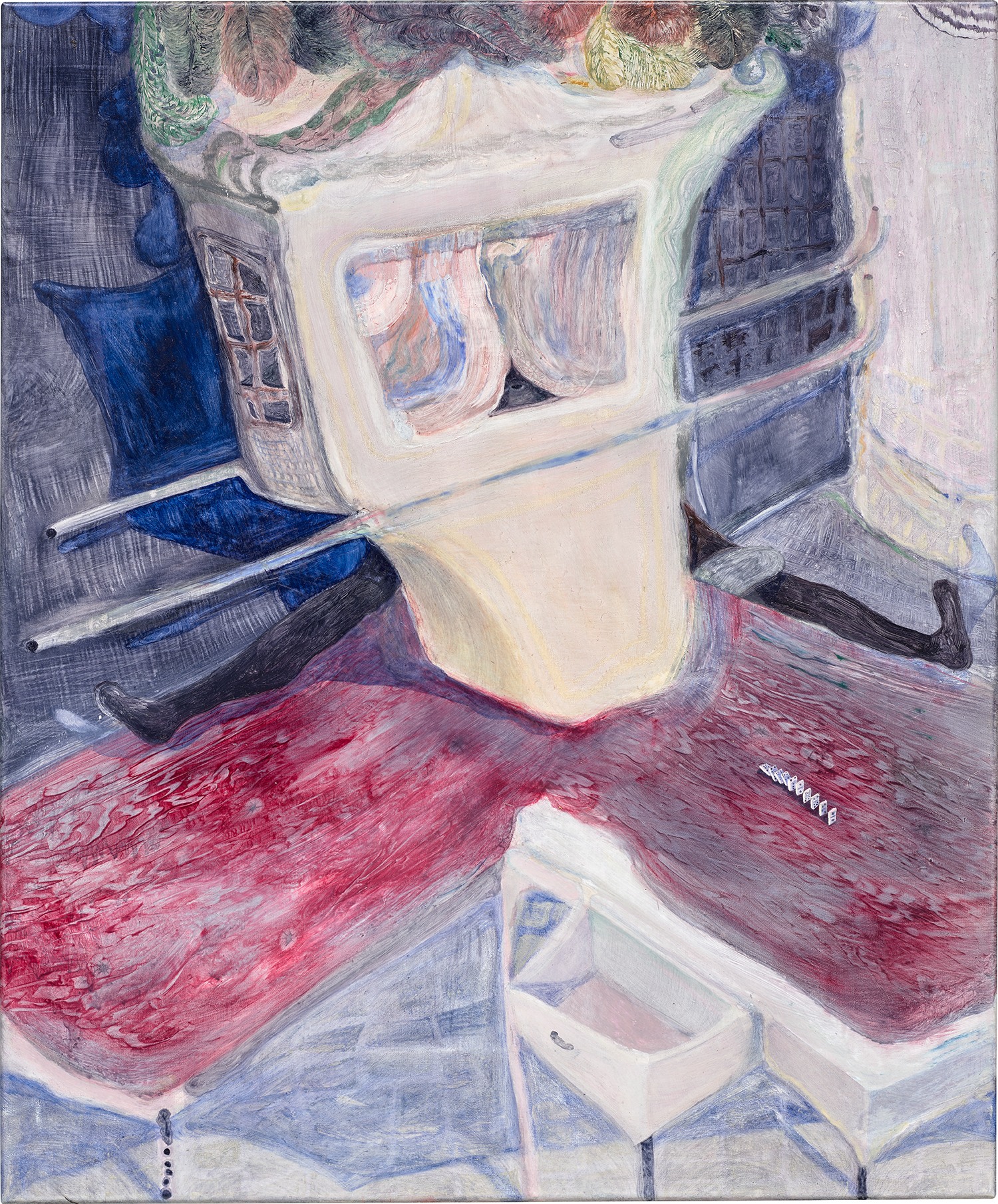
Guglielmo Castelli
Motherland, 2020
Yet his references also reach into art history with evident seriousness: the sfumato traditions of Leonardo, the soft dissolution of Correggio, and the melancholy lyricism of certain Symbolist painters all seem present in his work without being cited or imitated. He synthesizes these influences into something that feels entirely contemporary and entirely his own. His engagement with performance and dance, evident in his references to Pina Bausch, also aligns him with a generation of painters who move fluidly between disciplines in their search for visual equivalents of embodied experience. What ultimately makes Castelli matter, beyond the market reception and the critical recognition, is the quality of attention his paintings ask of and reward in their viewers.
In an era saturated with images produced at speed and consumed in fragments, his work insists on duration. To stand before a Castelli is to be invited into a state of reverie that is not passive but deeply engaged, a condition in which the boundary between one's own emotional experience and the lives of his painted figures begins to soften. He is a painter of the in between: between sleep and waking, between connection and solitude, between one person and another. These are not small territories.
They are, in fact, where much of human life is actually lived. Castelli has found a way to paint them with extraordinary grace, and his work will continue to resonate with collectors and institutions who understand that the most enduring art is always the art that knows where we truly live.