Grisha Bruskin
Grisha Bruskin: Decoding the Century's Great Mythologies
Artist Spotlight · The Collection Editorial
In the winter of 1988, a remarkable thing happened inside the ballroom of the Sovetskaya Hotel in Moscow. Sotheby's staged the first auction of contemporary Soviet art on Russian soil, a watershed cultural event that drew international collectors, diplomats, and journalists into a room crackling with the electricity of a world changing in real time. When Grisha Bruskin's monumental painting "Fundamental Lexicon" came to the block, it sold for 416,000 pounds, a record for a living Soviet artist at the time, and announced to the global art world that something singular and irreducible had emerged from behind the Iron Curtain. That moment remains one of the defining scenes of late twentieth century art history, and it belongs entirely to Bruskin.
Grisha Bruskin
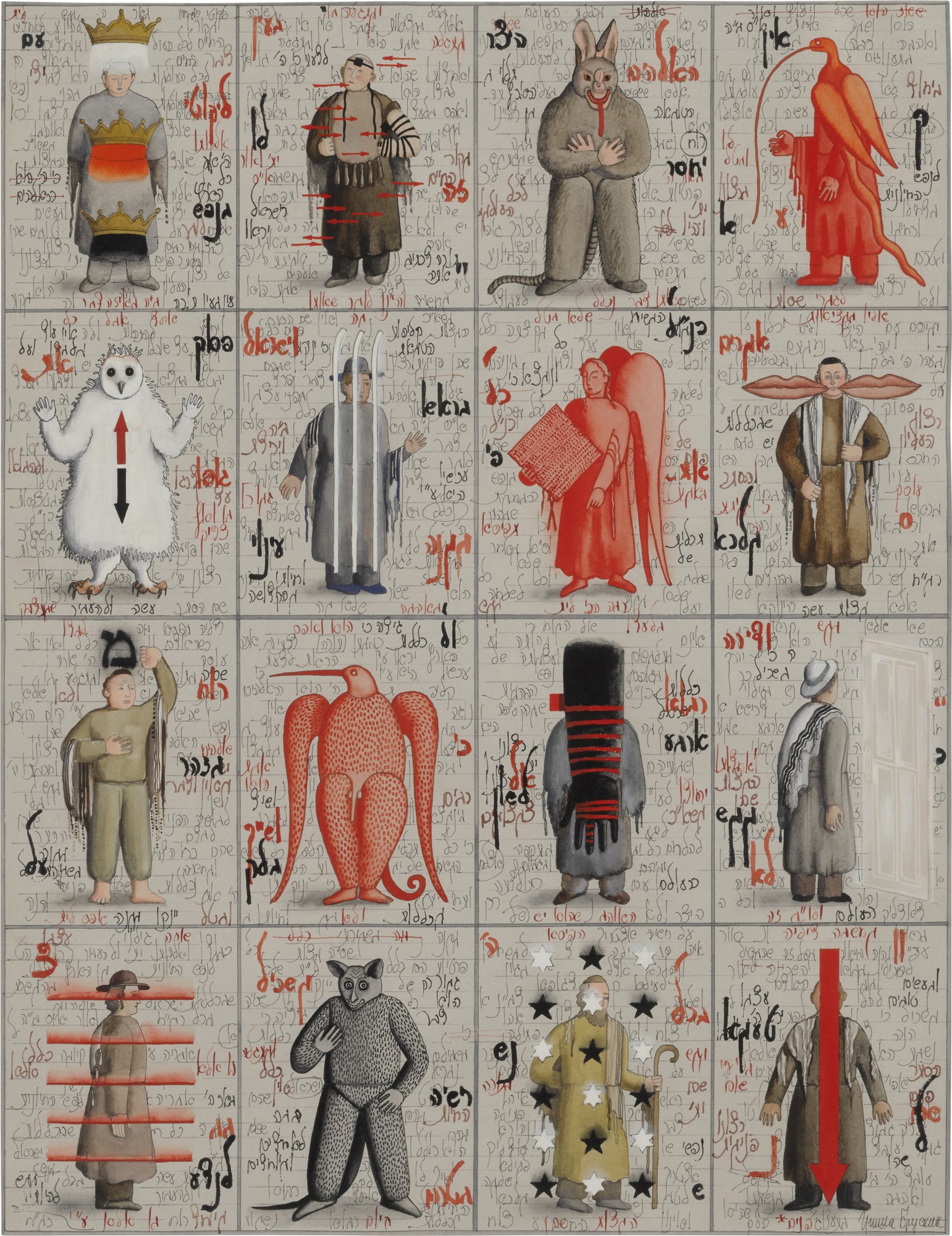
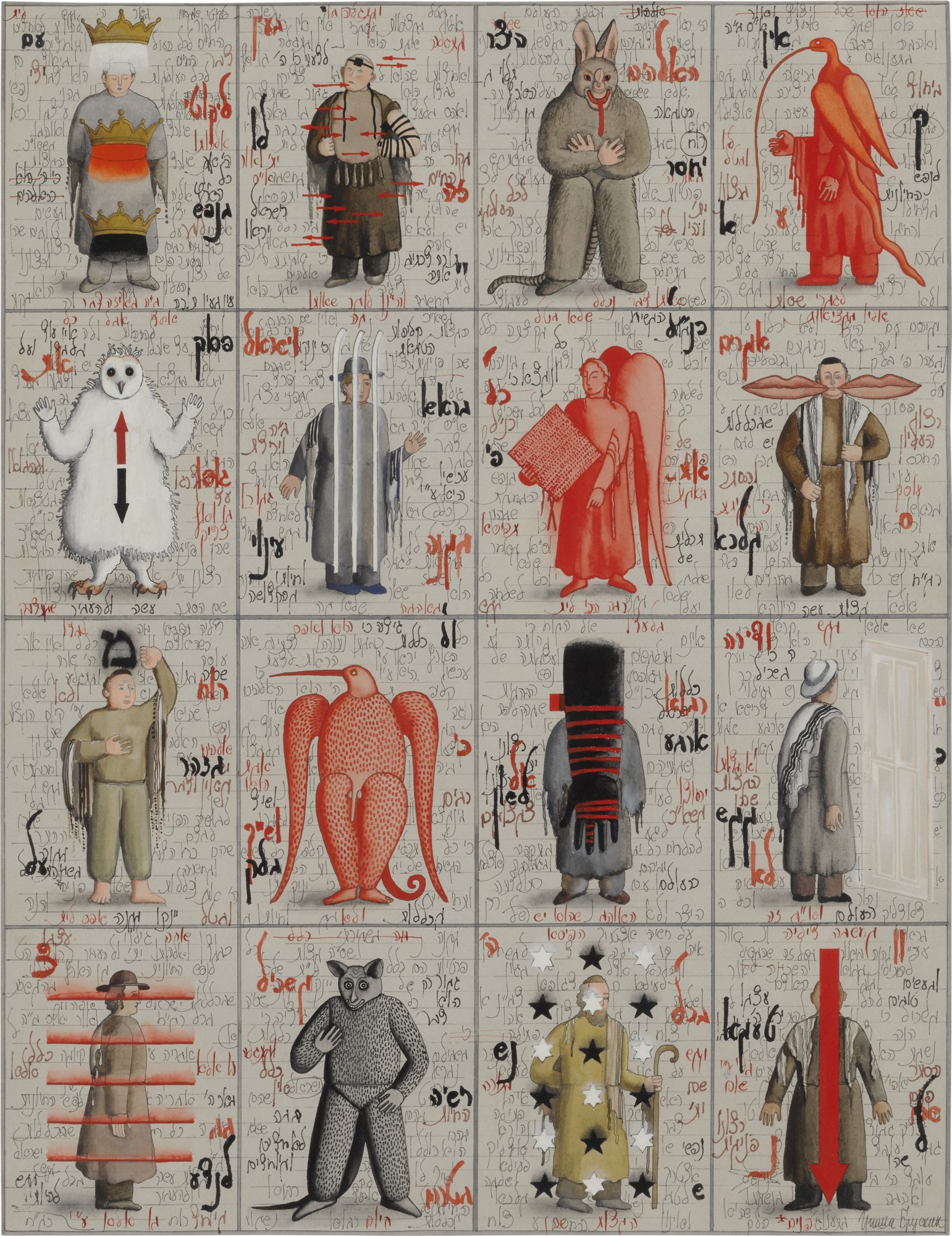
Notes BB, 1989
Born in Moscow in 1945, Grisha Bruskin came of age in a Soviet Union that demanded ideological conformity while simultaneously producing some of the most visually saturated propaganda culture the modern world had ever seen. He studied at the Moscow Textile Institute, where he trained as a designer, absorbing the formal grammar of Soviet visual language even as he quietly began to interrogate it. Growing up Jewish in Moscow meant navigating two distinct but equally powerful systems of symbols and belief, one imposed by the state and one inherited through family and tradition. That dual inheritance would become the animating tension of his entire artistic life.
Bruskin's development as an artist unfolded largely outside official Soviet channels. The state sanctioned artists' union offered a path toward exhibitions and recognition, but also demanded a kind of creative submission that Bruskin was constitutionally unable to give. He worked independently, building a body of work that fused the lexicon of Soviet iconography with the imagery of Jewish mysticism, Kabbalistic texts, and the ancient traditions of the Alefbet. This was not a simple act of political dissidence, though it carried real risk.
Grisha Bruskin
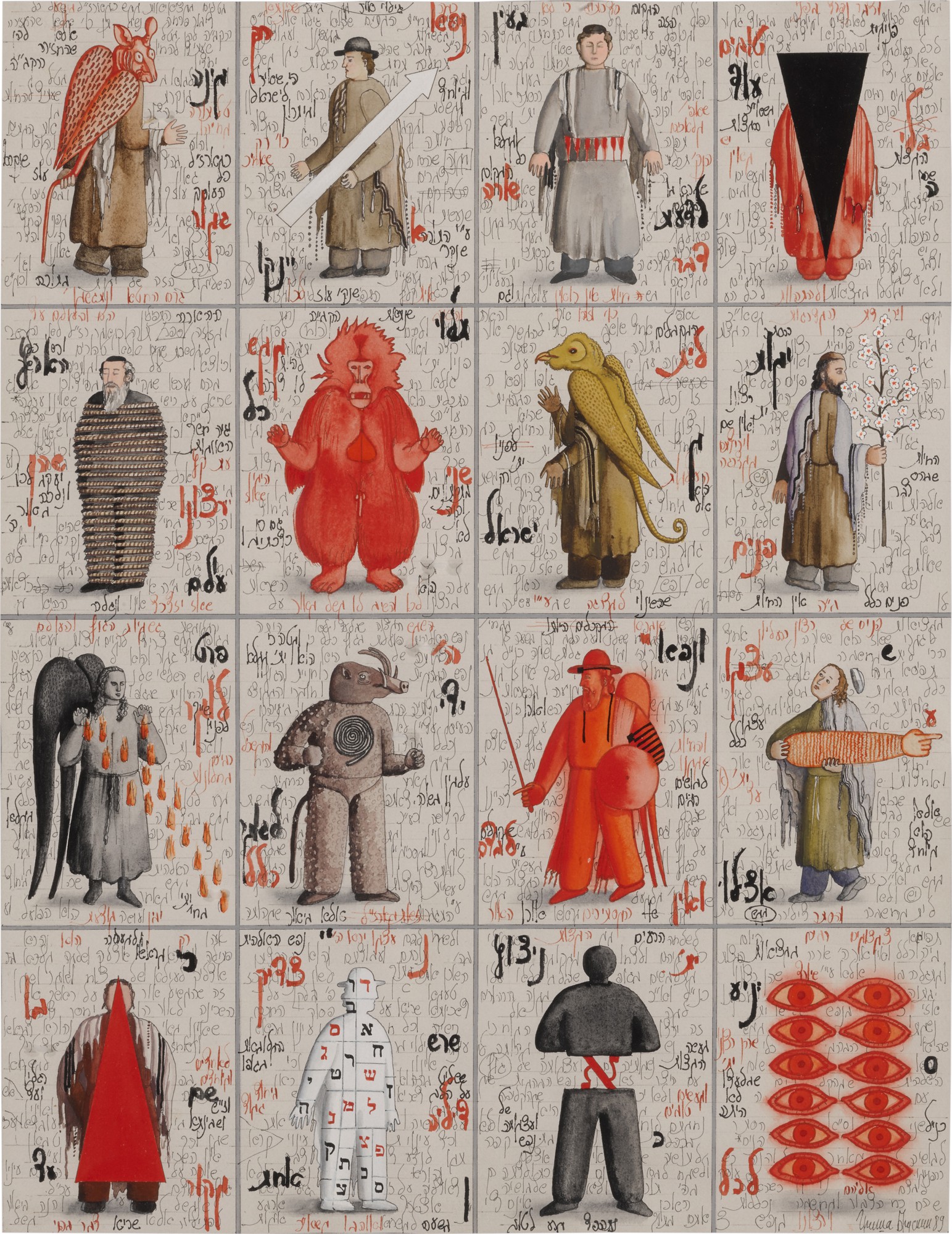
Notes CC, 1989
It was something more philosophically ambitious: an attempt to understand how human beings construct meaning through symbolic systems, and what happens when those systems collapse or contradict one another. The "Fundamental Lexicon" series, developed through the 1980s, stands as Bruskin's most celebrated achievement. These large scale paintings organize Soviet ideological figures, the worker, the soldier, the pioneer, the athlete, into rigid grid formations, each figure rendered with the cool, illustrative precision of an official manual or a military field guide. The effect is both familiar and deeply strange.
Stripped of their original propagandistic context and arrayed like specimens in a cabinet of curiosities, these symbols reveal themselves as exactly that: symbols, arbitrary constructions that derive their power entirely from collective belief and institutional repetition. Bruskin understood before many others that the Soviet ideological project was, at its core, a mythology, and he treated it with the same archaeological curiosity he brought to Jewish religious texts and ancient civilizations. His works on paper from this period are particularly prized among collectors. The "Notes" series, including "Notes AA," "Notes BB," and "Notes CC," all created in 1989 and executed in gouache on paper, distill his visual grammar into intimate, luminous works that reward close looking.
Grisha Bruskin
Partner
These pieces carry the layered quality of pages torn from an imaginary encyclopedia, dense with figures and signs that seem to be cataloging some lost or disappearing world. The screenprint "Jewish New Year" brings his engagement with Hebrew visual culture into direct conversation with the printmaking tradition, while works such as "Alefbet" and the etchings "Strela" and "Litza" demonstrate the range and formal ambition of his practice across media. His collaborations with Marlborough Graphics in New York produced editions of genuine distinction, and the printer's proofs from that period, signed and numbered by the artist, are among the more sought after works in his graphic output. After the Sotheby's auction transformed his international profile, Bruskin eventually relocated to New York, where he has lived and worked for decades.
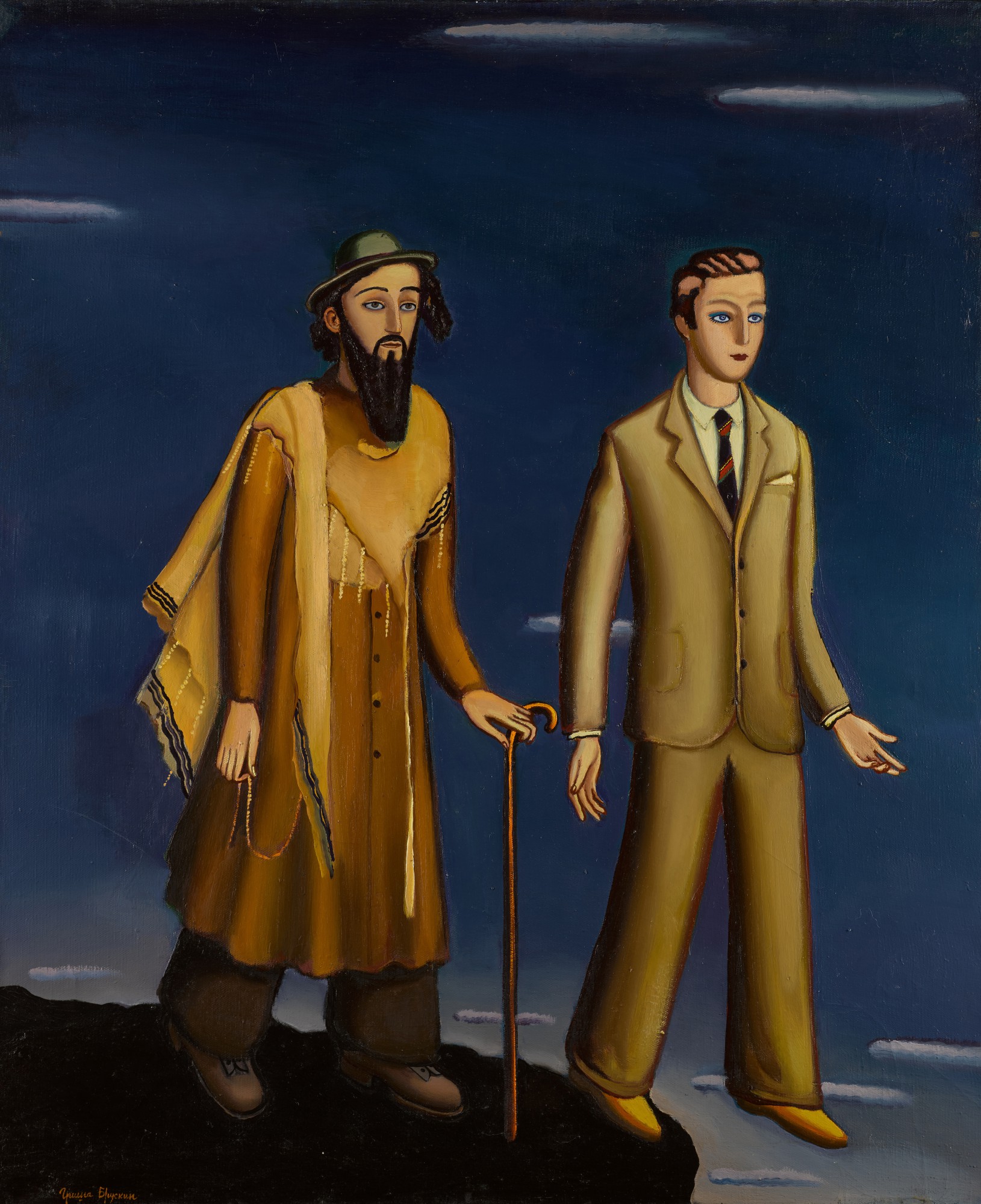
The move did not soften or redirect his artistic concerns so much as expand their frame of reference. He continued to develop his archaeological imagination, producing bronze sculptures that treat mythological and ideological figures with the same taxonomic precision as his paintings. His sculptural work brings an additional dimension of physical presence to the questions his paintings raise: what do our symbols weigh, what do they cost us, what remains when the systems that animated them are gone. Major museums including the Jewish Museum in New York and institutions across Europe have collected his work, and his pieces appear in significant private collections internationally.
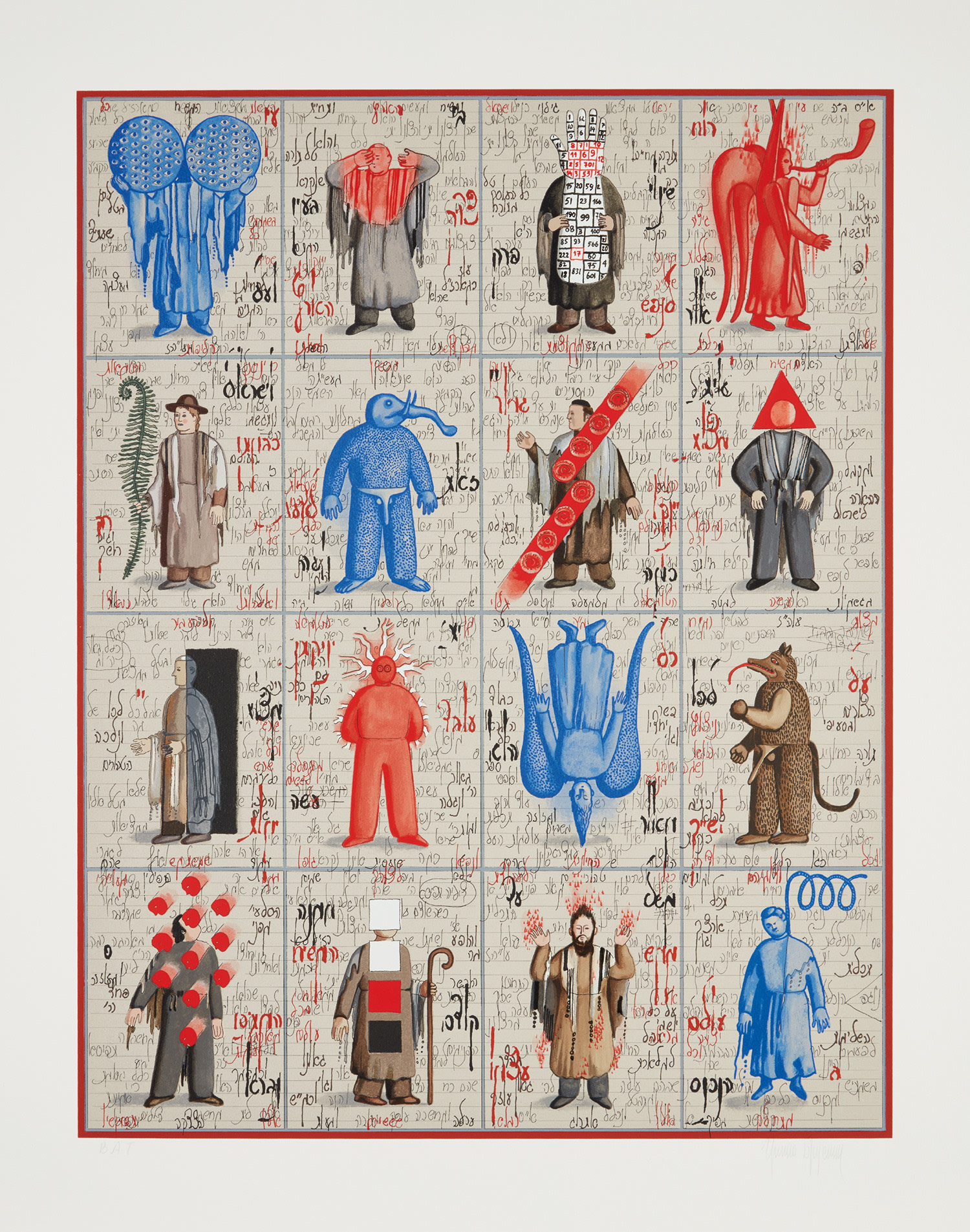
Grisha Bruskin
Jewish New Year
For collectors, Bruskin's work occupies a genuinely rare position in the contemporary market. He emerged at a historically specific moment, the twilight of the Soviet era, and his art is in a fundamental sense a document of that moment, but it transcends documentation entirely. The questions he asks about ideology, collective memory, and the archaeology of belief systems are as urgent now as they were in 1988. Works on paper and prints offer accessible entry points into a practice whose large scale paintings command significant prices, and the Marlborough Graphics editions in particular represent excellent collecting value.
His etchings and aquatints, including "Strela" and "Litza," demonstrate a mastery of the printmaking process that places them firmly within the tradition of great European graphic art while remaining unmistakably his own. Within the broader landscape of art history, Bruskin stands in productive dialogue with artists who have examined the collision of official ideology and personal or spiritual identity. His systematic approach to the deconstruction of political imagery invites comparison with the Conceptual traditions of both East and West, while his dense symbolic vocabulary connects him to artists working within Jewish visual culture and the traditions of European religious art. He belongs to a generation of Russian artists, including Ilya Kabakov and Erik Bulatov, who transformed the materials of Soviet life into a profound and lasting artistic language, and whose work now reads as essential testimony to one of the twentieth century's most consequential cultural experiments.
What makes Bruskin's work feel so alive today is precisely its refusal to be merely historical. His grids of ideological figures look out from their canvases with a patience that seems to say: this has happened before, and it will happen again, and the task of the thoughtful person is to learn to read the signs. In a moment when questions of collective mythology, state symbolism, and the construction of political identity feel urgently contemporary, Bruskin's lifelong project reads less like archaeology than like prophecy. His is one of the essential artistic visions of our time, and collectors who live with his work understand that they are living with something that will only grow in resonance and importance.