Gregory Crewdson
Gregory Crewdson: Cinema, Light, and Wonder
Artist Spotlight · The Collection Editorial
“Every picture tells a story of longing and desire and mystery and loss.”
Gregory Crewdson, Interview Magazine
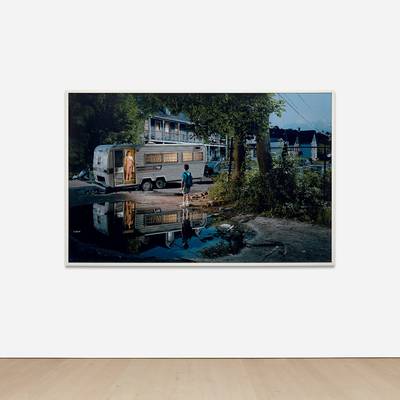
There are few living photographers whose work stops a room quite like Gregory Crewdson's. In recent years, major survey exhibitions at institutions including the Kunstfoyer in Munich and continued acquisitions by leading American museums have confirmed what collectors and curators have long understood: Crewdson is not simply a photographer of suburban America, he is its poet laureate, its compassionate witness, and its most technically ambitious visual storyteller. His prints command serious attention at auction and in private collections worldwide, and the sustained critical interest in his practice shows no sign of slowing. To encounter a Crewdson photograph in person is to feel the particular thrill of standing at the edge of a story you cannot quite name.
Gregory Crewdson
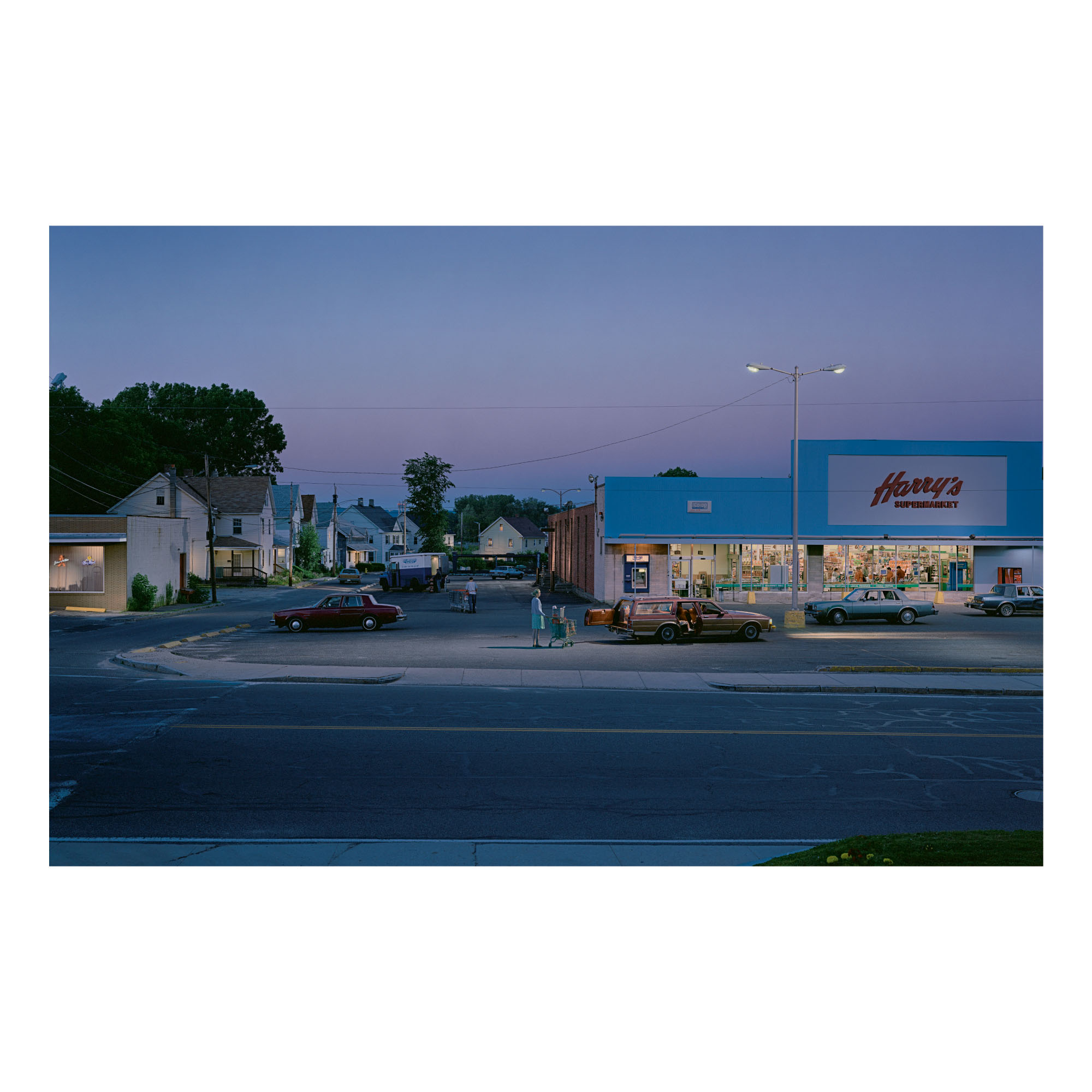
Untitled
Crewdson was born in Brooklyn, New York in 1962, and grew up in Park Slope at a time when the neighborhood carried none of its current polish. His father was a psychoanalyst who held sessions in the basement of the family home, a detail Crewdson has returned to often when discussing the origins of his fascination with the hidden interior lives of ordinary people. He studied at the State University of New York at Purchase and later earned his MFA from Yale School of Art, where he would eventually join the faculty and shape generations of photographers. Those formative years in New Haven, steeped in rigorous critical discourse and surrounded by ambitious peers, gave Crewdson the intellectual architecture to support the increasingly cinematic ambitions that would define his career.
His early work, including the series Hover from the mid 1990s, announced a sensibility that was already fully formed in its emotional intelligence even as the technical scale would grow dramatically over subsequent decades. Hover presented aerial views of suburban lawns and driveways, figures standing alone in the peculiar stillness of American domestic life, and already the images felt borrowed from some half remembered dream. The series Natural Wonder followed, with its strange intrusions of wildlife into interior spaces, chromogenic prints that balanced the uncanny with an almost painterly warmth. These works established Crewdson as a successor to a distinctly American tradition of anxious beauty, placing him in conversation with the paintings of Edward Hopper and the literary landscapes of Raymond Carver and Jeffrey Eugenides.
Gregory Crewdson
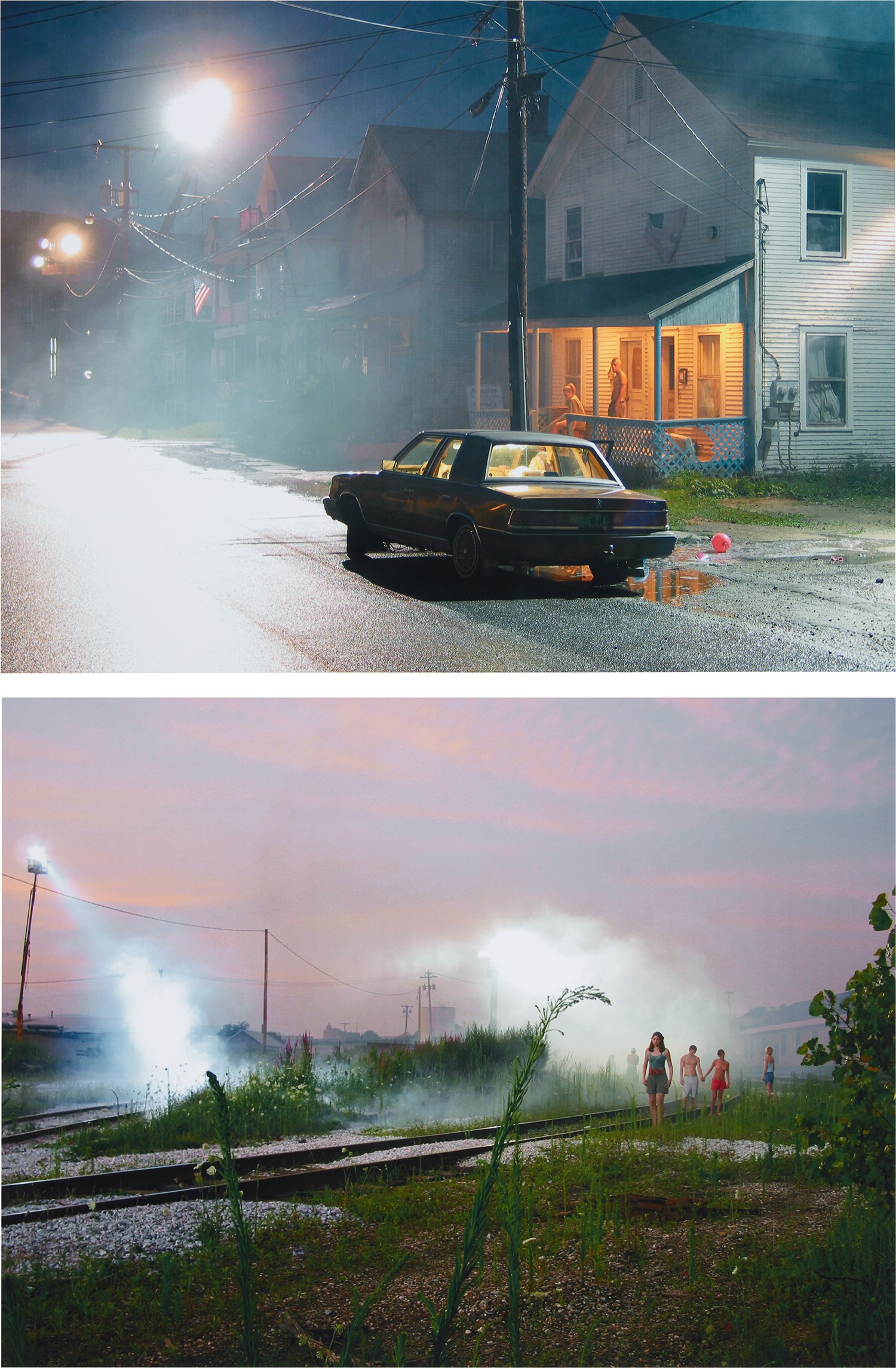
Production Still (Clover Street); Production Still (Railway Children)
The Twilight series, produced around the turn of the millennium, escalated everything. Crewdson began deploying full Hollywood film crews, working with gaffers, lighting directors, and set designers to construct single images of extraordinary complexity. Streets were flooded. Houses were gutted and rebuilt.
“I am always trying to create a world that is just slightly off from the real world.”
Gregory Crewdson, The Guardian
Hundreds of extras populated carefully choreographed scenes that unfolded across a single frame. The resulting photographs from this period, large scale chromogenic and digital prints, are among the most discussed works in contemporary photography precisely because they refuse to let the viewer settle. They are beautiful in a way that creates unease rather than comfort, which is perhaps the most difficult balance any visual artist can achieve. The 1999 laser direct color coupler prints from this era are especially prized among collectors for the luminous quality of their light and the density of their psychological atmosphere.
Gregory Crewdson
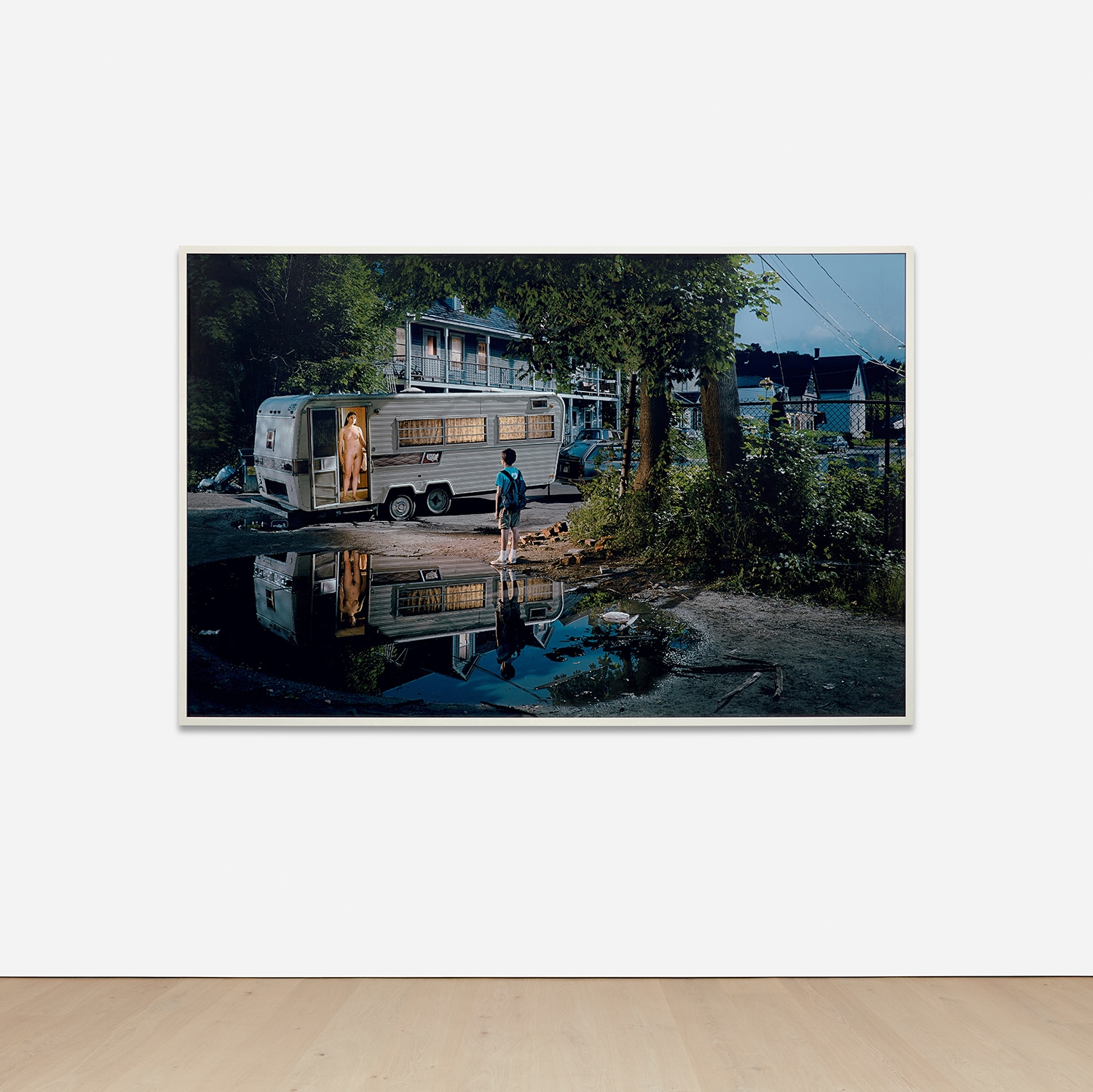
Photographed in 2004 and printed later, this is artist's proof number 1 from an edition of 6 plus 2 artist's proofs.
Beneath the Roses, produced between 2003 and 2008, remains the series most closely identified with Crewdson's name. Shot across small towns in Massachusetts and upstate New York, these monumental digital pigment prints brought his cinematic method to its fullest expression. A woman stands in a flooded living room, light pouring through curtains. A man lies in the middle of a deserted road at dusk.
Each image is precisely composed, exhaustively lit, and somehow utterly still despite the enormous machinery required to produce it. The production stills from this series, including works like Production Still, Forest Gathering from Beneath the Roses, offer collectors a rare secondary view into the creative process itself, images that are both documentary and deeply atmospheric in their own right. A 2004 artist's proof pigment print from this body of work represents the kind of rare and historically significant holding that serious photography collectors seek out with purpose. The Sanctuary series of 2009 marked a striking shift in register.
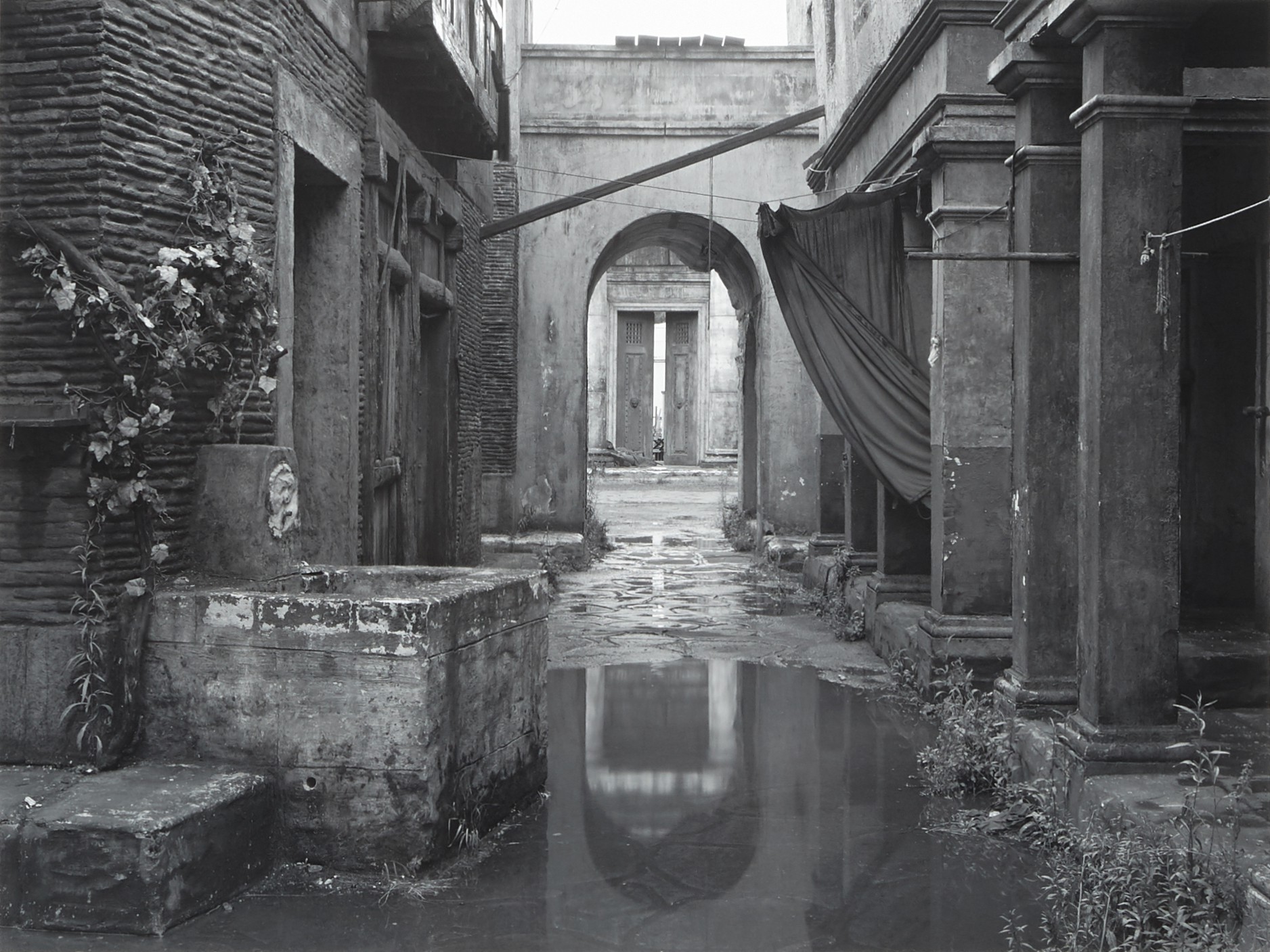
Gregory Crewdson
Untitled (18), (from the series Sanctuary), 2009
Traveling to Cinecittà studios outside Rome, Crewdson photographed the abandoned exterior sets of the legendary Italian film studio in quiet, elegiac light. Untitled (18) from this series exemplifies the emotional pivot: the grandeur is still present, but the human figure has been removed, leaving behind only architecture and absence. The series was received as both a meditation on the history of cinema and a quietly moving reflection on creative legacy. It demonstrated that Crewdson's ambitions extend well beyond the American suburban uncanny and that his practice contains genuine philosophical range.
Works from Sanctuary occupy an important place in any comprehensive account of his career. For collectors, Crewdson's market profile combines the accessibility of a deeply established critical reputation with the continuing vitality of an artist who is still actively producing work. His prints are held in the permanent collections of the Whitney Museum of American Art, the Museum of Modern Art, and the Solomon R. Guggenheim Museum, institutional endorsements that speak directly to the confidence with which curators assess his long term significance.
Edition sizes have historically been small, with artist's proofs representing particularly desirable holdings for those who want to own works with genuine provenance distinction. The chromogenic prints of the late 1990s and the large format digital pigment prints of the Beneath the Roses period are frequently cited by advisors as the anchor works for any serious collection of contemporary American photography. Crewdson belongs to a generation of American photographers who came of age in the 1980s and 1990s alongside figures such as Cindy Sherman, Andreas Gursky, and Jeff Wall, all of whom expanded the scale and conceptual ambition of the photographic print into territory previously associated with painting and cinema. Like Wall, Crewdson has been particularly influential in legitimizing the elaborately staged photograph as a serious art form deserving of the same critical attention given to any other medium.
His long tenure at Yale has extended his influence across two decades of emerging photographers, and the artists who have passed through his program carry visible traces of his commitment to psychological depth and technical rigor. What ultimately ensures Crewdson's place in the ongoing story of American art is the sincerity at the heart of his practice. For all the apparatus involved, for all the film crews and flooded streets and carefully sourced props, the images he makes feel genuinely felt. They speak to loneliness and longing, to the way the light at a particular hour can make an ordinary place feel charged with significance, and to the very human need to find meaning in the landscapes we inhabit.
To collect Crewdson is to commit to a vision of photography as something more than documentation: it is to believe, as he clearly does, that a single still image can hold an entire world inside it.
Explore books about Gregory Crewdson
Gregory Crewdson: Twilight
Gregory Crewdson

Gregory Crewdson: Dream of Life
Gregory Crewdson
Gregory Crewdson: Beneath the Roses
Gregory Crewdson
Gregory Crewdson: Cathedral of Forgetting
Gregory Crewdson
Gregory Crewdson: By the Pool
Gregory Crewdson
Gregory Crewdson: The Last House on the Left
Gregory Crewdson