Gregori Maiofis
Gregori Maiofis, Master of Darkly Playful Fables
Artist Spotlight · The Collection Editorial
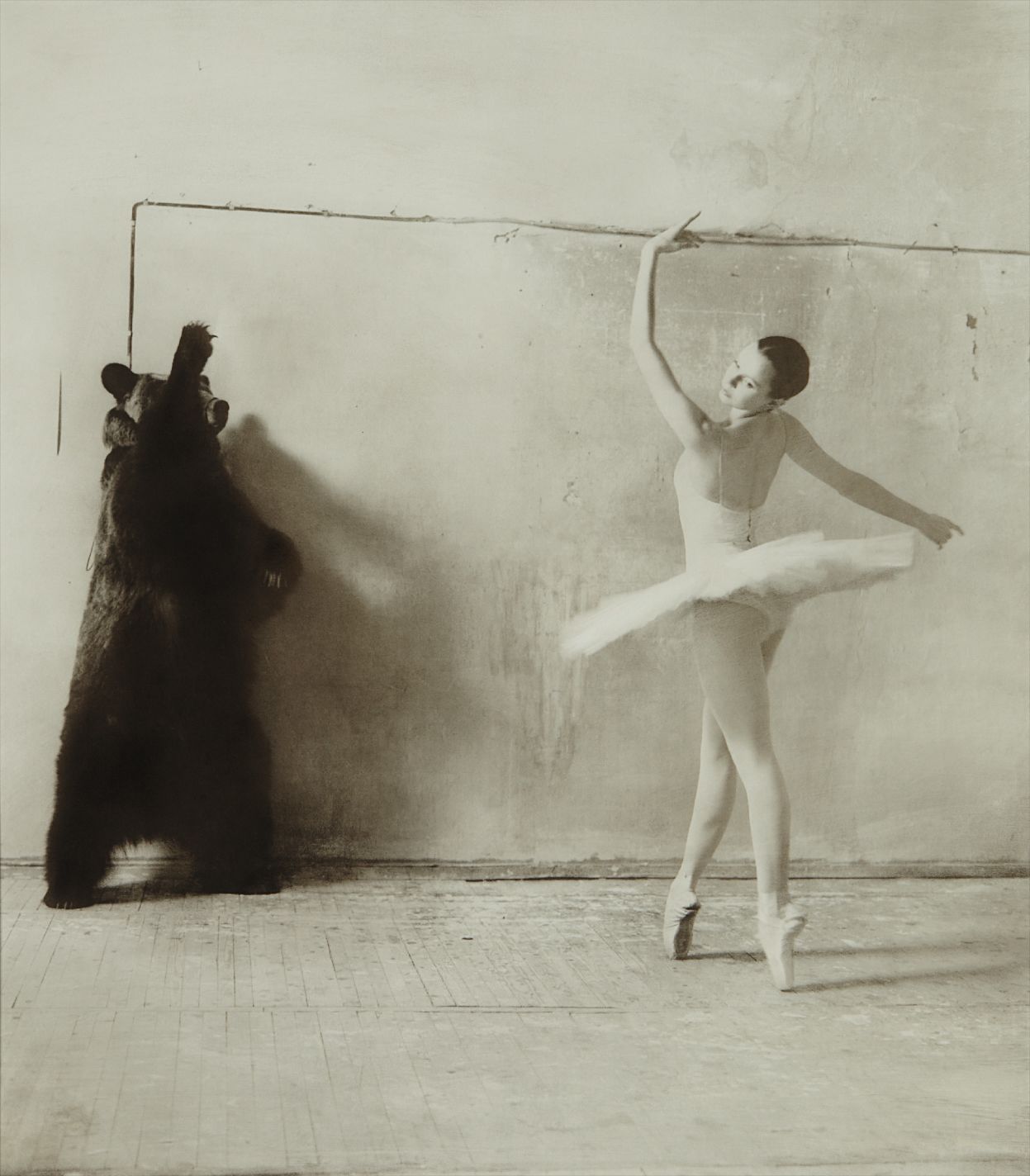
There is a photograph by Gregori Maiofis in which a bear sits with the formal patience of a schoolchild, poised as though waiting for a lesson to begin. The image is funny, melancholy, and utterly precise in its meaning. That photograph, "In Time a Bear May Even Be Taught to Dance," printed in the warm, sepia tones of the bromoil transfer process, encapsulates everything that has made Maiofis one of the most singular voices in contemporary Russian photography. His work has drawn sustained attention from international collectors and curators over the past two decades, and institutions across Europe and the United States have welcomed his tableaux into their holdings as examples of conceptual photography at its most inventive and culturally resonant.
Gregori Maiofis
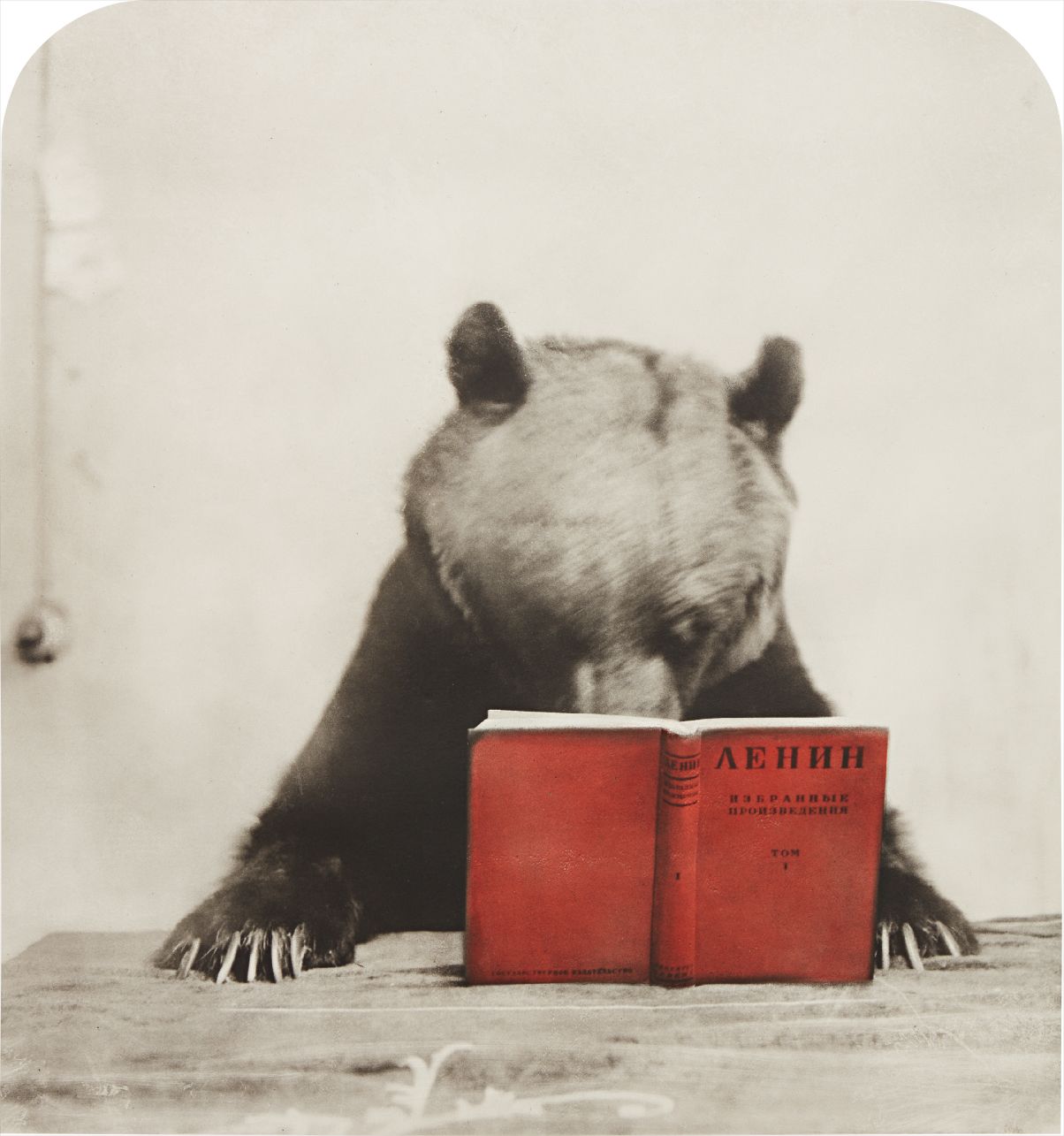
Lenin's Science Makes Hands and Mind Stronger
Maiofis was born in 1954 in the Soviet Union, and the circumstances of that origin are inseparable from the texture of his art. Growing up within a culture that demanded ideological conformity while simultaneously producing some of the world's great literary satirists, he absorbed contradictions that would later become the very substance of his practice. The Russia of Gogol and Chekhov, of absurdist humor deployed as a survival mechanism, of fables that say dangerous truths through the mouths of animals, formed the imaginative atmosphere of his early life. That inheritance is not worn lightly or nostalgically in his work.
It is reactivated, scrutinized, and made strange again. His development as an artist unfolded through a deep engagement with both theatrical and literary traditions, and he gravitated early toward photography not as documentary witness but as a tool for constructing alternative realities. Where many photographers of his generation sought to capture the world as it was, Maiofis preferred to build worlds that could not exist except within the frame. His process is elaborate and deliberate: animals, costumed figures, theatrical props, and painted backdrops are assembled with the care of a nineteenth century studio portraitist and the conceptual intention of a contemporary artist fully aware of the history of staged photography from Cindy Sherman to Thomas Demand.
Gregori Maiofis
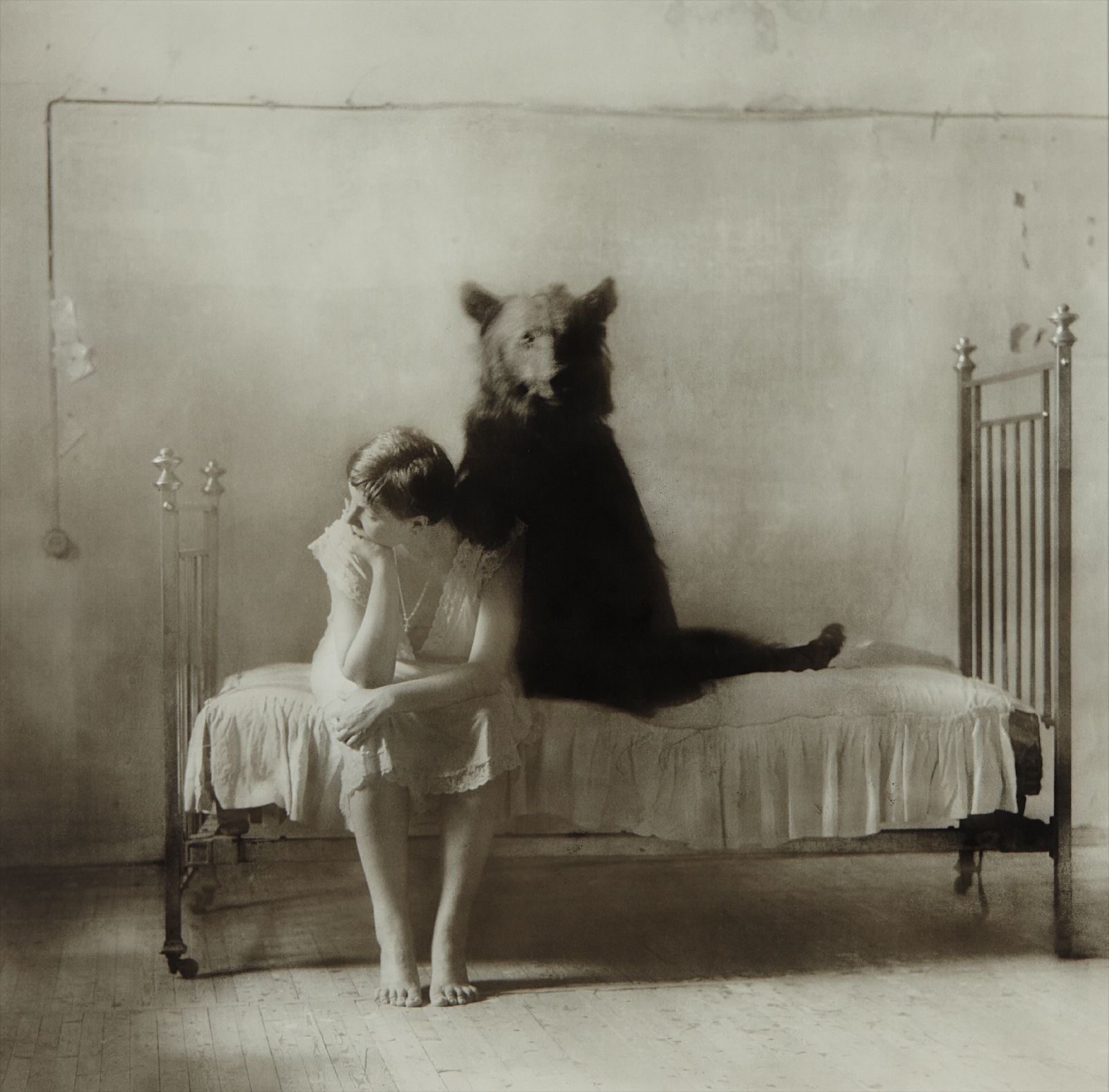
Adversity Makes Strange Bedfellows
The result is work that feels simultaneously antique and urgently contemporary. The bromoil transfer print is the technical signature of his practice and the source of much of its visual authority. This labor intensive process, popular in the early twentieth century and largely abandoned by the mid century, produces images of extraordinary tonal depth and surface richness. The pigments applied by hand to the oil soaked paper give each print a painterly quality that no inkjet or silver gelatin process can replicate.
Maiofis embraced this technique with the conviction of someone who understood that the how of an image is inseparable from its what. His prints feel like objects pulled from a parallel archive, as though they document a history that occurred slightly to the left of the one we know. "Lenin's Science Makes Hands and Mind Stronger" is among the most discussed works in his body of output, a title that deploys the sonorous rhetoric of Soviet propaganda while the image beneath it unfolds with gentle, unsettling irony. The tension between the official language of the title and the fable world depicted within the photograph creates exactly the kind of double reading that characterizes the best of his work.
Gregori Maiofis
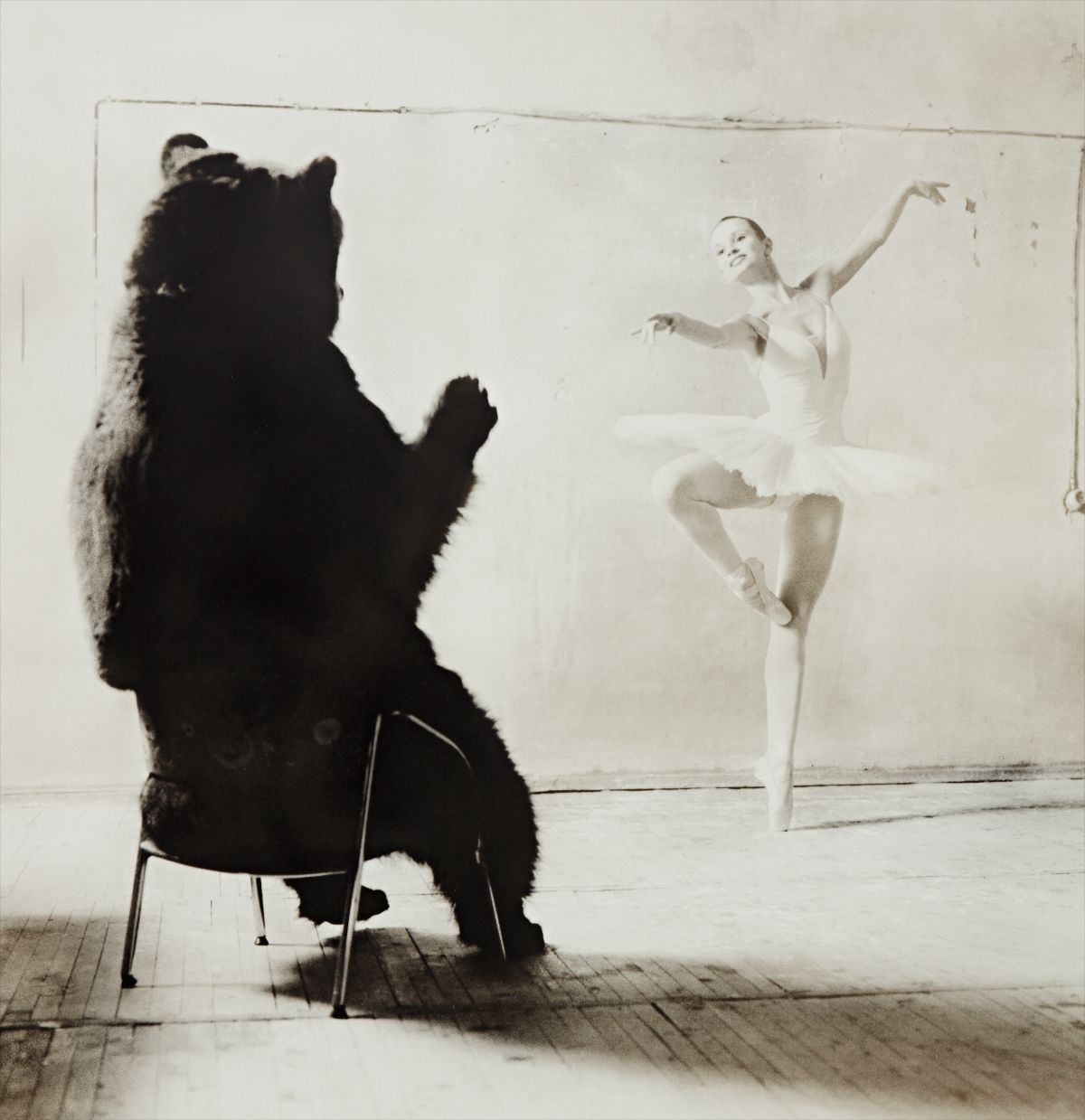
Taste for Russian Ballet
Maiofis is not making simple anti Soviet jokes. His project is more patient and more generous than satire alone. He is exploring what it means to inherit a culture, to love it and distrust it simultaneously, to find in its most absurd corners the deepest truths about human aspiration and failure. "Adversity Makes Strange Bedfellows," printed in 2013, extends this inquiry into territory that feels universal, its proverbial title opening outward from Russian specificity to something recognizable across cultures and centuries.
"Taste for Russian Ballet" brings another dimension of the cultural inheritance into view. Ballet in the Russian context carries enormous symbolic weight: it was both a genuine artistic glory and a heavily managed instrument of state prestige. By staging the imagery of ballet within his characteristic fable world, Maiofis places that legacy under the same warm, affectionate, yet probing light he brings to everything. The work does not mock.
Gregori Maiofis
In Time a Bear May Even Be Taught to Dance
It wonders aloud. This quality of wondering, of taking received cultural wisdom and holding it up to the lamp to see what it is really made of, is what distinguishes his practice from more polemical approaches and what accounts for the sustained admiration it has earned from collectors who return to these images for years without exhausting them. Within art history, Maiofis occupies a position that rewards comparison with several distinct traditions. His use of animals and fable resonates with the Russian lubok tradition of popular illustrated prints, as well as with the literary universe of Krylov and the broader European fable tradition reaching back to Aesop.
His staged photography connects him to the long lineage of constructed image making that runs through Rejlander and Robinson in the nineteenth century, through the Pictorialists whose techniques he has revived, and forward to contemporaries like Alexei Titarenko and the broader community of post Soviet artists grappling with the weight of historical memory. His use of dark humor as a mode of philosophical inquiry places him in the company of artists and writers who understood that laughter and grief are not opposites but companions. For collectors, the appeal of Maiofis is multilayered and enduring. The bromoil prints are technically irreproducible in the sense that each one is a handmade object with its own surface character.
No two prints from an edition are identical. This material individuality gives them a presence in person that reproduction cannot communicate, and it makes them objects of genuine connoisseurship. Collectors who have engaged seriously with his work frequently note the way it sustains continued looking: new details emerge, the allegories open into new readings, the humor deepens into something more complex. His prices have reflected a growing international recognition, with collectors in the United States, Western Europe, and Russia all having built holdings around his photographs.
For a collector assembling a serious body of work in the area of conceptual photography or post Soviet art, his prints represent both a rewarding aesthetic experience and a historically significant acquisition. What Maiofis ultimately offers is a reminder that the oldest forms of storytelling remain the most resilient. Fables survive because they encode truths in forms that outlast the specific circumstances of their creation. By marrying that ancient impulse to the rigorous demands of contemporary fine art photography, and by doing so through a technique of remarkable beauty, he has created a body of work that belongs to the present moment and to something much longer.
His bears and his ballet dancers and his solemn animals gathered under the banners of Soviet science are not relics. They are living images, still asking their questions, still waiting for answers that the viewer must supply.