Gregor Hildebrandt
Gregor Hildebrandt Turns Memory Into Material Beauty
Artist Spotlight · The Collection Editorial
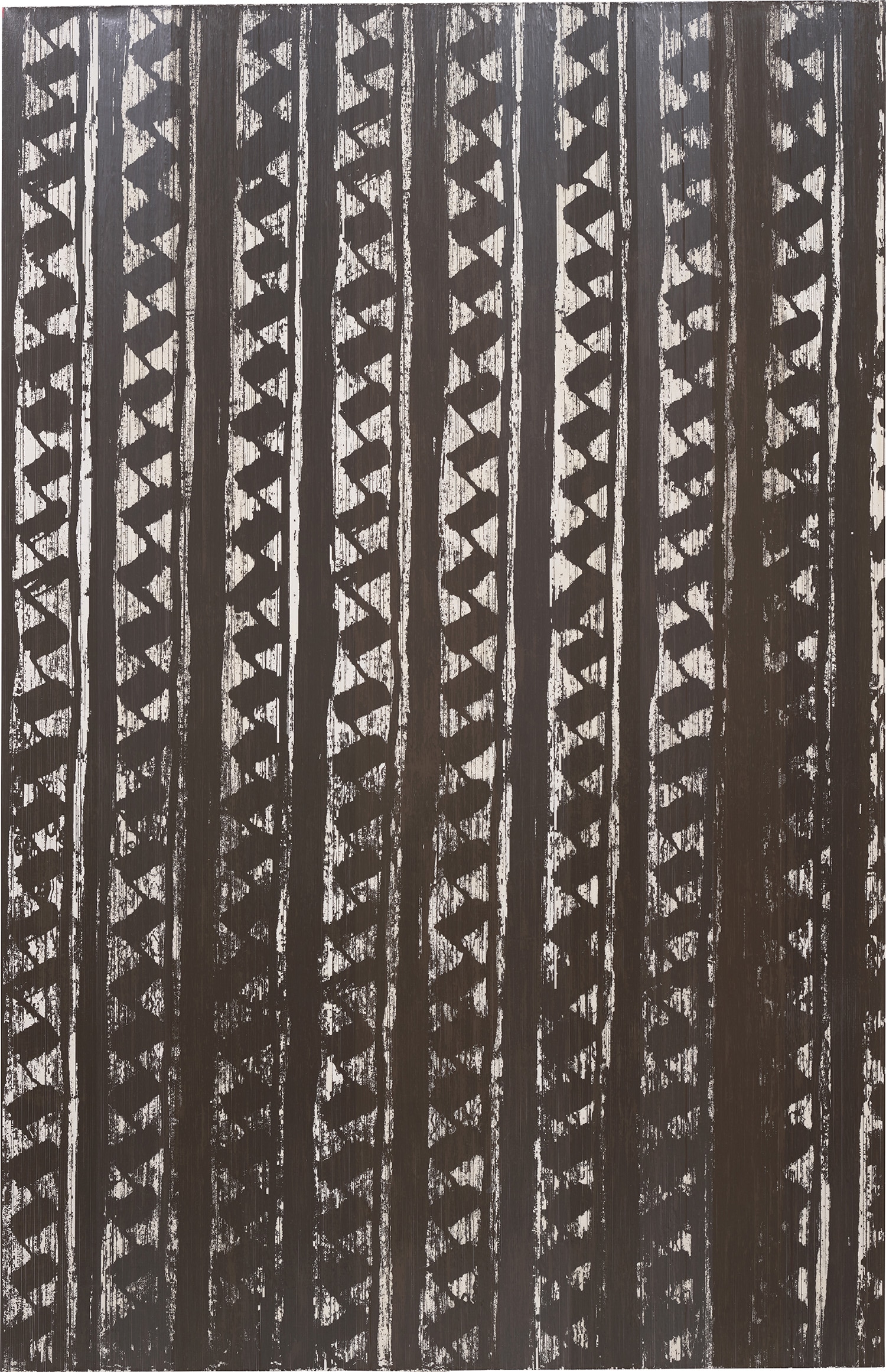
There is a particular kind of attention that settles over a room when Gregor Hildebrandt's work is installed within it. Visitors slow down. They lean in. What appears at first glance to be a richly textured abstract painting or a quietly gleaming monochrome reveals itself, on closer inspection, to be constructed entirely from cassette tape, wound and laid and pressed into something that feels simultaneously archaeological and alive.
Gregor Hildebrandt
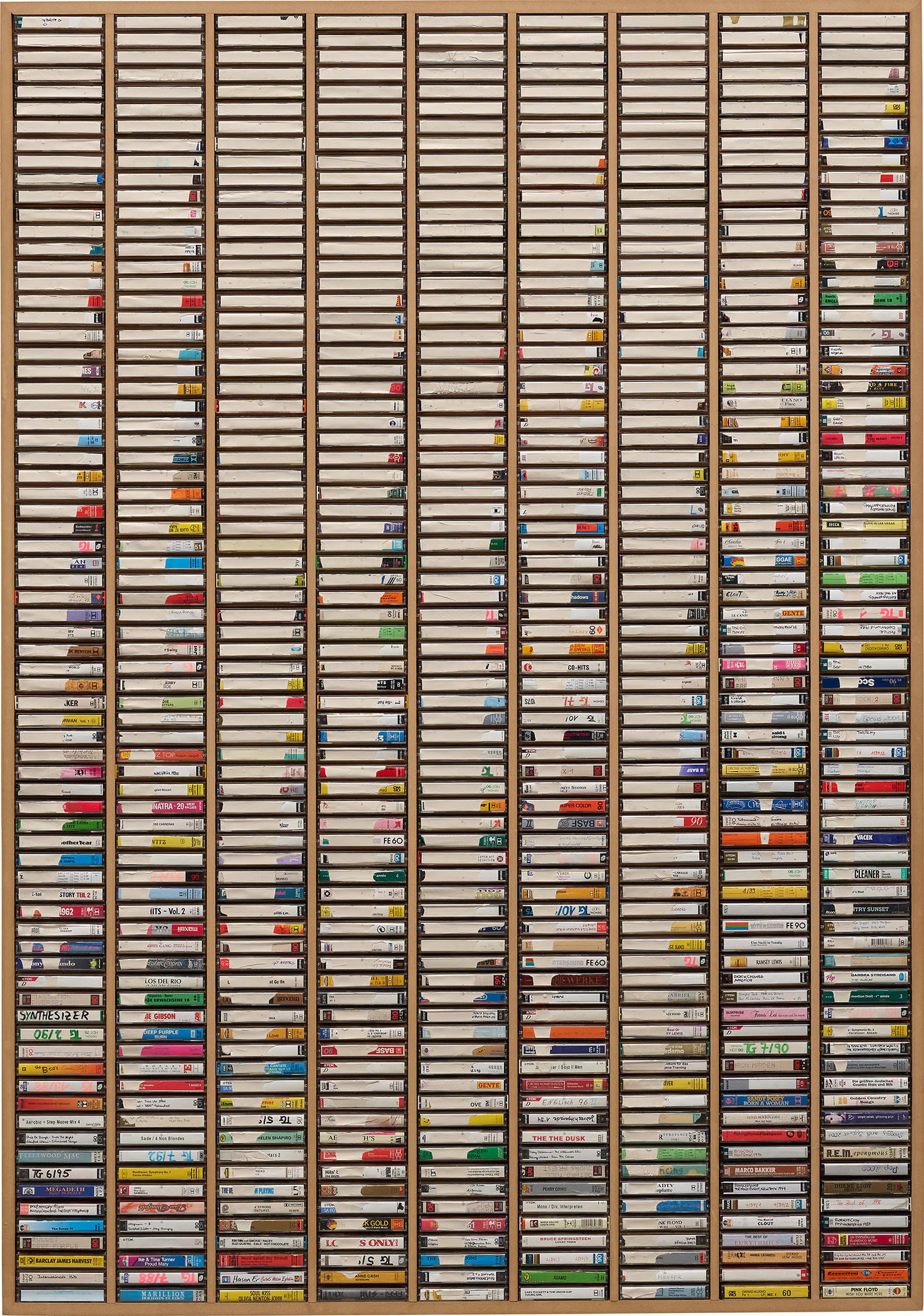
Kassettenkasten: Best, 2012
In recent years, Hildebrandt's profile has grown steadily within the European institutional circuit, with his work appearing at major venues including the Hamburger Bahnhof in Berlin and the Kunsthalle Mannheim, confirming his place as one of the most distinctive voices working at the intersection of conceptual rigor and romantic feeling in contemporary German art. Hildebrandt was born in 1974, and his formation as an artist coincided with one of the most fertile periods in German contemporary art. He studied at the Hochschule für Bildende Künste in Frankfurt and later at the Städelschule, an institution with a legendary history of producing artists who think seriously about the relationship between image and object, surface and idea. The cultural landscape of the 1980s and early 1990s saturated his sensibility: the cassette tape, the vinyl record, the VHS spool were not merely technologies but entire emotional ecosystems, carrying within their thin magnetic strips the residue of adolescent feeling, of music heard late at night, of voices and melodies that seemed, at the time, to contain everything important in the world.
The decision to use these analog materials as his primary medium was not simply a conceptual gesture, though it functions powerfully as one. It was also, for Hildebrandt, a form of fidelity to experience. The tape he uses in his paintings and installations often carries specific recordings: a song by The Cure, a performance of Carmina Burana, a piece of music chosen because its emotional frequency corresponds to the visual or emotional register the work is meant to inhabit. This means that every surface he makes is, in a very literal sense, encoded with sound.
Gregor Hildebrandt
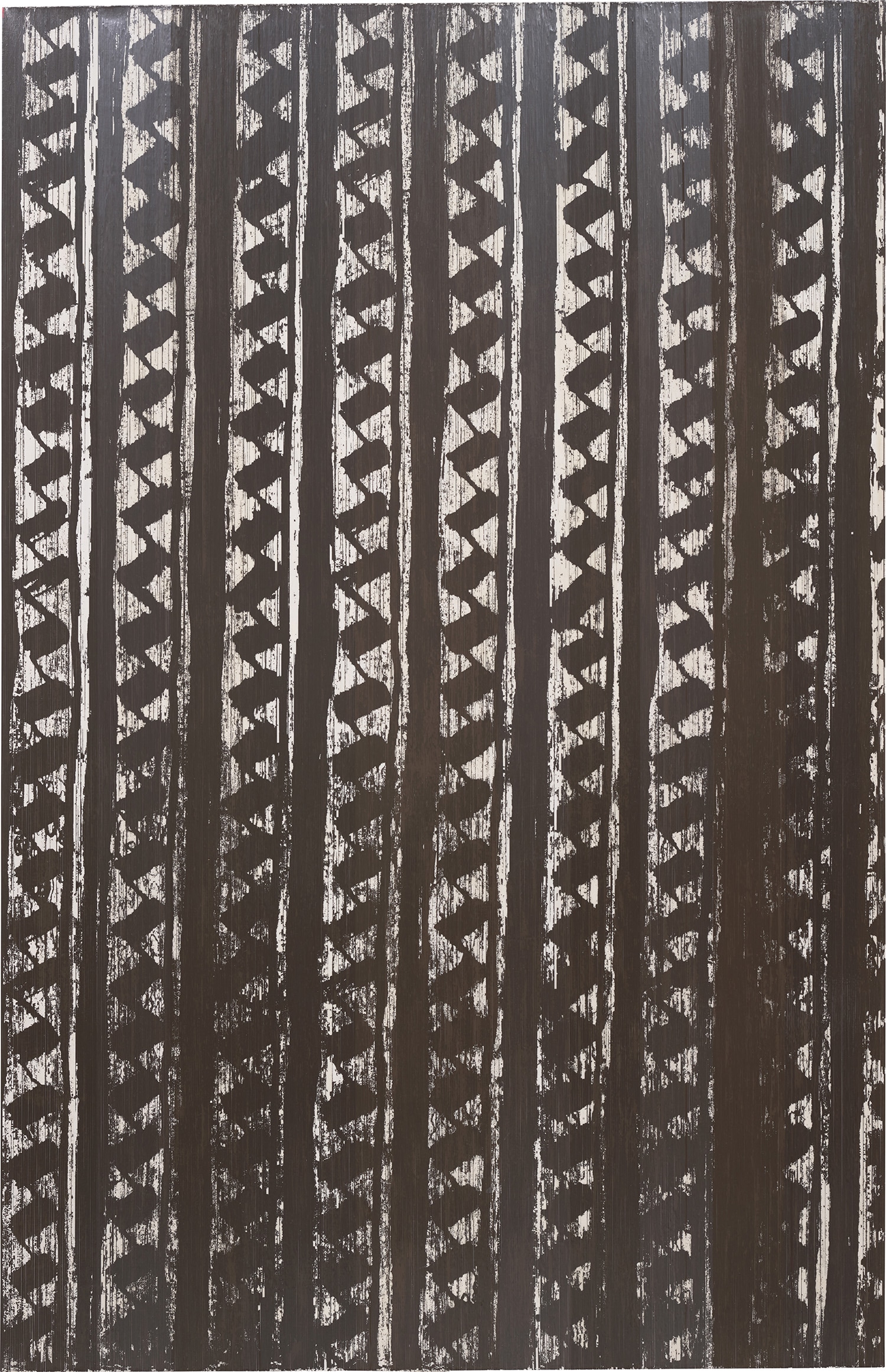
Sors saluais et virtutis (Carmina Burana), 2015
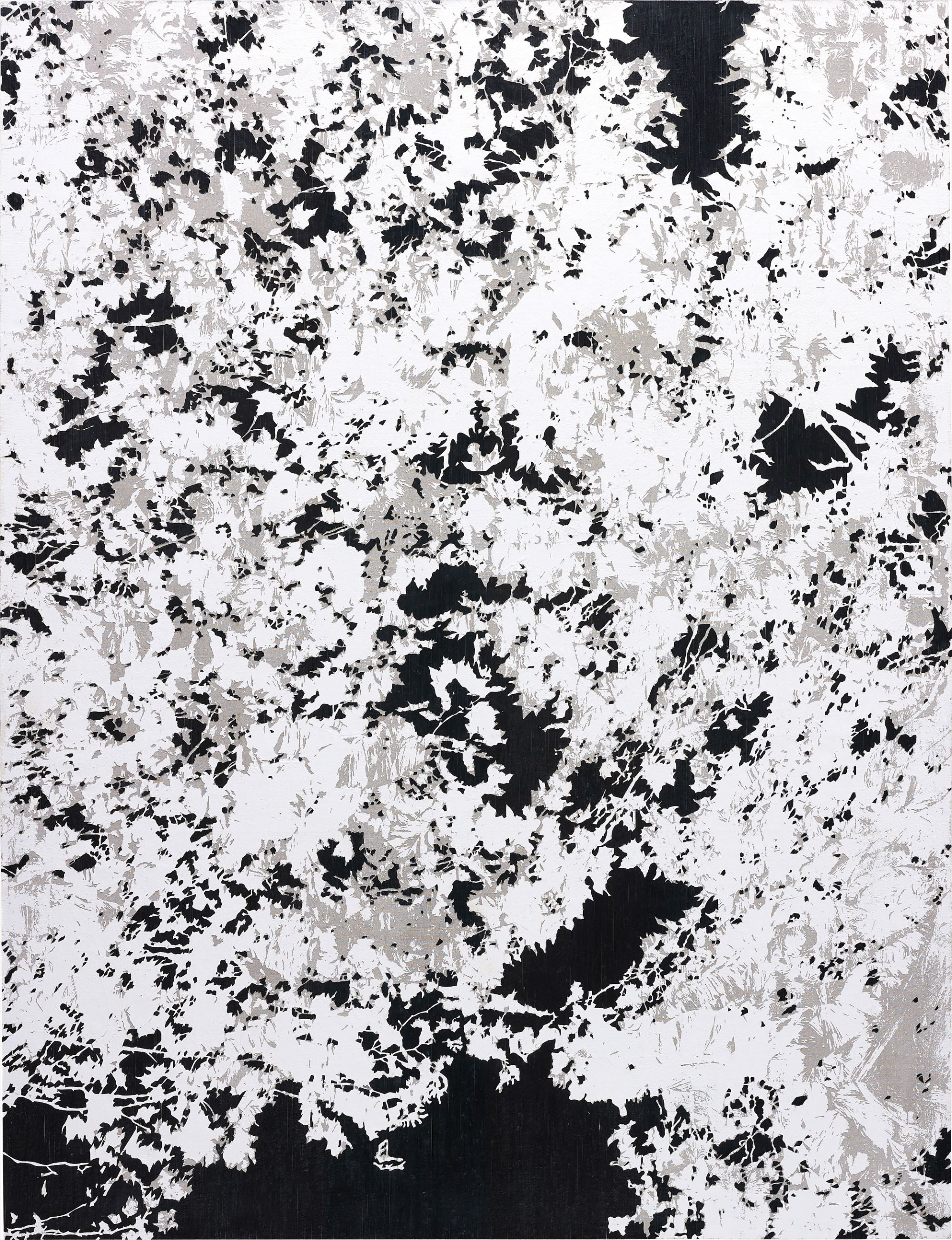
The paintings are silent, but they are not empty. They hold music inside them the way a dark room holds a memory of light. Among the works that best demonstrate the depth and range of his practice, "Mondschein beschienene Blätter" from 2010, which references the song A Forest by The Cure, stands as a particularly luminous example. The cassette tape, drawn across the canvas in dense parallel lines, creates a surface that is both graphically precise and sensuously textured, like something between a musical score and a night sky viewed through trees.
"Sors saluais et virtutis (Carmina Burana)" from 2015 brings together cassette tape and acrylic on canvas in a work whose title invokes the famous medieval poem set to music by Carl Orff, layering classical and contemporary cultural reference with characteristic elegance. "Kassettenkasten: Best" from 2012, constructed from acrylic on inlays and plastic cassette cases presented in the artist's own frame, shows Hildebrandt's gift for finding the readymade within the sentimental, turning the grid of a cassette rack into something that reads as both archive and portrait. "Scharrelmania II (Die Kassetten Meines Freundes)" from 2011 carries its emotional content directly in its title: the cassettes of my friend, a dedication rendered in tape and texture that turns personal history into shared form. What draws serious collectors to Hildebrandt is precisely this quality of double meaning, the way his works operate on a conceptual level while delivering genuine aesthetic pleasure.
Gregor Hildebrandt
Mondschein beschienene Blätter - A Forest (Cure), 2010
He is an artist who has absorbed the lessons of Arte Povera's investment in humble materials and Minimalism's faith in the integrity of the surface, but who inflects both traditions with something warmer and more specifically biographical. His practice resonates with the spirit of artists like Christian Marclay, who has similarly transformed recorded sound into visual art, and carries echoes of the German romantic tradition that runs through Caspar David Friedrich and into Joseph Beuys, that belief that materials can be charged with meaning beyond their physical properties. Hildebrandt belongs to a generation of European artists, alongside figures working in Berlin and Frankfurt's gallery scenes, who returned to materiality and craft as a form of resistance to the frictionless surfaces of digital culture. From a collecting perspective, Hildebrandt's works represent a genuinely compelling proposition.
His output is varied enough across scale and medium that collectors at different levels of commitment can engage meaningfully with his practice, whether through smaller works on canvas, the denser and more monumental tape installations, or the sculptural and object based pieces. The works age in an interesting way: the materials carry the patina of time gracefully, and the conceptual underpinning only deepens as analog media recedes further into cultural memory. Provenance in his case is often pleasingly personal, with works having passed through important European private collections and having been acquired by institutions with serious contemporary holdings. For collectors who value work that rewards sustained looking and that carries genuine intellectual and emotional content, his practice offers rare consistency.
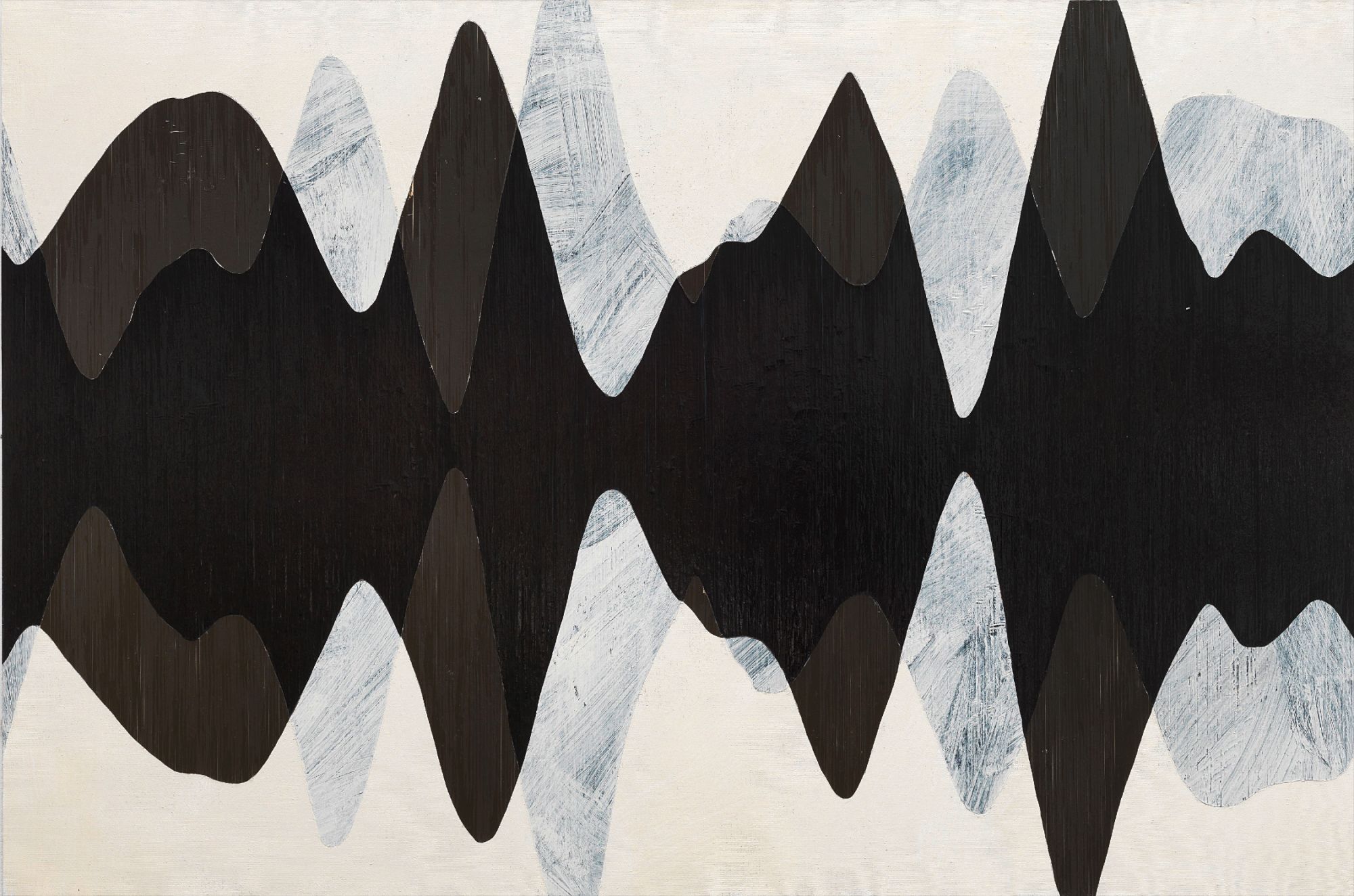
Gregor Hildebrandt
Ich suchte dein Aug, als du's aufschlugst und niemand dich ansah, (Paul Celan: Zahle die Mandeln nach Ute Aurand)
The legacy Hildebrandt is building is one rooted in a particular kind of honesty about how culture actually lives inside us. He understands that we do not experience music as data. We experience it as feeling, as association, as the specific texture of a time in our lives when something mattered intensely. By translating that experience into objects of genuine beauty and conceptual seriousness, he has created a body of work that speaks to anyone who has ever held a cassette tape and felt the strange weight of all the listening it contained.
In a moment when so much contemporary art reaches for irony as its default register, Hildebrandt's commitment to sincerity, to the genuine emotional charge of his materials, feels not nostalgic but quietly radical. His work does not look backward with regret. It preserves, and in preserving, transforms.