Graham Sutherland
Graham Sutherland: Nature's Most Eloquent Witness
Artist Spotlight · The Collection Editorial
“I have tried to be a mouthpiece for what the landscape would say if it could speak.”
Graham Sutherland, interview, 1951
There are artists who observe the natural world, and there are artists who seem to listen to it. Graham Sutherland belonged firmly to the second category. When the Tate Britain mounted a significant survey of his work, critics were struck anew by how thoroughly he had transformed the British landscape into something ancient, urgent, and alive. His paintings do not depict nature so much as interrogate it, finding in thorns, roots, and strange coastal formations a language that speaks directly to the unconscious.
Graham Sutherland
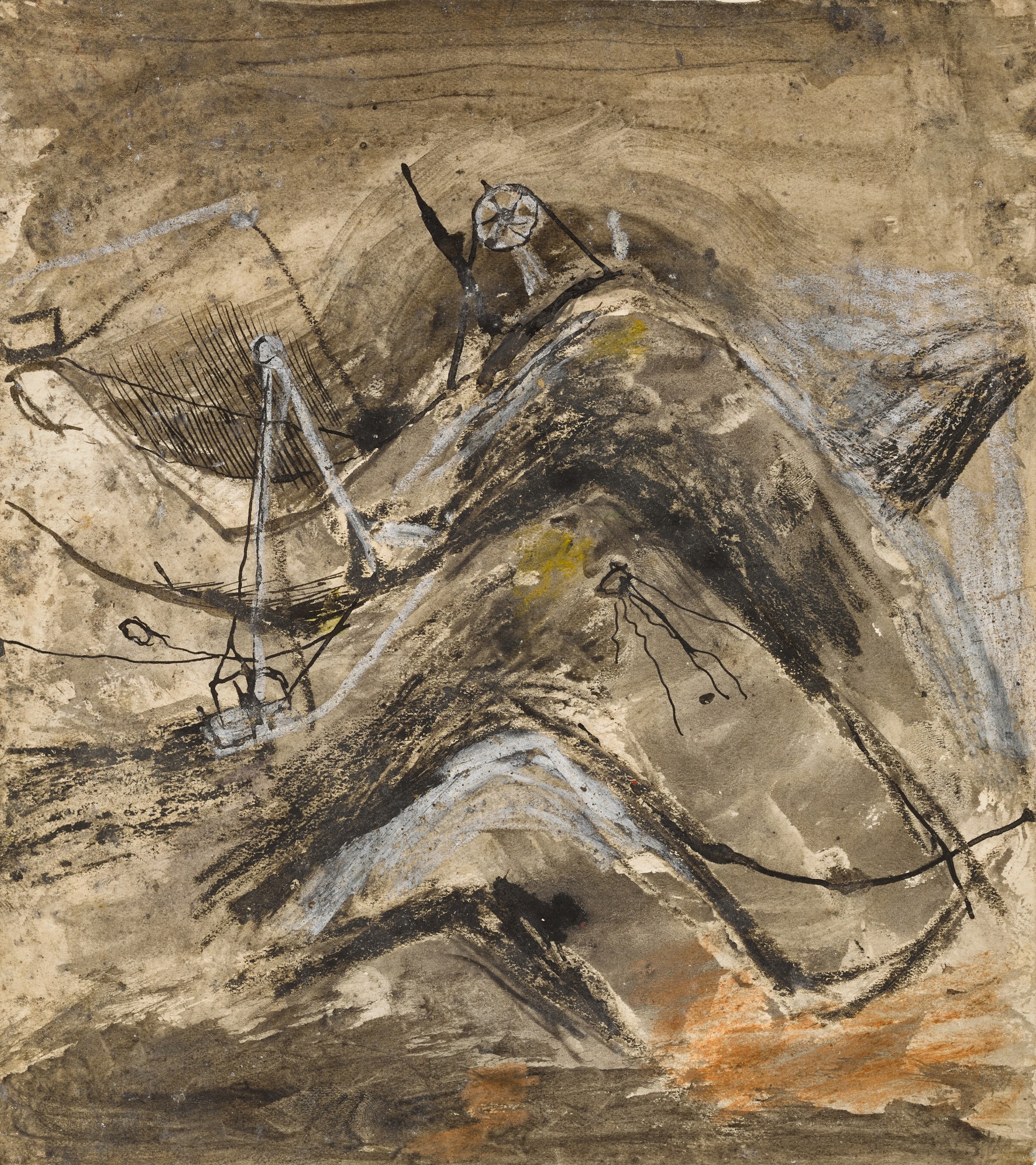
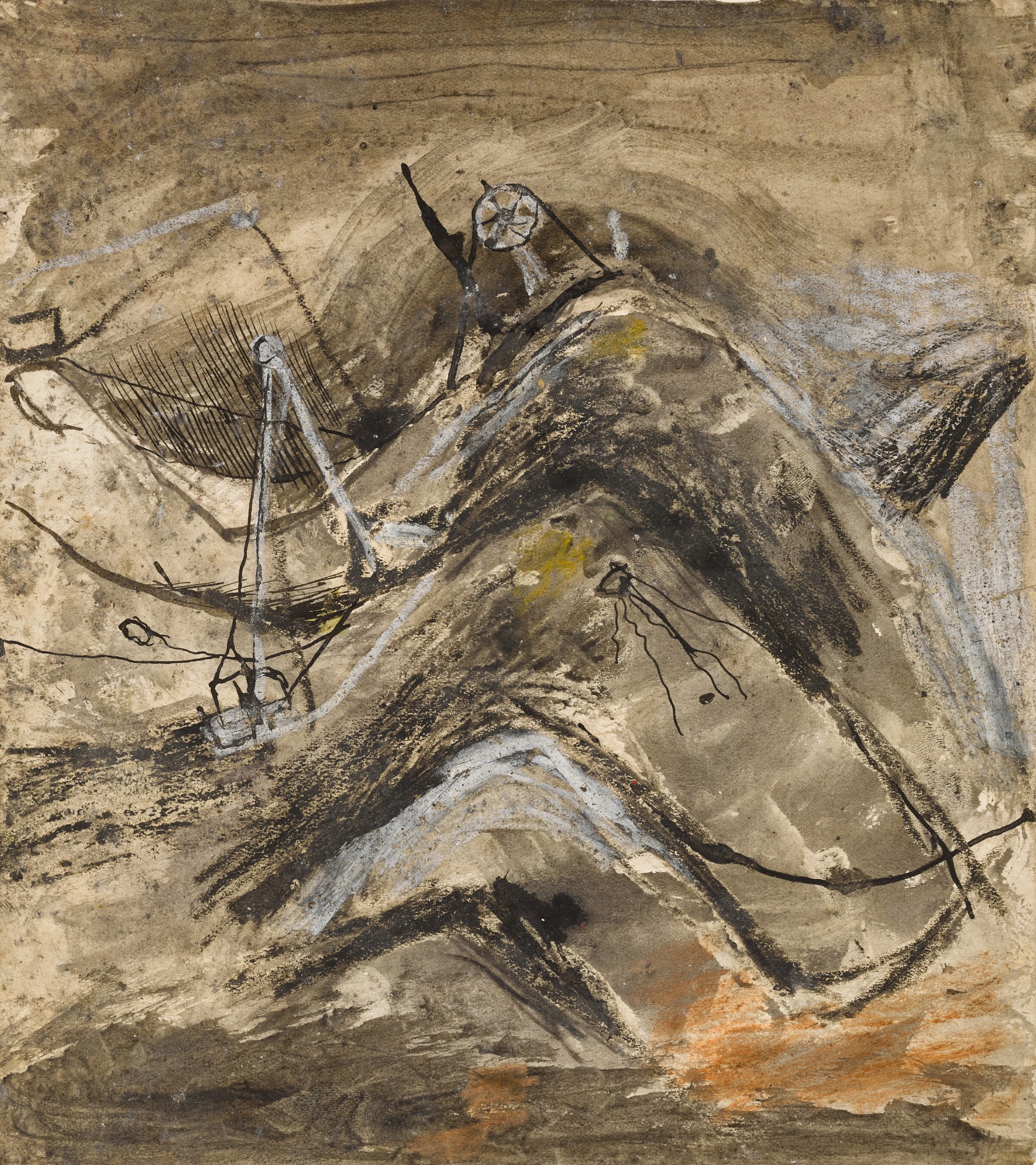
Study: Outcast Coal Production, 1943
To encounter a Sutherland in person is to feel that the organic world has been given a voice it did not previously know it had. Graham Vivian Sutherland was born in London in 1903, the son of a civil servant with an interest in law and literature. His early education took him through various schools before he settled into an apprenticeship at the Midland Railway Works in Derby, a practical beginning that gave him little indication of the visionary career ahead. He eventually enrolled at Goldsmiths College of Art in London, where he trained initially as an etcher and printmaker under the influence of Samuel Palmer, the nineteenth century visionary whose intensely spiritual renderings of the Shoreham valley would remain a touchstone for Sutherland throughout his life.
Palmer taught Sutherland, across the distance of a century, that the English countryside was not merely scenery but a place saturated with feeling. Sutherland worked as an etcher through the 1920s, producing prints of considerable delicacy and skill. The financial collapse of the print market at the end of the decade forced a decisive pivot. He turned to painting, and it was in painting that he found his true register.
Graham Sutherland
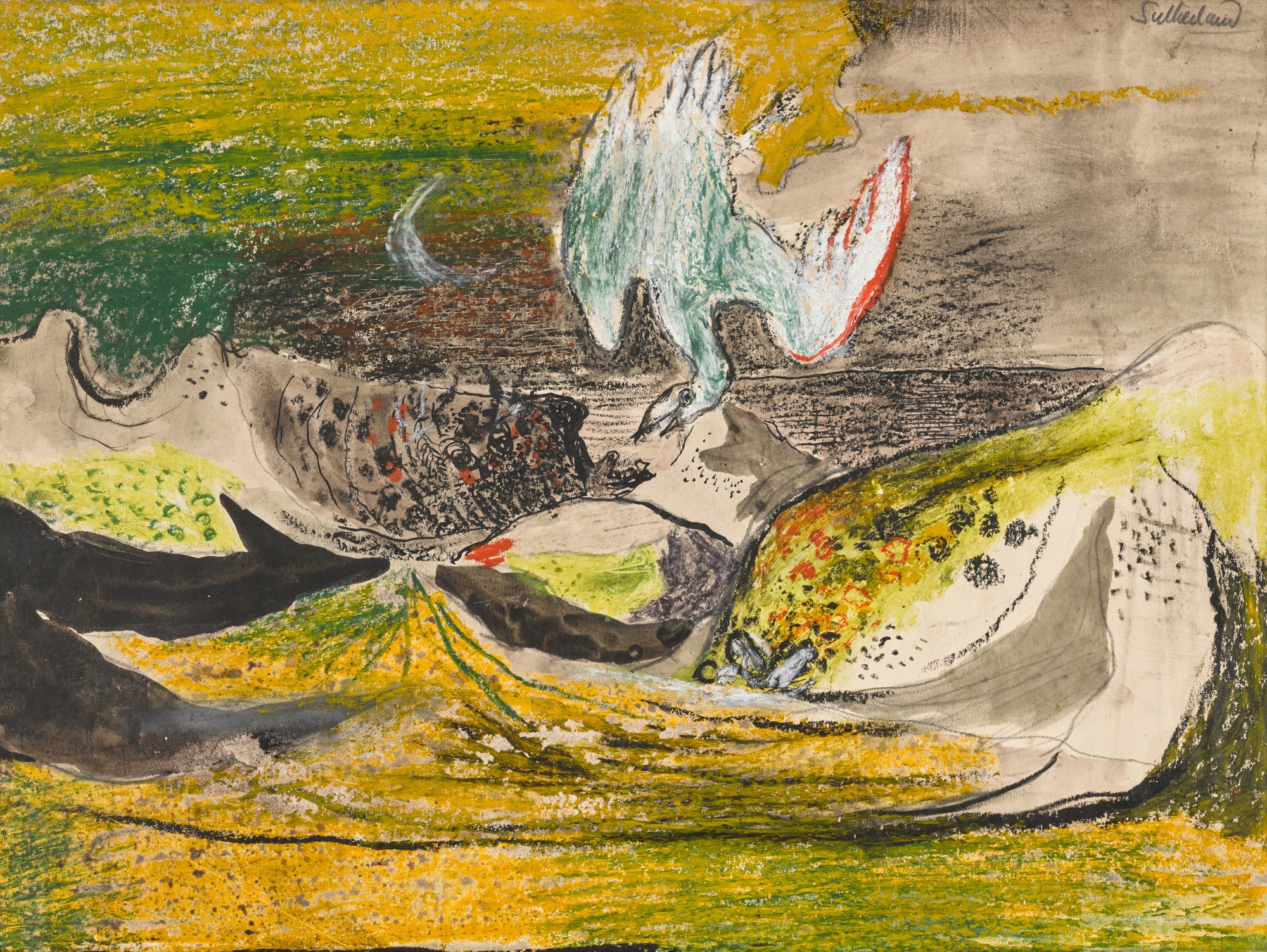
The Dying Swan, 1942
His discovery of Pembrokeshire in South Wales during the 1930s was transformative in the way that certain encounters with landscape can only be described as revelatory. The twisted forms of the Welsh countryside, its gnarled hedgerows and ancient, rounded hills, its sense of latent force barely held in check by the soil, gave him a visual vocabulary he would spend the rest of his life refining. He began to make works in which individual natural forms, a thorn, a root, a lane cutting between dark banks, were elevated to something close to totemic significance. The Second World War brought Sutherland a commission as an Official War Artist, and the works he produced in that capacity rank among the finest documents of the conflict made by any British painter.
“Painting is a way of seeing. You have to surrender yourself to the thing you are looking at.”
Graham Sutherland
His 1943 work Study: Outcast Coal Production, rendered in charcoal, pastel, ink and gouache on paper, captures the exhausted heroism of industrial labour with a directness that owes as much to his feeling for organic form as it does to any documentary impulse. The miners he depicted seem to emerge from the earth itself, their bodies inseparable from the material they are extracting. Similarly, The Dying Swan from 1942, a work in ink, watercolour, gouache, crayon, pencil and charcoal on paper, demonstrates how Sutherland could charge a single creature with an almost unbearable weight of symbolic meaning. These wartime works are among the most sought after of his career.
Graham Sutherland
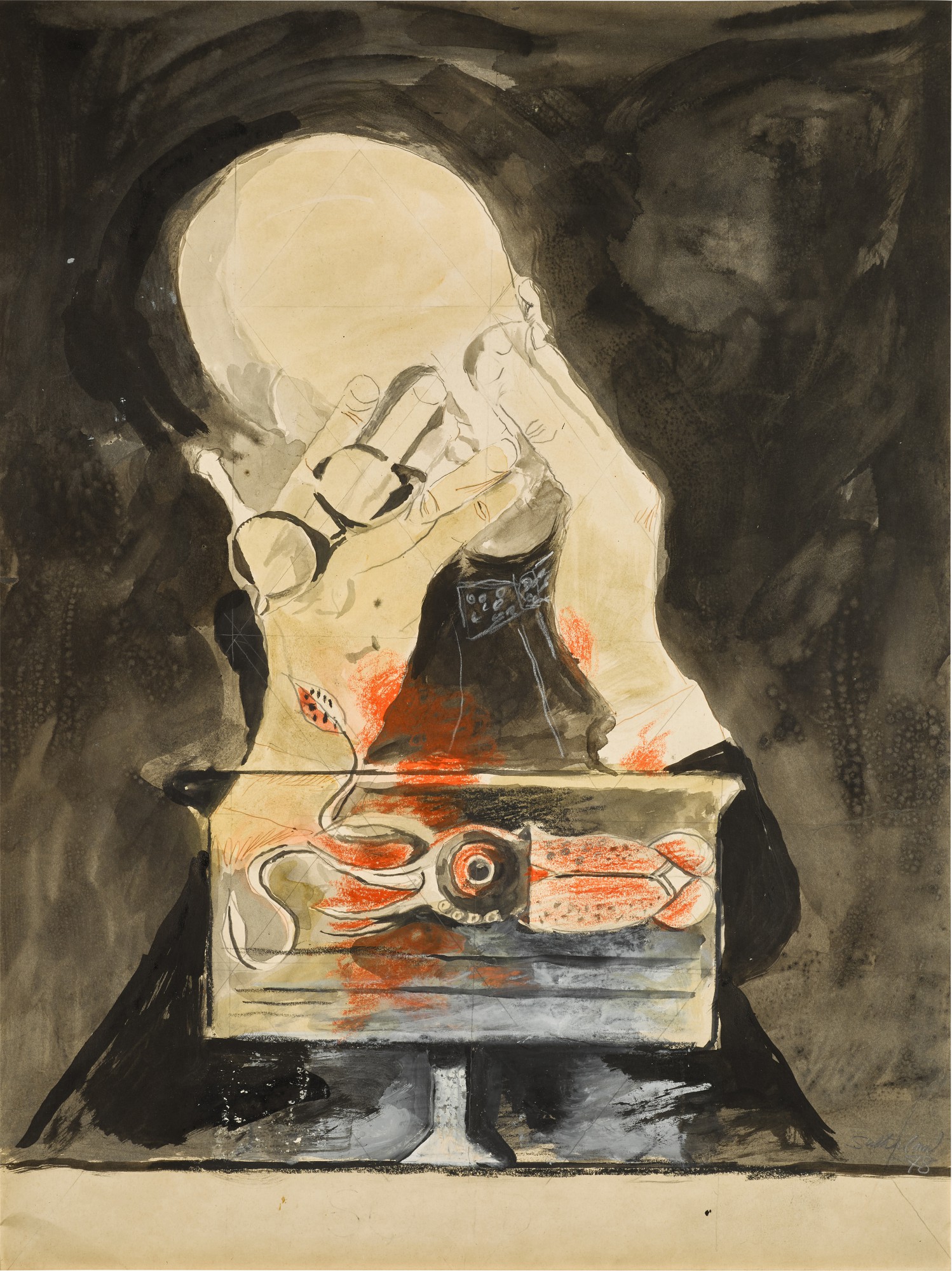
Octopus II, 1978
The postwar decades saw Sutherland reach an international audience. His friendship with Francis Bacon, another artist obsessed with the distorted and the visceral, was formative and mutual. Like Bacon, Sutherland was drawn to figures under pressure, forms caught in states of transformation or distress. His celebrated portrait of Somerset Maugham, painted in 1949 and now in the Tate collection, announced him as a portraitist of remarkable psychological penetration.
The portrait of Winston Churchill, completed in 1954 and famously destroyed on the orders of Lady Churchill, became one of the great legends of twentieth century British art, a reminder that Sutherland's unsparing honesty could prove uncomfortable for his subjects. He later settled for long periods in the south of France, where the Mediterranean light and its particular quality of heat and stillness opened new dimensions in his work. Sutherland's later output shows an artist continuing to deepen and diversify his practice without ever losing the thread that connected him to his earliest insights. Works such as Octopus II from 1978, executed in watercolour, wash, oil pastels, ink, pen and ink and pencil on paper, reveal a late fascination with creatures that seem to blur the boundary between animal and plant, between the fixed and the fluid.
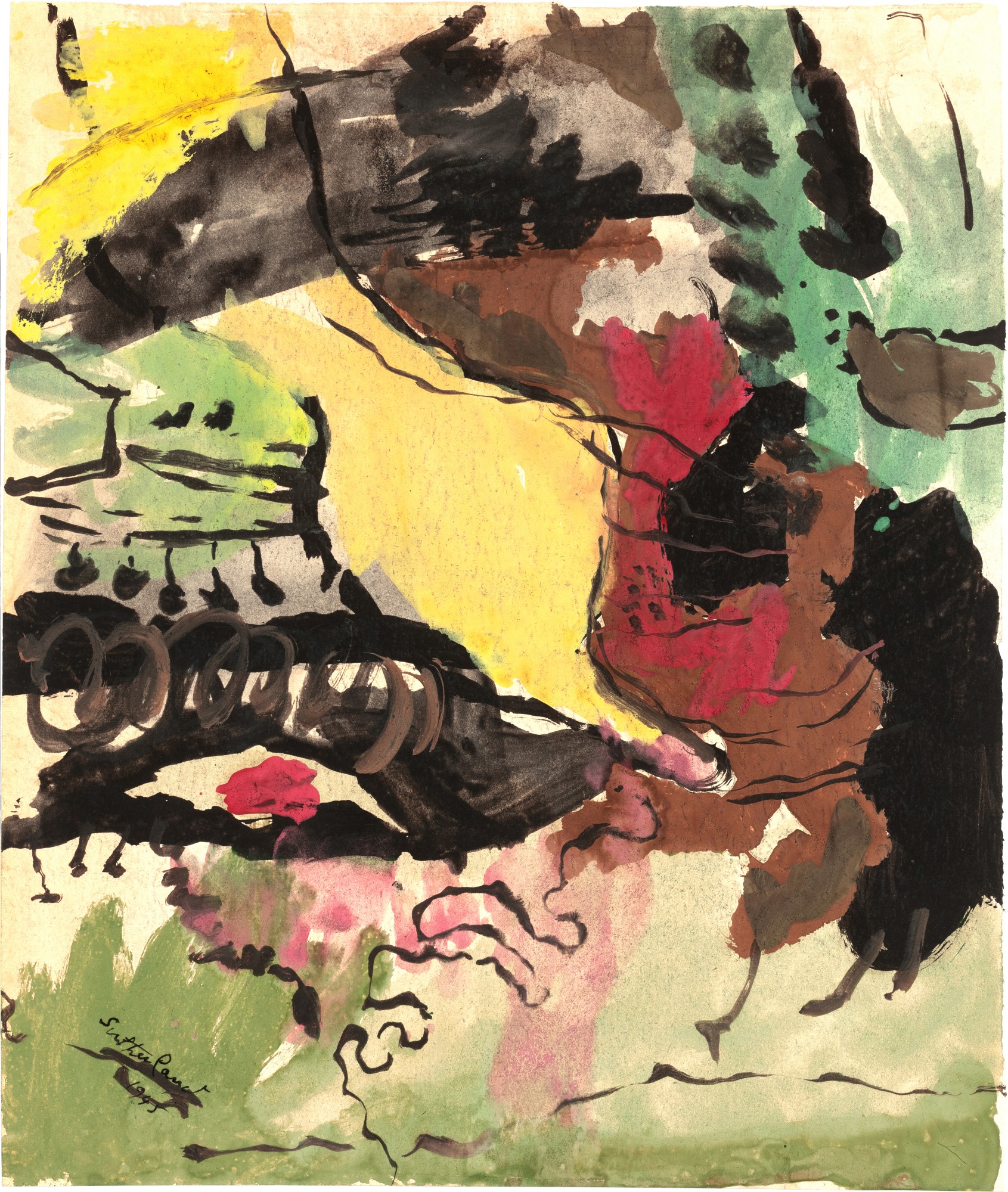
Graham Sutherland
Landscape, 1945
Le Serpent, also from 1978, returns to one of his most persistent symbols, the serpentine form that winds through art history from Eden onwards. Portugal No. II from 1957, in tempera and pencil on card, shows his ability to translate the particular quality of a landscape into something universal. The diversity of his materials, his ease with gouache, charcoal, watercolour, oil, and printmaking, was not restlessness but rigour.
Each medium was chosen because it was the right instrument for the particular truth he was pursuing. For collectors, Sutherland offers a compelling combination of art historical significance and genuine visual pleasure. His works on paper are especially prized, combining the intimacy of the studio with the full force of his imaginative vision. The range of media he employed across a single sheet, as in so many of the works held on The Collection, speaks to an artist who was always searching, always testing the boundary between observation and transformation.
Auction results at the major London houses have shown consistent appreciation for his wartime works and his Pembrokeshire period, while his late natural history subjects have attracted growing interest from collectors who respond to their strange, dreaming quality. A Sutherland work on paper in good condition, from any period of his career, represents an acquisition of both emotional and historical weight. Sutherland's place in the broader story of twentieth century British art is secure, and his influence extends well beyond his national context. His work sits in productive conversation with that of Henry Moore, whose similarly organic approach to form drew on many of the same sources, and with Samuel Palmer before him.
His relationship to European Surrealism was real but never doctrinaire; he absorbed its lessons about the unconscious life of objects without ever surrendering to its programmatic elements. He died in 1980, leaving behind a body of work that continues to reward serious looking. In an era when the natural world has never felt more urgent, more threatened, and more in need of articulate witnesses, Graham Sutherland's lifelong attention to its forms and forces feels not like history but like prophecy.
Explore books about Graham Sutherland
Graham Sutherland
Roger Berthoud
Graham Sutherland: A Maker of Myths
Andrew Causey
Graham Sutherland: Insects, Landscape, War
Frances Spalding
The Art of Graham Sutherland
Douglas Cooper

Graham Sutherland: Complete Graphic Works
Catalogue Raisonné Committee