Glenn Ligon
Glenn Ligon: Language, Light, and Legacy
Artist Spotlight · The Collection Editorial
“My work is about the experience of being a certain kind of person in America, and language is how that experience is transmitted.”
Glenn Ligon, interview with Tate Modern
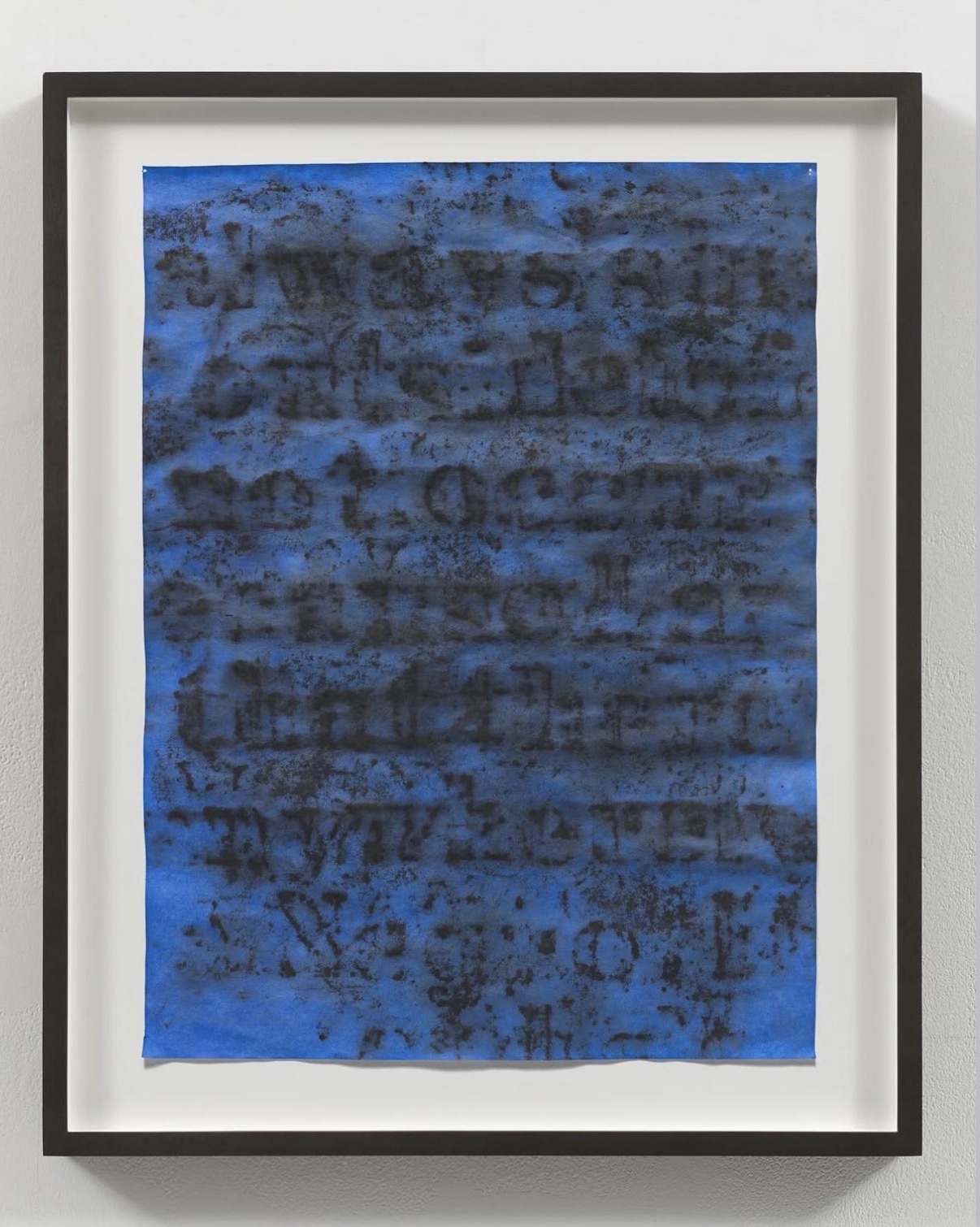
In 2025, Glenn Ligon released "Study for Blue (for JB) #6," a new pigment print that signals both a continuation and a deepening of the artist's lifelong conversation with James Baldwin. The work arrives at a moment when Ligon's reputation sits at an undeniable apex, with institutions, collectors, and critics alike reaffirming his place as one of the most essential American artists working today. That the piece is dedicated to Baldwin, the writer who has haunted and illuminated Ligon's practice for four decades, feels entirely fitting. Ligon has never been an artist who chases the moment.
Glenn Ligon
Study for Blue (for JB) #6, 2025
He has always been the one the moment eventually catches up to. Glenn Ligon was born in the Bronx, New York, in 1960, and grew up navigating the complex textures of Black American urban life during a period of profound social transformation. He studied at Wesleyan University and later at the Whitney Museum of American Art's Independent Study Program, a crucible that shaped a generation of conceptually rigorous artists in New York. That institutional formation gave Ligon a framework for thinking about art not as decoration or spectacle, but as a site of inquiry, a place where language, history, and identity could be examined with the same precision a philosopher might bring to a difficult text.
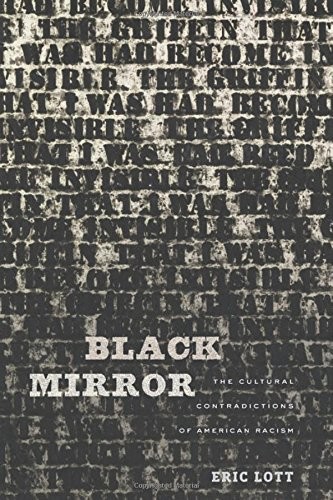
These formative years planted the seeds of a practice that would become instantly recognizable and endlessly nuanced. Ligon's artistic development accelerated through the late 1980s and into the 1990s, a period when American culture was grappling intensely with questions of race, representation, and visibility. He found his signature method early and committed to it with remarkable discipline: stenciling text directly onto canvas, often drawn from literary sources, repeated until the words accumulate, blur, and ultimately dissolve into abstraction. The technique does something philosophically profound.
Glenn Ligon
Untitled
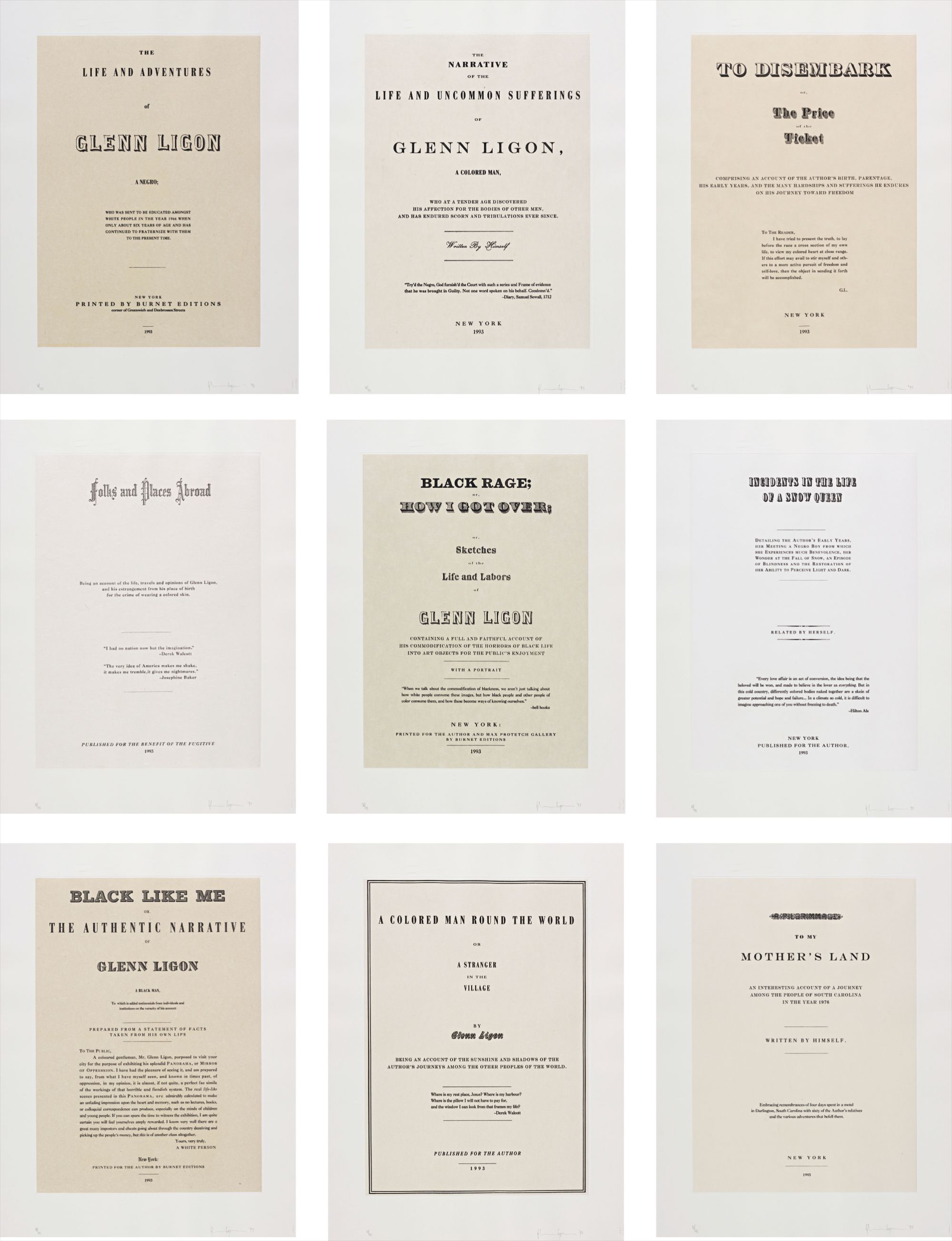
It enacts the very difficulty of being seen and understood that the texts themselves describe. A phrase from Baldwin or Zora Neale Hurston begins legibly, but as Ligon repeats it down the canvas, the oilstick builds and smears, and what started as clear statement becomes a kind of beautiful, troubled darkness. The medium becomes the message in the most rigorous sense. Among his most celebrated bodies of work are the text paintings begun in the early 1990s, including the "Narratives" series, with pieces such as "Narratives (Disembark)," published by Max Protetch Gallery in New York in 1993.
“I want the text to be both readable and unreadable, so you have to work to get something out of the painting.”
Glenn Ligon, Whitney Museum retrospective catalogue
These works draw on nineteenth century slave narratives, inserting voices that American art history had long ignored into the formal tradition of painting. The 1991 oilstick on paper works established his command of the intimate scale, while "The Future #1" from 2004, rendered in oilstick and acrylic on canvas, shows Ligon expanding his vocabulary into something more monumental and declarative. "Funny Motherfucker #1" from 2007 demonstrates his willingness to embrace the full, unvarnished register of Black vernacular language, refusing any comfortable euphemism, insisting that the viewer sit with the complexity of that choice. Ligon's neon sculptures represent a brilliant counterpoint to the dense materiality of his paintings.
Glenn Ligon
Narratives (Disembark)
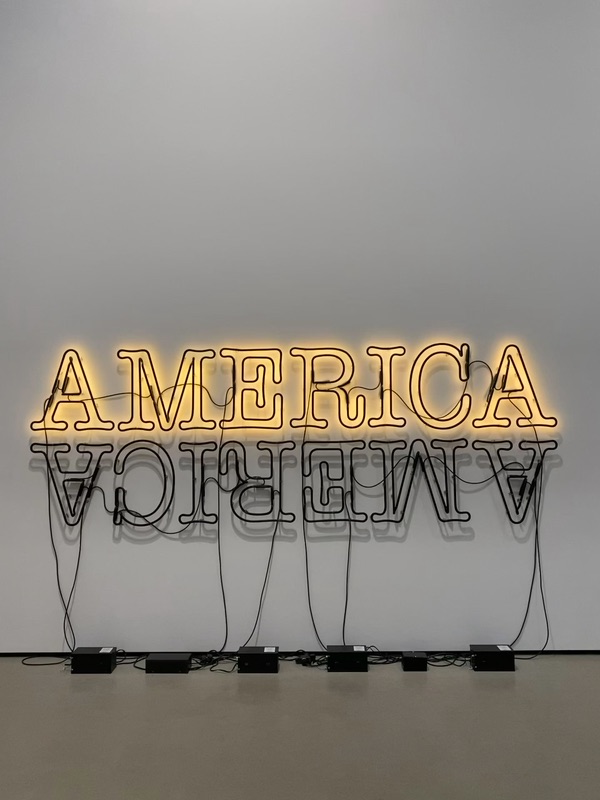
Works like "Untitled" in neon and paint, and the celebrated "Double America 2" from 2014, transform found and appropriated text into glowing, buzzing light. There is something deeply American about neon, with its associations with commerce, spectacle, and the seduction of the visible. Ligon turns that register inside out. "Double America 2" presents the word "America" twice, one version glowing cleanly and the other appearing to gutter or falter, a meditation on the gap between the nation's promises and its realities that manages to be visually beautiful while being morally clear eyed.
These sculptures have become among his most recognizable and widely discussed works, appearing in major institutional collections including MoMA and the Tate. From a collecting perspective, Ligon occupies a genuinely rare position in the market. He is both critically unimpeachable and commercially significant, a blue chip artist whose works appear regularly at major auction houses and consistently perform at the highest levels. Collectors are drawn to the works on paper and the print editions as considered entry points into his practice, with editions like the "Narratives" prints from Max Protetch offering documented provenance and art historical weight.
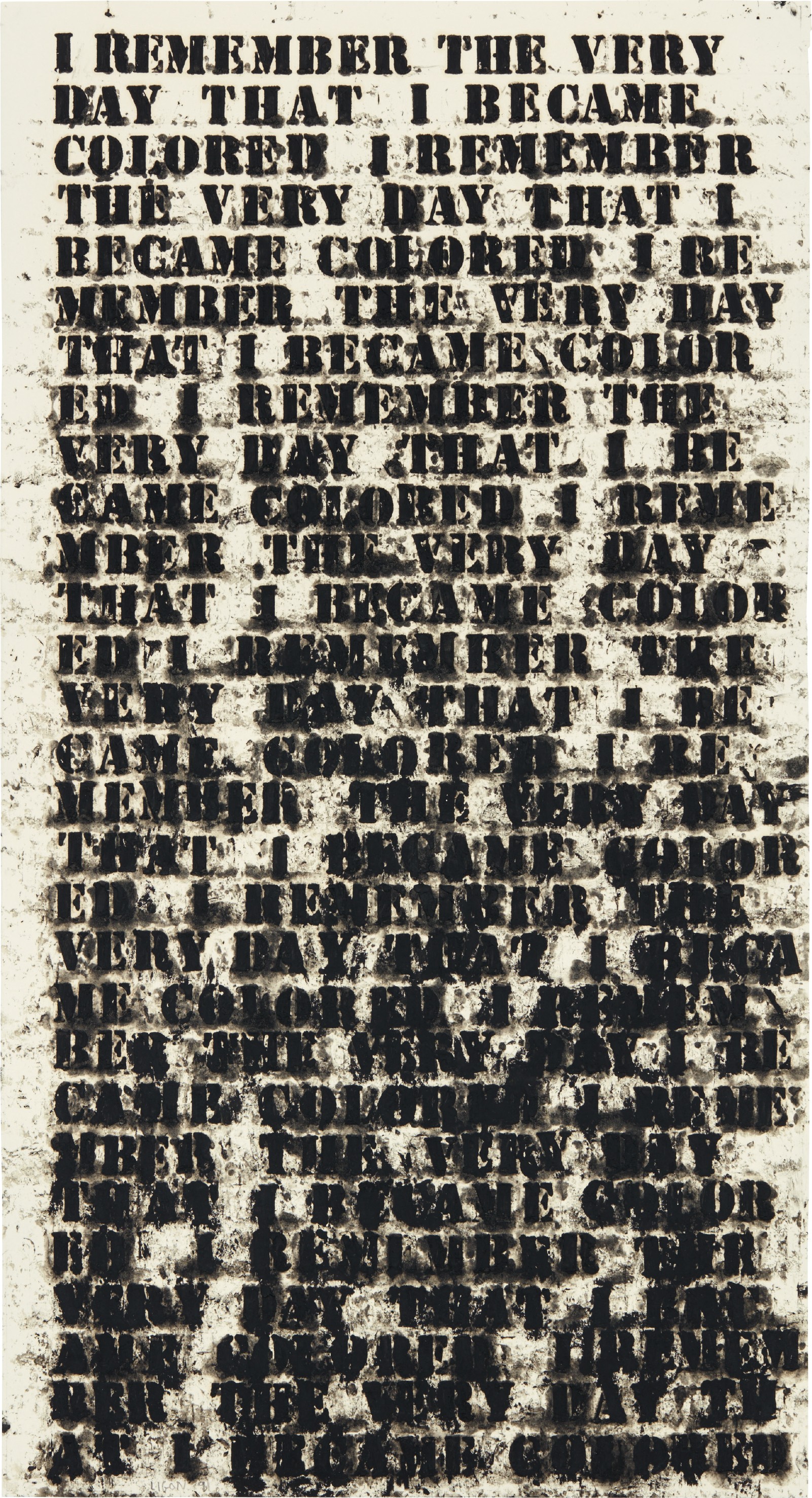
Glenn Ligon
oilstick on paper, 1991
The larger paintings, particularly the text works on canvas, have commanded significant sums at Christie's, Sotheby's, and Phillips, reflecting sustained institutional and private demand. What makes a Ligon genuinely valuable to a collection is not only its market standing but the way the work continues to generate meaning. These are not decorative objects. They are active, thinking things.
Ligon's place within art history is most clearly understood in relation to a generation of artists who emerged from conceptualism and brought to it an urgent social dimension. His practice shares a commitment to language as artistic material with artists like Barbara Kruger and Jenny Holzer, while his engagement with Black American cultural and literary history connects him to painters like Kerry James Marshall and Kara Walker, all of whom have insisted on the full complexity of that inheritance as worthy of the most serious artistic attention. At the same time, Ligon's formal rigor and his engagement with the history of abstraction place him in conversation with the tradition of painting itself, from the gestural accumulation of the Abstract Expressionists to the cool systematics of Minimalism. He belongs to no single lineage because he has built his own.
Retrospectives at the Whitney Museum of American Art and Camden Arts Centre have cemented Ligon's canonical status on both sides of the Atlantic, and his works in the permanent collections of MoMA and the Tate mean that future generations will encounter him as a foundational figure. But what makes Ligon matter most profoundly right now is the way his art refuses to let its questions become comfortable. In a cultural moment that often oscillates between outrage and exhaustion, Ligon's paintings offer something rarer: sustained, rigorous, formally beautiful attention to the hardest questions in American life. The words he stencils onto canvas are always both specific and universal, always both a historical document and a present tense demand.
He is an artist who has spent a lifetime teaching us how to read, and in doing so, has given us new ways to see.
Explore books about Glenn Ligon