Giovanni Antonio Canal, called Canaletto
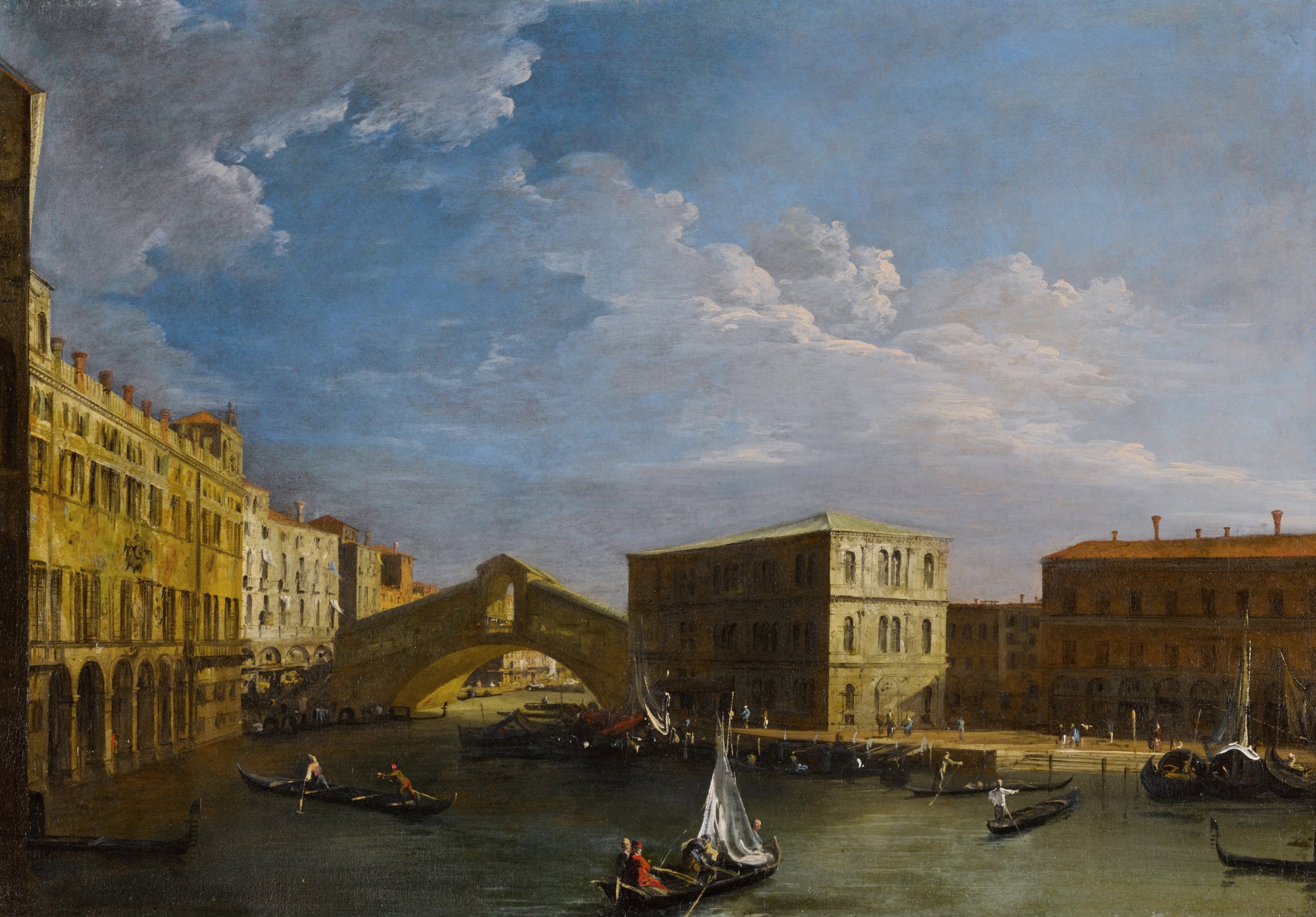
Canaletto: Venice Rendered in Eternal Light
Artist Spotlight · The Collection Editorial
Stand before any major canvas by Giovanni Antonio Canal, and you will understand immediately why the eighteenth century fell so completely under his spell. The light in his paintings does not merely illuminate a scene; it seems to arrive from some impossibly perfect Venetian morning, catching the ripple of the Grand Canal, bouncing off the pale stone of a palazzo, settling with quiet authority over a city that already knew it was extraordinary. Today, Canaletto's work commands reverence in the greatest institutions in the world, from the Royal Collection at Windsor Castle, which holds one of the most significant bodies of his drawings ever assembled, to the National Gallery in London and the Museo Correr in Venice itself. His presence at auction remains a cultural event, and his paintings continue to attract serious collectors who understand that acquiring a Canaletto is acquiring something close to a piece of Venice's very soul.
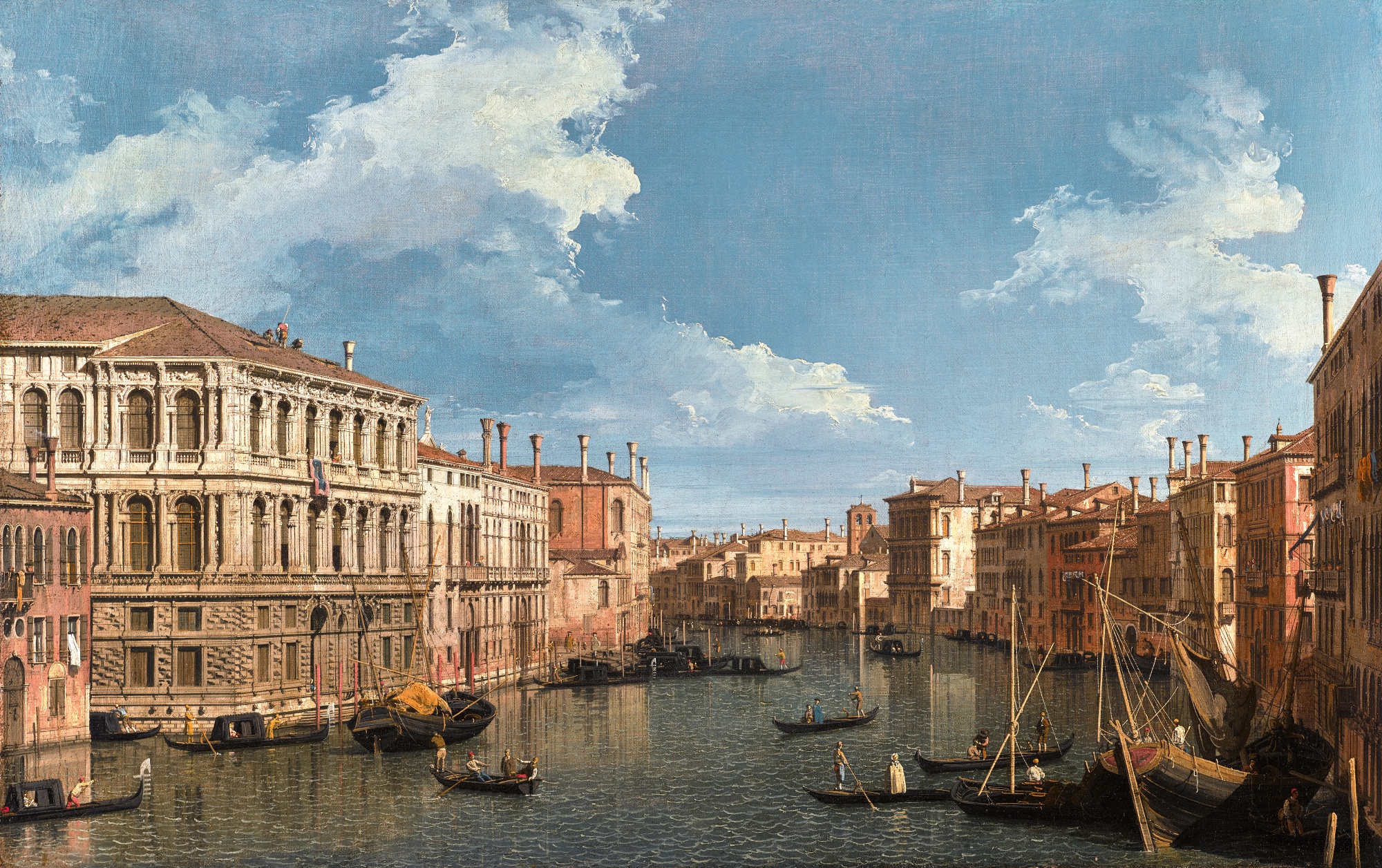
Giovanni Antonio Canal, called Canaletto
Venice, The Grand Canal, looking north-west, with the Palazzo Pesaro, Palazzo Foscarini, and the pinnacle of San Stae, to the left, with the Palazzo Vendramin-Calergi and San Marcuola, to the right
Giovanni Antonio Canal was born in Venice in 1697 into a family already steeped in the visual arts. His father, Bernardo Canal, was a theatrical scene painter of some standing, and the young Giovanni grew up surrounded by the practical business of making large scale illusionistic imagery. This apprenticeship in theatrical design was not a detour from his eventual vocation; it was the crucible in which his remarkable spatial intelligence was formed. He learned early how architecture could be dramatised, how perspective could be felt as well as calculated, and how light behaved differently depending on the hour and the season.
These were lessons that would shape every canvas he ever made. In 1719, Canaletto travelled to Rome, ostensibly to assist his father with scene painting for operas by Alessandro Scarlatti. The journey proved to be a turning point of the highest order. Rome in the early eighteenth century was alive with artists working in the veduta tradition, producing detailed topographical views of classical ruins and contemporary streetscapes for an audience hungry for images of the ancient world.
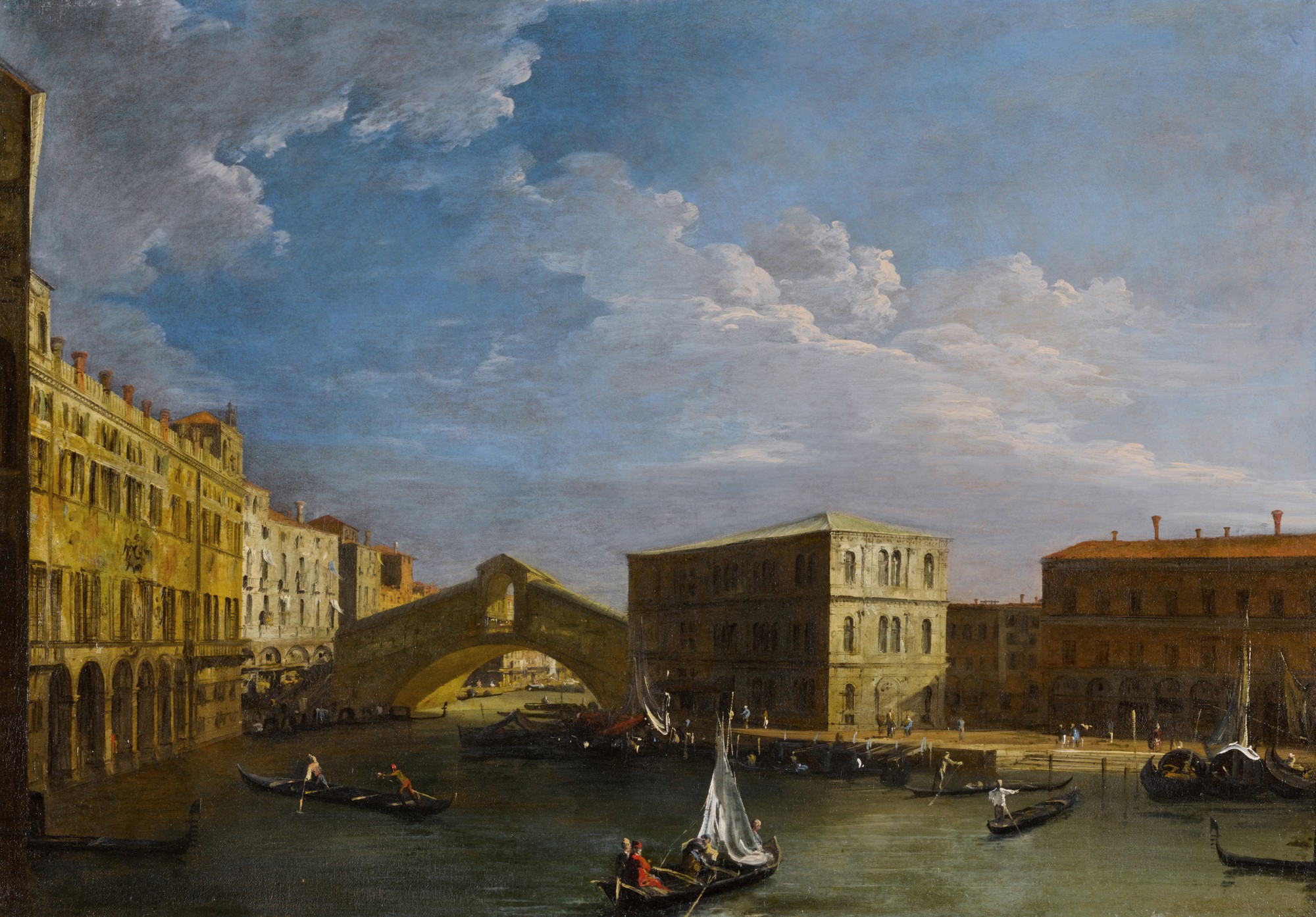
Giovanni Antonio Canal, called Canaletto
Venice, a view of the Grand Canal and the Rialto Bridge from the North
Giovanni Pannini was among those whose work Canaletto would have encountered. Returning to Venice around 1720, Canal abandoned theatrical work entirely and committed himself to painting views, a decision that would define the rest of his career and, indeed, the genre itself. His early Venetian paintings from the 1720s have a dramatic, almost theatrical quality that reflects his formation in the world of stage design. The skies are stormy, the shadows deep, the atmosphere charged with romantic tension.
By the 1730s, his style had evolved toward the luminous clarity and meticulous architectural precision that became his signature. He is known to have used a camera obscura, an optical device that projected scenes onto a surface and allowed for extraordinarily accurate renderings of perspective and proportion. Far from diminishing his achievement, this tool underlines his intellectual seriousness: Canaletto was a painter who thought hard about how vision worked, and who used every available means to capture something true about the world he saw. The works for which he is most celebrated place the viewer at the water's edge, looking down the Grand Canal as the city opens up on either side in breathtaking architectural procession.
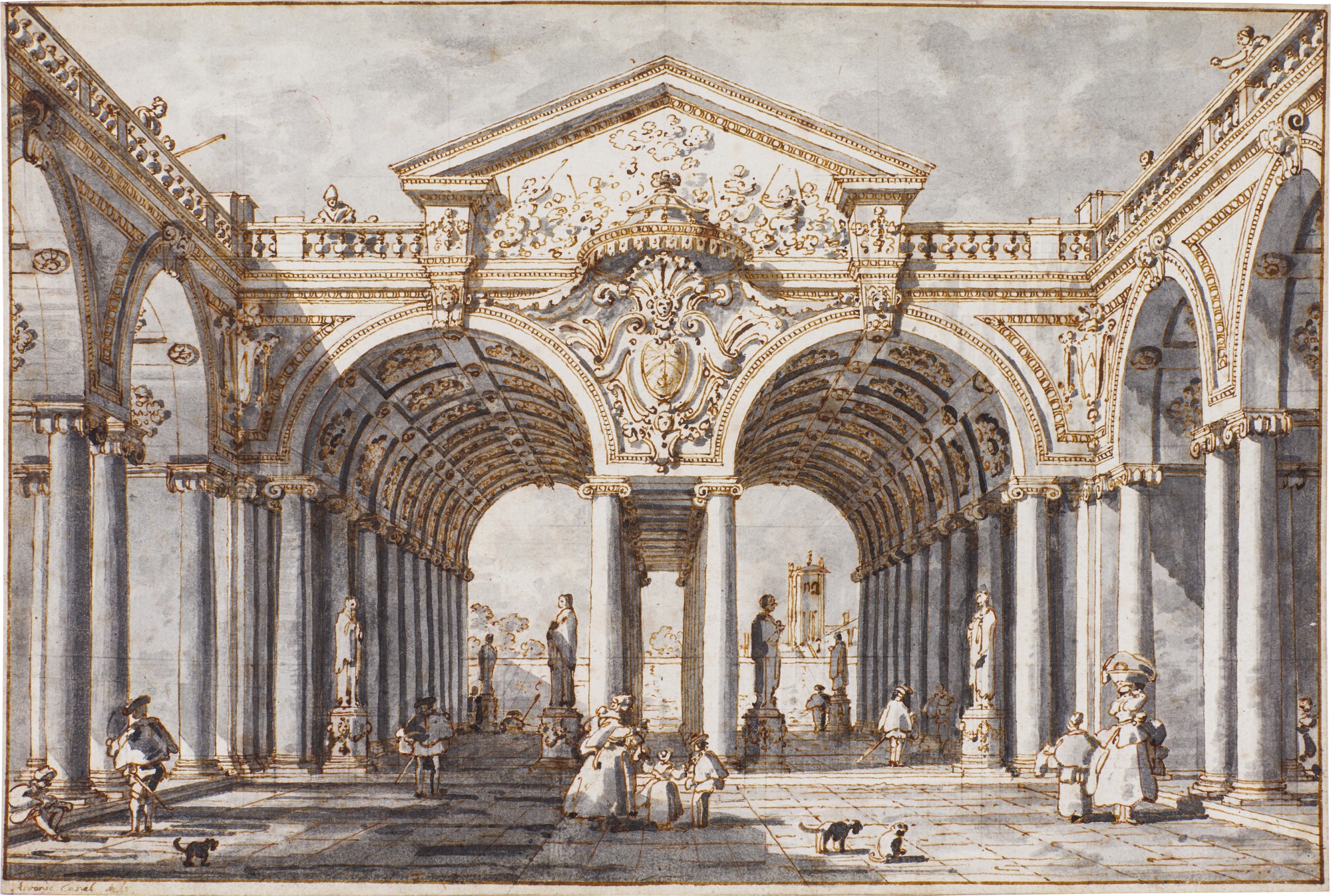
Giovanni Antonio Canal, called Canaletto
Capriccio: a courtyard with a double-arched portico surmounted by an elaborate pediment
His canvases depicting the Grand Canal looking north west past the Palazzo Pesaro and the Palazzo Foscarini toward San Stae, or looking from the Rialto Bridge northward along the canal's great arc, are among the most recognisable images in the history of Western art. They are not merely topographical records. They are essays in the experience of being in a place, composed with a rigour that would have satisfied an architect and a sensitivity to atmosphere that belongs entirely to painting. The precision of his stonework, the individuality of his gondoliers and merchants, the way clouds move across a blue sky with unhurried confidence: all of these elements combine to produce images that feel simultaneously documentary and transcendent.
Beyond his great canal views, Canaletto's range was broader and stranger than his popular reputation sometimes suggests. His capricci, imaginary architectural compositions in which real and invented buildings are freely combined, reveal a playful and inventive mind unbound by topographical duty. A capriccio such as his courtyard with a double arched portico surmounted by an elaborate pediment, executed in pen and golden brown ink with grey wash over chalk, demonstrates his mastery of draftsmanship and his delight in pure architectural fantasy. His etchings, produced around 1740 to 1746, represent another dimension of his practice entirely.
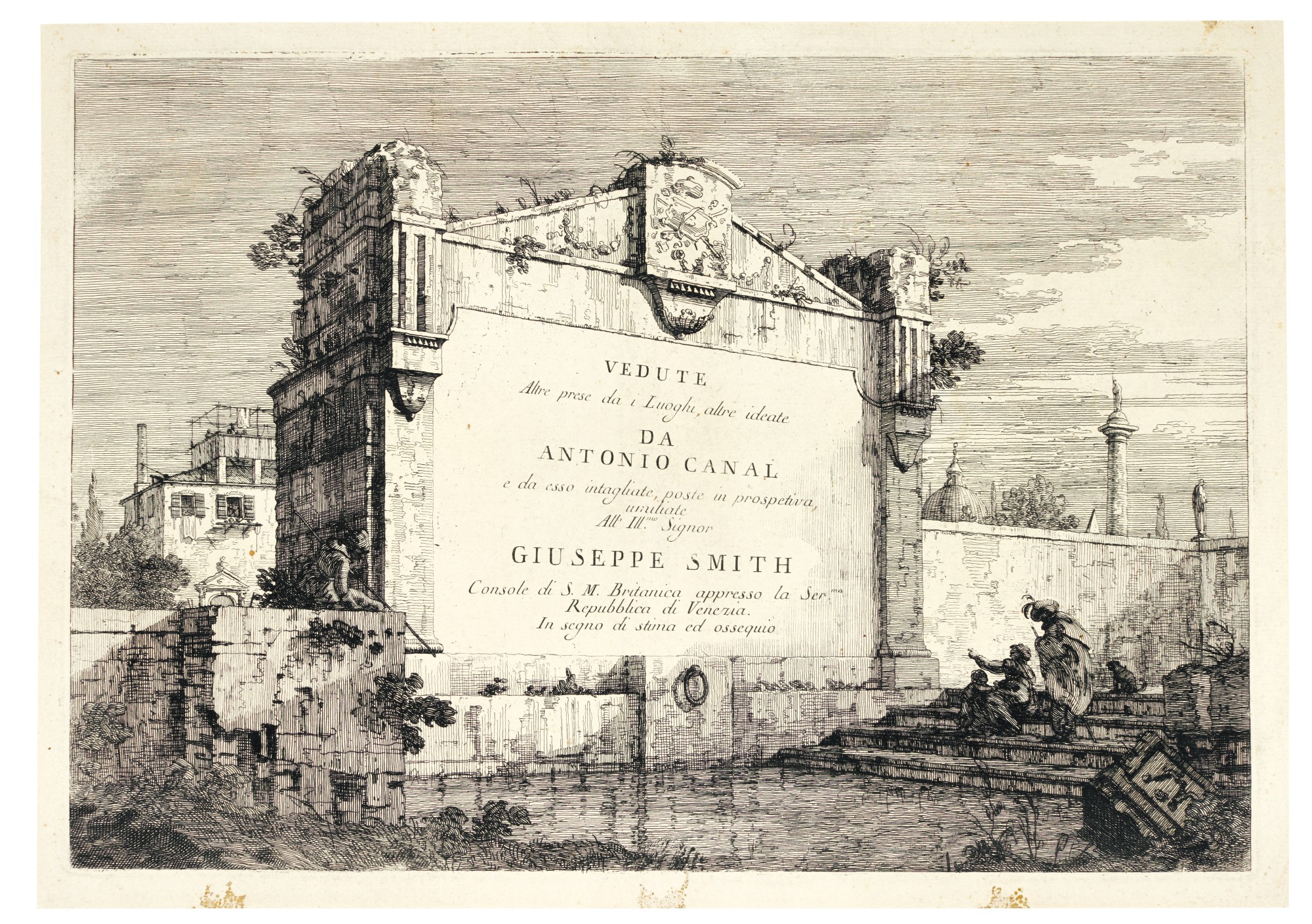
Giovanni Antonio Canal, called Canaletto
Vedute: Four Views (b. 1, 2, 5, 11)
Works from the Vedute series and individual prints such as Al Dolo show Canaletto translating his visual language into the more intimate and immediate medium of printmaking, with results that are atmospheric, precise, and deeply personal. These etchings are among the most prized objects in the prints and drawings market, valued for both their rarity and their quality of impression. Canaletto's relationship with British collectors is one of the great commercial and cultural partnerships in art history. From the late 1720s onward, his primary market was the British aristocracy undertaking the Grand Tour, that essential cultural pilgrimage through France and Italy that educated young English gentlemen in the arts of classical antiquity and European civilisation.
His principal agent, the merchant Joseph Smith, later appointed British Consul in Venice, acted as an indispensable intermediary, connecting Canaletto with an apparently inexhaustible supply of wealthy British patrons. The relationship was so productive that between 1746 and 1755, Canaletto relocated to England entirely, producing views of London, the Thames, and the English countryside that applied his Venetian methods to a new and sometimes surprising geography. Works from his English period have a particular fascination for collectors, offering a vision of Georgian London rendered with the same lapidary attention he gave to the Republic of Venice. For collectors approaching Canaletto's work today, the range of available entry points is genuinely remarkable.
Major oil paintings on canvas, particularly views of the Grand Canal from his mature Venetian period, represent the pinnacle of the market and appear at the great auction houses in London and New York where they routinely attract international bidding at the highest levels. Drawings, particularly those in pen and ink or wash, offer a more intimate encounter with his working process and his extraordinary linear intelligence. His etchings, especially good impressions of the Bromberg states on paper with the Remondini watermark, present a compelling opportunity for collectors at a range of levels, combining genuine rarity with the directness of a medium in which the artist's hand is felt with particular immediacy. When assessing any work attributed to Canaletto, condition, provenance, and the quality of impression or execution are paramount, and the guidance of a specialist is invaluable.
Canaletto's place in art history is secure, but his significance today goes beyond the merely historical. He invented a visual language for urban experience that has never become obsolete. The way we look at cities, the way we photograph them, the appetite we have for images that capture a particular quality of light at a particular moment in a particular place: all of this has Canaletto somewhere in its lineage. Artists working in traditions of architectural painting, topographical realism, and urban landscape have returned to his example across three centuries, and contemporary collectors continue to find in his work a standard of visual ambition and technical accomplishment that remains genuinely inspiring.
To own a Canaletto is to possess not merely an image of Venice, but an argument about what painting can do when it is made with complete seriousness, complete skill, and what can only be called love.
Explore books about Giovanni Antonio Canal, called Canaletto
Canaletto: A Life
Michael Levey
Canaletto and His Patrons
Michael Levey
Canaletto: Paintings and Drawings
F. J. B. Watson
Canaletto in England
Michael Levey
Canaletto: Complete Paintings
Terisio Pignatti
The Drawings of Canaletto in the Collection of Her Majesty the Queen
W. G. Constable and J. G. Links
Canaletto: Venice and London
Charles Beddington
Canaletto's Venice
Dario Succi