Gina Beavers
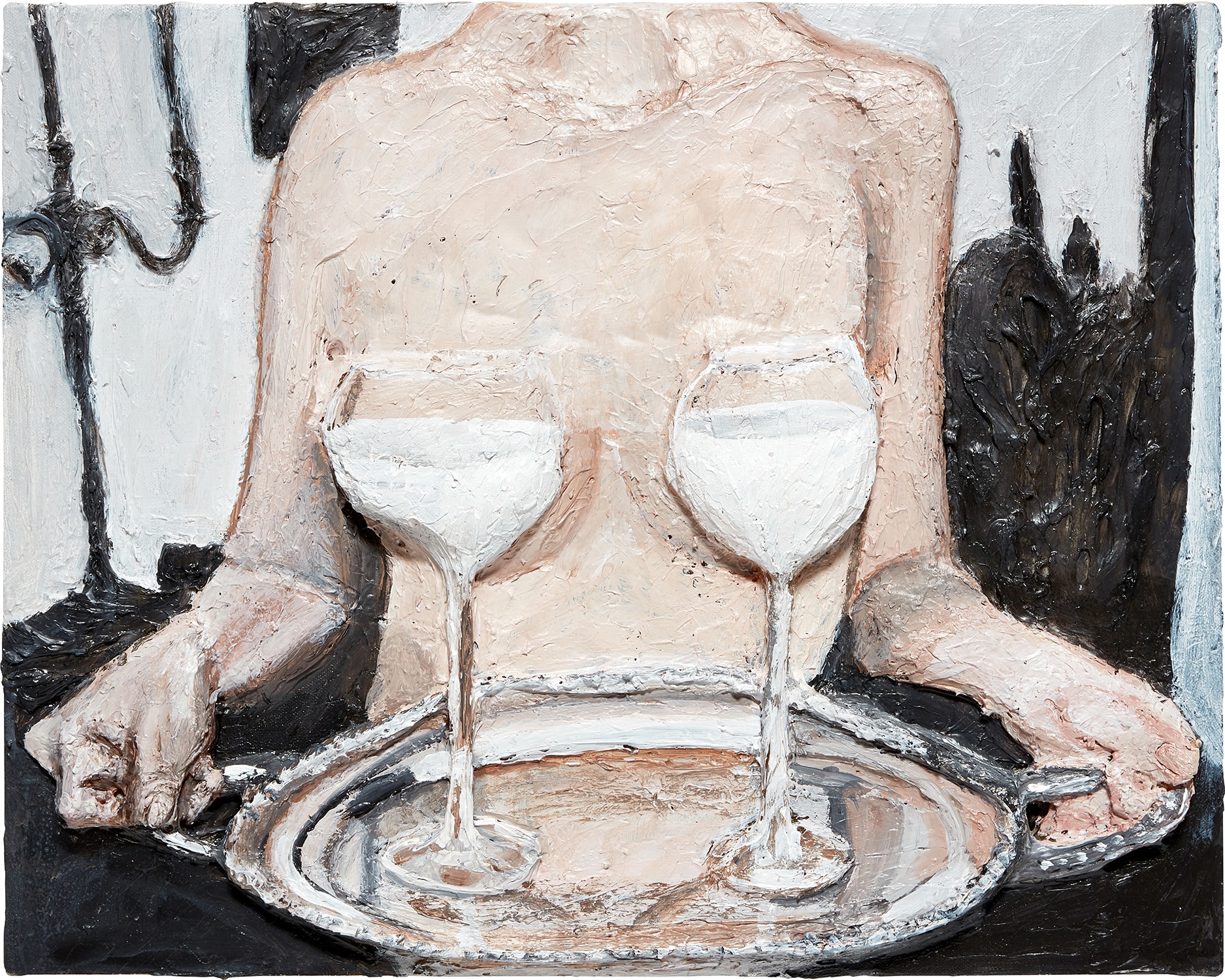
Gina Beavers Makes the Scroll Monumental
Artist Spotlight · The Collection Editorial
Something shifted in contemporary painting around the mid 2010s, and Gina Beavers was at the center of it. While critics debated whether the internet would flatten or destroy the image, Beavers was busy doing the opposite: dragging pictures out of the screen and into astonishing physical relief, piling acrylic and foam and modeling paste onto canvas until a burger, a lip, a frosted donut became something you could almost reach out and touch. Her work has been exhibited at institutions including the Institute of Contemporary Art in Los Angeles and shown through Marianne Boesky Gallery in New York, where she has long been represented, cementing her place as one of the most original painters working in America today. Beavers was born in 1974 and grew up navigating the particular visual landscape of American consumer culture before that culture migrated entirely online.
Gina Beavers
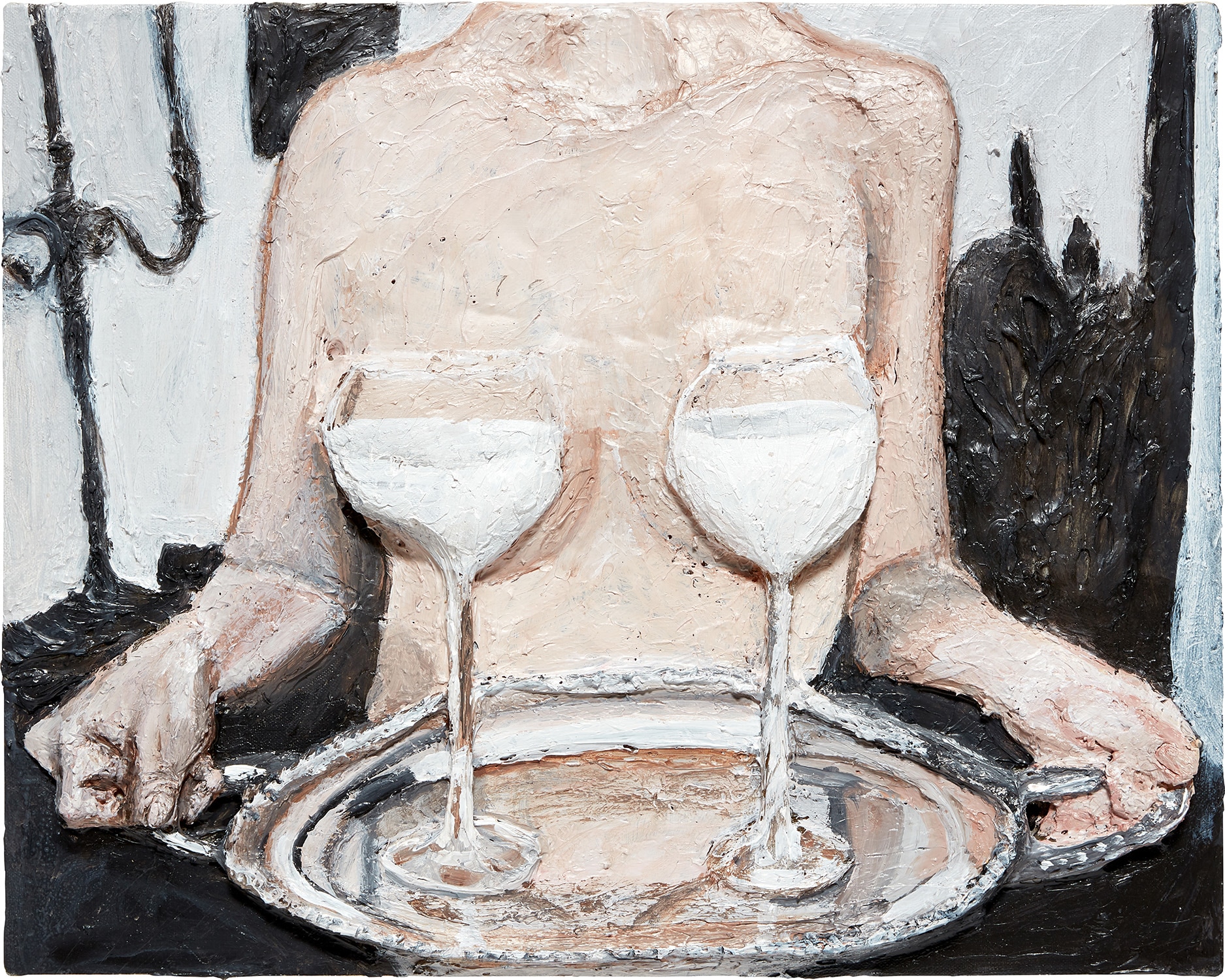
Based on Milk by Marlies Plank, 2019
She studied at the University of Georgia and later earned her MFA from the School of Visual Arts in New York, a city that would become both her home and her primary subject in a broader sense: the city as a concentrator of images, appetites, and desires. Her early formation was shaped by a genuine curiosity about why certain images compel us, why we stop scrolling, why a photograph of food or a beauty tutorial holds our gaze with almost physical force. That question has never left her work. Her practice took its definitive shape as social media platforms began to reorganize how images traveled and were consumed.
Beavers became an acute observer of the internet not as a critic standing apart from it, but as someone genuinely immersed in its logic. She sourced imagery from food blogs, fitness accounts, makeup tutorial screenshots, and viral memes, then subjected those images to an intensive painterly process that inverted every assumption about their ephemerality. Where a photograph of stacked pancakes might live online for seconds before being replaced, Beavers built it up in layers of impasto until it occupied real space, cast actual shadow, and demanded the kind of sustained attention that screens actively resist. This tension between the throwaway and the monumental is the engine of her entire body of work.
Gina Beavers
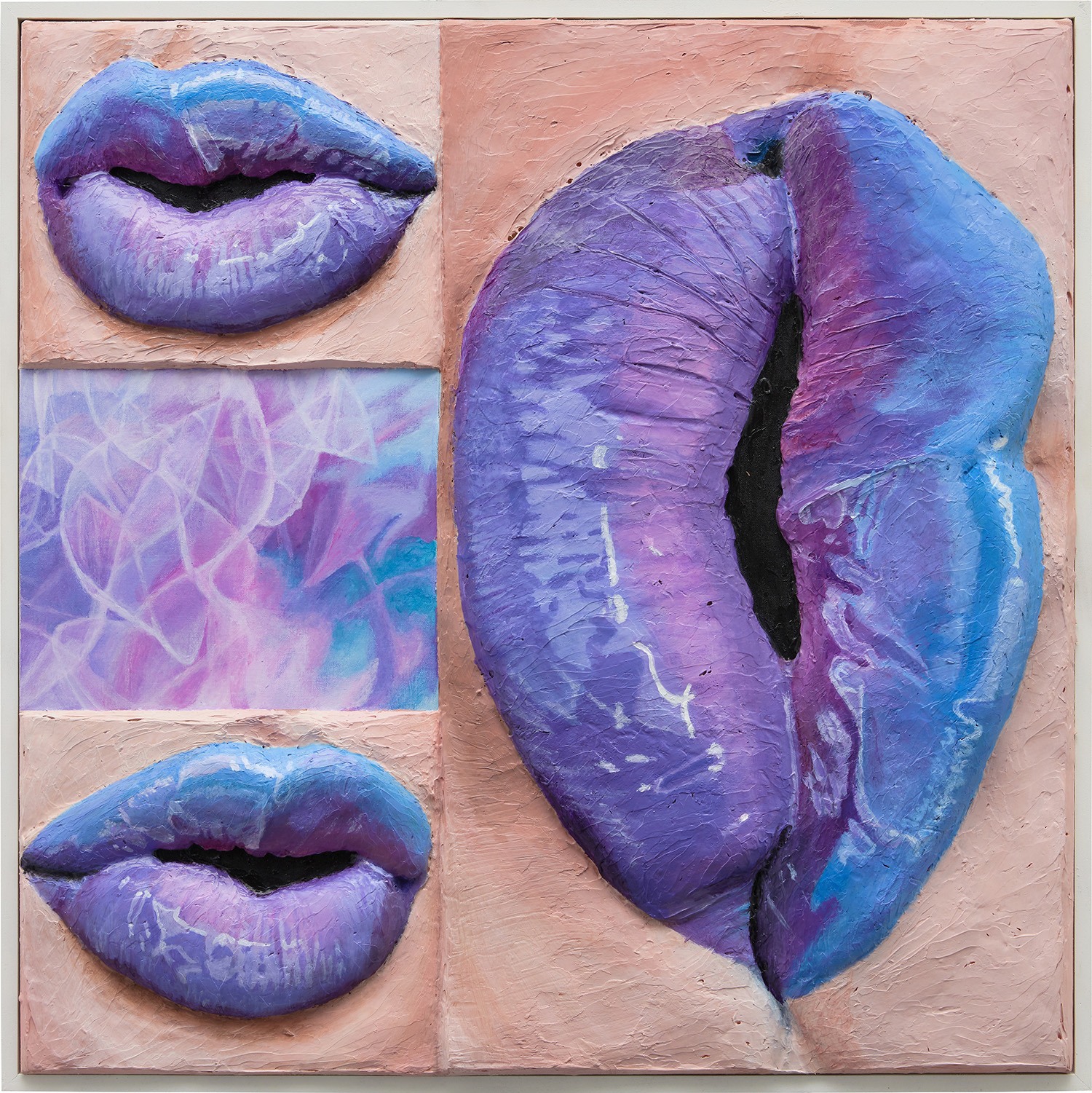
Candy Ombré Lips, 2015
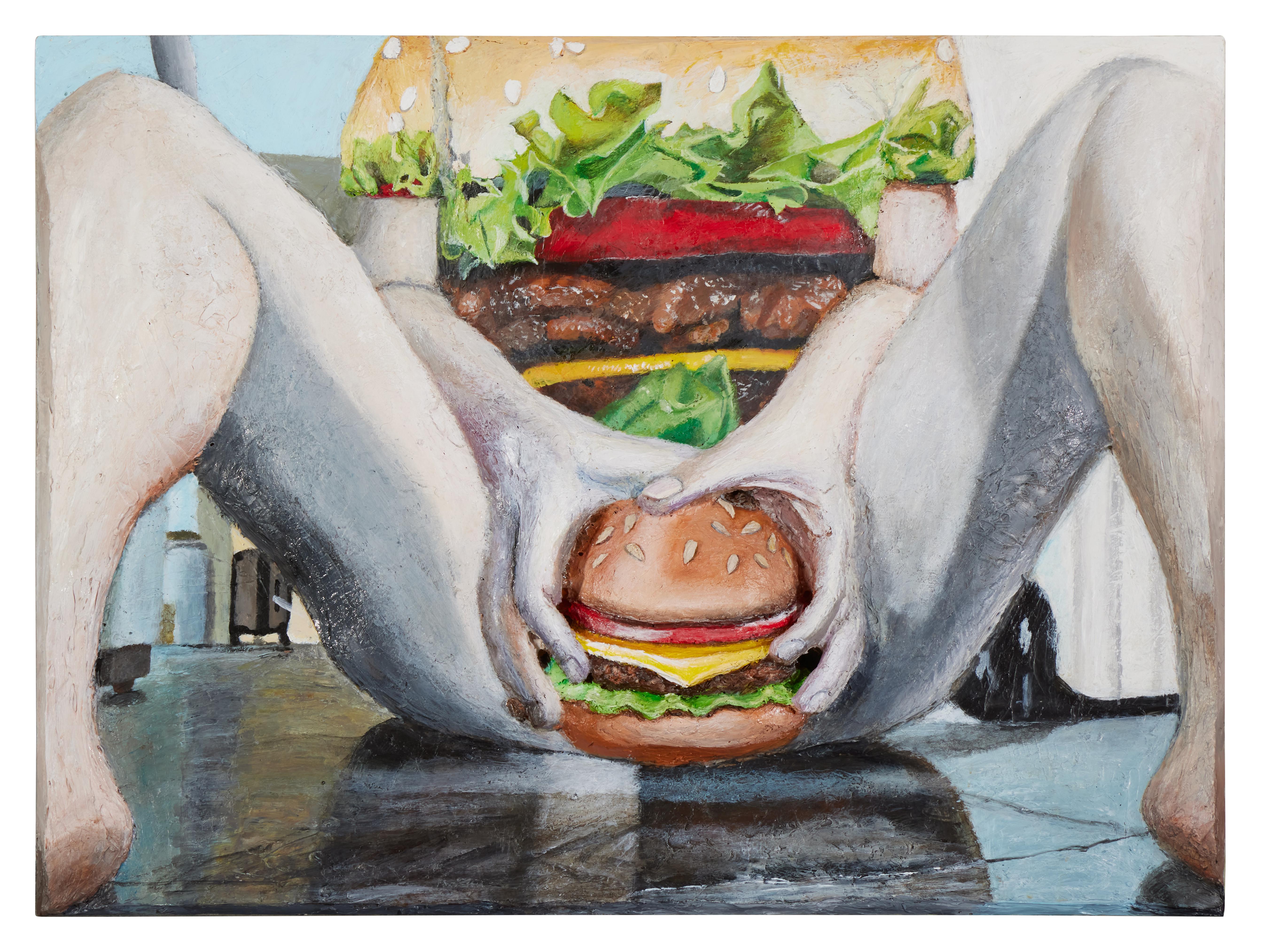
The works themselves are physically extraordinary. Pieces like Zipper Lips from 2018 and the earlier Candy Ombre Lips from 2015 show how consistently Beavers has returned to the mouth as a site of desire, language, consumption, and performance. Using acrylic and foam on panel, she builds lips into sculptural objects that hover between painting and three dimensional form, the surface catching light in ways that feel almost grotesque in their beauty. Cheeseburger Emoji Crotch from 2019 and Vagina Burger from 2020 push further into the territory where food, sex, and the internet overlap with darkly comic precision, collapsing categories that consumer culture keeps artificially separate.
Her ceramic work, represented here by Vase Lips from 2022, extends the practice into another dimension entirely, with hand painted glazed stoneware that carries the same impasto sensibility into an object with ancient material resonance. Each medium she touches seems to expand rather than dilute her central concerns. For collectors, the Beavers market has developed with the kind of steady, conviction driven momentum that signals genuine long term value. Her works have attracted serious institutional and private attention precisely because they occupy a rare position: they are visually immediate and almost viscerally appealing on first encounter, yet they reward sustained looking and thinking in ways that many more conceptually austere works do not.
Gina Beavers
Cheeseburger Emoji Crotch, 2019
The range of materials she works with, from traditional acrylic on canvas to foam, modeling paste, and ceramics, means that collections can develop real depth across different periods and approaches. Works from her earlier period, such as Pork Chop and Basil from 2012, document the emergence of her signature language and carry the particular value of origin. Later works like Based on Milk by Marlies Plank from 2019 and Heart Kiss on the Lips from 2021 demonstrate the continued refinement and ambition of a practice that has never stagnated. Collectors drawn to artists who engage seriously with how we live now, with screens and desires and the overlapping economies of food, beauty, and social performance, find in Beavers a painter who does that work with both intelligence and genuine formal mastery.
Beavers belongs to a generation of painters who refused to accept the premise that painting was finished or that the internet had made images meaningless. In this sense she is in genuine dialogue with artists like Lisa Yuskavage, whose work similarly takes the seductive image and transforms it through painterly excess, and with Wade Guyton, whose practice interrogates how images are produced and reproduced in a digital age, albeit through entirely different means. There are also resonances with the work of John Currin in the way Beavers uses technical virtuosity to make uncomfortable content formally gorgeous, and with younger painters like Chloe Wise, who similarly mines consumer culture and food imagery for painterly raw material. What distinguishes Beavers within this company is the specificity of her focus on internet culture as a phenomenon with its own visual grammar, one that she has translated into paint with a consistency and depth that no one else has quite matched.
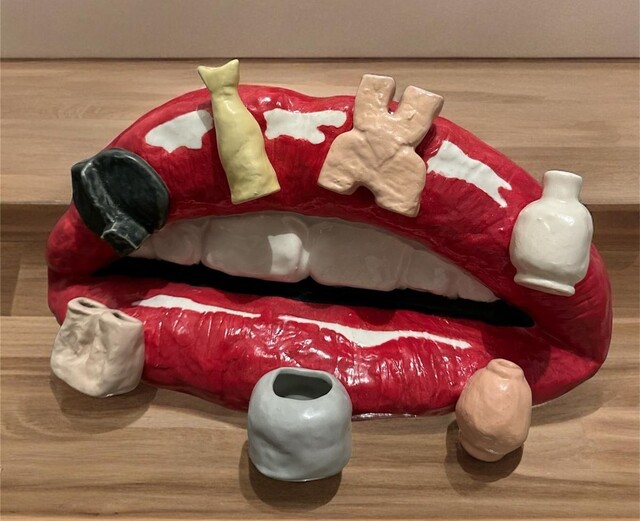
Gina Beavers
Vase Lips, 2022
What Gina Beavers has given painting is a new way to think about where images come from, where they go, and what survives the journey. In an era when the speed of image circulation has made most pictures feel disposable, she has insisted on slowness, on accumulation, on the physical weight of a painted surface as a form of resistance and a form of love. Her canvases ask us to look at the things we scroll past every day and to recognize that they carry real feeling, real hunger, real longing, even when they arrive in the form of an emoji or a beauty tutorial. That insistence feels not just relevant but genuinely urgent, and it is why her work will continue to matter long after the specific platforms that feed it have transformed beyond recognition.
Explore books about Gina Beavers